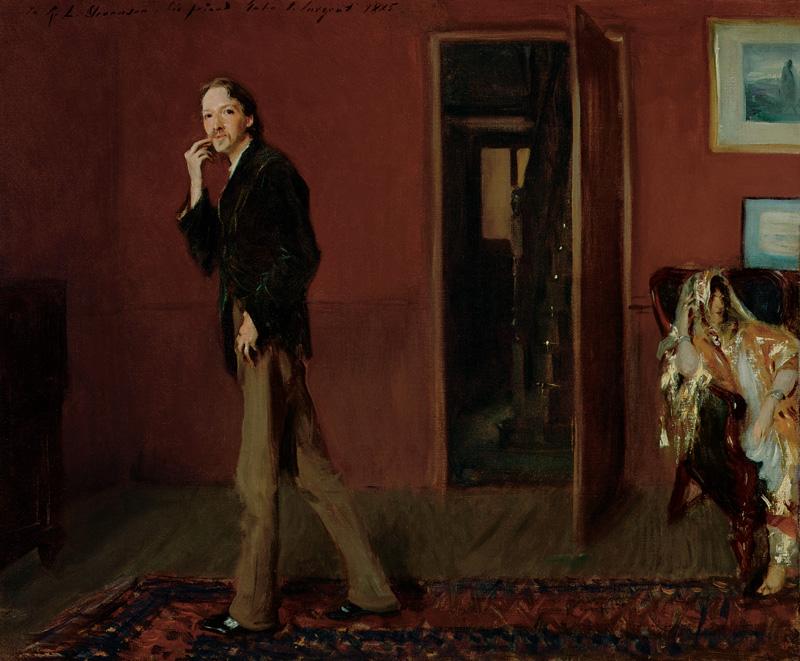
John Singer Sargent’s portrait of Robert Louis Stevenson and his wife
“Give us grace and strength to forbear and to persevere. Give us courage and gaiety, and the quiet mind. Spare to us our friends, soften to us our enemies. Bless us, if it may be, in all our innocent endeavours. If it may not, give us the strength to encounter that which is to come, that we may be brave in peril, constant in tribulation, temperate in wrath, and in all changes of fortune, and down to the gates of death, loyal and loving to one another.”
— Robert Louis Stevenson
Have a great weekend. Good luck with that quiet mind.
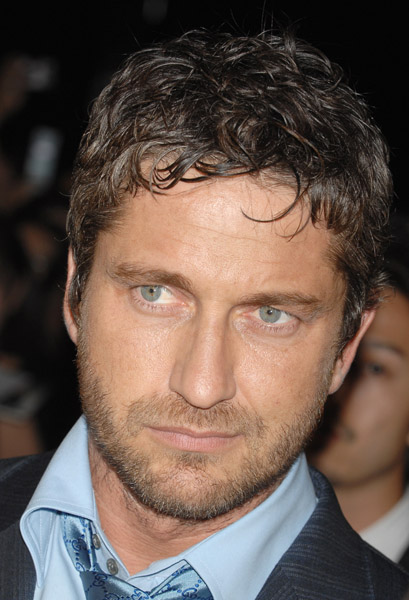
The birthday yesterday of Gerard Butler and my recommendation of Dear Frankie got me thinking about movies that make me cry and the benefits of said cry.
The complexities of the human body are varied and innumerable. We all know that lacrimation can have cathartic effects. Science has proven this. When we cry, we actually excrete toxins. Additionally, it protects the body from high levels of stress hormones and has also been linked to the release of endorphins. Because endorphins numb pain and improve mood, this is another reason why crying tends to make us feel better. These mental effects of crying are also reflected in the altered physical state it results in. Generally after crying, our breathing, sweating, and heart rate decrease, and we enter a more relaxed state. Therefore, a good cry (every once in a while) is a good thing.
So, without further ado, I will give you a list of my favorite movies that are guaranteed to make you cry time and time again. (First, as a disclaimer, let me say that I was probably the only teenager in 1970 who did not shed a tear at Love Story, and generally speaking, movies of the tear-jerker variety leave me cold.)
1. To Kill a Mockingbird (1962) The music by the great Elmer Bernstein is killer. I dare you to watch this scene where Scout says hey to Boo Radley behind the bedroom door and not cry. I double dog-dare you. (It cuts off too soon, but you get the idea.)
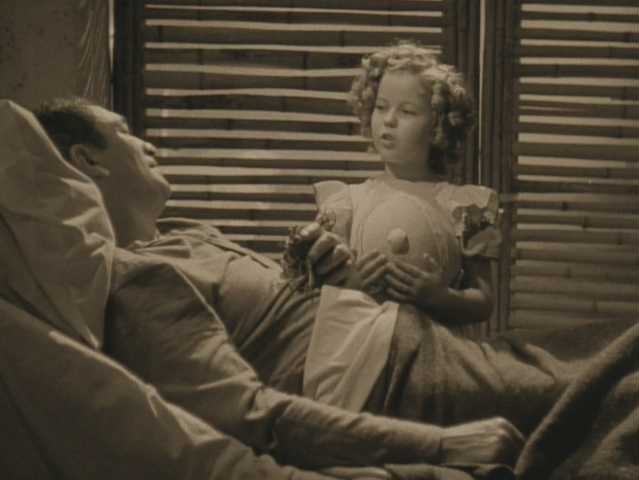
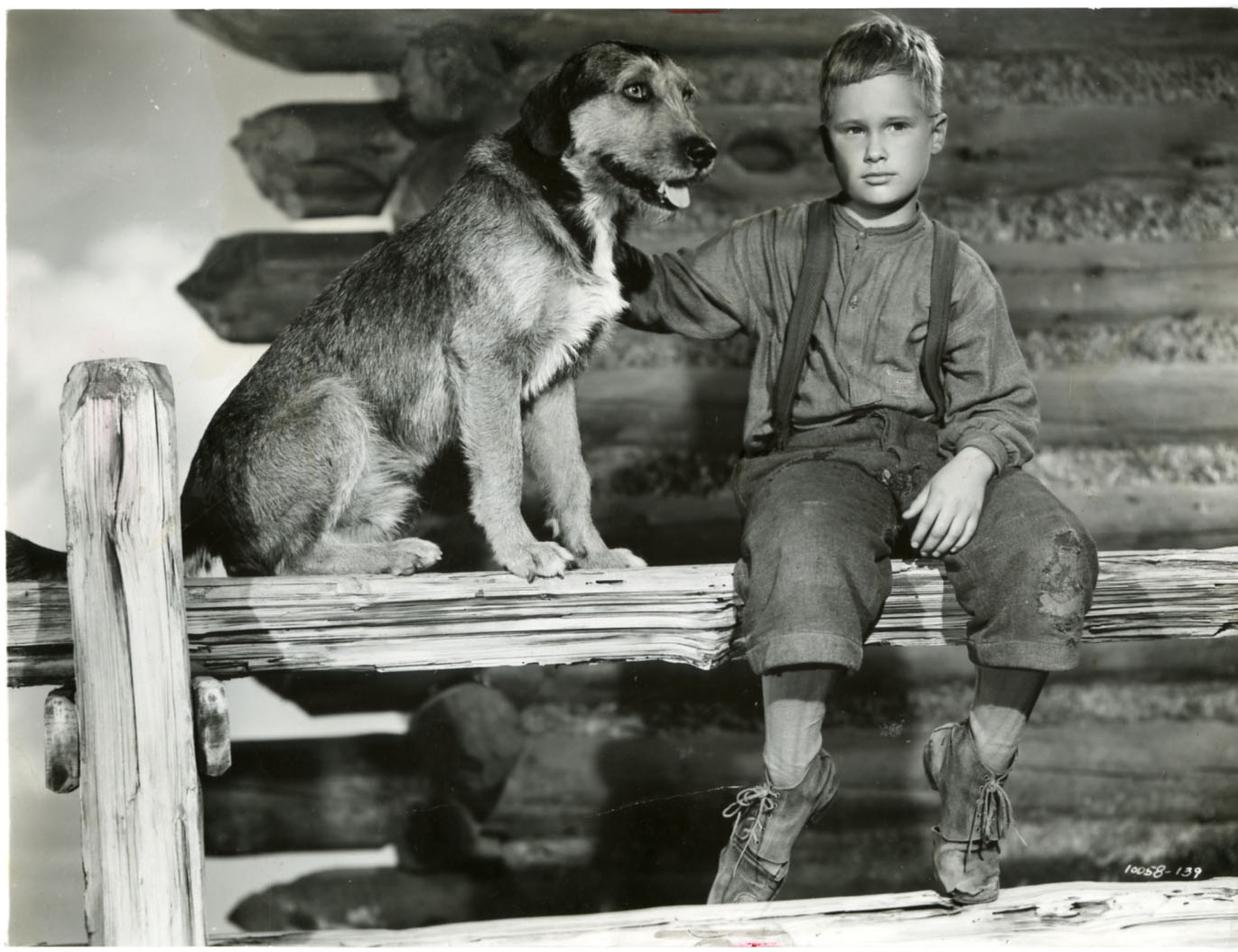
2. Wee Willie Winkie (1937), directed by John Ford and starring Shirley Temple. When she sings Auld Lang Syne to the dying Victor McLaglen even my teenage brother broke down.
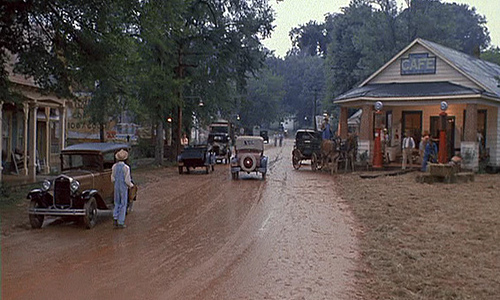
3. Fried Green Tomatoes (1991) from the book by Fannie Flagg is all about the meaning of family. The music by Thomas Newman, son of the awesome Alfred Newman, is a stab to the heart every time.
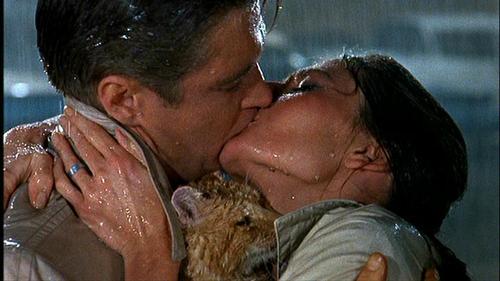
4. Breakfast at Tiffany’s (1961), although a funny movie, always makes me sad. The music by Henry Mancini is key–Moon River–c’mon. Audrey, George and Cat in the rain, the music swells, sobbing ensues. I should also add that pretty much any time Audrey Hepburn tears up in a movie, so do I. I really do feel her pain. (Think Roman Holiday.)
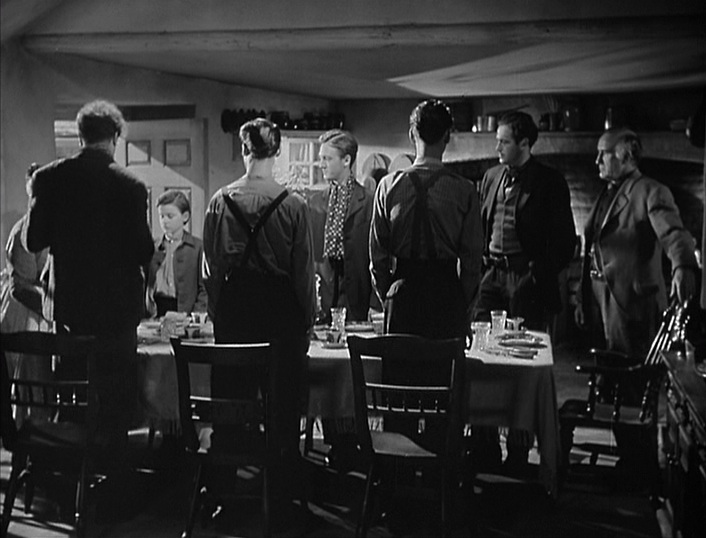
5. How Green Was My Valley (1941), another film directed by John Ford to great manipulative effect. The music by Alfred Newman is so sad. Indeed, John Ford knew how to use music to its optimal effect. Not all great directors do. (For instance, John Huston invariably comes close to ruining his movies with terrible or inappropriate music–e.g.The Treasure of the Sierra Madre.) There are a lot of wonderfully sad moments in Ford films, many featuring Henry Fonda, who teamed with the director for his best movies, notably Young Mr. Lincoln, The Grapes of Wrath, My Darling Clementine, etc.–all with the aforementioned throat-tightening scenes.
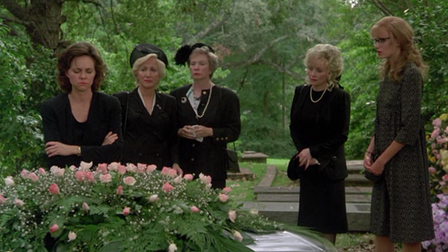
6. Steel Magnolias (1989)–granted it’s the exception to my tear-jerker/soap opera rule, but it’s sure to cause major Kleenex usage. The scene in the cemetery with Sally Field never fails. (And Dolly Parton co-stars!)
7. The King and I (1956)–oh yes. The first time I saw this (when I was about 8), I could not believe the ending of the movie. Pure disbelief. It still stings every time.
8. Shane (1953) “Shane, come back!” Need I say more? There are other scenes in Shane that are sad (if not tear-inducing) as well–such as Stonewall’s funeral where they sing Rock of Ages. There is the scene where Shane walks out in the rain and the one where Joey tells his mother that he loves Shane. Well, you get the picture.
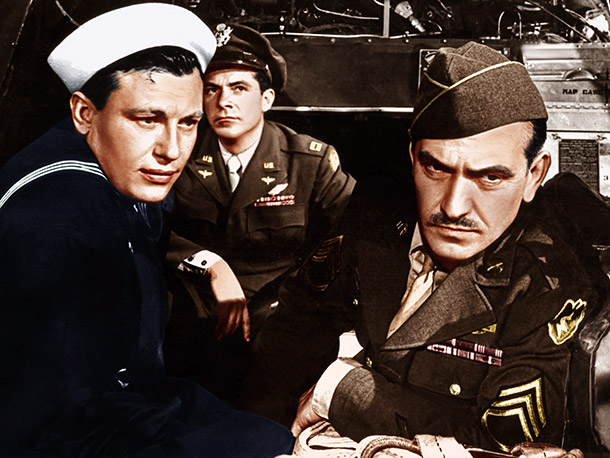
9. The Best Years of Our Lives (1946)–the great post-war film directed by William Wyler with an unsentimental screenplay by Robert Emmet Sherwood from a story by Mackinlay Kantor rises above the maudlin and soars, helped by a really good musical score by Hugo Friedhofer. So well done. So many great scenes.
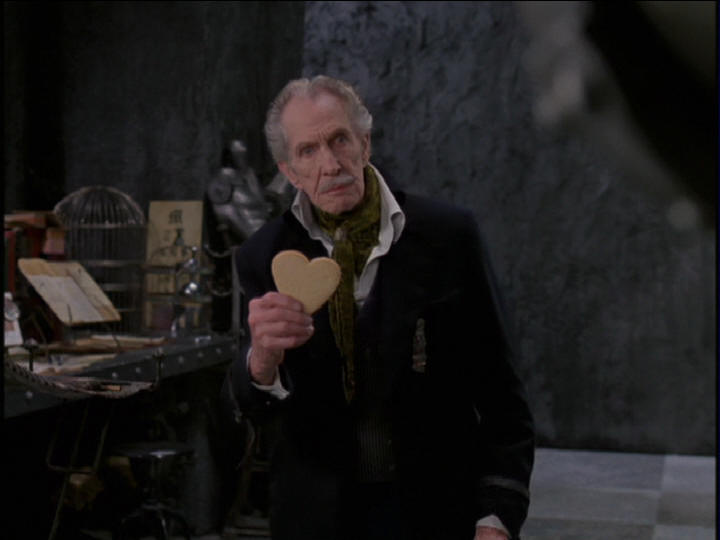
10. Edward Scissorhands (1990), directed by Tim Burton and starring Johnny Depp and Vincent Price in his last movie. The music by Danny Elfman is perfect and so is Johnny. In different ‘hands’ this movie would have been frightful, but it is sweet and innocent and sad.
I know. I know. I haven’t mentioned Cool Hand Luke (1967) or Awakenings (1990) or Life is Beautiful (1997) orThe Shawshank Redemption (1994) or The Elephant Man (1980) or The Bicycle Thief (1948) or, find me in the right mood, Scott of the Antarctic (1948), but I had to draw the line somewhere!
What movies have I forgotten? Which ones make you cry?
Gerard Butler (born 13 November 1969) is a Scottish actor who has appeared in an unusually varied array of films, most of them pretty bad. If he weren’t so darn good looking, I wouldn’t have suffered through half of them.
That may sound harsh, but really, think about it. Have you seen Lara Croft Tomb Raider, The Phantom of the Opera, 300, P.S. I Love You, Nim’s Island…the list goes on and on. I did like Machine Gun Preacher , and The Game of Their Lives was shot in St. Louis and was about a (true) St. Louis story, so it was bearable.
However, Gerard has made one movie that has redeemed his whole career and gives us hope for his future: Dear Frankie.
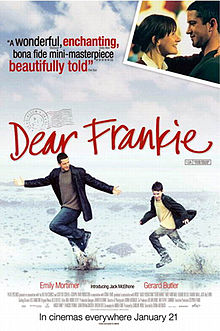
Dear Frankie (2004) is a film directed by Shona Auerbach and starring Emily Mortimer, Gerard Butler, and Jack McElhone. The screenplay by Andrea Gibb focuses on a young single mother in Scotland whose love for her son prompts her to perpetuate a deception designed to protect him from the truth about his father. It truly is a gem, and Gerard Butler is just right in the part of “the stranger” who pretends to be Frankie’s father. Would that he would play a few more parts in movies like this!
So I suggest we all watch Dear Frankie in honor of Gerard’s 43rd birthday. Have your Kleenex handy, because it’s a weeper (despite the feel-good cover art). I put it in the same category as Fried Green Tomatoes, another favorite of mine, which I cannot watch 10 minutes of before I am hopelessly weeping. Let me hasten to say, this is not a bad thing. Maybe what we need is a good cry.
Whatever new technology they come up with, nothing can ever replace the look, feel, and smell of a book. Curling up in a corner with a Kindle doesn’t cut it — where’s the romance in that? Lately, I’ve been ruminating over the books that have had the greatest impact on me, the ones that came out of the blue as a sort of revelation, whose worlds sucked me in and made me want to stay forever. But there were others that weren’t what you’d call “great literature” but nonetheless had an impact. Some of the great adventure/spy/romance writers of the 50s, 60s, and 70s (give or take a few years) are still worth a look. I’m leaving mystery for another post. My favorites were:
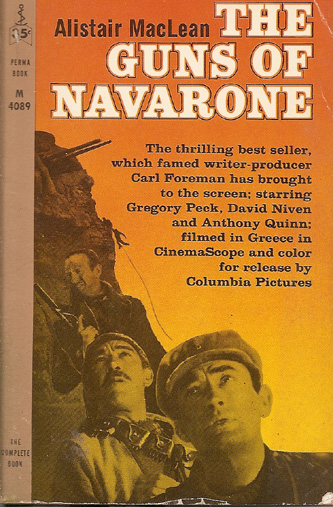
1. Alistair MacLean, especially the early works
No kidding, those WWII and Cold War spy novels are just great reading. We’re the good guys, they’re the bad guys, the hero is a solid citizen and all around decent bloke, and the heroine is smart and brave but slightly vulnerable. The books are well written and as vehicles for a set of straightforward and laudable ideals, you can’t go wrong.
2. Mary Stewart, especially the early works
a river of lava on the Isle of Skye? Who designed the cover?
Civilized romance. The heroine meets plenty of peril, but remains pretty cool, uses her head, and always finds true love in the process.
3. Helen MacInnis
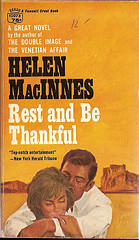
In some ways, more versatile than MacLean or Stewart, Helen MacInnis wrote some cracking spy novels and one of my favorites, a low-key cowboy romance, Rest and Be Thanksful. Always worth a read and very thoughtful.
4. Georgette Heyer
High-brow romance. We used to make-fun of my mother for reading these, but once I tried it myself I realized that they are really pretty well written and very entertaining. She’s witty; a sort of B-list Jane Austen.
5. Jane Aiken Hodge
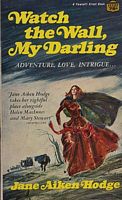
Well, if you are in the mood for a simple, chaste (but reasonably well written) romance in which the heroine faces danger, isn’t sure whether the guy she loves is okay or an ax murderer, but eventually ends up with the hero, these are for you.
All of the above tend toward formula, of course, but they are so superior to contemporary B-lit that it’s an insult to compare them. It’s telling that they’re all still in print. When you’re down, tired, or just don’t feel like tackling anything heavy, curl up with a cup of tea or glass of wine and have a good escape read.
You need a LOUD MUSIC NIGHT! Crank up the tunes and dance.
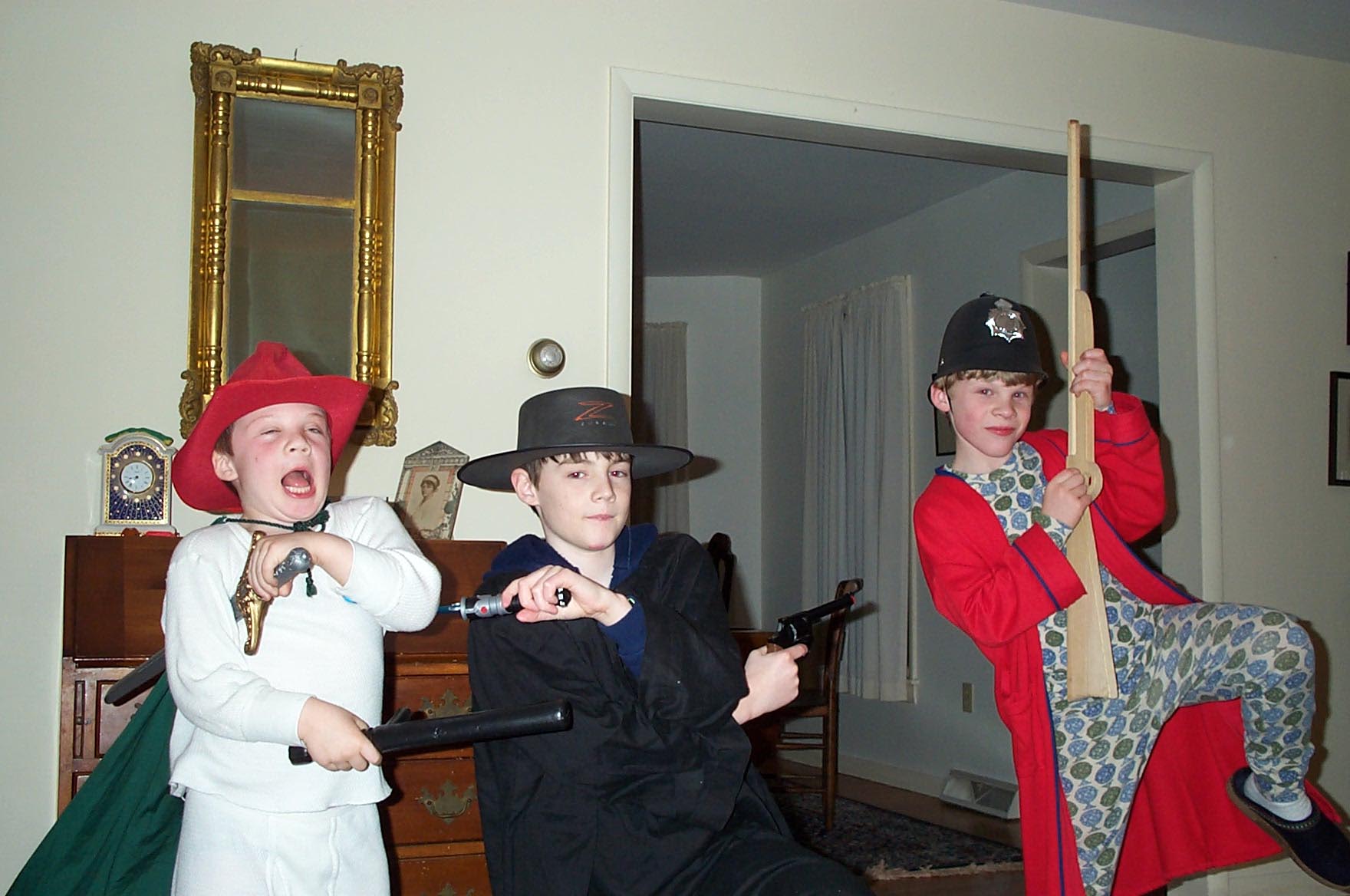
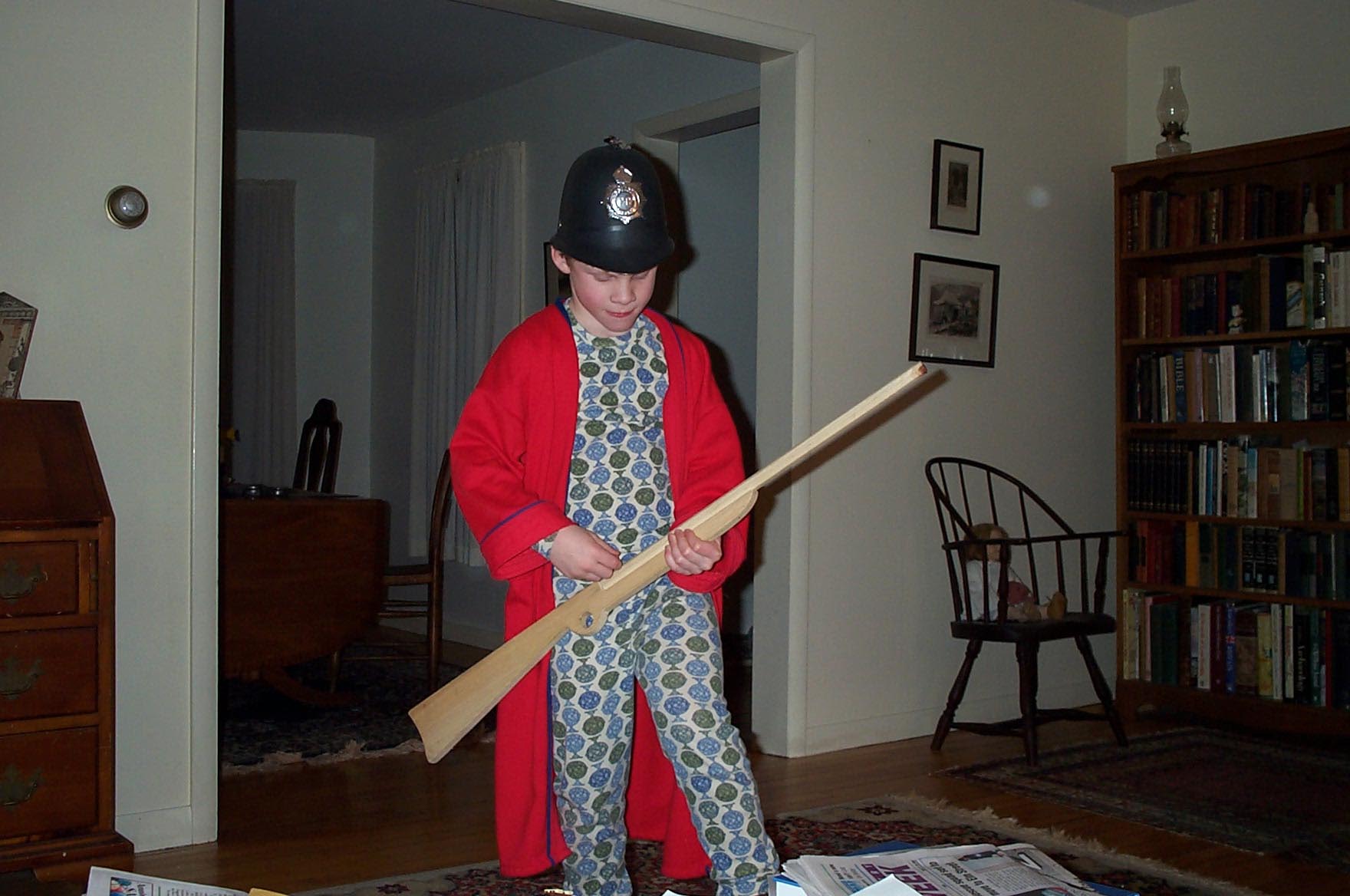
Accountrements, especially weapons, are optional, although they do liven things up and add a certain je ne sais quoi to the occasion.
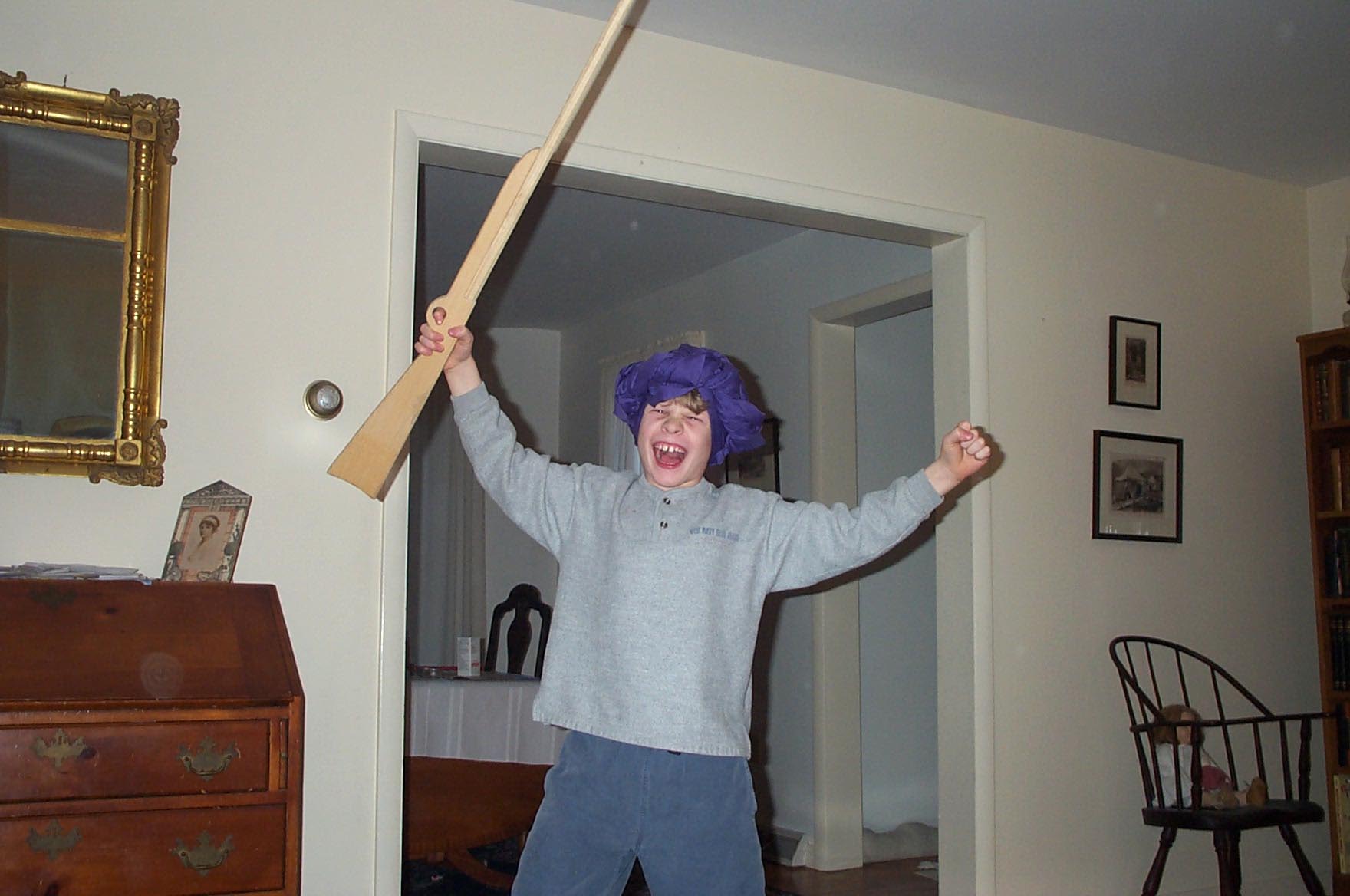
there’s something so invigorating about a turban, don’t you think?
No kidding, wooden rifles are perfect for playing air guitar.
It won’t be the same with out the little guys in pjs and armor, but loud music and boogieing are cathartic — very good for the troubled soul. I highly recommend both. But instead of a turban and toy gun, I’m going for a glass of red wine on the side.
Oh, it’s home again and home again, America for me!
I want a ship that’s westward bound to plough the rolling sea
To the blessed land of Room Enough beyond the ocean bars,
Where the air is full of sunlight and the flag is full of stars.
In my flyover institute of learning we sometimes offer a course on reading sonnets facilitated by a gentleman who really loves sonnets. I have never been a big fan of sonnets myself, in large part because when we studied them in the 6th grade, we had to write one. Good grief! What 12-year old is capable of writing a sonnet I ask you? John Keats maybe. Certainly not I. It prejudiced me against the form. Anyway, I was glancing through the syllabus the other day and came across this one.
The Cross of Snow
By Henry Wadsworth Longfellow
In the long, sleepless watches of the night,
A gentle face — the face of one long dead —
Looks at me from the wall, where round its head
The night-lamp casts a halo of pale light.
Here in this room she died; and soul more white
Never through martyrdom of fire was led
To its repose; nor can in books be read
The legend of a life more benedight.
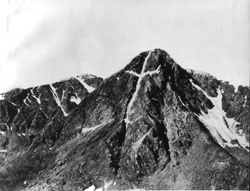
There is a mountain in the distant West
That, sun-defying, in its deep ravines
Displays a cross of snow upon its side.
Such is the cross I wear upon my breast
These eighteen years, through all the changing scenes
And seasons, changeless since the day she died.
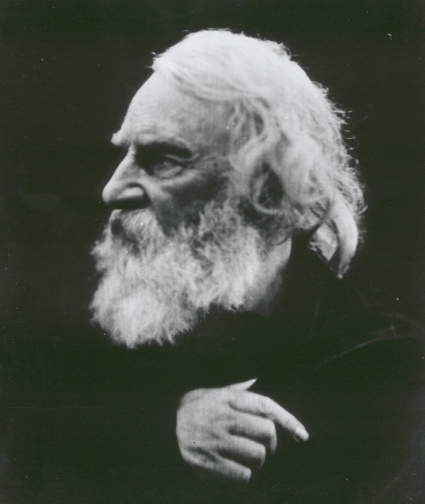
Longfellow wrote this sonnet about his second wife, Frances Appleton Longfellow, who died after her dress caught on fire and she was severely burned. Longfellow himself was burned when he attempted to put out the flames with a rug and his own body. His face was burned and that is why, from then on, he always wore a beard.
Longfellow photographed by Julia Cameron
Longfellow’s great fame faded after his death and he is mostly known today for having written The Midnight Ride of Paul Revere. However, I doubt that school children are made to memorize portions of it now or learn about meter by reciting This is the forest primeval…from Evangeline.
More’s the pity. I like this sonnet about his wife. Could I be wrong about sonnets? Look for more sonnets in this blog as we widen our appreciation together!
Since doomsday is fast approaching, I thought I would review some fun facts to know and tell about past presidential elections, concentrating on those that occurred on November 3rd.
On this day in 1868 Ulysses S. Grant defeated Horatio Seymor to become the first elected president after the Civil War ended. Has anyone ever heard of Horatio Seymor? And I must say, in his inaugural portrait U.S.G. doesn’t really look as if he wants the job, but who could blame him?
The stately looking Civil War veteran, William McKinley, who served at Antietam, defeated William Jennings Bryan in 1896 on 11-3. By all accounts it was a humdinger of an election with over 90% of the electorate turning out to vote. Now we’re lucky if we get anywhere close to 50%!
In 1908 William Howard Taft defeated William Jennings Bryan on November 3rd. That was poor Bryan’s third and final attempt at the presidency. I always think of Taft as a really obese guy, but he must have been a stress eater and put on weight in office. He doesn’t look all that portly here. Even so, he’d never get elected these days — can you imagine how today’s press would react to a candidate that makes Chris Christie look svelte? Personally, I’m all for the idea of a padded president. I’m tired of the health craze.
Moving forward, we get to the election of 1964 in which Lyndon Johnson won 61% of the popular vote to defeat Barry Goldwater. I’m going to skip his picture as I’m not a huge fan. Johnson won the silver star in WWII, but under controversial circumstances that remind me of John Kerry’s “swift boat” claims. Here’s what Wikipedia has to say on Johnson’s award:
Johnson and two Army officers went to the 22nd Bomb Group base, which was assigned the high risk mission of bombing the Japanese airbase at Lae in New Guinea. Reports vary on what happened to the B-26 Marauder carrying Johnson. Lyndon Johnson said it was also attacked by Japanese fighters but survived, while others, including other members of the flight crew, claim it turned back because of generator trouble before reaching the objective and before encountering enemy aircraft and never came under fire, which is supported by official flight records. Other airplanes that continued to the target did come under fire near the target at about the same time that Johnson’s plane was recorded as having landed back at the original airbase. MacArthur awarded Johnson the Silver Star, the military’s third-highest medal.
Oh, the politics of medals…
Finally, we have Bill Clinton’s 1988 victory over George W. Bush, which also happened on November 3rd. But since you know all about that, I’ll say no more.
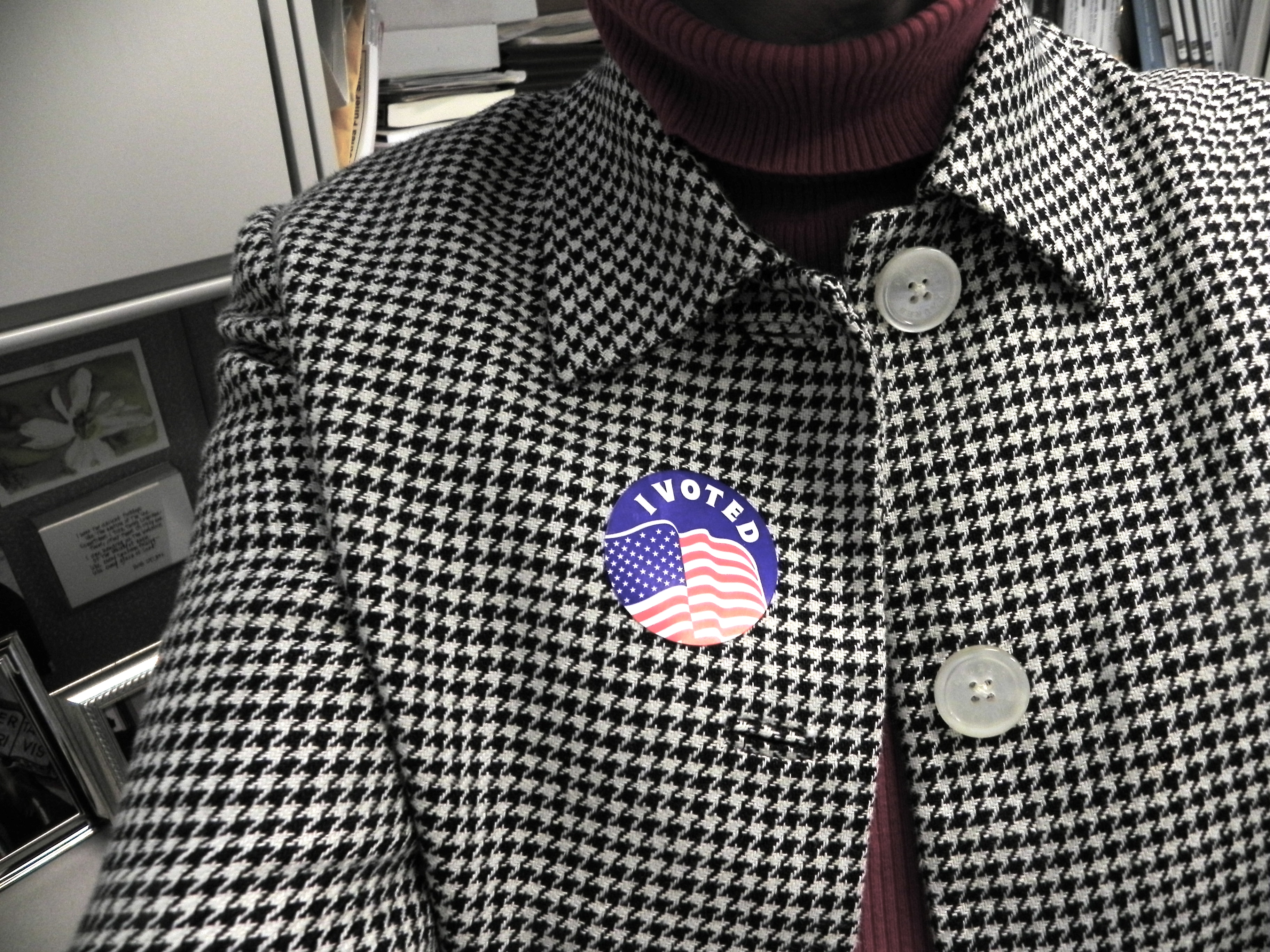
There were doubtless other presidential elections on November 3rd, but these are the ones that struck me as interesting or important. I’m not attributing any particular significance to November 3rd — it doesn’t seem to favor one party over the other and I’m no believer in prognostication of that type anyway. But keep your fingers crossed about this November 6th — whatever happens, I hope there is a CLEAR WINNER!