dual personalities

Category: Uncategorized

Kick it off, Katie

by chuckofish

Since we have been on the subject of hymns lately, I will perk up your Wednesday with this rendition of What a Friend We Have in Jesus by The Purple Hulls. It has been recorded by everyone from Aretha Franklin to Alan Jackson to John Tesh (!), but I like this version.

The Purple Hulls are a band of siblings and that’s one reason their harmony is so great. They also do a nice instrumental version of Be Thou My Vision, which was always a favorite hymn of mine and which we sang in our school chapel (sans banjo).

(A hat tip to the wonderful Hay Quaker blog where I am always discovering new things, such as The Purple Hulls.)

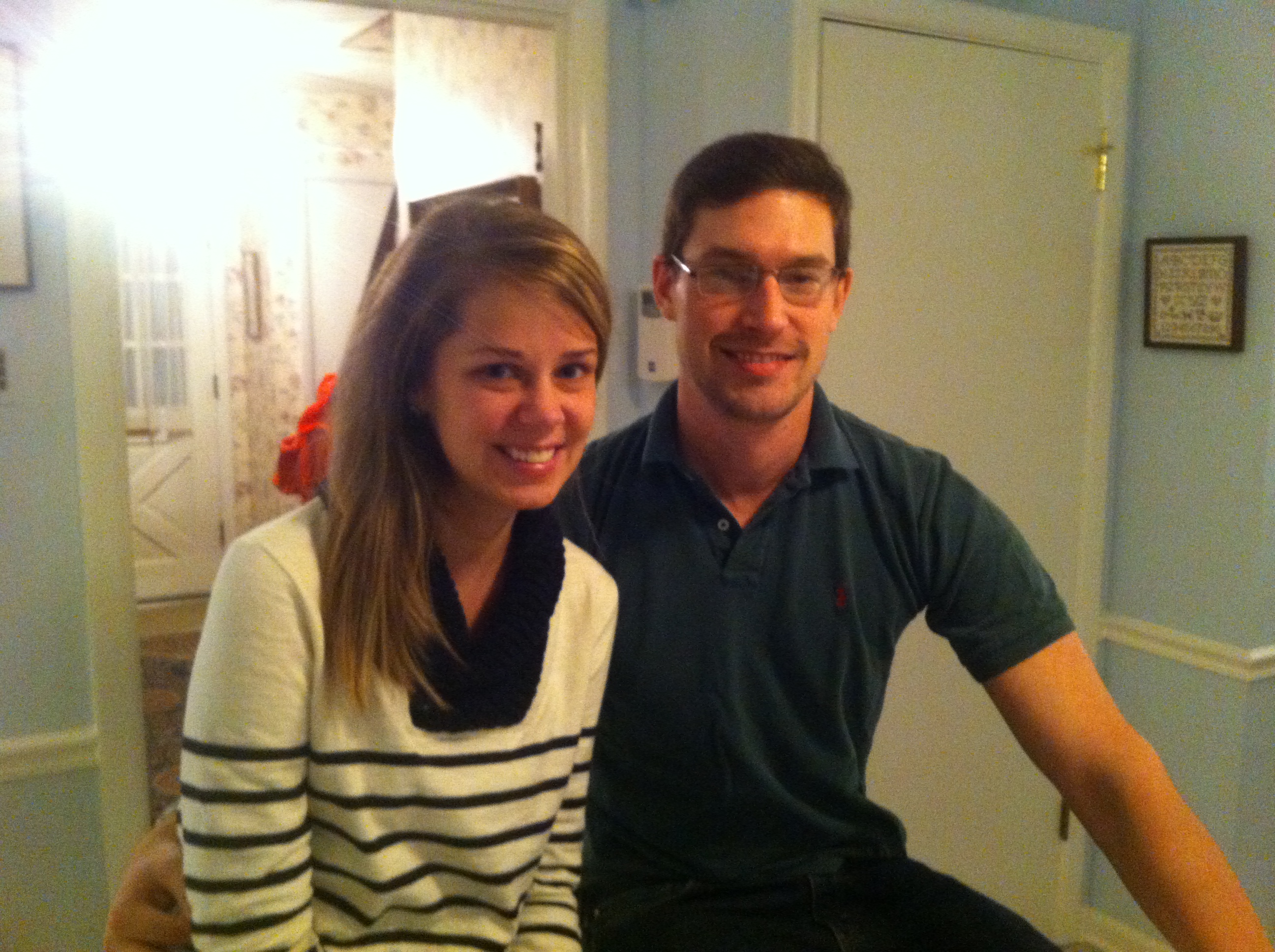
And a special birthday shout out to the boy who turns 26 today!

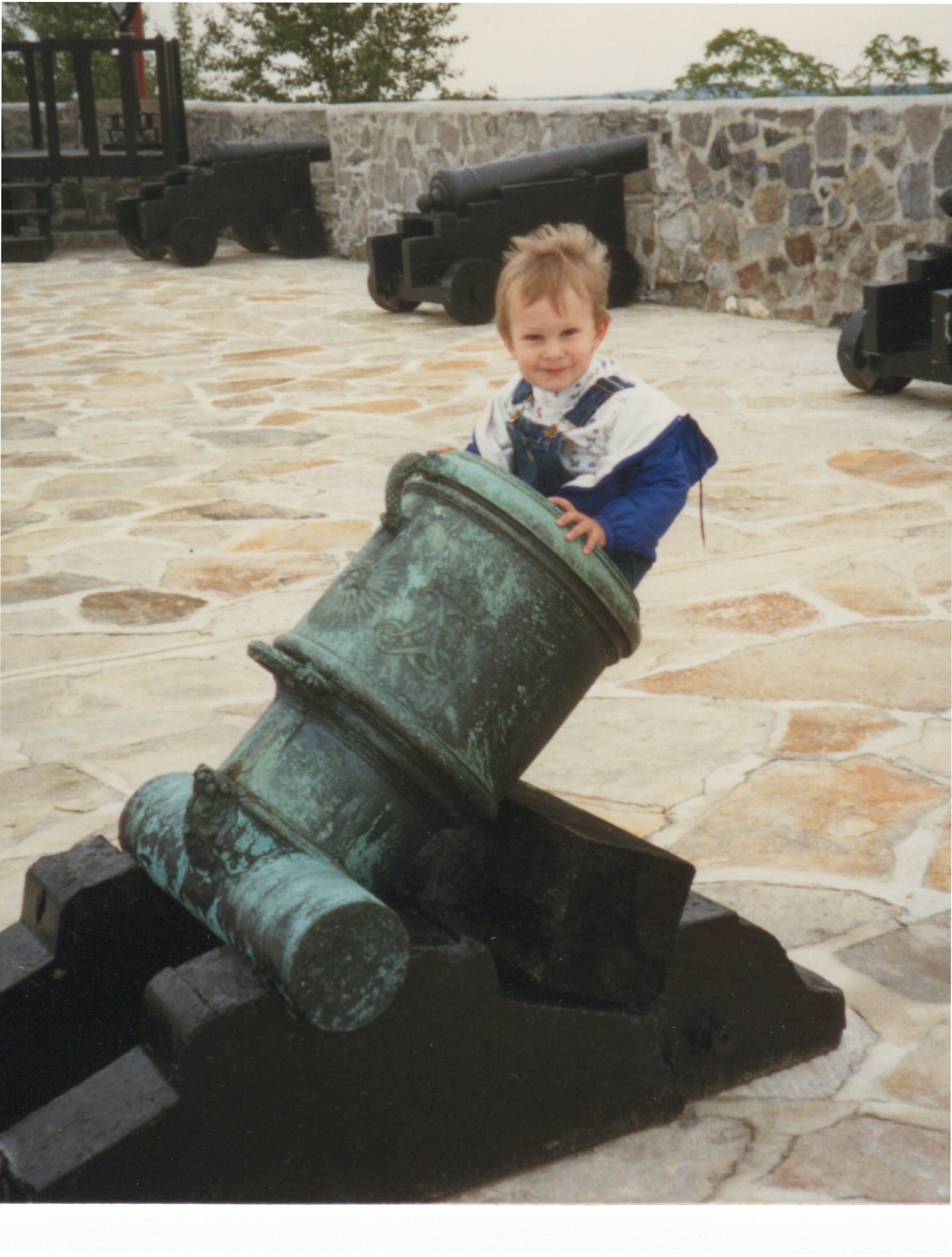
He has always been a fine young man. This picture reminds us, to paraphrase the great Pete Townshend, that all the best cowboys have Chinese eyes.

A settled rest: Isaac Watts remembered

by chuckofish

Yesterday the Episcopal Church remembered Isaac Watts (July 17, 1674 – November 25, 1748), preacher, pastor and a prolific and popular hymn writer, often recognized as the “Father of English Hymnody” and credited with some 750 hymns. It is also worth noting that he was the first hymn-writer to give expression to the Reformation emphasis on a personal appropriation of the faith by using first person pronouns in hymnody.

Watts, unable to go to either Oxford or Cambridge on account of his non-conformity, went to the Dissenting Academy at Stoke Newington in 1690, and much of his life centered around that village, which is now part of Inner London.

London’s only public statue to Isaac Watts is in Abney Park, Stoke Newington.

He is honored with a memorial in Westminster Abbey.

Among his more enduring hymns are Jesus Shall Reign, Joy to the World, Oh God, Our Help in Ages Past, and I Sing the Mighty Power of God. One of my favorites has always been My Shepherd Will Supply My Need especially the last verse:

The sure provisions of my God
Attend me all my days;
O may Thy house be my abode,
And all my work be praise.
There would I find a settled rest,
While others go and come;
No more a stranger, nor a guest,
But like a child at home.

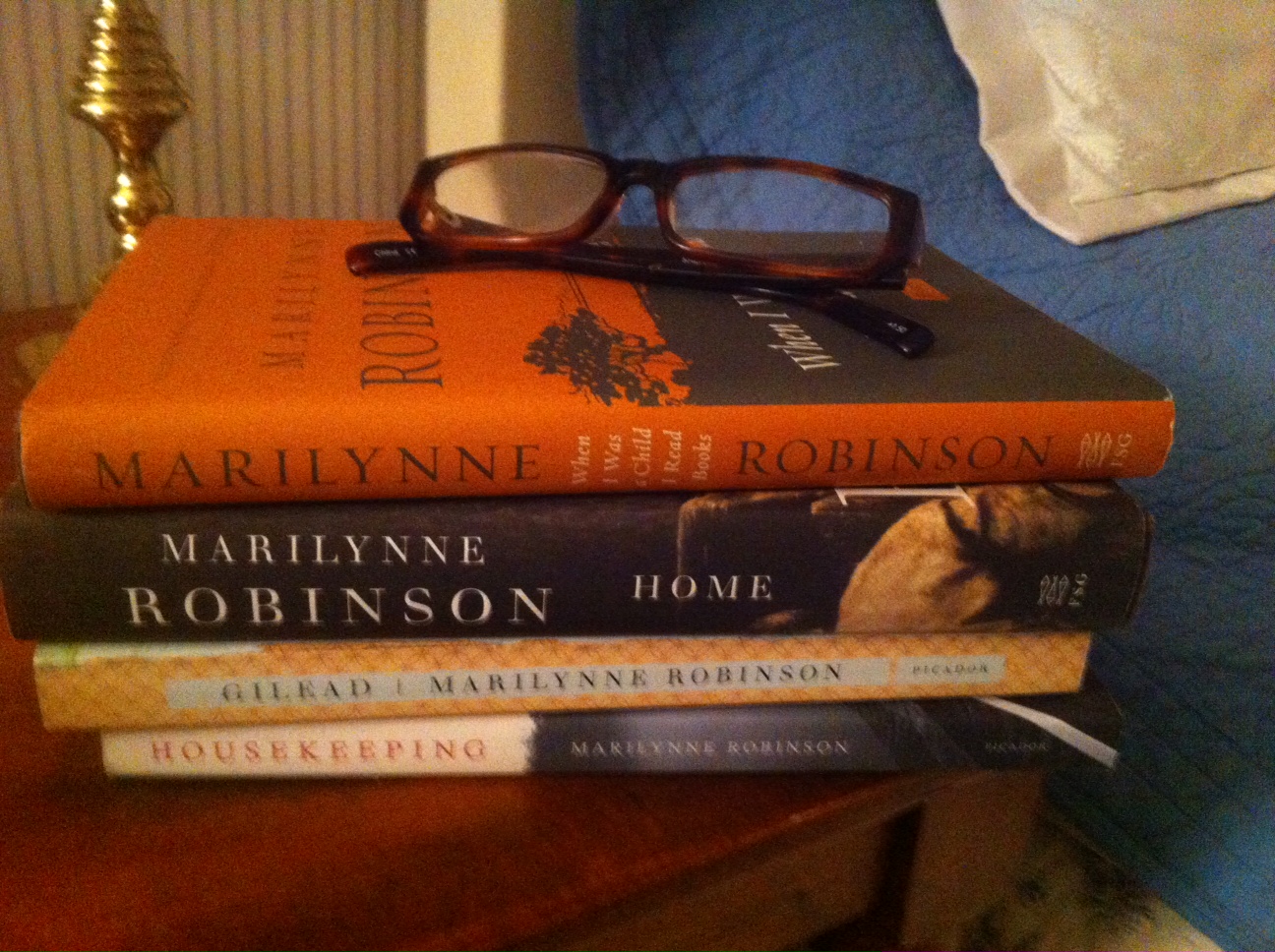
Marilynne Robinson (see yesterday’s post) quotes Watts in Gilead:

Time, like an ever-rolling stream,
Bears all its sons away;
They fly forgotten, as a dream
Dies at the opening day.

“Good old Watts,” she writes. “I’ve thought about that verse often. I have always wondered what relationship this present reality bears to an ultimate reality.”

A thousand ages in Thy sight
Are like an evening gone…

Truly they don’t write hymns like that anymore, do they?

Enjoy! (the choir of the Washington National Cathedral)

God of truth and grace, who didst give Isaac Watts singular gifts to present thy praise in verse, that he might write psalms, hymns and spiritual songs for thy Church: Give us grace joyfully to sing thy praises now and in the life to come; through Jesus Christ our Savior, who liveth and reigneth with thee and the Holy Spirit, one God, for ever and ever. Amen.

Happy birthday, Marilynne Robinson

by chuckofish

“…I’ve developed a great reputation for wisdom by ordering more books than I ever had time to read, and reading more books, by far, than I learned anything useful from, except, of course, that some very tedious gentlemen have written books. This is not a new insight, but the truth of it is something you have to experience to fully grasp.

Thank God for them all, of course, and for that strange interval, which was most of my life, when I read out of loneliness, and when bad company was much better than no company. You can love a bad book for its haplessness or pomposity or gall, if you have that starveling appetite for things human, which I devoutly hope you never will have. ‘The full soul loatheth an honeycomb; but to the hungry soul every bitter thing is sweet.’ There are pleasures to be found where you would never look for them. That’s a bit of fatherly wisdom, but it’s also the Lord’s truth, and a thing I know from my own long experience.”

from Gilead by Marilynne Robinson

Have you read any Marilynne Robinson? She is so great! She has written three highly-acclaimed novels plus several books of essays. She has been writer-in-residence or visiting professor at many universities and currently teaches at the Iowa Writers’ Workshop and lives in Iowa City. If you are not acquainted with Marilynne, you are in for a treat. She is wonderful.

Hope you had a wonderful Thanksgiving weekend with lots of good food:

family:

maybe a little Christmas decorating:

The boy puts up the Christmas lights

and even a little estate saling:

Estate-rescued angel choir

And, of course, some Marilynne Robinson!

“I have a story that will make you believe in God” —

by chuckofish

except, of course, that you already do.

Run, don’t walk, to see Ang Lee’s “Life of Pi”. I saw it this afternoon and I loved it. It is both breathtakingly beautiful and true to the book.

And it reminds us that a well-told story can capture the meaning of an event where mere facts can only record what happened. In this day and age of “science first” and obsessive “fact-checking” it’s worth remembering that “to choose doubt as a philosophy of life is akin to choosing immobility as a means of transportation.” (p. 28)

Fat baby (black) Friday

by chuckofish

What better way to observe Black Friday and usher in the Yuletide season than with a picture of the elder dual personality visiting Santa for the first time with her older brother Chris. Ah yes, the first of many awkward photos to come.

Advent is still over a week away, but even the local R.C. university in our flyover town has “decorated” their campus for the season (yes, before Thanksgiving). Shocking, I know. What is the world coming to? we ask ourselves, yet again.

Well, today I am packing away the Pilgrims and the turkeys and unwrapping my Christmas gear. It won’t all go up this weekend, but slowly over the next few weeks. It’s beginning to look a lot like Christmas, as they say…

We gather together to ask the Lord’s blessing

by chuckofish

Have a wonderful day with family and friends! Here’s hoping you have lots of delicious food, including lovely cheesy potato casserole.

My dogs are barking today

by chuckofish

One more day! Travel safely.

You know I can’t cook

by chuckofish

Just a few days until it’s time to watch one of our favorites:

I so cannot wait!

Time for some thrilling heroics

by chuckofish

Well, while my dual personality was posting about Achilles and The Illiad and heroes ‘n such and carrying on a deep conversation with the boy in the comments section, I was busy enjoying a Firefly marathon.

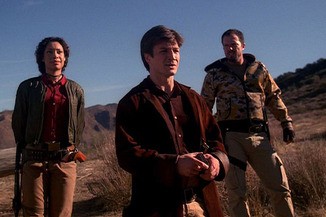
What a great show, though sadly short-lived. You may recall that it follows the exploits of a rag-tag bunch of misfits on a small spacecraft 500 years in the future. It’s an old story, but one we can relate to, can’t you? “We’re deep in space, corner of No and Where.” You gotta love it.

Meanwhile, back in reality, it is already the week of Thanksgiving. How did we get here? We haven’t even begun to post about all that we are thankful for! We have been side-tracked. We’ll have to do better.

For starters, I am thankful that the boy and his lovely bride came over for dinner last night. I made sloppy-joes and french fries. I am thankful that they live here in town and that they are always happy to come over.

We are going over to their place for Thanksgiving dinner with her parents. I am bringing my cheesy potato casserole. How wonderful, after all these years, to have an extended family!

Finally, here’s a little treble heroics ( Christ Church Cathedral Choir, Oxford: “Jubilate Deo”) to perk up your day:

Sing, O Muse

by chuckofish

of the Rage of Achilles.
Tiepolo’s “Rage of Achilles


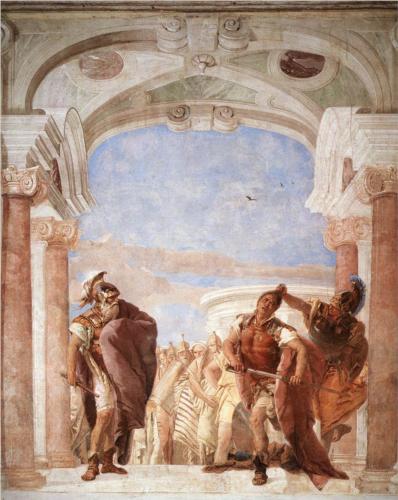
That’s Agamemnon looking worried on the left, while Athena (far right) tries to stop Achilles from chopping Agamemnon up into tiny pieces. I’m not sure the painting really captures the rage, but it is kind of pretty.

If your only acquaintance to The Iliad is through that ridiculous film, Troy, you can be forgiven for relegating the story to “the dustbin of history”. But I urge you to give the poem a chance. It, together with its twin, the Odyssey, ranks right up there with Shakespeare and the Bible — and it’s certainly the best war story ever.

What makes it great is its humanity. Sure, there’s plenty of testosterone-fuelled violence and, yes, the gods are interfering bastards, but there are real characters here, in real situations, to which the modern reader can still relate. I could go on and on, but today I’m going to concentrate on Achilles, who is, after all, central to the poem. The poet makes sure that Achilles is not just a dumb, sulky jerk. In fact, he gets some of the best lines, many of which point out the contradictions and difficulties inherent in war.

For example, during his argument with Agamemnon at the beginning of the poem, Achilles angrily declares that

I don’t have a quarrel with the Trojans
They didn’t do anything to me to make me
Come over here and fight, didn’t run off my cattle or horses
Or ruin my farmland back home in Pthia…

How often do soldiers find themselves wondering what their war really has to do with them? The Iliad is as conscious as we are that it’s the politicians (or in the poem’s case, kings) who start the wars and who send people to die in them, usually while they (the politicians) stand at the back. Achilles notably accuses Agamemnon of never having “buckled on armor in battle or come out with the best fighting Greeks” because it’s “more profitable to hang back in the army’s rear.” So true.

The poem also explores larger, more existential questions. In book 9, when people are trying to get Achilles to re-join the fight, he rants bitterly:

It doesn’t matter if you stay in camp or fight —
In the end, everyone comes out the same.
Coward and hero get the same reward:
You die whether you slack off or work.

In other words, life’s a bitch and then you die.

Even so, there’s a soft side to Achilles, who, in the same speech, reminds us that

Every decent, sane man
Loves his woman and cares for her, as I did,
Loved her from my heart. It doesn’t matter
That I won her with my spear.

Although it is common to assume that women in times past were horribly abused and oppressed, the poem is surprisingly appreciative of the plight of women, most of whom it is well aware will come to bad ends as a result of what men have done.

But the poem has a lighter side, too. Even the greatest of heroes were babies once. Phoenix, Achilles’ old nurse/mentor reminds the angry hero of their long-standing relationship:

You wouldn’t eat
Whether it was at a feast or a meal in the house
Unless I sat you on my lap and cut your food up
And fed it to you and held the wine to your lips.
Many a time you wet the tunic on my chest,
Burping up wine when you were colicky.

Okay, there’s also underage drinking here, but they didn’t have infant formula and wine was really the safest thing to drink…but anyway, you get the idea. Achilles was just as human as anyone else.

This poem has everything: action, adventure, plenty of conflict, lots of heart-rending emotional scenes, and a whole lot of wise things to say about human nature and war. Read it. Really. Stanley Lombardo’s translation, quoted here, is highly accessible, though it does take certain liberties. If you’re a purist, try Fagles’s or Latimore’s translations.