Tout va bien
by chuckofish

“I have learned silence from the talkative, toleration from the intolerant, and kindness from the unkind; yet strange, I am ungrateful to those teachers.”
–Kahlil Gibran
“I have learned silence from the talkative, toleration from the intolerant, and kindness from the unkind; yet strange, I am ungrateful to those teachers.”
–Kahlil Gibran

Packing the U-haul
Our #1 son (the eldest, that is) bid a fond adieu to his devoted, proud parents this last Thursday to move to Washington DC with friends, who are sharing a house and job-hunting. In the meantime, James (not Jim) is keeping up with his movie reviews on a new blog Rooster Illusion Reviews. Good luck, God bless, and don’t forget to call or email your parents from time to time!!!

Tiger Lily:
Beat on a drum
And I will come
Peter Pan:
And I will come and save the brave noble red skin
Ugga wugga wigwam! I have always been a big fan of day lilies or, as we say in our flyover state, tiger-lilies. They are all over the place and they bloom for a long time during the hottest of weather. As a small child I was jealous because we did not have any in our yard. I really felt deprived. (Not that I ever verbalized this to my mother who no doubt would have gamely tried to add them to our garden.) Anyway, I have made sure that we always have them in any yard that we have lived in since I had any say in the matter.

Aren’t they great?
Ray Bradbury, widely considered one of the greatest writers of science fiction and fantasy, died a few days ago. He was 91 years old. Last weekend I watched the John Huston 1956 version of Moby-Dick. The screenplay was written by Ray Bradbury!
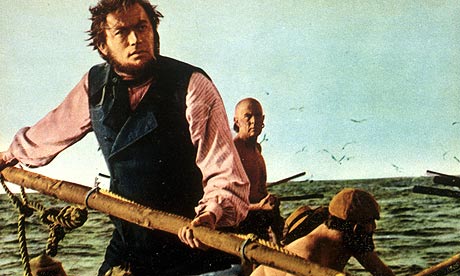
In an interview in the Paris Review Bradbury talked about writing this screenplay:
I had fallen in love with John Huston’s work when I was in my twenties. I saw The Maltese Falcon fifteen times, and The Treasure of the Sierra Madre scores of times. When I was twenty-nine I attended a film screening and John Huston was sitting right behind me. I wanted to turn, grab his hand, and say, I love you and I want to work with you. But I held off and waited until I had three books published, so I’d have proof of my love. I called my agent and said, Now I want to meet John Huston. We met on St. Valentine’s night, 1951, which is a great way to start a love affair. I said, Here are my books. If you like them, someday we must work together. A couple of years later, out of the blue, he called me up and said, Do you have some time to come to Europe and write Moby-Dick for the screen? I said, I don’t know, I’ve never been able to read the damn thing. So here I was confronted with a dilemma: Here’s a man that I love and whose work I admire. He’s offering me a job. Now, a lot of people would say, Grab it! Jesus, you like him, don’t ya? I said, Tell you what, I’ll go home tonight and I’ll read as much as I can, and I’ll come back for lunch tomorrow. By that time I will know how I feel about Melville. Because I’ve had copies of Moby-Dick around the house for years. So I went home and I read Moby-Dick. Strangely enough, a month earlier I’d been wandering around the house one night and picked up Moby-Dick and said to my wife, I wonder when I’m going to read this thing? So here I am sitting down to read it.
I dove into the middle of it instead of starting at the beginning. I came across a lot of beautiful poetry about the whiteness of the whale and the colors of nightmares and the great spirit’s spout. And I came upon a section toward the end where Ahab stands at the rail and says: “It is a mild, mild wind, and a mild looking sky; and the air smells now, as if it blew from a far-away meadow; they have been making hay somewhere under the slopes of the Andes, Starbuck, and the mowers are sleeping among the new-mown hay.” I turned back to the start: “Call me Ishmael.” I was in love! You fall in love with poetry. You fall in love with Shakespeare. I’d been in love with Shakespeare since I was fourteen. I was able to do the job not because I was in love with Melville, but because I was in love with Shakespeare. Shakespeare wrote Moby-Dick, using Melville as a Ouija board.
The day I went to see Huston I asked, Should I read up on the Freudians and Jungians and their interpretations of the white whale? He said, Hell no, I’m hiring Bradbury! Whatever is right or wrong about the screenplay will be yours, so we can at least say the skin around it is your skin.
So after I’d read the book multitudinous times, I wrote the beginning on the way to Europe on the boat, and that stayed. But everything else was so difficult. I had to borrow bits and pieces from late in the book and push them up front, because the novel is not constructed like a screenplay. It’s all over the place, a giant cannonade of impressions. And it’s a play too. Shakespearean asides, stage directions, everything.
I got out of the bed one morning in London, walked over to the mirror and said, I am Herman Melville. The ghost of Melville spoke to me and on that day I rewrote the last thirty pages of the screenplay. It all came out in one passionate explosion. I ran across London and took it to Huston. He said, My God, this is it.
Ray Bradbury never went to college. He was a self-taught, much-read writer. In that same Paris Review interview he explained, “I discovered me in the library. I went to find me in the library. Before I fell in love with libraries, I was just a six-year-old boy. The library fueled all of my curiosities, from dinosaurs to ancient Egypt. When I graduated from high school in 1938, I began going to the library three nights a week. I did this every week for almost ten years and finally, in 1947, around the time I got married, I figured I was done. So I graduated from the library when I was twenty-seven. I discovered that the library is the real school.”
Rest in peace, Ray, and may light perpetual shine upon you. “O Father, mortal or immortal, here I die. I have striven to be Thine, more than to be this world’s. Yet this is nothing. I leave eternity to Thee. For what is man, that he should live out the lifetime of his God?”
(If you would like to read the Paris Review interview in its entirety, it is here. It’s worth the effort.)

“Today is the day which the Lord has made,” says the 118th Psalm. “Let us rejoice and be glad in it.” Or weep and be sad in it for that matter. The point is to see it for what it is because it will be gone before you know it. If you waste it, it is your life that you’re wasting. If you look the other way, it may be the moment you’ve been waiting for always, that you’re missing.
All other days have either disappeared into darkness and oblivion or not yet emerged from them. Today is the only day there is.”
–Frederick Buechner “Whistling in the Dark”
Today in 1851 Harriet Beecher Stowe’s anti-slavery serial, Uncle Tom’s Cabin or, Life Among the Lowly started a ten-month run in the National Era abolitionist newspaper. In honor of this I wanted to show you the famous scene from the King and I movie where Rita Moreno narrates a Siamese version of Little Eva’s escape from Simon Legree across the frozen river. Alas, this is not currently available on YouTube.
So here is the best I could do. It is still pretty great.
I remember back in 1994 when daughter #1 did a report in the 4th grade on Harriet Beecher Stowe. As part of her report she brought our VHS tape to school and showed the famous scene from the King and I.

A gratuitous photo of Yul Brynner to please my dual personality.
Amazingly most of her classmates had never seen it. I have always been an evangelist for great movies, even encouraging my children to embarrass themselves in front of their peers. Hopefully they have forgiven me.
Please note that 1851 was also the year that Moby-Dick was published. Amazing!
Well, I have finished Bring Up the Bodies, Hilary Mantel’s sequel to Wolf Hall and book two in her trilogy about Thomas Cromwell. It is, no surprise, wonderful.

You remember that Thomas Cromwell, 1st Earl of Essex (c. 1485 – 28 July 1540) was an English statesman who served King Henry VIII of England from 1532 to 1540 in many capacities and was his right hand man. He facilitated his marriage to Anne Boleyn and then arranged the annulment of that marriage. Oftentimes throughout history (and in historical fiction) he has been portrayed as a villain and hatchetman, but we know he indeed was not.
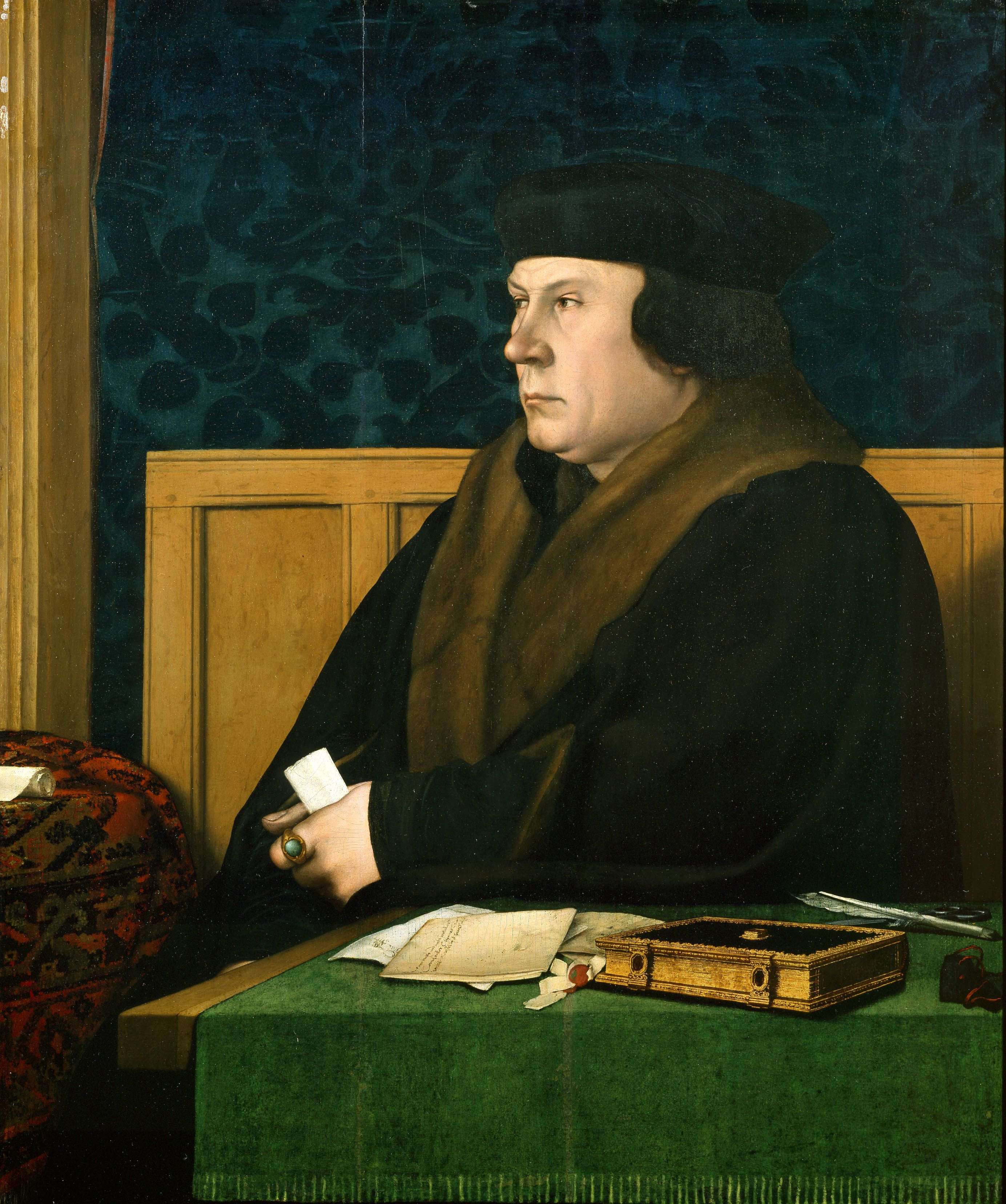
Here is a wonderful description by Cromwell of one of his friends, which really is a perfect description of him:
“He does not talk simply to hear his own voice, or pick arguments just to win them. He is not like George Boleyn: he does not write verses to six women in the hope of bundling one of them into a dark corner where he can slip his cock into her. He writes to warn and to chastise, and not to confess his need but to conceal it. He understands honour but does not boast of his own. He is perfectly equipped as a courtier, but he knows the small value of that. He has studied the world without despising it. He understands the world without rejecting it. He has no illusions but he has hopes. He does not sleepwalk through his life. His eyes are open, and his ears for sounds others miss.”
This is the kind of book I want to start over and read again right away. I think I will read Wolf Hall again. Hilary Mantel is brilliant, and as a writer reading her, I could weep for her brilliance. Brava, Hilary–you’ve done it again.
Daughter #2 and I just spent 36 hours in College Park, Maryland scouting the environs for an apartment and checking in with the English Department at the University of Maryland. And guess who we ran into on the campus?

Yes, Kermit the Frog and Jim Henson (class of 1960). What a small world!
We also found this fellow in the Student Union.

That’s Kermit as a terrapin. To me he looks more like a Ninja turtle, but whatever. At the University of Maryland they really do love their terrapins.

More specifically, they love Testudo, their fighting Terp:

I think daughter #2 will enjoy her upcoming years at the U. of MD. The campus is really lovely–large and green and full of handsome brick buildings. She will be spending most of her time here:

This is Tawes Hall which houses the English Department. Not bad, eh? The people in the department were nice too. Kermit, terps, nice people, and Georgian architecture–what more does one need?
Well, the crabcakes were tasty, but it’s a relief to be back in my flyover state. Sigh. Airports, rental cars, hotels, GPS devices, I95, and all that goes with modern travel make for a very stressful 2 days! And now it’s back to the salt mines…
For the Moby-Dick fans among us…

Still from the movie “Warrior”
Aside from the occasional martial arts movie involving either Tony Jaa or beautiful Chinese actors, I am not a fight movie fan. I especially don’t like boxing movies. You can imagine my trepidation last night when I (together with son #2) watched the 2011 MMA (mixed martial arts) movie, “Warrior”, starring Tom Hardy and Joel Edgerton as the sons of Nick Nolte. It was surprisingly watchable, even good. Though the premise seems tired — two brothers overcome major challenges and personal problems including their history with their alcoholic father, to make it to the finals of a big MMA championship only to fight each other — it managed to avoid most of the usual cliches.
For example, the married brother (Joel Edgerton) actually has a good relationship with his wife, but the script-writer didn’t fall prey to the usual ‘good sex = good marriage equation’ to establish the fact, or as an excuse to include gratuitous sex. The other brother (Tom Hardy) is an Iraq War vet, yet PTSD isn’t mentioned even once. Refreshingly, the viewer is allowed to draw his own conclusions. The script and performances are subtle and restrained — no histrionics involved — although there are some good lines and even some humor.
Potential viewers be warned, though. MMA is perhaps the most violent of all combat sports and this movie is sure to make you wince and cringe. Brutal as the action is, however, this is no self-indulgent exploration of flying sweat and crunching bones; no violence for the sake of violence. On the contrary, the director obviously understands the sport and appreciates the skill of the fighters. “Warrior” is definitely worth watching.
And if you’re wondering what Moby-Dick has to do with this post, you’ll just have to watch the movie! Hint: the title of this post is a quote from the movie.

Someone brought this vase of thistles to work the other day. He picked them on the side of the highway! Aren’t they awesome?
Often considered a weed around here, the thistle has been, of course, the national emblem of Scotland since the reign of Alexander III (1249–1286). According to legend, an invading Norse army was attempting to sneak up at night upon a Scottish army’s encampment. During this operation one barefoot Norseman had the misfortune to step upon a thistle, causing him to cry out in pain, thus alerting the Scots to the presence of the Norse invaders.
It is the symbol of the Order of the Thistle, a high chivalric order of Scotland

Crests of the Knights of the Thistle in their chapel in St. Giles Cathedral (or the High Kirk) in Edinburgh
According to Wikipedia the thistle is found as well in many Scottish symbols and as the name of several Scottish football clubs. The thistle, crowned with the Scottish crown, is the symbol of seven of the eight Scottish Police Forces (the exception being the Northern Constabulary). The thistle is also the emblem of Encyclopædia Britannica, which originated in Edinburgh, Scotland. Carnegie Mellon University features the thistle in its crest in honor of the Scottish heritage of its founder, Andrew Carnegie.
I started collecting Govancroft “Made in Scotland” pottery for daughter #2 (because Cameron is her middle name) when she was little. I love the funky, stylized and somewhat garish purple and green thistles.

I also have given her some Stangl china in the “Thistle” pattern–very mid-century modern.

Neither, I’m afraid, really grabbed her, but I like them anyway. And, I for one, love the lowly thistle–prickly though they be! Like some people I guess.

