dual personalities

Thought for the day

by chuckofish

“Ancient religion and modern science agree: we are here to give praise. Or, to slightly tip the expression, to pay attention. Without us, the physicists who have espoused the anthropic principle tell us, the universe would be unwitnessed, and in a real sense not there at all. It exists, incredibly, for us. This formulation (knowing what we know of the universe’s ghastly extent) is more incredible, to our sense of things, than the Old Testament hypothesis of a God willing to suffer, coddle, instruct, and even (in the Book of Job) to debate with men, in order to realize the meager benefit of worship, of praise for His Creation. What we beyond doubt do have is our instinctive intellectual curiosity about the universe from the quasars down to the quarks, our wonder at existence itself, and an occasional surge of sheer blind gratitude for being here.”

Updike_2

–John Updike

Seek him who made the Pleiades and Orion, and turns deep darkness into the morning, and darkens the day into night; who calls for the waters of the sea and pours them out upon the surface of the earth: The Lord is his name. Amos 5:8

Use it or lose it

by chuckofish

Today’s lesson is one I have learned over the years: stop saving things for later! Use them now. I learn this every weekend anew when I go to estate sales and there are linens galore that have been put away “for later” or for “company” and then never used.

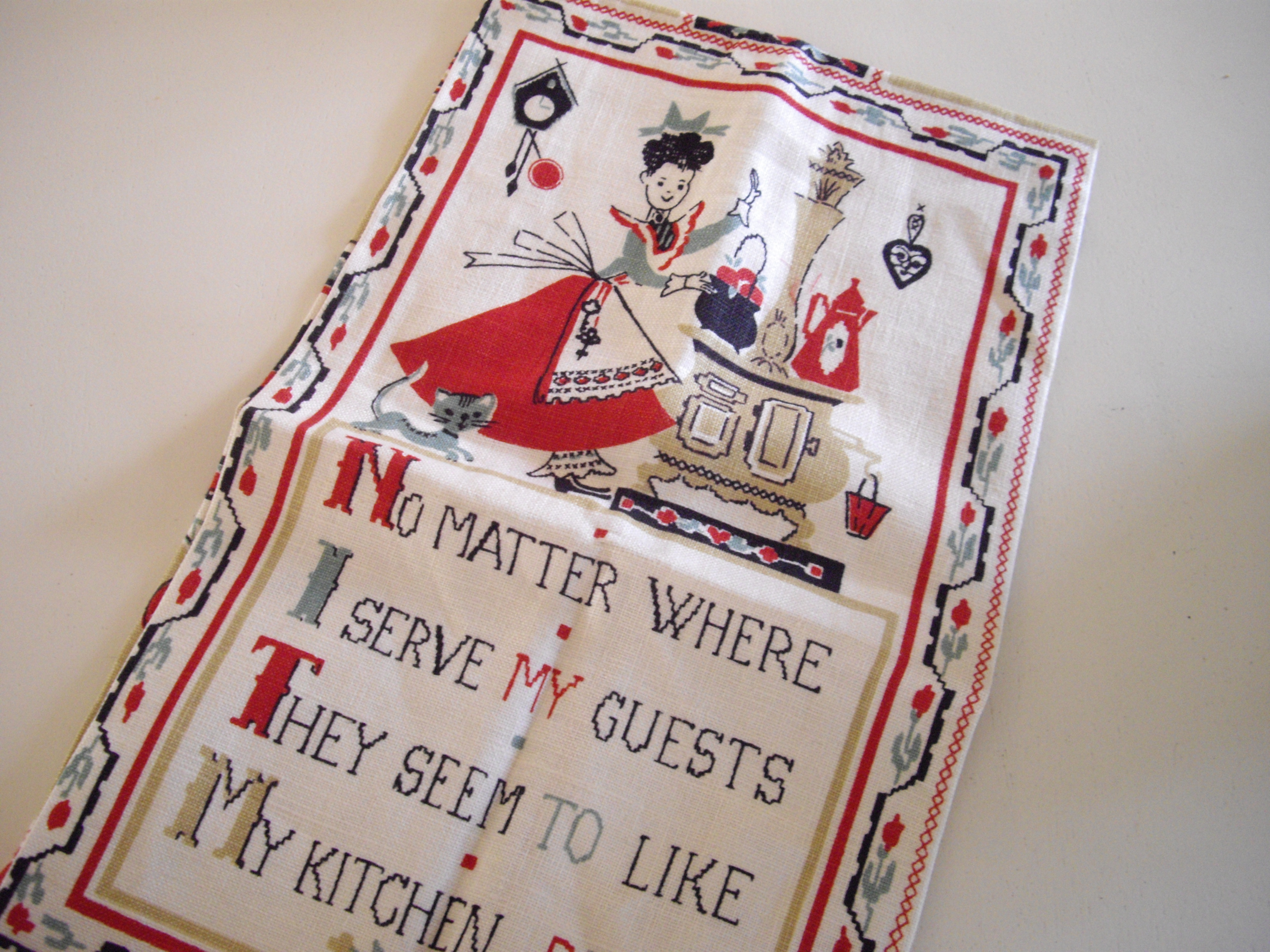
I was reminded of this again when I received a vintage linen kitchen towel in the mail that I had won on eBay. (Yes, I also collect these.)

towel1

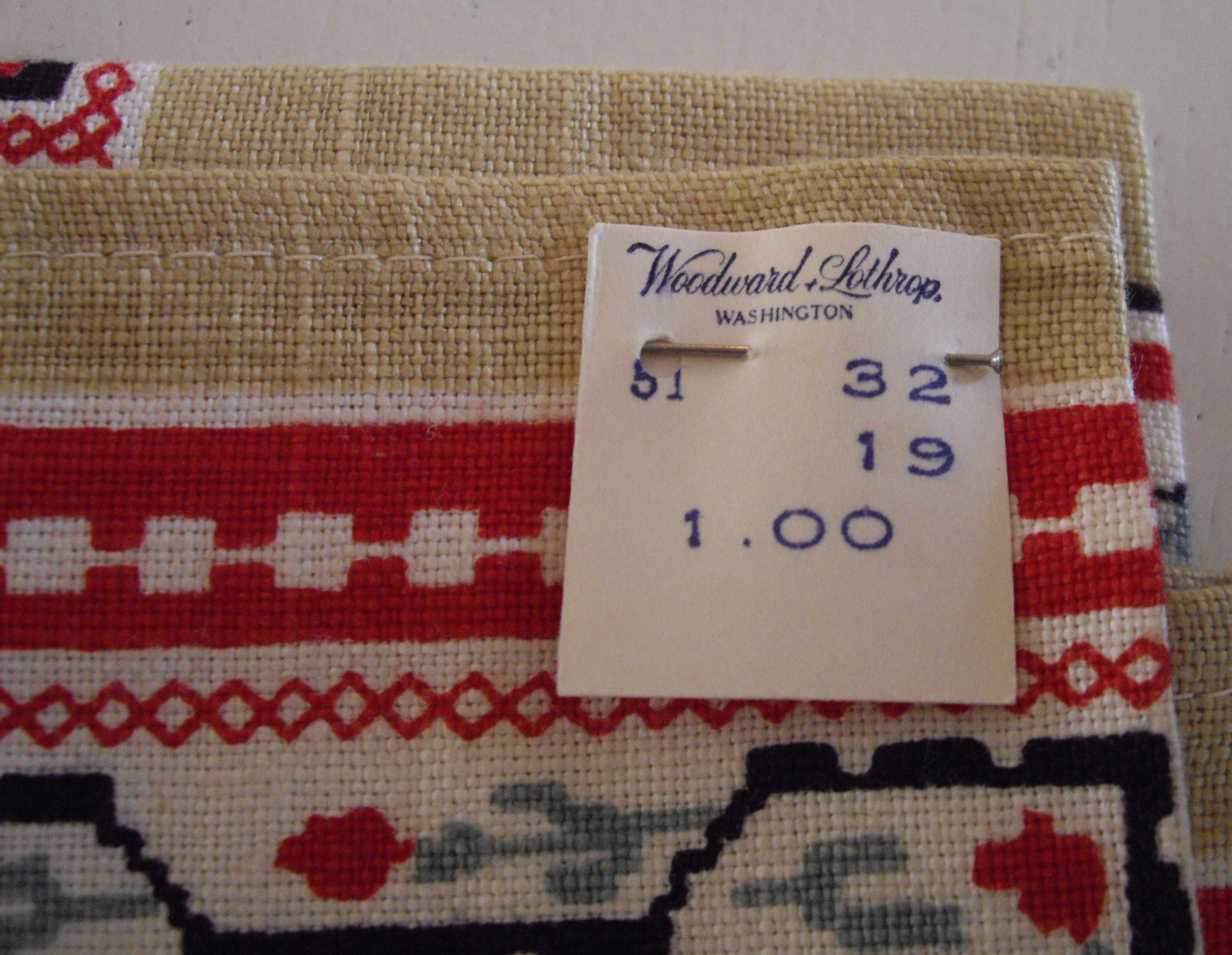
It had clearly never been used. It even sported the original Woodward and Lothrop price tag pinned to it. How long has it been since they pinned on price tags? Or, for that matter, since anything cost a dollar? Or since Woodward and Lothrop closed its doors?

tag1

I say, use the good china! Light the candles! Bring out the cloth napkins! When my kids were growing up, we always did. It gives meals a certain gravitas and everyday elegance which is lacking in our do-it-fast, throw-away world. There is no denying that even McDonalds hamburgers taste better on Wedgwood.

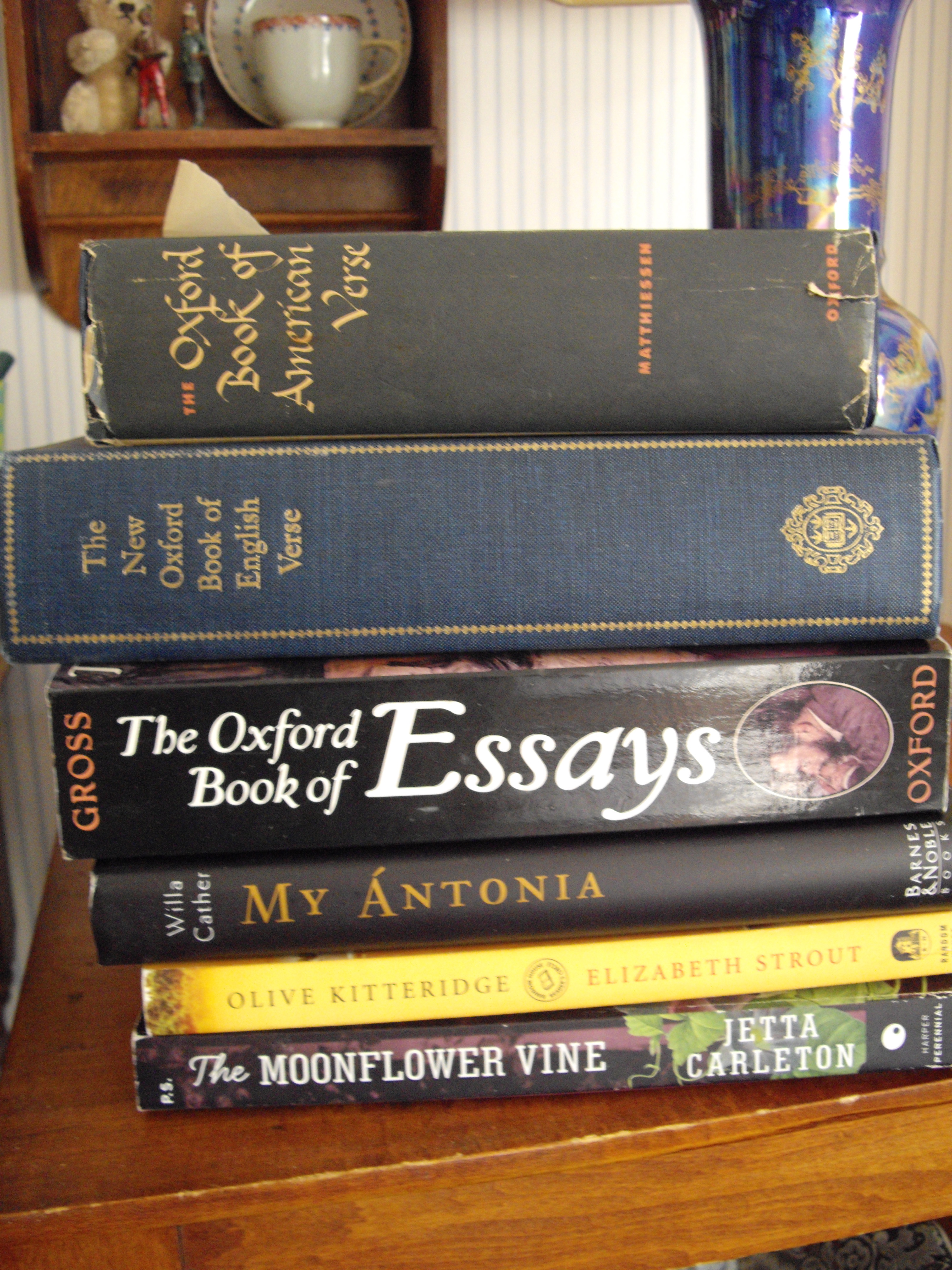
On another note, I went to the book fair at our local Unitarian Church this weekend. It is my experience that Unitarians and “ethical humanists” in general, have the best book sales, and once again I came away with two bulging bags of books. Some of them are duplicates and I will send them off to daughters #1 and #2.

book1

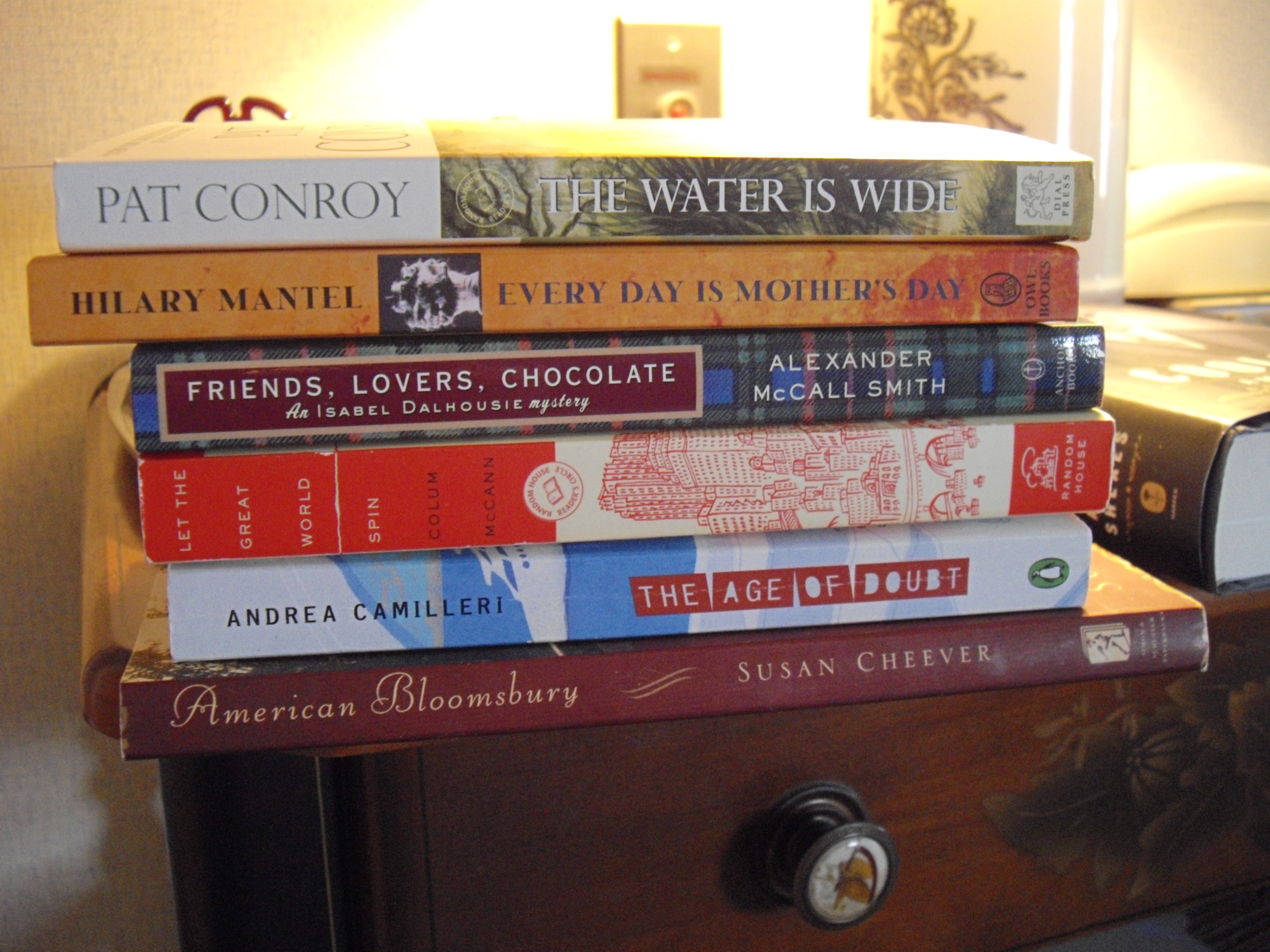
But quite a few I bought for myself. Ah, such a satisfying (and cheap) indulgence!

books2

It is, however, difficult to decide what to read after reading three novels by Willa Cather. I mean how do you follow that? I may have to resort to some mindless fun like this:

elmoreL

In other news, the boy, who is the head coach of the J.V. lacrosse team of one of our local public high schools–one known, let us say, more for its academic prowess than for its sports prowess–led his team to victory (in overtime) in their first game. (And the game was against a R.C. school, known conversely for being a sporting powerhouse.)

lax

Way to go, Hounds! (Greyhounds, that is, not Hounds of Hell–that would be the other team. But now I am mixing up my religious orders. Mea culpa.)

What did you do this weekend?

Generations

by chuckofish

History and tradition are not fashionable in academe at the moment, though thankfully they both remain popular just about everywhere else. In academia the Progressives have the floor and they think the past, like God, is dead. In reply, rather than rant, I refer to G.K. Chesterton, who rightly pointed out the importance of tradition (and by extension, history):

“Tradition means giving votes to the most obscure of all classes, our ancestors. It is the democracy of the dead. Tradition refuses to submit to that arrogant oligarchy who merely happen to be walking around.”

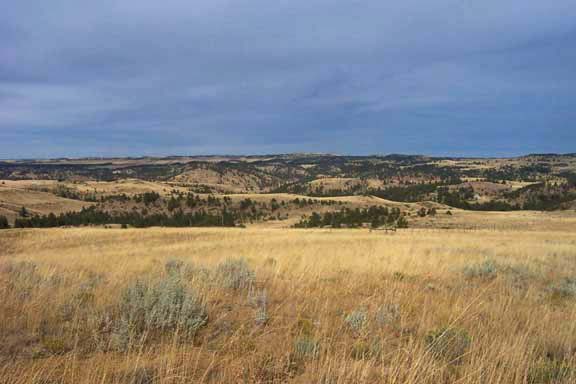
Hear, hear! Learn about your past and find out what the dead have to say — they speak volumes if you listen and use your imagination. Leave the comfort of your armchair (at least mentally), visit their landscapes, which were often harsh and unforgiving.

Site of the Battle of the Rosebud River 1876

Site of the Battle of the Rosebud River 1876

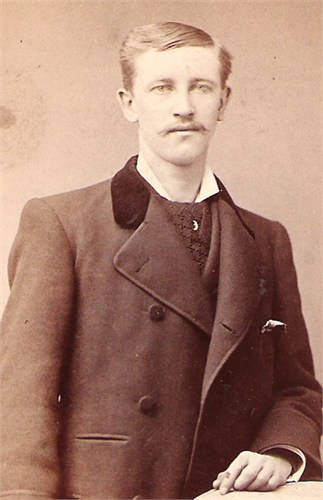
Appreciate the challenges they faced, which were many and cruel, from war to illness, poverty, disappointment, and old age.

Arthur Newell Chamberlin (I) who fought at the Rosebud

Arthur Newell Chamberlin (I) who fought at the Rosebud

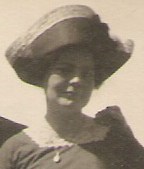
In short, the very things that plague us still.

Caroline Hendren Chamberlin

Caroline Hendren Chamberlin

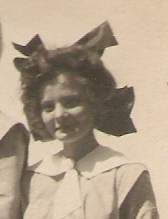
If we gain nothing else from the exercise, at least we acquire perspective on our own transient lives, though I have to admit that I have always found comfort in the past. The dead are never cruel or petty or indifferent. They are whatever we want them to be (like it or not, however much one strives to be accurate and objective, one always sees through the lens of personal experience and the present).

Ethel Chamberlin

Ethel Chamberlin

I like what Annie Dillard wrote:

Ours is a planet sown in beings. Our generations overlap like shingles. We don’t fall in rows like hay, but we fall. Once we get here, we spend forever on the globe, most of it tucked under. While we breathe, we open time like a path in the grass. We open time as a boat’s stem slits the crest of the present.”

I don’t want to sound all heavy-duty doom and gloom, though. Our ancestors had plenty of fun and it is a good idea to remind ourselves to do it, too.

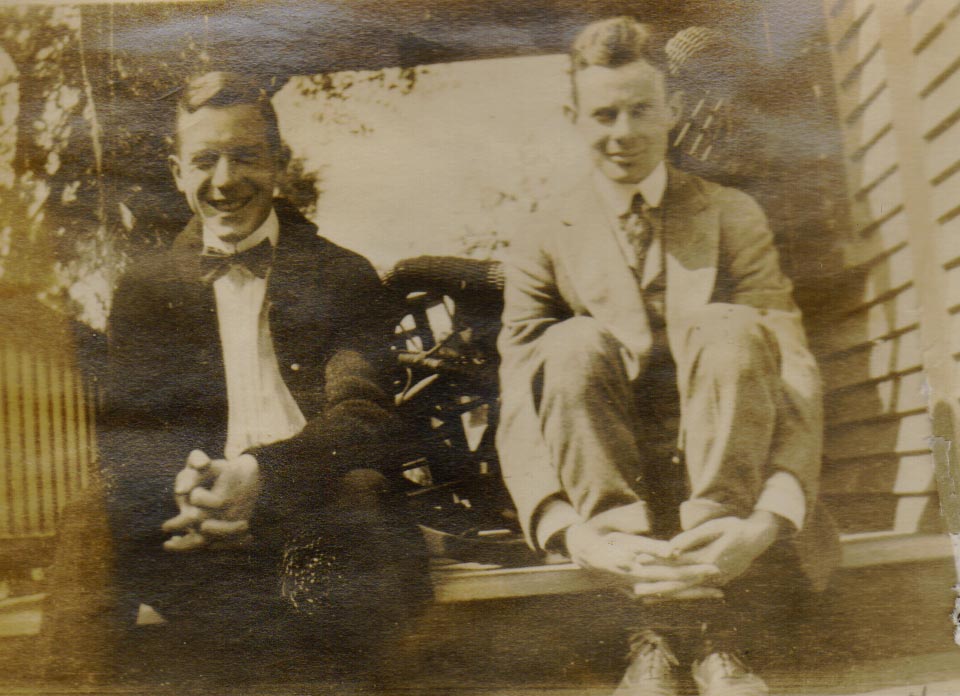
ANC jr and Guy c. 1911

Guy and ANC Jr. c. 1911

Here’s to those who came before us and to everything they did (and managed not to do) so that we could be here now.

The good reader*

by chuckofish

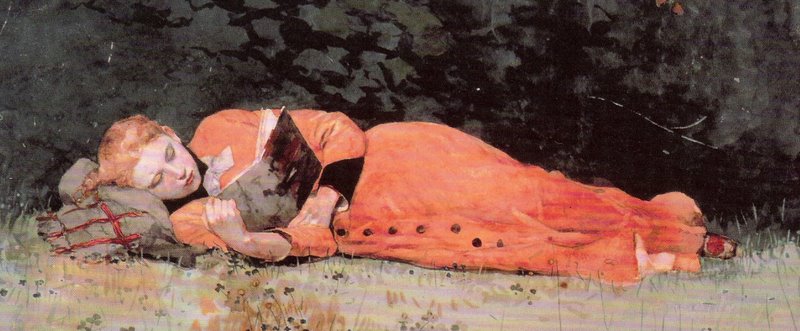
Winslow Homer, "Girl Reading"

Winslow Homer, “Girl Reading”

“The only advice … that one person can give another about reading is to take no advice, to follow your own instincts, to use your own reason, to come to your own conclusions. If this is agreed between us, then I feel at liberty to put forward a few ideas and suggestions because you will not allow them to fetter that independence which is the most important quality that a reader can possess. After all, what laws can be laid down about books? The battle of Waterloo was certainly fought on a certain day; but is Hamlet a better play that Lear? Nobody can say. Each must decide that question for himself. To admit authorities, however heavily furred and gowned, into our libraries and let them tell us how to read, what to read, what value to place upon what we read, is to destroy the spirit of freedom which is the breath of those sanctuaries. Everywhere else we may be bound by laws and conventions — there we have none.”

–Virginia Woolf, How Should One Read a Book? (1925)

*”Tis the good reader that makes the good book; in every book he finds passages which seem confidences or asides hidden from all else and unmistakenly meant for his ear; the profit of books is according to the sensibility of the reader; the profoundest thought or passion sleeps as in a mine, until it is discovered by an equal mind and heart.”
― Ralph Waldo Emerson

A spirit of power and of love and of self-control

by chuckofish

“The earth was warm under me, and warm as I crumbled it through my fingers…I kept as still as I could. Nothing happened. I did not expect anything to happen. I was something that lay under the sun and felt it, like the pumpkins, and I did not want to be anything more. I was entirely happy. Perhaps we feel like that when we die and become a part of something entire, whether it is sun and air, or goodness and knowledge. At any rate, that is happiness; to be dissolved into something complete and great. When it comes to one, it comes as naturally as sleep.”

For weeks now I have been meaning to write something about Willa Cather, but I have been so busy that I have not been able to think about it. I have read The Song of the Lark and My Antonia in quick succession, followed by O Pioneers! They are all three deep goldmines of insight and wonderful writing. I (literally) wept the tears a writer sheds when she reads something better than she can ever write.

Portrait of Willa Cather by Edward Steichen

Portrait of Willa Cather by Edward Steichen

She was born Wilella Sibert Cather in 1873 in the Back Creek Valley near Winchester, Virginia. Her father was Charles Fectigue Cather, whose family had lived on land in the valley for six generations. Her mother was Mary Virginia Boak, a former school teacher. The Cathers moved to Nebraska in 1883, joining Charles’ parents, when Willa was nine years old. Her father tried his hand at farming for eighteen months; then he moved the family into the town of Red Cloud, where he opened a real estate and insurance business, and the children attended school for the first time. Clearly Cather’s time in this frontier state was a deeply formative experience for her.

For now I will just give you a few quotes to give you some idea of the power of her writing and of her strong feelings about things. Reading three books in a row, I have a pretty good idea what was important to her: art, home, the land, childhood, hard work, authenticity. She repeats themes, and characters have similarities that indicate clearly where old Willa was coming from. I have to say, I am with her all the way.

As she says of one character: “Everything she said seemed to come right out of her heart.”

Here she writes about the young main character in The Song of the Lark:

“The clamor about her drowned out the voice within herself. In the end of the wing, separated from the other upstairs sleeping rooms by a long, cold, unfinished lumber room, her mind worked better. She thought things out more clearly. Pleasant plans and ideas occurred to her which had never come before. She had certain thoughts which were like companions, ideas which were like older and wiser friends. She left them there in the morning, when she finished dressing in the cold, and at night, when she came up with her lantern and shut the door after a busy day, she found them awaiting her.”

Many years later, the girl, now a famous opera singer, tries to explain her art in a long, brilliant section. Here’s just a snippet:

“They saved me: the old things, things like the Kohlers’ garden. They were in everything I do…the light, the color, the feeling. Most of all the feeling. It comes in when I’m working on a part, like the smell of a garden coming in at the window. I try all the new things, and then go back to the old. Perhaps my feelings were stronger then. A child’s attitude toward everything is an artist’s attitude. I am more or less of an artist now, but then I was nothing else…”

Here in My Antonia the narrator describes houses in the town:

“They were flimsy shelters, most of them poorly built of light wood, with spindle porch-posts horribly mutilated by the turning-lathe. Yet for all their frailness, how much jealousy and envy and unhappiness some of them managed to contain! The life that went on in them seemed to me made up of evasions and negations; shifts to save cooking, to save washing and cleaning, devices to propitiate the tongue of gossip.”

And here in O Pioneers! a person expresses something important to a friend:

“It’s by understanding me, and the boys, and mother, that you’ve helped me. I expect that is the only way a person ever really can help another. I think you are about the only one that ever helped me.”

Have I convinced you yet? Go now and order this book!
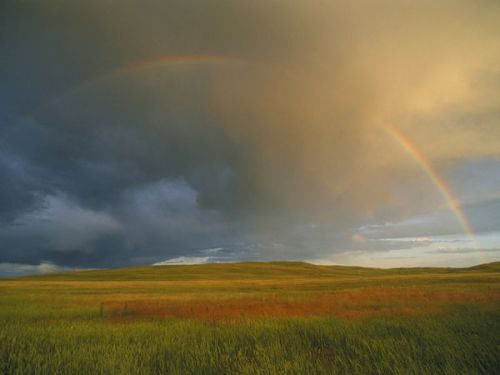
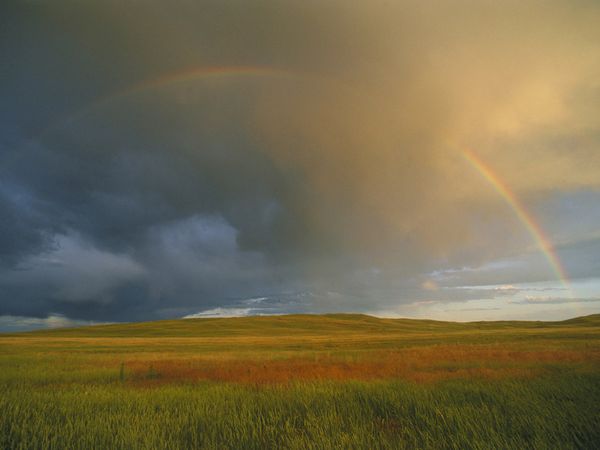
nationalgeographic.com
nationalgeographic.com
Absent Friends

by chuckofish

Last week we mentioned how appalled we were with the Academy Award presentations’s handling of (among so many other things) its “In Memoriam” tribute. They left out so many people!

Here is the TCM annual video, which is much better, and as you can see, includes many worthy people left out of the Oscar version.

However, they also appear to have left out Harry Carey, Jr.

What gives? Was he a Republican? Since he died at the tail end of the year, perhaps they had already finished their review, but is that really an excuse?

He appeared in over 90 films, including several classics directed by John Ford. Shame on you. I hope they remember him next year.

Things and the reason of things

by chuckofish

Whoever you are! motion and reflection are especially for you,
The divine ship sails the divine sea for you.

Whoever you are! you are he or she for whom the earth is solid and liquid,
You are he or she for whom the sun and moon hang in the sky,
For none more than you are the present and the past,
For none more than you is immortality.

Each man to himself and each woman to herself, is the word of the past and present, and the true word of immortality,
No one can acquire for another–not one,
Not one can grow for another–not one.

The song is to the singer, and comes back most to him,
The teaching is to the teacher, and comes back most to him,
The murder is to the murderer, and comes back most to him,
The theft is to the thief, and comes back most to him,
The love is to the lover, and comes back most to him,
The gift is to the giver, and comes back most to him–it cannot fail,
The oration is to the orator, the acting is to the actor and actress not to the audience,
And no man understands any greatness or goodness but his own, or the indication of his own.

–Walt Whitman, A Song of the Rolling Earth

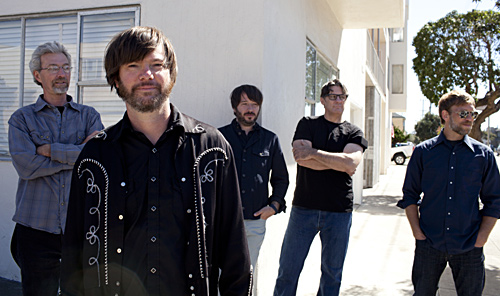
And in other news: my friend Gary’s band Sun Volt was featured in the Wall Street Journal the other day. You can read the article here.

via Wall Street Journal

via Wall Street Journal

Gary is the cool dude on the far left.

Bread of Heaven

by chuckofish

How was your weekend? I went home a little early on Friday and got right in my pajamas and hunkered down, as I had been fighting off some version of this winter’s flu for a few days. I went to bed and didn’t wake up ’til almost 10 o’clock the next morning which is four hours later than usual. I stayed in bed most of the day reading Willa Cather, only rousing myself to talk to loved ones on the phone.

But the next day was Sunday and I was scheduled to be a lay reader, so I got up, endeavored to make myself presentable and went to church. I read the second lesson which turned out to be some excellent fire and brimstone from Saint Paul to the Corinthians warning about sexual immorality etc.: “We must not put Christ to the test, as some of them did, and were destroyed by serpents.” Oh, how I do love him. And I say that without irony.

We also sang “Bread of Heaven”, one of my favorite hymns, which always conjures up images of the Reverend Jones in The Englishman Who Went Up a Hill and Came Down a Mountain

7053-5729

stabbing the tires of the surveyor’s car while muttering the refrain of this hymn. The words, indeed, are all quite evocative:

When I tread the verge of Jordan
Bid my anxious fears subside
Death of death, and hell’s destruction,
Land me safe on Canaan’s side

I left church renewed and with a light heart and feeling that a reward to myself was overdo. So I went to my neighborhood Dunkin’ Donuts:

DD

for a cup of:

cup of jo

and this crispy goodness:

photo

Life is good. But lest we forget: “So if you think you are standing, watch out that you do not fall.” (I Cor. 10:13) Have a great week!

North Country Fellowship

by chuckofish

I’m a little late posting today but I have a good excuse. This morning I had to take the Session records down to Evans Mills, NY to meet with other Presbyterian clerks (and/or assistant clerks) of the Session and get the books approved. This yearly event is surprisingly painless. You exchange books so that no one is reviewing his own and then you sit there and check them against a long list of requirements. That part didn’t take more than an hour, but the drive was an hour each way — hence the delay.

We met at a one-room church in a small village called Evans Mills near Watertown.

Evans Mills

What makes this church particularly intriguing is that it is both the First Presbyterian Church-LeRay and St. Andrew’s Episcopal Church-Evans Mills. Apparently they joined forces back in the early 70s and have been going strong together ever since. As one who was raised Episcopalian but has lately turned Presbyterian I was kind of tickled by the combination. I’d never come across anything like that before.

Though the village was as nondescript and uninspiring as the landscape in the area, which is flat, featureless farmland, I was pleasantly reminded that in all of these places kind, thoughtful people live, work, and worship. They are dedicated to making good things happen for their communities and, yes, all of them are above 45 (most above 55). So let’s hear it for overlooked people everywhere, who are diligently serving the Lord. And cheers to Evans Mills Episcoterian Presbypalians!

Evans mills sign

Okay, as Saturday adventures go, it doesn’t stack up to the city sister’s gallivanting, but it infinitely better than this,

DSC00096

which is how I get to spend the rest of the weekend. What fun things are you up to?

I love you, baby, can I have some more

by chuckofish

I think I’ve mentioned that I listen to CDs in my car. I know. Quelle old-fashioned. I don’t have an iPod. I haven’t downloaded much music to my laptop. Sorry. This old dog can only learn so many new tricks at a time.

So I have been wearing out The Lumineers and need something new. Or something old. I rifled through my box of “burns”–i.e. burned CDs, which my children have made for me over the years.

mwc cd

Daughters #1 and #2 obliged me many, many times, burning mixes of my favorites as well as mixes with songs “I might like”.

susie

The boy made some “themed” classics, especially the famous “Kleenex” mixes which included songs and music guaranteed to make his mother weep. These ranged from selections by Patrick Park to Boyz II Men and lots of other stuff in between.

wrc cd

I know that mixes take a lot of effort. But let it never be said that I do not appreciate that effort. I do. Deeply. Thanks, guys. Now, how about burning me a new mix?