dual personalities

Tag: writers

“Dead men tell no tales, Mary.”*

by chuckofish

“He took her face in his hands and kissed it, and she saw that he was laughing. “When you’re an old maid in mittens down at Helford, you’ll remember that,” he said, “and it will have to last you to the end of your days. ‘He stole horses,’ you’ll say to yourself, ‘and he didn’t care for women; and but for my pride I’d have been with him now.”

― Daphne du Maurier, Jamaica Inn

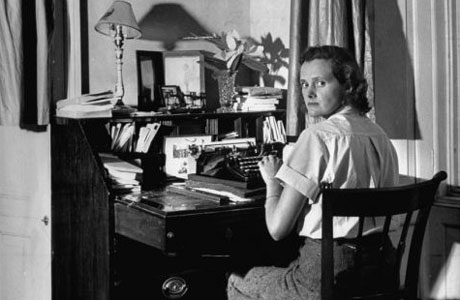
Happy birthday to Dame Daphne du Maurier (13 May 1907 – 19 April 1989)!

dumaurier4602

According to IMDB, “Daphne Du Maurier was one of the most popular English writers of the 20th Century, when middle-brow genre fiction was accorded a higher level of respect in a more broadly literate age. For her services to literature, she was made a Dame Commander of the Order of the British Empire in 1969, the female equivalent of a knighthood.” In other words, they don’t write them like she did anymore.

Yes, it may be time to dust off Jamaica Inn or Frenchman’s Creek. I wish they would do justice to her books on film, but I haven’t seen any that really come close to her prose power. The Birds maybe. I must say, they keep trying. Check out all the versions here.

*Jamaica Inn, of course


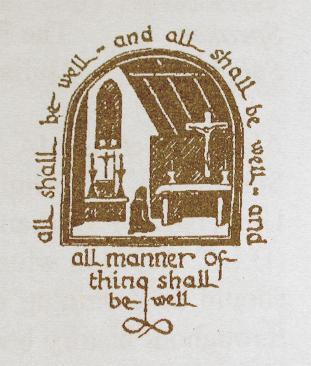
All shall be well

by chuckofish

What could be better than Julian of Norwich and the Moody Blues on Friday?

It was Julian’s day on the Episcopal Calendar yesterday. I am a big fan. She is “venerated” in the Anglican and Lutheran churches, but has never been officially beatified by the R.C. church. Oh, really, you say?

Anyway, she was born in England about 1342 during the time of the Black Death. When she was thirty years old, she became gravely ill and was expected to die. Then, on the seventh day, the medical crisis passed, and she had a series of fifteen visions, or “showings,” in which she was led to contemplate the Passion of Christ. These brought her great peace and joy.

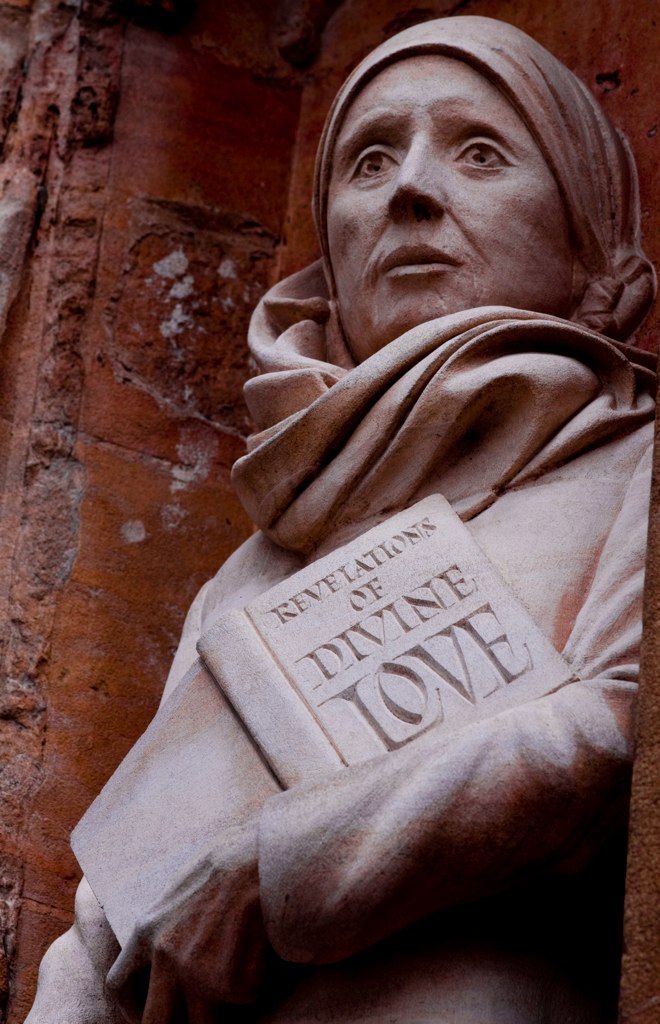
Julian on the west front of Norwich Cathedral

Julian on the west front of Norwich Cathedral

She became an anchoress–a person called to a solitary life, but one that was not cut-off from the world, but one anchored in it. Her life was one of prayer, contemplation and counseling, a life highly thought of by people of the time. Her home was a small room, or cell, attached to the Church of S. Julian, Bishop of Le Mans, just off one of the main streets of Norwich. The results of her meditations she wrote in a book called Revelations of Divine Love.

And from the time that [the vision] was shown, I desired often to know what our Lord’s meaning was. And fifteen years and more afterward I was answered in my spiritual understanding, thus: ‘Would you know your Lord’s meaning in this thing? Know it well, love was his meaning. Who showed it to you? Love. What did he show you? Love. Why did he show it? For love. Keep yourself therein and you shall know and understand more in the same. But you shall never know nor understand any other thing, forever.’

Thus I was taught that love was our Lord’s meaning. And I saw quite clearly in this and in all, that before God made us, he loved us, which love was never slaked nor ever shall be. And in this love he has done all his work, and in this love he has made all things profitable to us. And in this love our life is everlasting. In our creation we had a beginning. But the love wherein he made us was in him with no beginning. And all this shall be seen in God without end …

Immagine

I have read her wonderful meditations and let’s just say there was a whole lot of hi-lighting going on.

I have a busy weekend planned. How about you?

A hill of beans

by chuckofish

I used to visit and revisit it a dozen times a day, and stand in deep contemplation over my vegetable progeny with a love that nobody could share or conceive of who had never taken part in the process of creation. It was one of the most bewitching sights in the world to observe a hill of beans thrusting aside the soil, or a row of early peas just peeping forth sufficiently to trace a line of delicate green.

–Henry David Thoreau

Well, I know just what old Thoreau is talking about. Do you?

I go out to see if my pumpkin plants are still where I planted them every morning and then again when I come home from work.

pumpkins

The OM says, ironically, “Are they still there?” But I am worried about them! My past experience teaches me that their chances are not particularly good. Pesky garden varmints enjoy digging around in this bed, but so far so good.

I love this time of year though, don’t you?

azaleas

When the plants are just starting to come up and the weeds and violets and creeping vines have not taken over.

peony buds

peony buds

The first rose bud

The first rose bud

When insect life is minimal. When it is still cool enough to enjoy my time in the yard. I admit I lose interest quickly when our flyover temperatures soar. I am a fair-weather gardener.

But you know how my mind works. Thoreau’s quote got me thinking about “a hill of beans” and how that expression became a synonym for something of negligible importance or value. I wonder how that came to be the case? Anyway, this made me think of that famous scene at the end of Casablanca, when Rick says to Ilsa: “I’m no good at being noble, but it doesn’t take much to see that the problems of three little people don’t amount to a hill of beans in this crazy world. Someday you’ll understand that…”

BERGMAN BOGART

Yeats, you recall, wanted “Nine bean-rows” and “a hive for the honey-bee” in his Innisfree home.

Hmmm. If my pumpkins amount to even a hill of beans this year, maybe next year I’ll plant some beans.

Happy birthday, Maud Hart Lovelace

by chuckofish

Maud Hart Lovelace (April 25, 1892—March 11, 1980) was an American author best known for the 10-book Betsy-Tacy series.

Maud_Hart_Lovelace

Maud Palmer Hart was born in Mankato, Minnesota. She was the middle child; her sisters were Kathleen (Julia in the Betsy-Tacy books) and Helen (book character, Margaret). Maud reportedly started writing as soon as she could hold a pencil.

Shortly before Maud’s fifth birthday a “large merry Irish family” moved into the house directly across the street. Among its many children was a girl Maud’s age, Frances, nicknamed Bick, who was to be Maud’s best friend and the model for Tacy Kelly.

Baptized in a Baptist church, she joined the Episcopal church as a teenager. She went on to the University of Minnesota but took a leave of absence to go to California to recover from an appendectomy at her maternal grandmother’s home. It was while in California that she made her first short story sale. She returned to the university and worked for the Minnesota Daily, but did not graduate.

While spending a year in Europe in 1914, she met Paolo Conte, an Italian musician (who later inspired the character Marco in Betsy and the Great World). She married Delos Lovelace when she was twenty-five years old. Delos and Maud met in April 1917 and were married on Thanksgiving Day the same year.

Lovelace began the Betsy-Tacy series in 1938, having told stories about her childhood to her own daughter Merian. The first book in the series, Betsy-Tacy, was published in 1940, and the last book, Betsy’s Wedding, was published in 1955. The first four books increase in reading difficulty so that a child can grow up along with Betsy-Tacy. The Betsy-Tacy books take place mostly in the fictional town of Deep Valley, Minnesota, which is based on Mankato.

Lenski-Hill-Street-map-from-B-T-books-cropped

You can read more about her here.

Daughters #1 and #2 were (and are) both big fans of the Betsy-Tacy books. They read and re-read them when they were growing up. Occasionally they pick one up even now.

PT-AM666_BETSY_F_20091002160412

Betsy and Tacy were the original BFFs.

Pleasant-Grovelibrary

“She thought of the library, so shining white and new; the rows and rows of unread books; the bliss of unhurried sojourns there and of going out to a restaurant, alone, to eat.”

― Maud Hart Lovelace, Betsy and Tacy Go Downtown

The man in the arena

by chuckofish

0-theodore-roosevelt

On this day in 1910, former President Theodore Roosevelt made a speech on the subject of “Citizenship in a Republic”  at the Sorbonne in Paris. One notable passage on page seven of the 35-page speech is referred to as “The Man in the Arena.”

It is not the critic who counts; not the man who points out how the strong man stumbles, or where the doer of deeds could have done them better. The credit belongs to the man who is actually in the arena, whose face is marred by dust and sweat and blood; who strives valiantly; who errs, who comes short again and again, because there is no effort without error and shortcoming; but who does actually strive to do the deeds; who knows great enthusiasms, the great devotions; who spends himself in a worthy cause; who at the best knows in the end the triumph of high achievement, and who at the worst, if he fails, at least fails while daring greatly, so that his place shall never be with those cold and timid souls who neither know victory nor defeat.

These are good words to remember from our most active and hard-working president!

theodore-roosevelt-horse

So did you take my advice and watch Stagecoach last night? I was feeling a little  very down in the dumps because daughter #1 had returned to NYC that morning, so I knew it would be just the ticket to put me back on track. And it was.

It’s amazing how a little bit of sagebrush drama,

Annex - Wayne, John (Stagecoach)_04

exquisitely told by the master of the genre,

stagecoach_2011_a_l

with a generous dose of this guy

012-john-wayne

in the part that blew open his career can do that. It is such a great movie with such finely drawn characters.

And have I mentioned that the OM gave me this for my birthday?

front

Yes, #22…

back

Life is good, right?

sports_mike_matheny_st.louis_cardinals_dugout

Okay so I like the strong silent type. I get it. The man in the arena.

Same old story

by chuckofish

Jim Trainor on Easter…

“I believe the story. With my head, looking at the evidence and thinking logically as a person who was a research physicist for twenty-five years, I believe it. And after listening to the testimony of people – from beggars to kings — through all the ages who had concluded that the story is true, I believe it. And at the innermost levels of my heart, where the deepest truths reside but are not easily put into words, I believe it is true.

“And that is why I know that I will see my mother again someday. It’s not just wishful thinking, some little tale I’ve fooled myself with because I can’t face the cold hard facts of life. Yes, I will see Della Mae, and I am convinced that it will be a day of great victory and joy. St. Paul says that it will be like putting on a crown, and St. John says that it will be a time when every tear will be wiped away from my eyes. That’s what will happen someday to me. But what Jesus did affects me right here today also — I know that this Jesus who overcame death and the grave has promised not to leave me here twisting in the wind. He is with me every day, through his Spirit, to guide me, comfort me, embolden me, and use me for his glory and to serve his people, right here, right now.”

Read it all.

Re-blogged from TitusOne Nine, the weblog of the Rev. Canon Dr. Kendall Harmon

Everything was blazing

by chuckofish

Bob_Dylan_-_The_Freewheelin_Bob_Dylan

…Everything was blazing, everything was sweet. They were playing old Bob Dylan, more than perfect for narrow Village streets close to Christmas and the snow whirling down in big feathery flakes, the kind of winter where you want to be walking down a city street with your arm around a girl like on the old record cover–because Pippa was exactly that girl, not the prettiest, but the no-makeup and kind of ordinary-looking girl he’d chosen to be happy with, and in fact that picture was an ideal of happiness in its way, the hike of his shoulders and the slightly embarrassed quality of her smile, that open-ended look like they might just wander off anywhere they wanted together, and–there she was! her! and she was talking to herself, affectionate and old-shoe, asking me about Hobie and the shop and my spirits and what I was reading and what I was listening to, lots and lots of questions…

–Donna Tartt, The Goldfinch

Okay, I have finally finished this magnum opus and I have to say I liked it. I think it is overly long and could have used some tightening up. At times I wanted to tell ol’ Boris to shut the hell up, but, you know, he was a talker.  I have heard some blog-grumbling about the end of the novel. Personally–spoiler alert–I was relieved to have it work out the way it did. And I think the last twenty pages were worth waiting for.

RV-AA329_MASTER_DV_20101012215103

I guess they are making a movie. I’m sure it will be awful. Sigh.


Being oneself

by chuckofish

Prairie Thunderhead by J. Douglas Thompson

Prairie Thunderhead by J. Douglas Thompson

“To be silent; to be alone. All the being and the doing, expansive, glittering, vocal, evaporated; and one shrunk, with a sense of solemnity, to being oneself, a wedge-shaped core of darkness, something invisible to others.” 

― Virginia Woolf, To the Lighthouse

Happy birthday, Lew Wallace

by chuckofish

Lewis_Wallace

Lewis Wallace (April 10, 1827 – February 15, 1905) was an American lawyer, Union General in the Civil War, territorial governor and statesman, politician, and author. Wallace served as governor of the New Mexico Territory at the time of the Lincoln County War. He put the squeeze on Billy the Kid! 

son of indiana

To me, he is a fine example of the classic American male: soldier, statesman, spiritual guy, and author of a best-selling novel! And he was from Indiana. And he wrote this:

“Men speak of dreaming as if it were a phenomenon of night and sleep. They should know better. All results achieved by us are self-promised, and all self-promises are made in dreams awake. Dreaming is the relief of labor,the wine that sustains us in act. We learn to love labor, not for itself, but for the opportunity it furnishes for dreaming, which is the great under-monotone of real life, unheard, unnoticed, because of its constancy. Living is dreaming. Only in the graves are there no dreams.” 

Wallace started writing after the war, and while serving as governor, he completed his second novel. This one made him famous–Ben-Hur: A Tale of the Christ (1880). It became the best-selling American novel of the 19th century, surpassing Harriet Beecher Stowe’s Uncle Tom’s Cabin. The book has never been out of print and has been adapted for film four times. 

In his autobiography he recounted a life-changing journey and conversation in 1875 with Colonel Robert G. Ingersoll, whom he met on a train. During the journey Ingersoll, a well-known agnostic, quizzed Wallace about the history and ideas of Christ. Wallace realized during the conversation how little he knew about Christianity. He wrote, “I was ashamed of myself, and make haste now to declare that the mortification of pride I then endured…ended in a resolution to study the whole matter.” Writing about Christianity helped him become clear about his own ideas and beliefs. Wallace developed the novel Ben-Hur from his studies. The historian Victor Davis Hanson has argued that the novel drew from Wallace’s life, particularly his experiences at Shiloh, and the damage it did to his reputation. The book’s main character, Judah Ben-Hur, accidentally causes injury to a high-ranking commander, for which he and his family suffer tribulations and calumny. He first seeks revenge and then redemption. (Wallace may have felt bitterly toward U.S. Grant, but I hardly think he modeled the character of Messala after him.) Well, Wallace may have worked through a few personal issues, but writing can do that.

After Wallace retired home to Indiana, he built himself a wonderful writing study. (I want one too!)

WallaceStudy

His home in Crawfordsville, Indiana is on my bucket list of places I want to visit. I have been to Crawfordsville  (known as the “Athens of Indiana”) and to Wabash College, but I have not been to his home (yet).

Wallace also liked to write under his favorite tree, known fondly as “the Ben-Hur Beech”.

Lew-writing-under-the-Ben-Hur-Beech

I am with you, Lew!

“I know what I should love to do – to build a study; to write, and to think of nothing else. I want to bury myself in a den of books. I want to saturate myself with the elements of which they are made, and breathe their atmosphere until I am of it. Not a bookworm, being which is to give off no utterances; but a man in the world of writing – one with a pen that shall stop men to listen to it, whether they wish to or not.” 
― Lew Wallace

By the way, it is that time of year again–almost time to watch the 1959 version of Ben-Hur! I can’t wait!  But I will wait for daughter #1 to come home and watch it with me Easter weekend!

What are you reading?

by chuckofish

girl-reading-758651

This past weekend I went to several really good estate sales. One was at the home of a woman who had gone to my school, graduating 20 years earlier. Clearly it was a home she had moved to after either getting a divorce or being widowed. You can always tell when this is the case, because the woman has painted the inside of the house pink and redone the closets to suit herself. She has said, in effect, finally I’m going to have things the way I like.

She had obviously been an avid needlepointer. I bought a couple of unfinished kits and two books.

One is a vintage copy of Mary Martin’s Needlepoint (1969)–a delightful look into the hobby and home of the famous Broadway star.

MMbook

You remember Mary Martin–she starred on Broadway in the original productions of Annie Get Your Gun,  South Pacific, The Sound of Music and a host of other shows.

Mary_Martin_-_still

She took up needlepointing as a way to pass the time waiting in the wings offstage and on sets. She started BIG…with a rug!

Mary posing on "the rug" with other projects

Mary posing on “the rug” with other projects

“The Rug is known by a variety of names. It was the innocent, impulsive beginning—all five and a half by seven and a half feet of it!—of my doing needlepoint.”  She designed it herself, incorporating symbols that represented important aspects of her life. It took a few years, but she kept going. Impressive. Also impressive is the fact that she designed all her own work. No  kits for her! Her stitching is all very personal and heart-felt.

Through the years several of her friends found and bought antique samplers from the 18th and 19th centuries for her that included the name “Mary Martin” on them. Nice friends! Eventually she designed her own sampler incorporating motifs from shows that meant the most to her.

Mary's theater sampler

Mary’s theatre sampler

Mary Martin made pillows, purses, pictures, upholstered furniture, and more throughout her storied life. For needlepointers or theater-lovers, this is a fun book.

Meanwhile I continue to work my way through The Goldfinch by Donna Tartt. I am determined to finish this rather Dickensian opus, but I do think it is overly long. The author writes very well; we’ll see.

I must say that I believe I would get along famously with the author, who is considered one of the most reclusive contemporary authors around. Moreover, she’s indifferent to technology, avoids social media and does most of her writing by hand in notebooks. According to one of the very few articles I could find about her (in Business Day), “when her novels are released, she grants few interviews in which she reveals very little about herself. She’s known to become prickly when journalists dare suggest certain characters in her books are based on people she knows. Her private life is just that, private.”

What are you reading?