dual personalities

Tag: writers

Darlin’, pardon me

by chuckofish

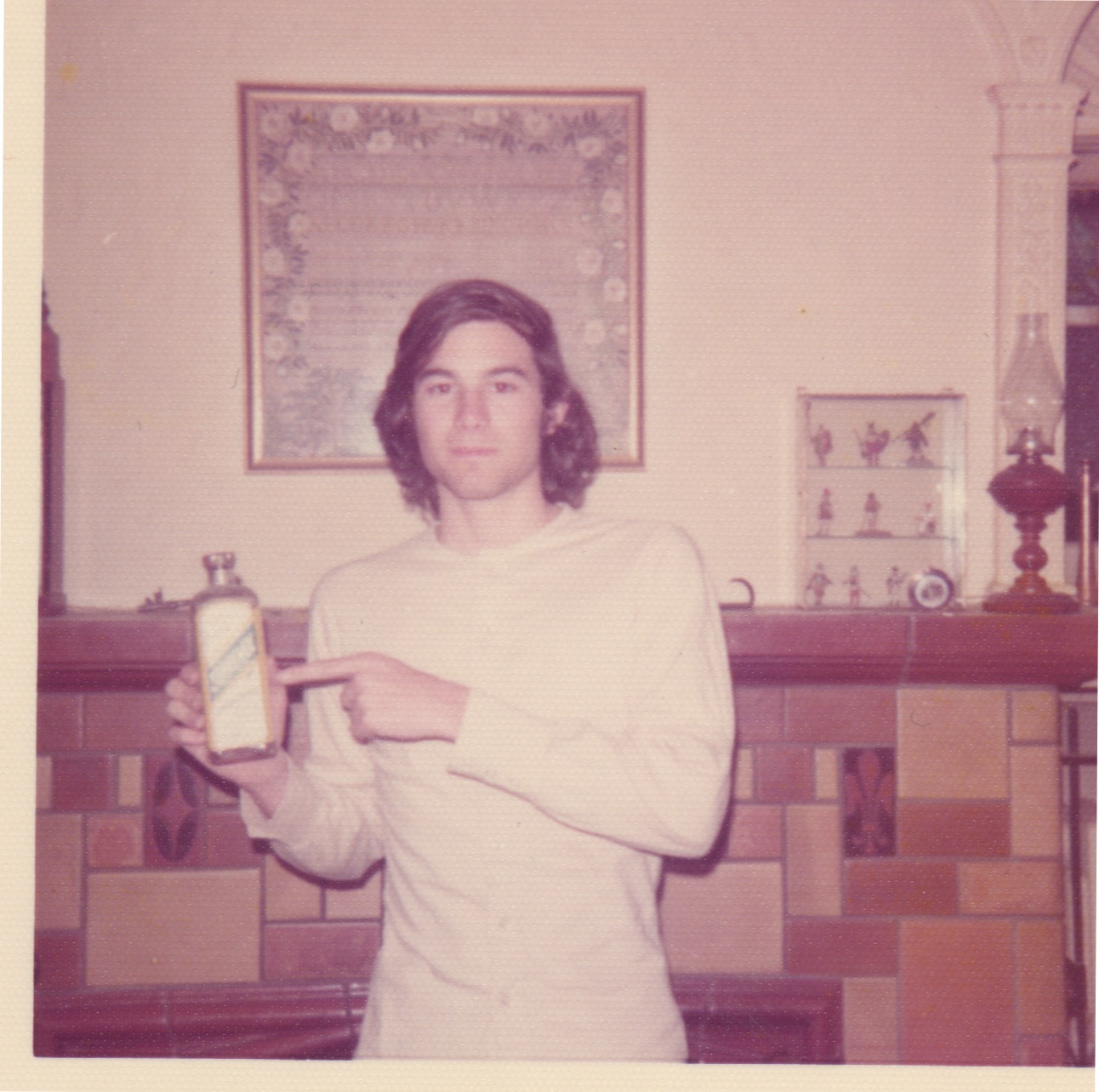
…but do I look familiar?

chris 1

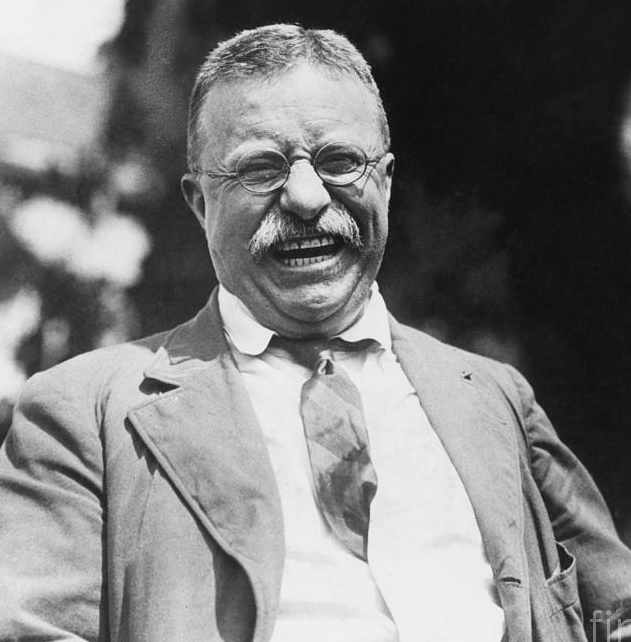
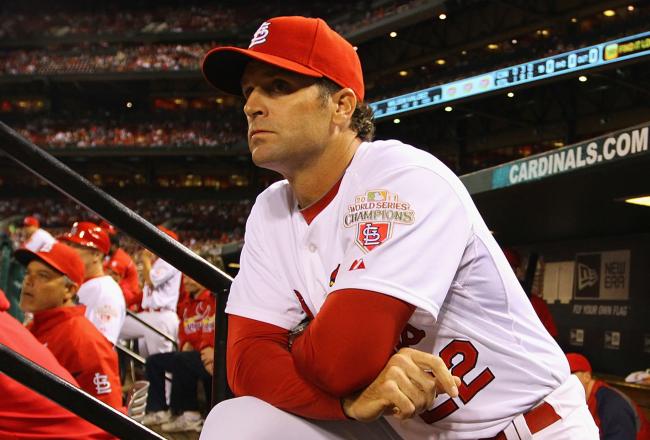
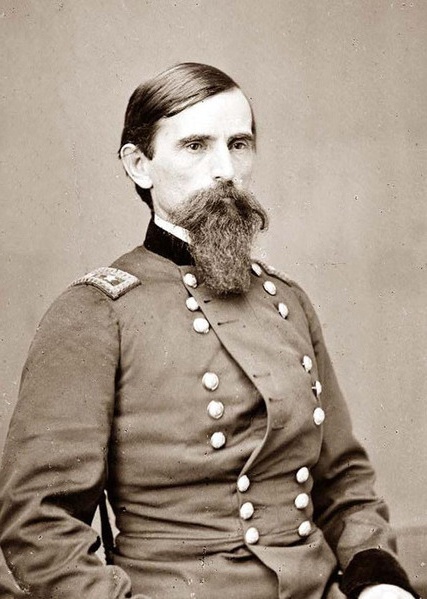
I recently found this photo of my big bro in his glory days. I am including it in today’s post for no particular reason except to say tempus fugit.

Here’s some food for thought from ol’ Fred B.

It is a moment of light surrounded on all sides by darkness and oblivion. In the entire history of the universe, let alone in your own history, there has never been another just like it and there will never be another just like it again. It is the point to which all your yesterdays have been leading since the hour of your birth. It is the point from which all your tomorrows will proceed until the hour of your death. If you were aware of how precious it is, you could hardly live through it. Unless you are aware of how precious it is, you can hardly be said to be living at all.

“This is the day which the Lord has made,” says the 118th Psalm. “Let us rejoice and be glad in it.” Or weep and be sad in it for that matter. The point is to see it for what it is because it will be gone before yo know it. If you waste it, it is your life that you’re wasting. If you look the other way, it may be the moment you’ve been waiting for always that you’re missing.

All other days have either disappeared into darkness and oblivion or not yet emerged from them. Today is the only day there is.

–Frederick Buechner, Whistling in the Dark

For whom the bell tolls

by chuckofish

donne01

Yesterday the poet and Anglican priest John Donne (1572 – 31 March 1631) was commemorated on the Episcopal calendar. He is one of England’s finest poets and was one of the best-known preachers of his day.

When all is done, the hell of hells, the torment of torments, is the everlasting absence of God, and the everlasting impossibility of returning to his presence…to fall out of the hands of the living God, is a horror beyond our expression, beyond our imagination…. What Tophet is not Paradise, what Brimstone is not Amber, what gnashing is not a comfort, what gnawing of the worme is not a tickling, what torment is not a marriage bed to this damnation, to be secluded eternally, eternally, eternally from the sight of God?

–From a sermon to the Earl of Carlisle in 1622

He is known equally for his love poetry:

Come live with me, and be my love,
And we will some new pleasures prove
Of golden sands, and crystal brooks,
With silken lines, and silver hooks.

and his metaphysical verse:

No man is an island,
Entire of itself,
Every man is a piece of the continent,
A part of the main.
If a clod be washed away by the sea,
Europe is the less.
As well as if a promontory were.
As well as if a manor of thy friend’s
Or of thine own were:
Any man’s death diminishes me,
Because I am involved in mankind,
And therefore never send to know for whom the bell tolls;
It tolls for thee.

I suggest you take some time today and read some John Donne. You’ll be glad you did.

“I am two fools, I know,
For loving, and for saying so
In whining poetry;
But where’s that wiseman, that would not be I,
If she would not deny?
Then as th’ earth’s inward narrow crooked lanes
Do purge sea water’s fretful salt away,
I thought, if I could draw my pains
Through rhyme’s vexation, I should them allay.
Grief brought to numbers cannot be so fierce,
For he tames it, that fetters it in verse.

But when I have done so,
Some man, his art and voice to show,
Doth set and sing my pain;
And, by delighting many, frees again
Grief, which verse did restrain.
To love and grief tribute of verse belongs,
But not of such as pleases when ’tis read.
Both are increased by such songs,
For both their triumphs so are published,
And I, which was two fools, do so grow three;
Who are a little wise, the best fools be.”

― John Donne

Almighty God, the root and fountain of all being: Open our eyes to see, with thy servant John Donne, that whatsoever hath any being is a mirror in which we may behold thee; through Jesus Christ our Lord, who liveth and reigneth with thee and the Holy Spirit, one God, for ever and ever. Amen.

The weekend approacheth

by chuckofish

Well, this time last week I was going out to dinner with cute boys and hanging out with daughter #2. This week it has been back to the salt mines for me as usual. Work, work, work.

One bright spot was going to my first lacrosse game of the season.

WRC Hounds Pioneers 2 20130326

The boy’s Varsity Hounds creamed his old high school team 15-3.

IMG_2069

It was kind of weird sitting in the KHS football stadium cheering for the “visitors”. It was also quite cold! Once it started to get dark, I had to bail and go home even with my winter coat and a Bean’s wool blanket to sit on.

At home I am keeping my spirits up with these pretty flowers–and, yes, the Christmas Cactus is blooming again.

photo

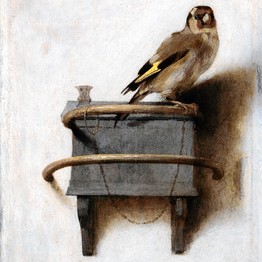
On the reading front, having finished Peter Carey’s wonderful Olivier and Parrot, I started reading The Goldfinch by Donna Tartt and I am hooked. The book, which took more than 10 years to write, is narrated by Theo Decker, a 13-year-old New York boy whose world is violently disrupted during a routine visit to the Metropolitan Museum of Art with his mother. A terrorist bomb explodes, killing Theo’s mother and other innocents, including a man who, just before dying, implores Theo to take “The Goldfinch” out of the smoking wreckage of the museum. I have not read Tartt’s other two books, but I am impressed. We’ll see if she holds me for 700 pages. I plan to find out this weekend.

Have a great weekend!

People talk

by chuckofish

swinging

“You must know that there is nothing higher and stronger and more wholesome and good for life in the future than some good memory, especially a memory of childhood, of home. People talk to you a great deal about your education, but some good, sacred memory, preserved from childhood, is perhaps the best education.”

― Fyodor Dostoyevsky, The Brothers Karamazov

For this people’s heart has grown dull*

by chuckofish

God-rays on Lake Champlain

God-rays on Lake Champlain

Do you ever read the blog Humans of New York? Sometimes he asks the question: “If you could give one piece of advice to a large group of people, what would it be?”

This is a difficult question to answer on the spur-of-the-moment. I would say: read this poem by e.e. cummings and remember it.

i thank You God for most this amazing
day:for the leaping greenly spirits of trees
and a blue true dream of sky; and for everything
which is natural which is infinite which is yes

(i who have died am alive again today,
and this is the sun’s birthday; this is the birth
day of life and of love and wings: and of the gay
great happening illimitably earth)

how should tasting touching hearing seeing
breathing any–lifted from the no
of all nothing–human merely being
doubt unimaginable You?

(now the ears of my ears awake and
now the eyes of my eyes are opened)

e.e. cummings
1894-1962

*For this people’s heart has grown dull,
and with their ears they can barely hear,
and their eyes they have closed,
lest they should see with their eyes
and hear with their ears
–Matthew 13:15–17 (English Standard Version)

True that

by chuckofish

wrc flowers

“I would far rather have two or three lilies of the valley gathered for me by a person I like, than the most expensive bouquet that could be bought!”

― Elizabeth Gaskell, Wives and Daughters

“All great and precious things are lonely.”*

by chuckofish

East of Sweden … John Steinbeck's Of Mice and Men faced isolated calls for censorship in Turkey.

John Steinbeck, author, Nobel Prize winner and Episcopalian, was born on this day in 1902 in Salinas, California.

  A writer out of loneliness is trying to communicate like a distant star sending signals. He isn’t telling or teaching or ordering. Rather he seeks to establish a relationship of meaning, of feeling, of observing. We are lonesome animals. We spend all life trying to be less lonesome. One of our ancient methods is to tell a story begging the listener to say—and to feel—

“Yes, that’s the way it is, or at least that’s the way I feel it. You’re not as alone as you thought.”

So tonight I will lift my glass of wine in a toast to the memory of the great Steinbeck! Why don’t you join me?

*East of Eden

Food for thought: fear not

by chuckofish

St. George window in the Princeton United Methodist Church by Tiffany Studio of New York City

St. George window in the Princeton United Methodist Church by Tiffany Studio of New York City

“How should we be able to forget those ancient myths that are at the beginning of all peoples, the myths about dragons that at the last moment turn into princesses; perhaps all the dragons of our lives are princesses who are only waiting to see us once beautiful and brave. Perhaps everything terrible is in its deepest being something helpless that wants help from us.

So you must not be frightened if a sadness rises up before you larger than any you have ever seen; if a restiveness, like light and cloud shadows, passes over your hands and over all you do. You must think that something is happening with you, that life has not forgotten you, that it holds you in its hand; it will not let you fall. Why do you want to shut out of your life any uneasiness, any miseries, or any depressions? For after all, you do not know what work these conditions are doing inside you.”

― Rainer Maria Rilke, Letters to a Young Poet

Alexander fighting dragons, Le livre et la vraye hystoire du bon roy Alixandre, Paris, c. 1420–25

Alexander fighting dragons, Le livre et la vraye hystoire du bon roy Alixandre, Paris, c. 1420–25

Kunisada dragon

Kunisada dragon

Arthur Rackham

Arthur Rackham

'St. George and the Dragon', by Wassily Kandinsky, 1911

‘St. George and the Dragon’, by Wassily Kandinsky, 1911

 'The Great Red Dragon and the Woman Clothed in Sun', by William Blake


‘The Great Red Dragon and the Woman Clothed in Sun’, by William Blake

The Reluctant Dragon by Maxfield Parrish

The Reluctant Dragon by Maxfield Parrish

“To be, or not to be; that is the bare bodkin”

by chuckofish

On this day in 1885 The Adventures of Huckleberry Finn was first published in the United States. What a book! It is still controversial, lo, these many years later.

An illustration by Thomas Hart Benton

An illustration by Thomas Hart Benton

We will not go into all that today. I will let ol’ Huck speak for himself in this, one of the greatest scenes in literature:

“It made me shiver. And I about made up my mind to pray, and see if I couldn’t try to quit being the kind of a boy I was and be better. So I kneeled down. But the words wouldn’t come. Why wouldn’t they? It warn’t no use to try and hide it from Him. Nor from ME, neither. I knowed very well why they wouldn’t come. It was because my heart warn’t right; it was because I warn’t square; it was because I was playing double. I was letting ON to give up sin, but away inside of me I was holding on to the biggest one of all. I was trying to make my mouth SAY I would do the right thing and the clean thing, and go and write to that nigger’s owner and tell where he was; but deep down in me I knowed it was a lie, and He knowed it. You can’t pray a lie–I found that out.

So I was full of trouble, full as I could be; and didn’t know what to do. At last I had an idea; and I says, I’ll go and write the letter–and then see if I can pray. Why, it was astonishing, the way I felt as light as a feather right straight off, and my troubles all gone. So I got a piece of paper and a pencil, all glad and excited, and set down and wrote:

Miss Watson, your runaway nigger Jim is down here two mile below Pikesville, and Mr. Phelps has got him and he will give him up for the reward if you send.

HUCK FINN.

I felt good and all washed clean of sin for the first time I had ever felt so in my life, and I knowed I could pray now. But I didn’t do it straight off, but laid the paper down and set there thinking–thinking how good it was all this happened so, and how near I come to being lost and going to hell. And went on thinking. And got to thinking over our trip down the river; and I see Jim before me all the time: in the day and in the night-time, sometimes moonlight, sometimes storms, and we a-floating along, talking and singing and laughing. But somehow I couldn’t seem to strike no places to harden me against him, but only the other kind. I’d see him standing my watch on top of his’n, ‘stead of calling me, so I could go on sleeping; and see him how glad he was when I come back out of the fog; and when I come to him again in the swamp, up there where the feud was; and such-like times; and would always call me honey, and pet me and do everything he could think of for me, and how good he always was; and at last I struck the time I saved him by telling the men we had small-pox aboard, and he was so grateful, and said I was the best friend old Jim ever had in the world, and the ONLY one he’s got now; and then I happened to look around and see that paper.

It was a close place. I took it up, and held it in my hand. I was a-trembling, because I’d got to decide, forever, betwixt two things, and I knowed it. I studied a minute, sort of holding my breath, and then says to myself:

“All right, then, I’ll GO to hell”–and tore it up.”

–Mark Twain, The Adventures of Huckleberry Finn 

What are you reading?

by chuckofish

Girl-reading-758651

I have been reading Oscar and Lucinda by the Australian Peter Carey, winner of the Booker Prize in 1988. It tells the story of Oscar Hopkins, an Anglican priest, and Lucinda Leplastrier, a young Australian heiress who buys a glass factory. They meet on a ship going to Australia and discover that they are both gamblers, one obsessive the other compulsive. Lucinda bets Oscar that he cannot transport a glass church from Sydney to a remote settlement.

oscar and L

I have been reading it slowly, appreciatively, with care. Because it is SO good.

The writing is excellent. The characters are wonderful. Oh my. All of the characters, even the most minor, are drawn with fine, detailed strokes. I care so much for the two main characters, Oscar and Lucinda.

“Our whole faith is a wager, Miss Leplastrier. We bet–it is all in Pascal and very wise it is too…we bet that there is a God. We bet our life on it. We calculate the odds, the return, that we shall sit with the saints in paradise. Our anxiety about our bet will wake us before dawn in a cold sweat. We are out of bed and on our knees, even in the midst of winter. And God sees us, and sees us suffer. And how can this God, a God who sees us at prayer beside our bed…I cannot see,” he said, “that such a God, whose fundamental requirement of us is that we gamble our mortal souls, every second of our temporal existence…It is true! We must gamble every instant of our allotted span. We must stake everything on the unprovable fact of His existence.”

…”That such a God,” said Oscar, “knowing the anguish and the trembling hope with which we wager…That such a God can look unkindly on a chap wagering a few quid on the likelihood of a dumb animal crossing the line first, unless…unless–and no one has ever suggested such a thing to me–it might be considered blasphemy to apply to common pleasure that which is by its very nature divine.”

Religion in the novel is not absurd. There is a pattern in everything.

The book is composed of 111 short, titled chapters (like in Moby-Dick), each a self-contained episode, each one a testimony to luck.

I find myself constantly scribbling in the margins–I read with a pencil at hand–and underlining passages. I have not been so excited since I discovered Willa Cather last year!

She had judged him too hastily. This was a bad habit. It had caused her trouble before. She had compared him to Dennis Hasset and had pursed her lips when he picked up his tea-cup a certain way, or placed the pot back on the table a little too heavily. She had felt slighted when he had scurried back into his room and shut the door on her. And yet–how quickly it happened–she had come to be proud of the propriety with which they now shared a house, the sense of measured discipline (a virtue she much admired) that they brought to their conduct so that there was great closeness, the closeness of intimates, but also a considerable distance, the distance not of strangers, but of neighbors. They occupied a position well above the Philistines who snubbed and slighted them. God, who saw all things, would not find their conduct unbecoming.

My oldest friend, who has similar taste in literature, has suggested I read The Siege of Krishnapur by J.G. Farrell, which won the Booker Prize in 1973.

seige

She is trying to read Booker prize-winners she has missed over the years, which is a great idea, and one I may embrace.

Another friend handed me a copy of Barbara Kingsolver’s new book Flight Behavior.

flight

Since I have it in my hot little hand, it will probably be next on my list, although BK tends to be too political for me. I’ll give it a try.

What are you reading?