dual personalities

“I don’t know what I would do without her.”*

by chuckofish
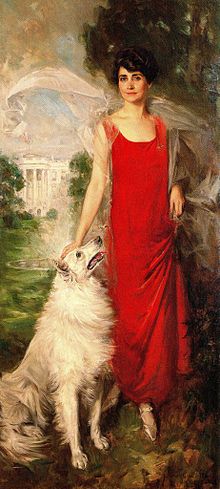
Grace_Coolidge_Official_portrait

Grace Goodhue Coolidge (January 3, 1879 – July 8, 1957) is one of my favorite first ladies. She and her husband Calvin lived for many years in Northampton, MA, a town I know well. In fact they met there, when she was on the faculty of the Clark School for the Deaf and he was a lawyer.

The story goes that while watering flowers outside the school one day in 1903, she happened to look up at the open window of Robert N. Weir’s boardinghouse and caught a glimpse of Calvin Coolidge shaving in front of a mirror with nothing on but long underwear and a hat. She burst out laughing at the sight; he heard the noise and turned to look at her. It was their first meeting. After a more formal introduction sometime later, the two were quickly attracted to each other.

Her vivacious personality was the perfect complement to his shy character. They were such opposites. She was a Pi Phi at the University of Vermont and the president of her sorority. Calvin was no Greek at Amherst. He was an outsider, an “ouden”–or “nothing.” At the Christmas break of his freshman year, he did  not want to return to school, but because he believed in finishing what he started, he did, and he pulled himself together.

Throughout their marriage, Grace and Calvin were a devoted pair. They may have been very different in some ways, but they also had a lot in common. They were both descended from Puritans, both were from Vermont and both had found their way to Northampton.

Both were animal lovers and the White House was a veritable menagerie sometimes referred to as the “Pennsylvania Avenue zoo.” Dogs, cats, birds, rabbits, even a raccoon–“She was a mischievous, inquisitive party,” wrote Grace of their raccoon Rebecca. “We had to keep watch of her when she was in the house. She enjoyed nothing better than being placed in a bathtub with a little water in it and given a cake of soap with which to play. In this fashion she would amuse herself for an hour or more.”

It is amusing to picture the man who brought dignity back to the White House with a raccoon in the bathtub.

They were indeed a couple, supporting each other. Somehow they went forward after the tragic death of their 16-year old son Calvin Jr. who had played tennis without socks and developed a blister and then sepsis. It nearly ruined them, but Calvin found solace in knowing that Abraham Lincoln had also lost a son while president. He and Grace pressed on.

If you are interested in learning more about the Coolidges, I recommend Coolidge by Amity Shlaes, published last year by Harper Collins. He and his wife were warm and real and unpretentious. They worked hard. I’m afraid we will not see their like again.

So join me in toasting Grace Coolidge tonight on the anniversary of her death in 1958.

*Calvin Coolidge referring to his wife.


Yep, our family is as functional as all get-out.*

by chuckofish

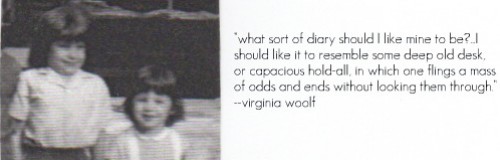
As you know the OM and I spent four days over the holiday in Michigan with my dual personality and her spouse at our brother’s lake house in Clay Township on Lake St. Clair. He and his lovely wife wined and dined us, took us on boat rides

photo 3-1

and on nature hikes.

photo 4-1

They introduced us to the neighbors

swans

and took us shooting

That's not Ernest Hemingway, that's my bro

No, that’s not Ernest Hemingway, that’s my bro

and treated us to incredible sunsets from their backyard.

photo 1-1

photo 2-1

And who knew my brother could cook?

salad

It was lovely.

sky6

*Homer Simpson, of course

I tramp a perpetual journey

by chuckofish

Today I am actually traveling! The OM and I are flying up to Michigan where we are meeting my big brother and heading to his house on Lake St. Clair. My dual personality and her DH (Dear Husband) are driving from the North Country to meet us. We will celebrate the frater’s birthday (and also our country’s) with much toasting and fireworks. Absent friends and all that.

sibs

The siblings circa 1967–pretend traveling at the Transportation Museum

And FYI the Star of the Month for July on TCM is the lovely Maureen O’Hara.

Maureen O'Hara24

Check out the schedule here. They aren’t showing The Quiet Man (1952)  or  Only the Lonely (1991) where  John Candy plays her son–inspired casting! But they are showing Rio Grande (1950), and there are some other good ones on the list.

Enjoy your holiday weekend! Celebrate responsibly!


“Gentleman, this is America!”*

by chuckofish

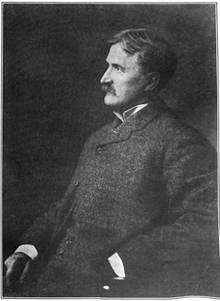
Last Saturday (June 28) was the birthday of Emerson Hough (1857–1923), the author of some 34 books and countless magazine articles and a distant cousin of my great-grandmother. You can read all about him here.

Emerson_Hough

Emerson was also descended from the original Hough who emigrated from Chester, England in 1683 to Pennsylvania, but his ancestors subsequently moved from Pennsylvania to Loudoun County, Virginia.

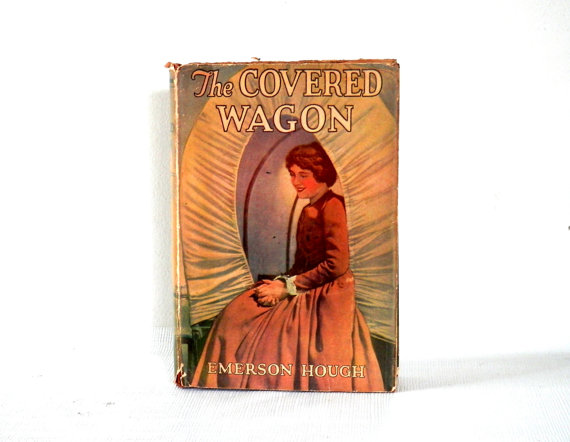
Family legend has it that Hough’s most famous novel, The Covered Wagon, was based on my great-great grandmother’s journal.

coveredwagon

If there is any truth to this story, boy, wouldn’t I love to get my hands on that journal! One of these days I’ll have to venture up to the University of Iowa (Hough’s alma mater) to check out his archive. (There are also letters in the collections at Iowa State and the University of Virginia.)

Besides writing fiction, Hough was also a journalist and conservationist. He once explored Yellowstone on skis and his reports were largely responsible for an act of Congress protecting the buffalo in the park.

One of the highlights of his writing career came when Theodore Roosevelt wrote him a fan letter, praising Story of the Cowboy (1897):

I don’t know when I have read a book that I like more than your “Story of the Cowboy.” I have always been hoping against hope that such a book would be written, but I had about given it up, and there was scant time remaining in which anyone could write it. At last, thank Heaven, it has been done! Not only is it to my mind a most fascinating book, but I think it is as valuable a bit of genuine contemporary history as I have yet examined.

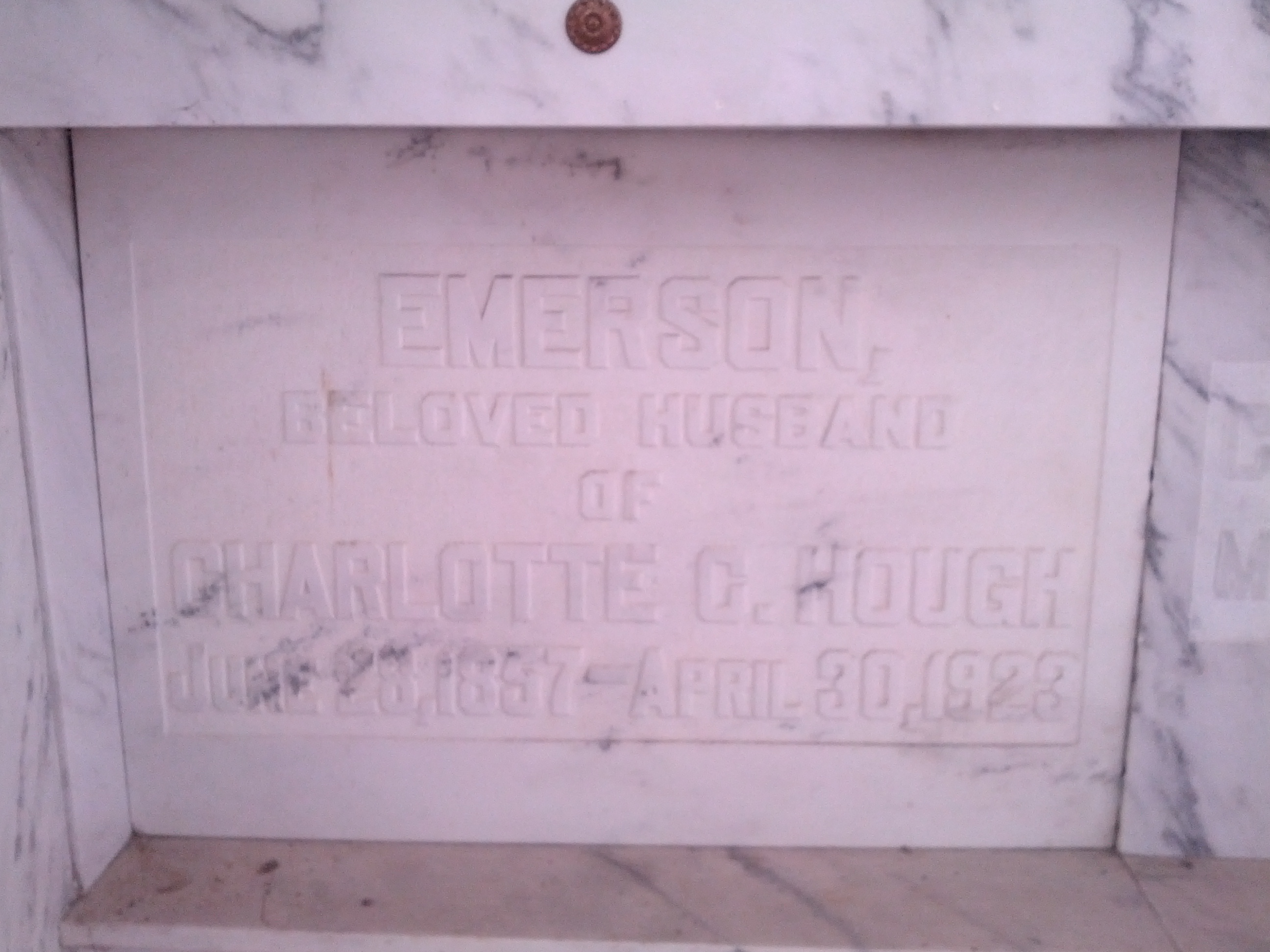
Hough died in Evanston, Illinois, on April 30, 1923, a week after seeing the Chicago premiere of the silent movie The Covered Wagon, which was a huge hit. It ran fifty-nine weeks at the Criterion Theater in New York City, eclipsing the record of The Birth of a Nation. He is buried in Galesburg, Illinois.

findagrave.com

findagrave.com

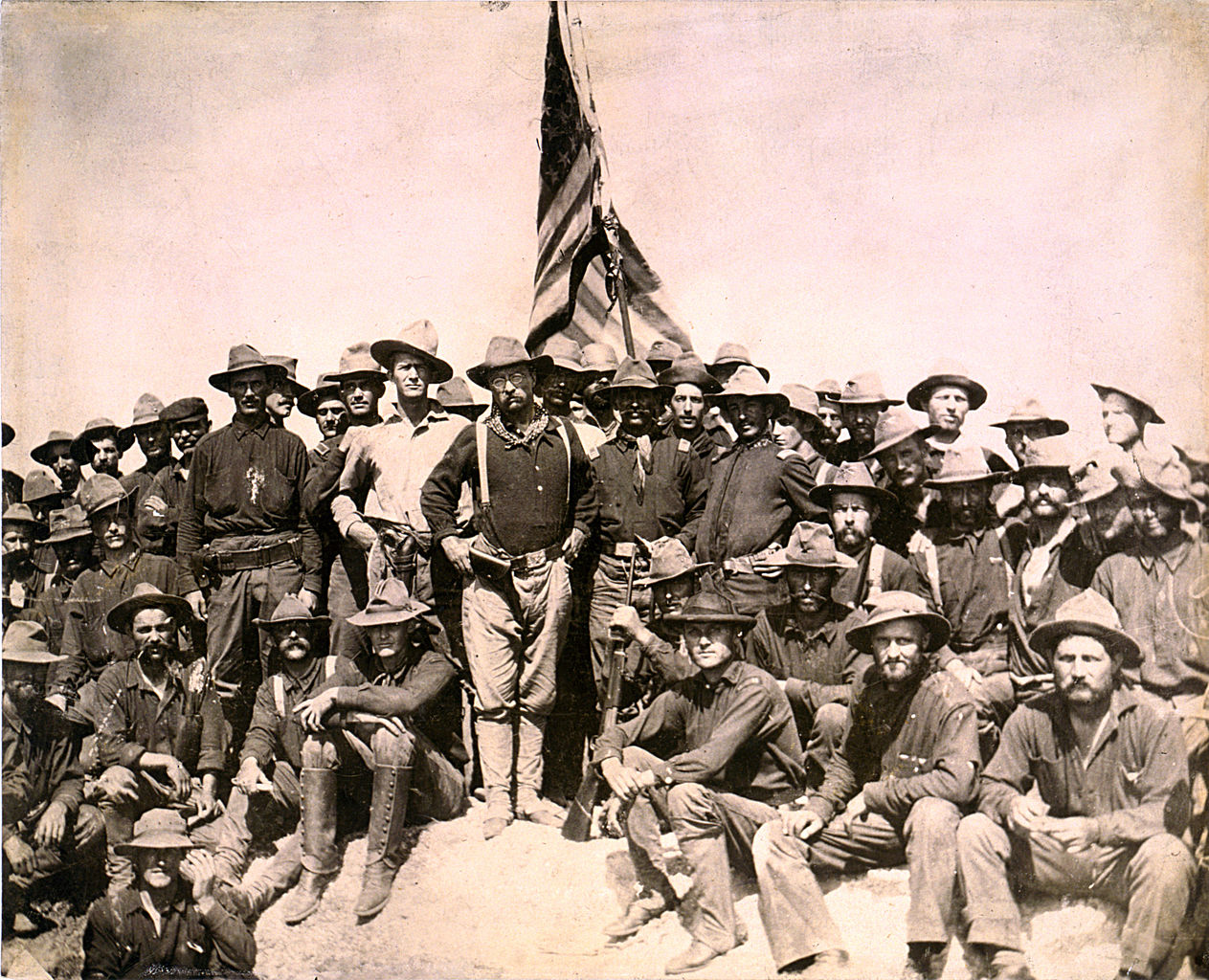
Anyway, I plan to toast old Emerson Hough tonight. And while I’m at it, I’ll toast Teddy Roosevelt and his Rough Riders who stormed San Juan Hill on this day in 1898.

1263px-RoughRiders

How about you?

*First line of The Mississippi Bubble by Emerson Hough

And that’s my opinion from the blue, blue sky

by chuckofish

At church last week we were exhorted to “Bring your smartphones, tablets, laptops, cameras… any electronic communications device…” to church yesterday as we joined a nationwide effort to “make the Good News go viral.”

O gee. No thanks. Call me old-fashioned, but I wanted no part of this:

  • Use your smartphone, tablet or other electronic devices to share comments, prayers or pictures on your favorite social media sites (Facebook, Twitter, etc.).
    Use #Episcopal and #GraceKirkwood.
  • Text questions or comments to Fr. Todd during the service.
  • Post a selfie with people around you during the time of the Peace, in the Narthex, during coffee hour, etc.
    (please ask permission before taking anyone’s picture).
    Use #Episcopal and #GraceKirkwood.
  • Keep an eye on the monitor next to the pulpit to see what other people are posting (yes, there will be a TV in the sanctuary — just for today!).
  • Come to our Sunday Forum at 9 a.m. in LaVielle Conference Room (all ages welcome).

I suppose this was supposed to appeal to young people, motivating them to come back to the new hipster Episcopal Church. See, we are with it! We’re still where it’s at, man.

The rector takes a selfie

The rector takes a selfie

Passing the peace

Passing the peace

Yes, a picture speaks 1000 words. (These were on Facebook.) Now all doubt has been erased concerning whether or not we are all huge nerds at Grace.

Anyway, I stayed home. Because–zut alors!– I think church should be a haven away from cell phones and monitors.

That was what I didn’t do this weekend. As for what I did do–it was the usual: estate sale-ing, house cleaning, yard work, a little shopping, reading, and movie watching. I watched The Magnificent Seven (as I said I would) and Blackthorn, as my dual personality suggested. I am proud to say, I figured out how to turn on the subtitles (on Netflix). Go me.

I also watched Murder My Sweet (1944), which is the best film version of a Raymond Chandler novel (Farewell, My Lovely). Dick Powell is, in my estimation, better than Humphrey Bogart. I know that’s sacrilegious to some, but it’s what I think.

murdermysweet

Wasn’t it swell of the boy to drop it by for me? It is a really good movie, full of wonderful Chandler lines like “I caught the blackjack right behind my ear. A black pool opened up at my feet. I dived in. It had no bottom. I felt pretty good – like an amputated leg.”

I also had a  big work event on Saturday which went very well. Now I have two work days and then the OM and I are heading up to Michigan to celebrate the 4th of July and my brother’s birthday with my siblings and their better halves. Go team.


“Kid, the next time I say, “Let’s go someplace like Bolivia,” let’s GO someplace like Bolivia…”*

by chuckofish

…because, after all, the scenery there is astonishingly beautiful! A couple of days ago while perusing Netflix for something to watch, I came across the movie “Blackthorn” starring Sam Shepard, Eduardo Noriega, and Stephen Rea. Boy, was it gorgeous. It’s 1927 and we learn that the eponymous character, James Blackthorn, is actually Butch Cassidy, who did not die in that infamous shoot-out all those years ago when he was Paul Newman. Having recently learned that the Sundance Kid’s old paramour, Etta Place, has passed away leaving a son behind to whom Blackthorn feels connected — the young man represents Blackthorn’s only connection to the people he loved — he decides to go back to the U.S.  Blackthorn sells off everything, saddles up, and heads out only to lose it all, including his horse, when he is waylaid by an incompetent thief on the run (played by the handsome Spanish star, Eduardo Noriega), who bears a notable resemblance to the Sundance Kid (we know from flashbacks). Troubles ensue.

The film is low key, deliberately paced, and lyrically focused on Bolivia, which is as much a character as any of the humans. The cinematography is fabulous.

it's a screenshot so small

All these are screenshots — aren’t you impressed?

Equal parts lush and barren, the landscape is like a Venus flytrap — deceptively beautiful but deadly. It’s vastness highlights man’s puny insignificance; (most) people, especially outsiders, become helpless in its grasp.

Blackthorn5

And I think that’s the point. The characters seem either lost (Noriega) or resigned (Rea and Shepard).

Blackthorn2

When on the point of death two of the characters (I won’t say who) say almost scoffingly, “Bolivia,” in recognition of the ironic fact that they went there seeking something — refuge, fortune, or results —  but found only entrapment and downfall. Even the Pinkerton agent (played by Rea), who chased Butch and Sundance all the way there, could never leave, eventually sinking into a horrible, somnolent and meaningless, existence. He, too, became trapped.

Blackthorn4

I very much enjoyed this film, although I didn’t realize that I had to turn on the subtitles and so missed everything they said in Spanish (and there’s a lot of it!). No problem. It will give me an excuse to watch it again. The music is also excellent. Don’t be fooled by the Butch and Sundance angle — this is not really an action movie (although there is some action). It’s a sad story about friendship, loss, and surviving the  indifference of the universe with one’s integrity in tact.

Watch the movie and let me know what you think!

*Butch to Sundance in “Butch Cassidy and the Sundance Kid”


“If God didn’t want them sheared, he would not have made them sheep.”*

by chuckofish

Eli Wallach played the bad guy in the first movie I ever saw at the movies. He was Charlie Gant in How the West Was Won (1962)–the guy who attempts to rob the train, but is thwarted by the good guy, George Peppard.

650px-Howest-saa1

It was a typical part for the ethnically ambiguous Wallach. A Jew from Brooklyn, he played many Mexican and Greek and Italian villains, including Calvera in The Magnificent Seven (1960), Stratos in The Moon-Spinners (1964) and countless others over the years. Like Ward Bond, he is always turning up in movies.

But Eli Wallach has died–at age 98! You can read about him here. I learned some fun facts about Eli, such as–although from New York, he went to the University of Texas in Austin where he learned to ride a horse. This came in very handy later in his movie career, right? He served five years in the Medical Corps during WWII, rising to captain. After the war he became a founding member of the Actors Studio and studied method acting with Lee Strasberg. He won a Tony Award, but no Oscars. He was married to the same woman for a very long time. She survives him.

Yes, he was quite a guy.

So let’s raise a toast to Eli Wallach tonight. I’m sure you have a movie in your own collection: How to Steal a Million (1966), Lord Jim (1965), The Good, The Bad and the Ugly (1966)…or The Holiday (2006)?

Eli Wallach with Michael Landon in "Highway to Heaven" episode

Eli Wallach with Michael Landon in a “Highway to Heaven” episode

TCM will celebrate Eli Wallach this Monday with a five film tribute.

Into paradise may the angels lead thee; and at thy coming may the martyrs receive thee, and bring thee into the holy city Jerusalem.
–BCP, Burial of the Dead, Rite I

*Calvera in The Magnificent Seven (1960)

Despite all our outfield saves*

by chuckofish

She was quiet and she stared at the sky. There were many ways of pursuing happiness and perhaps half of them were stupid. Most of the time you were a fool and the rest of it in pain.

–H.E. Bates, A Month at the Lake

Sometimes I feel this way. We all do, right? Sometimes I drive around on Saturday mornings going from estate sale to estate sale, feeling really stupid. And sometimes I think how much fun I would be having if my mother was there to ride around with me. She would have loved it. The driving around. The estate sale-ing. The being with me.

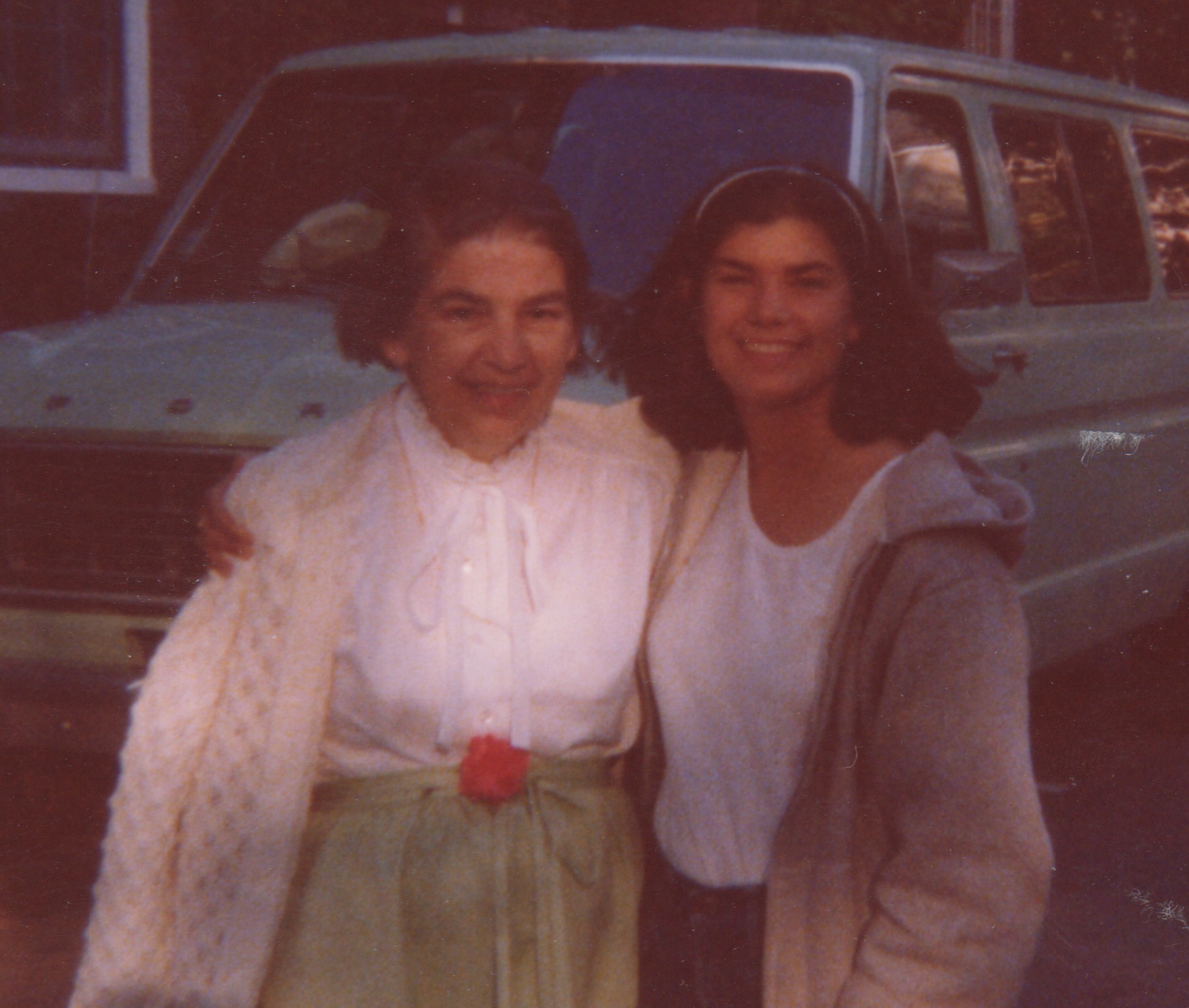
grad78

Sigh. My mother died 26 years ago today. I think about how much fun we’ve missed these last 26 years. She never even saw most of her grandchildren.

C’est la vie. We take the bitter with the sweet. We do our best. We are grateful for what we have. And had.

* “Honey, It’s Alright” by Gregory Alan Isakov

What are you reading?

by chuckofish

girl-reading-758651

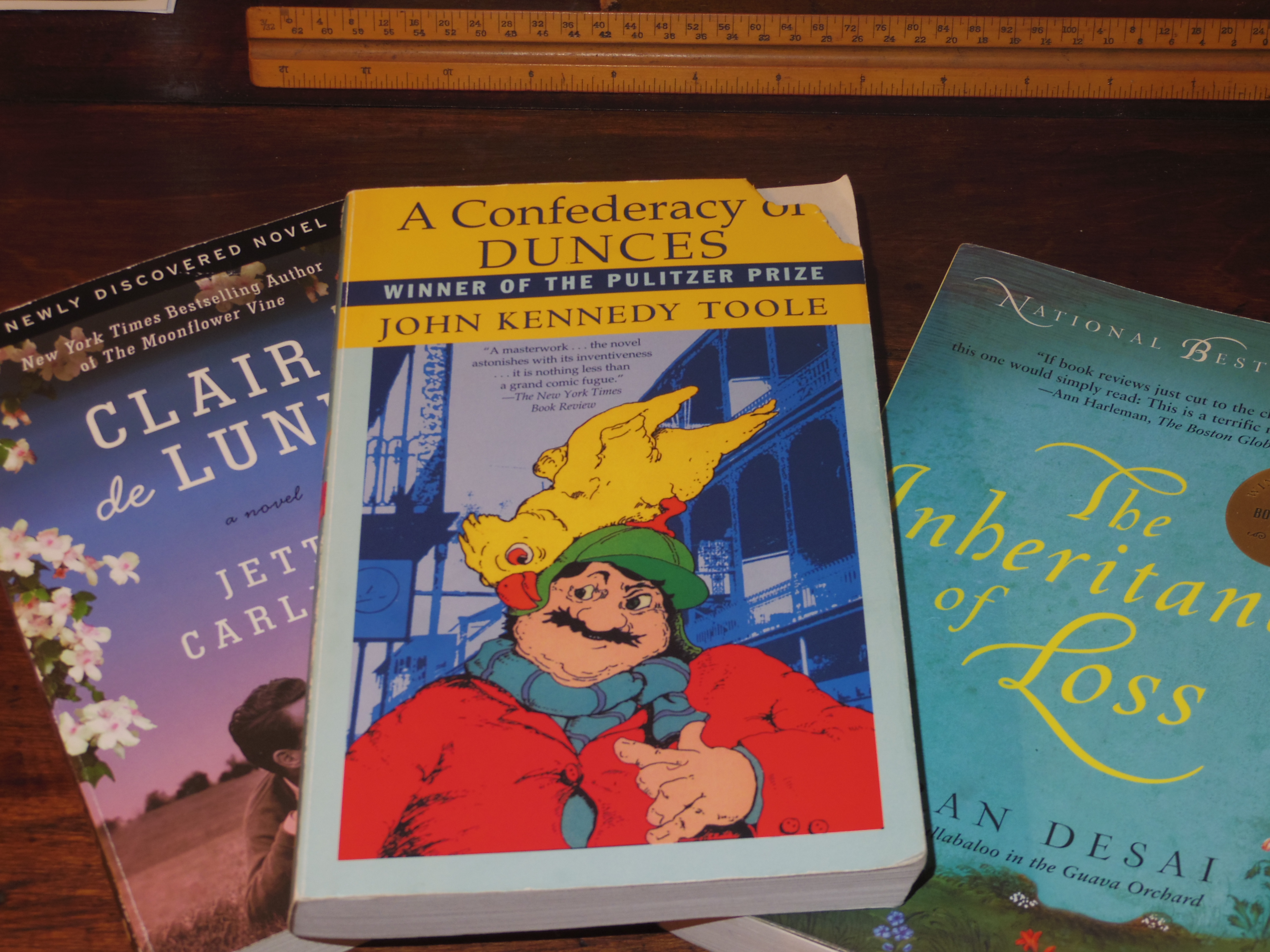
What have you been reading lately? Besides reading about Quakers (see yesterday’s post), I have started and stopped several books that I just couldn’t get into. It is so hard to find good fiction. These books were all well-written, but the characters just didn’t engage me. I am no longer “the good girl” who feels obligated to finish a book once I’ve started. I’m over that–are you?

duds

Even though I have already read Moby-Dick, I read Why Read Moby-Dick? by Nathaniel Philbrick. It made me want to read Moby-Dick again! I found a copy of the author’s In the Heart of the Sea at an estate sale, and I plan to read this account of the real-life whaling ship Essex and the whale that attacked it. It ought to be good.

I have just started Penelope Fitzgerald’s The Gate of Angels. She is so good and so very funny (in a very British way) but you have to pay attention. She is not an easy read. I’ll let you know if I make it through.

IMGP1040

I have a few new “coffee table” books which I have been enjoying.  American Writers At Home is wonderful, as you can imagine. If you want to buy yourself a present, I recommend this. I got mine used on Amazon.

writersathome

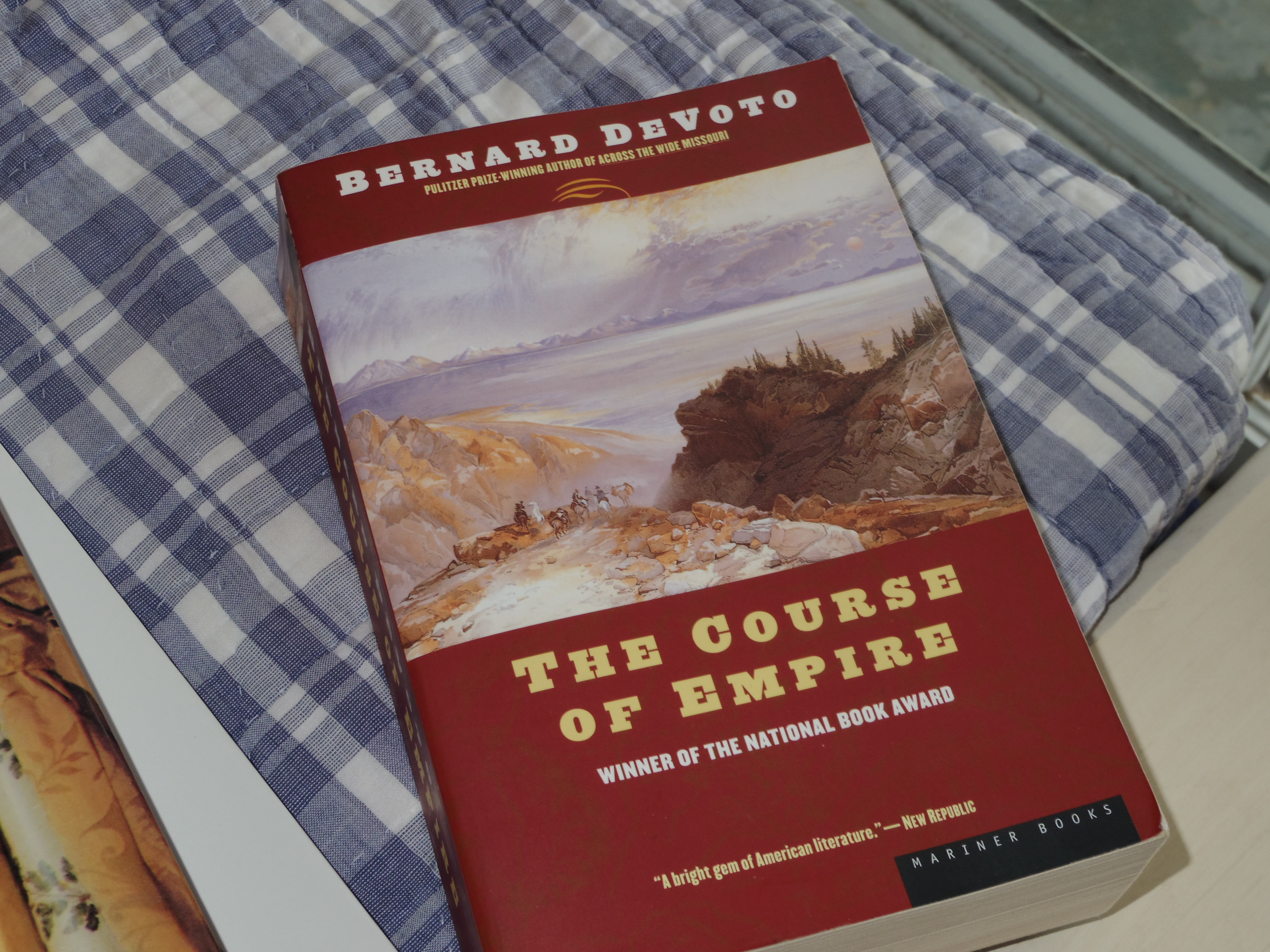
I am always doing research you know, so I have been delving into this old chestnut. DeVoto is pretty darn good.

devoto

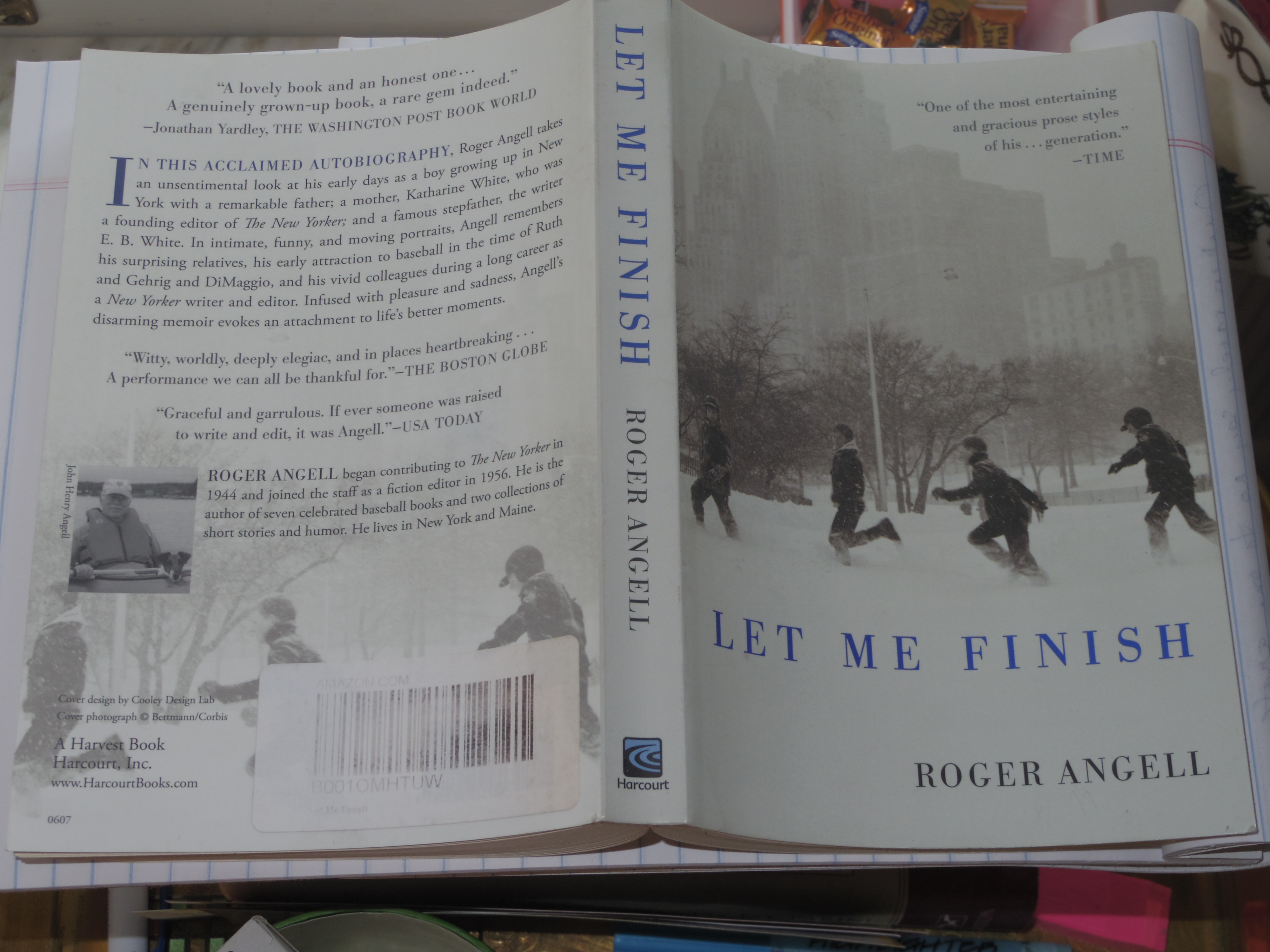
This is an old favorite that I took off my shelf–Roger Angell’s memoir of growing up in New York City as the son and step-son of New Yorker stalwarts Katharine White and E.B. White. He is one of those guys like whom they do not make anymore.

rogerangell

What are you reading?

Being faithful in the little light received*

by chuckofish

Readers of this blog may remember that my great-great grandfather John Simpson Hough was a Quaker. He came from a long line of Quakers who came to Bucks County from England in 1683. The Houghs prospered in Pennsylvania and had many children, many with the same names–such as Benjamin, Hannah, John, Joseph, Silas–which makes genealogy so challenging…But I digress.

After moving West, JSH no longer actively practiced his Quaker faith, but I believe no small part of the high esteem in which he was held was due to his reputation as a fine Quaker gentleman–truthful, (relatively well) educated and beyond reproach in legal and mercantile dealings.

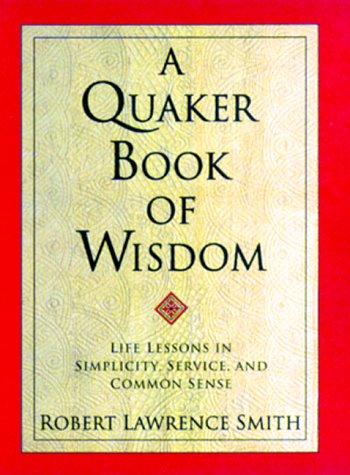
Anyway, the Quakers have always fascinated me. I found this little book recently, written by Robert Lawrence Smith, the former headmaster of the Sidwell Friends School in Washington D.C., the largest Quaker day school in the U.S.

quaker-wisdom

I highly recommend it.

The most valuable aspect of religion is that it provides us with a framework for living. I have always felt that the beauty and power of Quakerism is that it exhorts us to live more truthfully, more simply, more charitably. For many Friends, simplicity is a cornerstone of their faith that continues to define their daily lives….For Quakers, simplicity is truth’s twin virtue: The two concepts are seamlessly intertwined. Without simplicity of spirit, we are not prepared to receive the truth. And if we fail to act in accordance with the truth, we cannot let our lives speak.

* “Being faithful in the little light received, in that light I saw more light; and by it I was taught to trust in God in all my ways, and to consult him to direct my paths.”
(Increase Woodward, 1744-1822)