dual personalities

“My husband and I have never considered divorce… murder sometimes, but never divorce.”*

by chuckofish

As you know, today is Valentine’s Day. We thought it would be fun to look at some of our favorite couples in history since we’ve already looked at favorite movie couples/kisses in years past.

  1. William and Mary, King and Queen of England, who rocked the Glorious Revolution together.

Screen Shot 2018-02-13 at 10.47.14 AM.png

2.  Simon and Ann Bradstreet, “questing puritans”…She wrote, “If ever two were one, then surely we/If ever man were loved by wife, then thee.”

1607_puritans_going_to_church.jpg

3. Calvin and Grace Coolidge, President and First Lady. He said, “I do not know what I would do without her.”

coolidges-at-garden-party-030626.jpg

Calvin was devoted to his wife; he never cheated on her like some presidents we will not mention! Theodore Roosevelt and his wife Edith would be another example of devoted presidential couples, as would Ulysses and Julia Grant.

3. Robert Browning and Elizabeth Barrett Browning, poets. She wrote, “I love thee with the breath,/Smiles, tears, of all my life; and if God choose,/I shall but love thee better after death.”

browning1.jpg

4.  Katie von Bora and Martin Luther, reformers, who famously said, ” There is no more lovely, charming and friendly relationship, communion or company than a good marriage.”

ehepaar_luther.png

5. Paul Newman and Joanne Woodward, actors, who proved that a long marriage in Hollywood is not impossible…unlikely, but not impossible.

27_1_o.jpg

Well, our advice yesterday was to do your best in Lent, and that is good advice for love and marriage as well.

As for what to watch on Valentine’s Day, nothing tops The Adventures of Robin Hood (1938) with Errol Flynn and Olivia de Havilland for romance. This movie turns 80 years old this year! All the stars were aligned when this movie was made. It is perfect.errol-flynn-435.jpg

Sigh.

Happy Valentine’s Day!

*Joyce Brothers

Let us eat pancakes

by chuckofish

Today is Shrove Tuesday. Can you believe it? Lent starts tomorrow.

Pieter_Bruegel_d._Ä._066.jpgYou will recall that pancakes are associated with the day preceding Lent because in the olden days they were a way to use up rich foods such as eggs, milk, and sugar, before the fasting season of the 40 days of Lent. So Mardi Gras, French for “Fat Tuesday”, refers to the practice of going all out on the last night of eating richer, fatty foods and over-drinking before the ritual fasting of the Lenten season. (Liturgical fasting emphasizes eating plainer food and refraining from food that would “give pleasure.”) It is not my vibe, of course, and I have to say, it even embarrassed me to look at the pictures in The Riverfront Times of our hometown revelry.

grace-episcopal-churc01.jpgWell, we’ll go over to church after work for some pancakes and camaraderie–sans revelry. Then we’ll head home to watch more Olympics. I DVR them and then fast forward through the commercials.

32237543784_c068650e14_o.jpgWe watched quite a bit of cross country skiing over the weekend. You have to love a sport that is still so dominated by Norwegians. The same goes for those orange-wearing Netherlanders and speed skating.

holl.jpg

I love our American athletes, but we don’t have to win everything.

Enjoy your Tuesday. As George Herbert wrote:

… It’s true, we cannot reach Christ’s fortieth day;

Yet to go part of that religious way,

Is better than to rest:

We cannot reach our Savior’s purity;

Yet are bid, Be holy ev’n as he.

In both let’s do our best.

–from “Lent”

Do your best!

Get off your horse

by chuckofish

IMG_2209.jpeg

What a busy weekend! In fact, it was so busy that I did not have time to write a blogpost. All I have for today is this photo of the wee laddie wearing the new onesie I gave him for Valentine’s Day.

And it is Monday once again. The week begins anew. Have a good one, pilgrim!

Begin at the beginning

by chuckofish

In his “10 tips to writing”, Elmore Leonard advised, “Avoid prologues. They can be annoying, especially a prologue following an introduction that comes after a foreword.” Inasmuch as he was advising against pretentious self-indulgence, I agree. But there is an argument to be made in favor of ancillary material. If you explore a book before starting to read, you can find all sorts of wonderful gifts: an introduction; foreword; prologue; epilogue; afterward; appendices; maps and illustrations; lists of dramatis personae, and indices. They may not all be necessary, but they can be helpful, edifying, or just plain funny.

Take, for example, this ‘letter’ at the beginning of John Buchan’s The Three Hostages (1924):

To a young gentleman of Eton College:

Honoured Sir,

On your last birthday a well-meaning godfather presented you with a volume of mine, since you had been heard on occasion to express approval of my works. The book dealt with a somewhat arid branch of historical research, and it did not please you. You wrote to me, I remember, complaining that I had “let you down,” and summoning me, as I valued your respect, to “pull myself together.” In particular you demanded to hear more of the doings of Richard Hannay, a gentleman for whom you professed a liking.  I too have a liking for Sir Richard, and when I met him the other day (he is now a country neighbour) I observed that his left hand had been considerably mauled, an injury which I knew had not been due to the War. He was so good as to tell me the tale of an unpleasant business in which he had recently been engaged, and to give me permission to re-tell it for your benefit. Sir Richard took a modest pride in the affair, because from first to last it had been a pure contest of wits, without recourse to those more obvious methods of strife with which he is familiar. So I herewith present it to you, in the hope that in the eyes of you and your friends it may atone for certain other writings of mine which which you have been afflicted by those in authority.

The Three Hostages is a wonderful addition to the Richard Hannay series, and if you are in the mood for intrigue, little violence, and upstanding heroes behaving bravely, I highly recommend it. Be warned, however, that Buchan’s attitude toward race belongs firmly in his era. Modern sensibilities may be affronted on occasion. He was a firm believer in British imperialism and exceptionalism.

Just after reading Buchan, I cam across this gem that I’ve excerpted (with edits) from the introduction of William Faulkner’s Sanctuary (1932). In the author’s own words,

This book was written three years ago. To me it is a cheap idea, because it was deliberately conceived to make money. I had been writing books for about five years, which got published and not bought. But that was all right. I was young then and hard-bellied. I had never lived among nor known people who wrote novels and stories and I suppose I did not know that people got money for them. I was not very much annoyed when publishers refused the mss. now and then. Because I was hard-gutted then. I could do a lot of things that could earn what little money I needed, thanks to my father’s unfailing kindness which supplied me with bread at need despite the outrage to his principles at having been of a bum progenitive.

Then I began to get a little soft. I could still paint houses and do carpenter work, but I got soft. I began to think about making money by writing. I began to be concerned when magazine editors turned down short stories, concerned enough to tell them that they would buy these stories later anyway, and hence why not now. Meanwhile, with one novel completed and consistently refused for two years, I had just written my guts into The Sound and the Fury though I was not aware until the book was published that I had done so, because I had not done it for pleasure. I believed then that I would never be published again. I had stopped thinking of myself in publishing terms.

[After a while]…I began to think of myself again as a printed object. I began to think of books in terms of possible money. I decided I might just as well make some of it myself. I took a little time out, and speculated what a person in Mississippi would believe to be current trends, chose what I thought was the right answer and invented the most horrific tale I could imagine and wrote it [Sanctuary] in about three weeks…[My publisher] wrote immediately, “Good God, I can’t publish this. We’d both be in jail.” So I told [myself], “You’re damned. You’ll have to work now and then for the rest of your life.” That was in the summer of 1929. I got a job in the power plant, on the night shift, from 6 P.M. to 6 A.M., as a coal passer, I shoveled coal from the bunker into a wheel-barrow and wheeled it in and dumped it where the fireman could put it into the boiler…

I think I had forgotten about Sanctuary, just as you might forget about anything made for an immediate purpose, which did not come off… I rewrote the book…and I hope you will buy it and tell your friends and I hope they will buy it too.

You should look it up and read the whole intro. It’s really something. But much as I like Faulkner, this book is so dismally depressing that I could not read more than a third of it. It’s the story of dreadful people doing dreadful things and a decent man who, try as he might, can’t do anything about it. IMHO the best thing about the book is the introduction.

This all goes to show how important it is for readers to start at the actual beginning of a book — not with the first pages of the central text — and to explore all its nooks and crannies thoroughly. You never know what wonders you will discover.

Just so I can post one picture, I leave you with this weekend’s movie recommendation: 12 Strong. It has a great cast, including handsome Chris Hemsworth, a fine script, and wonderful scenery.

It is very well directed and surprisingly restrained in terms of violence (there’s plenty, but without the usual gouts of blood) or over-the-top machismo. Really, it’s about thoughtful, brave men doing brave things under difficult circumstances. They have a job to do and they do it — no complaints and no internal conflict. That is not to say that they enjoy killing; they just learn to live with it. Even their wives accept the situation stoically. The film has something to say beyond “war is bad.” Go see it.

Have a great weekend!!
“Lift your head a little higher, Spread the love like fire”*

by chuckofish

What a long week this has been! I am way more than ready for the weekend!

Daughter #1 is driving in from Columbia tonight and we will watch the opening ceremony of the Olympics and toast our American team.

Screen Shot 2018-02-08 at 10.44.54 AM.png

Team U.S. Curling is ready to go!

On Saturday there is a gallery auction at the Link Auction House and we are going–how nice to have company!

Screen Shot 2018-02-08 at 12.49.20 PM

Have you been looking for a copper deep sea diver’s helmet? There are two available!

Tomorrow night is the “Elegant Italian Dinner”–the annual fundraising event for our youth mission trip at church–such a major social event!

grace_kirkwood_hero_3-1.jpg

The OM will accompany me, but daughter #1 will be otherwise occupied.

And, of course, we hope to see the wee babes, those adorable goofballs.

Unknown-3.jpeg

Unknown-4.jpeg

Unknown-1.jpeg

Unknown-2.jpeg

That’s enough, don’t you agree?

“To be grateful is to recognize the Love of God in everything He has given us – and He has given us everything. Every breath we draw is a gift of His love, every moment of existence is a grace, for it brings with it immense graces from Him.Gratitude therefore takes nothing for granted, is never unresponsive, is constantly awakening to new wonder and to praise of the goodness of God. For the grateful person knows that God is good, not by hearsay but by experience. And that is what makes all the difference.”

–Thomas Merton

*tobyMac, “Speak Life”

With gladness and singleness of heart

by chuckofish

tumblr_p1tor8DgP51vgfusao1_1280.jpg

Let us, then, labor for an inward stillness,–

An inward stillness and an inward healing;

That perfect silence where the lips and heart

Are still, and we no longer entertain

Our own imperfect thoughts and vain opinions,

But God alone speaks in us and, we wait

In singleness of heart, that we may know

His will, and in the silence of our spirits,

That we may do His will and do that only!

~Henry Wadsworth Longfellow, from Christus: A Mystery

The painting is by Stanley Royle (1888–1961). Don’t you like it? That winter light is perfect.

SHEF_MSH_VIS_2886.jpg

28b09c010a693b2d49ee042b553e4665--landscape-art-landscape-paintings.jpg

dd6e12c91dbc29c06cb1a61b780f486e.jpg

Boy, isn’t he great?

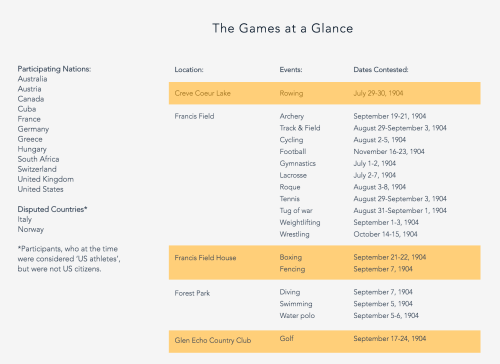
The Games of the III Olympiad

by chuckofish

That’s right–the third Olympiad. Lest we forget–the 1904 Olympics were held here in my flyover town.

1904summerolympicsposter.jpg

And that is pretty cool. We are, after all, one of only three cities in the U.S. — one of only 23 in the world — to host the Summer Games. And, of course, my flyover university–where most events of the third Olympiad took place–is going to “add another architectural jewel to its historic campus later this year when an Olympic Rings ‘Spectacular,’ a five-ring sculpture, is installed at the end of Olympian Way, on the southwest corner of the Danforth Campus.” Oh boy.

Screen Shot 2018-02-06 at 11.28.14 AM.png

But why did they ever get rid of the tug-of-war?

Screen Shot 2018-02-06 at 11.20.10 AM.png

Well, things haven’t changed that much on campus. Still a lot of pink granite and ramparts.

https---blueprint-api-production.s3.amazonaws.com-uploads-card-image-159055-GettyImages-535789557.jpg

danforth-aerial.jpgwashusign0152014-1200xx1200-675-0-63.jpg

Here’s an article about the “St. Louis’ Olympic legacy” with a lot of pictures.

By the way, did you notice that lacrosse was one of the team events in 1904? Speaking of lacrosse, here’s the boy’s latest video featuring D2 Lindenwood University’s team.

(That was a smooth segue, right?) Still pretty chilly for lacrosse.

Building character

by chuckofish

I was pleased to hear the MVP quarterback of the Super Bowl, Nick Foles, speak humbly about his great game.

“I think the big thing [to tell people] is ‘don’t be afraid to fail’. I think in our society today, you know, Instagram, Twitter, it’s a highlight reel. It’s all the good things. Then when you look at it, then you think like, ‘wow’, when you had a rough day or your life’s not as good as that, you’re failing.

“And failure’s a part of life, that’s a part of building character, and growing. Without failure, who would you be? I wouldn’t be up here if I hadn’t fallen a thousand times, made mistakes. We all are human, we have weaknesses, and throughout this being able to share that and be transparent.

“I know that when I listen to people speak, and they share their weaknesses, I’m listening because I can resonate. So, I’m not perfect, I’m not Superman. I might be in the NFL, and we might have just won the Super Bowl, but I still have daily struggles … And that’s really just been the message, simple. If something’s going on in your life and you’re struggling, embrace it, because you’re growing.”

(quoted in The Guardian)

And for the record, he did give the glory to Jesus Christ. Well, Nick, I’m glad you could come back after your experience with the STL Rams. You paid your dues. Chris Long too–if anyone deserves two Super Bowl titles, it’s Chris Long.

This was interesting about Super Bowl halftime shows of the past. My favorite was when Dolly Parton performed. Or was that a Simpson’s episode?

Sunday,_Cruddy_Sunday_(Promo_Picture).jpg

Chin chin.

“Those who wait on the LORD will renew their strength”*

by chuckofish

Well, a weekend without many plans turned into a pretty busy weekend after all. And it was cold again–it even snowed on Sunday!

I followed my usual weekend routine plus I re-read The Hours by Michael Cunningham, which was good but not as good as I remembered. I was overly aware of his details and his writing in general. But there is some real truth in it.

She simply does what her daughter tells her to, and finds a surprising relief in it. Maybe, she thinks, one could begin dying into this: the ministrations of a grown daughter, the comforts of a room. Here, then, is age. Here are the little consolations, the  lamp and the book. Here is the world, increasingly managed by people who are not you; who will do either well or badly; who do not look at you when they pass you in the street.

I watched The Shape of Water (2017) which has been nominated for 13 Oscars, including best picture, and has already won a slew of awards.

636474209925005698-the-shape-of-water-002-SOW-03315-rgb.jpg

I did not like it. “‘The Shape of Water’ is partly a code-scrambled fairy tale, partly a genetically modified monster movie, and altogether wonderful,”  gushed the reviewer in the NYT.  I would beg to differ. “Bigotry and meanness flow through every moment like an underground stream,” he continued. This is true. We are shown several examples of this. Women, blacks and gays are treated badly. We see, we understand, we virtue-signal our superiority.  Men are the bad guys in this movie, the enemy. The only decent man is gay. (Oh, and the other is a communist spy.) The #1 scary villain, of course, is a white male who works for the military, is married, has two children, lives in suburbia, and aspires  to own a Cadillac. He is the real monster. I am tired of being hit over the head with this view of the world. “The most welcome and notable thing about ‘The Shape of Water’ is its generosity of spirit,” the NYT reviewer concludes. Is he kidding?

The wee babes, thankfully, came over for dinner on Sunday night. They cheered me up! They are so active now and curious, so happy. They get very excited about  peanut butter and jelly, 30-year old toys, investigating the kitchen, and checking out the handles on the highboy. The wee laddie climbed all the way up to the second floor twice.

IMG_1972.jpegMiss Lottie slept on my shoulder after arriving, but perked right up once she awakened. She is a speed demon on all fours and can crawl the circuit of our first floor in under a minute.

IMG_1978.jpegThe wee laddie can take up to six steps on his own and is swiftly gaining his sea legs.

IMG_1973.jpeg

Now it’s back to the salt mine–have a good week!

*Isaiah 40:31

Into the dustbin of history (again)

by chuckofish

January 28th was the 100th anniversary of the death of John McCrae, the handsome Canadian doctor and artilleryman who wrote the famous poem, “In Flanders Fields”.

In Flanders fields the poppies blow
Between the crosses, row on row,
That mark our place; and in the sky
The larks, still bravely singing, fly
Scarce heard amid the guns below.

We are the Dead. Short days ago
We lived, felt dawn, saw sunset glow,
Loved and were loved, and now we lie
In Flanders fields.

Take up our quarrel with the foe:
To you from failing hands we throw
The torch; be yours to hold it high.
If ye break faith with us who die
We shall not sleep, though poppies grow
In Flanders fields.

First published in Punch in 1915, the poem was written during the early days of the second battle of Ypres. It became something of an overnight sensation and remained one of the war’s most popular poems. After serving throughout the war, McCrae contracted pneumonia and died in France in 1918. He is buried at Wimereux, France.

John McCrae  had an interesting career, although in some ways he was typical of his time: the family was hard-working, intelligent, and dedicated. His grandparents emigrated from Scotland, his father was a Lt. Colonel in the army, his sister married a lawyer, and he and his brother both became doctors, the latter eventually becoming a professor at Johns Hopkins in Baltimore.  Despite his training as a physician, John McCrae joined the army in 1900 and served in the artillery during both the first and second Boer Wars. When WWI broke out, he returned to active duty as a Medical Officer and Major of the 1st Brigade Canadian Field Artillery, eventually reaching the rank of Lieutenant-Colonel. He was a dutiful and patriotic man, who, one can’t help feeling, gave more for his country than he got in return.

McCrae’s personal diary from 1915, more of which you can read here, has this to say about the way the Canadian press covered 2nd Ypres:

Newspapers which arrive show that up to May 7th, the Canadian public has made no guess at the extent of the battle of Ypres. The Canadian papers seem to have lost interest in it after the first four days; this regardless of the fact that the artillery, numerically a quarter of the division, was in all the time. One correspondent writes from the Canadian rest camp, and never mentions Ypres. Others say they hear heavy bombarding which appears to come from Armentieres.

McCrae is much celebrated in Canada where statues, plaques and museum displays attest to his achievements. When the French held a ceremony at his grave to mark the centennial of his death, according to the Ottawa Citizen, “about two dozen visitors stood as a French band played O Canada, and the French town supplied a Canadian flag. French veterans stood with their banners. The town council of Wimereux laid a wreath. So did the Commonwealth War Graves Commission. So did one visitor from Britain,” but no Canadians attended.  I guess they were too busy voting to neuter their national anthem.

So it goes.

Still, we can lift a glass to the good doctor and to all those men who died in the mud of Flanders fields. A hundred years isn’t so long ago that we should forget. Who will remember you in a hundred years and what will they remember?