I am so glad it is Friday and that the weekend is just around the corner. I plan to take it easy.
I’m going to clean up my kitchen after having some work done in there this week. And I’m going to start thinking about my trip east next weekend to see daughter #2. Maybe I’ll even pack!
I’m looking forward to seeing the wee babes.
It is rumored that the sun may be out this weekend, at least partially, so I’m hoping to get outside and survey the south forty.
And, by the way, Sunday is Johnny Appleseed Day.
“Oooooh, the Lord is good to me, and so I thank the Lord, for giving me the things I need, the sun and the rain and the appleseed. The Lord is good to me.”
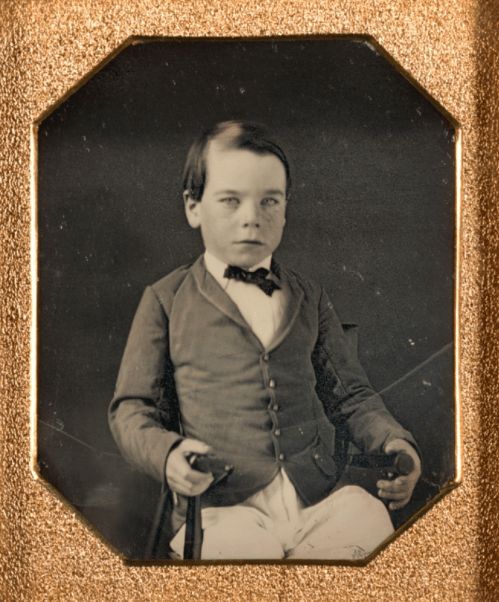
On this day in 1841 William Rockhill Nelson was born in Fort Wayne, Indiana. “He came,” we are told, “of builders of cities and states. His American ancestry reached back almost three centuries.” If you are interested in the man who owned and edited the Kansas City Star and was a co-founder of the Nelson-Atkins Museum of Art, you can read all about him here.
He was quite a fellow.
As a boy William was “exceedingly mischievous and difficult to manage.”
He used to say that he “must have been a natural insurgent.” One of the first insurrections came when he was ten years old. A political speaker was making an open-air address at night. The boy and one or two of his friends, armed with eggs, plastered the speaker from behind trees. The next day placards were posted offering a reward for the arrest and conviction of the offenders.
“I could see myself behind the bars,” he said in telling about it, “and I was overwhelmed at the thought of the disgrace I would bring on the family. So I determined to run away. I got on board the train. But my father had heard of my plan from my brother and he came and took me off. He asked me and I told him the full truth about what I had done, and I shall never forget the note of satisfaction in his voice when he said: ‘Well, thank God, you are not a liar.'”
William sounds like a character out of a Booth Tarkington novel, don’t you think?
After many such incidents, William was sent off as a teenager to the college, now the University, of Notre Dame, a school at that time famous for its strictness of discipline. Years later a friend inquired how it happened that his father, a vestryman in an Episcopal Church, sent him to a Catholic School. “It was a sort of Botany Bay for bad boys,” he explained. He was more than a match for the severe priests, however, and the they kicked him out and asked him not to return.
I like to think of Notre Dame as a Botany Bay for Bad Boys.
Anyway, Nelson became a lawyer. And a leading citizen of Kansas City.
If they ever make a movie about William Rockhill Nelson, I know who should play him.
“I got up on my feet and went over to the bowl in the corner and threw cold water on my face. After a little while I felt a little better, but very little. I needed a drink, I needed a lot of life insurance. I needed a vacation, I needed a home in the country. What I had was a coat, a hat and a gun. I put them on and went out of the room.”
Quelle fun weekend! The weather was beautiful. Daughter #1 came into town on Saturday and we went to a couple of estate sales, had margaritas with our lunch, shopped locally, took a long walk around town, and tried to get the wee babes interested in a dance party when they came over that night.
The wee babes were having none of it though, preferring to cruise around on their own–the wee laddie toddling on two feet
and the wee lassie careening around on all fours.
She is fast!
Daughter #1 headed off to DePauw in the morning. Her cousin Tim and longtime girlfriend Abby drove down from Crawfordsville, Indiana to meet her and go to Marvin’s, a Greencastle landmark.
I caught up with daughter #2 on the phone and then the OM surprised me by wanting to do something. We decided to go to Lone Elk Park, which was always a fun Sunday drive when our kids were little. Of course, it has been awhile and the OM got lost (several times) getting there, but we made it eventually. We saw some big ol’ elk and a little herd of buffalo.
Don’t worry–we did not get out of the car and try to take selfies with the buffs. (Pardon my iPhone photos taken through the window.)
I skipped church to have breakfast with daughter #1 before she left Sunday morning, but I did watch most of Billy Graham’s funeral. I was especially struck by his three daughters’ eulogies, especially Anne’s (below at 1:24:17).
Wow. Of course, there was a piper at the end.
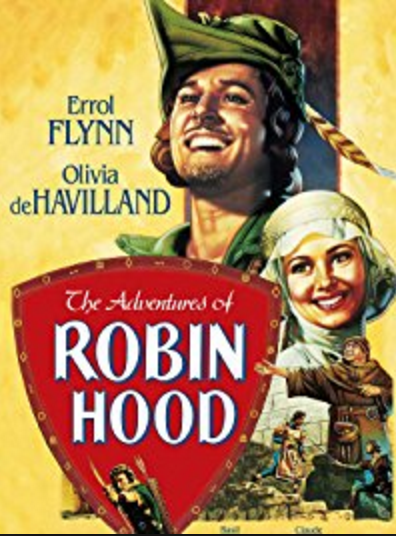
And if anyone is wondering which movie I chose to watch on Sunday night instead of the Oscars, it was The Adventures of Robin Hood (1938).
Excellent choice. Best direction, best script, best use of technicolor, best star, best supporting cast, best choreographed swordplay, best stunts, best music, best everything! And the movie is 80 years old! Zut alors!
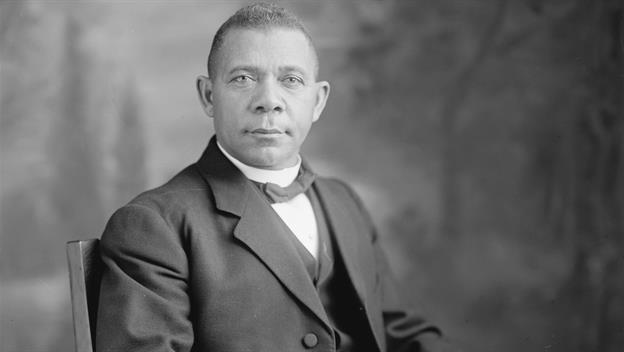
A couple of weeks ago I mentioned some books that my cousin passed on to me, among them a 1902 copy of Booker T. Washington’s Up from Slavery. My great grandmother gave the book to her uncle, James Erskine, on the occasion of his 73rd birthday. The choice of gift intrigued me. The eldest son of William Erskine and Margaret Young, James was born in Inchinnan, Scotland (outside Glasgow) in 1829. He and his two younger brothers moved to Clarence, Ontario and married three sisters. The Erskines were all farmers; they worked incredibly hard and suffered more than their share of heartbreak and hardship. Having now read Up from Slavery, I can see why my great grandmother thought it would interest her uncle James. This is a book that has much to teach beyond issues of race, although those obviously predominate.
Born a slave in Virginia, Booker Taliaferro (he added the Washington later) did not know the day, month, or year of his birth, or the name of his father. His family lived in abject squalor on the plantation. Only later did he realize how little they had as slaves: he had never brushed his teeth; slept in a bed with sheets, or eaten a meal at a table. He had only the clothes he wore and so washed them (and himself) irregularly. He knew no one of his race who could read or write, and early on realized that there could be no freedom without education and hard, hard work. He became determined to help his people and spent the rest of his life doing it.
After years of struggle, he managed to get a place at the Hampton Institute in Virginia (now Hampton University), where he worked as a janitor all day and studied at night. After graduating, he immediately started educating others.
The Hampton Institute
Later he used his experience at Hampton as a model for his work at Alabama’s Tuskegee Institute (now Tuskegee University), founded by George Campbell, a white former slave owner, and Lewis Adams, a black former slave.
classroom at Tuskegee
Rather than enumerating Booker T. Washington’s accomplishments, I’d like to concentrate on his philosophy, because I think that his views are instructive as well as admirable. He understood the importance of hard work, of forgiveness, of self-respect, good character, and kindness — things we all need to work on. Here are a few choice passages from the book:
“I will permit no man, no matter what color he might be, to narrow and degrade my soul by making me hate him.”
“In my contact with people I find that, as a rule, it is only the little, narrow people who live for themselves, who never read good books, who do not travel, who never open up their souls in a way to permit them to come into contact with other souls–with the great outside world. No man whose vision is bounded by color can come into contact with what is highest and best in the world. In meeting men, in many places, I have found that the happiest people are those who do the most for others; the most miserable are those who do the least.”
“Those who have accomplished the greatest results are those who never grow excited or lose self-control, but are always calm, self-possessed, patient, and polite.”
I would describe his philosophy as a sort of Christian Stoicism. In any case, the man had great ideas that he put into practice. He worked tirelessly his whole life, lived by his principles, and devoted himself to helping others.
His strategy for racial advancement demanded restraint, extremely hard work, tolerance and a lot of turning the other cheek. It did not sit well with those who wanted instant results or reparations, or who did not understand the enormity of the task they faced. Observations like this one made Booker T. some enemies:
“There is another class of colored people who make a business of keeping the troubles, the wrongs, and the hardships of the Negro race before the public. Having learned that they are able to make a living out of their troubles, they have grown into the settled habit of advertising their wrongs — partly because they want sympathy and partly because it pays. Some of these people do not want the Negro to lose his grievances, because they do not want to lose their jobs.”
This perceptive insight applies to all those people — regardless of their race — who prefer playing the victim to moving forward under their own steam. It’s something to think about anyway.
I haven’t done Booker T. Washington or his book justice. Read it. It’s available online for free at Project Gutenberg or as an audio-recording on Youtube:
In a country as divided by politics as we are, maybe we could learn something from a man who was willing to put aside personal goals and political differences to help other people.
The weather wizards are promising some sun today and tomorrow. We shall see.
Daughter #1 is stopping in this weekend on her way to her alma mater in Indiana where she is speaking on a panel about her career in media. Then she’ll stop on her way back to Mid-MO.
Meanwhile daughter #3 has moved out everything in their 2nd bedroom and created a playroom for the wee babes. It looks pretty cool.
The Oscars are coming up this Sunday, but, as you know, I no longer watch them. Self-aggrandizing rich people–phooey!
Instead I will watch one of my five favorite films, four of which were nominated for Best Picture (but, of course, did not win.) These five films are, in my humble opinion, as close to perfect as movies get. They won’t surprise you. I list them in no particular order.
Shane (1953): “Know what you want to stay for? Something that means more to you than anything else – your families – your wives and kids. Like you, Lewis, your girls. Shipstead with his boys. They’ve got a right to stay here and grow up and be happy. That’s up to you people to have – nerve enough to not give it up.”
2. The Adventures of Robin Hood (1938): “Why, you speak treason!”/”Fluently!”
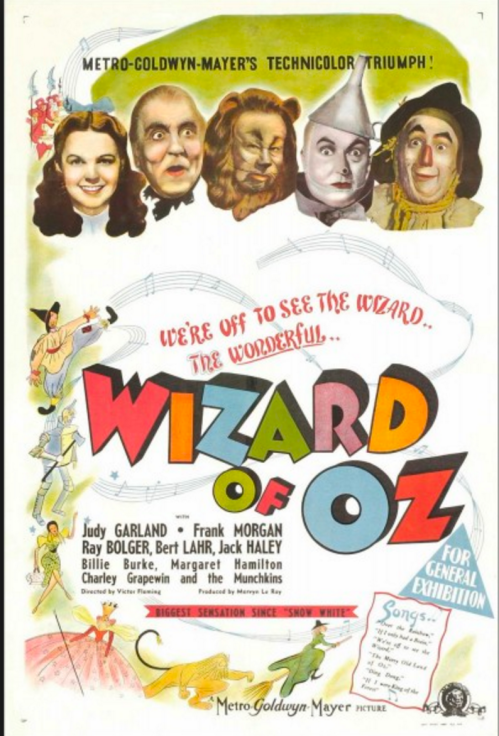
3. The Wizard of Oz (1939): “Back where I come from, we have universities, seats of great learning, where men go to become great thinkers. And when they come out, they think deep thoughts and with no more brains than you have.”
4. Breakfast at Tiffany’s (1961): “You know what’s wrong with you, Miss Whoever-you-are? You’re chicken, you’ve got no guts. You’re afraid to stick out your chin and say, “Okay, life’s a fact, people do fall in love, people do belong to each other, because that’s the only chance anybody’s got for real happiness.” You call yourself a free spirit, a “wild thing,” and you’re terrified somebody’s gonna stick you in a cage. Well baby, you’re already in that cage. You built it yourself. And it’s not bounded in the west by Tulip, Texas, or in the east by Somali-land. It’s wherever you go. Because no matter where you run, you just end up running into yourself.”
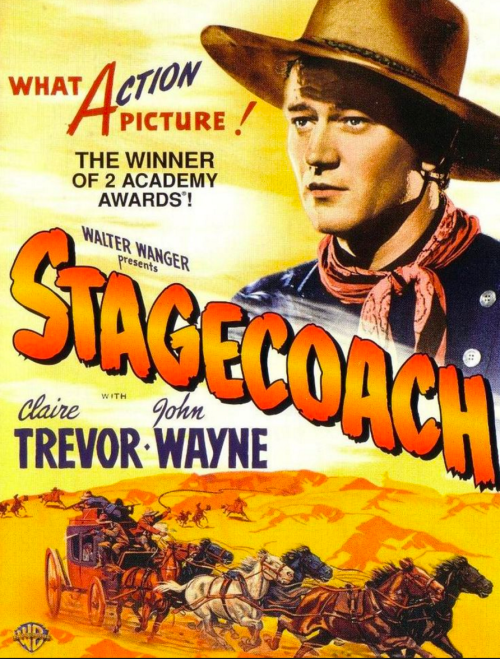
5. Stagecoach (1939): “Now folks, if we push on we can be in Apache Wells by sundown. Soldiers there will give us an escort as far as the ferry. Then it’s only a hoot and a holler into Lordsburg. We got four men who can handle firearms – five with you, Ringo. Doc can shoot if sober.” [or The Searchers (1956)/She Wore a Yellow Ribbon (1947)/The Man Who Shot Liberty Valance (1962)–the best of the John Wayne/John Ford oeuvre.]
In case you were wondering, Shane, The Wizard of Oz, The Adventures of Robin Hood, and Stagecoach were nominated for Best Picture. It is interesting to look at the list of Oscar winners for Best Picture. It ranges from the (not quite) sublime to the (truly) ridiculous. Some of my favorite winners are: The Best Years of Our Lives (1946), Ben Hur (1959), Tom Jones (1963), The Sting (1974), Chariots of Fire (1981), and The Last Emperor (1987).
But you will find me watching one of these non-winners, one of these five great films on Sunday night.
In the bitter cold of winter the trees stand bare and seem to be dead. But in the spring, they burst forth into leaf and flower, and the first fruits begin to appear. So it was with the Master’s death and resurrection, and so it is with all who faithfully bear the burden of suffering and death. Though they may seem crushed and dead, they will yet bear beautiful flowers and glorious fruits of eternal life.
–Sadhu Sundar Singh
Being means: not numbering and counting, but ripening like a tree, which doesn’t force its sap, and stands confidently in the storms of spring, not afraid that afterward summer may not come. It does come. But it comes only to those who are patient, who are there as if eternity lay before them, so unconcernedly silent and vast. I learn it every day of my life, learn it with pain I am grateful for: patience is everything!
–Rainer Maria Rilke
Ah, the last day of February–it is warming up but the clouds are back. Our flyover weather guru Dave Murray tells us that the “see-saw pattern of the winter” will continue into at least the beginning of the spring season. It was ever thus. Yesterday I returned a book to our west campus library–walking the block and a half there and back without a coat. The wind whipped my hair around and I arrived back at my office with that wind-blown, right-off-the-range look–a disheveled old lady. Well, I do the best I can to stay “sheveled,” but sometimes it is a losing battle.
It seems comfortable to sink down on a sofa in a corner, to look, to listen. Then it happens that two figures standing with their backs against the window appear against the branches of a spreading tree. With a shock of emotion one feels ‘There are figures without features robed in beauty’. In the pause that follows while the ripples spread, the girl to whom one should be talking says to herself, ‘He is old’. But she is wrong. It is not age; it is that a drop has fallen; another drop. Time has given the arrangement another shake. Out we creep from the arch of the currant leaves, out into a wider world. The true order of things – this is our perpetual illusion – is now apparent. Thus in a moment, in a drawing-room, our life adjusts itself to the majestic march of day across the sky.
–Virginia Woolf, The Waves
Woodcuts are by Walter J. Phillips and Erich Buchwald-Zinnwald.
Today on the Episcopal calendar of saints we celebrate the life of George Herbert, English poet and parson (1593-1633). Best known for his wonderful poetry, he also wrote a volume for parish clergy, A Country Parson. Here is section XXVIII,The Parson in Contempt, which seems very apropos today:
The Country Parson knows well, that both for the general ignominy which is cast upon the profession, and much more for those rules, which out of his choysest judgment he hath resolved to observe, and which are described in this Book, he must be despised; because this hath been the portion of God his Master, and of Gods Saints his Brethren, and this is foretold, that it shall be so still, until things be no more. Nevertheless, according to the Apostles rule, he endeavours that none shall despise him; especially in his own Parish he suffers it not to his utmost power; for that, where contempt is, there is no room for instruction. This he procures, first by his holy and unblameable life; which carries a reverence with it, even above contempt. Secondly, by a courteous carriage, & winning behaviour: he that will be respected, must respect; doing kindnesses, but receiving none; at least of those, who are apt to despise: for this argues a height and eminency of mind, which is not easily despised, except it degenerate to pride. Thirdly, by a bold and impartial reproof, even of the best in the Parish, when occasion requires: for this may produce hatred in those that are reproved, but never contempt either in them, or others. Lastly, if the contempt shall proceed so far as to do any thing punishable by law, as contempt is apt to do, if it be not thwarted, the Parson having a due respect both to the person, and to the cause, referreth the whole matter to the examination,and punishment of those which are in Authority, that so the sentence lighting upon one, the example may reach to all. But if the Contempt be not punishable by Law, or being so, the Parson think it in his discretion either unfit, or bootelesse to contend, then when any despises him, he takes it either in an humble way, saying nothing at all; or else in a slighting way, shewing that reproaches touch him no more, then a stone thrown against heaven, where he is, and lives; or in a sad way, grieved at his own, and others sins, which continually break Gods Laws, and dishonour him with those mouths, which he continually fills, and feeds: or else in a doctrinal way, saying to the contemner, Alas, why do you thus? you hurt your self, not me; he that throws a stone at another, hits himself; and so between gentle reasoning, and pitying, he overcomes the evil: or lastly, in a Triumphant way, being glad, and Joyful, that he is made conformable to his Master; and being in the world as he was, hath this undoubted pledge of his salvation. These are the five shields, wherewith the Godly receive the darts of the wicked; leaving anger, and retorting, and revenge to the children of the world, whom another’s ill mastereth, and leadeth captive without any resistance, even in resistance, to the same destruction. For while they resist the person that reviles, they resist not the evil which takes hold of them, and is far the worse enemy.
Speaking of saints, we don’t need to remind you that Dolly Parton is awesome, but this is very cool.