dual personalities

Category: Uncategorized

Postcards from abroad

by chuckofish

The Cathedral Church of St. George in Jerusalem

A dear friend of mine recently returned from a trip to the Holy Land where she visited the (Episcopal) Cathedral Church of St. George in Jerusalem. According to their website, the Cathedral is home today to two congregations: the indigenous Palestinian Anglicans, often called the ‘Living Stones,’ and a community of expatriate English-speaking members. The local Arabic-speaking Anglicans are part of the historic Christian presence here since the time of the first Pentecost:

‘Cretans and Arabs – in our own language we hear them speaking about God’s deeds of power’ (Acts 2:11)

The Cathedral remains a focal point for the Province of Jerusalem and the Middle East and the Worldwide Anglican Communion.

My friend took a picture of this for me:

How perfect is that? A needlepoint chair pad with the family cognomen! I was very touched. It is indeed a small world, especially in the Anglican Communion. And here’s a Monday morning shout-out to those distant relatives at St. George’s!

Praise for the morning

by chuckofish

“Morning Has Broken” is a popular Christian hymn first published in 1931. It was not written by Cat Stevens, although it is frequently attributed to him.  He should be given credit for introducing it to a wider audience.  However, English author Eleanor Farjeon wrote the words and it is set to a traditional Scottish tune known as “Bunessan”. According to Wikipedia, the hymn originally appeared in the second edition of “Songs of Praise” (published in 1931). In Songs of Praise Discussed, the editor, Percy Dearmer, explains that as there was need for a hymn to give thanks for each day, English poet and children’s author Eleanor Farjeon had been “asked to make a poem to fit the lovely Scottish tune”. A slight variation on the original hymn, also written by Eleanor Farjeon, can be found in the form of a poem contributed to the anthology Children’s Bells, under Farjeon’s new title, “A Morning Song (For the First Day of Spring)”, published by Oxford University Press in 1957.

Eleanor Farjeon (13 February 1881 – 5 June 1965) was an author of children’s stories and plays, poetry, biography, history and satire. She was the granddaughter of the American actor Joseph Jefferson and counted among her friends D. H. Lawrence, Walter de la Mare and Robert Frost. We thank her for writing this wonderful reminder to appreciate the small things (which are really the big things) in our lives and to thank our creator. After all, “this is the day the Lord has made; let us be glad and rejoice in it.” (Psalm 118:24)

Morning Has Broken
lyrics by Eleanor Farjeon

Morning has broken,
like the first morning
Blackbird has spoken,
like the first bird
Praise for the singing,
praise for the morning
Praise for the springing
fresh from the word

Sweet the rain’s new fall,
sunlit from heaven
Like the first dewfall,
on the first grass
Praise for the sweetness
of the wet garden
Sprung in completeness
where his feet pass

Mine is the sunlight,
mine is the morning
Born of the one light,
Eden saw play
Praise with elation,
praise every morning
God’s recreation of the new day

On the road again

by chuckofish

What should I bring?

“Our battered suitcases were piled on the sidewalk again; we had longer ways to go. But no matter, the road is life.” – Jack Kerouac

Daughter #1 is just coming home for the weekend, but travel is travel…Can’t wait to see her!

A trinity of Lenten movie picks

by chuckofish

As we hurtle through Lent, I realize that I will not get through all the good movies on my Lenten List unless I “bundle”. So today, I will combine a few suggestions for Lenten viewing in the non-openly-religious category.
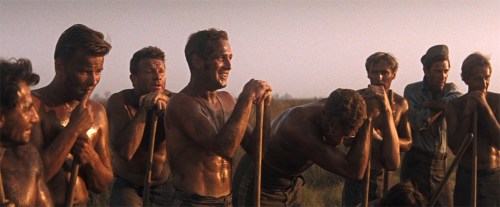
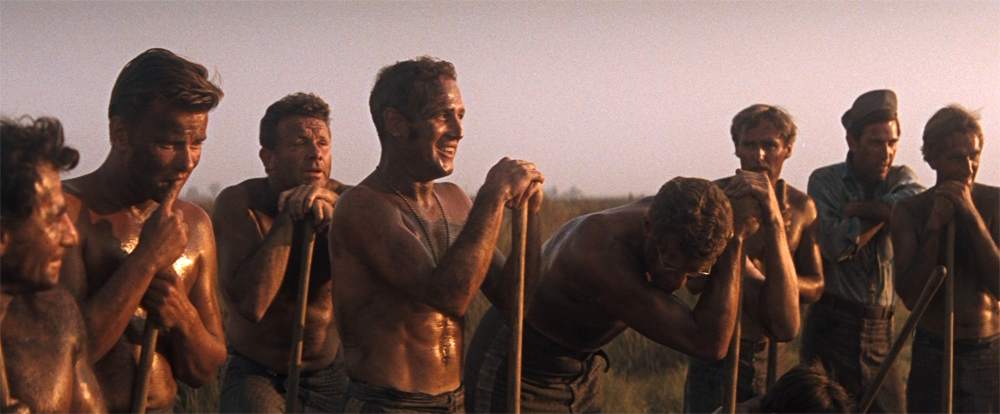
My dual personality has blogged about this one already, but Cool Hand Luke (1967), directed by Stuart Rosenberg and starring the inimitable Paul Newman as Luke, is clearly a suitable story for Lent as Luke is clearly a Christ figure surrounded by disciples, for whom he sacrifices his life. A wonderful movie based on the book by Don Pearce, it won only one Academy Award–for supporting actor George Kennedy, who shines in a firmament of spectacular supporting stars, as a stand-in for St. Peter. There were other nominations (for best actor, music and writing)–but please, no best picture, no best director? What were they thinking? And Paul Newman was down-right robbed that year. But enough said. It was a year for southern lawbreakers. Besides Cool Hand Luke, there was In the Heat of the Night, Bonnie and Clyde…and the more politically correct films won: In the Heat of the Night, Guess Who’s Coming to Dinner. A fine example of why I hate awards and award shows.
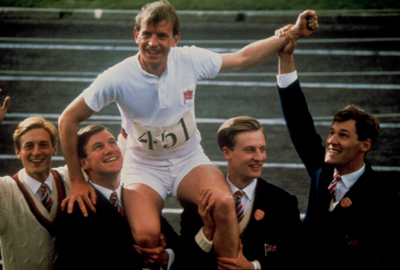
Chariots of Fire (1981), directed by Hugh Hudson and starring Ian Charleson and Ben Cross as two U.K. track athletes is an obvious choice. It is the story of a devout Christian and a determined Jew competing for places on the British 1924 Olympic team. The story of Eric Liddel and his steadfast faith is an inspiring one and not the usual stuff of late 20th century Hollywood. I loved this movie when I first saw it and still enjoy it immensely whenever I watch it. It was such a surprise when it took home the Oscar for best picture. It seemed like such an underdog that year, but it also won for costume design, music and best writing.
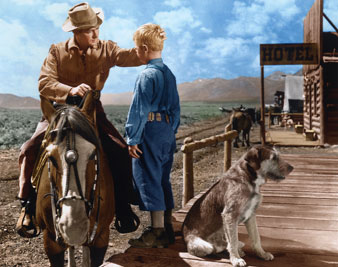
I never need an excuse to watch Shane (1953), because it is probably my favorite movie of all time–or at least up there in the Top Five–but if you are so inclined, it also makes for some good Lenten viewing/discussion. Shane is the story of a weary gunfighter who attempts to settle down with some homesteaders, but ends up sacrificing himself for their good. It is the magnus opus of its star, Alan Ladd, and its director, George Stevens. Neither was recognized by the Academy, although the film received multiple nominations, including best picture. It only won for best cinematography (Loyal Griggs) and, boy, did it deserve that one!

This film has a brilliant screenplay by A.B. Guthrie and is masterfully directed, notable for pacing, suspense and, of course, characterization. The “bad guys” in this western are not so bad really and the “good guys” are somewhat hapless. The chance arrival of the mysterious stranger Shane who throws in with the homesteaders upsets the balance and a really bad guy (Jack Palance), the gunslinger Wilson, is called in. It is important to remember when watching this movie that it has been copied badly ad nauseum, so that the original may appear cliched, when it truly is not a cliche. It is the original, a true classic, filled with wonderful archetypal scenes. Who can forget the arrival of Shane, watched from afar by the boy Joey (“I like a man who watches things go on around. It means he’ll make his mark someday.”), the symbolic conquering of the stump in the yard, the fight in the saloon with Chris (“I was just askin’ about sody pop… pigs and taters and one thing and another”), the prairie 4th of July party, the hilltop funeral where Shane quietly rallies the foundering farmers, the muddy showdown between Stonewall and Wilson, Shane’s fight with Joe and his ride into town, and, of course, the final gunfight between Shane and the cattlemen, and the haunting finale (“Shane, come back!”)? Arguably the best western ever, and John Wayne nowhere in sight! (Please note: Alan Ladd as Shane said, “You speakin’ to me?” long before Robert De Niro.)

All of these movies are good ones to watch with family and discuss with your children. They all include many “teachable moments”.
Our neck of the woods

by chuckofish

I took these photos last Friday when daughter #2 and I took a quick walk around the ‘hood.

We are surrounded by beauty! It rained very hard on Saturday and, as a result, most of the magnolia blossoms are on the ground now. They never last too long. Sigh. But everything is greening up nicely, don’t you think?

New Sarum picture Monday

by chuckofish

The other day I blogged about Old Sarum and New Sarum. Here is a picture of the boy at New Sarum (Salisbury Cathedral) in 1989, trying to climb up the grill, apparantly desperate to get into the church. Quelle monkey! He was 2 1/2 and wearing his engineer overalls and red Keds. A fashion plate even then.


The boy was in England for his aunt’s wedding. Here he is with daughter #1. And here they are at the wedding.

The wedding was not at Salisbury, but in the little local church in Titchfield. Lovely.

Getting along with an old house

by chuckofish

Old houses have quirks and foibles, and they can sometimes be like difficult, grumpy old people. Even so, they deserve to be treated with respect and it is usually best to let them have their way. Shirley Jackson instinctively understood that moving into an old house requires a period of adjustment while the house and the new inhabitants get used to each other. In Life Among the Savages, a wonderfully witty, sometimes slightly creepy, memoir about raising her family in 1950s Vermont, Jackson got it exactly right. She clearly understood old houses.

“After a few vain attempts at imposing our own angular order on things with a consequent out-of-jointness and shrieking disharmony that set our teeth on edge, we gave in to the old furniture and let things settle where they would. An irritation persisted in one particular spot in the dining room, a spot which would hold neither table nor buffet and developed an alarming sag in the floor when I tried to put a radio there, until I found completely by accident that this place was used to a desk and would not be comfortable until I went out and found a spindly old writing table and set a brass inkwell on it.

There was a door in the attic that preferred to stay latched and would latch itself no matter who was inside; there was another door which hung by custom slightly ajar, although it would close goodhumoredly for a time when some special reason required it…One bedroom chose the children, because it was large and light and showed unmistakable height-marks on one wall and seemed to mind not at all when crayon marks appeared on the wallpaper and paint got spilled on the floor.

It was a good old house, after all.”

The idea is to work with a house not against it. One doesn’t want one’s house to feel like a museum,

this is a nice enough room, but a might too perfect. Is it the bust in the corner?

a hotel,

a hideously overdone Queen Ann mansion

or a decorator’s show-place.

Nice, but everything doesn't have to match. It's a giveaway that you've had a decorator do it.

I prefer the mix and match of time — I like to work slowly and look until I find exactly the right object at the right price that will fit with what I already have. And when I buy, it’s for keeps — I’m not interested in how current I am (I guess I’m very bourgeois). My house is definitely a work in progress. We’ve lived here going on twenty years, but it is a long way from being finished and that’s the way I like it. I think I’ve got most of the disharmony worked out (e.g., the 1960s orange, gold, and avocado green), but there’s still plenty to do.

I’ll say this for our ‘good old house’: it doesn’t mind a mess, grubby hand prints, or dust-bunnies .. and if you’re lucky, you can sometimes “hear a faraway voice in the house”, which will sing to you at night.

Wherefore art thou, Kirk Douglas?

by chuckofish

“Meanwhile great Odysseus in the river scrubbed the salt crust from the flesh of his back and broad shoulders and cleaned his hair of the frothy scum dried in it from the infertile sea. When he had thoroughly washed and anointed himself smoothly and put on the clothes given him by the girl, then did Athene daughter of Zeus contrive to make him seem taller and stronger, and from his head she led down the curls of his hair in hyacinthine tendrils. As when some master craftsman (trained by Hephaestus and made wise by Palas Athene in all the resources of his art) washes his silver work with molten gold and betters it into an achievement that is a joy for ever–just so did the goddess gild his head and shoulders with nobility. Then he went far apart and sat down by the margin of the sea, radiant with graciousness and glory, so that the girl in wonder said to her well-coiffed maidens…”

Homer, The Odyssey (Book VI)
translated by T.E. Shaw (1935)

Methinks the gods and goddesses were not unlike the movie moguls of yesteryear.

God be in my head

by chuckofish

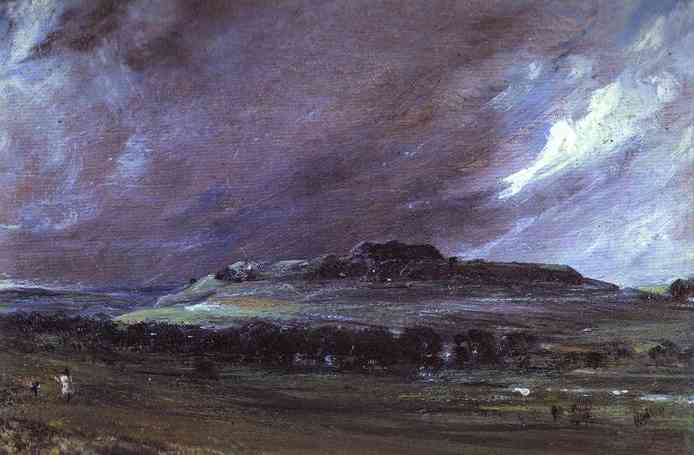
"Old Sarum" by John Constable

God Be in My Head
Anonymous
(from a 1506 Sarum Book of Hours)

God be in mihede And in min vnder ston dyng
God be in myn hyyesse And in min lokeyng
God be in mi movthe And in myspekeyng
God be in my hart And in my thovgvt
God be at myneyende And ad myde partying

God be in my head
And in my understanding;
God be in mine eyes
And in my looking;
God be in my mouth
And in my speaking;
God be in my heart
And in my thinking;
God be at mine end,
And at my departing.

Old Sarum as it looks today.

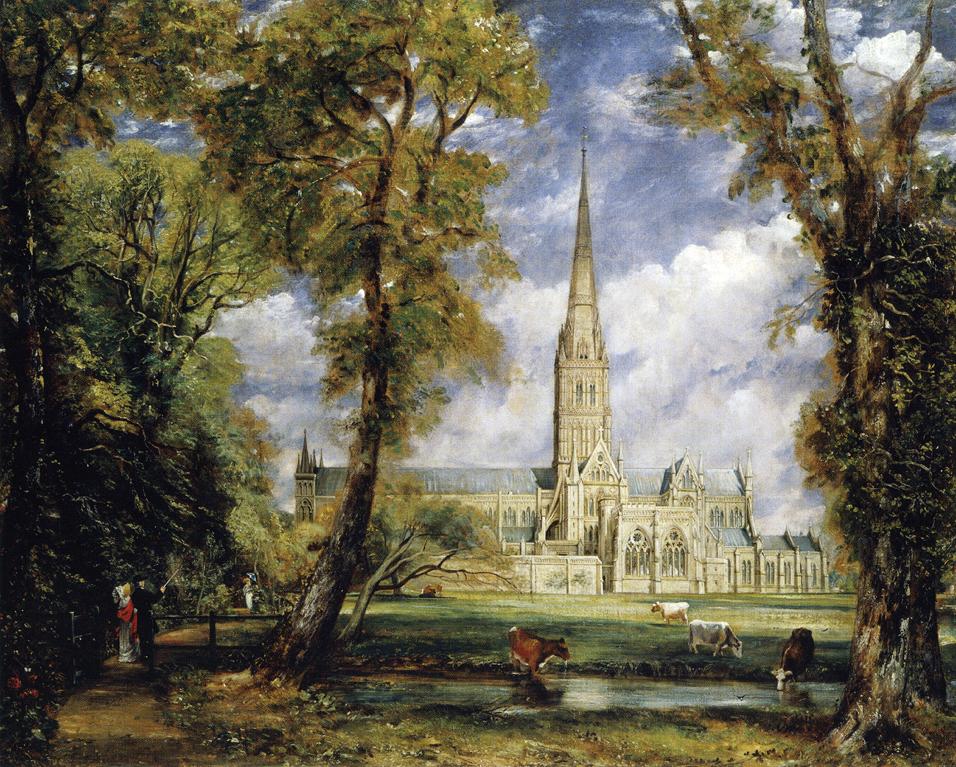
And here’s a picture of the “New Sarum” also by John Constable.

Happy St. Patrick’s Day

by chuckofish

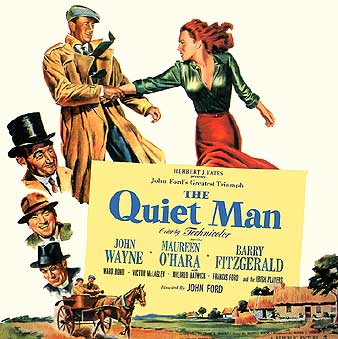
[Time out now from our Lenten movie festival for a St. Patrick’s Day Distraction.] In our decidedly un-Irish family we do make one concession to the Emerald Isle. St. Patrick’s Day is nothing if not a fine excuse for watching one of the greatest movies ever: The Quiet Man (1952).

It is firmly imbedded as one of our family favorites and is on my personal top-ten list of best movies. As with all our favorites, we know the dialogue by heart and many of the lines have become part of our family lexicon:

“Sir!… Sir!… Here’s a good stick, to beat the lovely lady.”

and

“Now I want you all to cheer like Protestants!”

and

“Impetuous! Homeric!”

And, of course, whenever we refer to our own antique furniture, pewter, plates and dishes, we like to call them our “Tings”, pronounced as Maureen O’Hara does, without the benefit of an “h”.

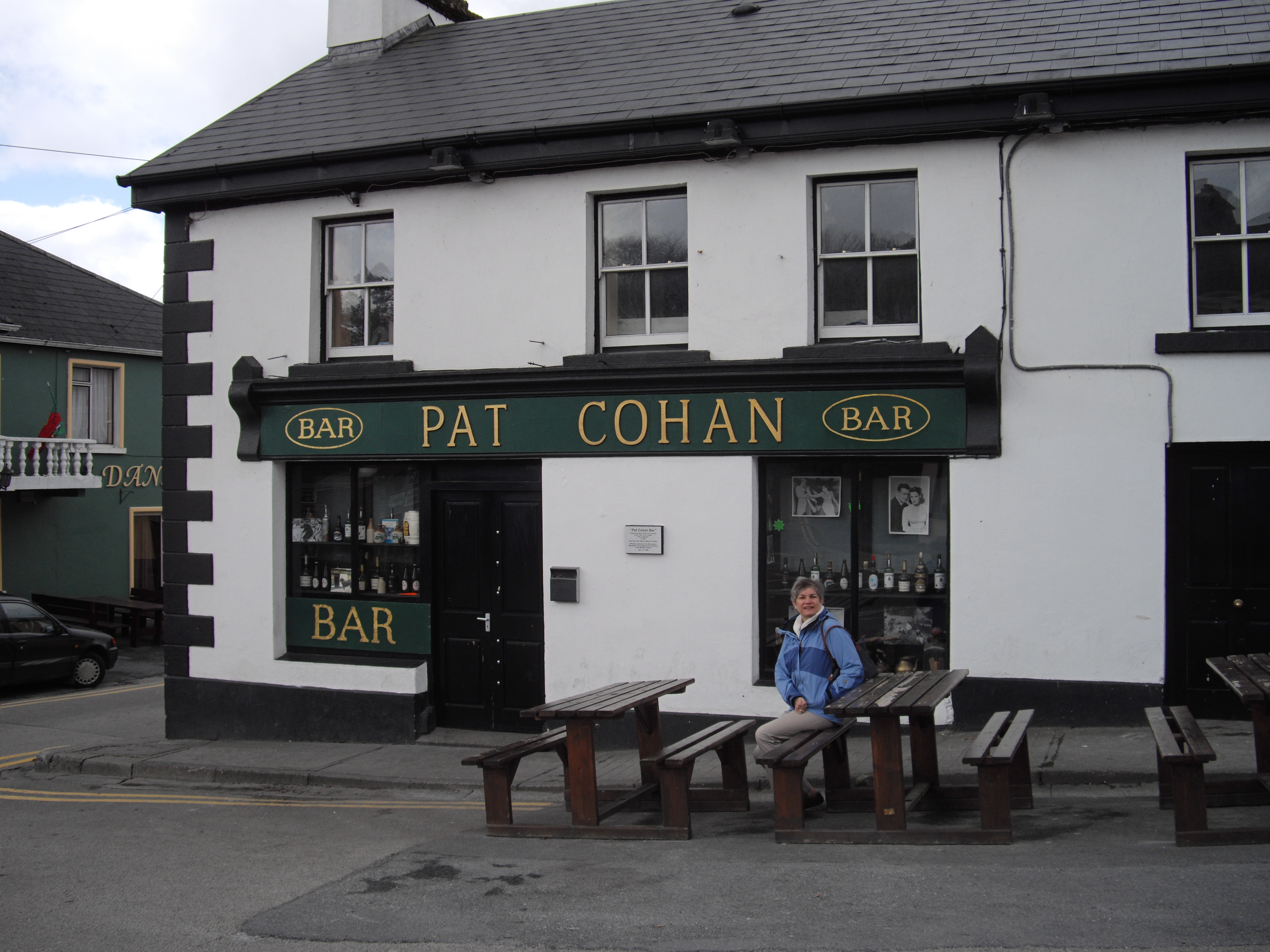
Last year when daughter #1 and I visited daughter #2 in Ireland where she was studying at Trinity College in Dublin, we took a day tour up through County Mayo and Connemara, stopping in the tiny village of Cong. Why, you ask? Because Cong is where The Quiet Man was filmed! It is a lovely little place and still a wee bit of a tourist attraction.

Your dual personality in front of Pat Cohan's pub in Cong.

Anyway, this is a movie not to be missed. It stars, of course, Ford’s “repertory company” which included John Wayne, Maureen O’Hara, Victor McLaglen, Barry Fitzgerald and his brother Arthur Shields, Ward Bond, Mildred Natwick, and a host of Irish character actors. John Ford won his fourth Directing Oscar and Winton C. Hoch won his third Oscar for color cinematography. What a team they were! The film was nominated for Best Picture, Best Writing, and several other Oscars.

As usual, John Wayne was overlooked. But just try to imagine this movie without him if you will! He is terrific as always, throwing his hat hither and yon, dragging Maureen over hill and dale, riding both a stallion and a tandem bicycle (at different times but in the same hell-bent-for-leather fashion), fighting the squire through the town and into the river. He was the most graceful and amazingly physical actor ever, and he could still manage to convey deep feelings without uttering a word.

Recently I saw another Irish-themed movie with a similar plot. The Field (1990), written and directed by Jim Sheridan, and starring Richard Harris, John Hurt, Sean Bean, and Tom Berenger, tells a similar story of another “rich” Irish-American who comes to a small village in the old country and attempts to buy a field. However, The Field is the nightmare flip-side of The Quiet Man. Ignorance, fear, suspicion and chronic abuse take center stage. Ultimately the rich foreigner is beaten to death for his trouble. The newer movie does somehow ring truer than Ford’s fairy tale, but I’ll take the fairy tale any day.