A little mid-week inspiration
by chuckofish
And we know that all things work together for good to them that love God, to them who are the called according to his purpose.
Romans 8:28
And we know that all things work together for good to them that love God, to them who are the called according to his purpose.
Romans 8:28
“Dixon was alive again. Consciousness was upon him before he could get out of the way; not for him the slow, gracious wandering from the halls of sleep, but a summary, forcible ejection. He lay sprawled, too wicked to move, spewed up like a broken spider crab on the tarry shingle of the morning. The light did him harm, but not as much as looking at things did; he resolved, having done it once, never to move his eyeballs again. A dusty thudding in his head made the scene before him beat like a pulse. His mouth had been used as a latrine by some small creature of the night, and then as its mausoleum. During the night, too, he’d somehow been on a cross-country run and then been expertly beaten up by secret police. He felt bad.”
From Lucky Jim by Kingsley Amis (Chapter six)
Oh, I laughed out loud as I typed this!
Lucky Jim, published in 1954, was Kingsley Amis’s first novel, and won the Somerset Maugham Award for fiction. Set sometime around 1950, the book follows the exploits of the eponymous Jim Dixon, a reluctant medieval history lecturer at an unnamed provincial English university. Christopher Hitchens described it as the funniest book of the second half of the 20th century. The New Yorker said in their review that it was a “highly unusual first novel by a young English writer who is endowed with, and in control of, more than his share of talent, humor, and human sympathy.” Well. It is very funny.
The Catcher in the Rye by J.D. Salinger was published on July 16 in 1951. It has been translated into almost all of the world’s major languages. Around 250,000 copies are sold each year, with total sales of more than 65 million books. I am one of its biggest fans and have been since I first read it in the 10th grade. I was one of those teenagers that identified with Holden Caulfield and forty years later I still do. I love him and his creator as much as any fictional character and author out there.
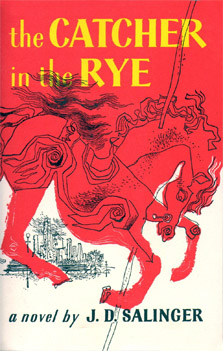
“The part that got me was, there was a lady sitting next to me that cried all through the goddam picture. The phonier it got, the more she cried. You’d have thought she did it because she was kindhearted as hell, but I was sitting right next to her, and she wasn’t. She had this little kid with her that was bored as hell and had to go to the bathroom, but she wouldn’t take him. She kept telling him to sit still and behave himself. She was about as kindhearted as a goddam wolf. You take somebody that cries their goddam eyes out over phony stuff in the movies, and nine times out of ten they’re mean bastards at heart. I’m not kidding. ” (Chapter 18)
How right is that?
It’s been a difficult week, but daughter # 1 came into town and we dealt with it like the ladies we are.


Dinner is a perennial problem in our house. We never seem to know who will be there and when we can sit down to eat. I’ve learned to be creative. Sometimes my made-up dinners work and other times they don’t. I’ve had some brilliant culinary disasters in my day — the time I tried ‘easy’ lobster Newburg comes to mind (we threw it out).
One recent success involved a last minute attempt to stretch a small amount of leftover meatloaf into dinner for four. In case you’re interested, here’s my meatloaf recipe:
2 lbs. really good ground beef
one heaping teaspoon marmite 
a couple handfuls of oats
one egg
a couple of tablespoons minced onion (optional)
Mix thoroughly and pop in the oven at 350 to 375 for about 1.5 hours or until cooked all the way through. Drain fat, let rest five minutes, and then serve.
For the sandwiches:

First cook Pepperidge Farms’ Garlic Bread according to package directions but for half the time. Meanwhile saute some onions in butter and slice the meatloaf very thin. When the garlic bread is ready, top with the meatloaf, the onions, and some grated cheddar cheese. Pop in the oven and cook until cheese is melted (about 3-4 minutes). Cut into pieces and serve as open faced sandwiches. Feeds four if you have a side salad and/or fruit. Unfortunately, I didn’t get a picture of this.
But the recipe is endlessly flexible and a couple of weeks later, I adapted it for tuna as follows:
2 cans tuna (fancy albacore) in water
mayo to taste
half a red onion soaked in water for 15 minutes and then sliced very thin
tomatoes sliced thin
grated cheddar cheese
Follow the cooking directions as above.
This is how it turned out:

Easy tuna melt
Okay, the picture is not that appealing. I need to work on presentation, but the point is that you can make a meal out of whatever you’ve got lying around — deli meat, left over meat or roasted vegetables, bacon, lettuce and tomatoes… and in the end — hey, presto! — you have yummy food that will please the hungry hordes.
Last night the boys and I searched Netflix “watch it now” for a Yul Brynner movie to watch in honor of his birthday. Since we’d recently watched the movies we own (Anastasia, the King and I, Kings of the Sun) and since “The Magnificent Seven” was not available, we settled for “Taras Bulba” with Yul in the titular role of course. Now I had seen the movie before, but not since I was very young and the only thing I remembered about it the scene where they jump the horses over the gorge. That should have warned me.

Yes, it’s very nice.
Yul was hardly in the movie; it was a Tony Curtis vehicle and quite frankly, terrible! Basically, the movie consisted of scenes of horses galloping around Argentina where it was filmed (nice scenery), Cossacks thumping each other, laughing heartily, drinking and dancing even on the battlefield, and Tony Curtis looking lovelorn. Next time you’re in the mood for a Yul Brynner movie, pick something else — anything else! To think we wasted our lives on this.
To Kill a Mockingbird by Harper Lee was first published on this day in 1960.
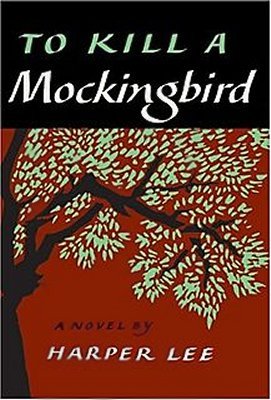
It was immediately successful, winning the Pulitzer Prize, and has become a classic of modern American literature. It’s a shame Harper Lee never wrote another novel, but I admire her for not giving in to the pressure her publisher must have put on her. She said what she had to say. It was enough. It must have taken everything she had.
I love the scene in Infamous where Sandra Bullock, playing Harper Lee, tries to explain what it takes out of a writer to write. She says, “America is not a country where the small gesture goes noticed…We want everything you have, and we want it as fast as you can turn it out.”
Of course, they made a terrific movie based on the novel in 1962. It is one of the few instances where the movie stacks up to the novel. It is also one of those movies that I and my dual personality were too young to go see at the theater. We only got to hear about it from our older brother who came home with our mother and raved about it. They both loved it. We had to wait until it came on television many years later to see it. As I recall, it was a dark and stormy night when we watched it, home alone this time. It was pretty scary! But we loved it too, and every time I see it I love it anew.
And, of course, it has the scene where if you were to stop me on the happiest day of my life and say, stop, watch this, I would be unable to stem the flow of ensuing tears. You know, it’s the Boo Radley behind the door scene. And that music. Absolute perfection.
I always loved Scout. I was not at all like her as a child (too timid), but I always thought I looked like the actress who played her and that was cool (not to mention unusual).
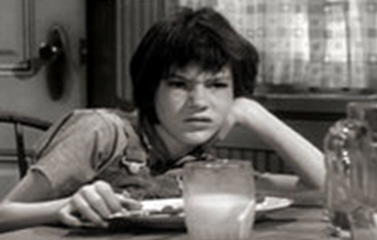
You have to admit, the resemblance is amazing.
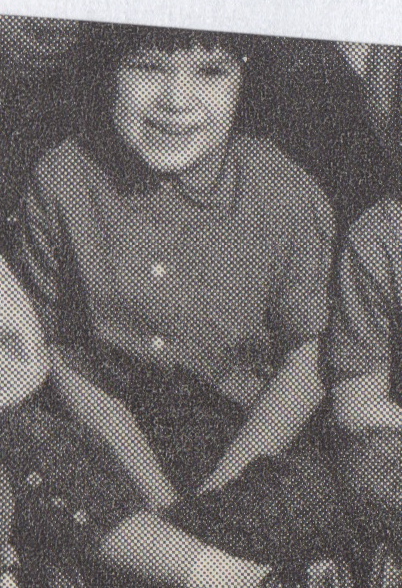
So all hail Harper Lee.
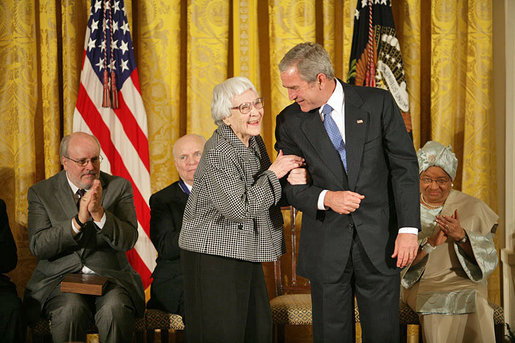
President George W. Bush awards the Presidential Medal of Freedom to author Harper Lee during a ceremony Monday, Nov. 5, 2007, in the East Room. “To Kill a Mockingbird has influenced the character of our country for the better. It’s been a gift to the entire world. As a model of good writing and humane sensibility, this book will be read and studied forever,” said the President about Harper Lee’s work. (White House photo by Eric Draper)
AMEN.

On this day in 1890 Wyoming entered the Union as the 44th U.S. state.

As daughter #1 says, quoting Liz Lemmon, I want to go to there. In fact, it is at the top of my list.

The state flower is Indian Paintbrush.

And my favorite movie was filmed there.
Sigh.
I recently came across this classic family photo.

What should the caption be?

Bottom line is, even if you see them coming, you’re not ready for the big moments. No one asks for their life to change, not really. But it does. So, what are we, helpless? Puppets? Nah. The big moments are gonna come, you can’t help that. It’s what you do afterwards that counts. That’s when you find out who you are.
(Whistler, Buffy the Vampire Slayer, season 2)

