dual personalities

Category: Uncategorized

Teach me, my God and King, in all things thee to see*

by chuckofish

Screen Shot 2017-02-05 at 1.47.32 PM.png

Got to hold this little nugget this weekend. It felt real good.

I also gabbed on the phone with my dual personality and two daughters. I got my hair cut and put together two Valentine boxes to mail to the aforementioned daughters. I worked in the yard on Sunday when the temperatures soared into the fifties.

The boy came over and helped me take down one twin bed in his old room and haul it and the mattress down to the basement. Then, after carrying the pieces upstairs, he put together the antique double bed I bought at an estate sale last fall (remember?). He is one busy boy and I appreciate his coming over to help his old mother. We didn’t even give him dinner; he was headed somewhere afterwards.

I continued to read The Transit of Venus by Shirley Hazzard–really such a treat.

The cicatrice of stitching on her gloves was an imprint on his brain. Earrings of pearl stared, white-eyed as fish. There was a streak of flowered scarf, inane, and the collar blue. Grief had a painter’s eye, assigning arbitrary meaning at random–like God.

We watched two  movies that are practically antiques–The Scarlet Pimpernel (1934) and Captain Blood (1935)–but which, in all the years since they were made, have never been surpassed on so many levels of cinematic effort. We watched a bit of the Super Bowl because the OM wanted to. Truly, I haven’t cared about football since Kurt Warner was traded to Arizona. (Except for Peyton Manning and he retired.)

I felt very happy sitting in church on Sunday. Nothing/no one annoyed me. I will try to hold on to this feeling and carry it into the work week.

Go in peace to love and serve the Lord.

*George Herbert, hymn #592
They don’t make ’em like that anymore..

by chuckofish

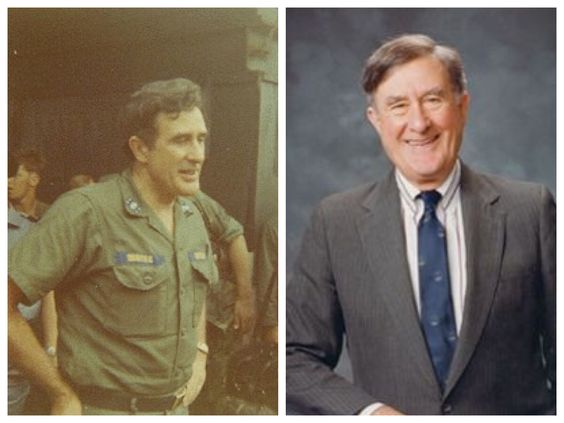
Yesterday I did not read the news at all and only used the internet for work.  It was the first truly pleasant day I’ve had in weeks. Rather than dissect the deplorable (can I even use that word now?) state of partisan conflict in this country, I’m going to write about a political figure known for his bipartisanship, John H. Chafee, a Marine veteran of WWII and Korea, Governor of Rhode Island, Secretary of the Navy, and Republican Senator. He died in 1999, apparently along with cooperation in government.

Chafee as a Marine and as a Senator

Chafee as a Marine and as a Senator

Born in 1922 into a prominent (yes, privileged), old Rhode Island family. Chafee was a student at Yale when the Japanese bombed Pearl Harbor. He immediately joined the Marines, eventually fighting on Guadalcanal and, after being commissioned 2nd Lieutenant, on Okinawa. After the war, he graduated from Yale in 1947 (a member of Skull and Bones no less) before attending Harvard Law School (1950). Recalled to active service in 1951 , he served as a Marine Captain in the Korean War. I discovered Chafee in the Korean War memoir I just read, The Coldest War, by James Brady. Since Brady called Chafee, his CO,  “the only truly great man I’ve yet met in my life” (p. 136), I thought I should look him up. He was, indeed, one of the rare breed of honorable politicians.

As first a Governor and then a U.S. Senator, Chafee was renown for his integrity, fairness and willingness to work with the opposition. You can read all about it in the (typically slanted) New York Times obituary.  Still, back in those days opponents could appreciate each other to a degree unheard of today. After all, President Clinton, a Democrat, awarded Republican Chafee the Presidential Medal of Freedom, albeit posthumously. In the citation, Clinton noted, “He embodied the decent center. For him, civility was not simply a matter of personal manners. He believed it was essential to the preservation of our democratic system” (Wikipedia). We could sure use that kind of civility in Washington now, don’t you think?

Appropriately, Chafee’s final public speech took place at the National Cathedral in Washington, where he spoke in celebration of the National Trust for Historic Preservation’s 50th anniversary, saying:

”Naysayers may ask, What difference does saving one train station or post office truly make in the future of America? My response is this: Preservation is not just about preserving brick and mortar, lintel and beam. It is about the quality of life, and the possibility of a bright future. Carl Sandburg expressed the danger of losing touch with our past when he said, ‘If America forgets where she came from, if people lose sight of what brought them along, then will begin the rot and dissolution.’ ” (quoted in the NYT obituary)

We would all do well to remember those wise words. I’m sure I wouldn’t have agreed with John Chafee on many issues, but that’s just the point. We should be able to work together despite our differences.

Let’s not lose sight of what brought us along!

Sources: Wikipedia, The New York Times, and James Brady’s The Coldest War. Photo from Pintarest.

Friday movie pick

by chuckofish

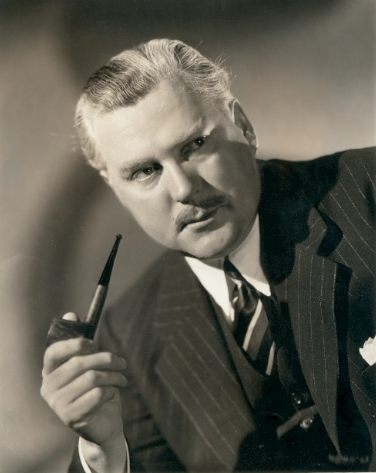
Tomorrow is the birthday of the famous character actor Nigel Bruce (1895–1953).

nigelbruce.jpg

The second son of a baronet, Bruce served in WWI as a lieutenant in the 10th Service Battalion of the Somerset Light Infantry. He was seriously wounded at the Battle of Cambrai (1917)and spent the rest of the war in a wheelchair. After the war, he went on the stage and then moved to Hollywood, becoming a leading member of the British film colony in Los Angeles where he was captain of the (mostly British) Hollywood Cricket Club.

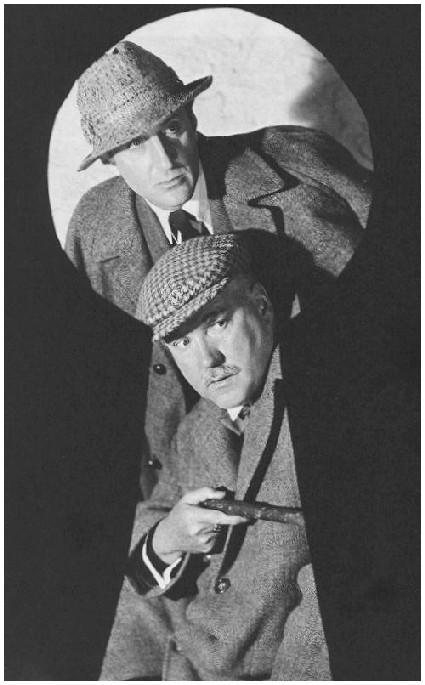
Best known for portraying Dr. Watson in fourteen Sherlock Holmes movies with Basil Rathbone,

sherlock.jpg

he made 78 movies–many of them classics. He is one of those guys who is always turning up in favorite films.

My personal favorite is The Scarlet Pimpernel (1934) starring Leslie Howard and Merle Oberon. Bruce played the Prince of Wales: “Why, damn me, Percy, you’re brainless, spineless, useless: But you do know clothes!”

50136222.jpeg

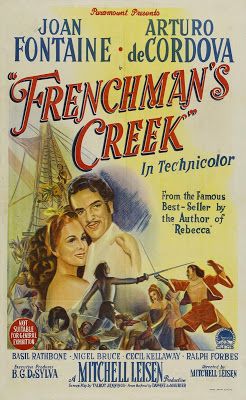
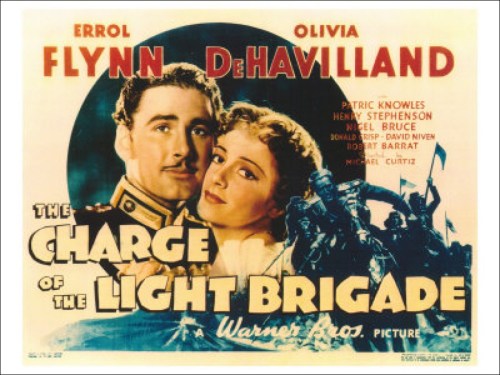
I think I will toast Nigel Bruce tonight and watch The Scarlet Pimpernel, but you could watch The Charge of the Light Brigade (1936), Rebecca (1940), Lassie Come Home (1943) or any one of those Sherlock Holmes movies.

Lassie_Come_Home,_Original_Theatrical_Poster.jpgfrenchman.jpg

charge of the lught.jpgthe blue bird.jpg

They just don’t make ’em like Nigel Bruce anymore!

I should also note that February is ’31 Days of Oscar’ month at TCM, so check out their schedule for a particularly strong line-up of Academy Award-winning titles.

Have a great weekend!

Thursday chuckle

by chuckofish

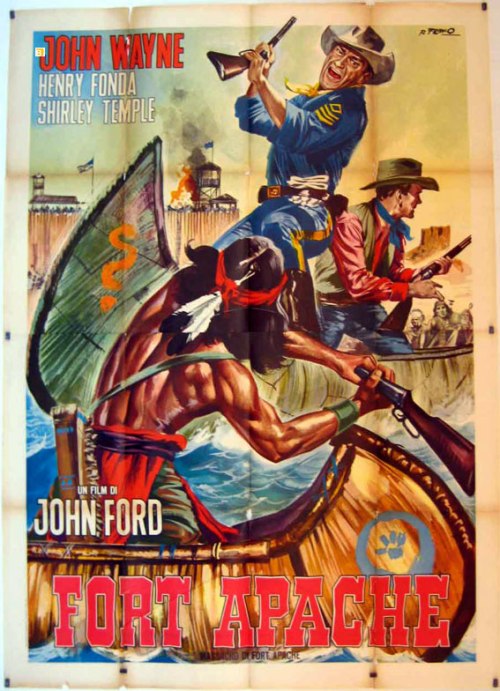
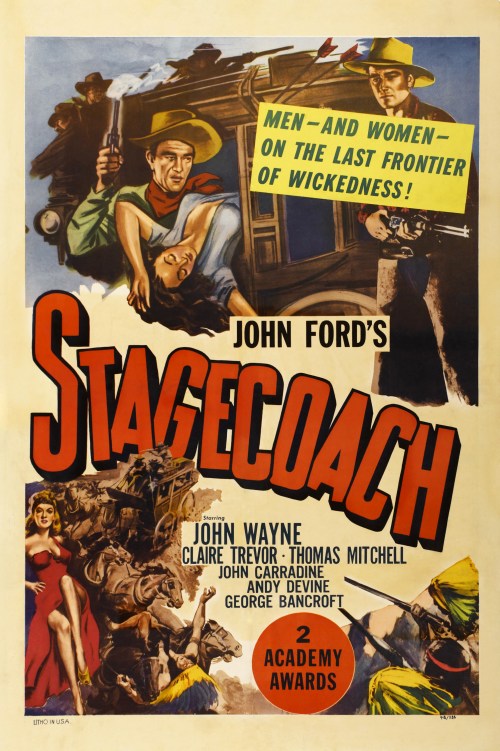
Here are a few examples I found recently of movie posters that bear no relation whatsoever to the film they are allegedly marketing.

fortapache.jpg

I mean seriously. Fort Apache (1948) takes place in the desert and was filmed in Monument Valley, Arizona. There are no Indians in canoes. And if there were canoes, John Wayne would know better than to stand up in one.

Poster-Stagecoach-1939_01.jpg

Are you kidding me? Words fail. “Men and women on the last frontier of wickedness”–if that’s what you were expecting, you were in for a big disappointment!

I wonder if this marketing method–i.e. blatantly wrong illustrations–ever worked.

Weird.

Have a good Thursday, or Friday eve, as we say in flyover land.

God direct my thinking today

by chuckofish

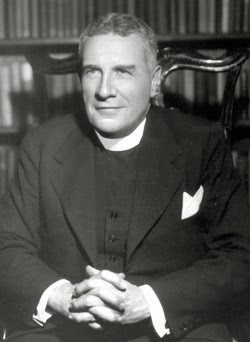
Yesterday on the Episcopal Church calendar was the lesser feast day of Sam Shoemaker, (1893-1963), who was an Episcopal priest instrumental in the Oxford Group and founding principles of Alcoholics Anonymous.

Shoemaker.jpg

Lest we forget, Dr. Samuel Moor Shoemaker was the rector of the Calvary Church in New York City, which was the U.S. headquarters of the Oxford Group. Bill Wilson attended Oxford Group meetings at the Calvary Church and Sam was instrumental in assisting Bill Wilson with the writing of the book Alcoholics Anonymous (nickname: The Big Book).

In 1917 Sam Shoemaker was sent to China to start a branch of the YMCA and to teach at the Princeton-in-China Program. Feeling discouraged there in 1918, he first met Frank Buchman, who told him of the four absolutes, honesty, purity and unselfishness and love. Shoemaker would later speak of the meeting as a major influence for the start of his ministry, that being the time when he decided to let go of self and let God guide his life.

Bill Wilson would later give credit to Sam Shoemaker whom he referred to as a co-founder of AA.

” It was from Sam Shoemaker, that we absorbed most of the Twelve Steps of Alcoholics Anonymous, steps that express the heart of AA’s way of life. Dr. Silkworth gave us the needed knowledge of our illness, but Sam Shoemaker had given us the concrete knowledge of what we could do about it, he passed on the spiritual keys by which we were liberated. The early AA got its ideas of self-examination, acknowledgement of character defects, restitution for harm done, and working with others straight from the Oxford Group and directly from Sam Shoemaker, their former leader in America, and from nowhere else.”

Rev. Shoemaker wrote over thirty books, at least half of which were circulating before AA’s 12 Steps were first published in the Big Book in 1939. Shoemaker’s contributions and service to Alcoholics Anonymous and as a minister of the Anglican Communion and Episcopal Church of America have had a worldwide effect. The philosophy that Shoemaker codified, in conjunction with Bill Wilson, is used in almost every country around the world to treat alcoholism.

God bless these amazing guys who started AA! Truly their coming together and working out the AA system was a miracle.

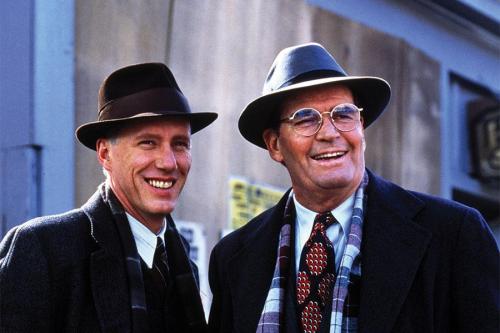
There is, by the way, a good made-for-tv movie called My Name is Bill W. (1989 Hallmark Hall of Fame) starring James Woods and James Garner. It is based on the true story of William Griffith Wilson and Dr. Robert Holbrook Smith, M.D.,  the co-founders of AA.

promise-1-900x600.jpg

James Woods won an Emmy for his portrayal of Wilson. I don’t remember if Sam Shoemaker is featured as a character–they no doubt soft-pedaled the spiritual side of the story. I think I will see if I can find it to watch. I remember thinking it was excellent at the time.

Holy God, we give thanks to thee for the vision of Samuel Shoemaker, who labored for the renewal of all people: Grant, we pray, that we may follow his example to help others find salvation through the knowledge and love of Jesus Christ our Savior; who with thee and the Holy Spirit liveth and reigneth, one God, for ever and ever. Amen.

A lot of material for this post is lifted from http://www.satucket.com/lectionary/sam_shoemaker.htm

Last day in January

by chuckofish

Shirley temple in memorium 6 IIHIH.jpg

The splendor falls on castle walls
And snowy summits old in story:
The long light shakes across the lakes,
And the wild cataract leaps in glory.
Blow, bugle, blow, set the wild echoes flying,
Blow, bugle; answer, echoes, dying, dying, dying.

O hark, O hear! how thin and clear,
And thinner, clearer, farther going!
O sweet and far from cliff and scar
The horns of Elfland faintly blowing!
Blow, let us hear the purple glens replying:
Blow, bugle; answer, echoes, dying, dying, dying.

O love, they die in yon rich sky,
They faint on hill or field or river:
Our echoes roll from soul to soul,
And grow for ever and for ever.
Blow, bugle, blow, set the wild echoes flying,
And answer, echoes, answer, dying, dying, dying.

–from The Princess (Part 3) by Alfred Lord Tennyson

Read the whole thing here.

Weekend update

by chuckofish

Another busy weekend has come and gone.

IMG_2385.JPG

It was a nice weekend, which combined the right balance of housework, reading, talking to family members and socializing with friends. We visited the tiny babies who have actually doubled in size (but are still tiny)

IMG_0581.jpg

and the boy and daughter #3 came over for tacos on Sunday night.

IMG_2386.JPG

I started reading The Transit of Venus by Shirley Hazzard who died last December. Reading her obituary at the time, I realized I was completely unacquainted with her. Then, when I was perusing my bookshelves recently looking, as always, for something to read, I found The Transit of Venus. So I started reading.

At first I was put off by her somewhat pretentious style:

As he went up he was ashamed by a sense of adventure that delineated the reduced scale of his adventures. After the impetuous beginning, he would puzzle them by turning out staid and cautious. In a gilt mirror near the door he surprised himself, still young.

And her overuse of clever simile:

Where they got down, wrought-iron gates were folded back like written pages.

But as I persevered, I became more and more impressed. I saw that she is the real deal and pretty terrific. The Transit of Venus, which won the 1980 National Book Critics Circle Award for fiction, is “stuffed with description so intellectually active as to be sometimes exhausting,” Thomas Mallon wrote in The Atlantic (NYT obit). This is true, but her observations are brilliant. I will keep going.

I also read the Paris Review interview with Hazzard in 2005 and I was further impressed. She made the interviewer look like a moron.

INTERVIEWER

The jar of Marmite that Rex Ivory held on to through his imprisonment in a Japanese prisoner-of-war camp seems like a symbol of the primitive human need to hold onto something, to make some sort of meaning. Has art been like that for you?

HAZZARD

There was an actual jar of Marmite, recounted to me long, long ago by a British survivor of Changi Camp near Singapore and of the camp called Outram Road. Don’t forget that it has a real and immediate significance. Men died of malnutrition in those camps, and of diseases from lack of any coherent diet. Marmite would have been a treasure, and a lifesaver. Keeping it unopened was not only symbolic; it was a possible element for a day or two’s survival in the case of escape. In the Japanese camps, British and Australian prisoners hid tiny rice cakes saved from their starvation rations for just such motives. Immediate factual truth comes before symbolic cogitations. But yes, I suppose art is a Marmite, and the conserved shred of civilized life must seem intensely so to isolated and persecuted people. I remember a heart-shaking description by Solzhenitsyn in The Gulag Archipelago about prisoners exchanging whispered remembrances of poetry, or a phrase from a Mozart opera, precious passwords of sanity and civilized life, and of the ineffable power of art; Marmite.

Here’s the whole Paris Review interview.

Have a good Monday and a good week!

He has told you, O mortal, what is good;
and what does the Lord require of you

but to do justice, and to love kindness,
and to walk humbly with your God?

–Micah 6:8, from the OT lesson on Sunday.

Italian Idyll

by chuckofish

One of the necklaces I wear most frequently is a silver coin pendant. It belonged to my paternal grandmother, Mira Sargent Chamberlin.  The obverse shows a nymph

obverse

and the reverse shows victory putting a laurel on a man-headed bull.

reverse

The pictures are a little blurry, but it isn’t very big (about the size of a penny), so I had to get in close.  I’ve always wondered about the coin and recently endeavored to find out about it. Low and behold, the internet is full of information about such things (which is how I know about the nymph, victory, and man-headed bull). It turns out that it’s an Italian didrachm, from Neapolis (Naples) and dates to the 4th century BC. A better photographed example looks like this:

neapolis-d-this-one

The city minted various versions between about 425 and 275, and mine seems to fall somewhere around 350. To give you some chronological perspective, at that point Rome was just beginning to expand a little, Neapolis was a Greek city, and Alexander the Great was still a child.

I’m sure there’s a great story behind the pendant. I imagine that Mira got it when the family lived in Italy but I wonder how she came by it? Maybe my father found it on the beach and gave it to his mother who then had it set and wore it proudly. Newell seemed to be an avid beach-comber.

newell 1 Or, perhaps more likely, they bought coin in some dark, mysterious antique shop. I don’t suppose we’ll ever know, but it’s pleasant to speculate. In any case, now I know a lot more about ancient coinage than I did before. Do you have any objects whose story you’d like to discover? Next time the contemporary world threatens to overwhelm you, do a little digging into the past. Who knows what you’ll find out!

The powerful play goes on

by chuckofish

 30a7e9faaa224c5e66c38ad0776ce7d0.jpg
Oh me! Oh life! of the questions of these recurring,
Of the endless trains of the faithless, of cities fill’d with the foolish,
Of myself forever reproaching myself, (for who more foolish than I, and who more faithless?)
Of eyes that vainly crave the light, of the objects mean, of the struggle ever renew’d,
Of the poor results of all, of the plodding and sordid crowds I see around me,
Of the empty and useless years of the rest, with the rest me intertwined,
The question, O me! so sad, recurring—What good amid these, O me, O life?
                                       Answer.
That you are here—that life exists and identity,
That the powerful play goes on, and you may contribute a verse.

When in doubt, folks, go back to Walt Whitman for a punch of optimism.

D’ailleurs, it is Friday and I am ready for the weekend. I have stuff to do per usual and the “Elegant Italian Dinner” to attend at church. This fundraiser for the youth mission trip is always a fun event, even if the menu never varies from the lasagna and bag salad of yesteryear. That is part of its charm I guess.

Weather-wise it is going to be a typical cold, gray flyover January weekend,

screen-shot-2017-01-26-at-10-30-45-am

but we’ll go see our two little rays of sunshine in the NICU unit.

Unknown.jpeg

Unknown-1.jpeg

They look so much bigger with their preemie clothes, don’t they?

I should also note that Sunday–January 29–is the birthday of our great-great uncle John Wesley Prowers (1838–1884), the Colorado cattleman.

John_Prowers_one_of_Colorados_first_businessmen (1).jpg

In honor of JWP, I think I will watch Lonesome Dove this weekend.  JWP was a friend and business partner of Charles Goodnight, upon whom the character Captain Call (Tommy Lee Jones) is based.  I meant to watch it a week or so ago in honor of Robert Duvall, but I could not find it, because, as it turned out, I had lent it to the boy! Life is complicated!

Other possibilities on the cattle drive theme would be Red River (1948) or The Cowboys (1972) or episodes from the old TV show Rawhide (1959–1965) starring a dreamy young Clint Eastwood.

So many choices. And, hello, here’s something I found while perusing the internet:

91RqbaFk3ZL._SX522_.jpg

The world is more than we know. Have a great weekend.

The painting is by Fairfield Porter, Broadway South of Union Square, oil on canvas 1974-1975

You’ve got spunk

by chuckofish

mary-tyler-moore-mary-tyler-moore-show-GC.jpg

Well, sadly, TV “icon” Mary Tyler Moore has died at the age of 80.

Mary was a person I could relate to. I was in the ninth grade when The Mary Tyler Moore Show debuted on television, and I can tell you, growing up in flyover-land where practically everyone in my school was a blue-eyed blonde, it was really nice to have a beautiful brown-eyed, brown-haired actress in the spotlight.

She was always meticulously groomed and chic (at least in my 9th grade opinion )–I remember looking forward to seeing what she would wear each week.

b63a6a3c5e5d5c438ade8e5c978cf0e8.jpg

But even though she always looked great, everything did not work out perfectly for Mary. No, she frequently was embarrassed and unsure of herself and sometimes people made fun of her–just like the rest of us.

Plus, Mary Richards was a person who was getting by on her own, as a working gal–an “associate producer” no less. She had ventured out of her comfort zone and often had to push herself to do something. But she got by with a little help from her friends–Rhoda, Lou, Murray et al–as we all do.

Mary-Rhoda-and-Phyllis-Mary-Tyler-Moore-Show-set.jpg

Mary Tyler Moore as Mary Richards taught me (and a lot of other girls) to have confidence. That is no small thing.

mplsmtmstatue

MTM did a lot of other things besides play Mary Richards, and she did them well, but it is for this role that I remember her most fondly. I watched four episodes of The Mary Tyler Moore Show last night and toasted Mary. More toasting and MTM on the agenda for tonight. (CBS has scheduled a tribute to Mary Tyler Moore tonight at 8 p.m. central time.)

Into paradise may the angels lead thee, Mary, and at thy coming may the martyrs receive thee, and bring thee into the holy city Jerusalem. (BCP, Burial of the Dead, Rite I)