dual personalities

Category: Uncategorized

Wisdom of the ages

by chuckofish

Each generation tends to think the challenges it faces are entirely new and much harder to overcome than anything anyone has ever dealt with before. If we think about it, we know that isn’t true, but we persist in our ahistoric viewpoint anyway. Don’t worry, I’m not going to preach. Instead, I thought I’d entertain you with some surprisingly relevant Sumerian proverbs that I recently came across.

People complained about double-standards, and criticized mothers about their parenting skills:

A chattering girl is silenced by her mother. A chattering boy is not silenced by his mother.

They recognized the importance of gratitude, and that negativity and complaining are not useful.

You don’t speak of that which you have found. You talk only about what you have lost.

They also realized that a reputation lost through lying is hard to reestablish.

Tell a lie and then tell the truth: it will be considered a lie.

Perhaps my favorite Sumerian proverbs involve literacy and education. We live in a day and age when correct grammar is (apparently) the preserve of elitist pedants, and many young people have a poor command over their native tongue. But things were ever thus:

What kind of a scribe is a scribe who does not know Sumerian?

A scribe who does not know how to grasp the meaning — from where will he produce a translation?

A votive statue of the scribe Dudu dedicated to Ningirsu, 2900-2450 BC

Those socially conscious ancients even had advice for the poor — a social class that included the majority.

Taking action defeats poverty. He who knows how to get moving becomes strong. He will live longer than the sedentary man.

Votive figurines from the Temple of Abu at Tell Asmar

Whatever problems you face, take comfort in the fact that they are neither new nor unique. They are simply part of the human condition. Accept what comes and be grateful. The Akkadian author of Gilgamesh shared some good advice:

As for you, Gilgamesh, let your belly be full,
Make merry day and night.
Of each day make a feast of rejoicing.
Day and night dance and play!
Let your garments be clean,
Wash your hair, bathe in water.
Pay heed to the little one that holds your hand,
Let your wife delight in your embrace.

Not bad for a pagan writing (about) four thousand years ago, eh?

Have a good weekend and do not fret. All is well!

*Pictures from Google image; proverbs from the Electronic Corpus of Sumerian Literature

There ain’t nothing gonna steal my joy*

by chuckofish

Screen Shot 2017-06-11 at 4.30.08 PM.png

I am looking forward to catching up on some sleep this weekend, how about you?

I have no plans, and the wee babes are in Florida.

IMG_1417.jpg

IMG_1418.jpgThey appear to be enjoying themselves…but I miss them!

By the way, today is the anniversary of the wee babes’ parents’ wedding! It’s been five years since they tied the knot. They’ve been through a lot and we’re very proud of them.

Screen Shot 2017-07-27 at 8.03.31 PM.png

God the Holy Trinity make you strong in faith and love,
defend you on every side, and guide you in truth and peace;
and the blessing of God almighty,
the Father, the Son, and the Holy Spirit,
be among you and remain with you always.

Amen!

Have a great weekend!

“They have their exits and their entrances”*

by chuckofish

I was sad to read that the actor John Heard had died. You remember him from Home Alone (1990) no doubt,

john-heard-d.jpgbut he was in a lot of other movies and television shows through the years.

I guess he was sick of being identified as “the frazzled father in Home Alone“–thanks, New York Times–but, you know, everyone can’t be Robert DeNiro. He was a working actor with a recognizable face, and thereby, ahead of the game in my book.

Anyway, I always liked him. Maybe I’ll scrounge around and find one of his more “serious” films, such as The Trip to Bountiful (1985) or (my personal favorite) Awakenings (1990) or “One Way Ticket,” episode 14, season two of Miami Vice.

Screen Shot 2017-07-26 at 12.49.44 PM.pngSo a toast to John Heard and his long career.

Meanwhile, it’s Thursday. Time to start thinking about the weekend!

*As You Like It

Away, you rolling river

by chuckofish

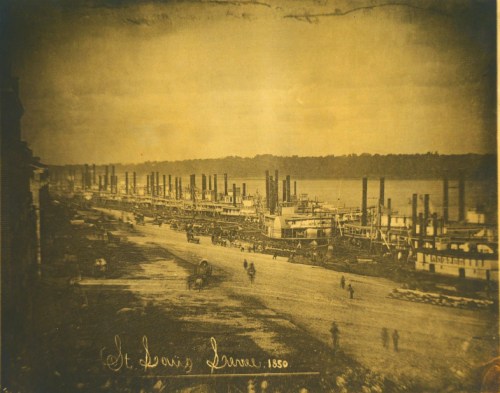
steamboat.jpgTwo hundred years ago the first steamboat arrived in St. Louis on (or around) July 27, 1817. The S.S. Zebulon M. Pike  was a small steamboat, and its underpowered engine needed help from old-fashioned poles in the hands of cordellers before it could tie up at the dock at the foot of Market Street.  This was on the natural riverbank. By the 1830s, the landing was paved with limestone. The red granite levee that still exists was built in 1868-69.

Built in Louisville, the Pike was the first steamboat to ascend the Mississippi River above the mouth of the Ohio River. Its voyage from Louisville took six weeks since the boat could run only in daylight. After the Pike’s arrival, no phase of life along the river was ever the same. Keelboats were instantly obsolete and the voyageurs who manned them soon passed from the scene.0334-0199_heimkehr_der_trapper.jpgTwo months later a second steamboat arrived, the S.S. Constitution. Then the following spring, the S.S. Independence fought its way up the more challenging Missouri River as far as Franklin, about half-way across the soon-to-be state of Missouri.  Next the S.S. Western Engineer, carrying the military/exploration party of Major Stephen Long, went up the Missouri as far as Council Bluffs.St._Louis_Levee._1850.jpgThus St. Louis was transformed into a bustling inland port.
“And the moral of the story is?”

by chuckofish

“What is it with you white people and morals? Maybe it’s just a story about what happened.” He paused for a moment. “If an Indian points at a tree, you white people are always thinking, What does that mean? What does the tree stand for? What’s the lesson in this for me? Maybe it’s just a tree.” (Virgil White Buffalo in Hell Is Empty)

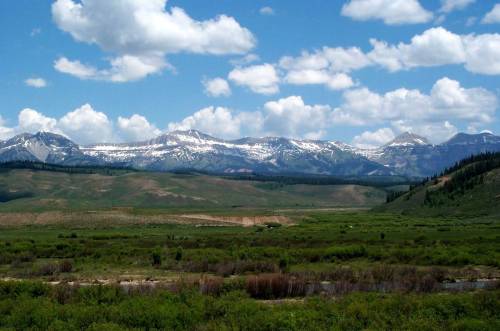
While waiting for cabs and resting between long walks and Big Events last weekend, I sought solace in the company of Walt Longmire in the Wyoming mountains.  Hell Is Empty is amazingly apropos reading for wiling away hours in LaGuardia Airport! (“Hell is empty and all the devils are here.”–Shakespeare, The Tempest)

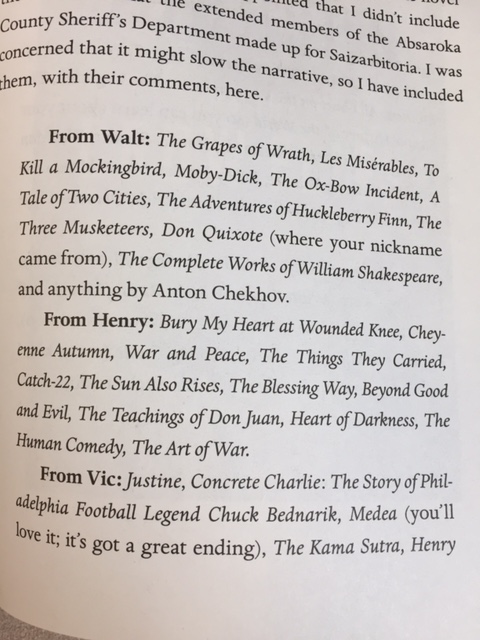
Anyway, at the beginning of this novel we are told that one of Walt’s deputies, regretting a stint in higher education devoted almost exclusively to criminal justice, is attempting to fill in some of the literary gaps. Walt and his deputies, plus the dispatcher and the lady who runs the diner have all made book lists for him. Dante’s Inferno plays a big part in the rest of the story.

Craig Johnson, understanding that his readers would want to know, thoughtfully includes the different lists in an appendix to the novel.

Unknown-1.jpeg

Of course, Ruby, the dispatcher and my soul sister, includes The Holy Bible (NT), The Pilgrim’s Progress, Inferno, Paradise Lost, My Antonia, The Scarlett Letter, Walden, Poems of Emily Dickinson, My Friend Flicka, and Our Town.

How great is that? I guess I’ll have to read My Friend Flicka!

I love lists.

My list would include: The Holy Bible (NT), The Book of Common Prayer, Moby-Dick, The Catcher in the Rye, O Pioneers!, The Big Sky, The Waters of Kronos, The Big Sleep, Gilead, Lonesome Dove…

I’m sure I’m forgetting something important that I really love. You know how that goes.

Here’s Frederick Buechner on a similar theme:

THE WRITERS WHO get my personal award are the ones who show exceptional promise of looking at their lives in this world as candidly and searchingly and feelingly as they know how and then of telling the rest of us what they have found there most worth finding. We need the eyes of writers like that to see through. We need the blood of writers like that in our veins.

J.D. Salinger’s The Catcher in the Rye was one of the first books I read that did it to me, that started me on the long and God knows far from finished journey on the way to becoming a human being—started making that happen. What I chiefly learned from it was that even the slobs and phonies and morons that Holden Caulfield runs into on his travels are, like Seymour Glass’s Fat Lady, “Christ Himself, buddy,” as Zooey explains it to his sister Franny in the book that bears her name Even the worst among us are precious. Even the most precious among us bear crosses. That was a word that went straight into my bloodstream and has been there ever since. Along similar lines I think also of Robertson Davies’ Deptford trilogy, Ford Madox Ford’s The Good Soldier, Rose Macaulay’s The Towers of Trebizond, George Garrett’s Death of the Fox, some of the early novels of John Updike like The Poorhouse Fair and The Centaur, John Irving’s A Prayer for Owen Meany. I think of stories like Flannery O’Connor’s “The Artificial Nigger” and Raymond Carver’s “Feathers” and works of non-fiction, to use that odd term (like calling poetry non-prose) such as Annie Dillard’s Holy the Firm and Geoffrey Wolff’s The Duke of Deception and Robert Capon’s The Supper of the Lamb or plays like Death of a Salesman or Our Town.

What 10 books would you put on your list of must-reads? Think about it.

But excuse me, I have to get back to Absaroka County…

04c3b6f656d895842ccde47daf712055.jpg

“I say, beware of all enterprises that require new clothes, and not rather a new wearer of clothes.”*

by chuckofish

IMG_2749.JPGWell, I’m back from my whirlwind weekend in New York. We arrived on Friday around noon, and while the OM napped, daughter #1 and I hiked through Central Park and visited a few of our favorite UWS spots. Then we cleaned up and went to happy hour, dinner and the wonderful Morgan Library.

IMG_2753.JPG

IMG_2752.JPG

IMG_2751.JPGwhere we saw the Thoreau exhibit.

IMG_2757.JPGThe next day we had breakfast with daughter #1 who then went off to work and we headed to the Guggenheim Museum.

IMG_2761.JPG

The building is quite amazing and the collections it houses are fun to see although not really my thing. But I did finally get to see some wonderful Joseph Cornell shadow boxes. (He has always fascinated me.)

IMG_2763.JPGThen we set off to Long Island for the Big Wedding at Oheka Castle.

1200x1200_1386870737947-ohekacastle130buildresizedwe.jpgYes, that Oheka Castle. I think Peta and Maks were married there…but believe you me, their wedding didn’t have anything on this one.

IMG_2769.JPGWell, we headed home on Sunday and it sure was nice to get back to our flyover home. I can only take so much of cab and Uber rides and busy, busy streets and all. those. people!

*H.D. Thoreau,Walden

This has been a day to die for*

by chuckofish

Son #2 is in town this weekend, so we decided to go see the much-anticipated “Dunkirk” on its opening day. The movie has been receiving rave reviews. The New York Times called it one of the best war movies ever made. All I can say is that the NYT reviewer can’t have seen many war movies. Dunkirk is stylish and not without merit, but I wouldn’t call it a war movie and it certainly doesn’t do justice to the events it purports to record.  But let’s start with what’s good about it.

Christopher Nolan clearly wanted to do something new with the genre and avoid comparison to hyper-violent movies like “Saving Private Ryan” and “Hacksaw Ridge.” Refreshingly free of gore, Dunkirk is rated PG-13 (although I would not recommend taking a child to see it). He used real Spitfires for the aerial combat scenes, which were beautifully shot and lyrical.

The cast did a fine job with what little dialogue there was. Mark Rylance, in particular, shined as the civilian taking his small yacht to evacuate troops, but he wasn’t in it enough.

Unfortunately, my objections far outweigh what I liked about the film. For clarity and brevity, I’ll list only what bothered me most (I could include other points).

  1. The audience gets no context. No one identifies the time (1940) or the enemy as the Germans — not once. We are just told that the British army needed a miracle. The film starts with soldiers arriving on the beach. We learn nothing whatsoever of how they got there.
  2. Characters were so underdeveloped as to be manikins (though admittedly, Mark Rylance could humanize a rock and Tom Hardy is expressive, even when masked).
  3. Nolan chose to concentrate on three young soldiers who were essentially cowards willing to do almost anything to save themselves. It’s true that two other groups — Mark Rylance and his son as well as the pilots — behave bravely, but the fact is that Nolan did not just downplay the heroism of Dunkirk, he subverted it. The officers (especially Kenneth Branagh) stand around looking decorative and doing nothing to help their men. You never get the sense that the army and navy have a plan or are trying to help themselves.
  4.  Aside from the aerial combat, there is no fighting in the movie. Sure, some soldiers shoot at planes from the beach, but you would never know that those 400,000 stranded men had lifted a finger against the enemy at any time prior to their evacuation. No naval ship mans anti-aircraft guns and the French (!) provide the only visible defense. In other words, Nolan depicts the British as almost entirely PASSIVE VICTIMS.
  5. We get no sense of the scale of the disaster. A few hundred men, a couple of planes, a handful of ships, and about 30 small craft stand in for 400,000 men and the hundreds of ships, sailboats, yachts and craft of all types that laboriously evacuate them while under continuous fire from the German army and Luftwaffe.
  6. The soundtrack by Hans Zimmer is painfully intrusive and jarring. Presumably designed to create tension in the viewer, it seems like a form of torture. Perhaps that was intended.
  7. Just as son #2 predicted, the film ends with one of the characters reading the famous passage from Churchill’s speech: “We shall not flag or fail. We shall go on to the end. We shall fight in France, we shall fight on the seas and oceans, we shall fight with growing confidence and growing strength in the air, we shall defend our island, whatever the cost may be, we shall fight on the beaches, we shall fight on the landing grounds, we shall fight in the fields and in the streets, we shall fight in the hills; we shall never surrender.” But Nolan couldn’t leave it at that. No. He had to go on and remind the audience that despite the heroism, the evacuation had been “an unmitigated disaster.” God forbid anyone should leave the theater feeling admiration for what the British had done or with a sense that the worst was yet to come. Certainly, at the time the British were painfully aware of that fact.

I cannot recommend Nolan’s “Dunkirk.” If you want a different understanding of those events, read a history book or Paul Gallico’s novella, The Snow Goose (1940), watch the (undoubtedly patriotic) 1958 movie, or listen to “Piper to the End” by Mark Knopfler, whose uncle, Freddie, according to Wikipedia, “was a piper  of the 1st Battalion, Tyneside Scottish, the Black Watch, Royal Highland Regiment. Freddie was killed with fellow fighters at Ficheux, near Arras in the north of France in May 1940. He was just twenty.”

It wasn’t all waiting around on beaches, and young men were not just helpless victims.

*Mark Knopfler, “Piper to the End”

“I tramp a perpetual journey.”*

by chuckofish

Screen Shot 2017-07-19 at 1.51.34 PM.pngThe OM and I are heading off to NYC tomorrow to visit daughter #1 and then attend a wedding on Saturday on Long Island.  I am looking forward to taking one more walk through Central Park.

Screen Shot 2017-07-19 at 1.24.07 PM.pngA month from now daughter #1 will be back in the Show Me state and a hop, skip and a jump down the road in Columbia.

Unknown.jpegWe can’t wait, can we?

*Walt Whitman

Fix our Thoughts on Thee

by chuckofish

You may have noted that yesterday was the bicentennial of Jane Austen’s death.

Jane_Austen_coloured_version.jpgI thought this article was very interesting.

And, of course, the new bank note is in the news.Screen Shot 2017-07-18 at 11.03.38 AM.pngI have a feeling Jane would be non-plussed by the whole bank note thing. Especially with the quote on the note which is causing twitter controversy.

Screen Shot 2017-07-18 at 11.08.49 AM.pngI have to say, I concur. We can assume that no one involved in designing the note had ever actually read one of her books. But there are memes galore, so…that counts, right?

C6Z62VEWAAIKWzO.jpgOne more big eye roll and then we’re done.

This probably didn’t sell out.

But this made me tear up a little. Amazing Americans.

Have a good day!

Give us grace, Almighty Father, so to pray, as to deserve to be heard, to address thee with our Hearts, as with our lips. Thou art every where present, from Thee no secret can be hid. May the knowledge of this, teach us to fix our Thoughts on Thee, with Reverence and Devotion.

It’s too darn hot

by chuckofish

We are on the verge of another heat wave here in flyover country. Our local meteorologists are saying that this week we will have days on end of 100+ temperatures. C’est la vie.

legend-lost-1957-10.jpg
We can survive–as long as the AC holds out. I mean it’s not like in the “old days” of my youth when we had no air-conditioning and we sweltered. Somehow we survived with fans. We didn’t have an ice-maker either–just those old fill-them-up-with water ice cube trays. Nowadays we are quite wanton in our ice cube consumption.

bondjulep.jpgI sound like an old lady I know. However, I am not old enough to remember the scorching summer of 1936 when for 13 consecutive days in July the average high was 103.2 degrees. “Pavements buckled and swimmers were told to stay out of the Meramec River because the low water level had caused severe pollution. Fans blowing over ice provided some relief for City Hospital patients, but all hospital emergency rooms were so crowded that it was impossible to handle the case load…Many St. Louisans took to the outdoors for whatever relief they could find, sleeping in city parks and along highways on the outskirts…Heavy rains in August ended the ordeal.”*

Zut alors! Anyway, here’s a little Ella Fitzgerald to help you keep your “cool”…

…and while you’re at it, have a cold one!

c255b36d252cd08a9e97d40374f3502c--grumpy-old-men-ice-fishing.jpg

And as always, count your blessings!

*St. Louis Day by Day by Frances Hurd Stadler