Steaming down the Mississippi
by chuckofish
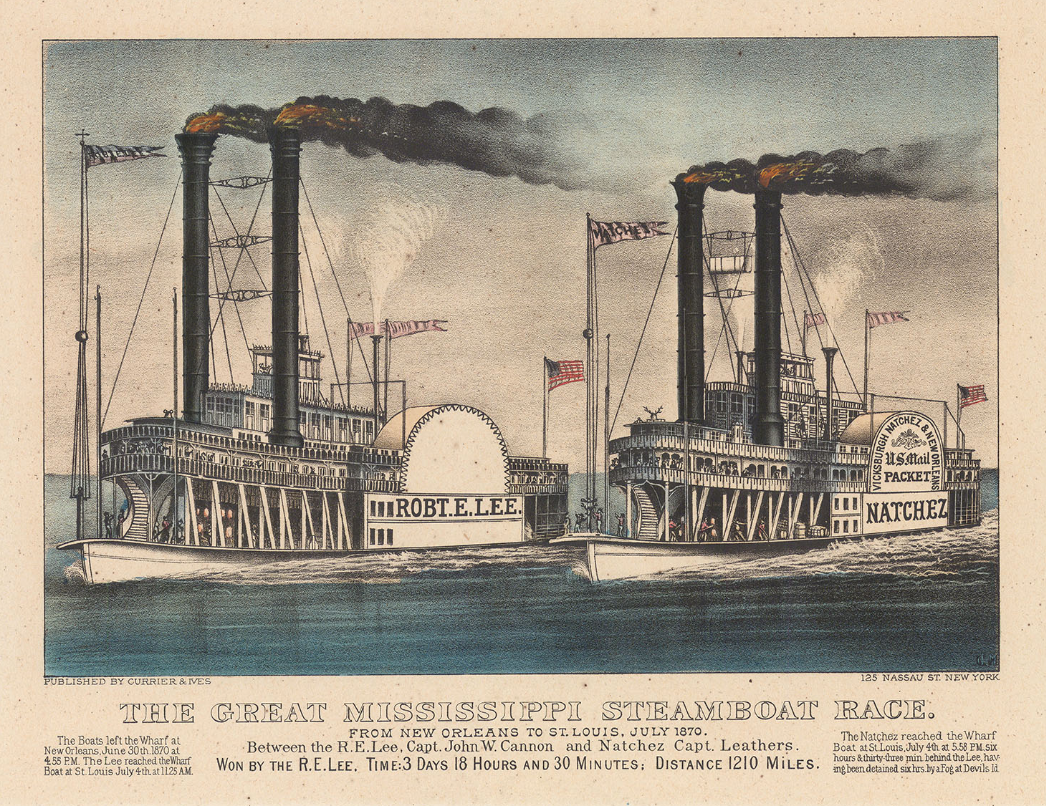
In the summer of 1870 a celebrated race took place between two steamboats, the Robert E. Lee and the Natchez. Leaving New Orleans on June 30, the Robert E. Lee reached St. Louis, a distance of 1,154 miles (1,857 km), in 3 days, 18 hours and 14 minutes. Indeed, it was one of the most thrilling events in the history of the Mississippi River. For days newspapers had been full of predictions, and bets were placed all over the world on the result. A crowd of thousands lined the levee to cheer the boat and its crew when it landed on July 4 several hours ahead of the Natchez.
It was very exciting, as you can imagine, because such racing involved major risks. Steamboats were inherently dangerous. The steam boilers were prone to exploding and igniting fires. The boats were wooden and much of their cargo could be highly flammable. These hazards came in addition to the snags and submerged bars that could rip a hull open. Between 1816 and 1848, boiler explosions alone killed more than 1,800 passengers and crew and injured another 1,000. Racing added significantly to the chance for an explosion.
Mark Twain described steamboat racing thusly:
“Two red-hot steamboats raging along, neck-and-neck, straining every nerve—that is to say, every rivet in the boilers—quaking and shaking and groaning from stem to stern, spouting white steam from the pipes, pouring black smoke from the chimneys, raining down sparks, parting the river into long breaks of hissing foam—this is sport that makes a body’s very liver curl with enjoyment.”
And, gee, nobody seemed to be overly offended by the name of Robert E. Lee, so soon after the Civil War. Interesting, n’est-ce pas?
Fun fact: The song “Steamboat Bill”, written in 1910, is an extended reference to the 1870 race. Mickey Mouse whistling a verse from “Steamboat Bill” in Steamboat Willie has been used as the production logo of Walt Disney Animation Studios since 2007.
Have a good day! Relax.
 dual personalities
Fascinating! It’s wild that the steamboat kept the name Robert E. Lee after the war — I bet that motivated them to win the race.