dual personalities

Tag: writers

If you really want to hear about it

by chuckofish

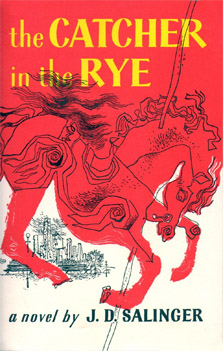
The Catcher in the Rye by J.D. Salinger was published on July 16 in 1951. It has been translated into almost all of the world’s major languages. Around 250,000 copies are sold each year, with total sales of more than 65 million books. I am one of its biggest fans and have been since I first read it in the 10th grade. I was one of those teenagers that identified with Holden Caulfield and forty years later I still do. I love him and his creator as much as any fictional character and author out there.

“The part that got me was, there was a lady sitting next to me that cried all through the goddam picture. The phonier it got, the more she cried. You’d have thought she did it because she was kindhearted as hell, but I was sitting right next to her, and she wasn’t. She had this little kid with her that was bored as hell and had to go to the bathroom, but she wouldn’t take him. She kept telling him to sit still and behave himself. She was about as kindhearted as a goddam wolf. You take somebody that cries their goddam eyes out over phony stuff in the movies, and nine times out of ten they’re mean bastards at heart. I’m not kidding. ” (Chapter 18)

How right is that?

The white whale tasks me

by chuckofish

Ray Bradbury, widely considered one of the greatest writers of science fiction and fantasy, died a few days ago. He was 91 years old. Last weekend I watched the John Huston 1956 version of Moby-Dick. The screenplay was written by Ray Bradbury!
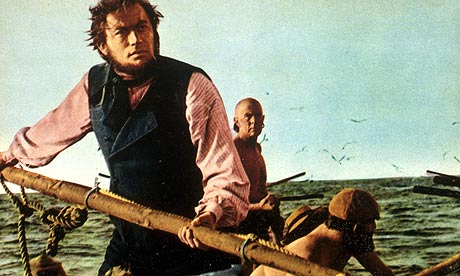
In an interview in the Paris Review Bradbury talked about writing this screenplay:

I had fallen in love with John Huston’s work when I was in my twenties. I saw The Maltese Falcon fifteen times, and The Treasure of the Sierra Madre scores of times. When I was twenty-nine I attended a film screening and John Huston was sitting right behind me. I wanted to turn, grab his hand, and say, I love you and I want to work with you. But I held off and waited until I had three books published, so I’d have proof of my love. I called my agent and said, Now I want to meet John Huston. We met on St. Valentine’s night, 1951, which is a great way to start a love affair. I said, Here are my books. If you like them, someday we must work together. A couple of years later, out of the blue, he called me up and said, Do you have some time to come to Europe and write Moby-Dick for the screen? I said, I don’t know, I’ve never been able to read the damn thing. So here I was confronted with a dilemma: Here’s a man that I love and whose work I admire. He’s offering me a job. Now, a lot of people would say, Grab it! Jesus, you like him, don’t ya? I said, Tell you what, I’ll go home tonight and I’ll read as much as I can, and I’ll come back for lunch tomorrow. By that time I will know how I feel about Melville. Because I’ve had copies of Moby-Dick around the house for years. So I went home and I read Moby-Dick. Strangely enough, a month earlier I’d been wandering around the house one night and picked up Moby-Dick and said to my wife, I wonder when I’m going to read this thing? So here I am sitting down to read it.

I dove into the middle of it instead of starting at the beginning. I came across a lot of beautiful poetry about the whiteness of the whale and the colors of nightmares and the great spirit’s spout. And I came upon a section toward the end where Ahab stands at the rail and says: “It is a mild, mild wind, and a mild looking sky; and the air smells now, as if it blew from a far-away meadow; they have been making hay somewhere under the slopes of the Andes, Starbuck, and the mowers are sleeping among the new-mown hay.” I turned back to the start: “Call me Ishmael.” I was in love! You fall in love with poetry. You fall in love with Shakespeare. I’d been in love with Shakespeare since I was fourteen. I was able to do the job not because I was in love with Melville, but because I was in love with Shakespeare. Shakespeare wrote Moby-Dick, using Melville as a Ouija board.

The day I went to see Huston I asked, Should I read up on the Freudians and Jungians and their interpretations of the white whale? He said, Hell no, I’m hiring Bradbury! Whatever is right or wrong about the screenplay will be yours, so we can at least say the skin around it is your skin.

So after I’d read the book multitudinous times, I wrote the beginning on the way to Europe on the boat, and that stayed. But everything else was so difficult. I had to borrow bits and pieces from late in the book and push them up front, because the novel is not constructed like a screenplay. It’s all over the place, a giant cannonade of impressions. And it’s a play too. Shakespearean asides, stage directions, everything.

I got out of the bed one morning in London, walked over to the mirror and said, I am Herman Melville. The ghost of Melville spoke to me and on that day I rewrote the last thirty pages of the screenplay. It all came out in one passionate explosion. I ran across London and took it to Huston. He said, My God, this is it.

Ray Bradbury never went to college. He was a self-taught, much-read writer. In that same Paris Review interview he explained, “I discovered me in the library. I went to find me in the library. Before I fell in love with libraries, I was just a six-year-old boy. The library fueled all of my curiosities, from dinosaurs to ancient Egypt. When I graduated from high school in 1938, I began going to the library three nights a week. I did this every week for almost ten years and finally, in 1947, around the time I got married, I figured I was done. So I graduated from the library when I was twenty-seven. I discovered that the library is the real school.”

Rest in peace, Ray, and may light perpetual shine upon you. “O Father, mortal or immortal, here I die. I have striven to be Thine, more than to be this world’s. Yet this is nothing. I leave eternity to Thee. For what is man, that he should live out the lifetime of his God?”

(If you would like to read the Paris Review interview in its entirety, it is here. It’s worth the effort.)
Small House of Uncle Thomas

by chuckofish

Today in 1851 Harriet Beecher Stowe’s anti-slavery serial, Uncle Tom’s Cabin or, Life Among the Lowly started a ten-month run in the National Era abolitionist newspaper. In honor of this I wanted to show you the famous scene from the King and I movie where Rita Moreno narrates a Siamese version of Little Eva’s escape from Simon Legree across the frozen river. Alas, this is not currently available on YouTube.

So here is the best I could do. It is still pretty great.

I remember back in 1994 when daughter #1 did a report in the 4th grade on Harriet Beecher Stowe. As part of her report she brought our VHS tape to school and showed the famous scene from the King and I.

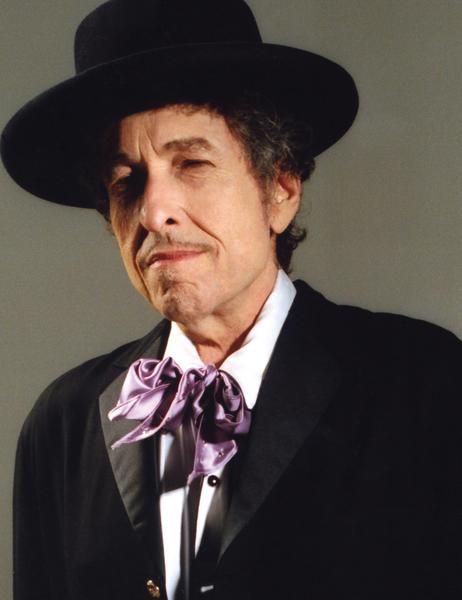
A gratuitous photo of Yul Brynner to please my dual personality.

Amazingly most of her classmates had never seen it. I have always been an evangelist for great movies, even encouraging my children to embarrass themselves in front of their peers. Hopefully they have forgiven me.

Please note that 1851 was also the year that Moby-Dick was published. Amazing!

Not a gentleman born

by chuckofish

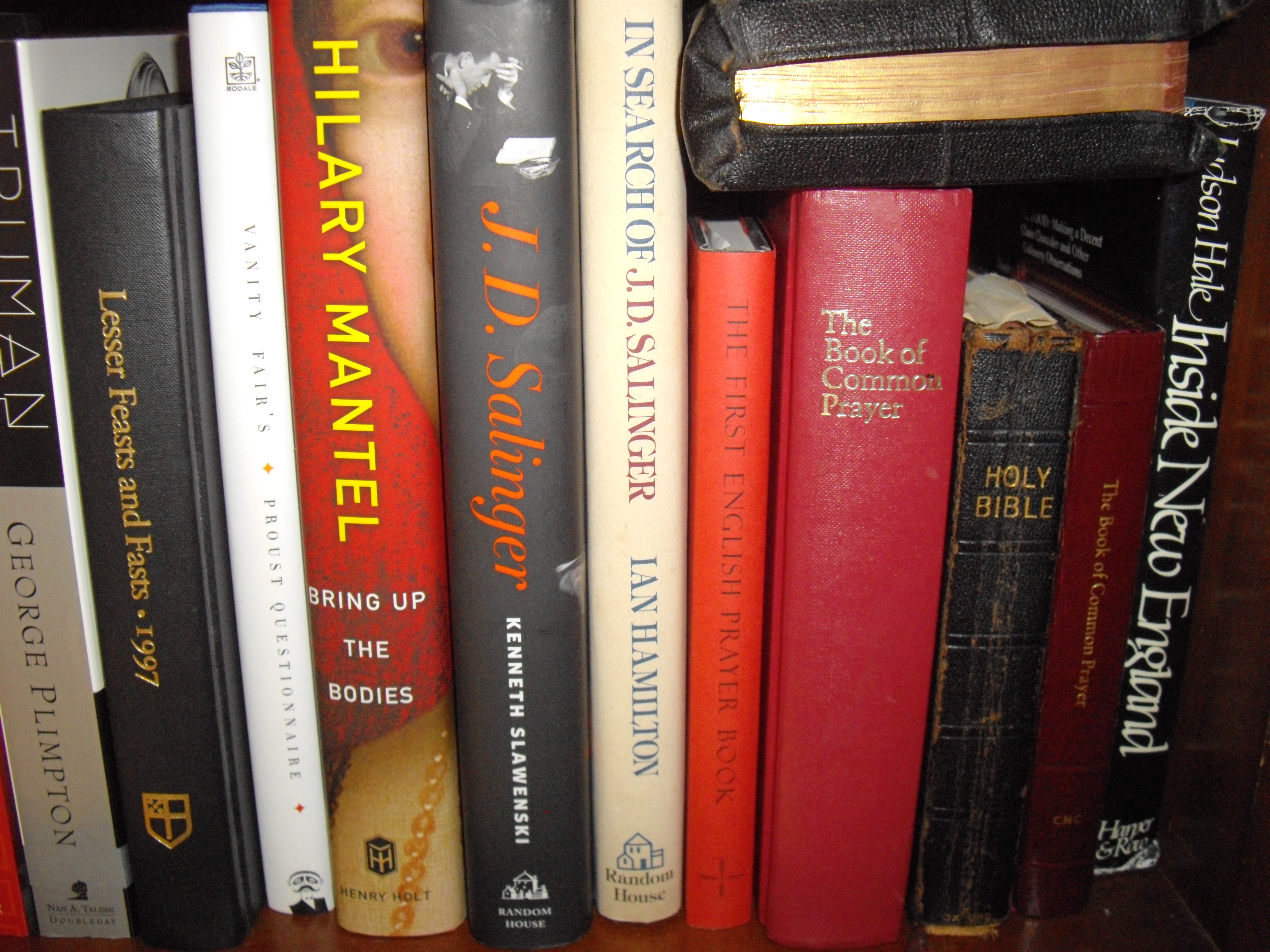
Well, I have finished Bring Up the Bodies, Hilary Mantel’s sequel to Wolf Hall and book two in her trilogy about Thomas Cromwell. It is, no surprise, wonderful.

You remember that Thomas Cromwell, 1st Earl of Essex (c. 1485 – 28 July 1540) was an English statesman who served King Henry VIII of England from 1532 to 1540 in many capacities and was his right hand man. He facilitated his marriage to Anne Boleyn and then arranged the annulment of that marriage. Oftentimes throughout history (and in historical fiction) he has been portrayed as a villain and hatchetman, but we know he indeed was not.

Here is a wonderful description by Cromwell of one of his friends, which really is a perfect description of him:

“He does not talk simply to hear his own voice, or pick arguments just to win them. He is not like George Boleyn: he does not write verses to six women in the hope of bundling one of them into a dark corner where he can slip his cock into her. He writes to warn and to chastise, and not to confess his need but to conceal it. He understands honour but does not boast of his own. He is perfectly equipped as a courtier, but he knows the small value of that. He has studied the world without despising it. He understands the world without rejecting it. He has no illusions but he has hopes. He does not sleepwalk through his life. His eyes are open, and his ears for sounds others miss.”

This is the kind of book I want to start over and read again right away. I think I will read Wolf Hall again. Hilary Mantel is brilliant, and as a writer reading her, I could weep for her brilliance. Brava, Hilary–you’ve done it again.

Reading Moby-Dick

by chuckofish

“Yes, there is death in this business of whaling–a speechlessly quick chaotic bundling of a man into Eternity. But what then? Methinks we have hugely mistaken this matter of Life and Death. Methinks that what they call my shadow here on earth is my true substance. Methinks that in looking at things spiritual, we are too much like oysters observing the sun through water, and thinking that thick water the thinnest of air. Methinks my body is but the lees of my better being. In fact take my body who will, take it I say, it is not me. And therefore three cheers for Nantucket; and come a stove boat and stove body when they will, for stave my soul, Jove himself cannot.”

Ishmael, “The Chapel”

Taking the shortcut

by chuckofish

“Or you can take the shortcut and paddle to one of the passages in the Huron River, which reflects this world so clearly you can see into the next one. When wild flags blossom along the river’s edge in this world, snow whitens the banks in that one. And when trout and sunfish sleep under a skin of ice here, swamps there hum with bees and cicadas, kingbirds and vireos and warblers. Walk against the current. Follow one of the streams that spill into the river till you find the spring at the bottom. You have found a doorway into the spirit world. Be careful. It is not safe to pass through that doorway without a guide.

“But maybe you don’t travel that far. You say, Ann Arbor is far enough. Stand still in the stream. Listen. Thomas Bearheart’s cousin picks up her hammer. Can you hear it ringing as she forges copper fishhooks in Drowning Bear, Wisconsin? Put your ear to the water as if it were a train track and listen for travelers rushing toward you, invisible as the dead and noisy as a pack of dogs.”

Nancy Willard, Sister Water

Don’t take your guns to town, son

by chuckofish

Yesterday, February 26, was the birthday of the late, great Johnny Cash (1932–2003). Johnny and I go way back. I saw him on television singing his hit Don’t Take Your Guns to Town when I was 3 or 4 and I was hooked. Uncharacteristically, my mother bought the single. I like to think it was at my prompting, but my older brother probably had something to do with it. Johnny was just so great and his talent so magnetic that even a three-year-old could sense it. He was to singing what John Wayne was to acting, except he had a jagged, dangerous edge. He was, after all, “the Man in Black”.

He wrote so many great songs: Understand Your Man, I Walk the Line, Ring of Fire, Folsom Prison Blues, and the list goes on and on. He was inducted into the Nashville Songwriters Hall of Fame (1977), the Country Music Hall of Fame (1980), and the Rock and Roll Hall of Fame (1992). Only thirteen performers are in both of the last two, and only Hank Williams Sr., Jimmie Rodgers, Bob Wills, and Bill Monroe share the honor with Cash of being in all three.

He also had a television show, wrote books, was a faithful Christian, and was friends with Bob Dylan. I never saw Johnny Cash in concert–it is one of my great regrets. Here is Johnny’s last video–a heart-breaking rendition of Hurt by Nine Inch Nails.

I always thought that Johnny and my mother had the same eyes of plaintive Scottish brown. (Apologies to J.D. Salinger)

What are you reading?

by chuckofish

1. I just finished Tinkers by Paul Harding, winner of the Pulitzer Prize, a short, beautiful first novel.

So few books like this are ever written, much less published. It is about an old man on his death-bed remembering his father, who in turn remembers his. A keeper!

2. Then Again by Diane Keaton–I am currently reading this memoir by actress Diane Keaton.

It is more about her relationship with her mother than a celebrity tell-all, and that is what attracted me to it. She is an unpretentious and intelligent person who was very close to her mother and wrote the book after her death to try to understand her better. “Comparing two women with big dreams who shared many of the same conflicts and also happened to be mother and daughter is partially a story of what’s lost in success contrasted with what’s gained in accepting an ordinary life.” Like me in my youth, Diane has frequently been classified as a “flakey chick”, but still waters run deep as they say.

3. The Little White Horse by Elizabeth Goudge–a juvenile novel I had heretofore missed. The cover of the newest edition is terrible, isn’t it?

An older one is much more appealing:

It is purportedly one of J.K. Rowling’s favorites and it is very popular in England. It was even made into a movie starring Ioan Gruffudd, but they changed a lot (playing up some vague romance angles) and angered the book’s fans. It was good and well written and I finished it, but it won’t be added to my shelf of classics.

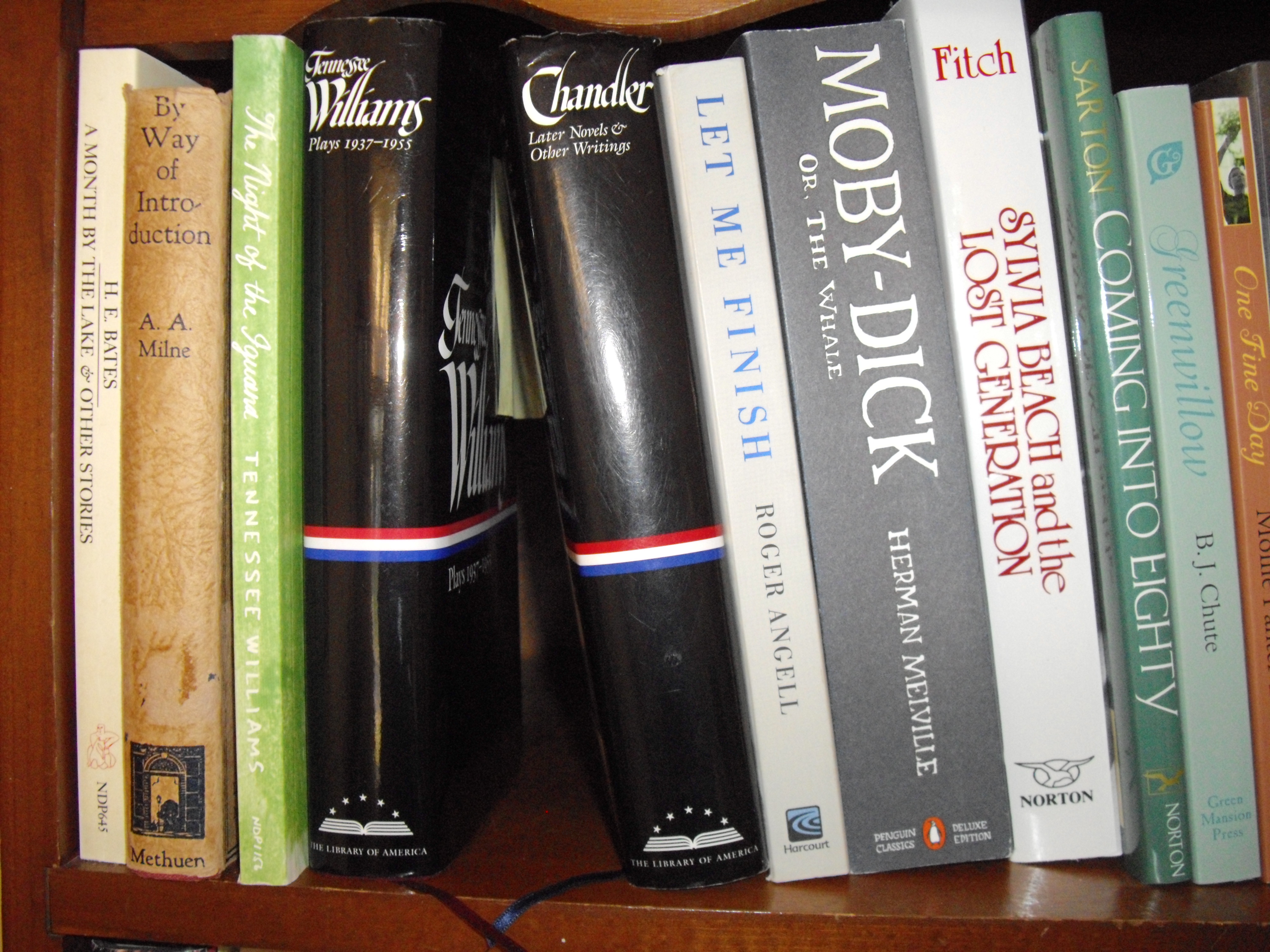
4. Volume II of the Library of America collected writings of Raymond Chandler.

I periodically re-read his novels, which never disappoint. One can read these books every year, because the plot is forgotten as soon as the book is closed. It is old Philip Marlowe that lingers.

And the prayer book, so the Psalms are always at hand!

What are you reading?

Virtue and Honor

by chuckofish

“However fashionable despair about the world and about people may be at present, and however powerful despair may become in the future, not everybody, or even most people, thinks and lives fashionably; virtue and honor will not be banished from the world however many popular moralists and panicky journalists say so. Sacrifice will not cease to be because psychiatrists have popularized the idea that there is often some concealed self-serving element in it; theologians always knew that. Nor do I think love as a high condition of honor will be lost; it is a pattern in the spirit, and people long to make the pattern a reality in their own lives, whatever means they take to do so.”

–Robertson Davies

Why I love Raymond Chandler

by chuckofish

“Yes. I can imagine. Out. I don’t know you. I don’t want to know you. And if I did, this wouldn’t be either the day or the hour.”

“Never the time and place and the loved one all together,” I said.

“What’s that?” She tried to throw me out with the point of her chin, but even she wasn’t that good.

“Browning. The poet, not the automatic. I feel sure you’d prefer the automatic.”

-The Little Sister