dual personalities

Tag: quotes

How to win friends and influence people

by chuckofish

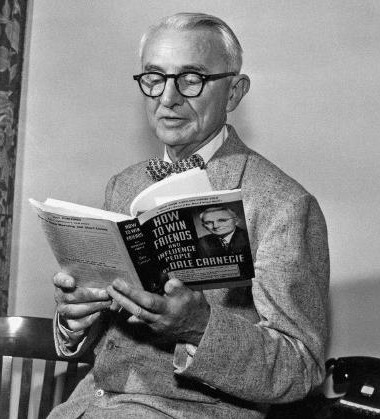
Dale Harbison Carnegie (originally Carnagey) (November 24, 1888 – November 1, 1955) was an American writer and lecturer and the developer of famous courses in self-improvement, salesmanship, public speaking, and interpersonal skills. He was the author of How to Win Friends and Influence People (1936), a bestseller that remains popular today.
1336495336

You knew that, but did you now that he was born and raised in Missouri? Well, he was born in Maryville, Missouri, the son of a farmer. His family moved to Belton, Missouri (also the hometown of Harry Truman) when he was a small child. He graduated from the State Teacher’s College in Warrensburg, worked as a salesman, and moved to New York City. After failing as an actor (!), he taught a public speaking class at the YMCA. In his first session, he ran out of material. Improvising, he suggested that students speak about “something that made them angry” and discovered that the technique made speakers unafraid to address a public audience. From this 1912 début, the Dale Carnegie Course evolved.

If-you-want-to-conquer__quotes-by-Dale-Carnegie-96

Most of what he said is just common sense.

“It isn’t what you have or who you are or where you are or what you are doing that makes you happy or unhappy. It is what you think about it.”

“Success is getting what you want..Happiness is wanting what you get.”

“When we hate our enemies, we are giving them power over us: power over our sleep, our appetites, our blood pressure, our health, and our happiness.”

“Actions speak louder than words, and a smile says, ‘I like you. You make me happy. I am glad to see you.”

“If you can’t sleep, then get up and do something instead of lying there and worrying. It’s the worry that gets you, not the loss of sleep.”

But that doesn’t make what he said any less true.
ef2cd6d7f942fb6047ed2a301779cb15

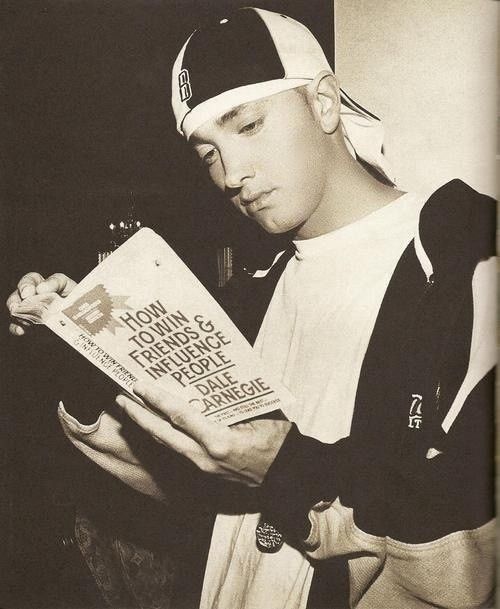
Eminem who was born in nearby St. Joseph, MO, reading words of wisdom from his homeboy.

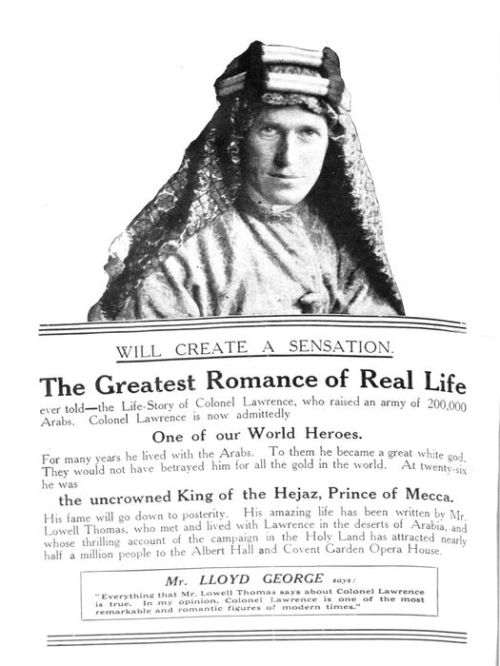
One more fun fact about Dale Carnegie: He worked as assistant to Lowell Thomas in his famous travelogue “With Allenby in Palestine and Lawrence in Arabia”. He managed and delivered the travelogue in Canada.
lowell-te-page

Well, son of a gun. A toast to Dale Carnegie on his birthday and to T.E. Lawrence any old day!
What it is

by chuckofish

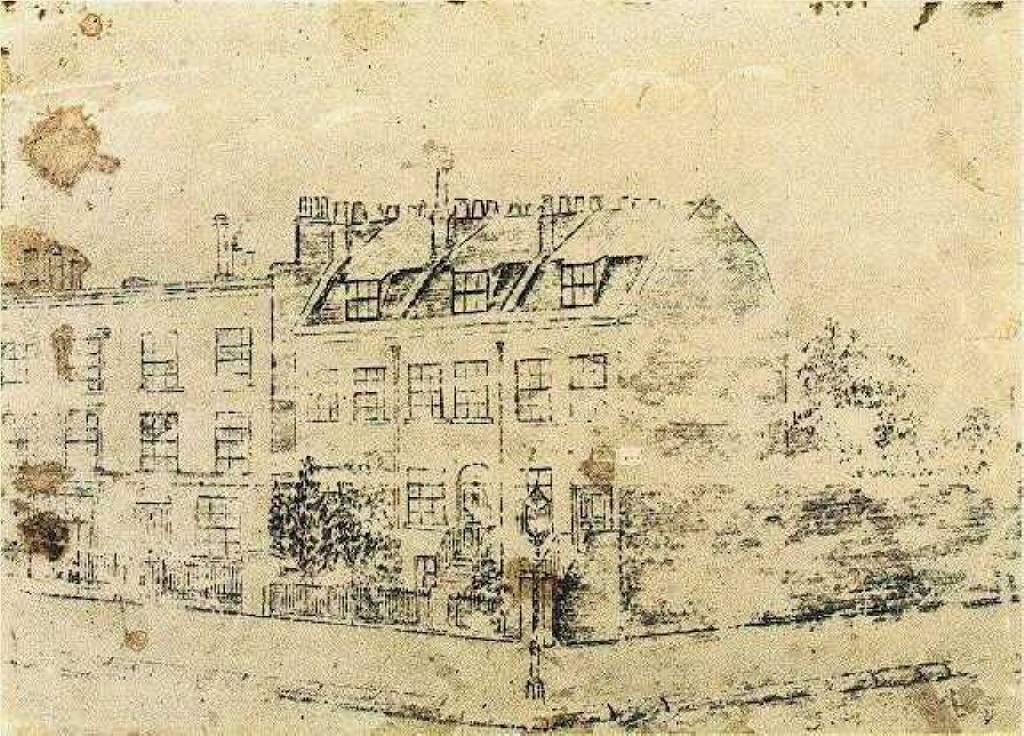
Vincent_van_Gogh_-_87_Hackford_Road

“When Van Gogh was a young man in his early twenties, he was in London studying to be a clergyman. He had no thought of being an artist at all. he sat in his cheap little room writing a letter to his younger brother in Holland, whom he loved very much. He looked out his window at a watery twilight, a thin lampost, a star, and he said in his letter something like this: “it is so beautiful I must show you how it looks.” And then on his cheap ruled note paper, he made the most beautiful, tender, little drawing of it.

When I read this letter of Van Gogh’s it comforted me very much and seemed to throw a clear light on the whole road of Art. Before, I thought that to produce a work of painting or literature, you scowled and thought long and ponderously and weighed everything solemnly and learned everything that all artists had ever done aforetime, and what their influences and schools were, and you were extremely careful about “design” and “balance” and getting “interesting planes” into your painting, and avoided, with the most astringent severity, showing the faintest “a” tendency, and were strictly modern. And so on and so on.

But the moment I read Van Gogh’s letter I knew what art was, and the creative impulse. It is a feeling of love and enthusiasm for something, and in a direct, simple, passionate and true way, you try to show this beauty in things to others, by drawing it.

And Van Gogh’s little drawing on the cheap note paper was a work of art because he loved the sky and the frail lamppost against it so seriously that he made the drawing with the most exquisite conscientiousness and care. ”

―Brenda Ueland, If You Want to Write: A Book about Art, Independence and Spirit 

It has been awhile since I shared Brenda Ueland with you. I think she is so great. I agree that Art is about Love and sharing what you love with others.

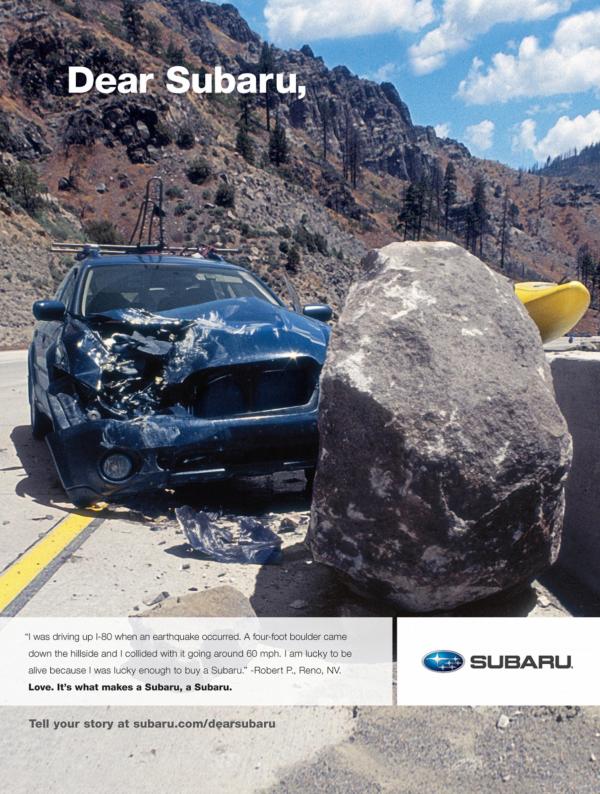
On another subject, but related–I drove a Subaru for years. It was totally against stereotype, but I loved that car . So I thought it was pretty great when the Subaru people worked “Love” into this ad campaign.

subaru-boulder-600-63663

Now they are even using a Gregory Alan Isakov song in an ad:

I hardly watch any television these days with commercials, but I saw this and was pleased. There are still some smart people out there working for the Man.

What it is

by chuckofish

Vincent_van_Gogh_-_87_Hackford_Road

“When Van Gogh was a young man in his early twenties, he was in London studying to be a clergyman. He had no thought of being an artist at all. he sat in his cheap little room writing a letter to his younger brother in Holland, whom he loved very much. He looked out his window at a watery twilight, a thin lampost, a star, and he said in his letter something like this: “it is so beautiful I must show you how it looks.” And then on his cheap ruled note paper, he made the most beautiful, tender, little drawing of it.

When I read this letter of Van Gogh’s it comforted me very much and seemed to throw a clear light on the whole road of Art. Before, I thought that to produce a work of painting or literature, you scowled and thought long and ponderously and weighed everything solemnly and learned everything that all artists had ever done aforetime, and what their influences and schools were, and you were extremely careful about “design” and “balance” and getting “interesting planes” into your painting, and avoided, with the most astringent severity, showing the faintest “a” tendency, and were strictly modern. And so on and so on.

But the moment I read Van Gogh’s letter I knew what art was, and the creative impulse. It is a feeling of love and enthusiasm for something, and in a direct, simple, passionate and true way, you try to show this beauty in things to others, by drawing it.

And Van Gogh’s little drawing on the cheap note paper was a work of art because he loved the sky and the frail lamppost against it so seriously that he made the drawing with the most exquisite conscientiousness and care. ”

―Brenda Ueland, If You Want to Write: A Book about Art, Independence and Spirit 

It has been awhile since I shared Brenda Ueland with you. I think she is so great. I agree that Art is about Love and sharing what you love with others.

On another subject, but related–I drove a Subaru for years. It was totally against stereotype, but I loved that car . So I thought it was pretty great when the Subaru people worked “Love” into this ad campaign.

subaru-boulder-600-63663

Now they are even using a Gregory Alan Isakov song in an ad:

I hardly watch any television these days with commercials, but I saw this and was pleased. There are still some smart people out there working for the Man.

Way back Wednesday

by chuckofish

MI hockey

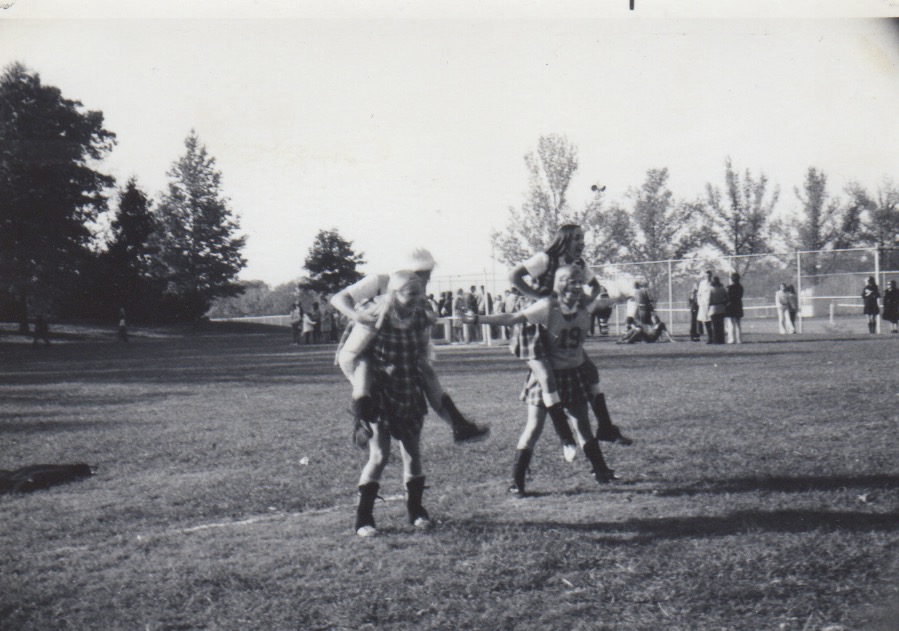
Outside the study hall the next fall, the fall of our senior year, the Nabisco plant baked sweet white bread twice a week. If I sharpened a pencil at the back of the room I could smell the baking bread and the cedar shavings from the pencil. I could see the oaks turning brown on the edge of the hockey field, and see the scoured silver sky above shining a secret, true light into everything, into the black cars and red brick apartment buildings of Shadyside glimpsed beyond the trees. Pretty soon all twenty of us–our class–would be leaving. A core of my classmates had been together since kindergarten. I’d been there eight years. We twenty knew by bored heart the very weave of each other’s socks. I thought, unfairly, of the Polyphemus moth crawling down the school’s driveway. Now we’d go, too.

–Annie Dillard, An American Childhood

This time of year always makes me take a wistful look backward at my schooldays. I have always been an observer, watching other people do things. Sometimes I was taking pictures, sometimes writing about it. Sometimes I was just listening. Whatever.

I was never as cool as Annie Dillard, that’s for sure, never as connected. But we both felt the same desire to get the heck out of Dodge and move on.

Speaking of moving on, I re-read Dillard’s short memoir looking for a quote and I didn’t think it was as great as the first time I read it. Time and age again.  Sigh.

“The outermost suburbs of the Truth”*

by chuckofish

IMG_1437

I didn’t do a whole lot this weekend. I went to a few estate sales and I puttered around the house. I walked around my neighborhood. It is the perfect weather for that.

I watched Furious 7 (2015) with Vin Diesel et al.

FURIOUS7

It was ridiculous but highly entertaining. Indeed, the movie deserves an Oscar for special effects, because I certainly could not tell you where the real Paul Walker began and ended. Those Weta Digital people are pretty amazing.

I didn’t go to church but stayed home and re-read Telling Secrets by Frederick Buechner, the third in his trilogy of memoir. It was the first book I ever read by Buechner and I was sold for life. But I guess he is not for everyone. When I first discovered him over twenty years ago, I recommended him to everyone I knew. One friend read The Sacred Journey (the first book of memoir) and thought he was a whiner. That is the last way I would describe him, but to each his own.

“The passage from Genesis points to a mystery greater still. It says that we came from farther away than space and longer ago than time. It says that evolution and genetics and environment explain a lot about us but they don’t explain all about us or even the most important thing about us. It says that though we live in the world, we can never really be at home in the world. It says in short not only that we were created by God but also that we were created in God’s image and likeness. We have something of God within us the way we have something of the stars.”

Buechner is the Man as far as I’m concerned.

And now it’s Monday again. Tra la la.

*Telling Secrets by Frederick Buechner

An’ The Raggedy Man, he knows most rhymes, An’ tells ’em, ef I be good, sometimes

by chuckofish

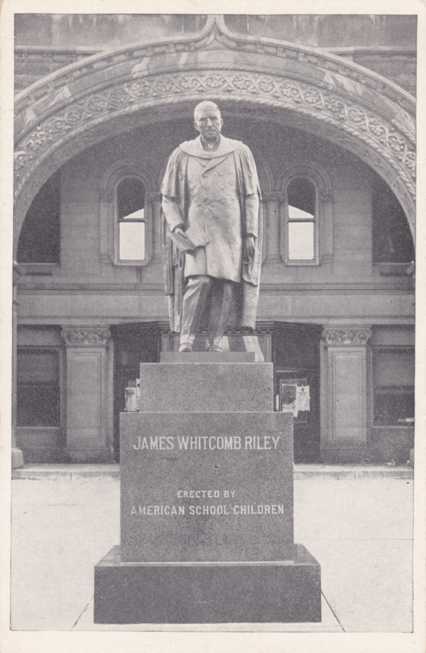
Today is the birthday of James Whitcomb Riley (October 7, 1849 – July 22, 1916) who was an American writer, poet, and best-selling author, frequently referred to as the “Hoosier Poet.”

Statue in Greenfield, Indiana

Statue in Greenfield, Indiana

I suppose no one reads his poems anymore. (Although–surprise!– his books are still in print.)

I remember my mother reading them aloud to us with great gusto. There was Little Orphant Annie

Little Orphant Annie’s come to our house to stay,
An’ wash the cups an’ saucers up, an’ brush the crumbs away,
An’ shoo the chickens off the porch, an’ dust the hearth, an’
sweep,
An’ make the fire, an’ bake the bread, an’ earn her board-
an-keep;
An’ all us other childern, when the supper-things is done,
We set around the kitchen fire an’ has the mostest fun,
A-listenin’ to the witch-tales ‘at Annie tells about,
An’ the Gobble-uns ‘at gits you
Ef you
Don’t
Watch
Out!

and The Raggedy Man

O The Raggedy Man! He works fer Pa;
An’ he’s the goodest man ever you saw!
He comes to our house every day,
An’ waters the horses, an’ feeds ’em hay…

Indeed, they were fun to read and fun to listen to. That is no doubt why Riley was among the most popular writers of the late nineteenth and early twentieth century.

So join me in a toast to the forgotten Hoosier poet, James Whitcomb Riley. (Perhaps with one of these.)

I leave you with this picture of another famous Hoosier reading some JWR poetry for fun and personal enrichment.

dean riley

Enjoy your Wednesday–and don’t let the Gobble-uns git you!

A floating sense of doom

by chuckofish

107-Christ the Comforter

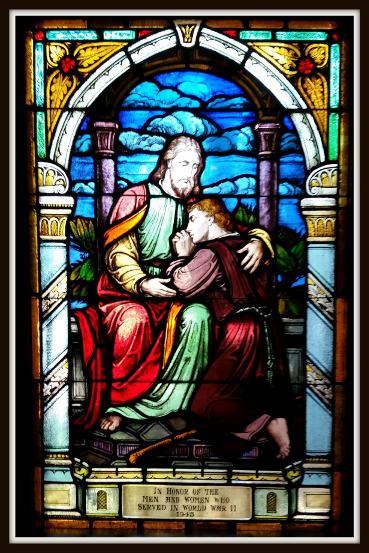
“God knows we have our own demons to be cast out, our own uncleanness to be cleansed. Neurotic anxiety happens to be my own particular demon, a floating sense of doom that has ruined many of what could have been, should have been, the happiest days of my life, and more than a few times in my life I have been raised from such ruins, which is another way of saying that more than a few times in my life I have been raised from death – death of the spirit anyway, death of the heart – by the healing power that Jesus calls us both to heal with and to be healed by.”

― Frederick Buechner, Secrets in the Dark: A Life in Sermons

I can surely relate to what Frederick Buechner is saying here, although I wouldn’t classify it as neurotic anxiety exactly. I just have always had a morbid imagination, always thinking about what might happen, especially concerning loved ones.

At the evensong service on Sunday the choir sang an anthem based on a poem by Robert Herrick (1591–1674):

In the hour of my distress,

When temptations me oppress,

And when I my sins confess,

Sweet Spirit, comfort me!


When I lie within my bed,

Sick in heart and sick in head,

And with doubts discomforted,

Sweet Spirit, comfort me!


When the house doth sigh and weep,

And the world is drown’d in sleep,

Yet mine eyes the watch do keep,

Sweet Spirit, comfort me!

I was reminded that people back in the seventeenth century lay in bed at night and obsessed over problems too. I must say that I do find comfort in that.

And as I always say to the boy after one of our overwrought discussions of current events, God is in control. It is good to remember that.

The evensong service ends with the wonderful prayer for mission:

Keep watch, dear Lord, with those who work, or watch, or weep this night, and give thine angels charge over those who sleep. Tend the sick, Lord Christ; give rest to the weary, bless the dying, soothe the suffering, pity the afflicted, shield the joyous; and all for thy love’s sake. Amen.

You can’t go wrong with this prayer at bedtime. Keep it on your bedside table. Envision those angels watching over you and your loved ones. It helps to dissipate that floating sense of doom.

“Salutations!” said the voice.”*

by chuckofish

Well, here we go. Ninety-one days left in the year!

It will be Christmas before we know it. Plans are full-speed ahead for 2016 at work. 2016! But the millennium was yesterday!

Well, time marches on and all that.

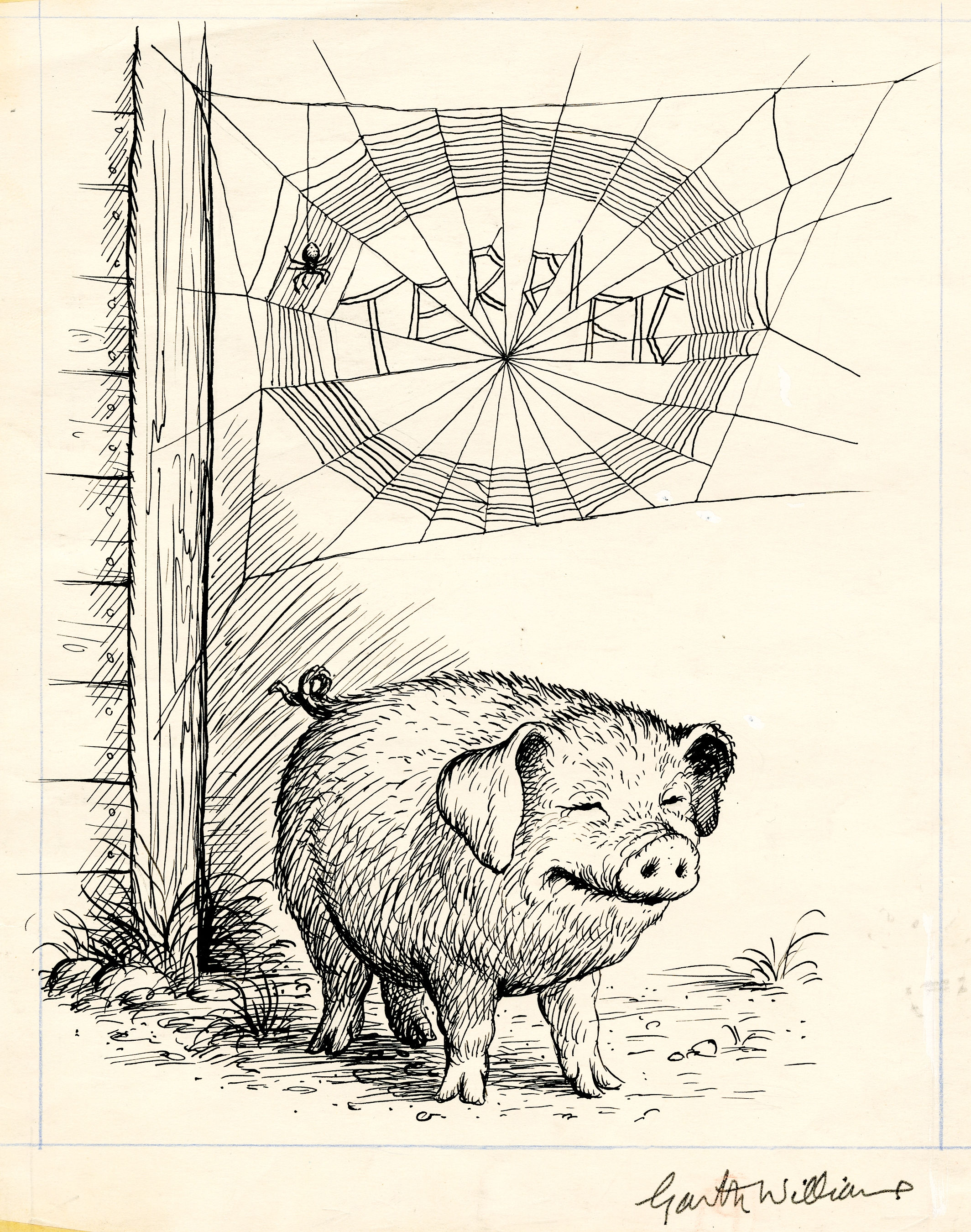
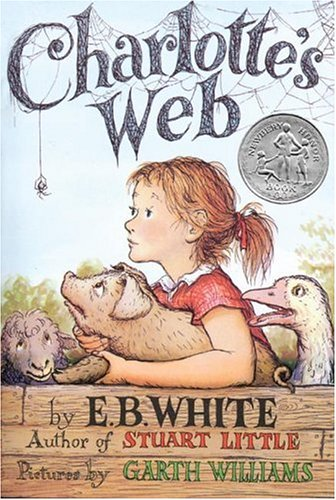
Today, in memory of E.B. White, who died on this day in 1985 (30 years ago!), let’s have a moment with our favorite spider Charlotte.

Charlottes-Web-Terrific-Garth-Williams

“Why did you do all this for me?’ he asked. ‘I don’t deserve it. I’ve never done anything for you.’

‘You have been my friend,’ replied Charlotte. ‘That in itself is a tremendous thing. I wove my webs for you because I liked you. After all, what’s a life, anyway? We’re born, we live a little while, we die. A spider’s life can’t help being something of a mess, with all this trapping and eating flies. By helping you, perhaps I was trying to lift up my life a trifle. Heaven knows anyone’s life can stand a little of that.”

CharlotteWeb

When the book was published in 1952, Eudora Welty reviewed it in the New York Times, writing, “As a piece of work it is just about perfect, and just about magical in the way it is done.” I concur.

As you know, I have a love/hate relationship with spiders, but I do love Charlotte.

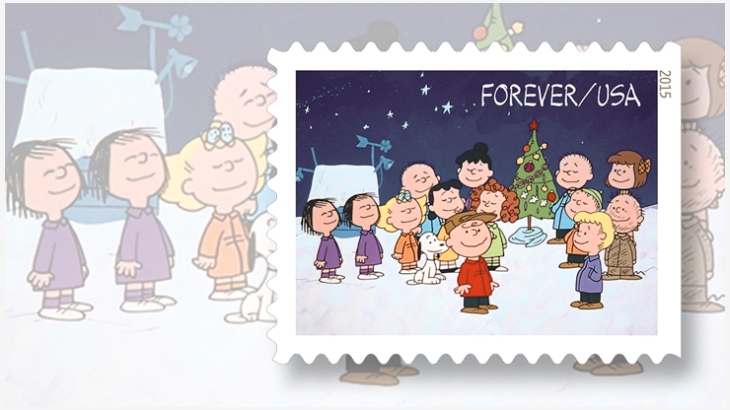
And, OMG, this year marks the 50th anniversary of A Charlie Brown Christmas! So buy your commemorative Christmas stamps today!

680204-S0

united-states-charlie-brown-christmas-stamp-2015

And the Cards won the division! There is joy in Mudville again!

*Charlotte

Like a flash of light*

by chuckofish

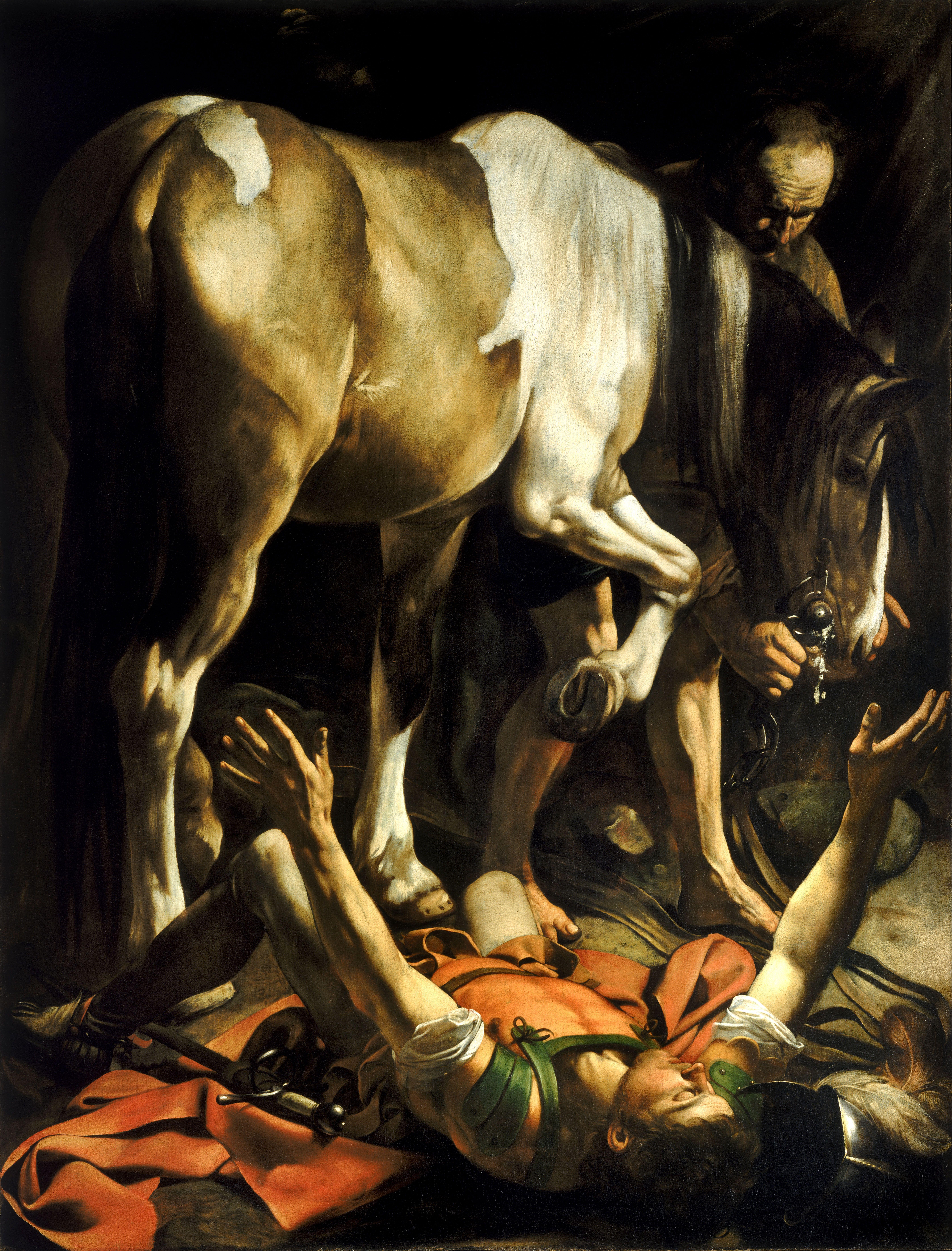
Conversion_on_the_Way_to_Damascus-Caravaggio_(c.1600-1)

“And he fell to the earth, and heard a voice saying unto him, Saul, Saul, why persecutest thou me?”

Today is the birthday of the Italian painter Caravaggio (1571–1610). I am not a big fan of his art, but I have always liked his painting of the conversion of Saint Paul. It is realistic and dramatic and the light–wow. Clearly something big is happening to Saul of Tarsus under the hooves of his horse.

Anyway, it gives us an opportunity to think about conversion today. Here is Frederick Buechner on the subject:

There are a number of conversions described in the New Testament. You think of Paul seeing the light on the road to Damascus (Acts 9:1-19), or the Ethiopian eunuch getting Philip to baptize him on the way from Jerusalem to Gaza (Acts 8:28-40). There is also the apostle Thomas saying, “My Lord and my God!” when he is finally convinced that Jesus is alive and whole again (John 20:26-29), not to mention the Roman centurion who witnessed the crucifixion saying, “Truly this man was the Son of God” (Luke 23:47). All these scenes took place suddenly, dramatically, when they were least expected. They all involved pretty much of an about-face, which is what the word conversion means. We can only imagine that they all were accompanied by a good deal of emotion.

But in this same general connection there are other scenes that we should also remember. There is the young man who, when Jesus told him he should give everything he had to the poor if he really wanted to be perfect as he said he did, walked sorrowfully away because he was a very rich man. There is Nicodemus, who was sufficiently impressed with Jesus to go talk to him under cover of darkness and later to help prepare his body for burial, but who never seems to have actually joined forces with him. There is King Agrippa, who, after hearing Paul’s impassioned defense of his faith, said, “Almost thou persuadest me to be a Christian” (Acts 26:28, KJV). There is even Pontius Pilate, who asked, “What is truth?” (John 18:38) under such circumstances as might lead you to suspect that just possibly, half without knowing it, he really hoped Jesus would be able to give him the answer, maybe even become for him the answer.

Like the conversions, there was a certain amount of drama about these other episodes too and perhaps even a certain amount of emotion, though for the most part unexpressed. But of course in the case of none of them was there any about-face. Presumably all these people kept on facing more or less the same way they had been right along. King Agrippa, for instance, kept on being King Agrippa just as he always had. And yet you can’t help wondering if somewhere inside himself, as somewhere also inside the rest of them, the “almost” continued to live on as at least a sidelong glance down a new road, the faintest itching of the feet for a new direction.

We don’t know much about what happened to any of them after their brief appearance in the pages of Scripture, let alone what happened inside them. We can only pray for them, not to mention also for ourselves, that in the absence of a sudden shattering event, there was a slow underground process that got them to the same place in the end.

–Frederick Buechner, Beyond Words

Discuss among yourselves.

*”Like a flash of light, I realized in what an abyss of errors, in what chaos I was.” (John Calvin)

What are you reading?

by chuckofish

Peter Vilhelm Ilsted (Danish artist, 1861-1933) Woman Reading by Candlelight 2

I have been re-reading some old favorites.

First I read One Fine Day by Mollie Painter-Downes, which I highly recommend. You will recall that between 1939 and 1945 Mollie Panter-Downes covered the war from England for the New Yorker. The action of this novel takes place all on one day in the summer of 1946 in a small village in England. It is a quiet meditation on how things change and how we adapt and how we still have so much to be grateful for.

“The country was tumbled out before her like the contents of a lady’s workbox, spools of green and silver and pale yellow, ribbed squares of brown stuff, a thread of crimson, a stab of silver, a round, polished gleam of mother of pearl. It was all bathed in magic light, the wonderful transforming light in which known things look suddenly new.”

IMGP1341 (1)

Now I am re-reading the wonderful Gilead by the great Marilynne Robinson. Basically it is a meditation by a dying minister, writing to his young son about his life and what it has meant to him.

“I’m writing this in part to tell you that if you ever wonder what you’ve done in your life, and everyone does wonder sooner or later, you have been God’s grace to me, a miracle, something more than a miracle. You may not remember me very well at all, and it may seem to you to be no great thing to have been the good child of an old man in a shabby little town you will no doubt leave behind. If only I had the words to tell you.”

It is all about the beauty of the world and our lives here on earth. Wow.

“There are two occasions when the sacred beauty of Creation becomes dazzlingly apparent, and they occur together. One is when we feel our mortal insufficiency to the world, and the other is when we feel the world’s mortal insufficiency to us.”

The new Jan Karon book, Come Rain or Come Shine, is out and I have ordered it. In this installment Dooley has graduated from vet school and opened his own animal clinic and is getting married. Sounds good to me.

What are you reading?