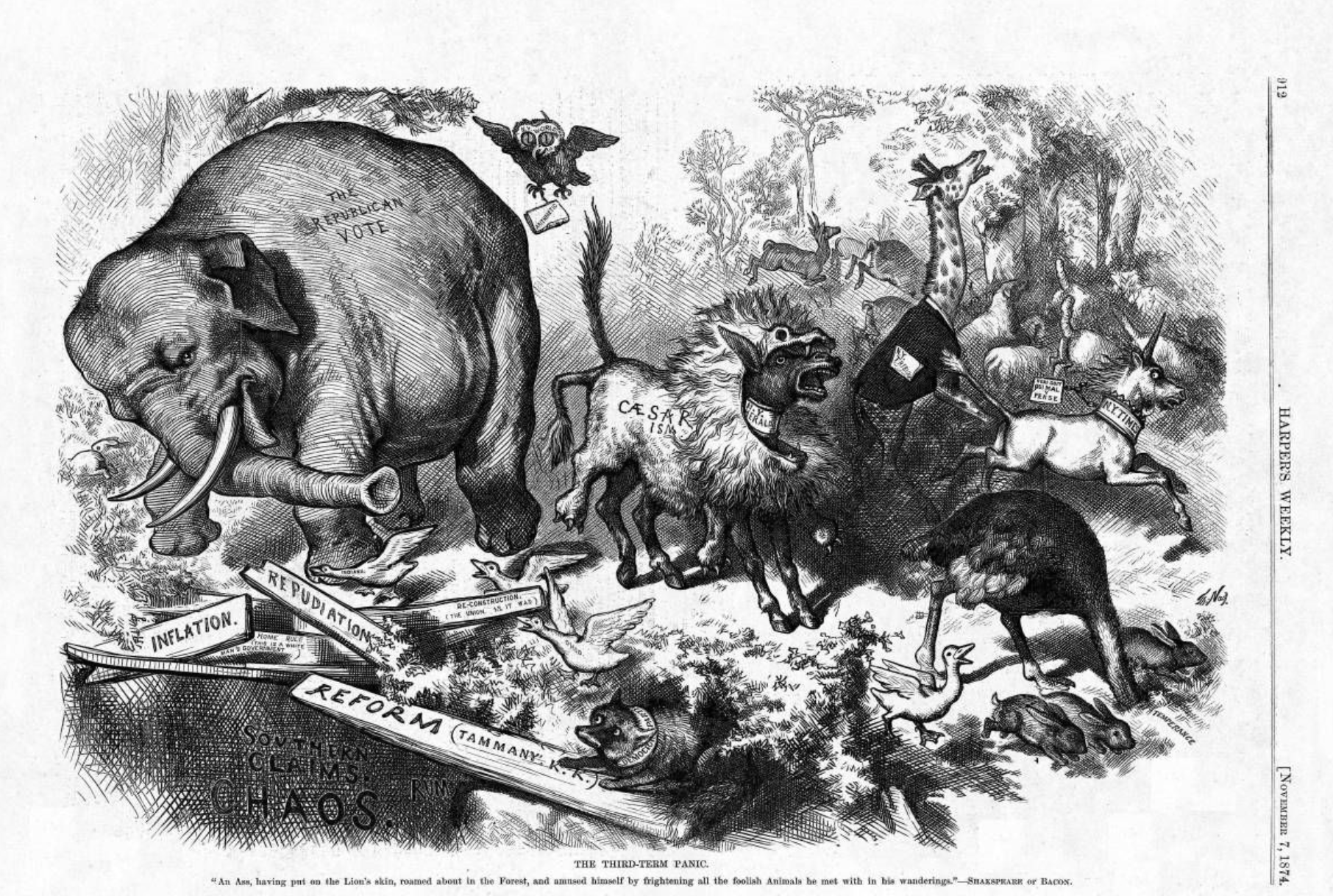
On this day in 1874 this cartoon by Thomas Nast appeared, featuring the first notable appearance of the Republican elephant.
The Republican Party has changed quite a bit over the years, but I am happy to see it become a real diverse coalition of Americans–the people that make this country great. Truly, the 2024 election is the “revenge of the working class American.” They’re not Nazis; they’re not garbage. Indeed.
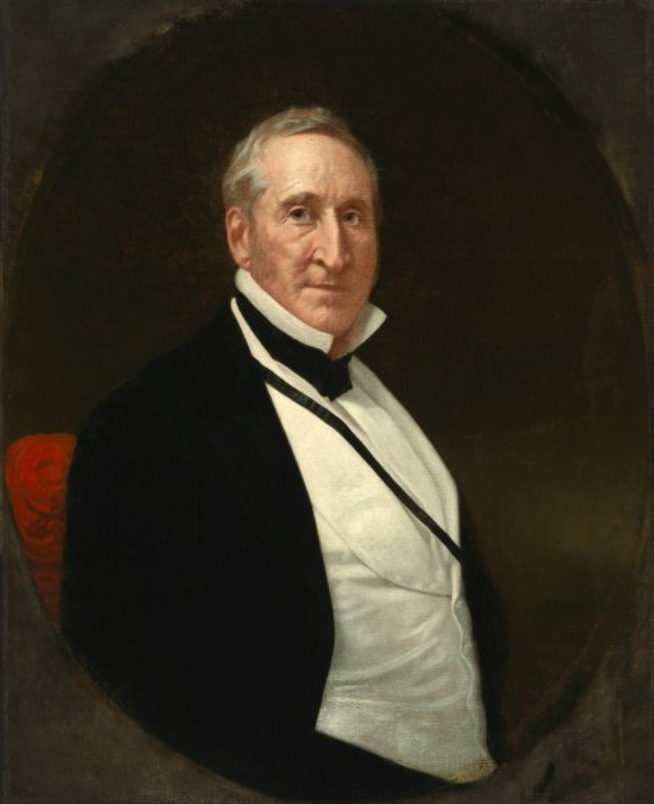
On this day in 1849 at a convention in St. Louis’s old courthouse, 800 delegates heard a speech by Missouri’s veteran U.S. senator Thomas Hart Benton. With his customary persuasiveness, Benton launched into a recital of the glories and riches which would come from a transcontinental railway.
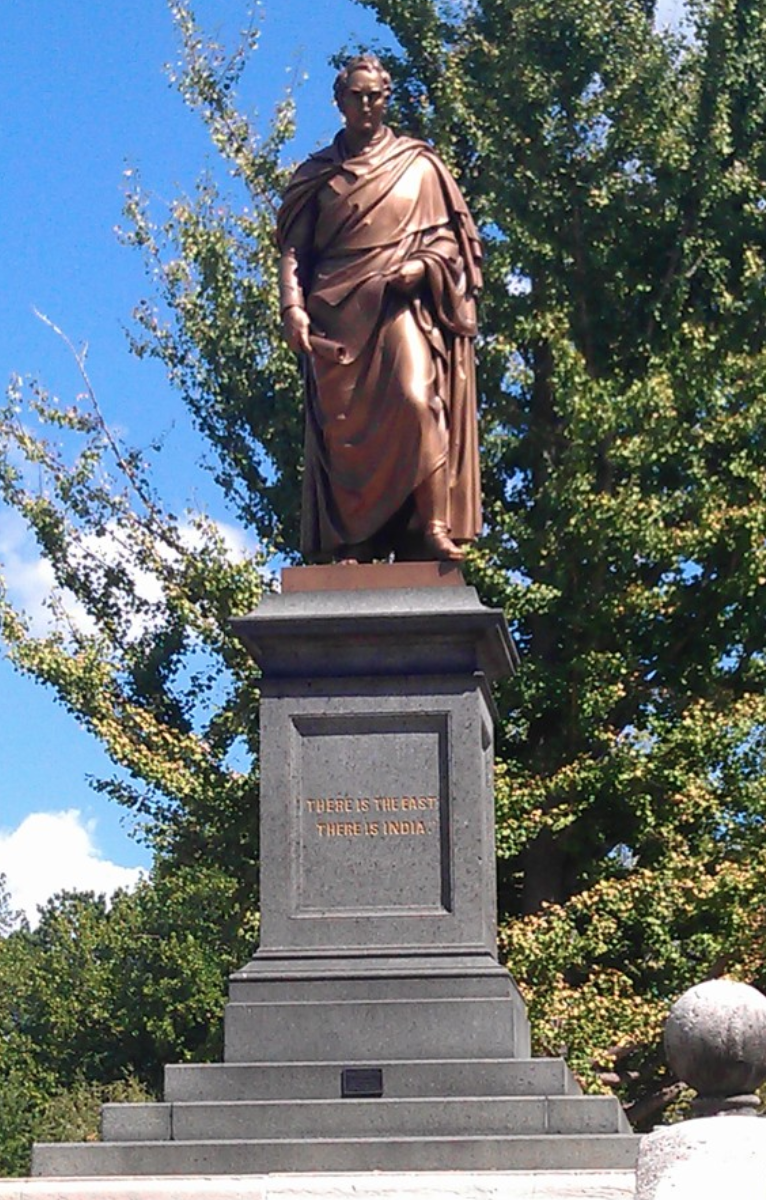
Summing up his argument, he pointed majestically westward and cried, “There is the East! There is India!” Expertly phrased, perfectly timed, and dramatically delivered, Benton’s stunning conclusion electrified his audience and strengthened the case for the projected railroads as no other argument had done.
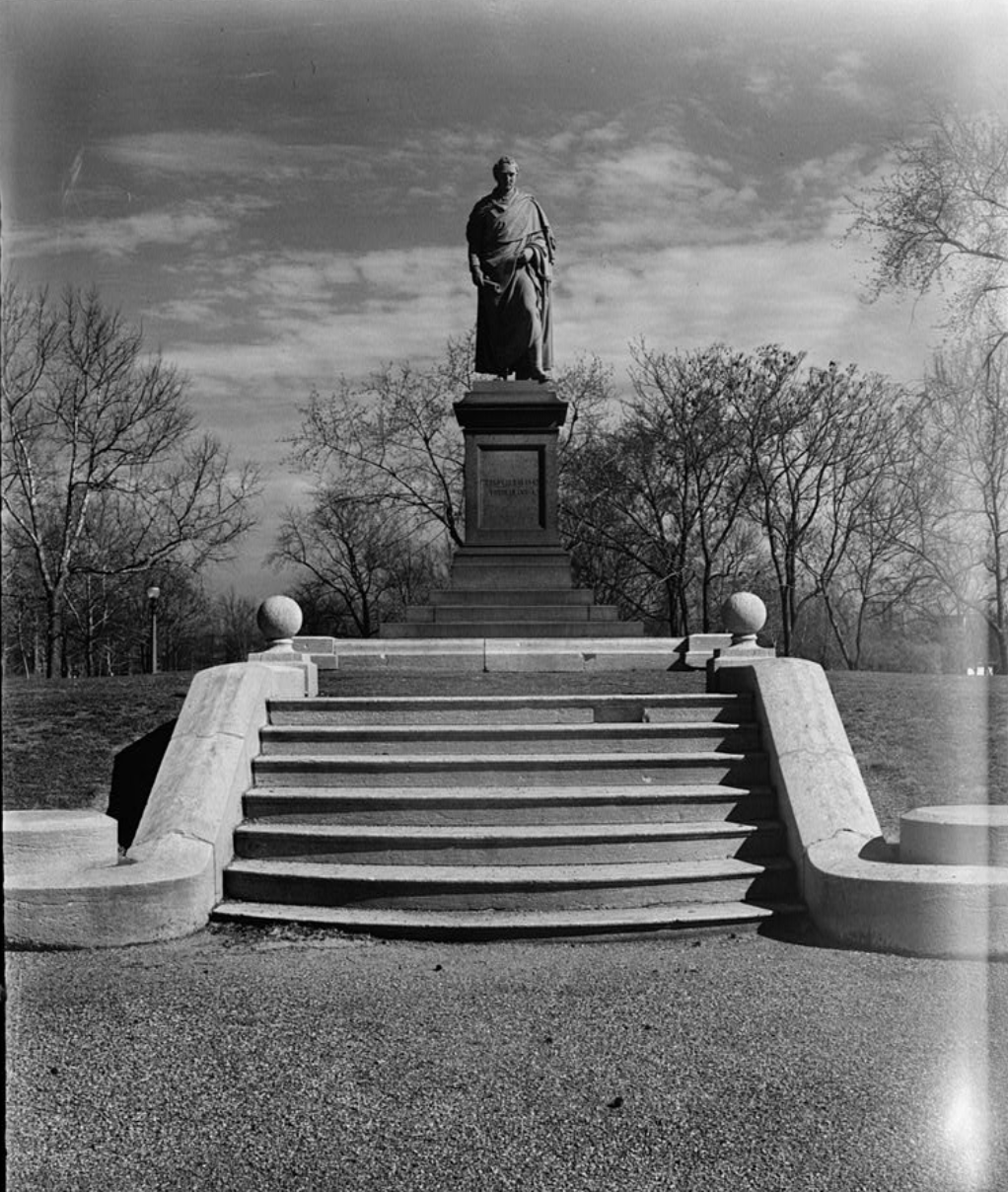
The occasion is preserved in the bronze statue of Benton in Lafayette Park as portrayed by American sculptor Harriet Hosmer. The closing words of his speech are engraved at his feet.
Harriet Hosmer was about 30 years old and living in Rome when she received the commission. She sculpted the statue in Rome in 1861. It was then cast by the Royal Bronze Foundry in Munich in 1864.
The resulting statue is a colossal standing figure of Senator Benton. It stands ten feet tall and is two feet, ten inches wide and deep. Benton wears a classical toga over a contemporary jacket and neck scarf. He is wearing sandals, faces west and holds a partially unrolled scroll of a map with the word “America” on it. Dedicated in 1868, it was the first public monument in the State of Missouri.
The park also boasts a bronze casting from a life-sized statue of George Washington by French sculptor Jean-Antoine Houdon, which was placed in the park in 1869.
Lafayette Park was set aside from the St. Louis Common in 1836 and dedicated in 1851 as one of the first public parks, and by far the largest of its era, in the City of St. Louis, Missouri. It is considered by many historians to be the oldest urban park west of the Mississippi. Indeed, at 30 acres, Lafayette Park is one of the larger parks in the city even though it is still dwarfed by Forest Park which is about 46 times larger.
*Information for this post is from St. Louis Day By Day by Frances Hurd Stadler and the Lafayette Park Conservancy.
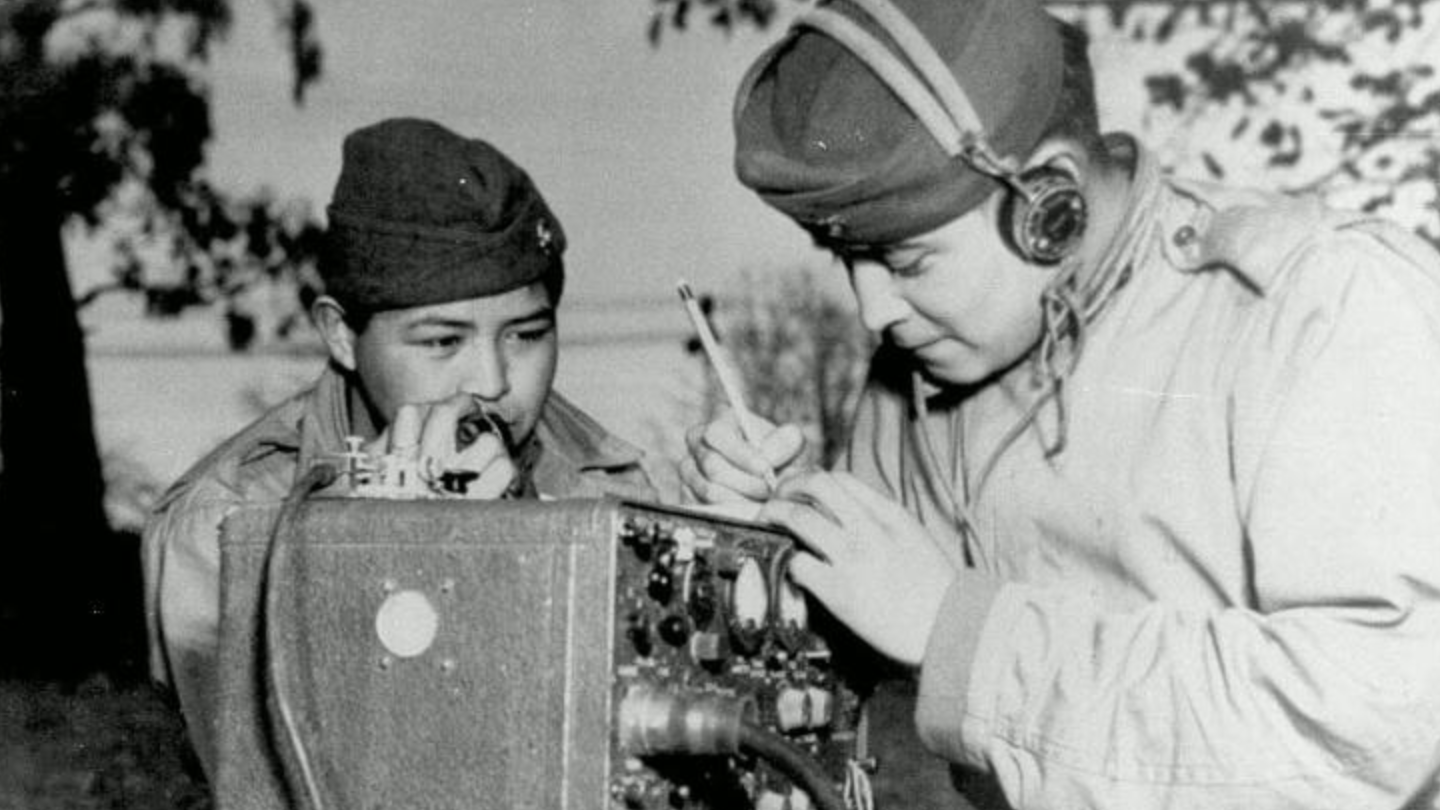
While staying on the Navajo Rez in Monument Valley we were reminded several times of the Navajo code talkers of WWII fame. You will recall that this was the ingenious idea of using the Navajo language to write an unbreakable code–one of America’s all-time great secret weapons. After Pearl Harbor, and because the Japanese had broken all the codes previously sent over the radio waves, the Marines were desperate to find a secure way to communicate vital information with precious little time. After several successful tests, the Navajo language was approved as a communication code.
But we wondered, who originally had this brilliant idea?
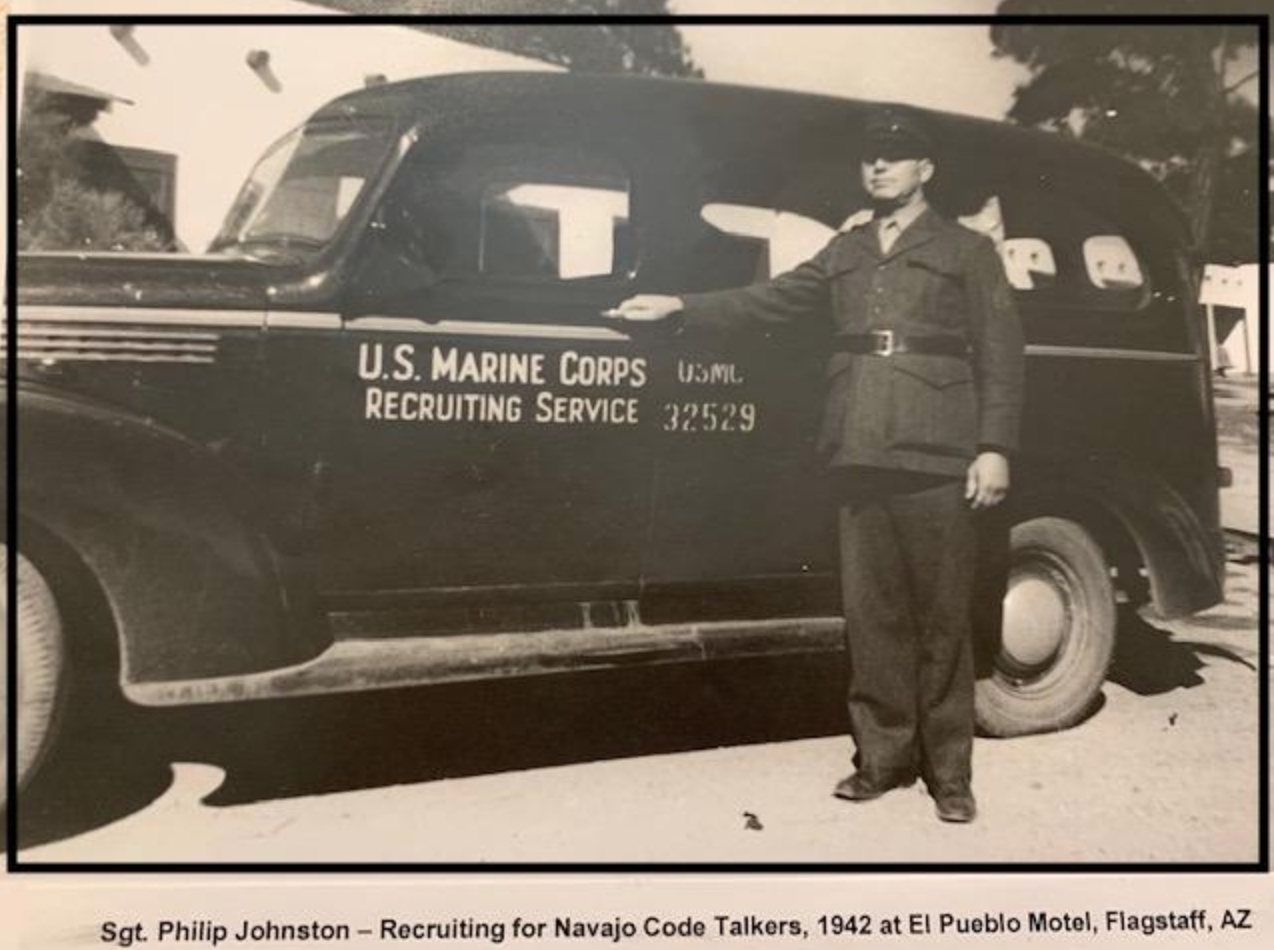
Well, I looked into this and it was Philip Johnston, the son of a Christian missionary, who had grown up on a Navajo reservation and had learned the language in his youth. In fact, Johnston became so fluent in the (very difficult) Navajo language that he was asked in 1901 at age 9 to serve as an interpreter for a Navajo delegation sent to Washington, D.C., to lobby for Indian rights. Philip was the Navajo/English translator between the local Navajo leaders and President Theodore Roosevelt.
Johnston said he came up with the idea of enlisting Navajos as signalmen early in 1942, when he read a newspaper story about the army’s use of several Native Americans during training maneuvers with an armored division in Louisiana. The article also stated that, during World War I, Native Americans had acted as signalmen for the Canadian army to send secure messages about shortages of supplies or ammunition.
Shortly thereafter, Johnston contacted the military with his idea: “My plan is not to use translations of an Indian language, but to build up a code of Indian words. Let’s imagine this code included terms such as ‘fast shooter’ to designate a machine gun, and ‘iron rain’ for a barrage. Navajo personnel would be thoroughly drilled to understand and use these substitutions.”
I mean, brilliant.
During the course of the war, about 400 Navajos participated in the code talker program. Their hard work was not recognized until after the declassification of the operation in 1968.
President Ronald Reagan gave the Code Talkers a Certificate of Recognition and declared August 14 “Navajo Code Talkers Day” in 1982. President George W. Bush presented the Congressional Gold Medal to the four surviving Code Talkers at a ceremony held in the Capitol Rotunda in Washington in July 2001.
To my knowledge Philip Johnston was never recognized with a medal or special ceremony for his great idea. But hats off to him.
If you would like to read more about this, check this and this out.
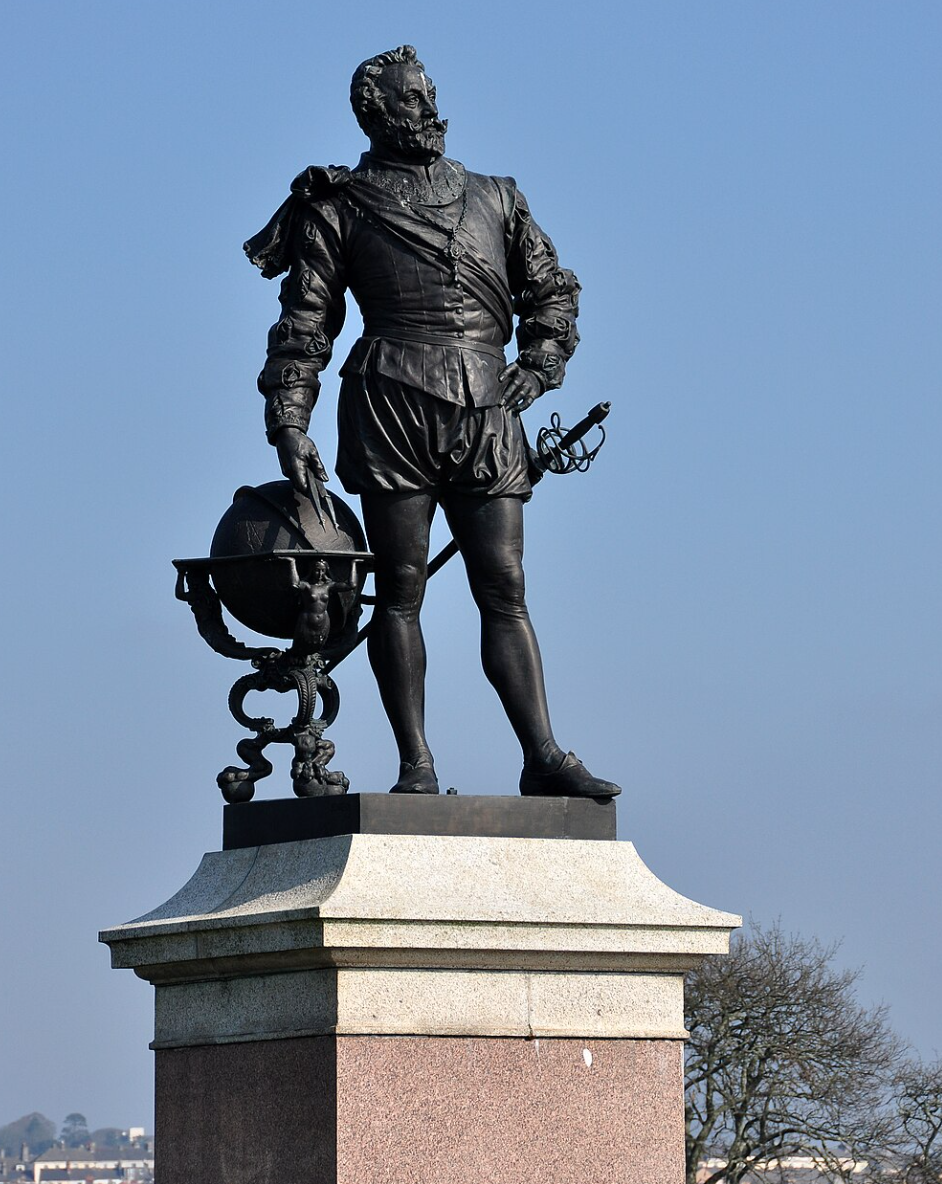
Today is the 444th anniversary of the completion of Sir Francis Drake’s circumnavigation of the Earth in Plymouth, England on September 26, 1580.
This was the first English circumnavigation, and second circumnavigation overall. Drake’s exploits made him a hero to the English, but his privateering led the Spanish to brand him a pirate, known to them as El Draque (“The Dragon”). “While Spain regarded him as a pirate even then, he was really a privateer, since he carried the royal warrant and the Crown participated by furnishing money and armed ships. That is hardly piracy as we understand it.” (This is an interesting article about Drake.)
I have shared this prayer by Drake before, but it bears repeating:
“Disturb us, Lord, when we are too well pleased with ourselves, when our dreams have come true because we have dreamed too little, when we arrive safely because we sailed too close to the shore.
Disturb us, Lord, when with the abundance of things we possess, we have lost our thirst for the waters of life, having fallen in love with life, we have ceased to dream of eternity, and in our efforts to build a new earth, we have allowed our vision of the new heaven to dim.
Disturb us, Lord, to dare more boldly, to venture on wider seas, where storms will show your mastery, where losing sight of land, we shall find the stars. We ask you to push back the horizon of our hopes, and to push us into the future in strength, courage, hope, and love. This we ask in the name of our Captain, who is Jesus Christ. ”
Wonderful.
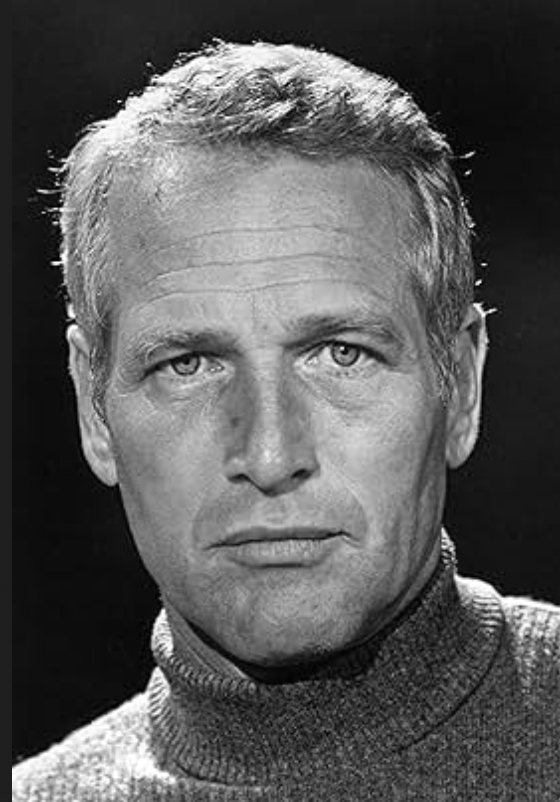
We also remember Paul Newman, who died on this day in 2008.
Kind of like Sir Francis Drake, Paul Newman is in a league of own. Nominated eight times for Best Actor (and once for Supporting Actor), he only won one Oscar for The Color of Money (1987) and that seemed like a consolation prize at the time. Newman wasn’t even there to pick up his award. C’est la vie. He was great and everybody loved him. Anyway, a toast to the great Paul Newman!
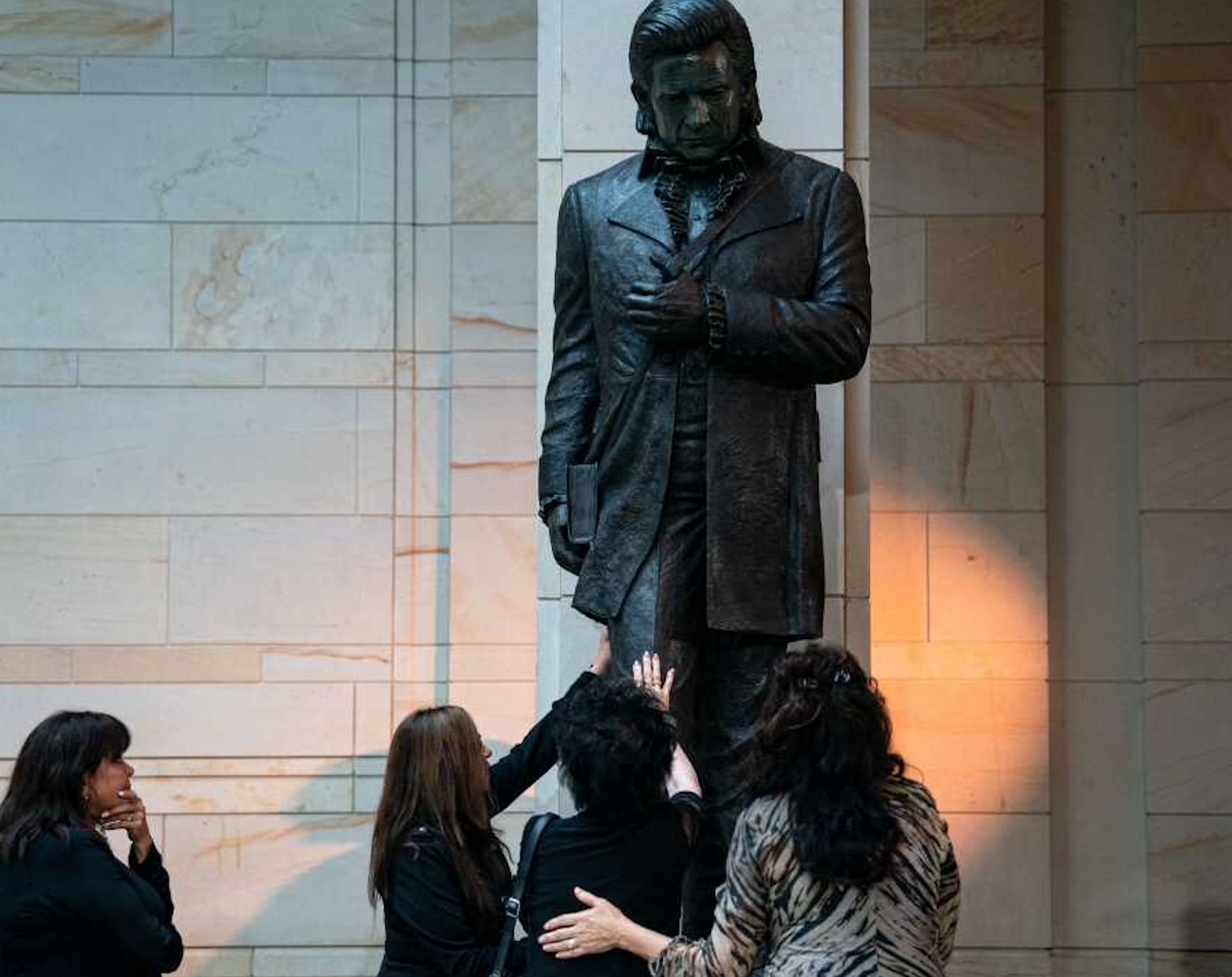
And speaking of cool, how about that new statue at the U.S. Capitol? Johnny Cash, representing Arkansas, became the first professional musician to be honored with a statue in the Capitol.
Cash’s daughter, Rosanne Cash, said her father would have viewed the statue “as the ultimate honor” in his life. She said her father’s hard upbringing instilled in him a strong work ethic and that he loved the idea of America as a place of dreams and refuge. “This man was a living redemption story,” Rosanne Cash said. “He encountered darkness and met it with love.” Amen, brother.
Now there’s three aces! Sir Francis Drake, Paul Newman and Johnny Cash. Woohoo! Have a good day!
I had not heard of the Battle of Iuka, nor of Iuka, Mississippi for that matter, until yesterday. Before the Civil War the town boasted an all-female college, a boys’ military academy and a fine hotel. The Civil War brought widespread devastation when a major engagement took place on September 19, 1862.
Major General Ulysses Grant brought two armies to confront Sterling Price in a double envelopment: Rosecrans’s Army of the Mississippi approaching Iuka from the southwest, and three divisions of his own Army of the Tennessee under Maj. General Edmund Ord, approaching from the northwest. Although Grant and Ord planned to attack in conjunction with Rosecrans when they heard the sound of battle, an acoustic shadow suppressed the sound and prevented them from realizing that the battle had begun.
Now hold the phone, what is an acoustic shadow?!
“An acoustic shadow is an area through which sound waves fail to propagate, due to topographical obstructions or disruption of the waves via phenomena such as wind currents, buildings, or sound barriers.”
I looked up in his Memoirs to see what Grant had to say about this:
“During the 19th the wind blew in the wrong direction to transmit sound either towards the point where Ord was, or to Burnsville where I had remained…A couple of hours before dark on the 19th…the wind was hard and in the wrong direction to transmit sound either to Ord or to me. Neither he nor I nor any one in either command heard a gun that was fired upon the battle-field. After the engagement Rosecrans sent me a dispatch announcing the result. This was brought by a courier. There is no road between Burnsville and the position then occupied by Rosecrans and the country was impassable for a man on horseback. The courier bearing the message was compelled to move west nearly to Jacinto before he found a road leading to Burnsville.”
Boy, the things we take for granted in our tech world today.
Anyway, I thought that was very interesting. And now we know what an acoustic shadow is.
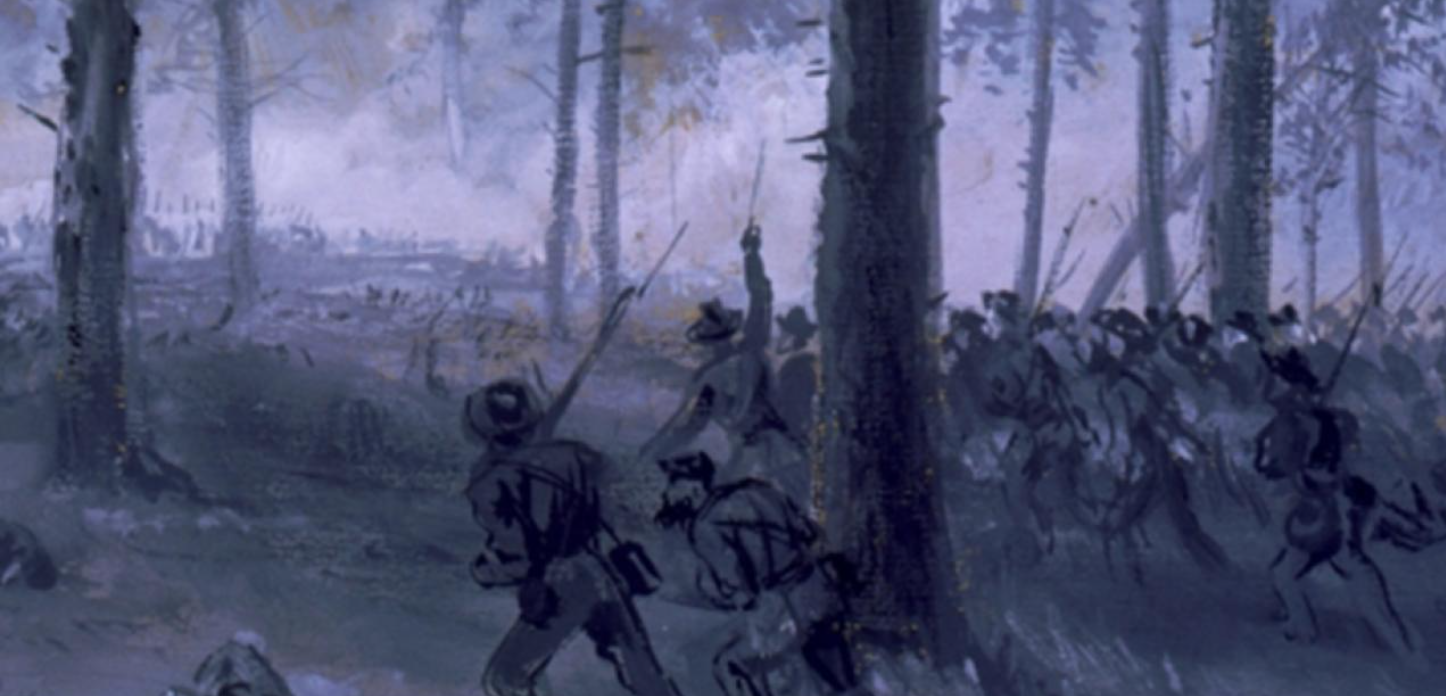
Today is also the anniversary ( in 1863 ) of the first day of the Battle of Chickamauga, in northwestern Georgia, the bloodiest two-day battle of the conflict, and the only significant Confederate victory in the war’s Western Theater. You will recall the short story by Ambrose Bierce about the deaf-mute boy who wanders onto the battlefield.
One sunny autumn afternoon a child strayed away from its rude home in a small field and entered a forest unobserved. It was happy in a new sense of freedom from control, happy in the opportunity of exploration and adventure; for this child’s spirit, in bodies of its ancestors, had for thousands of years been trained to memorable feats of discovery and conquest—victories in battles whose critical moments were centuries, whose victors’ camps were cities of hewn stone. From the cradle of its race it had conquered its way through two continents and passing a great sea had penetrated a third, there to be born to war and dominion as a heritage.
A very grim read, to be sure.
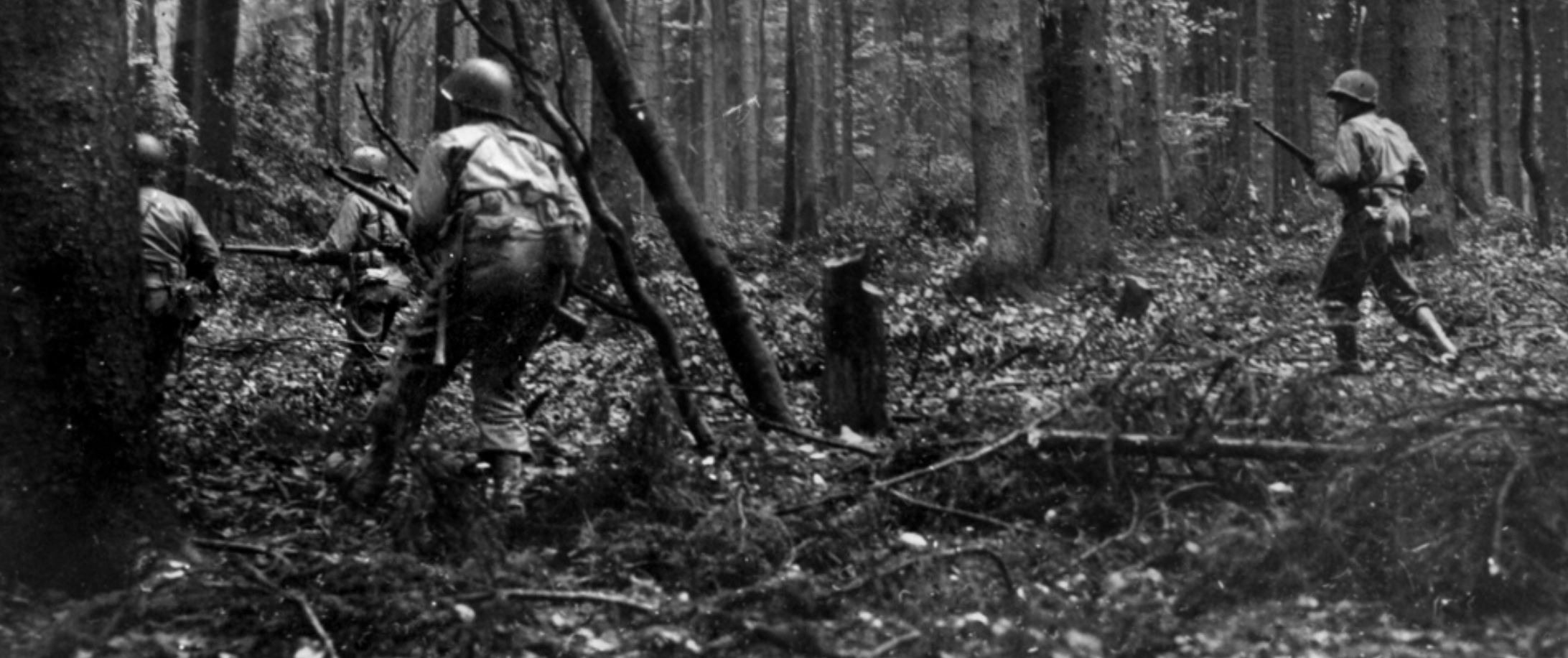
September 19 was also the first day of the Battle of the Hürtgen Forest in 1944, which was the longest battle on German ground during World War II. It is the second longest single battle the U.S. Army has ever fought after The Battle of Bataan. The Battle of Hürtgen Forest has been referred to as a stalemate that consumed large amounts of resources on both sides. Many men died in the freezing cold. The Americans suffered 33,000 casualties during the course of the battle which ranged up to 55,000 casualties, including 9,000 non-combat losses, and represented a 25 percent casualty rate.
J.D. Salinger was there. And I always think of a girl I knew in college whose father was there in the Hürtgen Forest and who returned home after the war and became a mailman in Worcester, MA.
He who dwells in the shelter of the Most High will abide in the shadow of the Almighty. 2 I will say to the Lord, “My refuge and my fortress, my God, in whom I trust.”
3 For he will deliver you from the snare of the fowler and from the deadly pestilence. 4 He will cover you with his pinions, and under his wings you will find refuge; his faithfulness is a shield and buckler. 5 You will not fear the terror of the night, nor the arrow that flies by day, 6 nor the pestilence that stalks in darkness, nor the destruction that wastes at noonday.
7 A thousand may fall at your side, ten thousand at your right hand, but it will not come near you. 8 You will only look with your eyes and see the recompense of the wicked.
9 Because you have made the Lord your dwelling place— the Most High, who is my refuge — 10 no evil shall be allowed to befall you, no plague come near your tent.
11 For he will command his angels concerning you to guard you in all your ways. 12 On their hands they will bear you up, lest you strike your foot against a stone. 13 You will tread on the lion and the adder; the young lion and the serpent you will trample underfoot.
14 “Because he holds fast to me in love, I will deliver him; I will protect him, because he knows my name. 15 When he calls to me, I will answer him; I will be with him in trouble; I will rescue him and honor him. 16 With long life I will satisfy him and show him my salvation.”
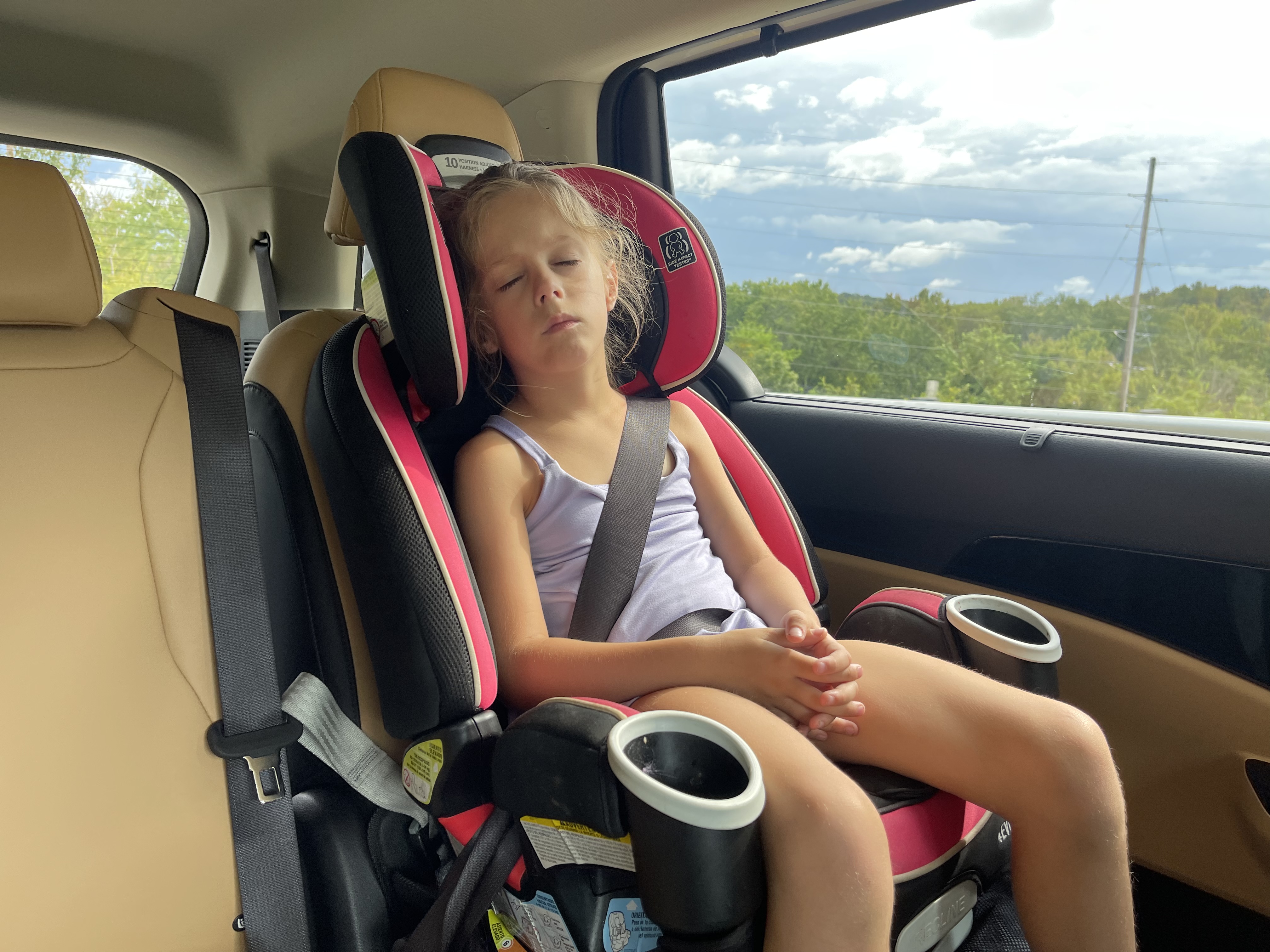
Busy, busy weekend! I am now a person who takes naps to survive exciting times.
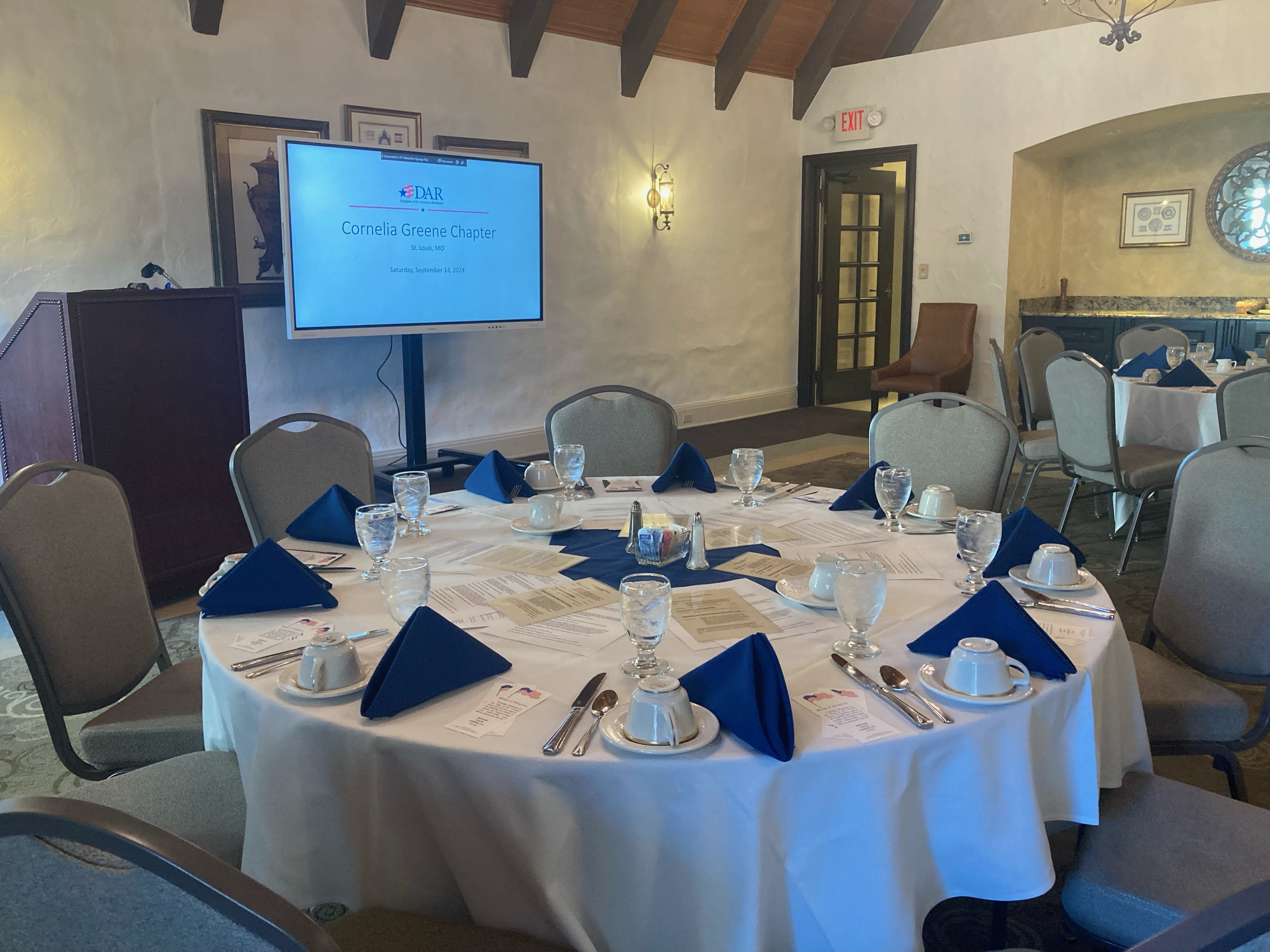
I went to daughter #1’s first DAR chapter meeting as regent on Saturday morning. She handled it like a pro as I knew she would. (I have transferred to her chapter.)
Of course, I didn’t take a picture of the meeting after it started…c’est la vie. We had breakfast and then the meeting, followed by the program, which she presented: DAR 101. I learned a lot.
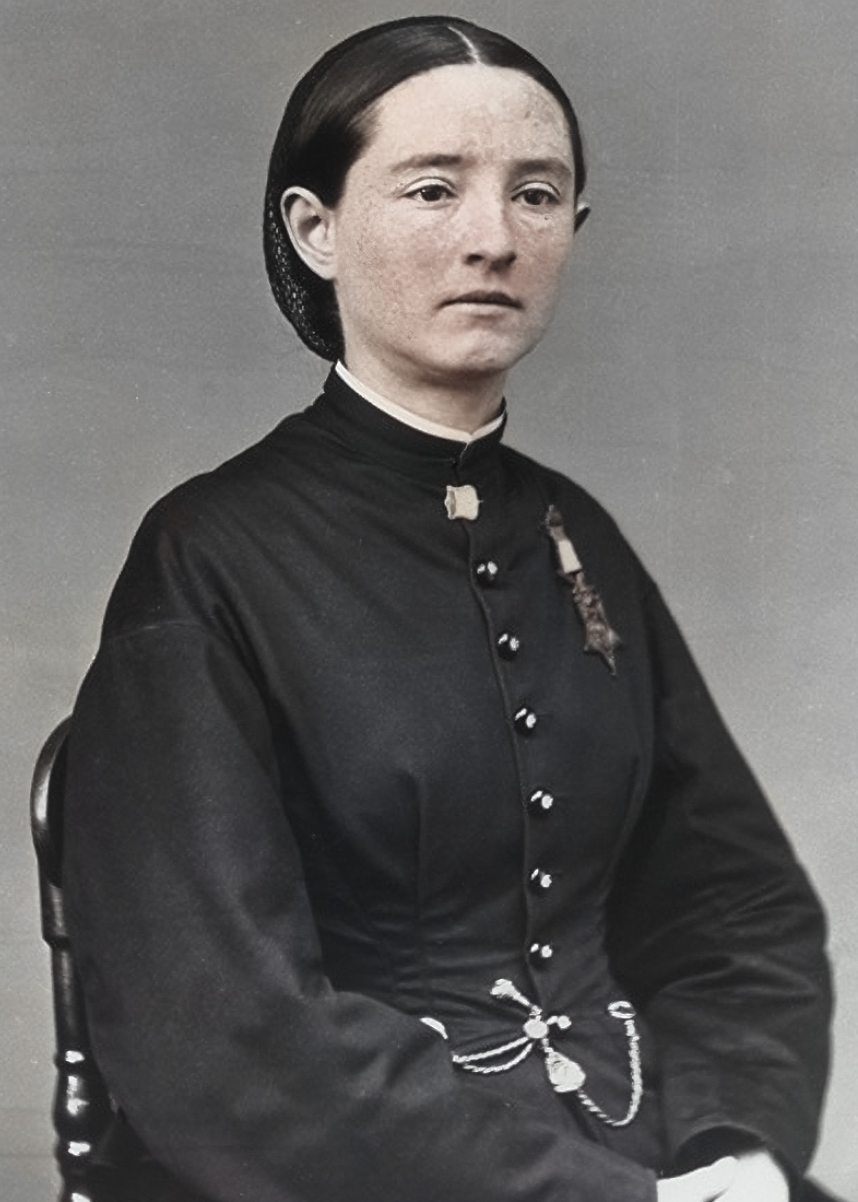
I was interested to learn that one early member of our chapter was Dr. Mary Walker, who served as a surgeon during the Civil War. Assigned to the Army of the Cumberland and later the 52nd Ohio Infantry, she was the first female surgeon in the US Army. She was captured by Confederate forces after crossing enemy lines to treat wounded civilians and arrested as a spy. She was then sent as a prisoner of war to Richmond, VA until released in a prisoner exchange. She is the only female to receive the Medal of Honor.
Pretty awesome. She tried to join the DAR in NYC, but they wouldn’t let her in because she wore pants. Yay, Cornelia Greene Chapter for being more open-minded.
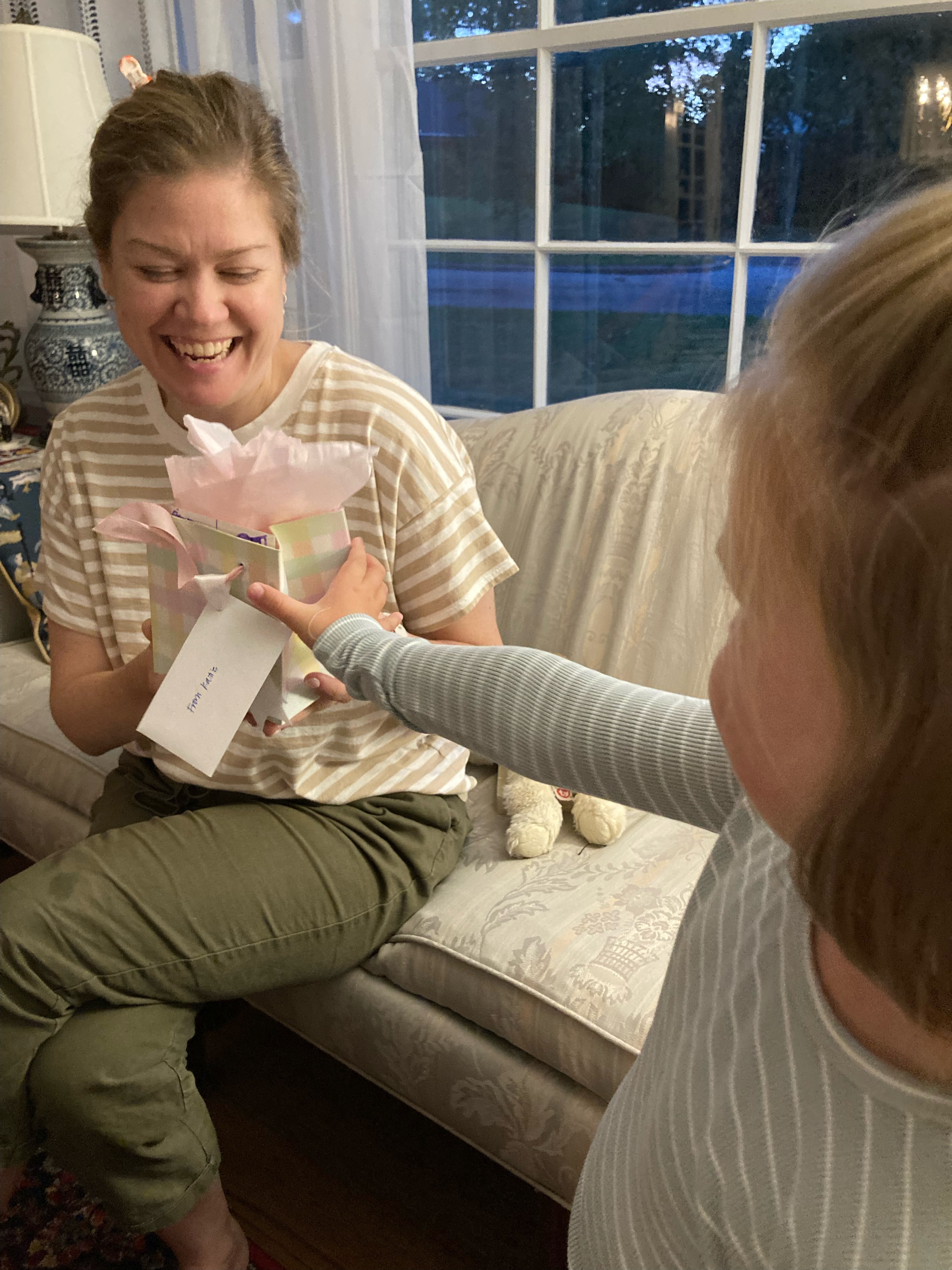
Daughter #2 and DN arrived with the prairie girls around dinner time and we had toasted ravioli and daughter #1 opened some presents.
It was a full day.
On Sunday we got up bright and early and went to the early service at church and to Sunday School, then headed home and on to our favorite Wild Sun Winery to continue celebrating daughter #1’s birthday in our favorite style. We were joined by several of her friends (ages 3-96) as well as the boy and his family. A good time was had by all and the rain held off til it was time to go home.
We had quite a sunrise yesterday, due, they say, to the wildfires out west. (Photo from Fox2)
Red sky at morning, sailors take warning, and all that. But the sun shone all day and it warmed up considerably.
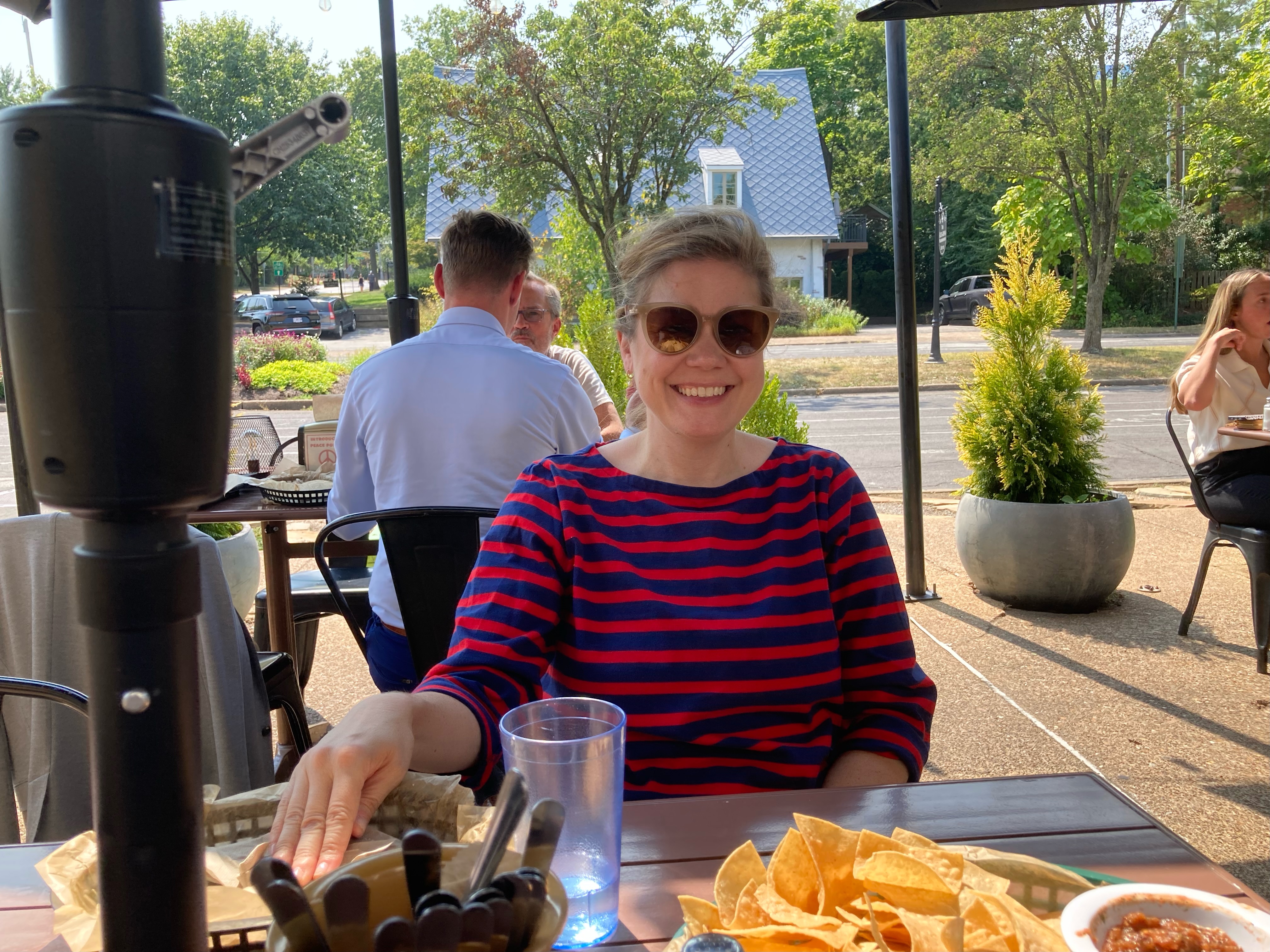
Daughter #1 took the day off for her birthday and we went to the Art Museum where we had not been for quite some time–probably since before Covid, as with so many things. It was fun to walk around without it being very crowded and look at all the good and bad art. When I was growing up we lived five minutes away and we went frequently with our Mother. It was free and we would sometimes go for an hour or so after church. We had our favorites to check out. That is still the way I like to go to the art museum–just to wander through and not look at every single painting, reading each description card. So we did that and then we sat outside at Taco Buddha back in daughter #1’s neighborhood and ate lunch. Lovely.
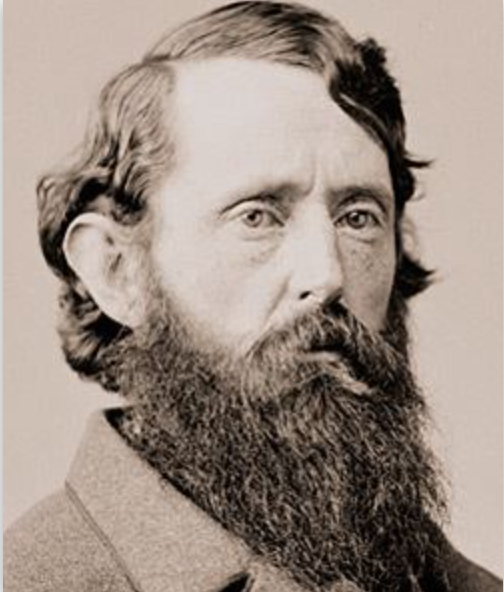
When I got home I worked a little on my article about Gratz Brown, the governor of Missouri after the Civil War. Here’s a fun fact: His granddaughter was Margaret Wise Brown who wrote Goodnight Moon and The Runaway Bunny! Talk about your small world! File that one away in your Trivia File.
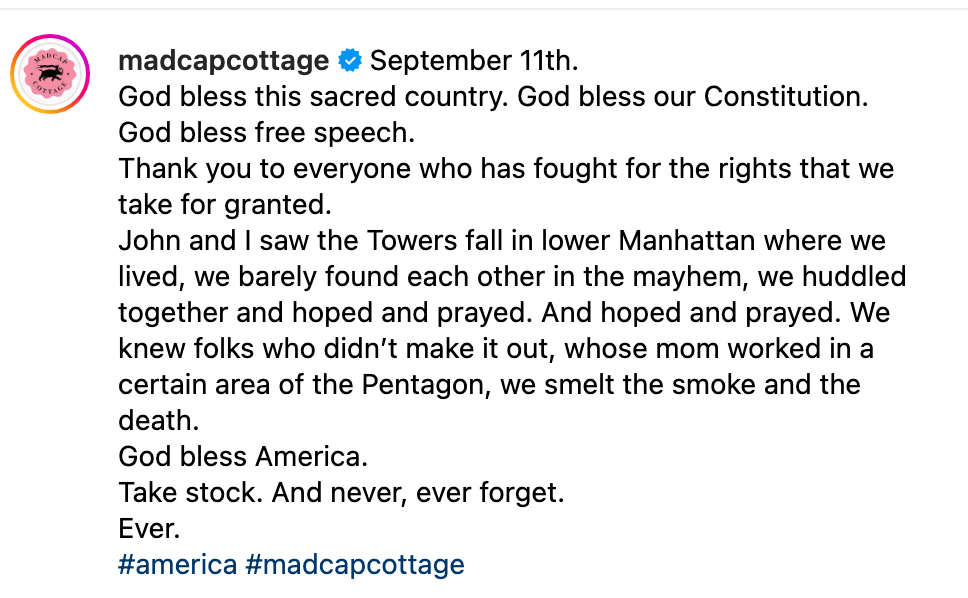
I also toasted all those brave Americans who died on September 11, 2001. In past years I have included this video about a fine young man who died in one of the towers helping others and I encourage you to watch it again. He was a lacrosse player and his initials were WRC. It wrecks me every time. Lest we forget.
To paraphrase Anne who has such a way with words, I hope that 2024 is not the year I so relentlessly roll my eyes that I develop some kind of horrendous facial tic that makes it impossible for me to show myself in public. I mean, ye gods, what a clown show!
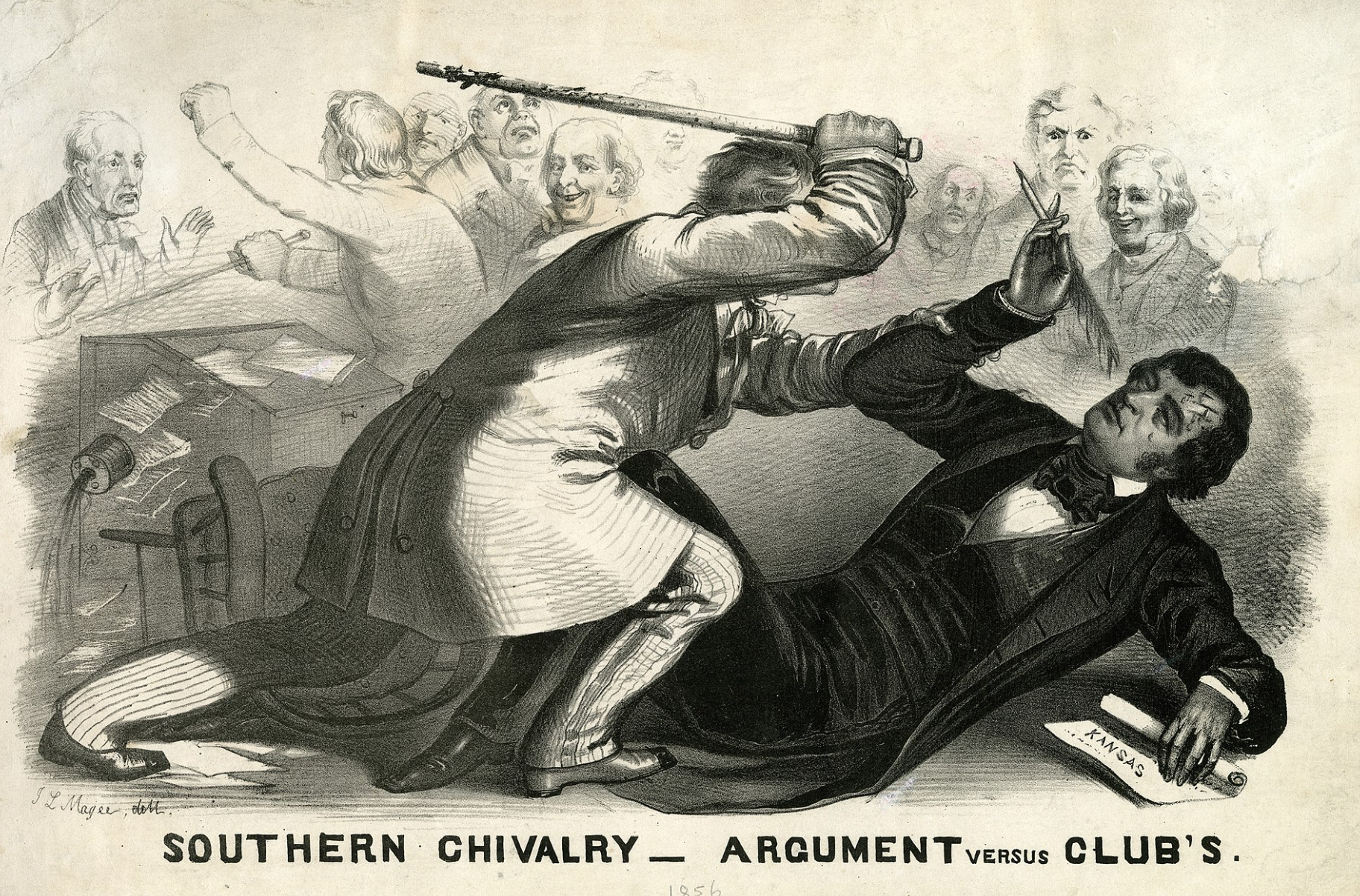
However, as always, it is good to keep our perspective. History teaches us that politics have always been thus. Think of Julius Caesar being literally back-stabbed to death by his friends. Think of Charles Sumner being caned on the floor of the U.S. Senate chamber by Representative Preston Brooks, a pro-slavery Democrat from South Carolina in 1856.
The Bible teaches us that we, indeed, live in a fallen world.
I was recently reminded of all this when researching B. Gratz Brown, an early Governor of Missouri, who hailed from Kentucky but lived for a long time in Kirkwood, Missouri.
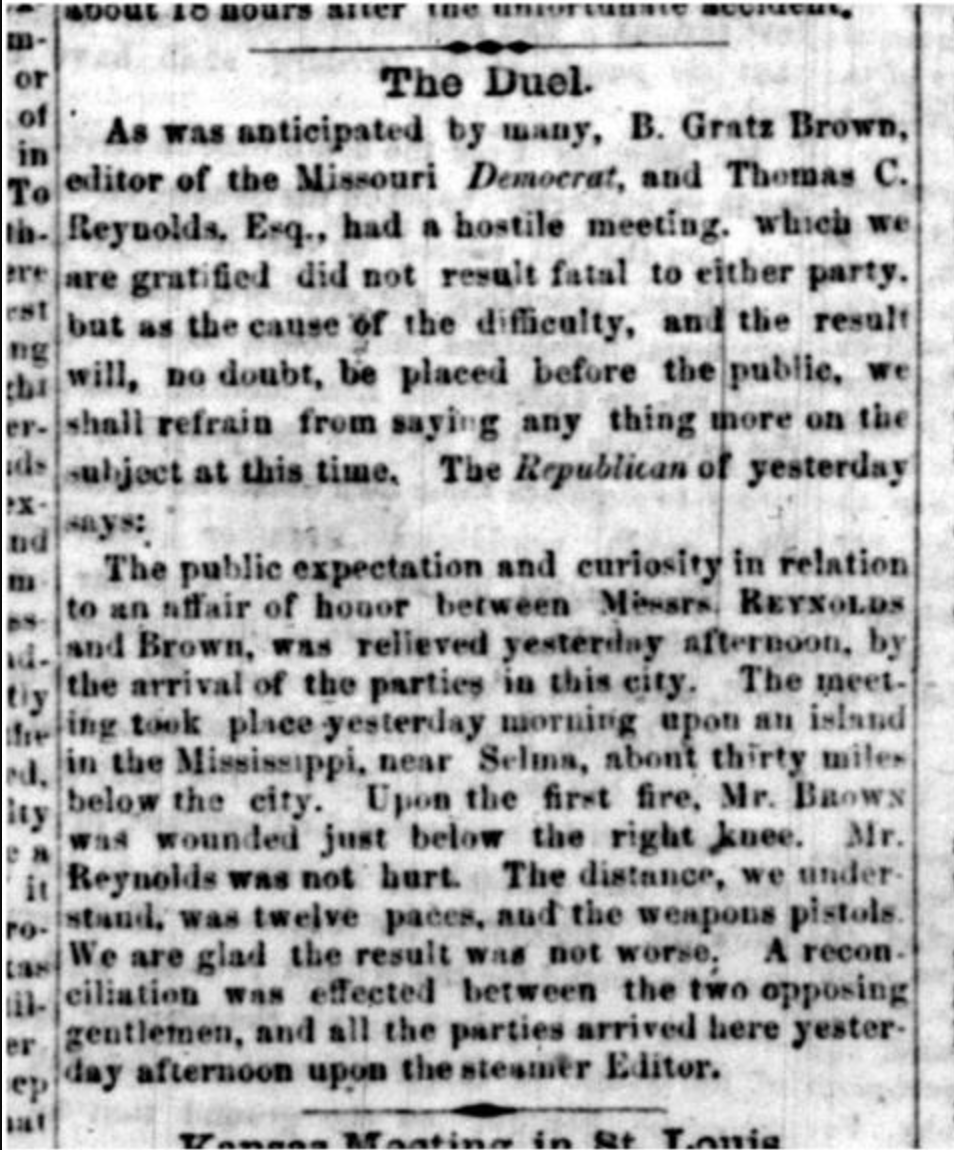
He limped because of an injury he incurred when dueling with his political foe Thomas C. Reynolds, the standard-bearer for the anti-Benton Democrats.
Ella Cecil Bodley, whose diary reveals many of the ordinary incidents of life in early Kirkwood, was not much taken with politics. In her July 21, 1858 entry she notes, “There was a barbeque in Kirkwood yesterday, with a good deal of speechifying. Cousin Frank Blair and Mr. Breckenridge and Mr. Barrett and Mr. Goal all made a speech, some of them two. I did not go to the barbeque for several reasons. Firstly, I look on such things as rather vulgar and I don’t like to go among strangers much, then it was very hot and I did not care to hear the speeches.”
I can relate to Ella, can’t you?
In 1858 Frank Blair was the most powerful politician in Missouri and at that barbeque was probably speaking in behalf of another cousin, B. Gratz Brown, who was running for re-election to the legislature. “Cousin Gratz” is mentioned many times in Ella’s diary–his visits to their home in Kirkwood, his romance and marriage to Mary Brown and his resignation as Editor of the influential Missouri Democrat.
In 1856 the Democratic party in St. Louis was split and Frank Blair was running for congress against Thomas C. Reynolds, who had no hope of beating Blair, but whose campaign was designed to help Trusten Polk’s race for Governor. Brown was running for the state legislature in support of Benton and Blair. In the heat of the campaign he wrote an editorial in his paper that was very offensive to Reynolds and Reynolds gave an equally strong reply in a competing newspaper. The editorial sparring continued until Reynolds challenged Brown to a duel.
Though illegal, dueling was not uncommon in those days in St. Louis, especially among newspaper editors. Most affairs of honor were settled on Bloody Island, a strip of land in the middle of the Mississippi River just below St. Louis, but the prominence of these two combatants demanded a more secure place to eliminate interference. The seconds decided on Selma Hall, the country home of Ferd Kennett, which was on the river forty miles below St. Louis.
When the smoke cleared, Brown was bent over, clutching his thigh and falling to the ground, the ball having split the bone just below his knee. Painfully wounded, Brown was carried on to the first boat passing up the river. When the boat reached the Levee that afternoon, a large crowd had already gathered and a squad of police prepared to arrest the survivor. When it was determined that the duel had not taken place in Missouri, no arrests were made.
Both men were only about 30 years old at the time. Reynolds was elected Lieutenant-governor of Missouri in 1860, but when the war started, he went south with Governor Claiborne Jackson and Gen. Sterling Price. When Jackson died, Reynolds became the Confederate Governor of Missouri in exile. When Lee surrendered, he went to Mexico with General Joe Shelby before ultimately returning to St. Louis to become a prominent attorney.
Gratz Brown became a U.S. Senator, the Governor of Missouri and ran for Vice-President of the U.S. on the Greeley-Brown ticket in 1872. He limped the rest of his life.
We grant no dukedoms to the few, We hold like rights and shall;- Equal on Sunday in the pew, On Monday in the mall. For what avail the plough or sail, Or land or life, if freedom fail?
The noble craftsmen we promote, Disown the knave and fool; Each honest man shall have his vote, Each child shall have his school. A union then of honest men, Or union nevermore again.
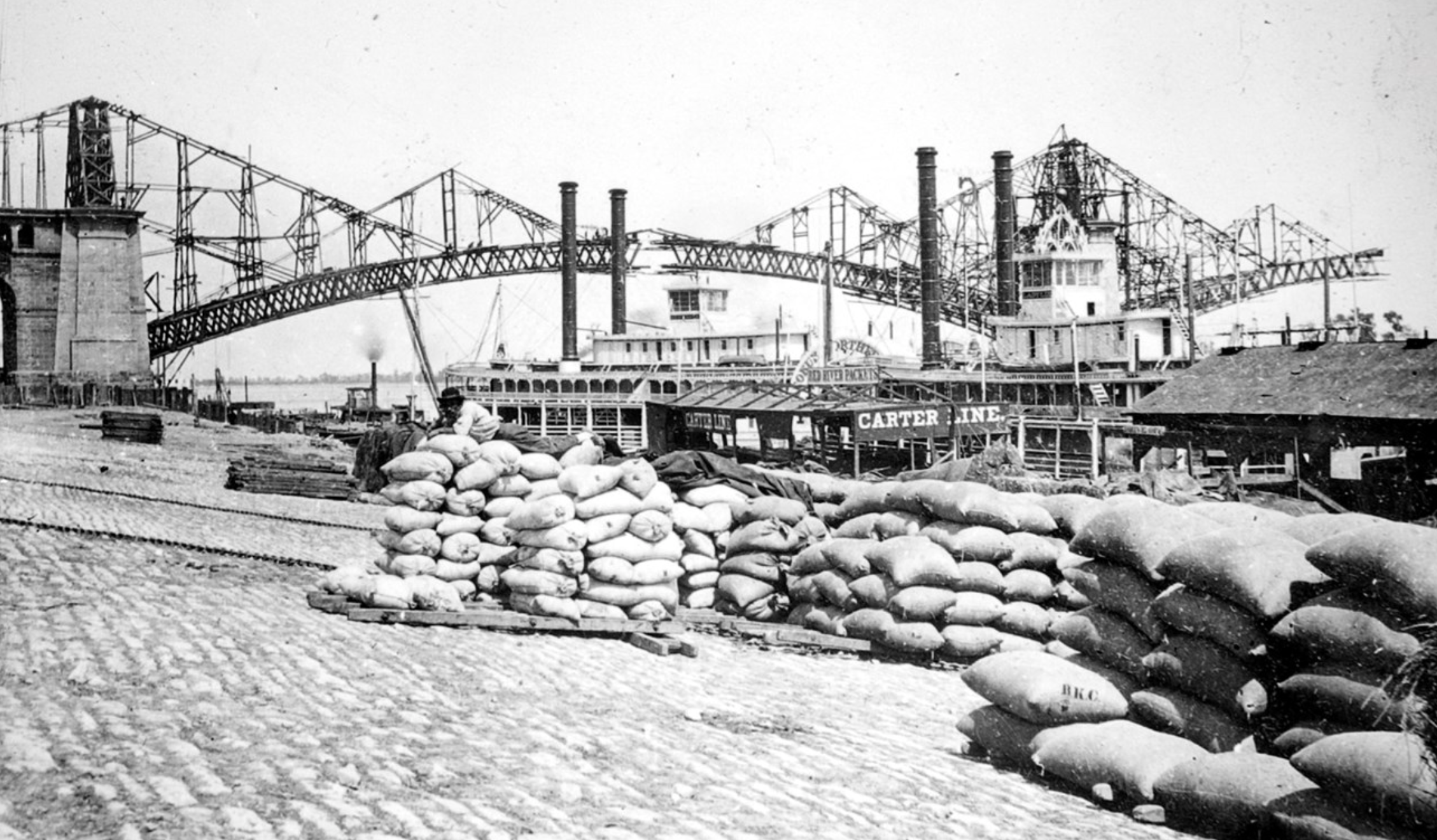
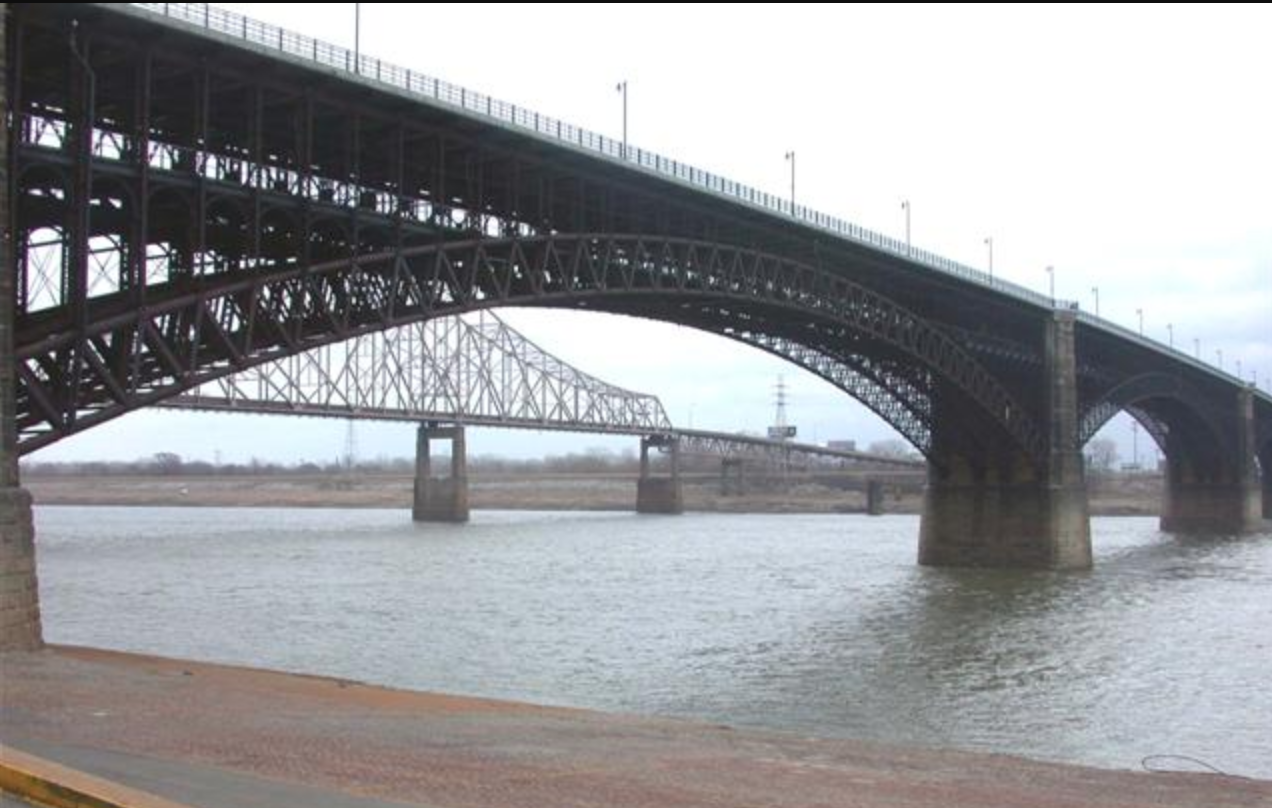
Today in St. Louis we are also celebrating the 150th anniversary of the opening of Eads Bridge, a true architectural marvel. It was the first bridge in St. Louis, the first in the world to use steel and the first in the U.S. to use caissons for its piers.
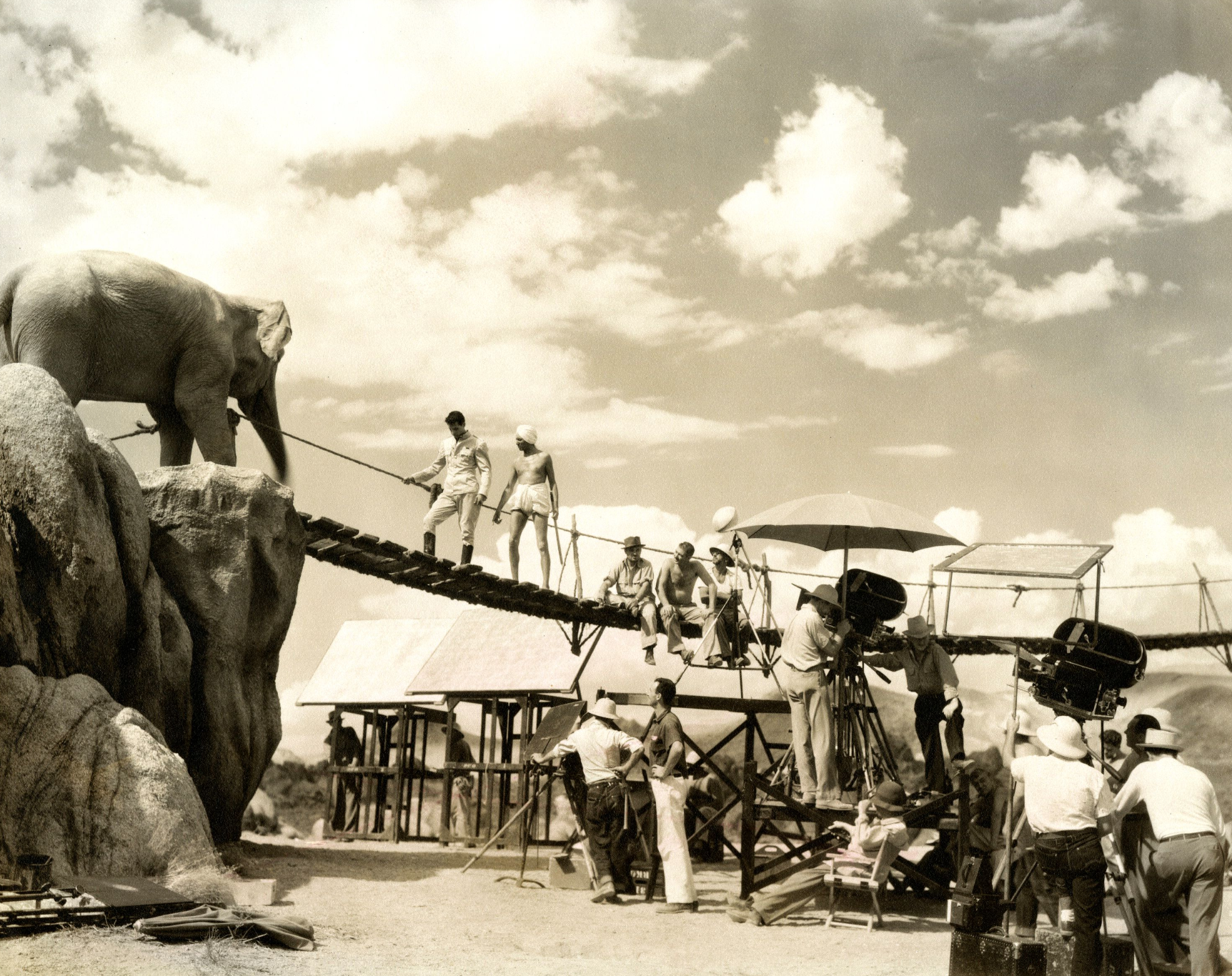
At the time there were many doubters who were concerned about the safety of the structure, but people were reassured two weeks before the grand opening by the sight of an elephant lumbering across the wagon deck. It was an unscientific test, but in the 19th century many people believed elephants knew instinctively not to set foot on unsound structures. (This made me think of that famous scene in Gunga Din (1939) when the elephant is willing to step onto the rickety bridge to follow Cary Grant…)
Needless to say, Eads bridge was sound…
Well then, exactly at daybreak on July 4, 1874 on a clear and sunny day, a thirteen-gun salute was fired to honor the original colonies of the United States. At 9 a.m. 100 guns were fired, fifty on each side of the the Mississippi River, to signal the beginning of a huge parade.
“A link of steel unites the East and West” was painted on one side of the bridge’s main arch. On the other side, decorated with evergreens, appeared a fifty-foot-high portrait of the man of the hour, James B. Eads. A display of fireworks completed the evening festivities.
I hope you all have fun plans to celebrate Independence Day with friends and family. If not, read some Emerson or Whitman, watch an old movie like Yankee Doodle Dandy (1942) or Alleghany Uprising (1939)…
What is the meaning of this intrusion?
…Read Esther Forbes’ fine book Paul Revere and the World He Lived In or Eric Metaxas’ If You Can Keep It: the Forgotten Promise of American Liberty or David McCullough’s 1776.
“The year 1776, celebrated as the birth year of the nation and for the signing of the Declaration of Independence, was for those who carried the fight for independence forward a year of all-too-few victories, of sustained suffering, disease, hunger, desertion, cowardice, disillusionment, defeat, terrible discouragement, and fear, as they would never forget, but also of phenomenal courage and bedrock devotion to country, and that, too they would never forget.”
Be proud. Be loud. Open the windows and blast your neighbors! That’s what we did when I was growing up. We had this LP and this was one of my favorite pieces:
Since I have had such a busy two weeks, I confess I fell behind in my daily Bible reading. However, I have caught up and it wasn’t easy considering I was in 1 and 2 Kings. Lots of violence and mayhem and even sassy boys being devoured by bears! But it did supply me with a good bear story for the twins on Sunday, complete with a moral: never call a prophet of God “you baldhead!” Show some respect or it will not end well for you. (I keep my MacArthur Bible Commentary close by to explain these sometimes troubling passages.)
Speaking of bears, a baby bear was spotted in Ballwin, a neighboring suburb here in flyover country, which is a little too close for my comfort. (Since then it has been spotted in Sunset Hills and Kirkwood!) Where there’s a baby bear, there’s a mama bear close by.
Today we remember George Armstrong Custer and his brothers, Thomas Ward Custer and Boston Custer who all died on this day in 1876 at the Battle of the Little Big Horn. Custer’s nephew and brother-in-law died there as well.
And Myles Keogh. You remember Myles…
Side note: Our ancestor, Arthur Newell Chamberlin, fought at the battle of the Rosebud Creek (between the U.S. Army and its Crow and Shoshone allies against the Lakota Sioux and Northern Cheyenne) eight days before and lived, thankfully, to tell the tale.
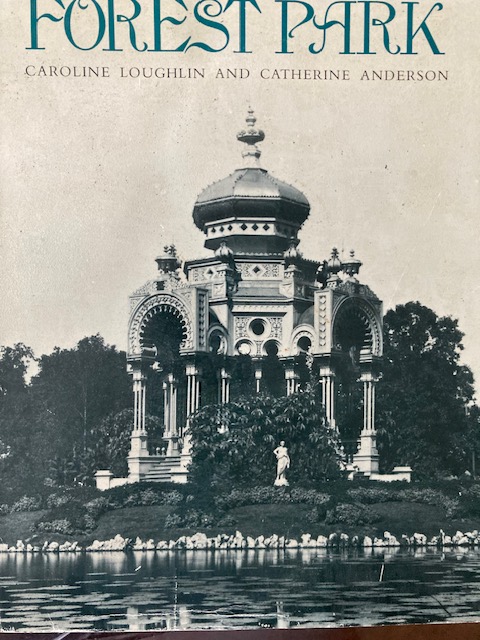
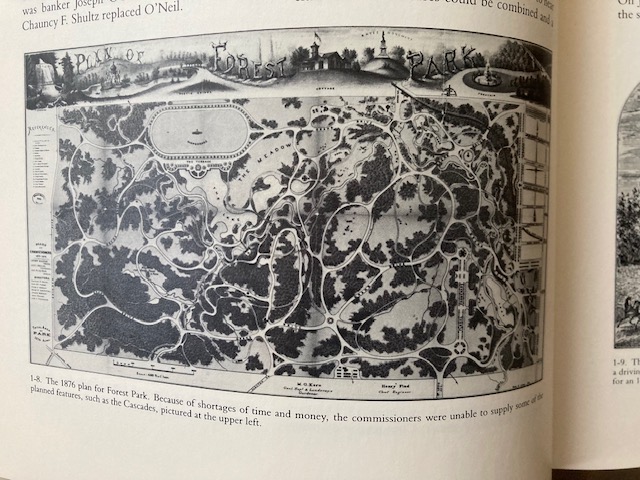
In local news, the day before on June 24, 1876, Forest Park was formally opened in our fair city. This 1,380-acre tract had been purchased by the city a year earlier for just under $800,000. Because more than 1,100 acres of its land was forested, the name Forest Park was agreed upon. At the time of its purchase the park was considered to be ridiculously far from the city–of which it is now a central and integral part. The park’s vital role in the life of St. Louis really began in 1904, when it served as the site for the St. Louis World’s Fair.
It was, and still is, pretty great.
So seize the day, learn some history, watch an old movie! And count it all joy.




 dual personalities