dual personalities

Tag: History

Three cheers and a toast

by chuckofish

Well, as of yesterday it is officially fall. It is a little cooler and we have had a lot of much-needed rain and we are grateful.

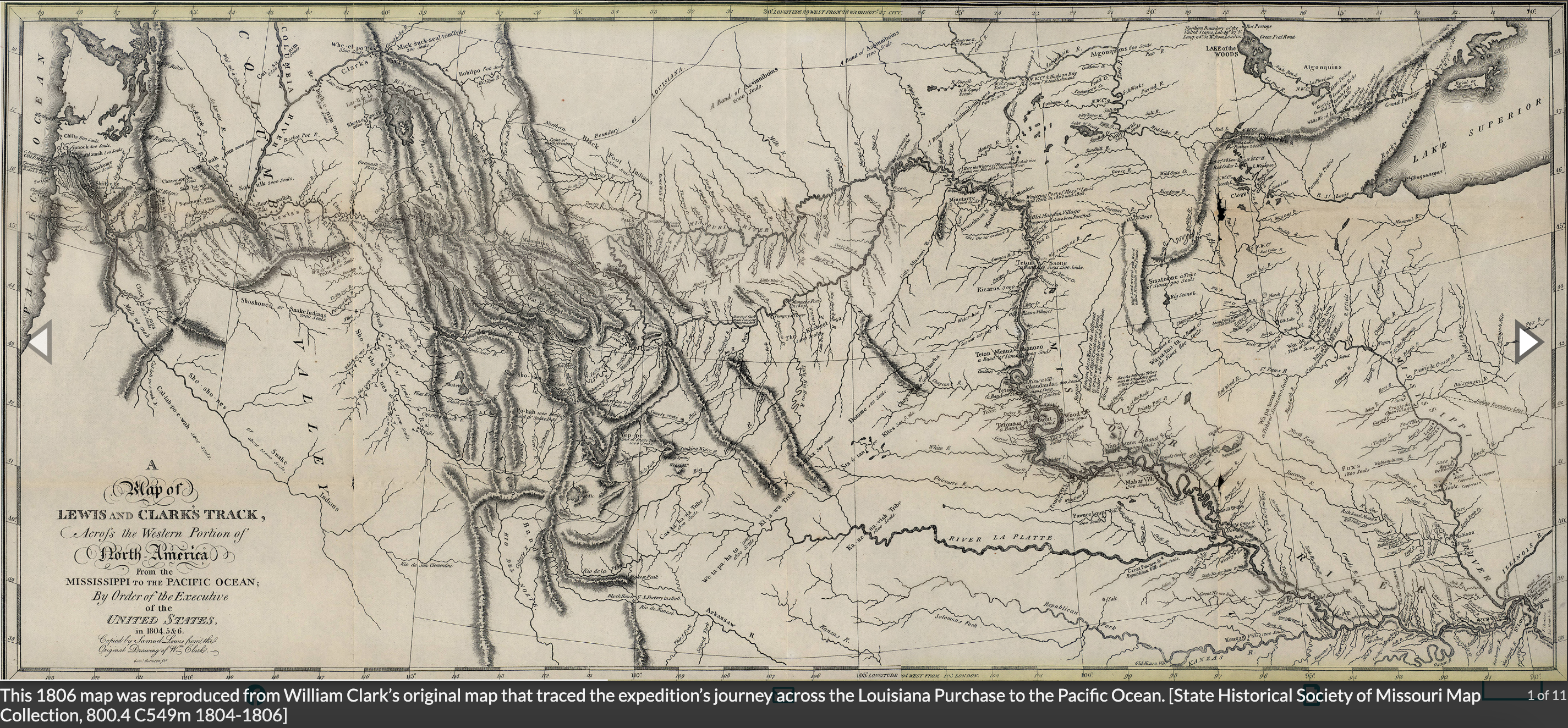
Today we toast the 219th anniversary of the return of the exploring expedition led by Meriwether Lewis and William Clark back to St. Louis in 1806. The people of St. Louis, we are told, “gathered on the Shore and Hizzared three cheers” and rifles were fired in a welcoming volley as they landed their canoes on the levee.

Two years and four months earlier, the band had departed quietly from a gathering point at Wood River, Illinois, for their 8,000-mile expedition through the Northwest. The Corps of Discovery encountered a wide variety of natural landscapes on their trek to the Pacific coast, including rolling prairies, vast rivers, towering limestone bluffs, and rugged mountain ranges. They also encountered hardship, privation, extremes of temperature and climate, danger from Indians, grizzly bears, and a wide range of physical discomforts. Several times they were presumed lost.

The two captains were fetted that evening at a state dinner followed by a grand ball. The rest of the crew were eager to resume civilian life and quickly spent their accumulation of two years’ pay in the frontier village. One can only imagine their relief and joy upon returning.

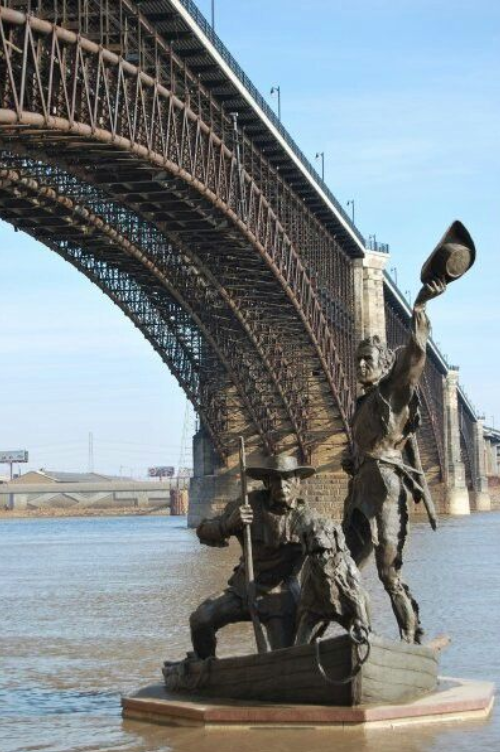
By the way, the 22 foot tall bronze statue, The Captains’ Return (shown above), depicts the return of William Clark and Meriwether Lewis to St. Louis in 1806. It was commissioned by the Greater St. Louis Community Foundation to mark the bicentennial of the end of the Lewis and Clark Expedition. After its initial placement in 2006, flooding of the Mississippi River often led to the statue being partially submerged with the result that Clark looked as if he was waving his hat as in distress. In 2014, the statue was removed and restored to fix damage from the floods, and in 2016, the statue was returned to the riverfront to a location slightly south and about 17 feet higher than before.  The sculptor, Harry Weber, has thirty-one works displayed throughout the city.

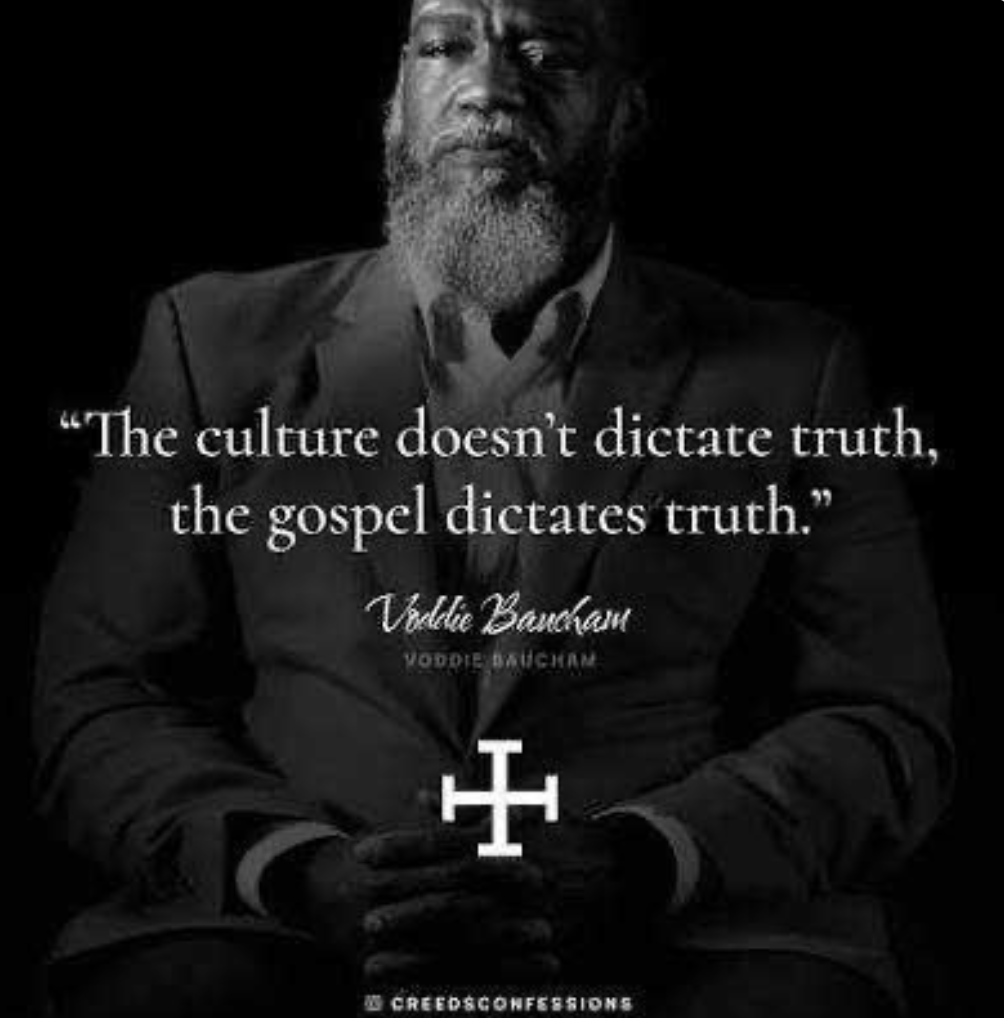
And this is a good opinion piece by Albert Mohler, Jr. about the Charlie Kirk memorial service. As he says, “We will be thinking about this service for a long time.”

(Photo from Pinterest)

Information for this post mostly gleaned from St. Louis Day By Day by Frances Hurd Stadler.

Non-relatives of note

by chuckofish

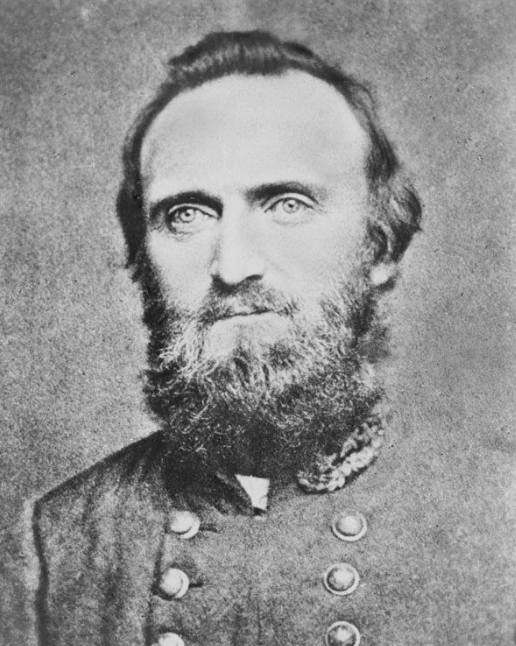
Today is the birthday of Confederate General Joseph “Fighting Joe” Wheeler (1836-1906). He was a calvary general in the CSA during the American Civil War, and then a general in the U.S. Army during both the Spanish-American and Philippine-American wars near the turn of the twentieth century. He also served several terms in the U.S. Congress representing Alabama.

After graduating from West Point in 1854, while stationed in New Mexico and fighting in a skirmish with Indians, Wheeler picked up the nickname “Fighting Joe.” He is one of the few Confederates who is buried in Arlington Cemetery.

It is worth noting that Wheeler was of New England ancestry–descended from the English Puritans who came to New England in the seventeenth century–so it is possible that he is a distant cousin of our own Connecticut Wheelers.

Today is also the birthday of Arthur Holly Compton (1892-1962), the American particle physicist who shared the 1927 Nobel Prize for Physics with C.T.R. Wilson for his discovery of the Compton effect, which demonstrated the particle nature of electromagnetic radiation.

(Compton on the cover of Time magazine on January 13, 1936, holding his cosmic ray detector)

Compton was a key figure in the Manhattan Project that developed the first nuclear weapons. His reports were important in launching the project. In 1942, he became a member of the executive committee and then head of the “X” projects overseeing the Metallurgical Laboratory at the University of Chicago. Throughout WWII, Compton remained a prominent scientific adviser and administrator. In 1945, he served, along with Lawrence, Oppenheimer, and Fermi, on the Scientific Panel that recommended military use of the atomic bomb against Japan. He was awarded the Medal of Merit for his services to the Manhattan Project.

After WWII he became the chancellor of Washington University in St. Louis. When I worked there, forty-plus years after he retired, people were constantly asking me if I was related to him. I would say, no, and my husband isn’t either.

So a toast to famous non-relatives Fighting Joe Wheeler and Arthur Holly Compton! Have a good day!

A little history

by chuckofish

Today is Victory over Japan Day, the day on which Imperial Japan surrendered in WWII, bringing an end to the war. The formal signing of the Japanese Instrument of Surrender took place on board the battleship USS Missouri in Tokyo Bay on September 2, 1945, and at that time President Truman declared September 2 to be the official V-J Day.

General Douglas MacArthur signing the Instrument of Surrender on behalf of th e Allied Powers. Generals Wainwright and Percival, both former prisoners of the Japanese, stand behind him.

Missouri was the third ship of the United States Navy to be named after the US state of Missouri. The ship was authorized by Congress in 1938. The ship was launched on 29 January 1944 before a crowd of 20,000 to 30,000 spectators. At the launching ceremony, the ship was christened by Margaret Truman, the ship sponsor and daughter of Harry S. Truman, then one of the senators from the ship’s namesake state.

USS Missouri underway in August 1944.

Missouri earned three battle stars for World War II service, five for Korean War service and a further three for Gulf War service.

Let’s all just take a moment, shall we?

April charms

by chuckofish

I am currently working on an article for the Kirkwood Historical Review about A.G. Edwards, an early “pioneer” of our adopted hometown. They weren’t fighting off Indians or anything, but those mid-19th century guys led very interesting lives nonetheless.

Edwards was a graduate of West Point (class of 1832) and was 45th in a class of 45–the goat. I should note here that the term “Goat” holds a special place in U.S. Army tradition. The term refers to the cadet graduating from West Point with the lowest Grade Point Average (GPA) or “the man who would have stood first if he had boned (i.e. studied)”. Rather than being a badge of shame, it recognizes the tenacity or foolhardiness it takes to be the last graduate of the best of the best. “It is definitely an honor; it is in no way a joke,” according to

James Robbins, author of “Last in their Class: Custer, Pickett and the Goats of West Point.” At West Point, where plenty of cadets “wash out” years before graduation, there’s a genuine respect for the cadet who faltered, but graduated. And, truly, General A.G. Edwards went on to great things.

In other news, this appeared on my Instagram feed on April Fool’s Day:

Well, to infinity and beyond!

Also, I really like John Piper’s answer to Jordan Peterson’s take on happiness–it is wonderful. “Jordan Peterson is negative about happiness as the aim of life because he defines happiness as fleeting, unpredictable, impulsive, and superficial rather than as deep, lasting, soul-satisfying, rooted in God, and expanding in love. He’s probably right that for most people, happiness is experienced as fleeting, superficial, unpredictable, and impulsive rather than as deep and lasting and soul-satisfying and rooted in God.” Read the whole thing.

And here’s a poem: Always Marry an April Girl by Ogden Nash

Praise the spells and bless the charms,
I found April in my arms.
April golden, April cloudy, Gracious, cruel, tender, rowdy; April soft in flowered languor, April cold with sudden anger, Ever changing, ever true -- I love April, I love you.

Tuesday this and that

by chuckofish

Yesterday was Steve McQueen’s 95th birthday–how did I miss that? Mea culpa for not reporting that in a timely manner. When I remembered I watched several episodes of Wanted Dead or Alive, the show that kick-started Steve’s career. It’s Steve before Steve was super-cool.

Today we toast British director David Lean who was born on this day in 1908. Lean was nominated for ten Oscars, winning seven, including two for Best Director.

Lean remains the only British director to win more than one Oscar for directing. He has seven films in the British Film Institute’s Top 100 British Films (with three of them being in the top five)–which seems rather over-indulgent. They include: Brief Encounter, Lawrence of Arabia, Great Expectations, The Bridge on the River Kwai, Doctor Zhivago, Oliver Twist, and In Which We Serve. Before he became a film director, he was a film editor. He edited Pygmalion (with Leslie Howard), Major Barbara, 49th Parallel, and One of Our Aircraft is Missing. Anyway, you might want to pick one of these movies to watch. I’m afraid it would take me at least three nights to watch Lawrence of Arabia! But I could probably handle Pygmalion.

It is also the 100th birthday of the author Flannery O’Connor. I was never a big fan of her writing. She is primarily known for her short stories which are a little too weird for my taste. I think I was seriously scarred by reading “A Good Man Is Hard to Find” in high school. You can visit her Andalusia farmhouse in Milledgeville, Georgia if you are so inclined.

And lest we forget, today is Medal of Honor Day in the U.S., created to honor the heroism and sacrifice of Medal of Honor recipients and celebrated every year since 1991. Over 3,500 Medals of Honor have been awarded, including two to Frank Baldwin (1842-1923) who is one of only 19 servicemen to receive the Medal of Honor twice and one of only 14 to be awarded the United States’ highest military honor for two separate actions. 

Baldwin received his first award for his actions during the Atlanta Campaign where he led his company in battle at Peachtree Creek and captured two commissioned officers in the Civil War. He received his second for conspicuous bravery in 1874 during the Indian Wars. On November 8, 1874, while commanding a scout company on escort duty, he led a surprise attack on the camp of Grey Beard, rescuing two young sisters whose parents and brothers had been killed by another Indian band. His second citation reads “Rescued, with 2 companies, 2 white girls by a voluntary attack upon Indians whose superior numbers and strong position would have warranted delay for reinforcements, but which delay would have permitted the Indians to escape and kill their captives.” Baldwin also served in the Spanish-American War and in World War I. Let’s all take a moment.

This is a wonderful ‘Ask Pastor John’ from John Piper: seven promises God has used to keep me from drifting away. 

So enjoy your day! Get out in the spring sunshine, watch an old movie, read some history, and remember that all the promises of God find their Yes in Christ.

A firebell in the night*

by chuckofish

In case you have forgotten, the Missouri Compromise of 1820 was a law that tried to address growing sectional tensions over the issue of slavery. By passing the law, the U.S. Congress admitted Missouri to the Union as a state that allowed slavery, and Maine as a free state. It also banned slavery from the remaining Louisiana Purchase lands located north of the 36º 30’ parallel (the southern border of Missouri). The U.S. Congress passed the legislation on March 3, 1820, and President James Monroe signed it on March 6, 1820–over 200 years ago.

Thomas Jefferson considered it “as the knell of the Union. It is hushed indeed for the moment, but this is a reprieve only, not a final sentence.”* It was a temporary fix.

The Kansas-Nebraska Act effectively repealed the bill in 1854, and the Supreme Court declared it unconstitutional in Dred Scott v. Sandford (1857), both of which increased tensions over slavery and contributed, as you can imagine, to the Civil War.

In other news, in case you missed it, yesterday was Ash Wednesday–I only found out because it is printed on my weekly planner! Well, gee, we forgot to have pancakes on Tuesday and make meaningless resolutions about Lent and self-care. I was busy praying hard for daughter #1 to make it home safely, flying on a small jet from Colorado on a very windy (and intermittently snowy) day. (She made it home and picked up Mr. Smith at the kennel and made it to her Wednesday night Bible study!)

And here’s an important reminder.

I will also mention that Dolly Parton’s husband of nearly 60 years, Carl Dean, died a few days ago. It is strange to see so many pictures of him since for so many years she never appeared with him in public and no one even really knew what he looked like.

He was quite a handsome dude. And a lucky one. We’ll toast him (and Dolly) tonight. May flights of angels lead you on your way, Carl.

*Jefferson to Holmes, April 22, 1820

Signed, Sealed, Delivered

by chuckofish

On this day in 1792 The Postal Service Act was signed into law by President George Washington. This piece of legislation established the United States Post Office Department. The 1792 law provided for a greatly expanded postal network, and served editors by charging newspapers an extremely low rate. The law guaranteed the sanctity of personal correspondence, and provided the entire country with low-cost access to information on public affairs, while establishing a right to personal privacy. To cover long distances, the Post Office used a hub-and-spoke system, with Washington as the hub and chief sorting center. By 1869, with 27,000 local post offices to deal with, it had changed to sorting mail en route in specialized railroad mail cars, called railway post offices, or RPOs. The system of postal money orders began in 1864. Free mail delivery began in the larger cities in 1863.

The postal system played a crucial role in national expansion. It facilitated expansion of the western American frontier by creating an inexpensive, fast, convenient communication system. Furthermore, The advent of Rural Free Delivery (RFD) in the U.S. in 1896, and the inauguration of a domestic parcel post in 1913, greatly increased the volume of mail shipped nationwide, and motivated the development of more efficient postal transportation systems. (After four-year-old Charlotte May Pierstorff was mailed from her parents to her grandparents in Idaho in 1914, mailing of people was prohibited.)

Well, all I can say is nowadays we are lucky to get our mail at all, especially if it has snowed or it is cold. Back in January we didn’t get mail for a week!

“Neither snow nor rain nor heat nor gloom of night stays these couriers from the swift completion of their appointed rounds”, a phrase long associated with the American postal worker, no longer seems very relevant. Sigh. Come to think of it, we haven’t gotten any mail this week either!

Well, while we’re reminiscing about the good ol’ days of the P.O., let us remember this classic paean to letter writing…

Woah…that brought me back!

So keep warm, dress in layers…

My sister sent pictures of the snowfall up in their neck of the woods (upstate New York)–yikes!

….the deepest she’s ever seen!

Have a great day! It’s almost Friday!

First in war, first in peace, first in the hearts of his countrymen

by chuckofish

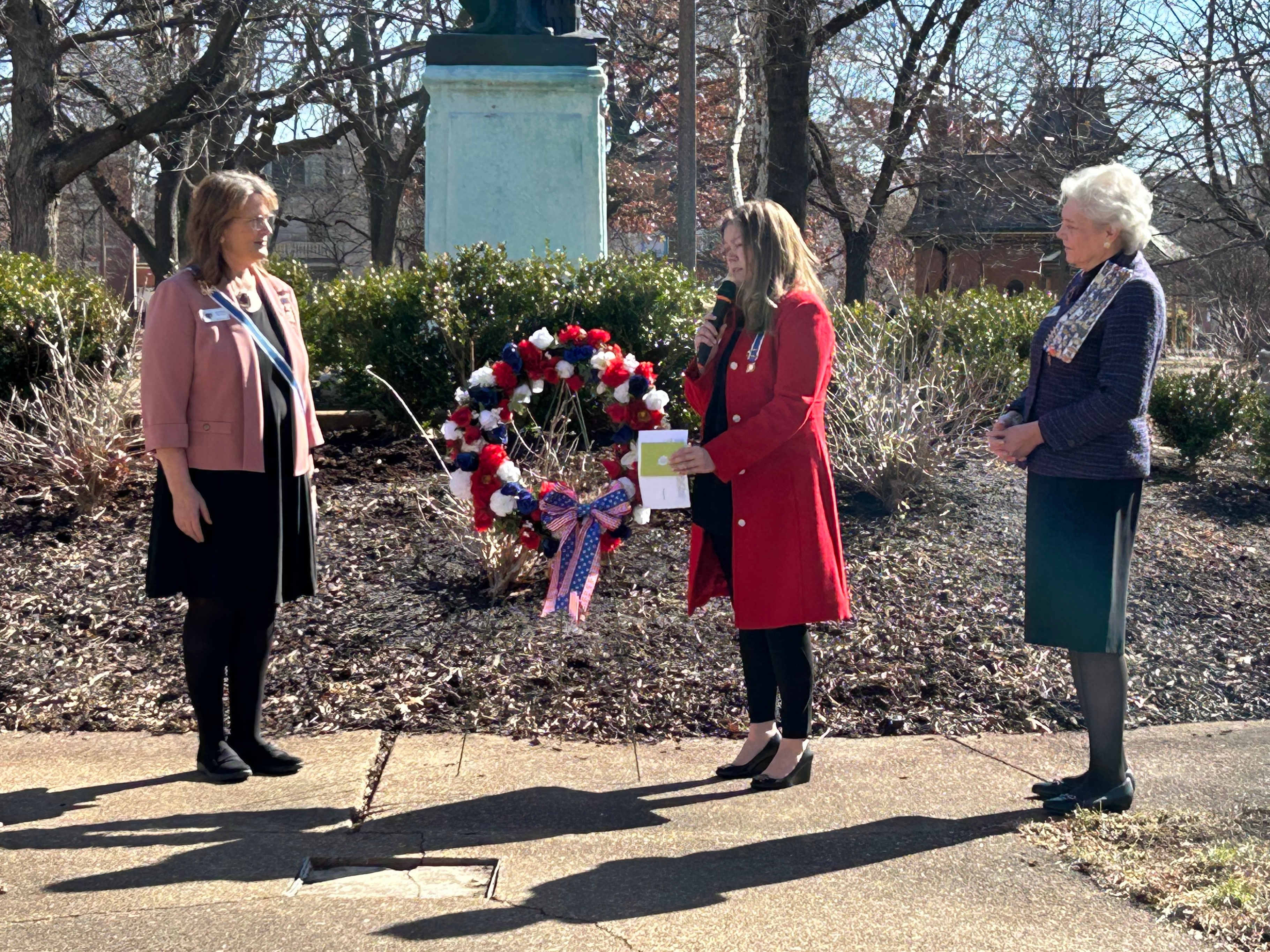
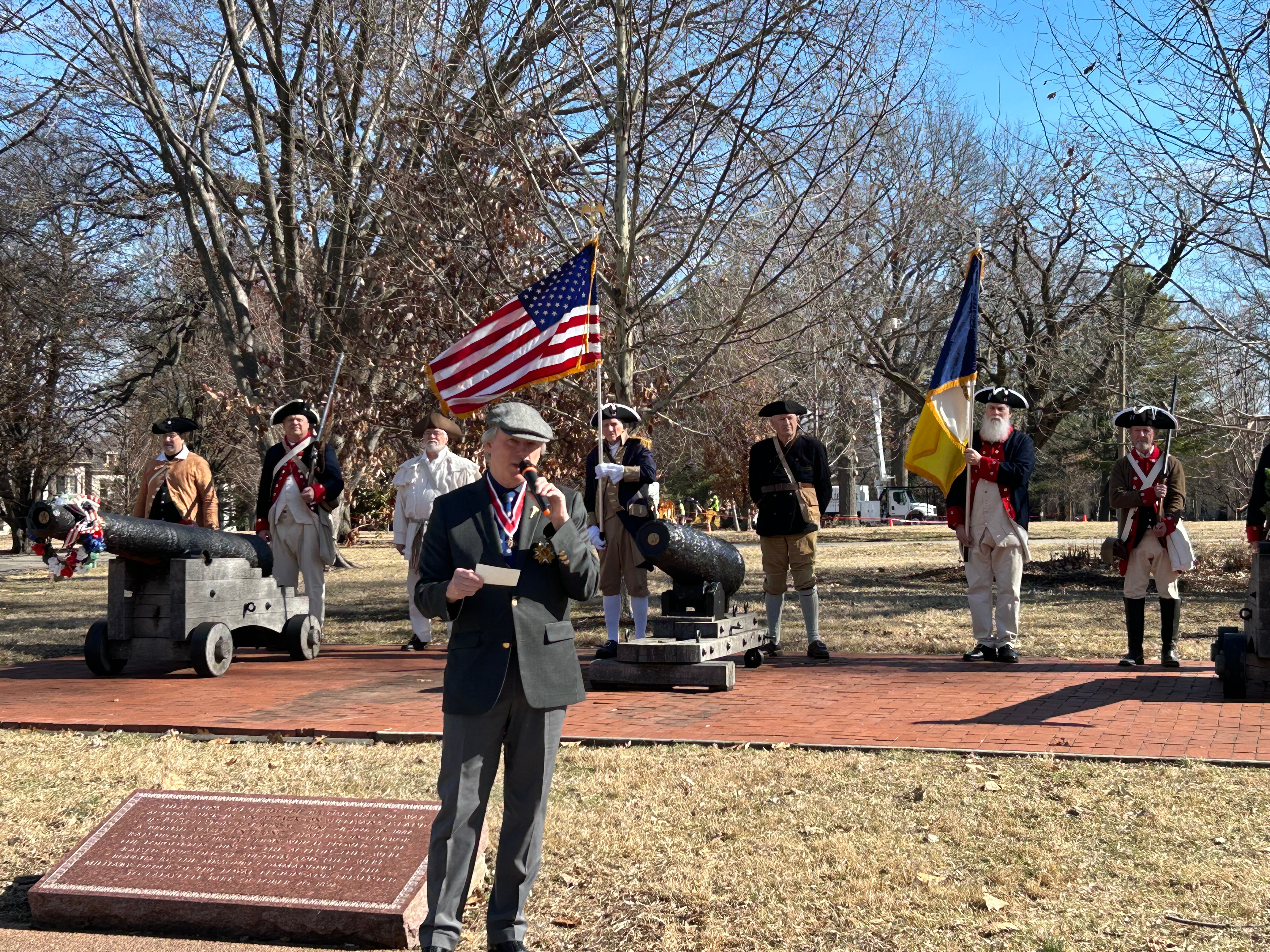
Yesterday morning daughter #1 and I got up early and drove down to Lafayette Park in the city to attend our DAR commemoration of George Washington’s birthday and wreath laying. She was the host of the event so I tagged along despite it being 14 degrees outside! She did a masterful job as always and it was a lot of fun and the speaker from the Missouri Historical Society was good.

Connie & Katie dressed appropriately for the weather

The SAR provided the color guard. And there were two TV news stations there covering the event.

(Daughter #1 knows how to rouse the media!)

Then I went to the grocery store to stock up on bread and milk as we are expecting a foot of snow (?) later today. Woohoo!

Lest we forget

by chuckofish

Well, I for one, am glad to hear that the SecDef has changed the name of Fort Bragg Liberty back to Fort Bragg. But with a twist. Fort Bragg was named after Confederate General Braxton Bragg, but this time it is named after a different Bragg:

For nearly a century under the designation of Camp Bragg and subsequently Fort Bragg, tens of thousands of Soldiers trained and deployed increases and conflicts around the world in defense of our nation. Fort Bragg has a long and proven history of equipping, training, and preparing our Soldiers to fight and prevail in any operational environment. This directive honors the personal courage and selfless service of all those who have trained to fight and win our nation’s wars, including Pfc. Bragg, and is in keeping with the installation’s esteemed and storied history.

Pursuant to the authority of the Secretary of Defense, Title 10, United States Code, Section 113, 1 direct the Army to change the name of Fort Liberty, North Carolina, to Fort Bragg. North Carolina, in honor of Private First Class Roland L. Bragg, who served with great distinction during World War II with the United States Army, and in recognition of the installation’s storied history of service to the United States of America.

Born in 1923 in Sabattus, Maine, Pfc. Bragg entered U.S. Army service and was assigned to the 513th Parachute Infantry Regiment, 17th Airborne Division, XVIII Airborne Corps, and was stationed at Fort Bragg during World War II. Pfc. Bragg fought with distinction in the European theater of operations. He received the Silver Star for conspicuous gallantry and intrepidity, and the Purple Heart for wounds sustained, during the Battle of the Bulge. During these hellish conditions and amidst ferocious fighting, Pfc. Bragg saved a fellow Soldier’s life by commandeering an enemy ambulance and driving it 20 miles to transport a fellow wounded warrior to an allied hospital in Belgium.

For nearly a century under the designation of Camp Bragg and subsequently Fort Bragg, tens of thousands of Soldiers trained and deployed increases and conflicts around the world in defense of our nation. Fort Bragg has a long and proven history of equipping, training, and preparing our Soldiers to fight and prevail in any operational environment. This directive honors the personal courage and selfless service of all those who have trained to fight and win our nation’s wars, including Pfc. Bragg, and is in keeping with the installation’s esteemed and storied history.

Well done. 👏👏👏

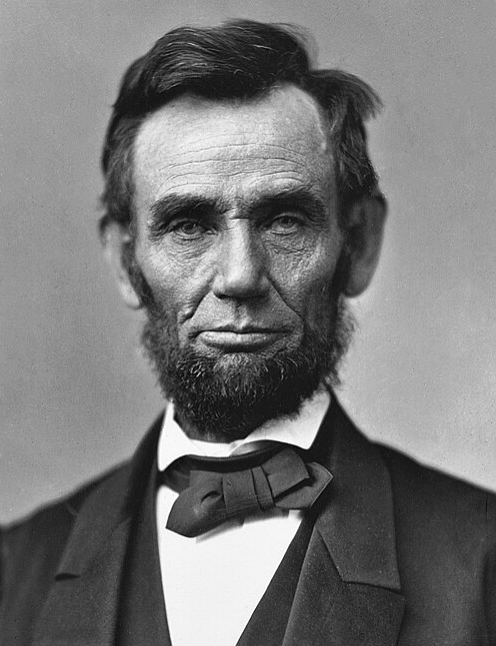
Today, as you know, is the birthday of Abraham Lincoln, our 16th president. He was a great president and a great writer. Here is a letter he wrote to his Quaker friend Eliza Gurney on September 4, 1864:

My esteemed friend.

I have not forgotten–probably never shall forget–the very impressive occasion when yourself and friends visited me on a Sabbath forenoon two years ago. Nor has your kind letter, written nearly a year later, ever been forgotten. In all, it has been your purpose to strengthen my reliance on God. I am much indebted to the good Christian people of the country for their constant prayers and consolation; and to no one of them, more than yourself. The purposes of the Almighty are perfect, and must prevail, though we erring mortals may fail to accurately perceive them in advance. We hoped for a happy termination of this terrible war long before this; but God knows best, and has ruled otherwise. We shall acknowledge His wisdom and our own error therein. Meanwhile we must work earnestly in the best light He gives us, trusting that so working still conduces to the great ends He ordains. Surely He intends some great good to follow this mighty convulsion, which no mortal could make, and no mortal could stay.

Your people–the Friends–have had, and are having, a very great trial. On principle, and faith, opposed to both war and oppression, they can only practically oppose oppression by war. In this hard dilemma, some have chosen one horn and some the other. For those appealing to me on conscientious grounds, I have done, and shall do, the best I could and can, in my own conscience, under my oath to the law. That you believe this I doubt not; and believing it, I shall receive it, for our country and myself, your earnest prayers to our Father in Heaven. Your sincere friend

A. Lincoln.

If you have never visited Springfield, Illinois and the Lincoln Home Site and the Presidential Library and Museum, I suggest you do! (Springfield and the Sangamon Valley also enjoy a strong literary tradition with Lincoln, Vachel Lindsay, Edgar Lee Masters, William Maxwell, among others, hailing from there.)

I regret that I never made it to Brooklyn to visit Henry Ward Beecher’s Plymouth Church when daughter #1 lived in NYC. They have a stained glass window depicting Lincoln…

But I will stop in Springfield sometime to visit First Presbyterian Church where the Lincolns rented a pew and regularly attended church services.

In Missouri, while Washington’s Birthday is a federal holiday, Lincoln’s Birthday is still a state holiday, falling on February 12 regardless of the day of the week. We will toast him and remember his funeral in Springfield where at least six Protestant clergymen participated in the service: four from Springfield and two from the East Coast. The Rev. Albert Hale, the 65-year-old pastor of Springfield’s Second Presbyterian Church, offered the introductory prayer. A graduate of Yale Divinity School, he knew Lincoln before he was the president. During his prayer he recalled Lincoln as someone to emulate: “Merciful God, bless us, and we pray Thee help us to cherish the memory of his life, and the worth of the high example he has shown us. Sanctify the event to all in public office; may they learn wisdom from that example, and study to follow in the steps of him whom Thou hast taken away.

Amen.

It’s a twister!

by chuckofish

Yesterday was the anniversary of the February 10, 1959 “tornado outbreak” in St. Louis. I was not-quite three years old so I don’t remember it and luckily we lived in a part of town that was not hit. However, the F4 tornado did sweep through my current stomping grounds–Warson Woods, Rock Hill, Brentwood–on its way to the city.

It toppled the Channel 2 television tower and one of the Arena’s two towers before moving on to devastate the area around Boyle and Olive Streets (Gaslight Square).

The tornado was on the ground for at least 35 minutes, traveled 23.9 miles (38.5 km), was 200 yards (180 m) wide, and caused $50.25 million is damage. 345 people were injured and 21 others were killed, making it the third deadliest tornado in the city’s history.

Interestingly, the heyday of Gaslight Square was actually kick-started in the aftermath of the city’s 1959 tornado outbreak, which caused severe property damage but also led to an influx of attention and insurance money. Business owners took advantage of this to revitalize the local economy. It became a very hip place to hang out–even my parents went there. Entertainers who performed in the clubs included: Miles Davis, Bob Dylan, Barbra Streisand, Judy Collins, the Smothers Brothers, Phyllis Diller, Woody Allen, and so on…

A 1962 episode of the TV show Route 66 titled “Hey Moth, Come Eat the Flame” was set and filmed inside The Darkside jazz club. How cool can you get?

Gaslight Square didn’t last long, however, and the Board of Alderman, who had officially renamed the district on 24 March 1961, retired the name in December of 1972. Easy come, easy go. C’est la vie.


P.S. I watched the Route 66 episode and besides the scenes in Gaslight Square there are scenes shot at the Chase Park Plaza on Kingshighway and the old Rock Hill quarry (which is mostly filled in now) and in some bowling alley I could not identify. It’s worth checking out for that!