dual personalities

Tag: History

First in war, first in peace, first in the hearts of his countrymen

by chuckofish

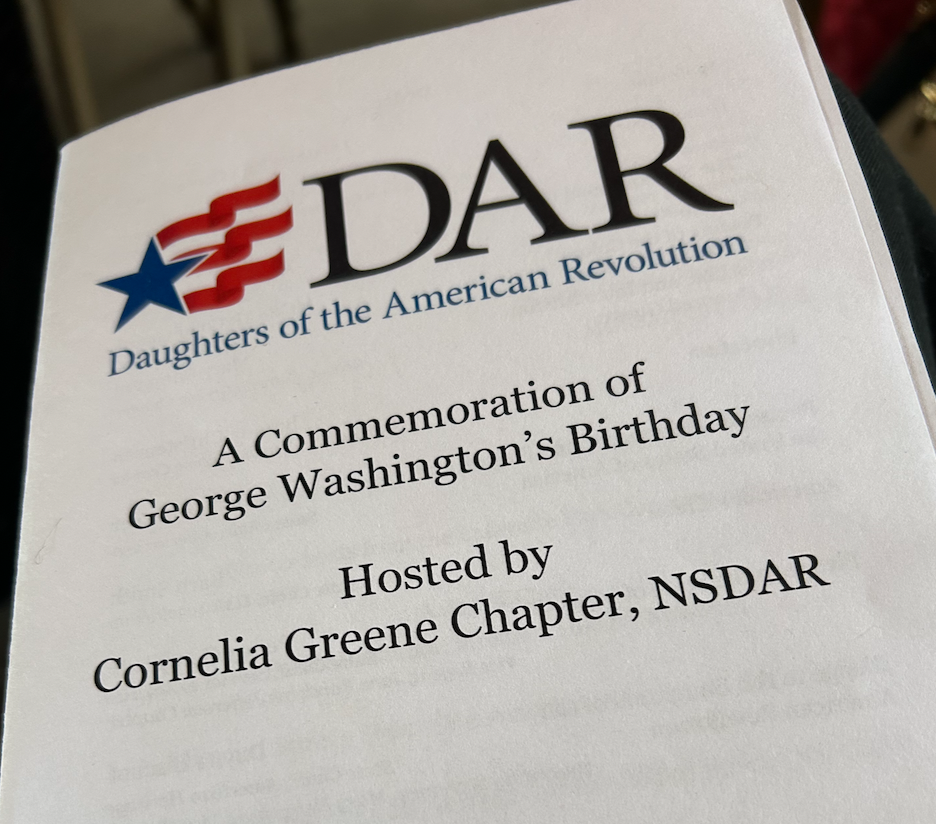
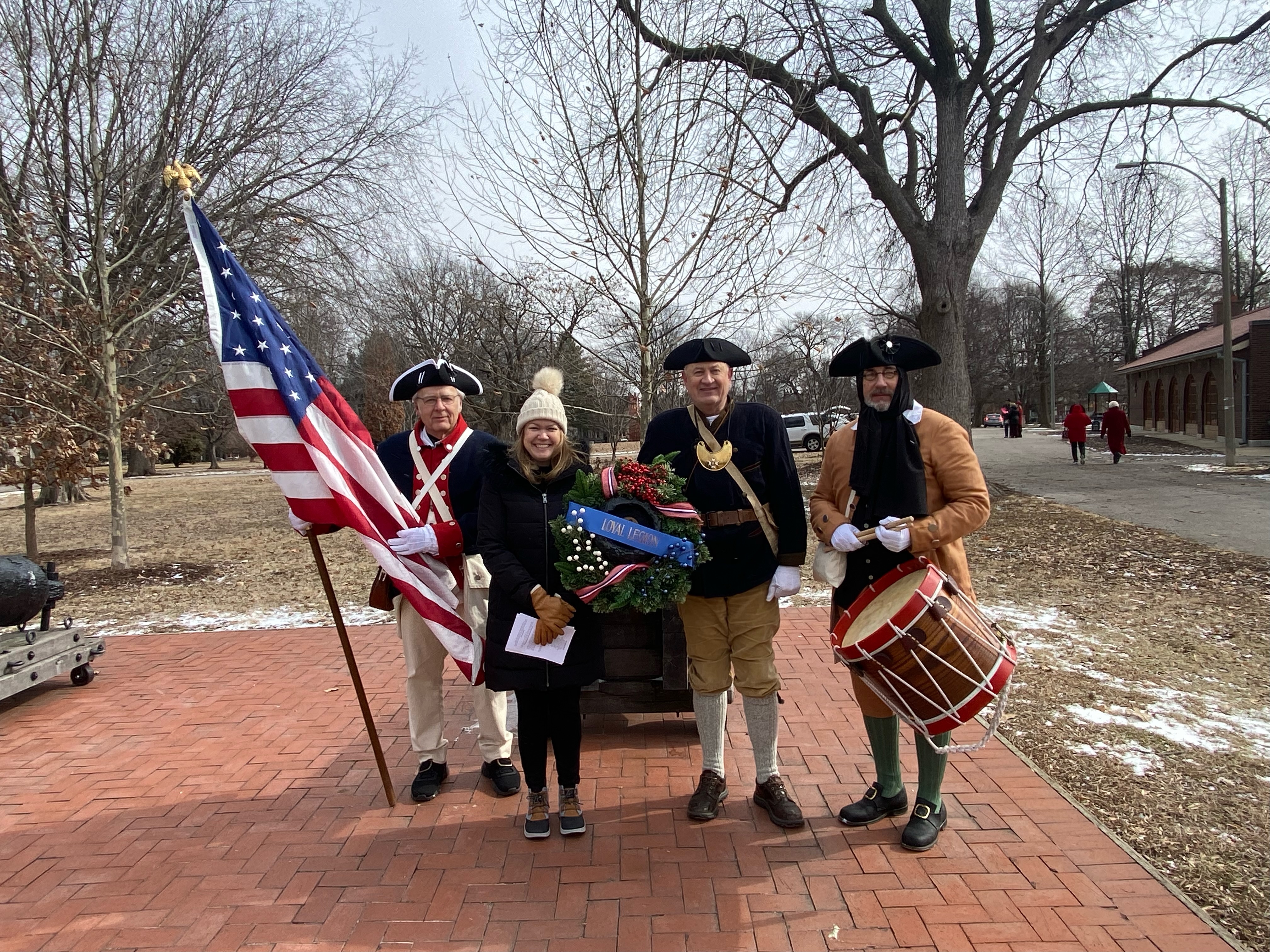
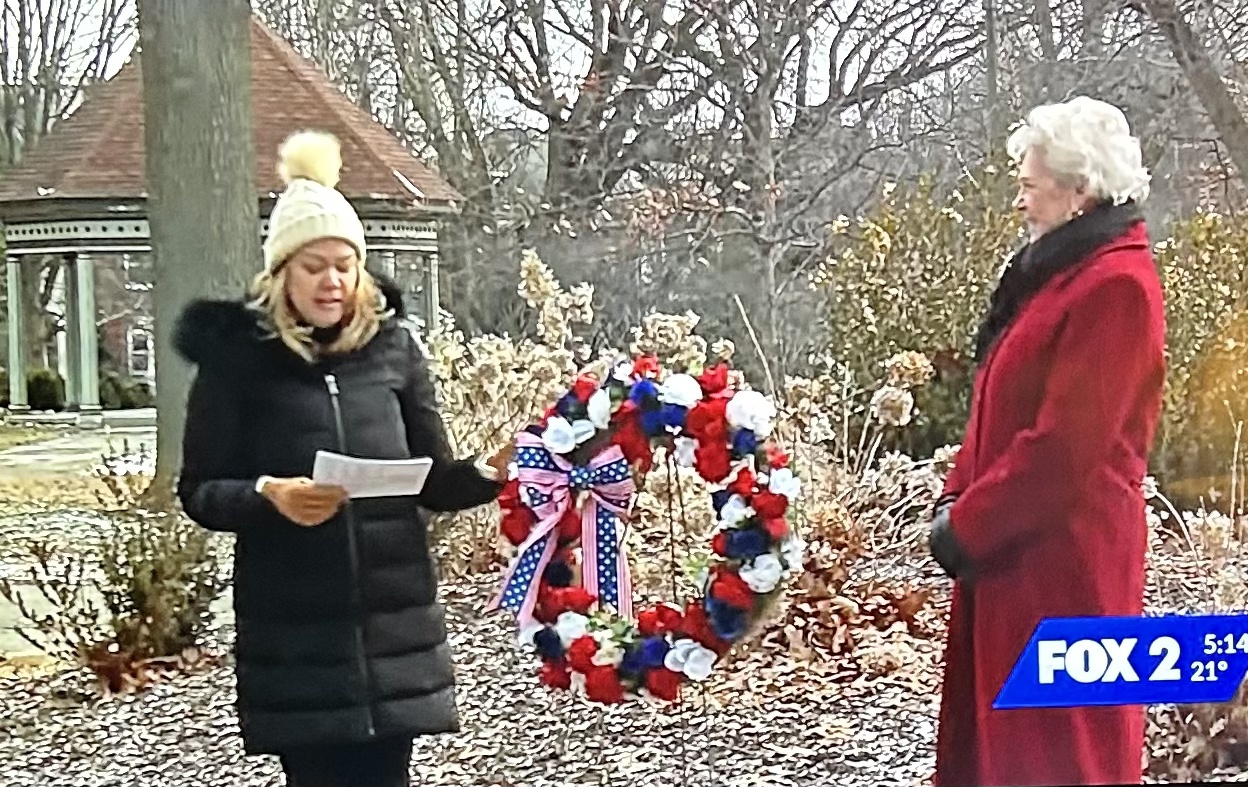
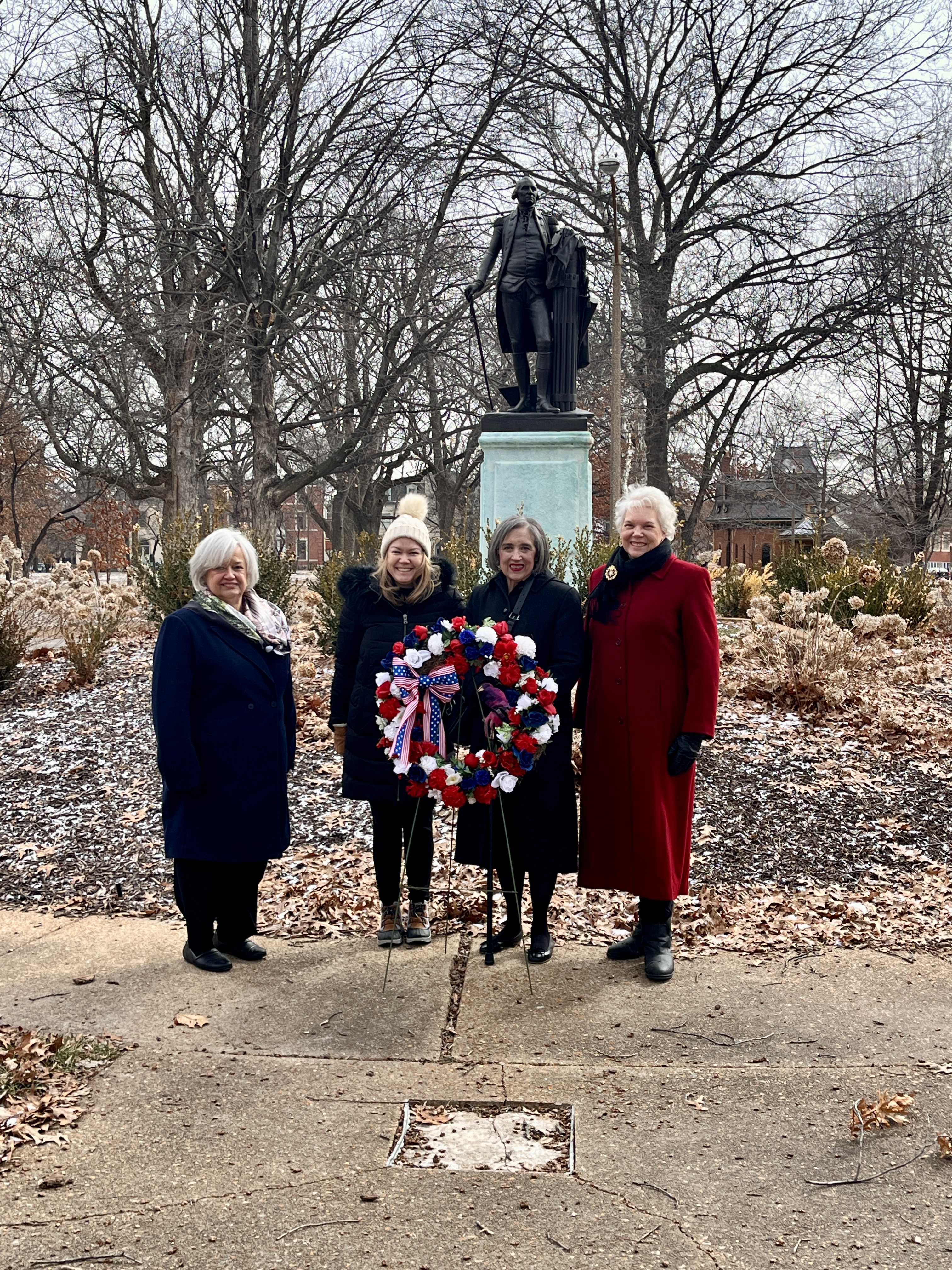
Yesterday morning daughter #1 and I got up early and drove down to Lafayette Park in the city to attend our DAR commemoration of George Washington’s birthday and wreath laying. She was the host of the event so I tagged along despite it being 14 degrees outside! She did a masterful job as always and it was a lot of fun and the speaker from the Missouri Historical Society was good.

Connie & Katie dressed appropriately for the weather

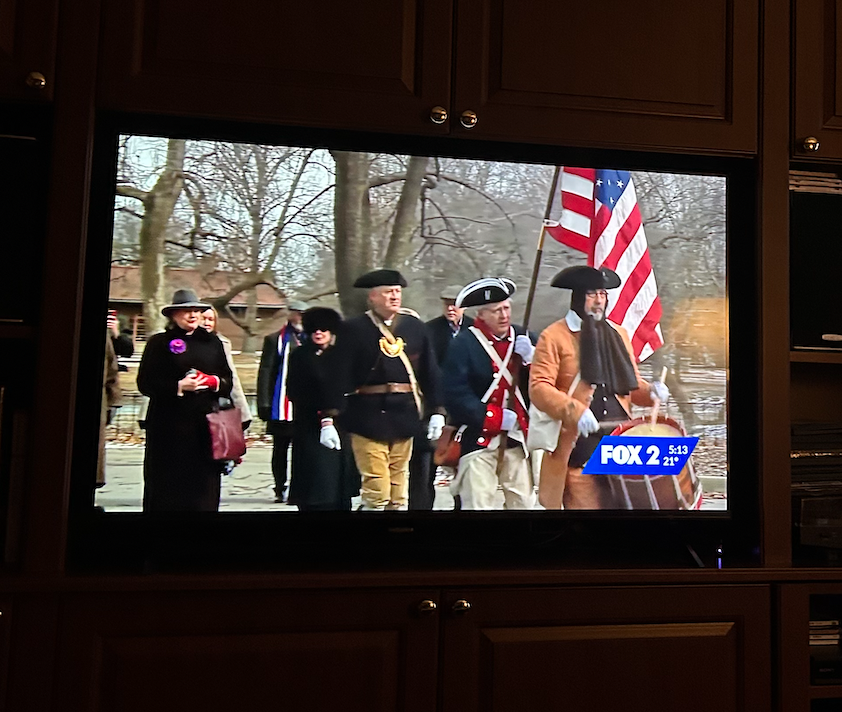
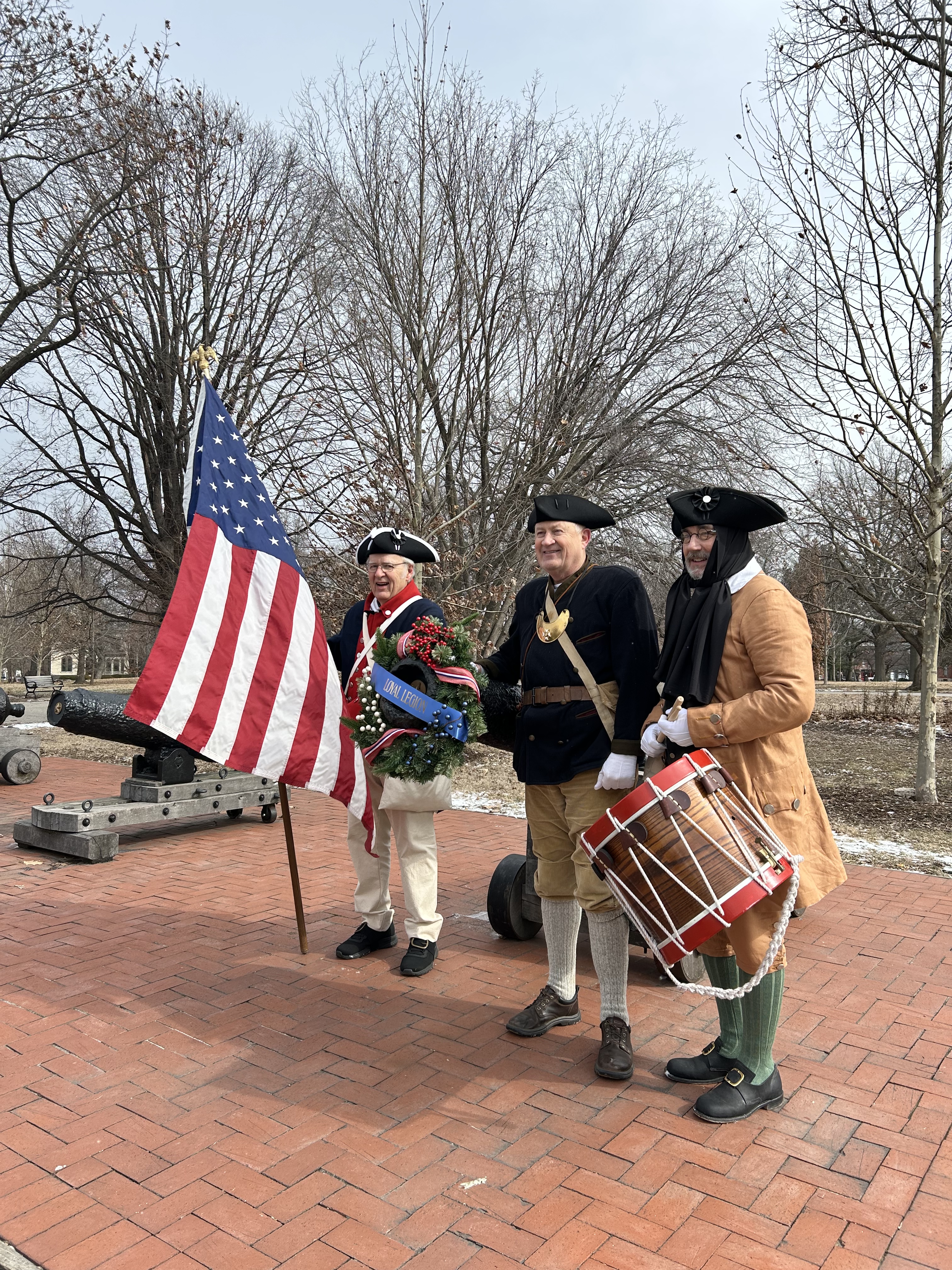
The SAR provided the color guard. And there were two TV news stations there covering the event.

(Daughter #1 knows how to rouse the media!)

Then I went to the grocery store to stock up on bread and milk as we are expecting a foot of snow (?) later today. Woohoo!

Lest we forget

by chuckofish

Well, I for one, am glad to hear that the SecDef has changed the name of Fort Bragg Liberty back to Fort Bragg. But with a twist. Fort Bragg was named after Confederate General Braxton Bragg, but this time it is named after a different Bragg:

For nearly a century under the designation of Camp Bragg and subsequently Fort Bragg, tens of thousands of Soldiers trained and deployed increases and conflicts around the world in defense of our nation. Fort Bragg has a long and proven history of equipping, training, and preparing our Soldiers to fight and prevail in any operational environment. This directive honors the personal courage and selfless service of all those who have trained to fight and win our nation’s wars, including Pfc. Bragg, and is in keeping with the installation’s esteemed and storied history.

Pursuant to the authority of the Secretary of Defense, Title 10, United States Code, Section 113, 1 direct the Army to change the name of Fort Liberty, North Carolina, to Fort Bragg. North Carolina, in honor of Private First Class Roland L. Bragg, who served with great distinction during World War II with the United States Army, and in recognition of the installation’s storied history of service to the United States of America.

Born in 1923 in Sabattus, Maine, Pfc. Bragg entered U.S. Army service and was assigned to the 513th Parachute Infantry Regiment, 17th Airborne Division, XVIII Airborne Corps, and was stationed at Fort Bragg during World War II. Pfc. Bragg fought with distinction in the European theater of operations. He received the Silver Star for conspicuous gallantry and intrepidity, and the Purple Heart for wounds sustained, during the Battle of the Bulge. During these hellish conditions and amidst ferocious fighting, Pfc. Bragg saved a fellow Soldier’s life by commandeering an enemy ambulance and driving it 20 miles to transport a fellow wounded warrior to an allied hospital in Belgium.

For nearly a century under the designation of Camp Bragg and subsequently Fort Bragg, tens of thousands of Soldiers trained and deployed increases and conflicts around the world in defense of our nation. Fort Bragg has a long and proven history of equipping, training, and preparing our Soldiers to fight and prevail in any operational environment. This directive honors the personal courage and selfless service of all those who have trained to fight and win our nation’s wars, including Pfc. Bragg, and is in keeping with the installation’s esteemed and storied history.

Well done. 👏👏👏

Today, as you know, is the birthday of Abraham Lincoln, our 16th president. He was a great president and a great writer. Here is a letter he wrote to his Quaker friend Eliza Gurney on September 4, 1864:

My esteemed friend.

I have not forgotten–probably never shall forget–the very impressive occasion when yourself and friends visited me on a Sabbath forenoon two years ago. Nor has your kind letter, written nearly a year later, ever been forgotten. In all, it has been your purpose to strengthen my reliance on God. I am much indebted to the good Christian people of the country for their constant prayers and consolation; and to no one of them, more than yourself. The purposes of the Almighty are perfect, and must prevail, though we erring mortals may fail to accurately perceive them in advance. We hoped for a happy termination of this terrible war long before this; but God knows best, and has ruled otherwise. We shall acknowledge His wisdom and our own error therein. Meanwhile we must work earnestly in the best light He gives us, trusting that so working still conduces to the great ends He ordains. Surely He intends some great good to follow this mighty convulsion, which no mortal could make, and no mortal could stay.

Your people–the Friends–have had, and are having, a very great trial. On principle, and faith, opposed to both war and oppression, they can only practically oppose oppression by war. In this hard dilemma, some have chosen one horn and some the other. For those appealing to me on conscientious grounds, I have done, and shall do, the best I could and can, in my own conscience, under my oath to the law. That you believe this I doubt not; and believing it, I shall receive it, for our country and myself, your earnest prayers to our Father in Heaven. Your sincere friend

A. Lincoln.

If you have never visited Springfield, Illinois and the Lincoln Home Site and the Presidential Library and Museum, I suggest you do! (Springfield and the Sangamon Valley also enjoy a strong literary tradition with Lincoln, Vachel Lindsay, Edgar Lee Masters, William Maxwell, among others, hailing from there.)

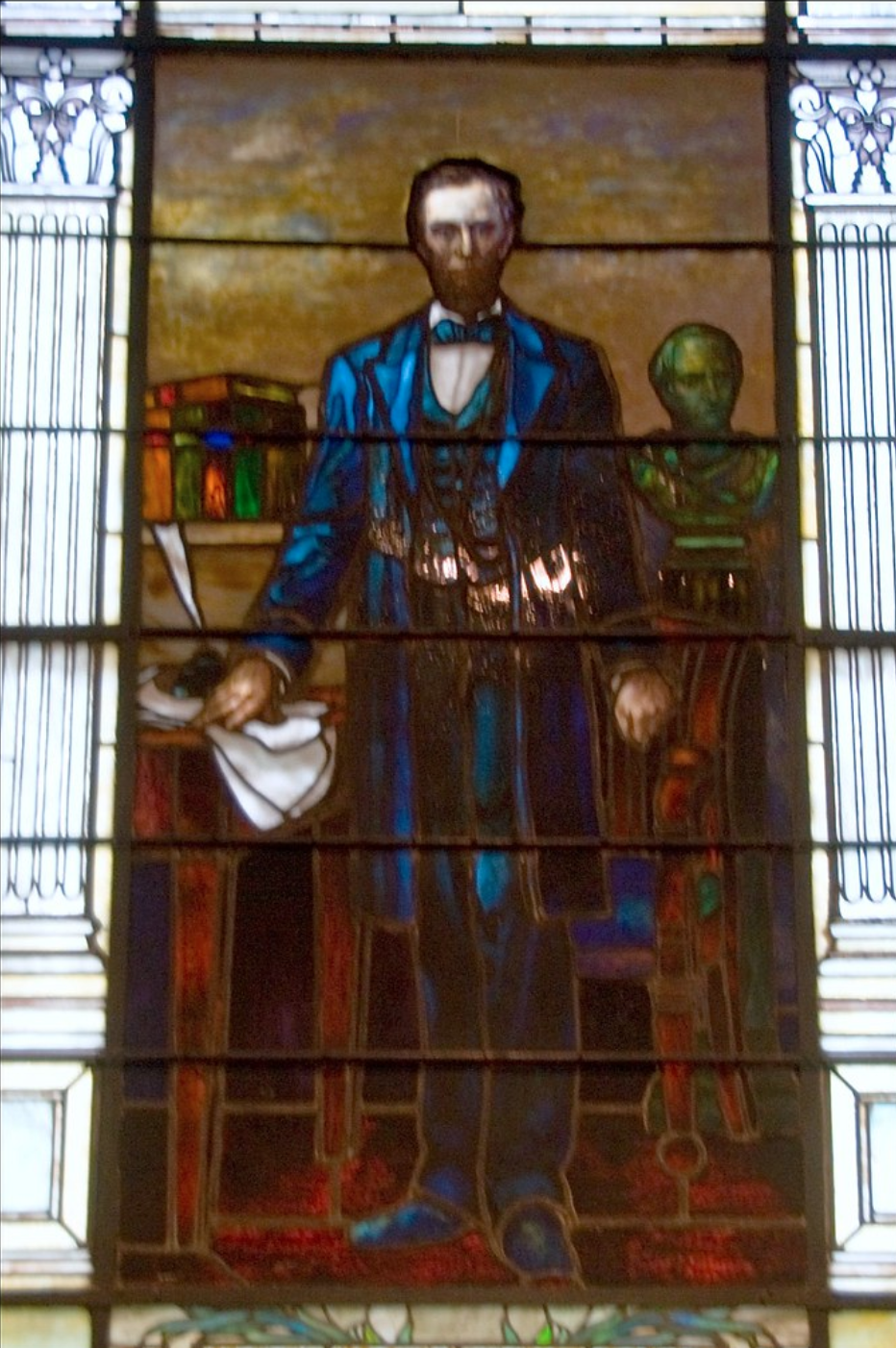
I regret that I never made it to Brooklyn to visit Henry Ward Beecher’s Plymouth Church when daughter #1 lived in NYC. They have a stained glass window depicting Lincoln…

But I will stop in Springfield sometime to visit First Presbyterian Church where the Lincolns rented a pew and regularly attended church services.

In Missouri, while Washington’s Birthday is a federal holiday, Lincoln’s Birthday is still a state holiday, falling on February 12 regardless of the day of the week. We will toast him and remember his funeral in Springfield where at least six Protestant clergymen participated in the service: four from Springfield and two from the East Coast. The Rev. Albert Hale, the 65-year-old pastor of Springfield’s Second Presbyterian Church, offered the introductory prayer. A graduate of Yale Divinity School, he knew Lincoln before he was the president. During his prayer he recalled Lincoln as someone to emulate: “Merciful God, bless us, and we pray Thee help us to cherish the memory of his life, and the worth of the high example he has shown us. Sanctify the event to all in public office; may they learn wisdom from that example, and study to follow in the steps of him whom Thou hast taken away.

Amen.

It’s a twister!

by chuckofish

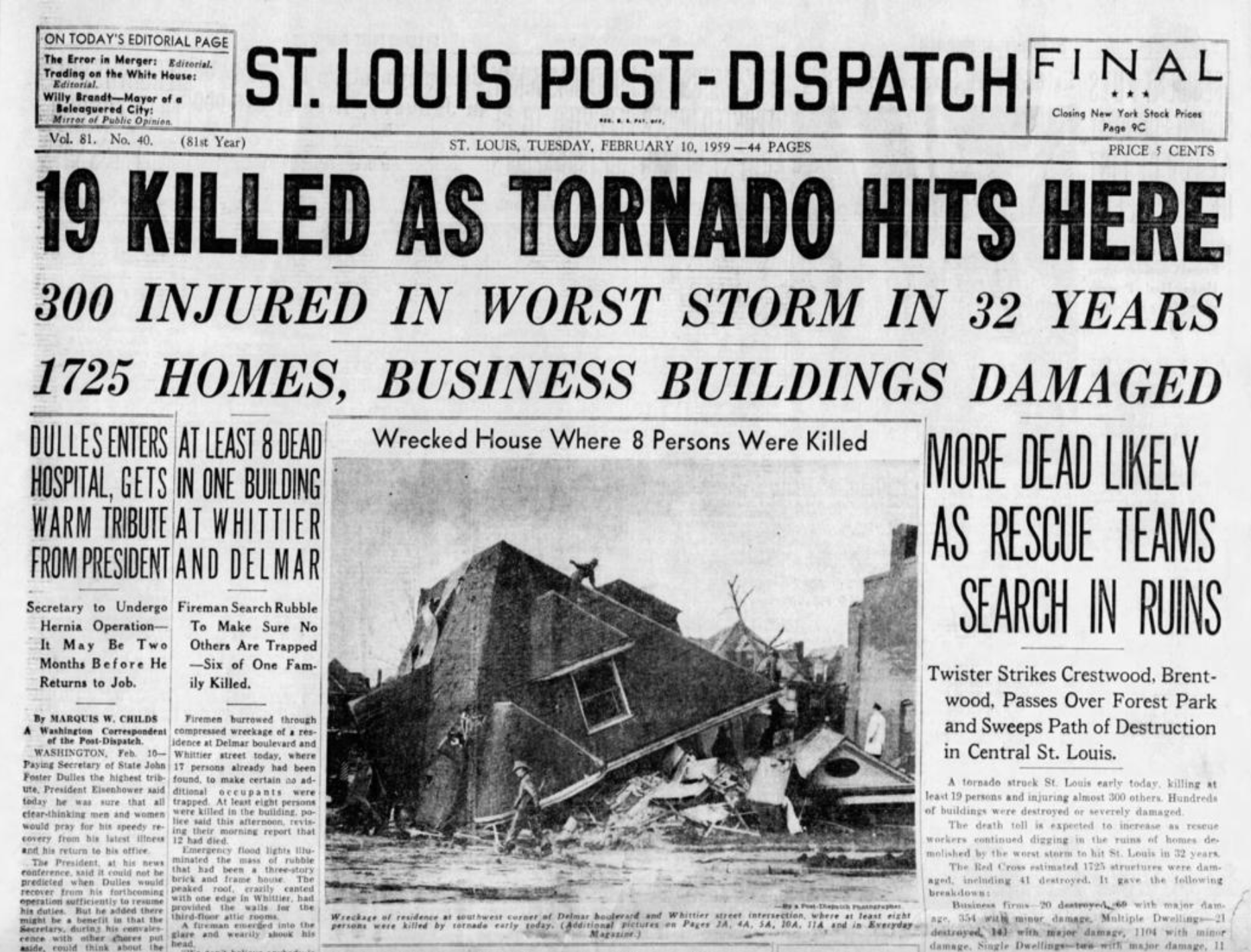
Yesterday was the anniversary of the February 10, 1959 “tornado outbreak” in St. Louis. I was not-quite three years old so I don’t remember it and luckily we lived in a part of town that was not hit. However, the F4 tornado did sweep through my current stomping grounds–Warson Woods, Rock Hill, Brentwood–on its way to the city.

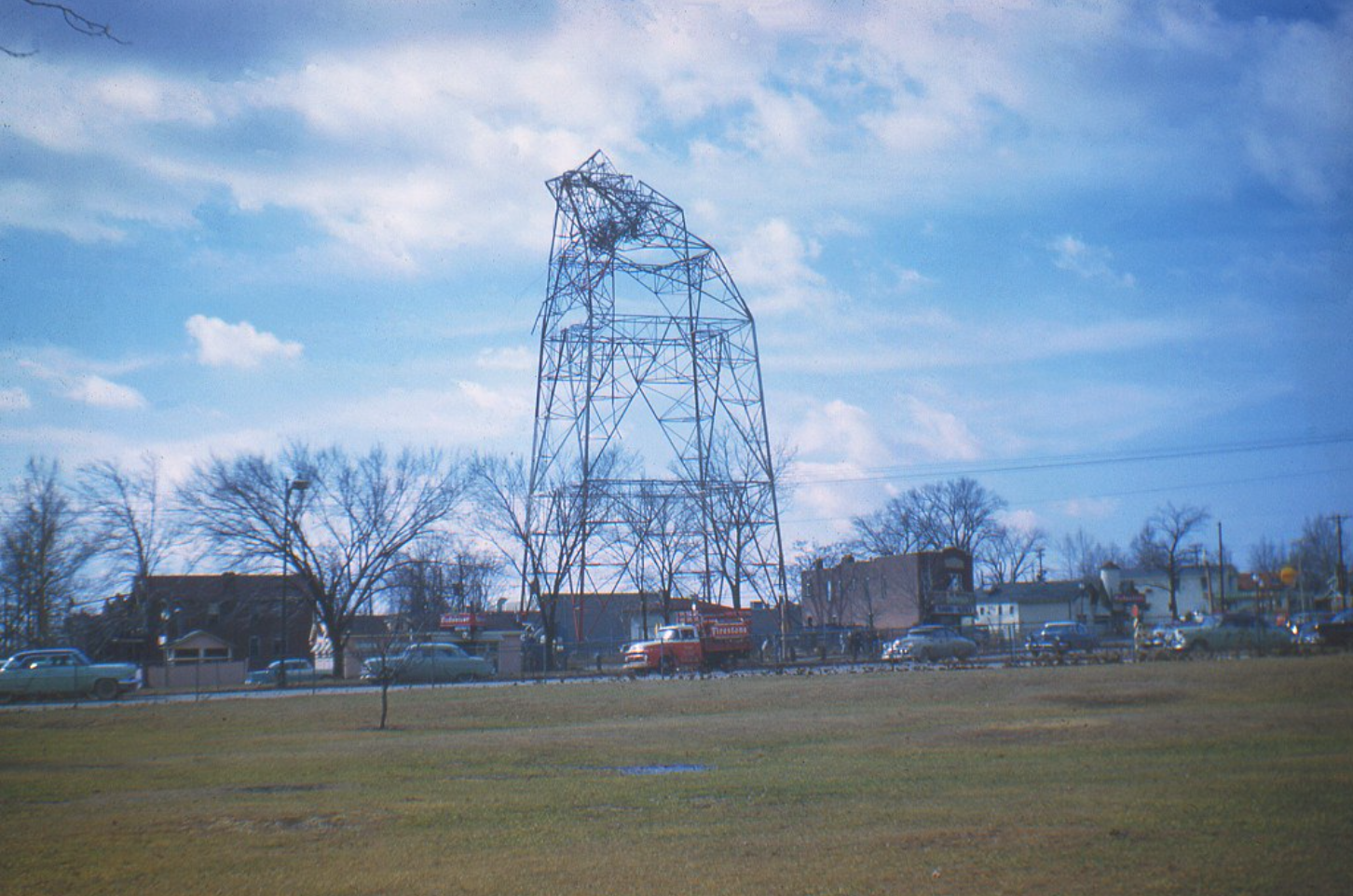
It toppled the Channel 2 television tower and one of the Arena’s two towers before moving on to devastate the area around Boyle and Olive Streets (Gaslight Square).

The tornado was on the ground for at least 35 minutes, traveled 23.9 miles (38.5 km), was 200 yards (180 m) wide, and caused $50.25 million is damage. 345 people were injured and 21 others were killed, making it the third deadliest tornado in the city’s history.

Interestingly, the heyday of Gaslight Square was actually kick-started in the aftermath of the city’s 1959 tornado outbreak, which caused severe property damage but also led to an influx of attention and insurance money. Business owners took advantage of this to revitalize the local economy. It became a very hip place to hang out–even my parents went there. Entertainers who performed in the clubs included: Miles Davis, Bob Dylan, Barbra Streisand, Judy Collins, the Smothers Brothers, Phyllis Diller, Woody Allen, and so on…

A 1962 episode of the TV show Route 66 titled “Hey Moth, Come Eat the Flame” was set and filmed inside The Darkside jazz club. How cool can you get?

Gaslight Square didn’t last long, however, and the Board of Alderman, who had officially renamed the district on 24 March 1961, retired the name in December of 1972. Easy come, easy go. C’est la vie.


P.S. I watched the Route 66 episode and besides the scenes in Gaslight Square there are scenes shot at the Chase Park Plaza on Kingshighway and the old Rock Hill quarry (which is mostly filled in now) and in some bowling alley I could not identify. It’s worth checking out for that!

What are you reading?

by chuckofish

It has been such a cold week! Thankfully the sun has been out much of the time and I have been able to needlepoint by my window. I also sent the Review off to the printer. I do love crossing items off my to-do list, don’t you?

I am also making headway reading Drums Along the Mohawk–the 600+-page tome given to me for Christmas. I am more than a third of the way in and I must say, it is wonderful. Published in 1936, it is well-written, exciting, and populated with realistic characters. It is very scary in parts and well it should be. It was a scary time to be on the New York frontier.

“For the first time they began to realize that there was no protection for them except in themselves. An unpredictable force had been born in the Mohawk Valley…”

The book is peopled with historical persons such as General Nicholas Herkimer and Adam Helmer, and other descendants of the German immigrants who were the majority residents in the central Mohawk Valley at the time. It also features such historical events as the Battle of Oriskany.

(Side note: When I was writing the Review article about RADM Courtney Shands, I learned that he was the commander of the aircraft carrier USS Oriskany during the Korean Conflict. The USS Oriskany was named after the famous and bloody engagement during the Saratoga Campaign. Synchronicity!)

Anyway, I am learning a lot and enjoying the book. Of course, young people today never read books like this and it is a shame. They might actually learn something about our country and the pioneers who built it. It was not easy, not easy at all.

Here’s another bit of trivia. Henry Fonda, the star of the film Drums Along the Mohawk (1939), was a descendent of Douw Fonda, (1700–1780) a prominent settler and trader in the Mohawk Valley. During the fighting with Loyalists, he was captured by a Mohawk, tomahawked and scalped. Two of Douw Fonda’s sons, John and Adam, were taken prisoner in the raid and taken to Canada.

Our ancestors were a hardy lot. They had to be.

So stay warm, read some (good) historical fiction, watch an old movie. Be thankful for and remember those who came before you.

Good grief, Charlie Brown!

by chuckofish

Today we celebrate the birth of Charles Monroe “Sparky” Schulz (1922-2000), cartoonist and creator of Peanuts. He is widely regarded as one of the most influential cartoonists in history, and cited by many cartoonists as a major influence. I, of course, have been a fan since the mid-1960s.

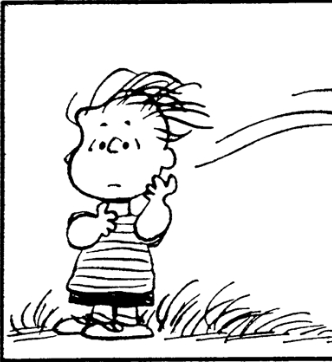
Funnily enough, as I get older, I look more and more like Linus…

Linus has always been the character I relate to most (not Lucy as my siblings would argue). There is certainly someone for everyone to relate to in this great classic comic strip. To whom do you relate most?

We also remember that in 1789 George Washington recommended that November 26 be “devoted by the People of these States to the service of that great and glorious Being, who is the beneficent Author of all the good that was, that is, or that will be. That we may then all unite in rendering unto him our sincere and humble thanks, for his kind care and protection of the People of this Country previous to their becoming a Nation, for the signal and manifold mercies, and the favorable interpositions of his providence, which we experienced in the course and conclusion of the late war, for the great degree of tranquility, union, and plenty, which we have since enjoyed, for the peaceable and rational manner, in which we have been enabled to establish constitutions of government for our safety and happiness, and particularly the national One now lately instituted, for the civil and religious liberty with which we are blessed; and the means we have of acquiring and diffusing useful knowledge; and in general for all the great and various favors which he hath been pleased to confer upon us.”

Well said, President Washington!

In 1863 President Abraham Lincoln proclaimed November 26 as a national Thanksgiving Day, to be celebrated annually on the final Thursday of November. It has been observed on the fourth Thursday in November since 1942.

Meanwhile I am busy readying my house for precious visitors arriving tomorrow. Thankful for good times ahead and praying for travel mercies tomorrow!

“Eternal Father, strong to save, Give us courage and make us brave”*

by chuckofish

As you know Veterans Day was yesterday and as usual I gave it some thought. I think a lot of Boomers like myself are fascinated with WWII because we grew up with so many WWII veterans–fathers and grandfathers–ordinary men who did extraordinary things.

So I was doing some research about a local man who became an “Ace in a day” on August 7, 1942 at Guadalcanal. Courtney Shands was awarded the Navy Cross for “extraordinary heroism in operations against the enemy while serving as Pilot of a carrier-based Navy Fighter Plane in Fighting Squadron SEVENTY-ONE (VF-71), attached to the U.S.S. WASP (CV-7), in action against enemy Japanese forces on Guadalcanal, Solomon Islands, on 7 August 1942. Leading his fighter squadron in the initial air assault on Japanese positions on the Solomon Islands, Lieutenant Commander Shands’ flight destroyed seven enemy fighters and 15 patrol planes. This victory eliminated all local air opposition in the area, thus greatly contributing to the successful occupation of the islands by American ground forces. Lieutenant Commander Shands personally shot down four Japanese fighters and two patrol planes. His outstanding courage, daring airmanship and devotion to duty were in keeping with the highest traditions of the United States Naval Service.”

A month later in September 1942 Shands was commander of the USS Wasp’s air group when the aircraft carrier was torpedoed and sank in shark-infested waters. The descriptions of this disaster are blood-curdling. At one point Shands was “floating in the water in his “Mae West” life preserver and holding on to an injured man when he saw Lieutenant Ray Conklin helping a wounded sailor down one of the lines and into the ocean. While towing a wounded man toward one of the life crafts, Shands was amazed that Conklin towed his casualty past him “on the double.” The reason for Conklin’s Olympic speed? A shark was following him.”

Courtney Shands from Kirkwood, MO (KHS class of 1923) went on to become a Rear Admiral in the USN.

Lest we forget.

And what do they fight for? This:

*John H. Eastwood, WWII Army Air Corps Chaplain

Change

by chuckofish

On this day in 1874 this cartoon by Thomas Nast appeared, featuring the first notable appearance of the Republican elephant.

The Republican Party has changed quite a bit over the years, but I am happy to see it become a real diverse coalition of Americans–the people that make this country great. Truly, the 2024 election is the “revenge of the working class American.” They’re not Nazis; they’re not garbage. Indeed.

And hey,

A little bit o’ history

by chuckofish

On this day in 1849 at a convention in St. Louis’s old courthouse, 800 delegates heard a speech by Missouri’s veteran U.S. senator Thomas Hart Benton. With his customary persuasiveness, Benton launched into a recital of the glories and riches which would come from a transcontinental railway.

Summing up his argument, he pointed majestically westward and cried, “There is the East! There is India!” Expertly phrased, perfectly timed, and dramatically delivered, Benton’s stunning conclusion electrified his audience and strengthened the case for the projected railroads as no other argument had done.

The occasion is preserved in the bronze statue of Benton in Lafayette Park as portrayed by American sculptor Harriet Hosmer. The closing words of his speech are engraved at his feet.

Harriet Hosmer was about 30 years old and living in Rome when she received the commission. She sculpted the statue in Rome in 1861. It was then cast by the Royal Bronze Foundry in Munich in 1864.

The resulting statue is a colossal standing figure of Senator Benton. It stands ten feet tall and is two feet, ten inches wide and deep. Benton wears a classical toga over a contemporary jacket and neck scarf. He is wearing sandals, faces west and holds a partially unrolled scroll of a map with the word “America” on it. Dedicated in 1868, it was the first public monument in the State of Missouri.

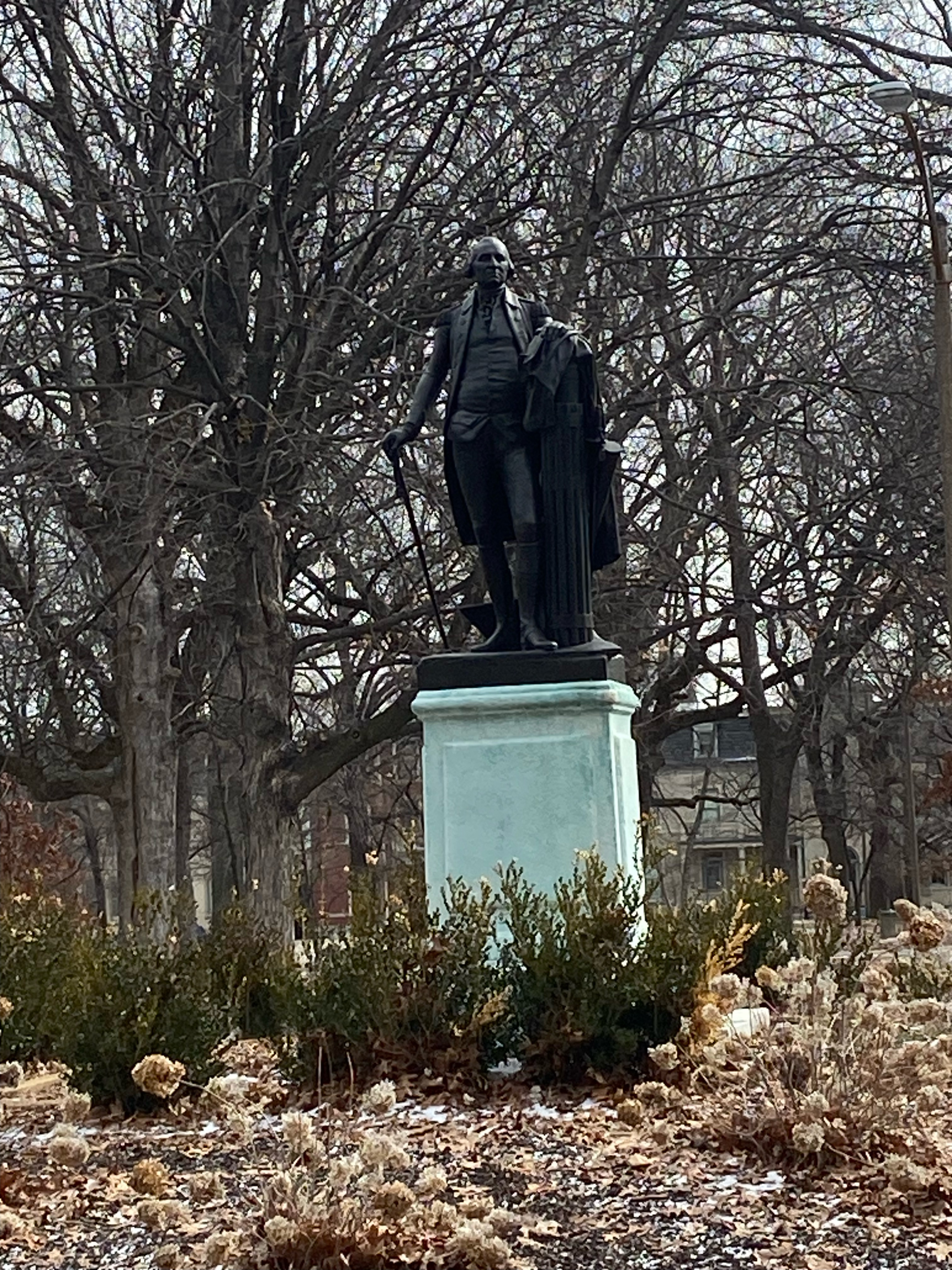
The park also boasts a bronze casting from a life-sized statue of George Washington by French sculptor Jean-Antoine Houdon, which was placed in the park in 1869.

Lafayette Park was set aside from the St. Louis Common in 1836 and dedicated in 1851 as one of the first public parks, and by far the largest of its era, in the City of St. Louis, Missouri. It is considered by many historians to be the oldest urban park west of the Mississippi. Indeed, at 30 acres, Lafayette Park is one of the larger parks in the city even though it is still dwarfed by Forest Park which is about 46 times larger.

*Information for this post is from St. Louis Day By Day by Frances Hurd Stadler and the Lafayette Park Conservancy.

Semper Fidelis, Code Talkers

by chuckofish

While staying on the Navajo Rez in Monument Valley we were reminded several times of the Navajo code talkers of WWII fame. You will recall that this was the ingenious idea of using the Navajo language to write an unbreakable code–one of America’s all-time great secret weapons. After Pearl Harbor, and because the Japanese had broken all the codes previously sent over the radio waves, the Marines were desperate to find a secure way to communicate vital information with precious little time. After several successful tests, the Navajo language was approved as a communication code.  

But we wondered, who originally had this brilliant idea?

Well, I looked into this and it was Philip Johnston, the son of a Christian missionary, who had grown up on a Navajo reservation and had learned the language in his youth. In fact, Johnston became so fluent in the (very difficult) Navajo language that he was asked in 1901 at age 9 to serve as an interpreter for a Navajo delegation sent to Washington, D.C., to lobby for Indian rights. Philip was the Navajo/English translator between the local Navajo leaders and President Theodore Roosevelt.

Johnston said he came up with the idea of enlisting Navajos as signalmen early in 1942, when he read a newspaper story about the army’s use of several Native Americans during training maneuvers with an armored division in Louisiana. The article also stated that, during World War I, Native Americans had acted as signalmen for the Canadian army to send secure messages about shortages of supplies or ammunition.

Shortly thereafter, Johnston contacted the military with his idea: “My plan is not to use translations of an Indian language, but to build up a code of Indian words. Let’s imagine this code included terms such as ‘fast shooter’ to designate a machine gun, and ‘iron rain’ for a barrage. Navajo personnel would be thoroughly drilled to understand and use these substitutions.”

I mean, brilliant.

During the course of the war, about 400 Navajos participated in the code talker program. Their hard work was not recognized until after the declassification of the operation in 1968.

President Ronald Reagan gave the Code Talkers a Certificate of Recognition and declared August 14 “Navajo Code Talkers Day” in 1982. President George W. Bush presented the Congressional Gold Medal to the four surviving Code Talkers at a ceremony held in the Capitol Rotunda in Washington in July 2001.

To my knowledge Philip Johnston was never recognized with a medal or special ceremony for his great idea. But hats off to him.

If you would like to read more about this, check this and this out.

Disturb us, Lord

by chuckofish

Today is the 444th anniversary of the completion of Sir Francis Drake’s circumnavigation of the Earth in Plymouth, England on September 26, 1580.

This was the first English circumnavigation, and second circumnavigation overall. Drake’s exploits made him a hero to the English, but his privateering led the Spanish to brand him a pirate, known to them as El Draque (“The Dragon”). “While Spain regarded him as a pirate even then, he was really a privateer, since he carried the royal warrant and the Crown participated by furnishing money and armed ships. That is hardly piracy as we understand it.” (This is an interesting article about Drake.)

I have shared this prayer by Drake before, but it bears repeating:

“Disturb us, Lord, when we are too well pleased with ourselves, 

when our dreams have come true because we have dreamed too little, 

when we arrive safely because we sailed too close to the shore. 


Disturb us, Lord, when with the abundance of things we possess,
we have lost our thirst for the waters of life, having fallen in love with life, we have ceased to dream of eternity, 
and in our efforts to build a new earth, 
we have allowed our vision of the new heaven to dim. 


Disturb us, Lord, to dare more boldly, to venture on wider seas, 
where storms will show your mastery, 
where losing sight of land, we shall find the stars. 
We ask you to push back the horizon of our hopes, 
and to push us into the future in strength, courage, hope, and love. 
This we ask in the name of our Captain, who is Jesus Christ. ”

Wonderful.

We also remember Paul Newman, who died on this day in 2008.

Kind of like Sir Francis Drake, Paul Newman is in a league of own. Nominated eight times for Best Actor (and once for Supporting Actor), he only won one Oscar for The Color of Money (1987) and that seemed like a consolation prize at the time. Newman wasn’t even there to pick up his award. C’est la vie. He was great and everybody loved him. Anyway, a toast to the great Paul Newman!

And speaking of cool, how about that new statue at the U.S. Capitol? Johnny Cash, representing Arkansas, became the first professional musician to be honored with a statue in the Capitol.

Cash’s daughter, Rosanne Cash, said her father would have viewed the statue “as the ultimate honor” in his life. She said her father’s hard upbringing instilled in him a strong work ethic and that he loved the idea of America as a place of dreams and refuge. “This man was a living redemption story,” Rosanne Cash said. “He encountered darkness and met it with love.” Amen, brother.

Now there’s three aces! Sir Francis Drake, Paul Newman and Johnny Cash. Woohoo! Have a good day!