dual personalities

Tag: History

Being faithful in the little light received*

by chuckofish

Readers of this blog may remember that my great-great grandfather John Simpson Hough was a Quaker. He came from a long line of Quakers who came to Bucks County from England in 1683. The Houghs prospered in Pennsylvania and had many children, many with the same names–such as Benjamin, Hannah, John, Joseph, Silas–which makes genealogy so challenging…But I digress.

After moving West, JSH no longer actively practiced his Quaker faith, but I believe no small part of the high esteem in which he was held was due to his reputation as a fine Quaker gentleman–truthful, (relatively well) educated and beyond reproach in legal and mercantile dealings.

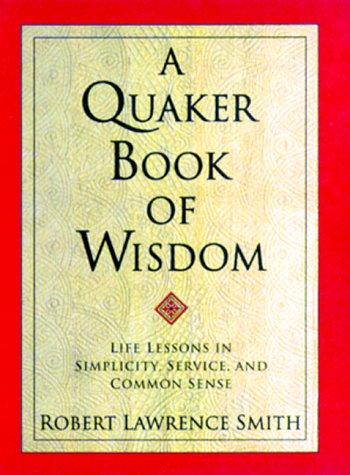
Anyway, the Quakers have always fascinated me. I found this little book recently, written by Robert Lawrence Smith, the former headmaster of the Sidwell Friends School in Washington D.C., the largest Quaker day school in the U.S.

quaker-wisdom

I highly recommend it.

The most valuable aspect of religion is that it provides us with a framework for living. I have always felt that the beauty and power of Quakerism is that it exhorts us to live more truthfully, more simply, more charitably. For many Friends, simplicity is a cornerstone of their faith that continues to define their daily lives….For Quakers, simplicity is truth’s twin virtue: The two concepts are seamlessly intertwined. Without simplicity of spirit, we are not prepared to receive the truth. And if we fail to act in accordance with the truth, we cannot let our lives speak.

* “Being faithful in the little light received, in that light I saw more light; and by it I was taught to trust in God in all my ways, and to consult him to direct my paths.”
(Increase Woodward, 1744-1822)

Throwback Thursday

by chuckofish

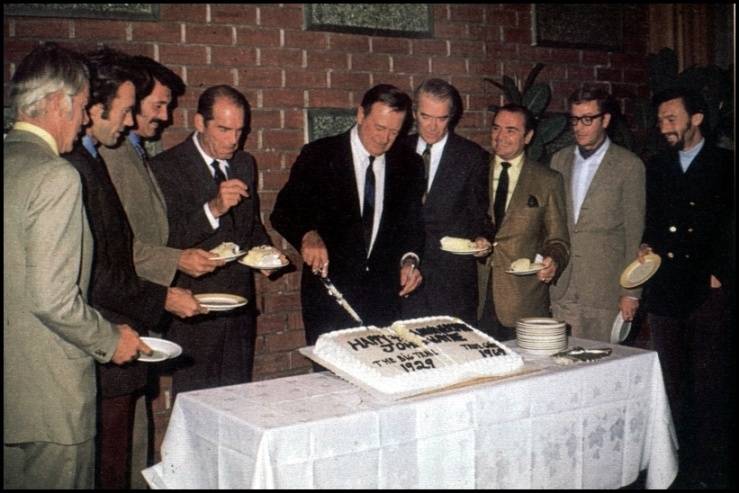
wayne-marvin-eastwood-hudson-macmurray-stewart-caine

Lee Marvin, Clint Eastwood, Rock Hudson, Fred MacMurray, Jimmy Stewart, Ernest Borgnine, Michael Caine, and Laurence Harvey watch the Duke cut the cake. Who knew that Ernest Borgnine was ever the short guy?

Quite a line-up.

By the way, the cake was in honor of John Wayne’s 40 years in movies (in 1969). Cake is always good.

By the dim and flaring lamps

by chuckofish

Today is Memorial Day and also John Wayne’s birthday!

You can watch war movies all day on TCM. Twelve O’Clock High (1949)–one of my favorites is on tonight, followed by another great one, The Best Years of Our Lives (1946).

Or you can choose to watch John Wayne movies.

mustache_bigEither way, have a good day and take some time to remember the men and women who died while serving in the U.S. armed forces.

Here is a great rendition of The Battle Hymn of the Republic, written by Julia Ward Howe in 1861 to the tune of “John Brown’s Body”:

Have you ever read all the lyrics to this wonderful hymn? Well, here they are:

Mine eyes have seen the glory of the coming of the Lord;

He is trampling out the vintage where the grapes of wrath are stored;

He hath loosed the fateful lightning of His terrible swift sword:

His truth is marching on.

I have seen Him in the watch-fires of a hundred circling camps,

They have builded Him an altar in the evening dews and damps;

I can read His righteous sentence by the dim and flaring lamps:

His day is marching on.

I have read a fiery gospel writ in burnished rows of steel:

“As ye deal with my contemners, so with you my grace shall deal”;

Let the Hero, born of woman, crush the serpent with his heel,

Since God is marching on.

He has sounded forth the trumpet that shall never call retreat;

He is sifting out the hearts of men before His judgment-seat:

Oh, be swift, my soul, to answer Him! be jubilant, my feet!

Our God is marching on.

In the beauty of the lilies Christ was born across the sea,

With a glory in His bosom that transfigures you and me.

As He died to make men holy, let us die to make men free,

While God is marching on.

He is coming like the glory of the morning on the wave,

He is Wisdom to the mighty, He is Succour to the brave,

So the world shall be His footstool, and the soul of Time His slave,

Our God is marching on.

(Chorus)

Glory, glory, hallelujah!

Glory, glory, hallelujah!

Glory, glory, hallelujah.

Our God is marching on.

And here is a special prayer from the BCP for today:

ALMIGHTY God, our heavenly Father, in whose hands are the living and the dead; We give thee thanks for all those thy servants who have laid down their lives in the service of our country. Grant to them thy mercy and the light of thy presence, that the good work which thou hast begun in them may be perfected; through Jesus Christ thy Son our Lord. Amen.


“I figure if a girl wants to be a legend, she should go ahead and be one.”*

by chuckofish

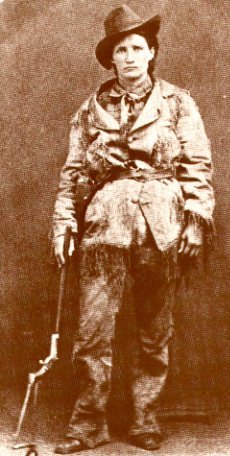
Martha Jane Canary (May 1, 1852 – August 1, 1903) was born today in 1852. She is, of course, better known as Calamity Jane. 

jane_1a

Born in Mercer County, Missouri, Canary was the oldest of many siblings. Her father was a farmer. After some legal wrangling over land, the family sold their property and left Missouri in the early 1860s, heading for Montana gold. But they fell on hard times; her mother died in a mining camp in Blackfoot City, Montana, when Canary was about 9. After taking the children to Salt Lake City, her father died soon after.

Her life, already a hard one, became at that point the stuff of legend. As she became a dime-novel heroine and stage performer, she enlarged her myth with every new story. It is nearly impossible to know where the truth lies and who she really was. Well, she was and still is an intriguing oddity that fires the imagination.

Not surprisingly Calamity Jane has been portrayed by myriad actresses on the large and small screen. In the movies she has been played by Jean Arthur, Jane Russell, Yvonne De Carlo, Doris Day, Catherine O’Hara, Ellen Barkin–to name a few. On television Stephanie Powers, Anjelica Huston and Jane Alexander have attempted to represent her.

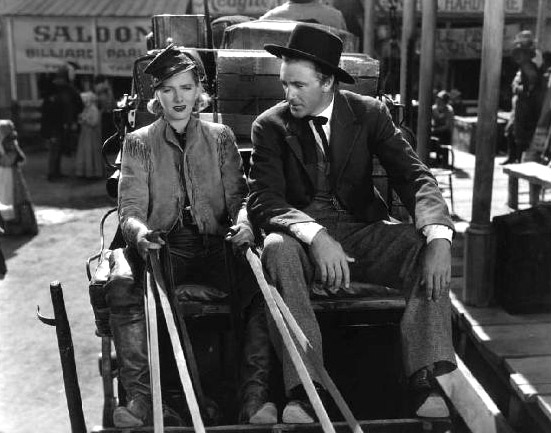
Of the movies I like The Plainsman (1936) with Jean Arthur as Calamity and Gary Cooper as Wild Bill Hickok.

MientemecinemientemeViejoyfalsoOesteCalamityJaneJeanArthur

Directed by Cecil B. DeMille, it is a very exciting movie and Arthur and Cooper are well matched. I’m sure the plot has practically no basis in reality, but it is a good movie and Jean Arthur is no glamour girl. Cooper, as usual, is adorable.

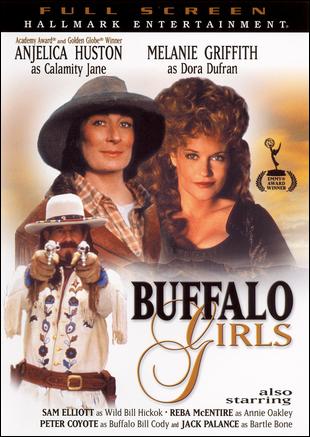
I also like Anjelica Huston as Calamity in the 1995 TV mini-series Buffalo Girls, an adaption of the book by Larry McMurtry. Physically, she is the most like the real Martha Jane–tall and somewhat manly and with (we hope) a heart of gold.

movie_154233

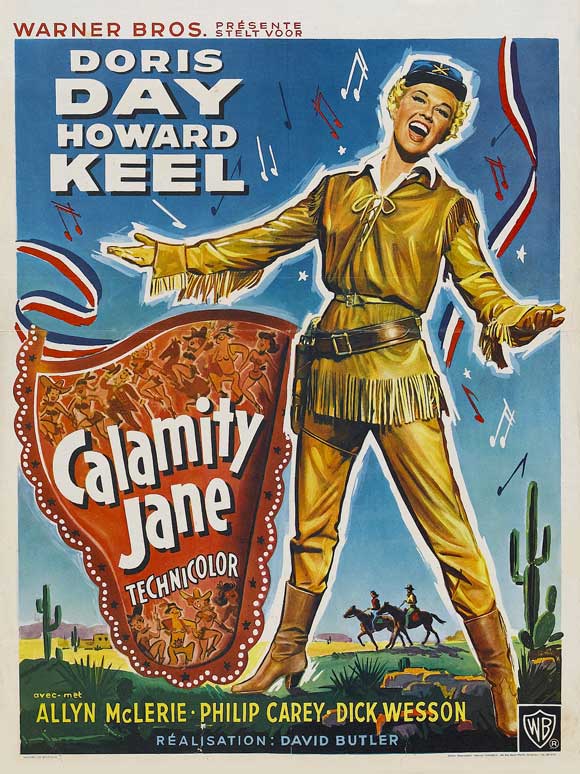
One of the most ridiculous presentations of Calamity Jane’s life is that put forth in the1953 musical Calamity Jane, starring Doris Day.

Calamity-Jane-Poster

But one can not help but love this rendition and Doris Day who always gives 110%. This film focuses on the relationship between Jane and Wild Bill (Howard Keel) and Doris gets to sing lyrics like: “At last my heart’s an open door / And my secret love’s no secret any more.” Yikes. The song won the Academy Award for Best Song that year, and with Doris singing, why wouldn’t it?

I think I will watch Doris in Calamity Jane because I DVR’d it when it was on TCM on her birthday a few weeks ago. Here’s a little something to whet your appetite:

So let’s raise a glass to Martha Jane Canary on her birthday, the American legend and the real woman, whoever she was.

*Attributed to Calamity Jane

Meet me at the fair

by chuckofish

One hundred and ten years ago today the Louisiana Purchase Exposition (informally known as the St. Louis World’s Fair) opened in my flyover town. It was quite a Big Deal.

Are those elephants in the lower left?

Are those elephants in the lower left?

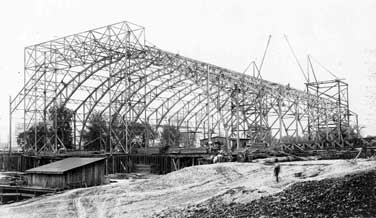
The Fair’s 1,200 acre site was designed by George Kessler and was located on the grounds of what is now Forest Park and on the campus of my flyover university. There were over 1500 buildings, connected by some 75 miles of roads and walkways. It was said to be impossible to give even a hurried glance at everything in less than a week. The Palace of Agriculture alone covered some 20 acres.

Exhibits were staged by 62 foreign countries, the United States government and 43 of the then 45 states. 19,694,855 individuals were in attendance at the fair.

Here is a map of the Fair.

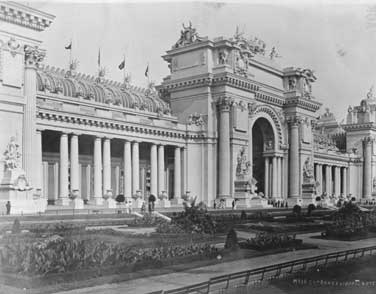
The fairgrounds were filled with spectacular buildings.

The Palace of Liberal Arts

The Palace of Liberal Arts

The Aviary was built by the U.S. government and was the largest free flight birdcage ever built.

aviary

It is still here, a part of our zoo. OLYMPUS DIGITAL CAMERA

The administrative center of the Fair was none other than Brookings Hall at my home away from home.

WUBrook

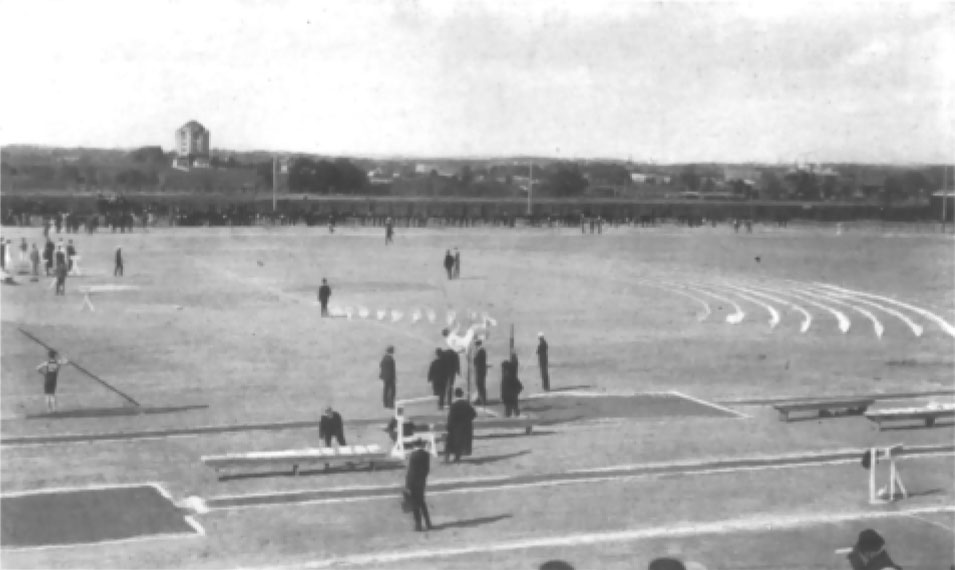
The Fair hosted the 1904 Summer Olympics, the first ever held in the U.S.

Many of the events were held at Francis Field.

Francis_Field_1904

The field has been updated, but is still very much in use at my flyover university.

100511-st-louis-touring-018

Well, it’s probably true that we peaked back in 1904, but we’re still a pretty cool place. And it’s fun to see that parts of our illustrious past are still very much a part of our everyday life in the twenty-first century.

Happy birthday, Lew Wallace

by chuckofish

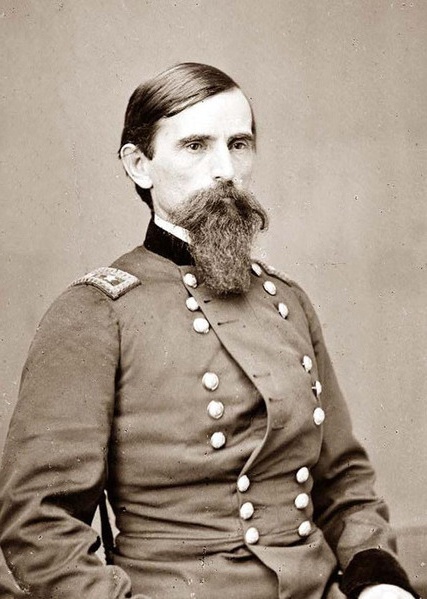
Lewis_Wallace

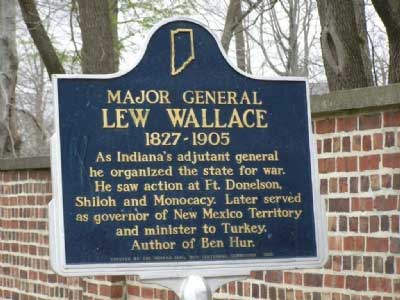
Lewis Wallace (April 10, 1827 – February 15, 1905) was an American lawyer, Union General in the Civil War, territorial governor and statesman, politician, and author. Wallace served as governor of the New Mexico Territory at the time of the Lincoln County War. He put the squeeze on Billy the Kid! 

son of indiana

To me, he is a fine example of the classic American male: soldier, statesman, spiritual guy, and author of a best-selling novel! And he was from Indiana. And he wrote this:

“Men speak of dreaming as if it were a phenomenon of night and sleep. They should know better. All results achieved by us are self-promised, and all self-promises are made in dreams awake. Dreaming is the relief of labor,the wine that sustains us in act. We learn to love labor, not for itself, but for the opportunity it furnishes for dreaming, which is the great under-monotone of real life, unheard, unnoticed, because of its constancy. Living is dreaming. Only in the graves are there no dreams.” 

Wallace started writing after the war, and while serving as governor, he completed his second novel. This one made him famous–Ben-Hur: A Tale of the Christ (1880). It became the best-selling American novel of the 19th century, surpassing Harriet Beecher Stowe’s Uncle Tom’s Cabin. The book has never been out of print and has been adapted for film four times. 

In his autobiography he recounted a life-changing journey and conversation in 1875 with Colonel Robert G. Ingersoll, whom he met on a train. During the journey Ingersoll, a well-known agnostic, quizzed Wallace about the history and ideas of Christ. Wallace realized during the conversation how little he knew about Christianity. He wrote, “I was ashamed of myself, and make haste now to declare that the mortification of pride I then endured…ended in a resolution to study the whole matter.” Writing about Christianity helped him become clear about his own ideas and beliefs. Wallace developed the novel Ben-Hur from his studies. The historian Victor Davis Hanson has argued that the novel drew from Wallace’s life, particularly his experiences at Shiloh, and the damage it did to his reputation. The book’s main character, Judah Ben-Hur, accidentally causes injury to a high-ranking commander, for which he and his family suffer tribulations and calumny. He first seeks revenge and then redemption. (Wallace may have felt bitterly toward U.S. Grant, but I hardly think he modeled the character of Messala after him.) Well, Wallace may have worked through a few personal issues, but writing can do that.

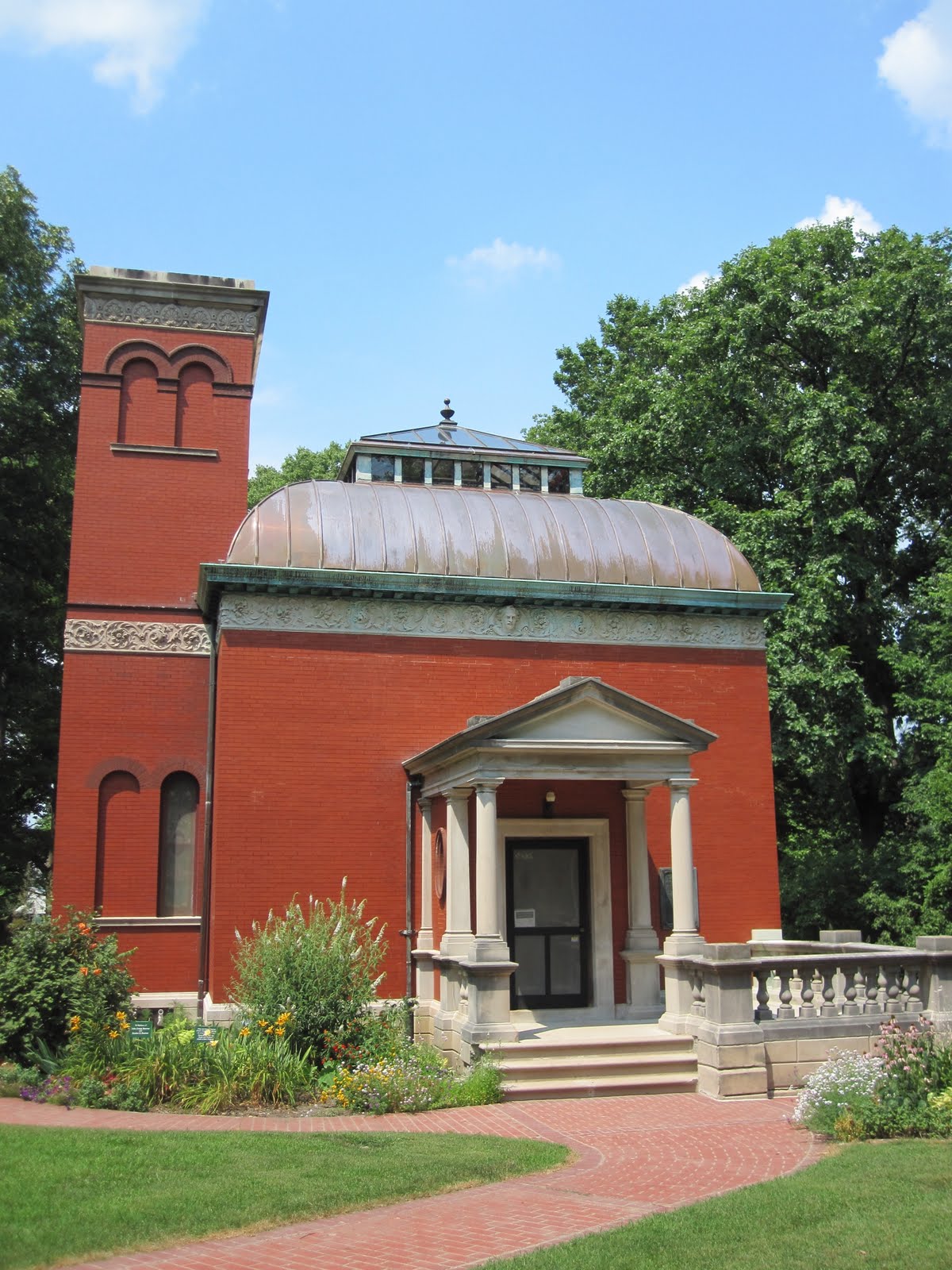
After Wallace retired home to Indiana, he built himself a wonderful writing study. (I want one too!)

WallaceStudy

His home in Crawfordsville, Indiana is on my bucket list of places I want to visit. I have been to Crawfordsville  (known as the “Athens of Indiana”) and to Wabash College, but I have not been to his home (yet).

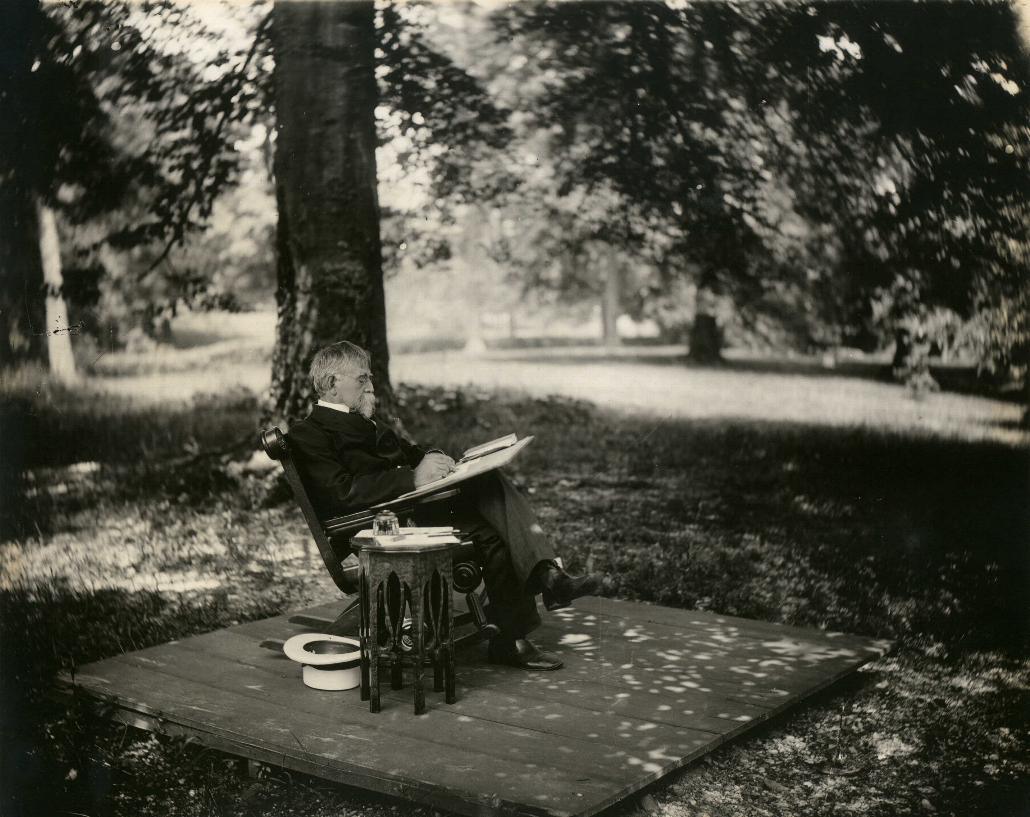
Wallace also liked to write under his favorite tree, known fondly as “the Ben-Hur Beech”.

Lew-writing-under-the-Ben-Hur-Beech

I am with you, Lew!

“I know what I should love to do – to build a study; to write, and to think of nothing else. I want to bury myself in a den of books. I want to saturate myself with the elements of which they are made, and breathe their atmosphere until I am of it. Not a bookworm, being which is to give off no utterances; but a man in the world of writing – one with a pen that shall stop men to listen to it, whether they wish to or not.” 
― Lew Wallace

By the way, it is that time of year again–almost time to watch the 1959 version of Ben-Hur! I can’t wait!  But I will wait for daughter #1 to come home and watch it with me Easter weekend!

Don’t tell me the lights are shining any place but there*

by chuckofish

Did you have a pleasant weekend?

Earlier in the week my dual personality sent me a couple of old books that were right up my alley,

2books

so I had those to peruse. I also picked up a pillow that I had left to be finished at the Sign of the Arrow.

pillow

If you recall, I bought it at an estate sale. I thought it was Edinburgh Castle, but a friend told me he thought it was Strasbourg. Well, hats off to Allan’s eagle eye, because when I separated it from its tacky polyester backing and took it apart, it said “Strasbourg” on the original canvas. The ladies at the Sign of the Arrow were impressed with the design and workmanship and it turned out really well, don’t you agree?

On Sunday afternoon, the OM had the bright idea to go down to the Riverfront to see the new Stan Musial bridge.

Bridge2

Here is the OM taking a picture of the bridge in front of one of the ubiquitous “cakes” that are found throughout the city and county celebrating the 250th birthday of our flyover city.

rpc bridge

Standing four-feet-tall, each two-tier ornamental birthday cake has been decorated by local artists and marks a location of note in our region. Two hundred and fifty locations were chosen. We ran into two quite by accident on our adventures downtown.

Since we were in the vicinity, we had to go to Ted Drewes.

teddrewes

And there was a cake!

photo cake

I think these cakes are kind of silly, but if it amuses people, who am I to quibble?

Meanwhile the amaryllis is going by having put on quite show.

K3_Mar 09 2014_0376_edited-1

Have a nice week!

“Meet Me in St. Louis” by Andrew B. Sterling

How the West Was Won

by chuckofish

Today is the 176th anniversary of the birth of one of my favorite ancestors, John Wesley Prowers, who was born on January 29, 1838 near Westport, Jackson County, Missouri.

bent1881_jwprowers

Readers of this blog will recall that John was the older brother of our great-great-grandmother Mary Prowers Hough. Not much is known about their parents, Susan and John Prowers. Some say they came from Virginia, arriving in Missouri where John built a sturdy two-story log cabin near the Missouri River, which stood for nearly 75 years. The senior Prowers died (we know not why) in 1840, leaving 22-year-old Susan alone (literally) in the wilderness with two children under two and very little else save the sturdy cabin. She re-married–what else could she do?

Anyway, John Wesley Prowers did not get along with his step-father and skidaddled in 1856, at the age of eighteen. He went to work for Robert Miller, Indian agent for the Kiowa, Comanche, Apache, Cheyenne and Arapaho tribes of the Upper Arkansas region. They headed for Bent’s new fort. Soon he was working for Colonel Bent at the fort, who put him in charge of the wagon trains, freighting supplies from the trading posts on the Missouri to those west, making twenty-two trips across the plains over the next six years.

In 1861 he married the 15-year-old Indian “princess” Amache Ochinee, the daughter of Ochinee, a sub-chief of the Southern Cheyennes, near Camp Supply in Indian Territory. In 1862 when John made his usual trip to Westport he took his bride east with him and she remained there with his sister, giving birth to their first child. They named the baby Mary Hough Prowers after her aunt (my great-great-grandmother, Mary Prowers Hough)–which has been confusing genealogists ever since.

The Prowers went on to have nine children, eight surviving to adulthood. John became a cattle baron, building up his herds until at the fall round-up of his ranch, the cattle shipment was a matter of train loads, not carloads. Sometimes, according to his daughter, as many as eight train loads left the ranch for eastern markets. At one time, the fall “check-up” showed 70,000 cattle bearing the Box B and the Bar X brands. Later Prowers cut out the middle man, building his own modern slaughter-house in Las Animas.

For a man with very little formal education, he was a creative and scientific rancher/statesman. He was always trying to improve his herd and his ranch. He experimented to find the cattle best suited to the plains country, bringing cattle from Ireland (the Kurry breed) and he bought “Gentle the Twelfth” from Frederick William Stone of Guelph, Canada. At last he turned to the Hereford as the best North American beef animal, calling it the “American type.” Thus he set about systematically improving and enlarging his herds and acquiring larger range. During his lifetime he fenced 80,000 acres of land in one body and owned forty miles of river front on both sides of the Arkansas River, controlling 400,000 acres of land.

He liked to experiment with things other than cattle as well. He introduced prairie chickens and Bob White quail at the mouth of the Purgatoire River. Hoping to increase the wild game in the county he brought in white tail deer. He also experimented with irrigation, having miles of ditches dug on his ranch.

Unlike his sister, who was a devout Baptist, he belonged to no church or lodge, but he always gave generously to resident pastors, no matter what denomination. He founded a bank and had numerous partners who ran stores and shipping operations. He was elected to represent the county in the Legislature and again to represent Bent County in the General Assembly. Furthermore, he sent all his children, boys and girls, to school and to college.

My great-great-grandmother was a great believer in women’s rights and the need for women to be educated and to have their own property. I have no reason to believe that her brother didn’t feel the same way. I’m sure this stemmed from their own mother’s predicament when her husband died.

When a new county was created from Bent County on May 3, 1889, it was named for Prowers, the pioneer and cattleman. I could go on about this great man, and I haven’t even mentioned his dealings with the Cheyenne, but that’s enough for now. Tonight let us raise a toast to him in remembrance.

These words, attributed to the great warrior Tecumseh, seem appropriate:

“Live your life so that the fear of death can never enter your heart…Love your life, perfect your life, beautify all things in your life. Seek to make your life long and in the service of your people…Always give a word or a sign of salute when meeting or passing a friend, even a stranger, when in a lonely place. Show respect to all people and grovel to none. When you arise in the morning give thanks for the food and for the joy of living. If you see no reason for giving thanks, the fault lies only in yourself…
When it comes your time to die, be not like those whose lives are filled with the fear of death, so that when time comes they weep and pray for a little more time to live their lives over again in a different way. Sing your death song and die like a hero going home.”

John Prower's 14-room house in Boggsville, Colorado

John Prower’s 14-room house in Boggsville, Colorado

boggsville

Vision and courage: you go girl edition

by chuckofish

Well, I guess you can say we have been preoccupied with snow lately. It does have a way of disturbing one’s routine. It snowed again last night. Bah humbug.

Snow days are great, but those (school) days must be made up. As the person who decides when to call a snow day, stress ensues. It is at such times that I turn to my lectionary.

Today in the Episcopal Church it is the feast day of Julia Chester Emery, missioner and founder of the United Thank Offering. We remember Julia for raising funds, organizing volunteers, administering institutions, and educating lay members of the church.

julia-chester-emery

“Apparently, her only training for this ministry was a willingness to try it, for she possessed no special education or preparation. Her only authority was collegial, for being a lay woman, she had neither the office nor the perquisites of ordained status to buttress her leadership. Julia Emery reminds us that we all possess the resources we need to be effective missionaries, except perhaps the two most important qualities exemplified in her—a willingness to try and the commitment to stick with it, even for a lifetime.” (Brightest and Best: A Companion to the Lesser Feasts and Fasts by Sam Portaro )

I can certainly relate to her. I mean, she is the ultimate Church Lady.

Julia Chester Emery was born in Dorchester, Massachusetts, in 1852. In 1876 she succeeded her sister, Mary, as Secretary of the Woman’s Auxiliary of the Board of Missions which had been established by the General Convention in 1871.

During the forty years she served as Secretary, Julia helped the Church to recognize its call to proclaim the Gospel both at home and overseas. Her faith, her courage, her spirit of adventure and her ability to inspire others combined to make her a leader respected and valued by the whole Church.

She visited every diocese and missionary district within the United States, encouraging and expanding the work of the Woman’s Auxiliary; and in 1908 she served as a delegate to the Pan-Anglican Congress in London. From there she traveled around the world, visiting missions in remote areas of China, in Japan, Hong Kong, the Philippines, Hawaii, and then all the dioceses on the Pacific Coast before returning to New York. In spite of the fact that travel was not easy, she wrote that she went forth “with hope for enlargement of vision, opening up new occasions for service, acceptance of new tasks.”

Through her leadership a network of branches of the Woman’s Auxiliary was established which shared a vision of and a commitment to the Church’s mission. An emphasis on educational programs, a growing recognition of social issues, development of leadership among women, and the creation of the United Thank Offering are a further part of the legacy Julia left to the Church when she retired in 1916.

In 1921, the year before she died, the following appeared in the Spirit of Missions: “In all these enterprises of the Church no single agency has done so much in the last half-century to further the Church’s Mission as the Woman’s Auxiliary.” Much of that accomplishment was due to the creative spirit of its Secretary of forty of those fifty years, Julia Chester Emery.

Quoted from the Holy Women, Holy Men blog

God of all creation, thou callest us in Christ to make disciples of all nations and to proclaim thy mercy and love: Grant that we, after the example of thy servant Julia Chester Emery, may have vision and courage in proclaiming the Gospel to the ends of the earth; through Jesus Christ our light and our salvation, who liveth and reigneth with thee and the Holy Spirit, one God, for ever and ever. Amen.

Lets hear it for Julia Chester Emery! A woman with vision and courage and no “training” who got the job done.

O powerful, western, fallen star!

by chuckofish

lincoln-memorial-flickr

On this day 150 years ago, President Abraham Lincoln gave this short address at the dedication of the military cemetery ceremony in Gettysburg, Pennsylvania. He wrote it himself and he did not have a teleprompter. Read the whole thing.

FOUR SCORE AND SEVEN YEARS AGO OUR FATHERS BROUGHT FORTH ON THIS CONTINENT A NEW NATION CONCEIVED IN LIBERTY AND DEDICATED TO THE PROPOSITION THAT ALL MEN ARE CREATED EQUAL •
NOW WE ARE ENGAGED IN A GREAT CIVIL WAR TESTING WHETHER THAT NATION OR ANY NATION SO CONCEIVED AND SO DEDICATED CAN LONG ENDURE • WE ARE MET ON A GREAT BATTLEFIELD OF THAT WAR • WE HAVE COME TO DEDICATE A PORTION OF THAT FIELD AS A FINAL RESTING PLACE FOR THOSE WHO HERE GAVE THEIR LIVES THAT THAT NATION MIGHT LIVE • IT IS ALTOGETHER FITTING AND PROPER THAT WE SHOULD DO THIS • BUT IN A LARGER SENSE WE CAN NOT DEDICATE~WE CAN NOT CONSECRATE~WE CAN NOT HALLOW~THIS GROUND • THE BRAVE MEN LIVING AND DEAD WHO STRUGGLED HERE HAVE CONSECRATED IT FAR ABOVE OUR POOR POWER TO ADD OR DETRACT • THE WORLD WILL LITTLE NOTE NOR LONG REMEMBER WHAT WE SAY HERE BUT IT CAN NEVER FORGET WHAT THEY DID HERE • IT IS FOR US THE LIVING RATHER TO BE DEDICATED HERE TO THE UNFINISHED WORK WHICH THEY WHO FOUGHT HERE HAVE THUS FAR SO NOBLY ADVANCED • IT IS RATHER FOR US TO BE HERE DEDICATED TO THE GREAT TASK REMAINING BEFORE US~THAT FROM THESE HONORED DEAD WE TAKE INCREASED DEVOTION TO THAT CAUSE FOR WHICH THEY GAVE THE LAST FULL MEASURE OF DEVOTION~THAT WE HERE HIGHLY RESOLVE THAT THESE DEAD SHALL NOT HAVE DIED IN VAIN~THAT THIS NATION UNDER GOD SHALL HAVE A NEW BIRTH OF FREEDOM~AND THAT GOVERNMENT OF THE PEOPLE BY THE PEOPLE FOR THE PEOPLE SHALL NOT PERISH FROM THE EARTH •

(This is the version of the text inscribed on the walls at the Lincoln Memorial in Washington D.C.)

Awesome.

The Lincoln Address Memorial (top left) at the Gettysburg National Cemetery

The Lincoln Address Memorial (top left) at the Gettysburg National Cemetery

Another place for the bucket list.