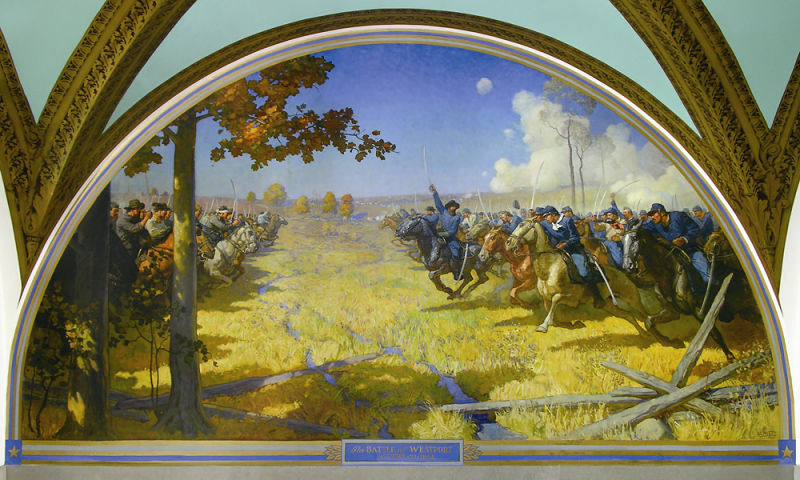
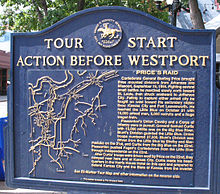
Today is the 150th anniversary of the Battle of Westport–sometimes referred to as the Gettysburg of the West–on October 23, 1864.
N.C. Wyeth mural of the Battle of Westport at the MO State Capitol
Union forces under Major Samuel R. Curtis decisively defeated an outnumbered Confederate force under Major Sterling Price. This engagement was the turning point of Price’s Missouri Expedition, forcing his army to retreat and ending the last significant Confederate operation west of the Mississippi River. This battle was one of the largest ever to be fought west of the Mississippi River, with over 30,000 men engaged. Buffalo Bill Cody, Wild Bill Hickcock (a scout for Gen. Curtis), Frederick Benteen, and Jeremiah Johnson all fought in this battle.
I am definitely adding this trip to my “To Do” list. I have been meaning to visit Westport, Missouri (now called Kansas City) where my ancestors were among the first pioneers to settle. And now I find that there was a major Civil War battle fought there? Where have I been?
Unfortunately, I will have to miss the reenactment, but, as you know, I am more of the self-guided-tour type anyway.
Road trip, anyone?
Trivia question: What famous movie character had a cat named after Gen. Sterling Price? What movie?
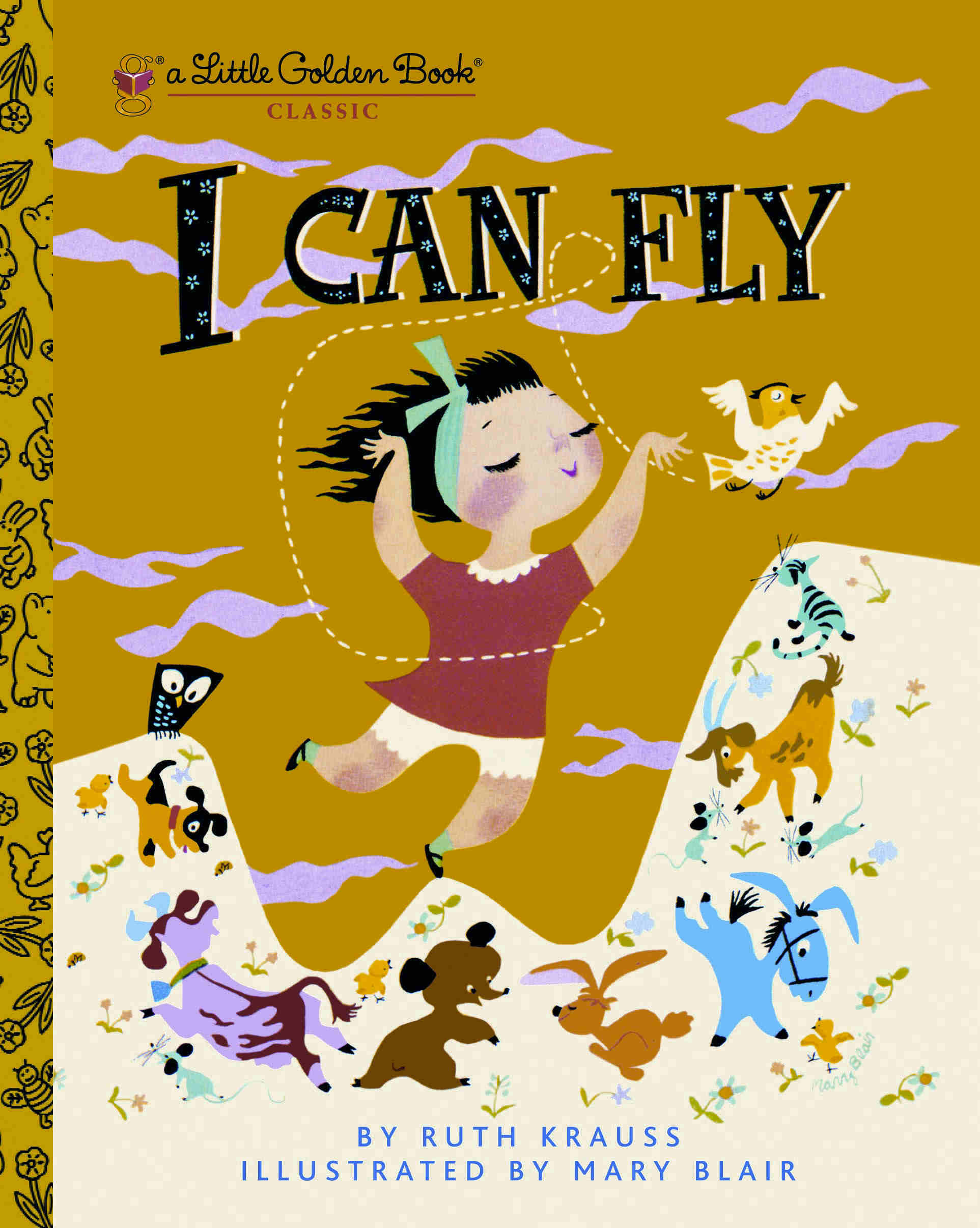
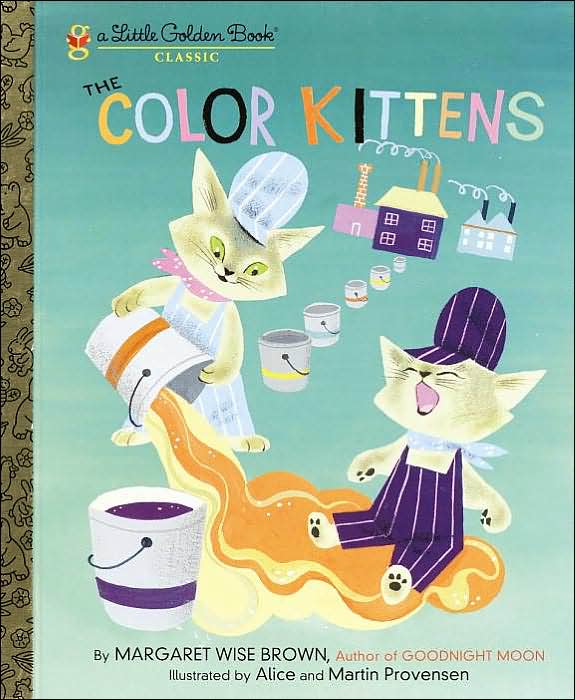
On this date back in 1942 the first twelve titles of the Little Golden Books series were published. You remember. These were the books your mother used to buy for you in the grocery store when you were a good child and deserved a treat. The books, which initially sold for 25¢ (rising to 29¢ in 1962 and currently $3.99), were published by Simon and Schuster.
Many of the best children’s writers and illustrators have worked on the series, including several of my personal favorites:
Mary Blair,
Margaret Wise Brown and Alice and Martin Provensen,
Garth Williams,
and, of course, Richard Scarry.
You will be happy to know that now there are Little Golden Book apps for children: “Now the Little Golden Book that you loved as a child can be shared with a whole new generation in this magically interactive storybook app. Open the cover, complete with its distinctive gold spine, to reveal the timeless story, beautifully rendered with interactive illustrations on every page, and activities that encourage reading comprehension and creativity.”
“Magically interactive”! Oh brother. Just what every 3-year old needs for his/her iPad, iPhone, and iPod touch! Gone I suppose is the magically interactive time you spent with your mother or father while you were read these books.
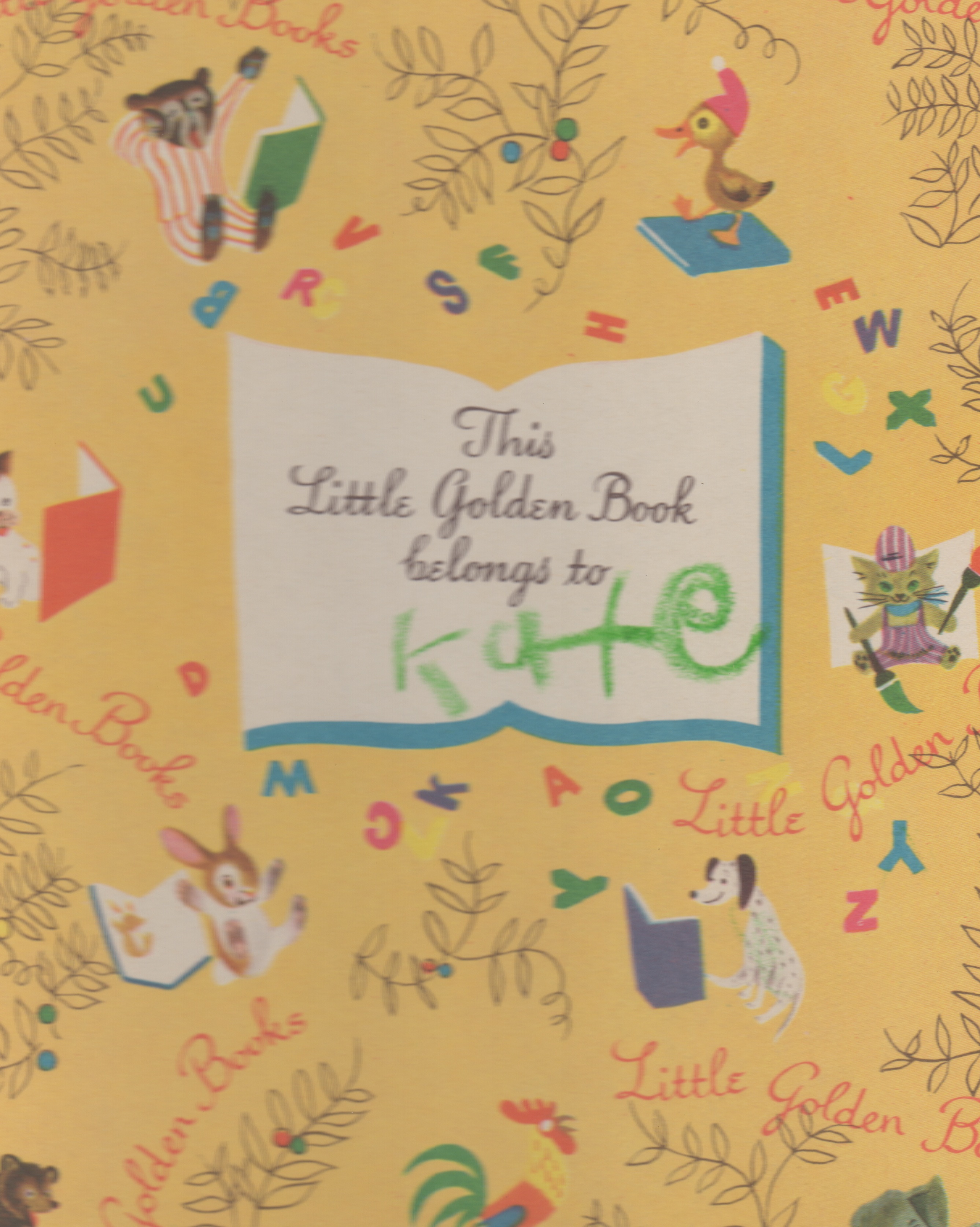
I know I am an old curmudgeon, but this concerns me. And I have to say, it’s sad that there is no name plate on an app where you can make that first attempt at proudly writing your own name on your own book.
Oh well. C’est la vie. Do you have a favorite Little Golden Book?
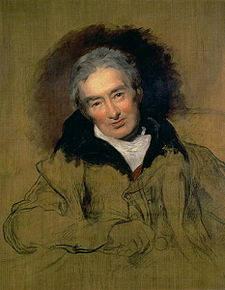
Today on the Episcopal Church calendar is the feast day of the worthy William Wilberforce, English politician, philanthropist and a leader of the movement to abolish the slave trade.
Unfinished portrait of Wilberforce by Sir Thomas Lawrence
He was born in 1759 and served in Parliament from 1780 to 1825. A turning point in his religious life came while on a tour of Europe. In the luggage of a travelling companion he saw a copy of William Law’s book, A Serious Call to a Devout and Holy Life. He asked his friend, “What is this?” and received the answer, “One of the best books ever written.” The two of them agreed to read it together on the journey, and Wilberforce embarked on a lifelong program of setting aside Sundays and an interval each morning on arising for prayer and religious reading. He considered his options, including the clergy, and was persuaded by Christian friends that his calling was to serve God through politics.
He was a major supporter of programs for popular education, overseas missions, parliamentary reform, and religious liberty. He is best known, however, for his untiring commitment to the abolition of slavery and the slave trade. He introduced his first anti-slavery motion in the House of Commons in 1788, in a three-and-a-half hour oration that concluded: “Sir, when we think of eternity and the future consequence of all human conduct, what is there in this life that shall make any man contradict the dictates of his conscience, the principles of justice and the law of God!”
The motion was defeated. Wilberforce brought it up again every year for eighteen years, until the slave trade was finally abolished on 25 March 1806. He continued the campaign against slavery itself, and the bill for the abolition of all slavery in British territories passed its crucial vote just four days before his death on July 29, 1833. A year later, on July 31, 1834, 800,000 slaves, chiefly in the British West Indies, were set free.
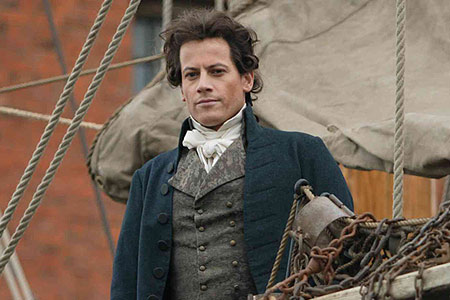
A movie of the life of William Wilberforce, Amazing Grace, was released in 2006. It stars Ioan Gruffudd as Wilberforce.
Also featured are Albert Finney as John Newton, Rufus Sewell as Thomas Clarkson and Benedict Cumberbatch as William Pitt. It is definitely worth watching for many reasons, not the least of which is that Mr. Gruffudd is so darn cute.
*Amazing Grace by John Newton
Information about Wilberforce from Christianitytoday.com.
Let’s take a moment to remember that the Battle of Britain began on July 10, 1940 as Nazi forces attacked shipping convoys in the English Channel. It was the first major assault by the Luftwaffe. Although heavily outnumbered, the British fighter pilots put up a fierce fight and succeeded in driving off the attackers.
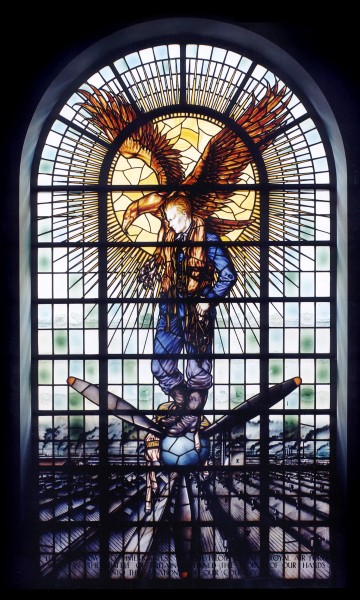
The Battle of Britain Memorial Window for Rolls-Royce, dedicated in 1947 in the Lady Chapel in Westminster Abbey
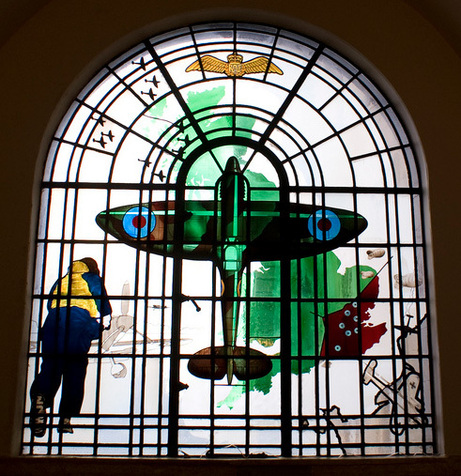
“Spitfire” window created to honor all members of RAF Fighter Command. It’s located at the former RAF Bentley Priory, headquarters of Fighter Command during the Second World War.
Battle of Britain Memorial in Kent, England
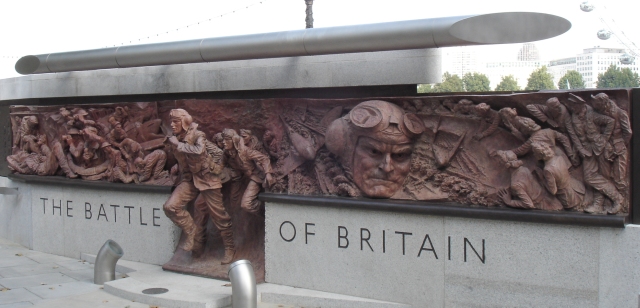
A section of the Battle of Britain Monument in London, England
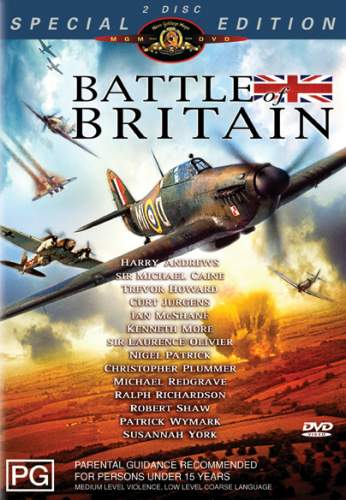
I might have to dust off my copy of The Battle of Britain (1969), an “historical reenactment of the air war in the early days of World War Two for control of the skies over Britain as the new Luftwaffe and the Royal Air Force determine whether or not an invasion can take place.”
Directed by Guy Hamilton, there is a lot of aerial action by Spitfires and it boasts a who’s who of British actors, including Michael Caine, Trevor Howard, Ian McShane, Laurence Olivier, Michael Redgrave, Kenneth More, Ralph Richardson, and on and on.
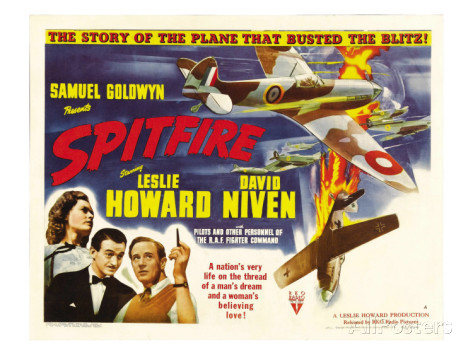
If I had not just recently seen Spitfire–The First of Few (1942) starring Leslie Howard and David Niven, I would certainly watch it.
Leslie Howard is great as aircraft designer R.J. Mitchell and, as usual, he is doing his best to support the war effort in the best way he can.
It goes without saying that I will toast those few brave flyers who fought so valiantly to save so many. Will you join me?
* Lines from “Our Wall” by Flight Lieutenant William Walker, 616 Squadron, inscribed on a plaque next to the memorial wall in Kent.
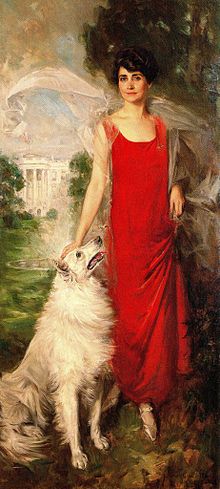
Grace Goodhue Coolidge (January 3, 1879 – July 8, 1957) is one of my favorite first ladies. She and her husband Calvin lived for many years in Northampton, MA, a town I know well. In fact they met there, when she was on the faculty of the Clark School for the Deaf and he was a lawyer.
The story goes that while watering flowers outside the school one day in 1903, she happened to look up at the open window of Robert N. Weir’s boardinghouse and caught a glimpse of Calvin Coolidge shaving in front of a mirror with nothing on but long underwear and a hat. She burst out laughing at the sight; he heard the noise and turned to look at her. It was their first meeting. After a more formal introduction sometime later, the two were quickly attracted to each other.
Her vivacious personality was the perfect complement to his shy character. They were such opposites. She was a Pi Phi at the University of Vermont and the president of her sorority. Calvin was no Greek at Amherst. He was an outsider, an “ouden”–or “nothing.” At the Christmas break of his freshman year, he did not want to return to school, but because he believed in finishing what he started, he did, and he pulled himself together.
Throughout their marriage, Grace and Calvin were a devoted pair. They may have been very different in some ways, but they also had a lot in common. They were both descended from Puritans, both were from Vermont and both had found their way to Northampton.
Both were animal lovers and the White House was a veritable menagerie sometimes referred to as the “Pennsylvania Avenue zoo.” Dogs, cats, birds, rabbits, even a raccoon–“She was a mischievous, inquisitive party,” wrote Grace of their raccoon Rebecca. “We had to keep watch of her when she was in the house. She enjoyed nothing better than being placed in a bathtub with a little water in it and given a cake of soap with which to play. In this fashion she would amuse herself for an hour or more.”
It is amusing to picture the man who brought dignity back to the White House with a raccoon in the bathtub.
They were indeed a couple, supporting each other. Somehow they went forward after the tragic death of their 16-year old son Calvin Jr. who had played tennis without socks and developed a blister and then sepsis. It nearly ruined them, but Calvin found solace in knowing that Abraham Lincoln had also lost a son while president. He and Grace pressed on.
If you are interested in learning more about the Coolidges, I recommend Coolidgeby Amity Shlaes, published last year by Harper Collins. He and his wife were warm and real and unpretentious. They worked hard. I’m afraid we will not see their like again.
So join me in toasting Grace Coolidge tonight on the anniversary of her death in 1958.
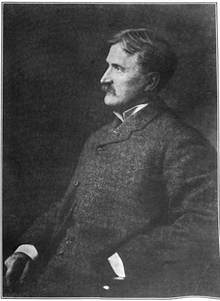
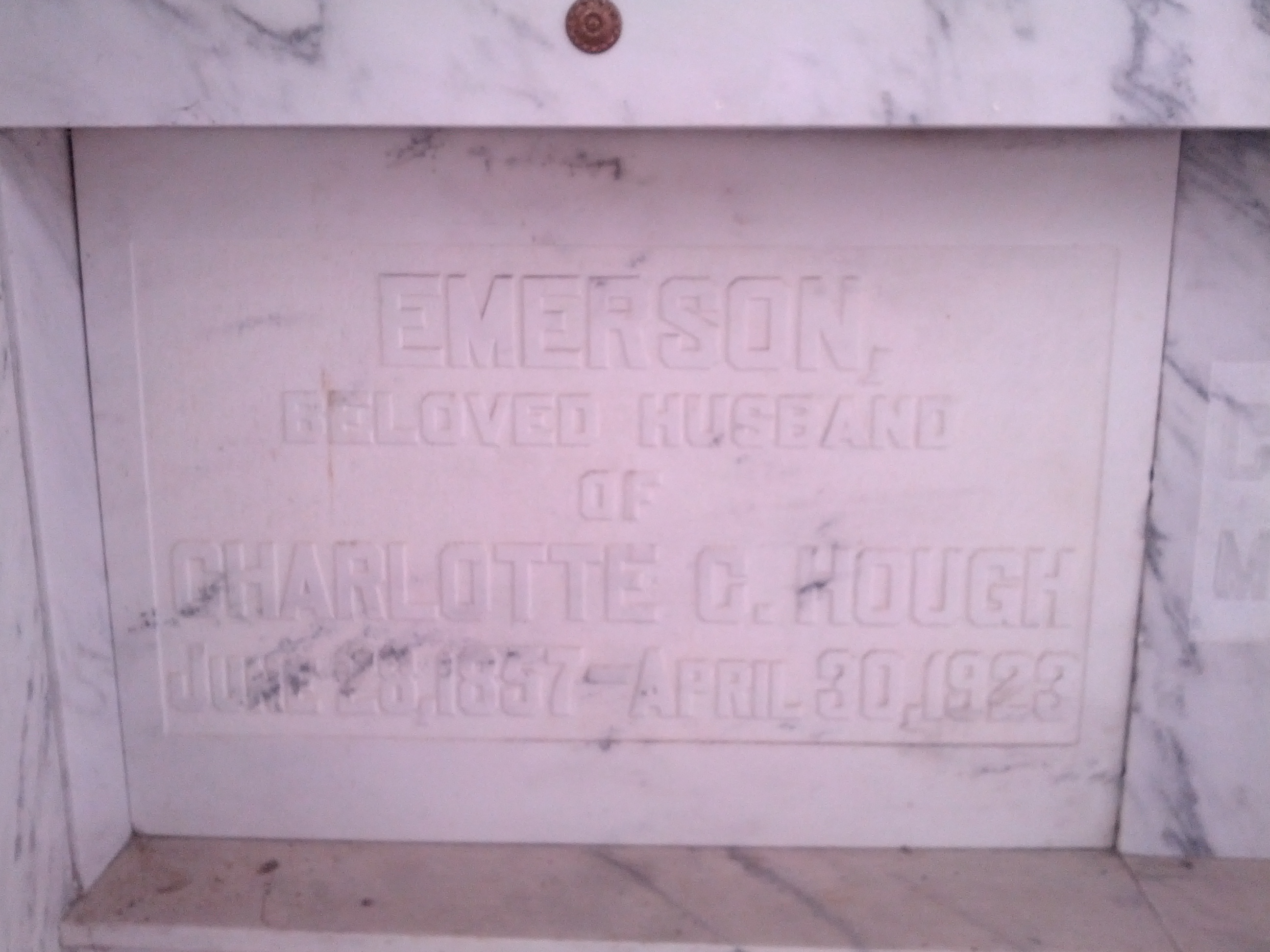
Last Saturday (June 28) was the birthday of Emerson Hough (1857–1923), the author of some 34 books and countless magazine articles and a distant cousin of my great-grandmother. You can read all about him here.
Emerson was also descended from the original Hough who emigrated from Chester, England in 1683 to Pennsylvania, but his ancestors subsequently moved from Pennsylvania to Loudoun County, Virginia.
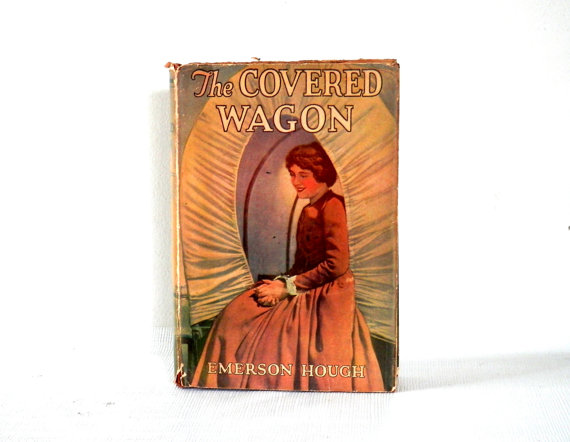
Family legend has it that Hough’s most famous novel, The Covered Wagon, was based on my great-great grandmother’s journal.
If there is any truth to this story, boy, wouldn’t I love to get my hands on that journal! One of these days I’ll have to venture up to the University of Iowa (Hough’s alma mater) to check out his archive. (There are also letters in the collections at Iowa State and the University of Virginia.)
Besides writing fiction, Hough was also a journalist and conservationist. He once explored Yellowstone on skis and his reports were largely responsible for an act of Congress protecting the buffalo in the park.
One of the highlights of his writing career came when Theodore Roosevelt wrote him a fan letter, praising Story of the Cowboy (1897):
I don’t know when I have read a book that I like more than your “Story of the Cowboy.” I have always been hoping against hope that such a book would be written, but I had about given it up, and there was scant time remaining in which anyone could write it. At last, thank Heaven, it has been done! Not only is it to my mind a most fascinating book, but I think it is as valuable a bit of genuine contemporary history as I have yet examined.
Hough died in Evanston, Illinois, on April 30, 1923, a week after seeing the Chicago premiere of the silent movie The Covered Wagon, which was a huge hit. It ran fifty-nine weeks at the Criterion Theater in New York City, eclipsing the record of The Birth of a Nation. He is buried in Galesburg, Illinois.
findagrave.com
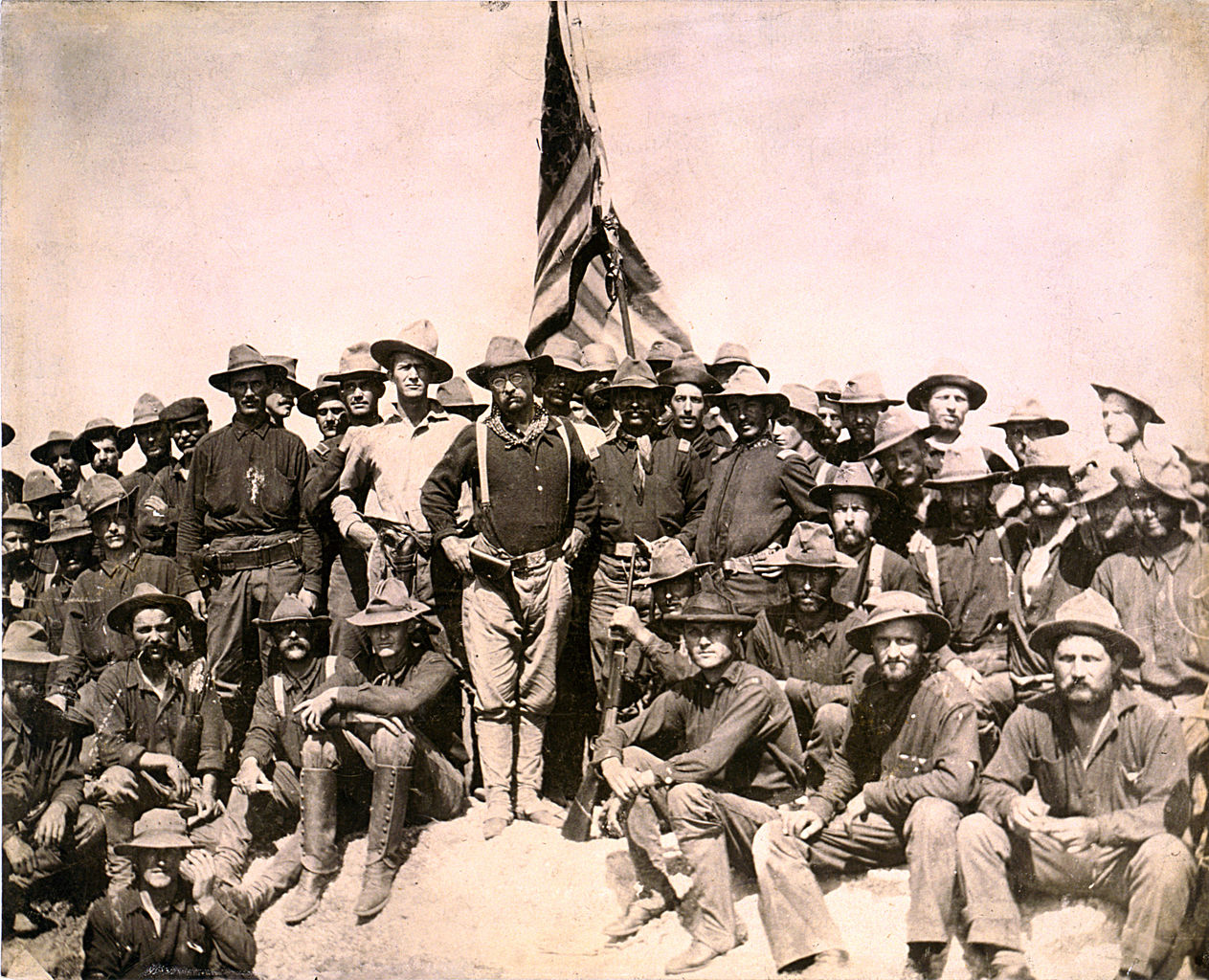
Anyway, I plan to toast old Emerson Hough tonight. And while I’m at it, I’ll toast Teddy Roosevelt and his Rough Riders who stormed San Juan Hill on this day in 1898.
How about you?
*First line of The Mississippi Bubble by Emerson Hough
Readers of this blog may remember that my great-great grandfather John Simpson Hough was a Quaker. He came from a long line of Quakers who came to Bucks County from England in 1683. The Houghs prospered in Pennsylvania and had many children, many with the same names–such as Benjamin, Hannah, John, Joseph, Silas–which makes genealogy so challenging…But I digress.
After moving West, JSH no longer actively practiced his Quaker faith, but I believe no small part of the high esteem in which he was held was due to his reputation as a fine Quaker gentleman–truthful, (relatively well) educated and beyond reproach in legal and mercantile dealings.
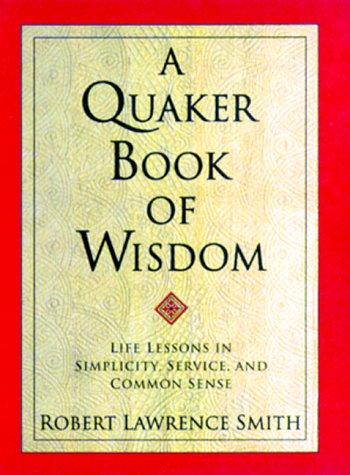
Anyway, the Quakers have always fascinated me. I found this little book recently, written by Robert Lawrence Smith, the former headmaster of the Sidwell Friends School in Washington D.C., the largest Quaker day school in the U.S.
I highly recommend it.
The most valuable aspect of religion is that it provides us with a framework for living. I have always felt that the beauty and power of Quakerism is that it exhorts us to live more truthfully, more simply, more charitably. For many Friends, simplicity is a cornerstone of their faith that continues to define their daily lives….For Quakers, simplicity is truth’s twin virtue: The two concepts are seamlessly intertwined. Without simplicity of spirit, we are not prepared to receive the truth. And if we fail to act in accordance with the truth, we cannot let our lives speak.
* “Being faithful in the little light received, in that light I saw more light; and by it I was taught to trust in God in all my ways, and to consult him to direct my paths.”
(Increase Woodward, 1744-1822)
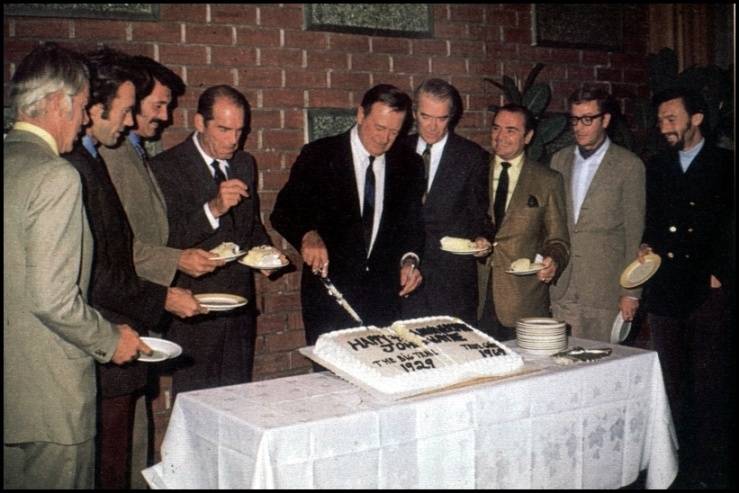
Lee Marvin, Clint Eastwood, Rock Hudson, Fred MacMurray, Jimmy Stewart, Ernest Borgnine, Michael Caine, and Laurence Harvey watch the Duke cut the cake. Who knew that Ernest Borgnine was ever the short guy?
Quite a line-up.
By the way, the cake was in honor of John Wayne’s 40 years in movies (in 1969). Cake is always good.
Today is Memorial Day and also John Wayne’s birthday!
You can watch war movies all day on TCM. Twelve O’Clock High (1949)–one of my favorites is on tonight, followed by another great one, The Best Years of Our Lives (1946).
Or you can choose to watch John Wayne movies.
Either way, have a good day and take some time to remember the men and women who died while serving in the U.S. armed forces.
Here is a great rendition of The Battle Hymn of the Republic, written by Julia Ward Howe in 1861 to the tune of “John Brown’s Body”:
Have you ever read all the lyrics to this wonderful hymn? Well, here they are:
Mine eyes have seen the glory of the coming of the Lord;
He is trampling out the vintage where the grapes of wrath are stored;
He hath loosed the fateful lightning of His terrible swift sword:
His truth is marching on.
I have seen Him in the watch-fires of a hundred circling camps,
They have builded Him an altar in the evening dews and damps;
I can read His righteous sentence by the dim and flaring lamps:
His day is marching on.
I have read a fiery gospel writ in burnished rows of steel:
“As ye deal with my contemners, so with you my grace shall deal”;
Let the Hero, born of woman, crush the serpent with his heel,
Since God is marching on.
He has sounded forth the trumpet that shall never call retreat;
He is sifting out the hearts of men before His judgment-seat:
Oh, be swift, my soul, to answer Him! be jubilant, my feet!
Our God is marching on.
In the beauty of the lilies Christ was born across the sea,
With a glory in His bosom that transfigures you and me.
As He died to make men holy, let us die to make men free,
While God is marching on.
He is coming like the glory of the morning on the wave,
He is Wisdom to the mighty, He is Succour to the brave,
So the world shall be His footstool, and the soul of Time His slave,
Our God is marching on.
(Chorus)
Glory, glory, hallelujah!
Glory, glory, hallelujah!
Glory, glory, hallelujah.
Our God is marching on.
And here is a special prayer from the BCP for today:
ALMIGHTY God, our heavenly Father, in whose hands are the living and the dead; We give thee thanks for all those thy servants who have laid down their lives in the service of our country. Grant to them thy mercy and the light of thy presence, that the good work which thou hast begun in them may be perfected; through Jesus Christ thy Son our Lord. Amen.
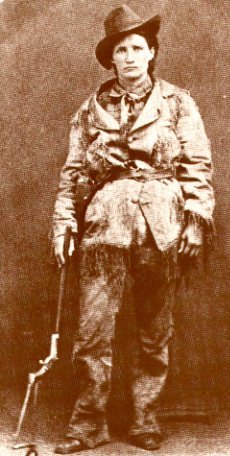
Martha Jane Canary (May 1, 1852 – August 1, 1903) was born today in 1852. She is, of course, better known as Calamity Jane.
Born in Mercer County, Missouri, Canary was the oldest of many siblings. Her father was a farmer. After some legal wrangling over land, the family sold their property and left Missouri in the early 1860s, heading for Montana gold. But they fell on hard times; her mother died in a mining camp in Blackfoot City, Montana, when Canary was about 9. After taking the children to Salt Lake City, her father died soon after.
Her life, already a hard one, became at that point the stuff of legend. As she became a dime-novel heroine and stage performer, she enlarged her myth with every new story. It is nearly impossible to know where the truth lies and who she really was. Well, she was and still is an intriguing oddity that fires the imagination.
Not surprisingly Calamity Jane has been portrayed by myriad actresses on the large and small screen. In the movies she has been played by Jean Arthur, Jane Russell, Yvonne De Carlo, Doris Day, Catherine O’Hara, Ellen Barkin–to name a few. On television Stephanie Powers, Anjelica Huston and Jane Alexander have attempted to represent her.
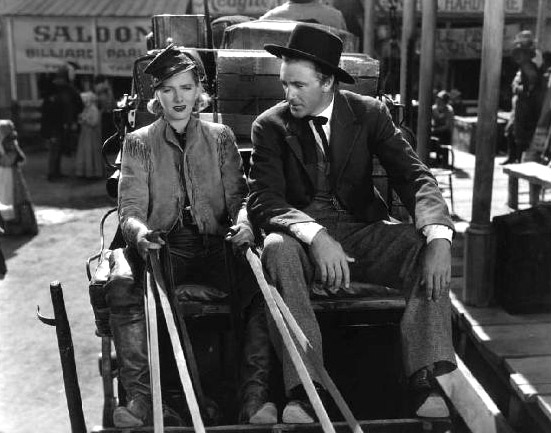
Of the movies I like The Plainsman (1936) with Jean Arthur as Calamity and Gary Cooper as Wild Bill Hickok.
Directed by Cecil B. DeMille, it is a very exciting movie and Arthur and Cooper are well matched. I’m sure the plot has practically no basis in reality, but it is a good movie and Jean Arthur is no glamour girl. Cooper, as usual, is adorable.
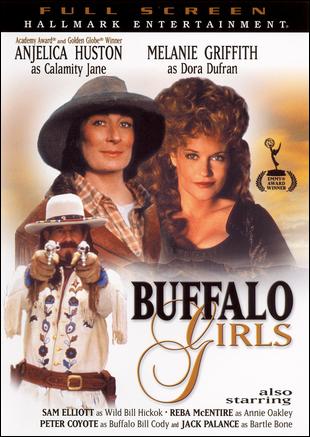
I also like Anjelica Huston as Calamity in the 1995 TV mini-series Buffalo Girls, an adaption of the book by Larry McMurtry. Physically, she is the most like the real Martha Jane–tall and somewhat manly and with (we hope) a heart of gold.
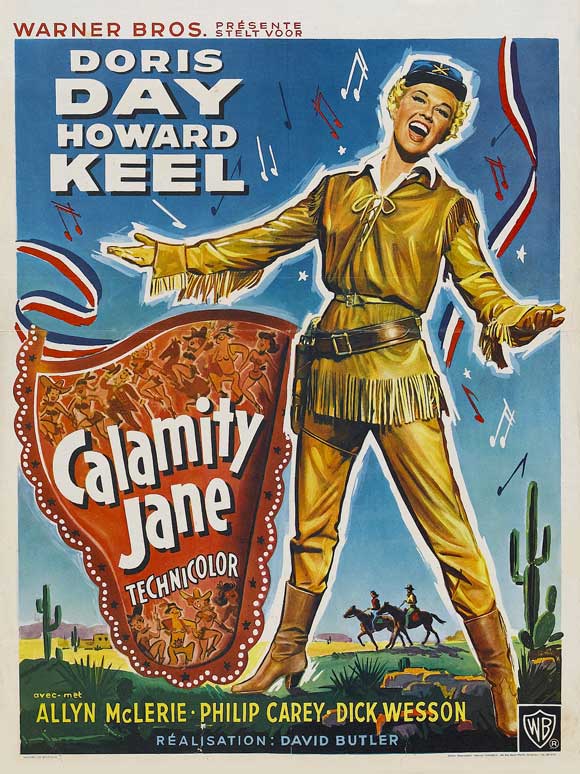
One of the most ridiculous presentations of Calamity Jane’s life is that put forth in the1953 musical Calamity Jane, starring Doris Day.
But one can not help but love this rendition and Doris Day who always gives 110%. This film focuses on the relationship between Jane and Wild Bill (Howard Keel) and Doris gets to sing lyrics like: “At last my heart’s an open door / And my secret love’s no secret any more.” Yikes. The song won the Academy Award for Best Song that year, and with Doris singing, why wouldn’t it?
I think I will watch Doris in Calamity Jane because I DVR’d it when it was on TCM on her birthday a few weeks ago. Here’s a little something to whet your appetite:
So let’s raise a glass to Martha Jane Canary on her birthday, the American legend and the real woman, whoever she was.