dual personalities

Tag: History

Look, I tell you, lift up your eyes*

by chuckofish

The boy texted me this photo of the Northern Lights taken in his neighborhood the other night. I rushed outside but nothing was visible at my house. Pretty cool, I must say.

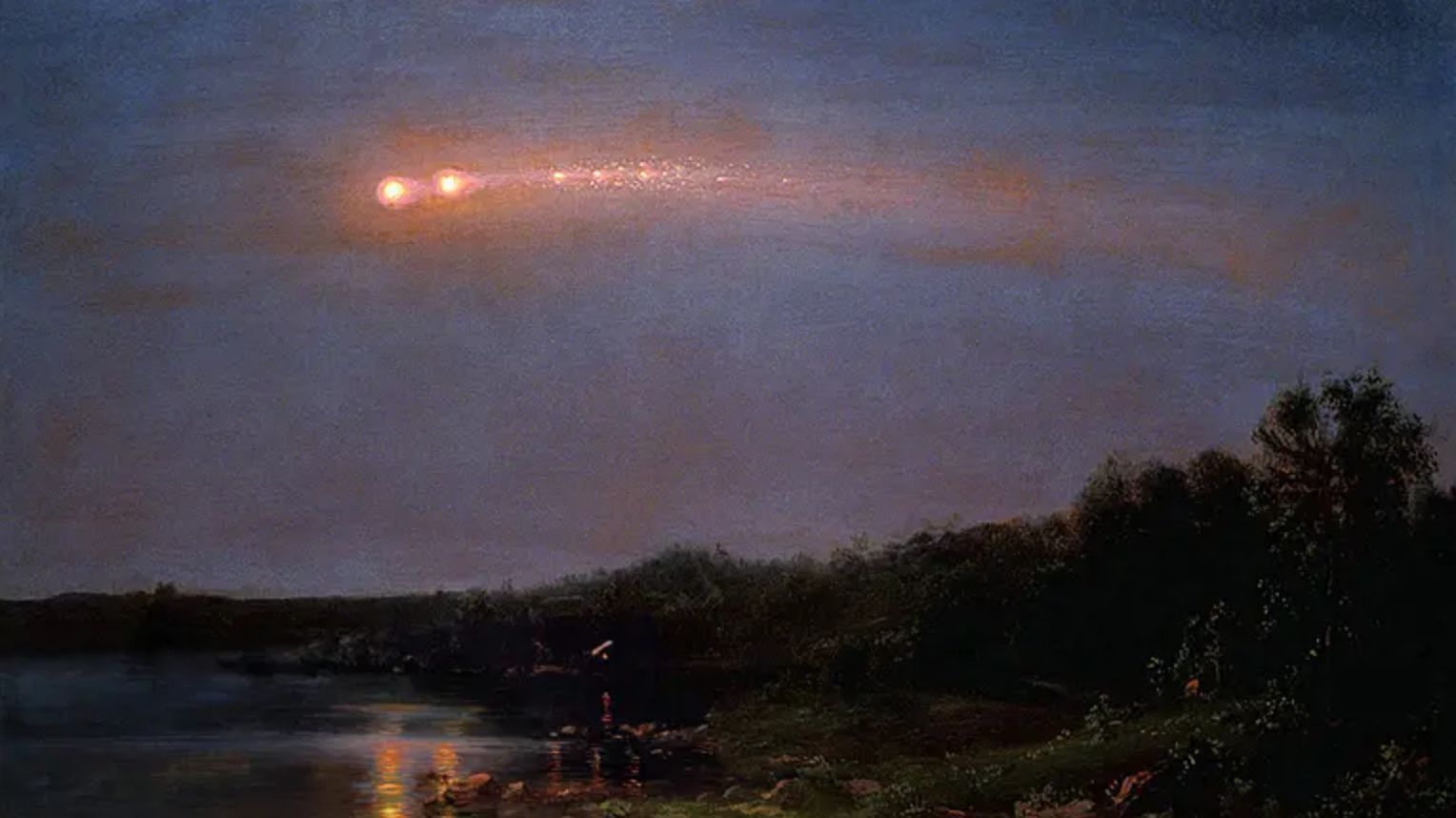
You may recall that November 13, 1833 was the “the night the stars fell.” This phenomenal event, one of the greatest meteoric displays on record, was viewed with awe and a degree of superstitious respect across the country. The Missouri Republican reported: “The air was filled with brilliant and innumerable meteors, shooting lawless through the sky, illuminating the earth, ad then passing off to the West.” Many thought the event was the fulfillment of the Scriptures, “when portents shall come of wars and rumors of wars.” Near Independence, Missouri, in Clay County, a refugee Mormon community watched the meteor shower on the banks of the Missouri River after having been driven from their homes by local settlers. Joseph Smith, the leader and founder of Mormonism, afterwards noted in his journal for November 1833 his belief that this event was “a litteral [sic] fulfillment of the word of God” and a harbinger of the imminent second coming of Christ.

A Missouri journalist later recounted the story of how the meteoric shower had restored freedom to a captive black whom a group of farmers had kidnapped. They were awaiting a steamboat to ship the man to a slave trader when the meteor display made the trees and even the river seem to be on fire. The farmers thought that Judgment Day had caught them in the dishonorable act of “running south” a free black man. They let him go. Praise the Lord!

(The Meteor of 1860 by Frederic Edwin Church) Imagine a thousand times that!

P.S. All the leaves have turned very fast!

And from the Ida files…

*John 4:35

Come, ye weary, heavy laden

by chuckofish

How was your weekend? We had blue skies overhead, but it did get kind of toasty watching the bud play soccer on Sunday afternoon!

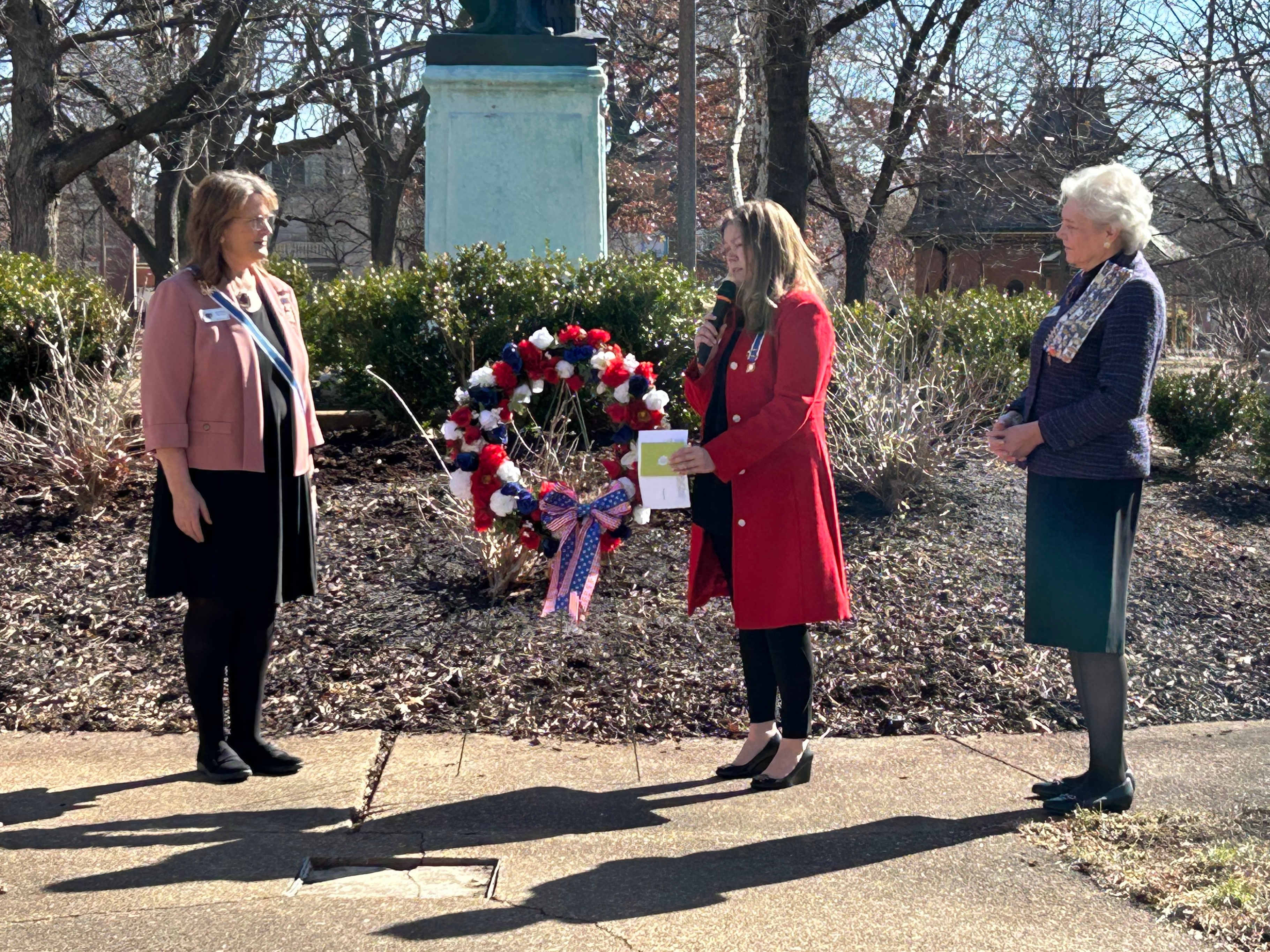
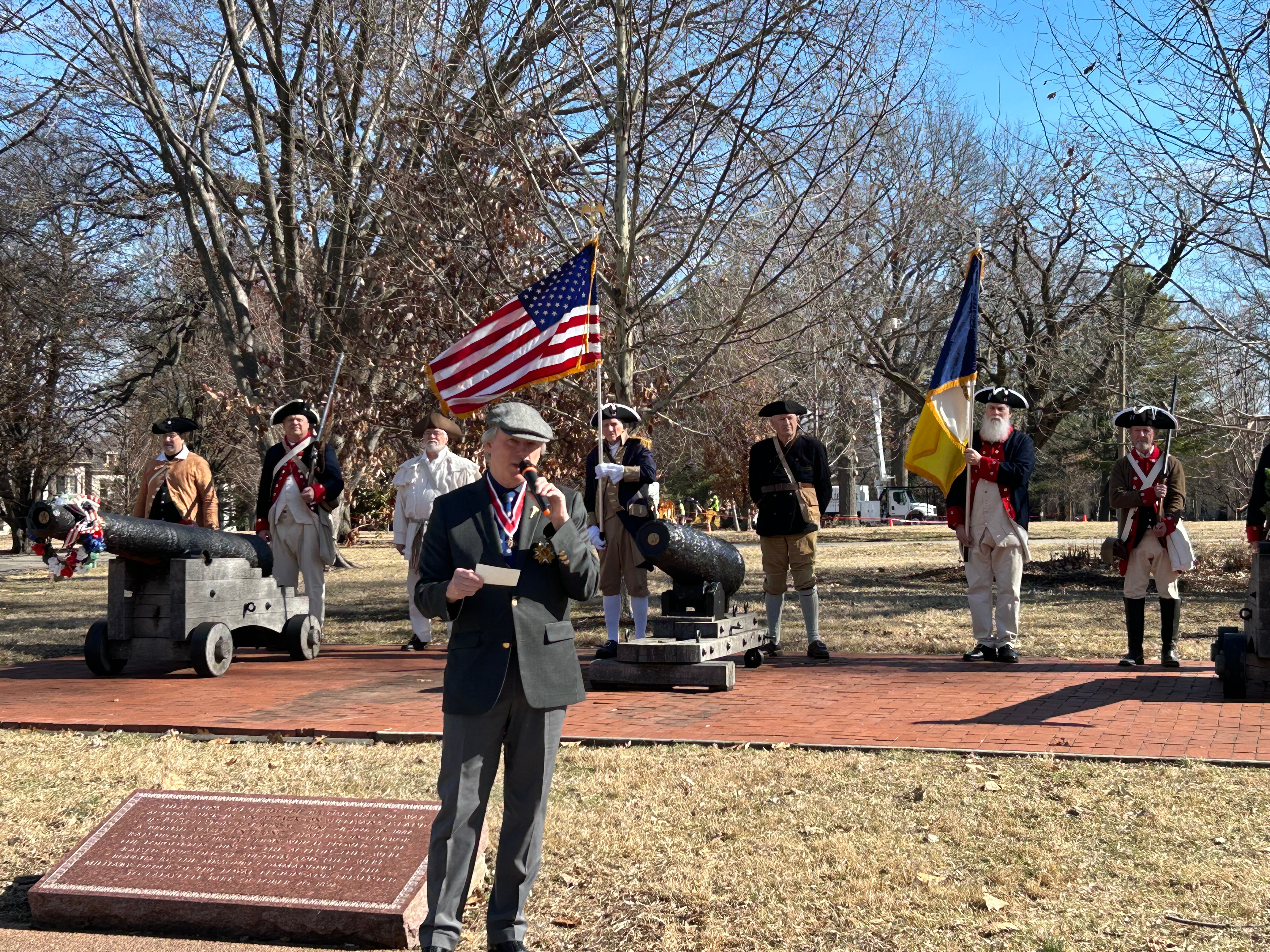
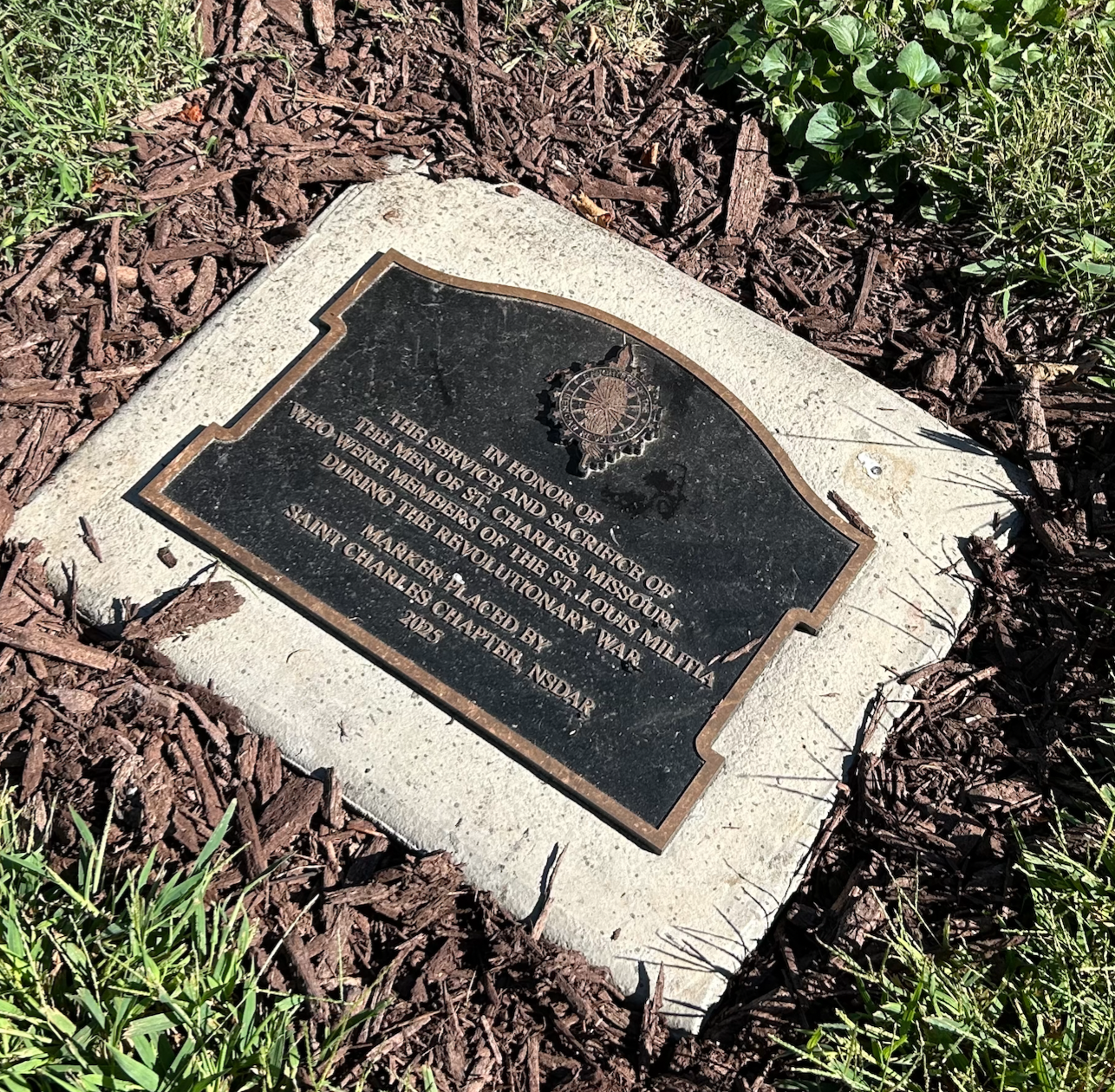
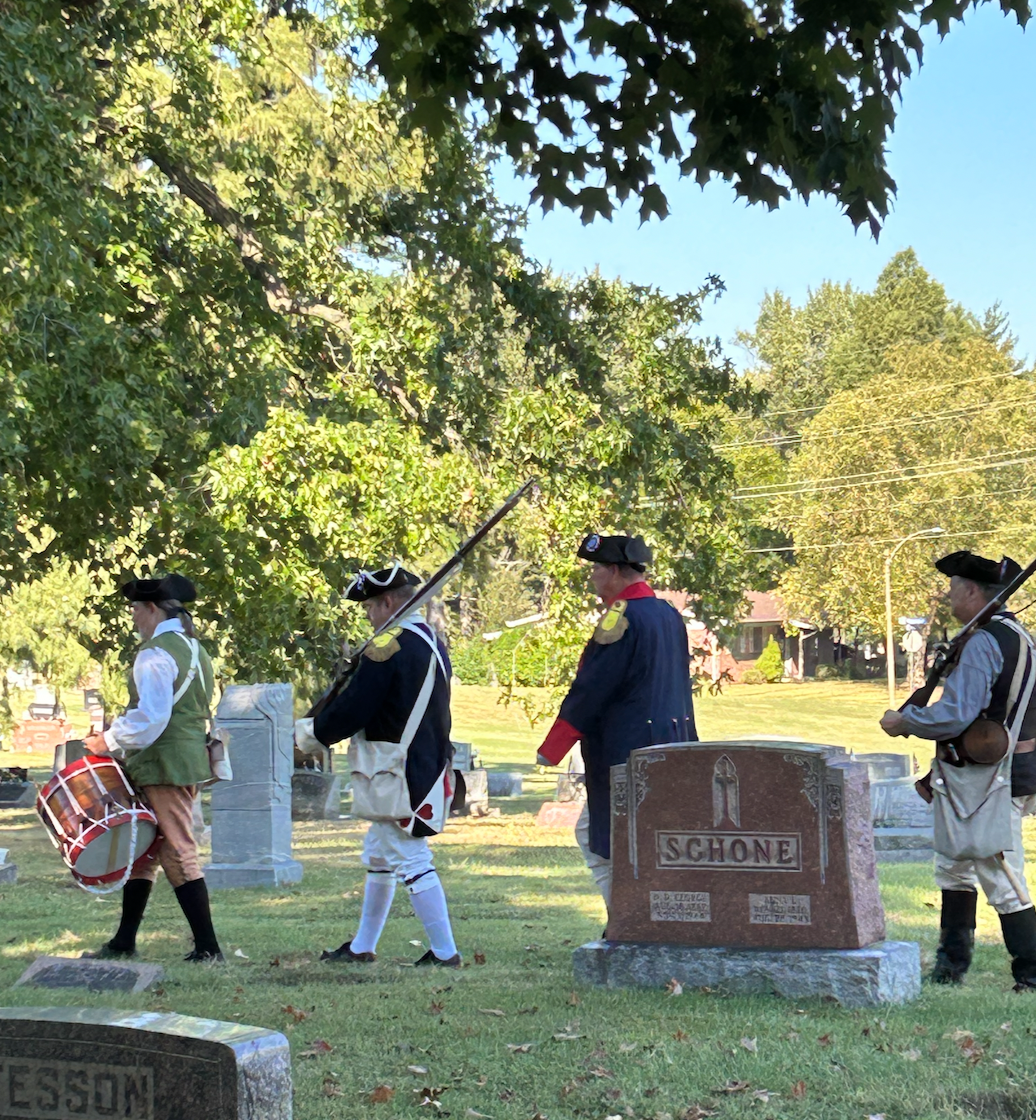
On Saturday morning daughter #1 and I ventured to Saint Charles across the Missouri River to a DAR cemetery marker ceremony. The SAR Color Guard was there in full regalia to lend support and authenticity to the event. Much appreciated, guys. (Sometimes I do think we live in Mayberry.)

In case you have forgotten, the Battle of Fort San Carlos, was fought on May 26, 1780, between British-allied Indians and defenders of the Franco-Spanish village of St. Louis (Louisiana Territory) during the American Revolutionary War. The garrison, a motley assortment of regulars and militiamen led by Upper Louisiana’s lieutenant governor, Captain Fernando de Leyba, suffered a small number of casualties. A few of the veterans of that battle were buried in Saint Charles. Their graves were later moved to the Saint Charles Borromeo Cemetery in Saint Charles and that is where the marker was dedicated. Lest we forget.

Afterwards we went to old town St. Charles and walked up and down Main Street visiting some “vintique” stores, and ate lunch on the patio of Llewellyn’s Pub, which was delightful.

Meanwhile, I was glad to see that the twins were practicing their BB gun marksmanship in their backyard.

On Sunday I went to church and heard a good sermon on Philippians 1:27-2:4: “Only let your manner of life be worthy of the gospel of Christ, so that whether I come and see you or am absent, I may hear of you that you are standing firm in one spirit, with one mind striving side by side for the faith of the gospel, 28 and not frightened in anything by your opponents.”

We sang “Come Ye Sinners” and I wept from start to finish. The choir was back and in fine fettle and sang “Land of Pure Delight”. Lovely.

And now the inimitable Voddie Baucham has entered into eternity (last Thursday) at the age of 56. It is a lot to process.

Voddie was an American pastor, author and educator. He served nine years as Dean of Theology from 2015 to 2024 at African Christian University in Zambia. Rest in peace, brother.

Well, we go on. Read some history, pet a nice dog. Come to Jesus.

Lest we forget: Laus Deo

by chuckofish

At the top of the Washington monument in Washington D.C., on the East-facing surface, are two Latin words: Laus Deo. “Laus Deo,” translated from the Latin, means “Praise Be To God.” The words cannot be seen from below and they face perpetually to the rising Sun in the east. 

The presence of those two words on his monument may recall, however, the prayer George Washington offered at his first inauguration as the first President of the United States:

“Almighty God; We make our earnest prayer that Thou wilt keep the United States in Thy holy protection; that Thou wilt incline the hearts of the citizens to cultivate a spirit of subordination and obedience to government; and entertain a brotherly affection and love for one another and for their fellow citizens of the United states at large.

And finally that Thou wilt most graciously be pleased to dispose us all to do justice, to love mercy, and to demean ourselves with that charity, humility, and pacific temper of mind which were the characteristics of the Divine Author of our blessed religion, and without a humble imitation of whose example in these things we can never hope to be a happy nation. Grant our supplication, we beseech Thee, through Jesus Christ our Lord. Amen.”

Amen, indeed!

If you haven’t seen this yet, check it out:

I will leave you with this video of 2 1/2-year old Idabelle’s favorite radio song. She knows all the words and sings along. How I wish I had a video of that!

Yea, though I walk through the valley
I will have

[Chorus]
No fear (No fear)
No fear (No fear)
The mighty power of Jesus is fighting for me here
No fear (No fear)
No fear (No fear)
The light of the world makes the darkness disappear

Three cheers and a toast

by chuckofish

Well, as of yesterday it is officially fall. It is a little cooler and we have had a lot of much-needed rain and we are grateful.

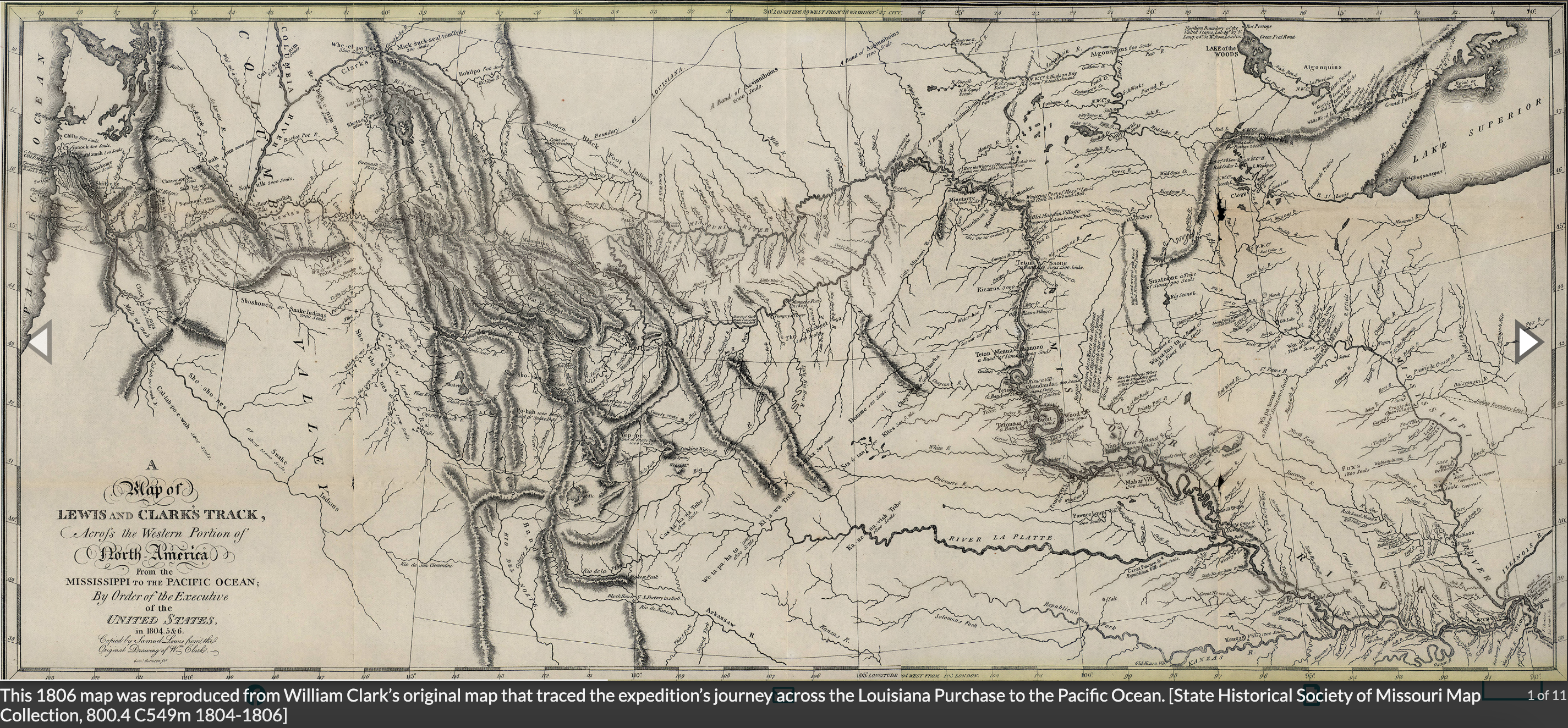
Today we toast the 219th anniversary of the return of the exploring expedition led by Meriwether Lewis and William Clark back to St. Louis in 1806. The people of St. Louis, we are told, “gathered on the Shore and Hizzared three cheers” and rifles were fired in a welcoming volley as they landed their canoes on the levee.

Two years and four months earlier, the band had departed quietly from a gathering point at Wood River, Illinois, for their 8,000-mile expedition through the Northwest. The Corps of Discovery encountered a wide variety of natural landscapes on their trek to the Pacific coast, including rolling prairies, vast rivers, towering limestone bluffs, and rugged mountain ranges. They also encountered hardship, privation, extremes of temperature and climate, danger from Indians, grizzly bears, and a wide range of physical discomforts. Several times they were presumed lost.

The two captains were fetted that evening at a state dinner followed by a grand ball. The rest of the crew were eager to resume civilian life and quickly spent their accumulation of two years’ pay in the frontier village. One can only imagine their relief and joy upon returning.

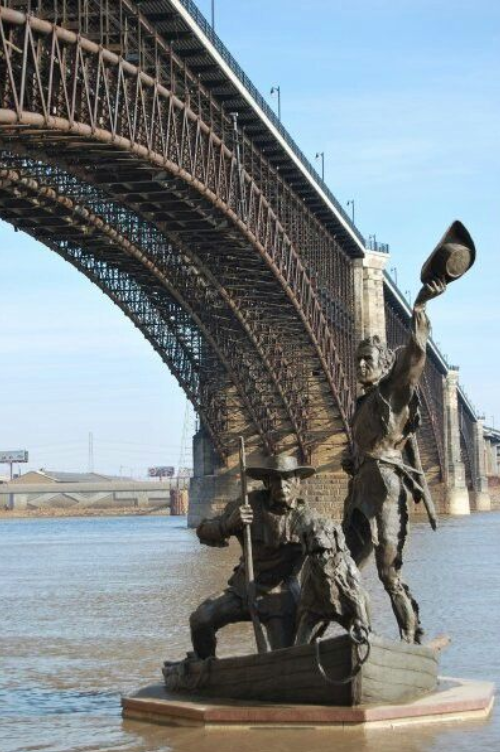
By the way, the 22 foot tall bronze statue, The Captains’ Return (shown above), depicts the return of William Clark and Meriwether Lewis to St. Louis in 1806. It was commissioned by the Greater St. Louis Community Foundation to mark the bicentennial of the end of the Lewis and Clark Expedition. After its initial placement in 2006, flooding of the Mississippi River often led to the statue being partially submerged with the result that Clark looked as if he was waving his hat as in distress. In 2014, the statue was removed and restored to fix damage from the floods, and in 2016, the statue was returned to the riverfront to a location slightly south and about 17 feet higher than before.  The sculptor, Harry Weber, has thirty-one works displayed throughout the city.

And this is a good opinion piece by Albert Mohler, Jr. about the Charlie Kirk memorial service. As he says, “We will be thinking about this service for a long time.”

(Photo from Pinterest)

Information for this post mostly gleaned from St. Louis Day By Day by Frances Hurd Stadler.

Non-relatives of note

by chuckofish

Today is the birthday of Confederate General Joseph “Fighting Joe” Wheeler (1836-1906). He was a calvary general in the CSA during the American Civil War, and then a general in the U.S. Army during both the Spanish-American and Philippine-American wars near the turn of the twentieth century. He also served several terms in the U.S. Congress representing Alabama.

After graduating from West Point in 1854, while stationed in New Mexico and fighting in a skirmish with Indians, Wheeler picked up the nickname “Fighting Joe.” He is one of the few Confederates who is buried in Arlington Cemetery.

It is worth noting that Wheeler was of New England ancestry–descended from the English Puritans who came to New England in the seventeenth century–so it is possible that he is a distant cousin of our own Connecticut Wheelers.

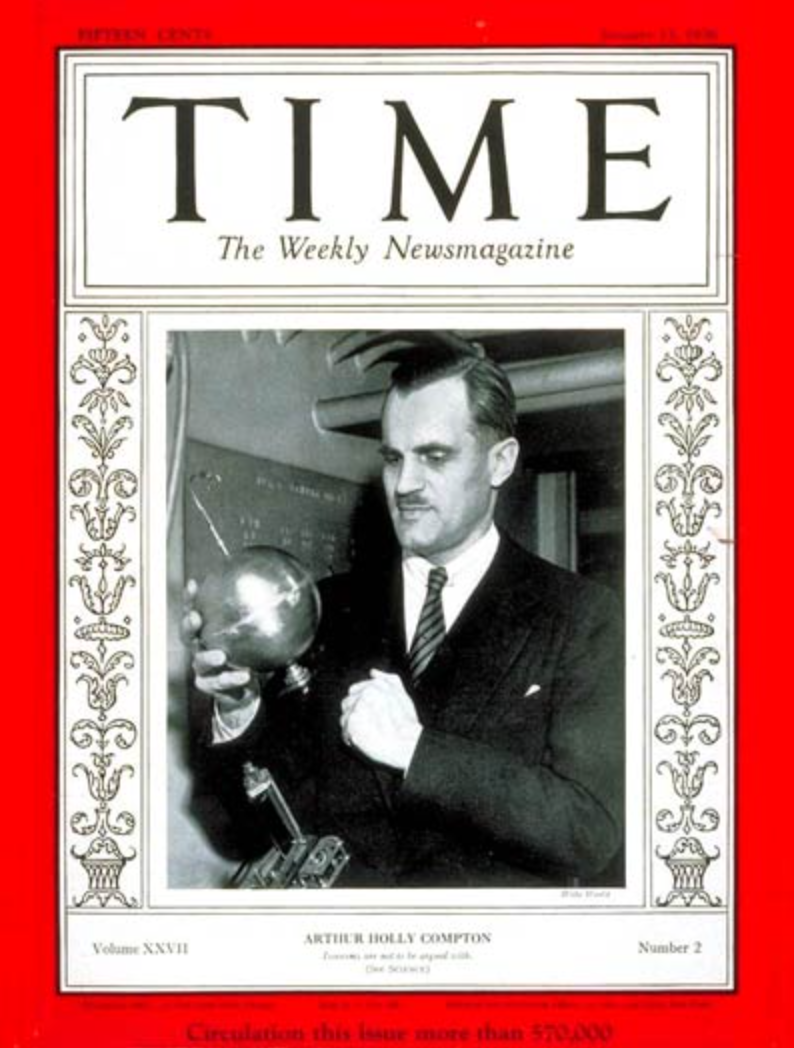
Today is also the birthday of Arthur Holly Compton (1892-1962), the American particle physicist who shared the 1927 Nobel Prize for Physics with C.T.R. Wilson for his discovery of the Compton effect, which demonstrated the particle nature of electromagnetic radiation.

(Compton on the cover of Time magazine on January 13, 1936, holding his cosmic ray detector)

Compton was a key figure in the Manhattan Project that developed the first nuclear weapons. His reports were important in launching the project. In 1942, he became a member of the executive committee and then head of the “X” projects overseeing the Metallurgical Laboratory at the University of Chicago. Throughout WWII, Compton remained a prominent scientific adviser and administrator. In 1945, he served, along with Lawrence, Oppenheimer, and Fermi, on the Scientific Panel that recommended military use of the atomic bomb against Japan. He was awarded the Medal of Merit for his services to the Manhattan Project.

After WWII he became the chancellor of Washington University in St. Louis. When I worked there, forty-plus years after he retired, people were constantly asking me if I was related to him. I would say, no, and my husband isn’t either.

So a toast to famous non-relatives Fighting Joe Wheeler and Arthur Holly Compton! Have a good day!

A little history

by chuckofish

Today is Victory over Japan Day, the day on which Imperial Japan surrendered in WWII, bringing an end to the war. The formal signing of the Japanese Instrument of Surrender took place on board the battleship USS Missouri in Tokyo Bay on September 2, 1945, and at that time President Truman declared September 2 to be the official V-J Day.

General Douglas MacArthur signing the Instrument of Surrender on behalf of th e Allied Powers. Generals Wainwright and Percival, both former prisoners of the Japanese, stand behind him.

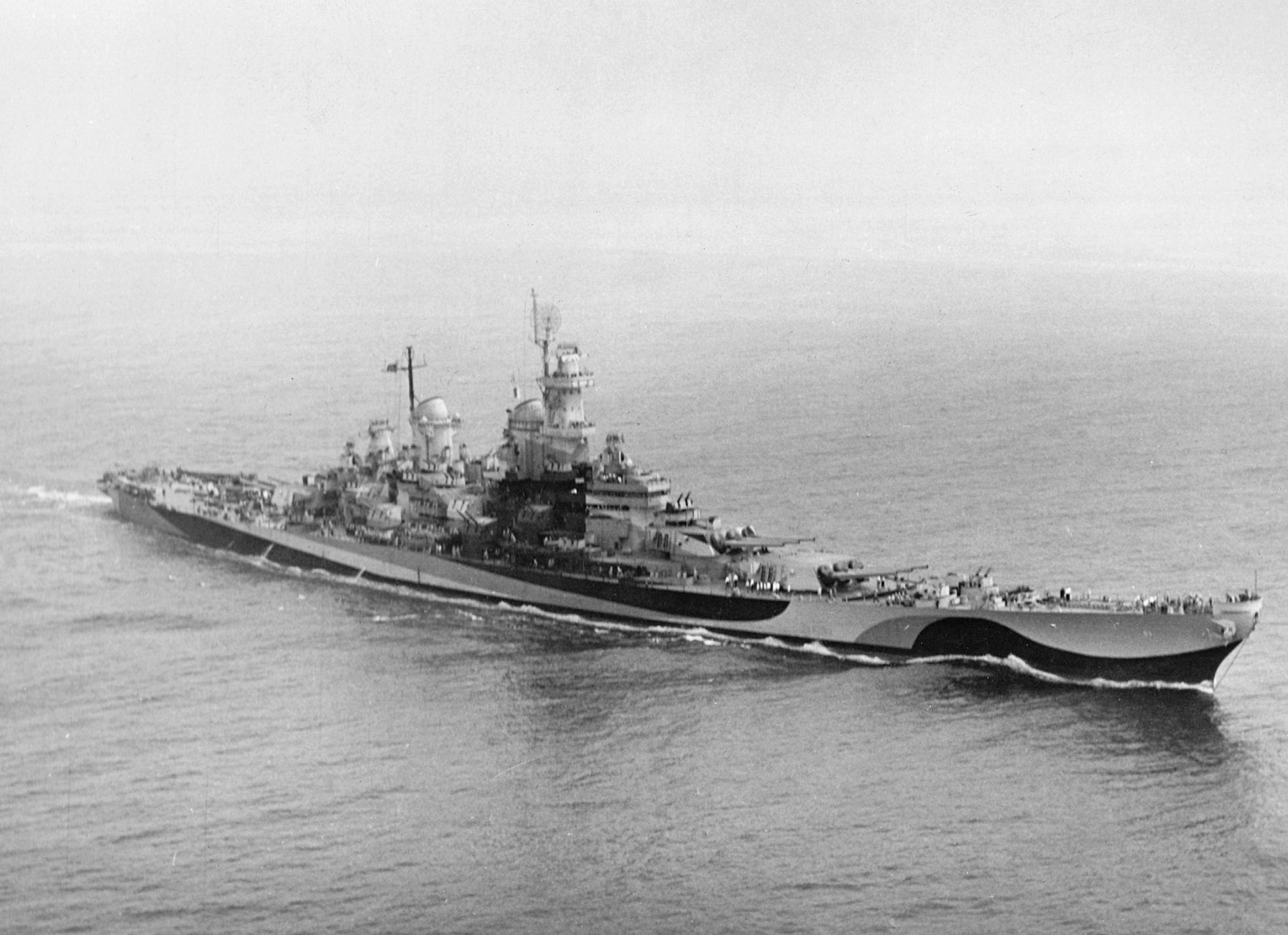
Missouri was the third ship of the United States Navy to be named after the US state of Missouri. The ship was authorized by Congress in 1938. The ship was launched on 29 January 1944 before a crowd of 20,000 to 30,000 spectators. At the launching ceremony, the ship was christened by Margaret Truman, the ship sponsor and daughter of Harry S. Truman, then one of the senators from the ship’s namesake state.

USS Missouri underway in August 1944.

Missouri earned three battle stars for World War II service, five for Korean War service and a further three for Gulf War service.

Let’s all just take a moment, shall we?

April charms

by chuckofish

I am currently working on an article for the Kirkwood Historical Review about A.G. Edwards, an early “pioneer” of our adopted hometown. They weren’t fighting off Indians or anything, but those mid-19th century guys led very interesting lives nonetheless.

Edwards was a graduate of West Point (class of 1832) and was 45th in a class of 45–the goat. I should note here that the term “Goat” holds a special place in U.S. Army tradition. The term refers to the cadet graduating from West Point with the lowest Grade Point Average (GPA) or “the man who would have stood first if he had boned (i.e. studied)”. Rather than being a badge of shame, it recognizes the tenacity or foolhardiness it takes to be the last graduate of the best of the best. “It is definitely an honor; it is in no way a joke,” according to

James Robbins, author of “Last in their Class: Custer, Pickett and the Goats of West Point.” At West Point, where plenty of cadets “wash out” years before graduation, there’s a genuine respect for the cadet who faltered, but graduated. And, truly, General A.G. Edwards went on to great things.

In other news, this appeared on my Instagram feed on April Fool’s Day:

Well, to infinity and beyond!

Also, I really like John Piper’s answer to Jordan Peterson’s take on happiness–it is wonderful. “Jordan Peterson is negative about happiness as the aim of life because he defines happiness as fleeting, unpredictable, impulsive, and superficial rather than as deep, lasting, soul-satisfying, rooted in God, and expanding in love. He’s probably right that for most people, happiness is experienced as fleeting, superficial, unpredictable, and impulsive rather than as deep and lasting and soul-satisfying and rooted in God.” Read the whole thing.

And here’s a poem: Always Marry an April Girl by Ogden Nash

Praise the spells and bless the charms,
I found April in my arms.
April golden, April cloudy, Gracious, cruel, tender, rowdy; April soft in flowered languor, April cold with sudden anger, Ever changing, ever true -- I love April, I love you.

Tuesday this and that

by chuckofish

Yesterday was Steve McQueen’s 95th birthday–how did I miss that? Mea culpa for not reporting that in a timely manner. When I remembered I watched several episodes of Wanted Dead or Alive, the show that kick-started Steve’s career. It’s Steve before Steve was super-cool.

Today we toast British director David Lean who was born on this day in 1908. Lean was nominated for ten Oscars, winning seven, including two for Best Director.

Lean remains the only British director to win more than one Oscar for directing. He has seven films in the British Film Institute’s Top 100 British Films (with three of them being in the top five)–which seems rather over-indulgent. They include: Brief Encounter, Lawrence of Arabia, Great Expectations, The Bridge on the River Kwai, Doctor Zhivago, Oliver Twist, and In Which We Serve. Before he became a film director, he was a film editor. He edited Pygmalion (with Leslie Howard), Major Barbara, 49th Parallel, and One of Our Aircraft is Missing. Anyway, you might want to pick one of these movies to watch. I’m afraid it would take me at least three nights to watch Lawrence of Arabia! But I could probably handle Pygmalion.

It is also the 100th birthday of the author Flannery O’Connor. I was never a big fan of her writing. She is primarily known for her short stories which are a little too weird for my taste. I think I was seriously scarred by reading “A Good Man Is Hard to Find” in high school. You can visit her Andalusia farmhouse in Milledgeville, Georgia if you are so inclined.

And lest we forget, today is Medal of Honor Day in the U.S., created to honor the heroism and sacrifice of Medal of Honor recipients and celebrated every year since 1991. Over 3,500 Medals of Honor have been awarded, including two to Frank Baldwin (1842-1923) who is one of only 19 servicemen to receive the Medal of Honor twice and one of only 14 to be awarded the United States’ highest military honor for two separate actions. 

Baldwin received his first award for his actions during the Atlanta Campaign where he led his company in battle at Peachtree Creek and captured two commissioned officers in the Civil War. He received his second for conspicuous bravery in 1874 during the Indian Wars. On November 8, 1874, while commanding a scout company on escort duty, he led a surprise attack on the camp of Grey Beard, rescuing two young sisters whose parents and brothers had been killed by another Indian band. His second citation reads “Rescued, with 2 companies, 2 white girls by a voluntary attack upon Indians whose superior numbers and strong position would have warranted delay for reinforcements, but which delay would have permitted the Indians to escape and kill their captives.” Baldwin also served in the Spanish-American War and in World War I. Let’s all take a moment.

This is a wonderful ‘Ask Pastor John’ from John Piper: seven promises God has used to keep me from drifting away. 

So enjoy your day! Get out in the spring sunshine, watch an old movie, read some history, and remember that all the promises of God find their Yes in Christ.

A firebell in the night*

by chuckofish

In case you have forgotten, the Missouri Compromise of 1820 was a law that tried to address growing sectional tensions over the issue of slavery. By passing the law, the U.S. Congress admitted Missouri to the Union as a state that allowed slavery, and Maine as a free state. It also banned slavery from the remaining Louisiana Purchase lands located north of the 36º 30’ parallel (the southern border of Missouri). The U.S. Congress passed the legislation on March 3, 1820, and President James Monroe signed it on March 6, 1820–over 200 years ago.

Thomas Jefferson considered it “as the knell of the Union. It is hushed indeed for the moment, but this is a reprieve only, not a final sentence.”* It was a temporary fix.

The Kansas-Nebraska Act effectively repealed the bill in 1854, and the Supreme Court declared it unconstitutional in Dred Scott v. Sandford (1857), both of which increased tensions over slavery and contributed, as you can imagine, to the Civil War.

In other news, in case you missed it, yesterday was Ash Wednesday–I only found out because it is printed on my weekly planner! Well, gee, we forgot to have pancakes on Tuesday and make meaningless resolutions about Lent and self-care. I was busy praying hard for daughter #1 to make it home safely, flying on a small jet from Colorado on a very windy (and intermittently snowy) day. (She made it home and picked up Mr. Smith at the kennel and made it to her Wednesday night Bible study!)

And here’s an important reminder.

I will also mention that Dolly Parton’s husband of nearly 60 years, Carl Dean, died a few days ago. It is strange to see so many pictures of him since for so many years she never appeared with him in public and no one even really knew what he looked like.

He was quite a handsome dude. And a lucky one. We’ll toast him (and Dolly) tonight. May flights of angels lead you on your way, Carl.

*Jefferson to Holmes, April 22, 1820

Signed, Sealed, Delivered

by chuckofish

On this day in 1792 The Postal Service Act was signed into law by President George Washington. This piece of legislation established the United States Post Office Department. The 1792 law provided for a greatly expanded postal network, and served editors by charging newspapers an extremely low rate. The law guaranteed the sanctity of personal correspondence, and provided the entire country with low-cost access to information on public affairs, while establishing a right to personal privacy. To cover long distances, the Post Office used a hub-and-spoke system, with Washington as the hub and chief sorting center. By 1869, with 27,000 local post offices to deal with, it had changed to sorting mail en route in specialized railroad mail cars, called railway post offices, or RPOs. The system of postal money orders began in 1864. Free mail delivery began in the larger cities in 1863.

The postal system played a crucial role in national expansion. It facilitated expansion of the western American frontier by creating an inexpensive, fast, convenient communication system. Furthermore, The advent of Rural Free Delivery (RFD) in the U.S. in 1896, and the inauguration of a domestic parcel post in 1913, greatly increased the volume of mail shipped nationwide, and motivated the development of more efficient postal transportation systems. (After four-year-old Charlotte May Pierstorff was mailed from her parents to her grandparents in Idaho in 1914, mailing of people was prohibited.)

Well, all I can say is nowadays we are lucky to get our mail at all, especially if it has snowed or it is cold. Back in January we didn’t get mail for a week!

“Neither snow nor rain nor heat nor gloom of night stays these couriers from the swift completion of their appointed rounds”, a phrase long associated with the American postal worker, no longer seems very relevant. Sigh. Come to think of it, we haven’t gotten any mail this week either!

Well, while we’re reminiscing about the good ol’ days of the P.O., let us remember this classic paean to letter writing…

Woah…that brought me back!

So keep warm, dress in layers…

My sister sent pictures of the snowfall up in their neck of the woods (upstate New York)–yikes!

….the deepest she’s ever seen!

Have a great day! It’s almost Friday!