dual personalities

Tag: books

Send out your light and your truth

by chuckofish

Well, it’s Friday once again. Time to look back over the week and to remind ourselves of some important things. Here’s Frederick Buechner with some wise words:

“We must be careful with our lives, for Christ’s sake, because it would seem that they are the only lives we are going to have in this puzzling and perilous world, and so they are very precious and what we do with them matters enormously.”

Have a great weekend and be careful with your life!

Note to self

by chuckofish

Recently I was re-reading the wonderful If You Want to Write: A Book about Art, Independence and Spirit by the wonderful Brenda Ueland, written back in 1937. She was a journalist, editor, freelance writer, and teacher of writing.

She graduated from Barnard College in 1913–I wonder if she knew our grandmother Mira Sargent, who graduated in 1914? Hmm. Another layer to the story.

Anyway, her book about writing is wonderful. Even the footnotes are great.

Yes, I am all against anxiety, worry. There are many people, you can see, who consider worry a kind of duty. Back of this I think it is the subconscious feeling that Fate or God is mean or resentful or tetchy and that if we do not worry enough we will certainly catch it from Him.

But they should remember that Christ said that we should cast off anxiety so that we could “seek first the Kingdom of Heaven and His righteousness” (i.e., live creatively, greatly, in the present) “and all these things” (beauty, happiness, goodness, talent, food and clothing) “will be added unto you.” Of course He is right.

That “Of course He is right” tells you a lot. Even if you are not interested in writing, you should check out this book.

But at last I understood from William Blake and Van Gogh and other great men, and from myself–from the truth that is in me (and for which I have at last learned to declare and stand up for, as I am trying to persuade you to stand up for your inner truth)–at last I understood that writing was this: an impulse to share with other people a feeling or truth that I myself had. Not to preach to them, but to give it to them if they cared to hear it. If they did not–fine. They did not need to listen. That was all right too.

She would have loved to blog.

Note to self

by chuckofish

I was casting about recently, as I am wont to do, trying to find something to read. I have plenty of books at home and usually can come up with something rather easily. And I did.

I started re-reading Civil to Strangers by Barbara Pym, which I had read back in the 1980s when I went through a Pym period. She had recently been re-discovered by the English-speaking world after the biographer David Cecil and the poet Philip Larkin both nominated her as the most underrated writer of the century.

Anyway, I thoroughly enjoyed my re-introduction to Pym.
Her books are very English, full of very English characters.

‘I suppose every author gets stuck occasionally,’ said Mrs. Gower.

‘The inspiration flows less easily,’ interposed Mrs. Wilmot, thinking that it was a more suitable phrase.

Cassandra smiled at both of them. ‘That’s just it,’ she said, making each woman feel that she had said exactly the right thing. ‘It’s so nice of you to ask after Adam’s book,’ she said, turning to Janie. ‘People are so kind,’ she added vaguely, almost as if her husband were an invalid who needed sympathetic enquiries.

I’m sure you know what I mean. Alexander McCall Smith even likens her to Jane Austen: “Like Jane Austen, Pym painted her pictures on a small square of ivory, and covered much the same territory as did her better-known predecessor: the details of smallish lives led to places that could only be in England. Neither used a megaphone; neither said much about the great issues of their time.”

So I have ordered Excellent Women, her most well-known novel, from Amazon and am eagerly awaiting its arrival.

‘I wonder, when you are working here, have you ever given a thought to all those who have died in Bodley’s Library, or as a result of working there?’

Adam was forced to admit that he had not.

‘You should, you know, it is quite an education.’

‘It would surely do one more good to concentrate on one’s work,’ said Adam austerely.

‘That is my work,’ said the clergyman simply. ’I am writing a thesis on that subject for the degree of Bachelor of Letters.’

Adam said nothing, but looked at him in some surprise.

‘Since my wife died,’ said the clergyman, ‘I have thought much of death. And your wife?’ He looked suddenly at Adam. ’You have a wife?’

‘She is not with me here,’ said Adam, hypnotised by the old man.

‘No, she is not with you here. But,’ his voice rose, ‘you must believe that you will meet again, that she will be waiting for you, in that other life, perhaps?’

‘She is in Budapest,’ said Adam shortly.

‘Oh, well, that’s another pair of shoes, isn’t it?’ said the clergyman surprisingly.

— Civil to Strangers

So if you are casting about for something to read, and the thought of the London Olympics ending makes you sad, I suggest you try Barbara Pym. You’ll be glad you did.

Now hold your head up, Mason

by chuckofish

I am a New Englander by birthright and a Midwesterner by acclimation. My ancestors were all Yankee-bred.

Chamberlins from Vermont, Sargents and Putnams from Massachusetts, Rands from New Hampshire, Wheelers from Connecticut, Tukeys from Maine. The Houghs and Carnahans from Pennsylvania are the farthest south we go.

We boast no southerners in this family, but nevertheless, I feel drawn to the South. Some of its culture repels me: the pseudo aristocracy-Gone-With-the-Wind delusions, their misguided Robert E. Lee-sense of honor, slavery. But like I said, there is much to recommend it as well.

For one thing, there is the grand literary tradition exemplified by Faulkner, Welty, Capote, Harper Lee, Reynolds Price et al. They do not romantisize, even here:

It’s all now you see. Yesterday won’t be over until tomorrow and tomorrow began ten thousand years ago. For every Southern boy fourteen years old, not once but whenever he wants it, there is the instant when it’s still not yet two o’clock on that July afternoon in 1863, the brigades are in position behind the rail fence, the guns are laid and ready in the woods and the furled flags are already loosened to break out and Pickett himself with his long oiled ringlets and his hat in one hand probably and his sword in the other looking up the hill waiting for Longstreet to give the word and it’s all in the balance, it hasn’t happened yet, it hasn’t even begun yet, it not only hasn’t begun yet but there is still time for it not to begin against that position and those circumstances which made more men than Garnett and Kemper and Armistead and Wilcox look grave yet it’s going to begin, we all know that, we have come too far with too much at stake and that moment doesn’t need even a fourteen-year-old boy to think This time. Maybe this time with all this much to lose than all this much to gain: Pennsylvania, Maryland, the world, the golden dome of Washington itself to crown with desperate and unbelievable victory the desperate gamble, the cast made two years ago; or to anyone who ever sailed a skiff under a quilt sail, the moment in 1492 when somebody thought This is it: the absolute edge of no return, to turn back now and make home or sail irrevocably on and either find land or plunge over the world’s roaring rim.

Intruder in the Dust (1948)

And, of course, there is the gospel-enriched music: from Hank Williams to Dolly Parton and Lyle Lovett—almost all of my favorites and some of my soul mates.

Yes, I love the American South. I even subscribe to Garden & Gun magazine, which purports to reflect “the Soul of the South.” Well, I will say they have interesting articles about the likes of Padgett Powell and Wendell Berry and Olivia Manning.

And I dream of a Tennessee Mountain Home, don’t you?

Here is Dolly singing about her Tennessee Mountain Home. (Listening to this song on an old compilation CD of “Mom’s Favorites” made by daughter #1 back in the day prompted this post.)

Have I mentioned that I really want a Magnolia (Magnolia grandiflora) tree?

Bit of a headache, you know

by chuckofish

“Dixon was alive again. Consciousness was upon him before he could get out of the way; not for him the slow, gracious wandering from the halls of sleep, but a summary, forcible ejection. He lay sprawled, too wicked to move, spewed up like a broken spider crab on the tarry shingle of the morning. The light did him harm, but not as much as looking at things did; he resolved, having done it once, never to move his eyeballs again. A dusty thudding in his head made the scene before him beat like a pulse. His mouth had been used as a latrine by some small creature of the night, and then as its mausoleum. During the night, too, he’d somehow been on a cross-country run and then been expertly beaten up by secret police. He felt bad.”

From Lucky Jim by Kingsley Amis (Chapter six)

Oh, I laughed out loud as I typed this!

Lucky Jim, published in 1954, was Kingsley Amis’s first novel, and won the Somerset Maugham Award for fiction. Set sometime around 1950, the book follows the exploits of the eponymous Jim Dixon, a reluctant medieval history lecturer at an unnamed provincial English university. Christopher Hitchens described it as the funniest book of the second half of the 20th century. The New Yorker said in their review that it was a “highly unusual first novel by a young English writer who is endowed with, and in control of, more than his share of talent, humor, and human sympathy.” Well. It is very funny.

Macomb County, born and bred

by chuckofish

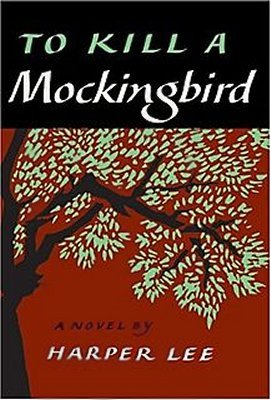
To Kill a Mockingbird by Harper Lee was first published on this day in 1960.

It was immediately successful, winning the Pulitzer Prize, and has become a classic of modern American literature. It’s a shame Harper Lee never wrote another novel, but I admire her for not giving in to the pressure her publisher must have put on her. She said what she had to say. It was enough. It must have taken everything she had.

I love the scene in Infamous where Sandra Bullock, playing Harper Lee, tries to explain what it takes out of a writer to write. She says, “America is not a country where the small gesture goes noticed…We want everything you have, and we want it as fast as you can turn it out.”

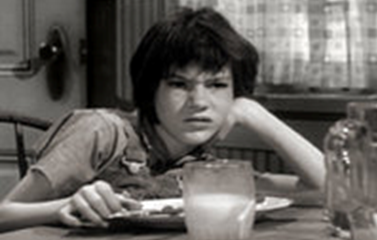
Of course, they made a terrific movie based on the novel in 1962. It is one of the few instances where the movie stacks up to the novel. It is also one of those movies that I and my dual personality were too young to go see at the theater. We only got to hear about it from our older brother who came home with our mother and raved about it. They both loved it. We had to wait until it came on television many years later to see it. As I recall, it was a dark and stormy night when we watched it, home alone this time. It was pretty scary! But we loved it too, and every time I see it I love it anew.

And, of course, it has the scene where if you were to stop me on the happiest day of my life and say, stop, watch this, I would be unable to stem the flow of ensuing tears. You know, it’s the Boo Radley behind the door scene. And that music. Absolute perfection.

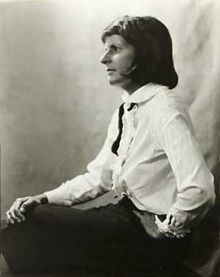
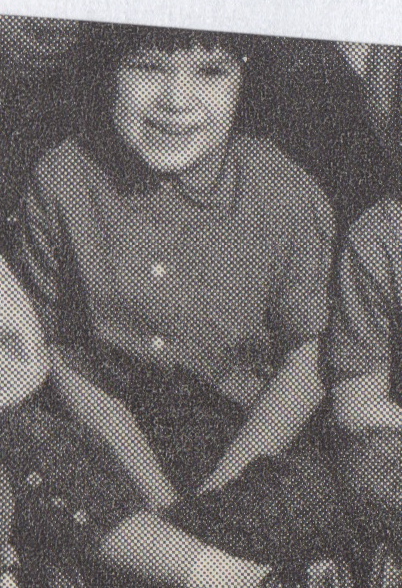
I always loved Scout. I was not at all like her as a child (too timid), but I always thought I looked like the actress who played her and that was cool (not to mention unusual).


You have to admit, the resemblance is amazing.

So all hail Harper Lee.

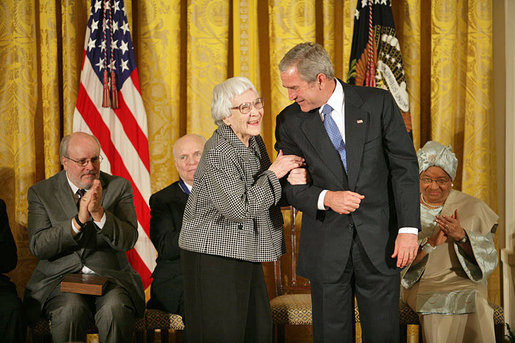
President George W. Bush awards the Presidential Medal of Freedom to author Harper Lee during a ceremony Monday, Nov. 5, 2007, in the East Room. “To Kill a Mockingbird has influenced the character of our country for the better. It’s been a gift to the entire world. As a model of good writing and humane sensibility, this book will be read and studied forever,” said the President about Harper Lee’s work. (White House photo by Eric Draper)

AMEN.

What are you reading?

by chuckofish

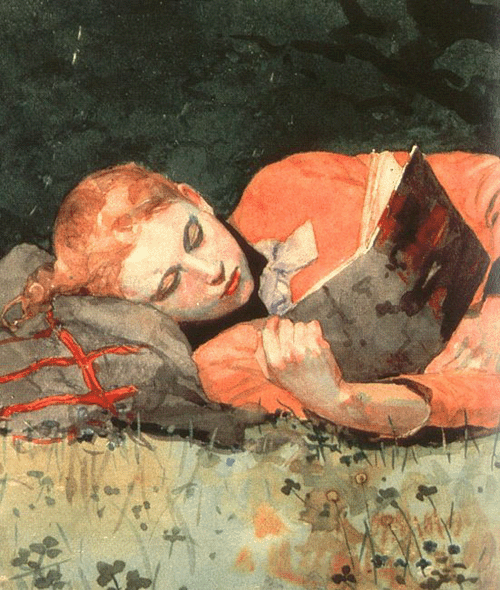
Detail from “The New Novel” by Winslow Homer

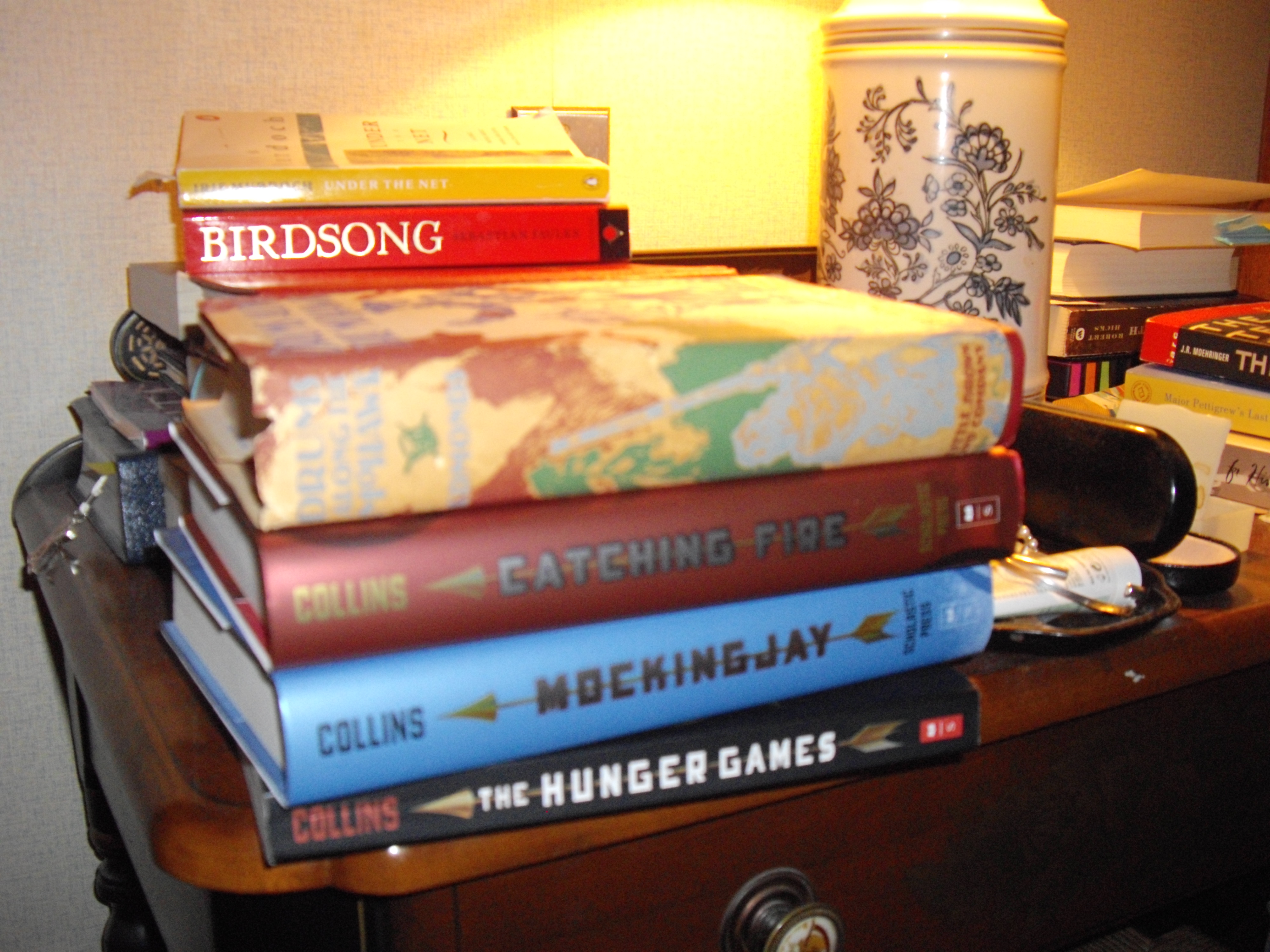
Well, having just read the first two books in the Hunger Games trilogy, the super popular young adult series, I am taking a break from Katniss and company and plunging into Drums Along the Mohawk by Walter D. Edmonds, written in 1936. Drums Along the Mohawk was on the bestseller list for two years, second only to Margaret Mitchell’s Gone with the Wind for part of that time. But why am I reading it now? you ask.

Well, I bought a nice hardback copy a few weeks ago at an estate sale, and then I watched the great John Ford movie (1939) for the umpteenth time on TCM.

It tells the story of Gil and Lana Martin, settlers in the Mohawk Valley of the New York frontier during the American Revolution who are beset by the British, Tories and Mohawk Indians. I’m not very far, but it is a good, well-written yarn. It sure beats Jonathan Franzen.

And I will get back to Katniss et al eventually. First, I would like to get my hands on a copy of Edmond’s The Matchlock Gun, about a boy in Colonial New York who defends his home against invading Indians, and for which he won the 1942 Newbury Medal. He was, it seems, a man after my own heart.

Not a gentleman born

by chuckofish

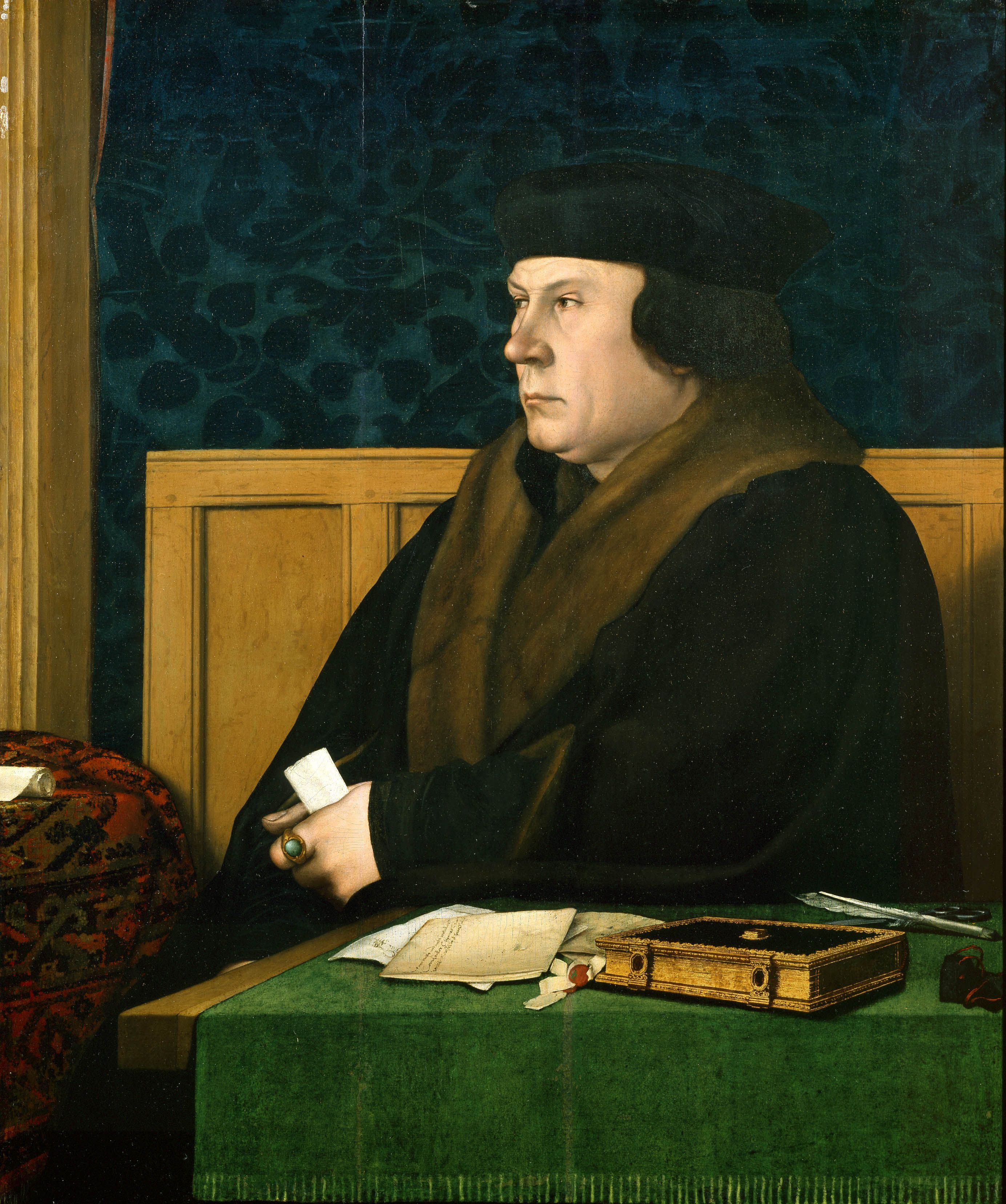
Well, I have finished Bring Up the Bodies, Hilary Mantel’s sequel to Wolf Hall and book two in her trilogy about Thomas Cromwell. It is, no surprise, wonderful.

You remember that Thomas Cromwell, 1st Earl of Essex (c. 1485 – 28 July 1540) was an English statesman who served King Henry VIII of England from 1532 to 1540 in many capacities and was his right hand man. He facilitated his marriage to Anne Boleyn and then arranged the annulment of that marriage. Oftentimes throughout history (and in historical fiction) he has been portrayed as a villain and hatchetman, but we know he indeed was not.

Here is a wonderful description by Cromwell of one of his friends, which really is a perfect description of him:

“He does not talk simply to hear his own voice, or pick arguments just to win them. He is not like George Boleyn: he does not write verses to six women in the hope of bundling one of them into a dark corner where he can slip his cock into her. He writes to warn and to chastise, and not to confess his need but to conceal it. He understands honour but does not boast of his own. He is perfectly equipped as a courtier, but he knows the small value of that. He has studied the world without despising it. He understands the world without rejecting it. He has no illusions but he has hopes. He does not sleepwalk through his life. His eyes are open, and his ears for sounds others miss.”

This is the kind of book I want to start over and read again right away. I think I will read Wolf Hall again. Hilary Mantel is brilliant, and as a writer reading her, I could weep for her brilliance. Brava, Hilary–you’ve done it again.

Odds and ends and St. Elmo’s Fire

by chuckofish

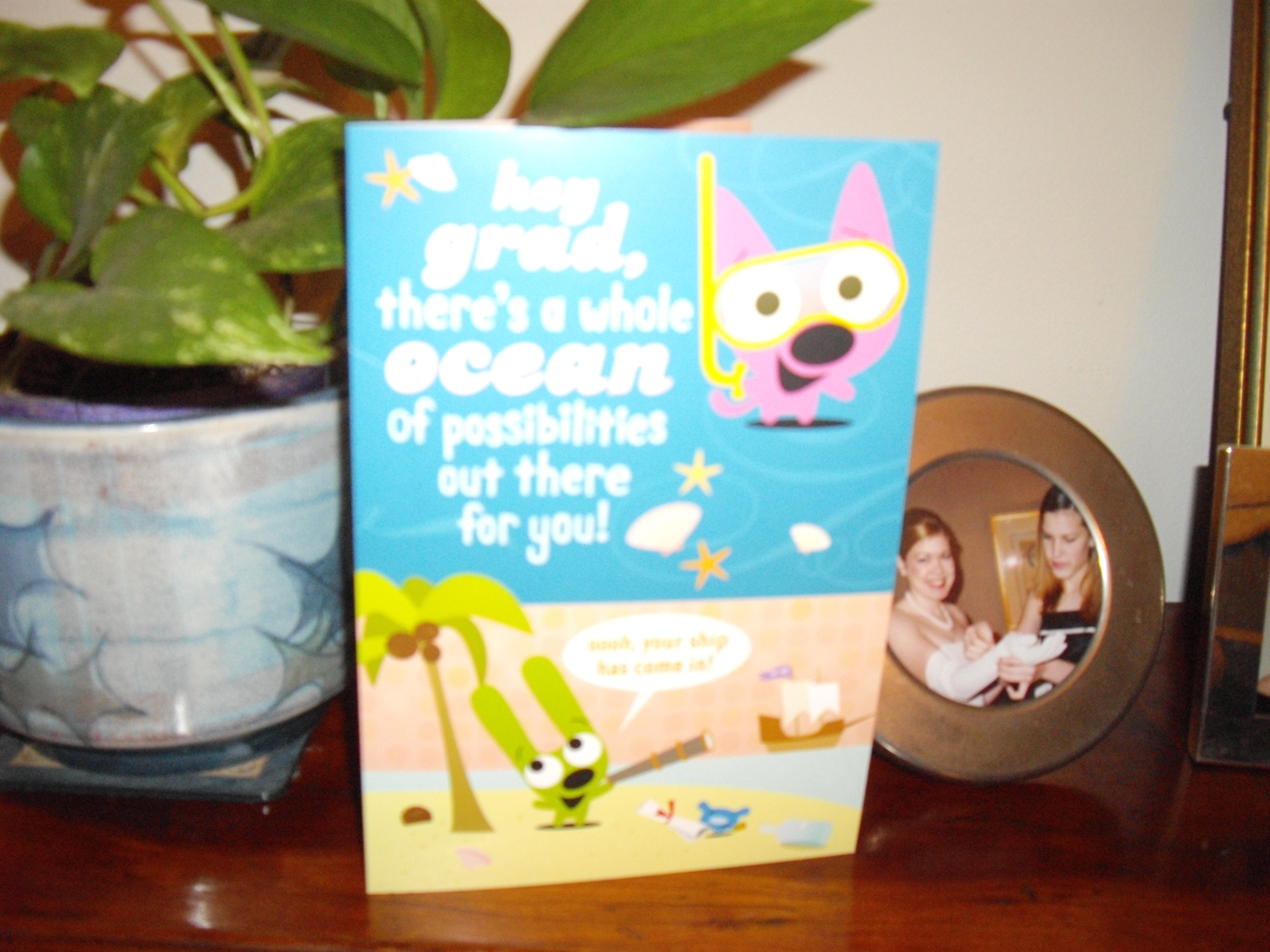
It was a big weekend. Daughter #2, as you know, graduated.

Hoops and YoYo talking card

I bought this vintage 1970s needlepoint pillow at an estate sale.

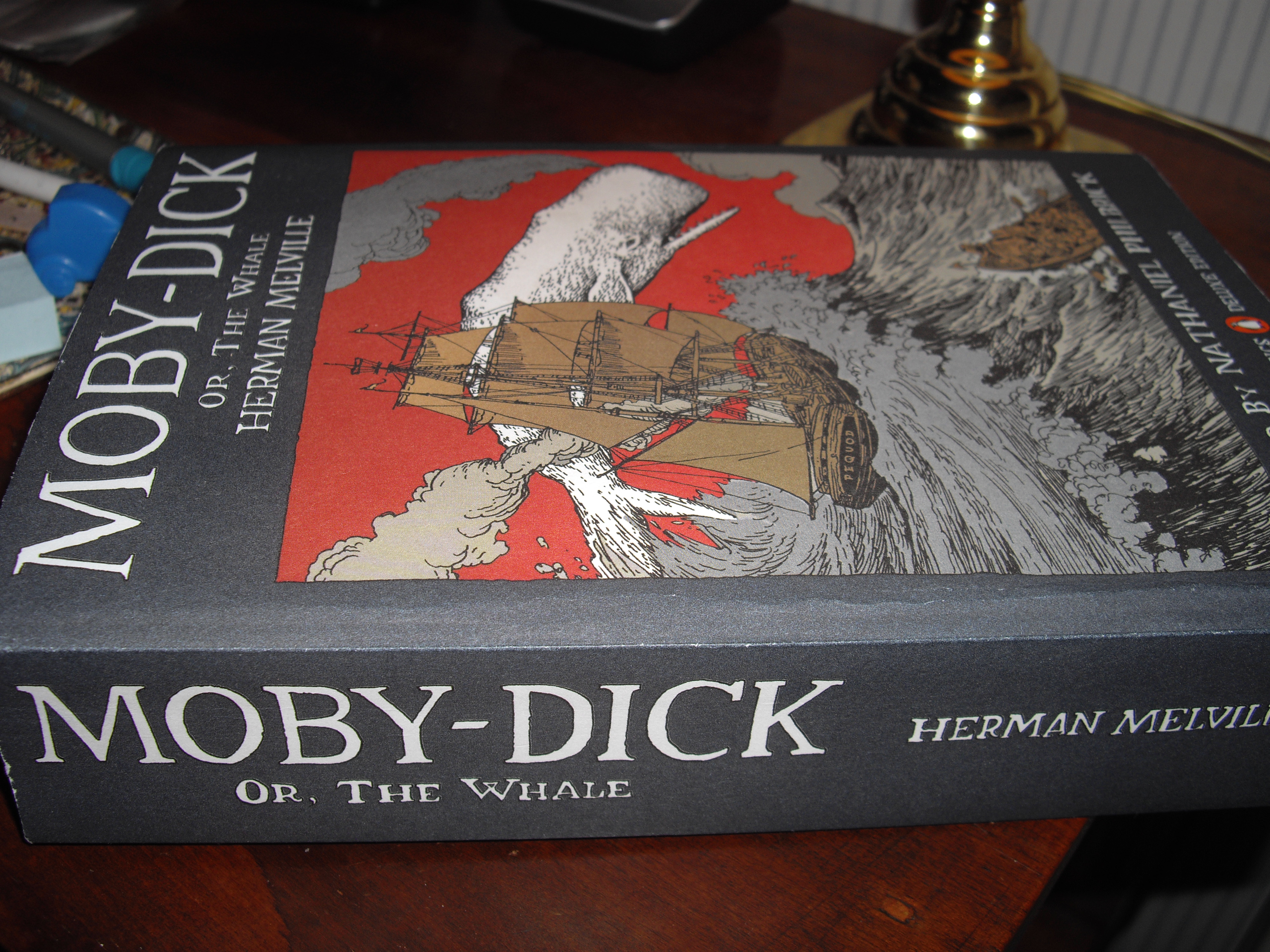
And I finished Moby-Dick.

“One often hears of writers that rise and swell with their subject, though it may seem but an ordinary one. How, then, with me, writing of this Leviathan? Unconsciously my chirography expands into placard capitals. Give me a condor’s quill! Give me Vesuvius’ crater for an inkstand! Friends, hold my arms! For in the mere act of penning my thoughts of this Leviathan, they weary me, and make me faint with their outreaching comprehensiveness of sweep, as if to include the whole circle of the sciences, and all the generations of whales, and men, and mastodons, past, present, and to come, with all the revolving panoramas of empire on earth, and throughout the whole universe, not excluding its suburbs. Such, and so magnifying, is the virtue of a large and liberal theme! We expand to its bulk. To produce a mighty book, you must choose a mighty theme. No great and enduring volume can ever be written on the flea, though many there be who have tried it.” (The Fossil Whale, chapter 104)

A mighty book indeed! You’ll hear more about this book in the days to come. If you are looking for something to read, I can make no stronger a recommendation–read this book!

The art of (not) mincing words

by chuckofish

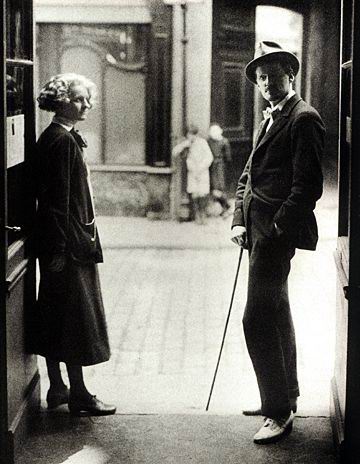
Sylvia Beach, American ex-patriot, minister’s daughter and owner of “Shakespeare and Company”, a bookstore in Paris, decided to rescue Ulysses which had been banned in English-speaking countries, by publishing it herself in France. A prospectus was printed announcing that Ulysses by James Joyce would be published “complete as written” by Shakespeare and Company Paris, in the autumn of 1921. The edition was to be limited to 1000 copies. On the back of the prospectus was a blank form to be filled with the subscriber’s name and his choice of the kind of copy he wanted (there were 3 choices).

Sylvia sent a prospectus to George Bernard Shaw, even though Joyce said he would never subscribe. They made a bet. She received the following reply:

Dear Madam,

I have read fragments of Ulysses in the serial form. It is a revolting record of a disgusting phase of civilization, but it is a truthful one; and I should like to put a cordon around Dublin, round up every male person in it between the ages of 15 and 30; force them to read all the foul mouthed, foul minded derision and obscenity. To you possibly it may appeal as art; you are probably (you see I don’t know you) a young barbarian beglamoured by the excitements and enthusiasms that art stirs up in passionate material; but to me it is all hideously real: I have walked those streets and know those shops and have heard and taken part in those conversations. I escaped from them to England at the age of twenty; and forty years later have learnt from the books of Mr. Joyce that Dublin is still what it was, and young men are still drivelling in slack-jawed blackguardism just as they were in 1870. It is, however, some consolation to find that at last somebody has felt deeply enough about it to face the horror of writing it all down and using his literary genius to force people to face it. In Ireland they try to make a cat cleanly by rubbing its face in its own filth. Mr. Joyce has tried the same treatment on the human subject. I hope it may prove successful.

…I must add, as the prospectus implies an invitation to purchase, that I am an elderly Irish gentleman, and if you imagine that any Irishman, much less an elderly one, would pay 150 francs for such a book, you know little of my countryman.

Faithfully,

G. Bernard Shaw

Sylvia was amused by being called “A young barbarian beglamoured”, but she lost the bet all right.