dual personalities

Tag: books

Dissolved into something complete and great

by chuckofish

I have gushed previously about Willa Cather on this blog here. I am about to do so again.
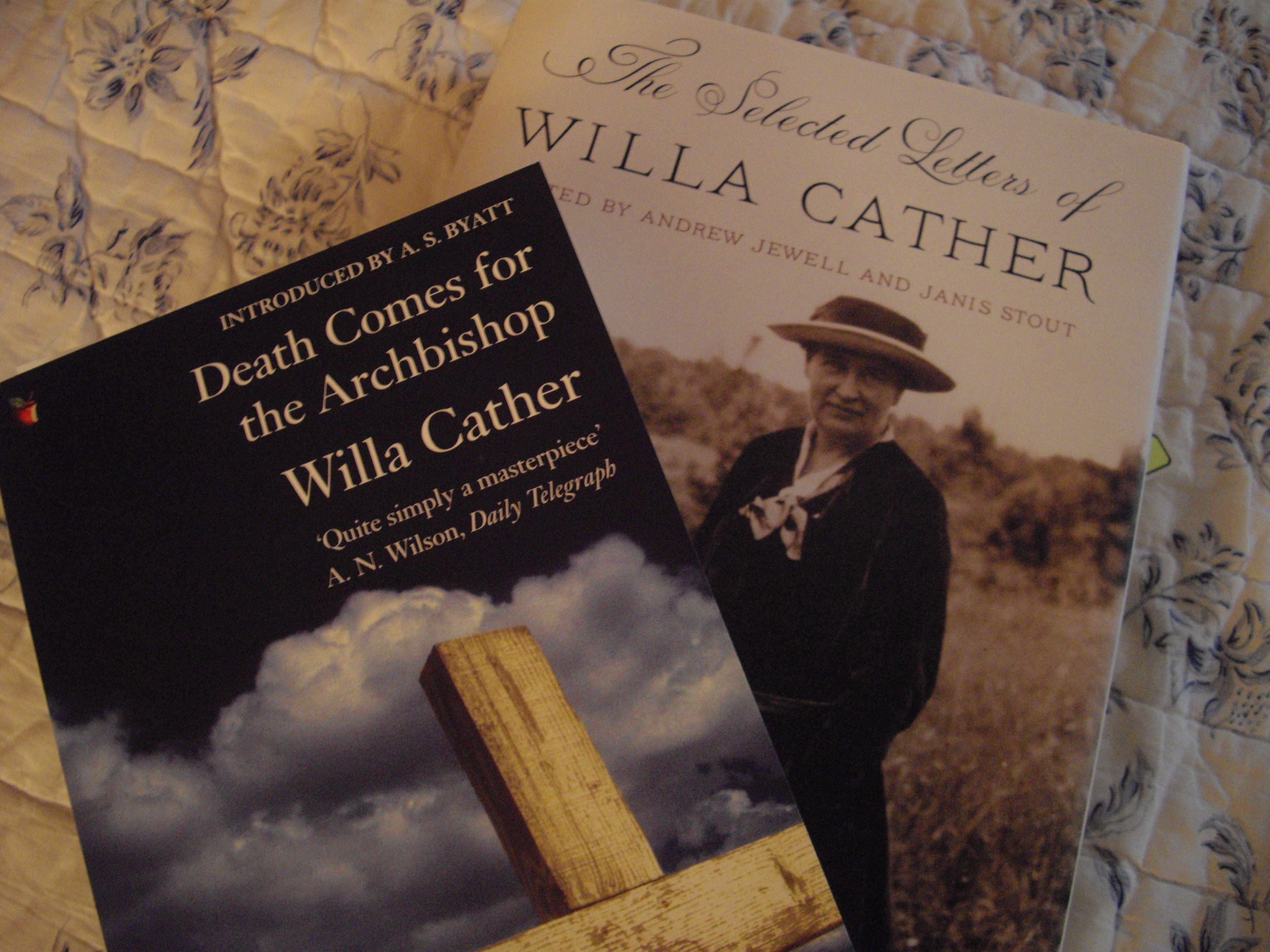
cAther

My dual personality gave me the newly published Selected Letters of Willa Cather for my birthday last month. Cather had left adamant instructions to her executors that her private correspondence not be published or quoted. “The editors of the new collection, Andrew Jewell and Janis Stout, acknowledge in the introduction that this publication flies in the face of Cather’s instructions, as set forth by a will that partially expired in 2011. Still, they believe that publication of her letters will prove invaluable for her legacy, arguing that ‘these lively, illuminating letters will do nothing to damage her reputation.'” (Melville House)

Oh well, I have been enthusiastically reading them. (Personally I think she was very depressed at the end of her life, and that is why she put those particular orders into effect.) I already knew from her fiction, that she was wonderfully talented and deep, but from her letters we get a real sense of Willa as a person. We see what gets her excited and the things that annoy her. We see her feelings hurt by mean-spirited reviewers and her confidence boosted by the encouraging words of worthy people.

“Weeks ago I got such a heart-warming letter from a former president of the Missouri Pacific, Edwin Winter, who as a young man helped to carry the U.P. across Nebraska, and who built the bridge over Dale Creek canyon–the first bridge, which was of timber! He asked if he could come to see me, and on Friday he came. Such a man! all that one’s proudest of in one’s country. He picked the book [My Antonia] up in his club and sat right down and wrote me the most beautiful of letters. I would rather have the admiration of one man like that than sell a thousand books…”

–from a letter to her brother Roscoe Cather, 1919

She loved her family and friends. She never married, and despite what some people who look at everything through the “queer lens” imagine, I think she would have liked to. But she was a passionate artist first and foremost. Had she married and had children, we might not have the wonderful books which are her legacy.

I also read Death Comes for the Archbishop, which she considered to be her best work. It is awesome. It tells the story of two well-meaning and devout French priests who encounter an entrenched Spanish-Mexican clergy whom they are sent to supplant after the United States acquired New Mexico in the Mexican-American War. She is very respectful of the Catholic Church (more so probably than a Catholic would be), and I am happy to say, she is a big fan of our old family friend Kit Carson, who plays a minor role in the novel.

“This Missourian, whose eye was so quick to read a landscape or a human face, could not read a printed page. He could at that time barely write his own name. Yet one felt in him a quick and discriminating intelligence. That he was illiterate was an accident; he had got ahead of books, gone where the printing-press could not follow him. Out of the hardships of his boyhood–from fourteen to twenty picking up a bare living as cook or mule-driver for wagon trains, often in the service of brutal and desperate characters–he had preserved a clean sense of honour and a compassionate heart.”

Through the 1910s and 1920s, Cather was firmly established as a major American writer, receiving the Pulitzer Prize in  1922 for her novel One of Ours. By the 1930s, however, critics began to dismiss her as a “romantic, nostalgic writer who could not cope with the present.” Critics such as Granville Hicks accused Cather of failing to confront “contemporary life as it is.” The same thing happened to Thornton Wilder, you may recall,  and many other writers who are still read today (whereas Granville Hicks is long forgotten). It is good to see Willa Cather appreciated again. I agree with Wallace Stevens who wrote toward the end of her life: “We have nothing better than she is. She takes so much pains to conceal her sophistication that it is easy to miss her quality.” I am so grateful to have finally discovered her!

On a personal note, I was interested to read that one of her favorite nieces graduated from Smith College. I was gratified to learn that the college bestowed an honorary degree on Willa, the year her niece graduated.

Someday I would like to visit her grave in Jaffrey, New Hampshire.
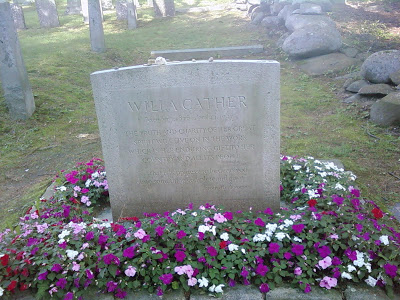
willacathergrave

WILLA CATHER
December 7, 1873-April 24, 1947
THE TRUTH AND CHARITY OF HER GREAT
SPIRIT WILL LIVE ON IN THE WORK
WHICH IS HER ENDURING GIFT TO HER
COUNTRY AND ALL ITS PEOPLE.
“…that is happiness; to be dissolved
into something complete and great.”
From My Antonia
What the hell happened?*

by chuckofish

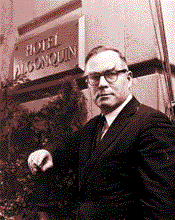
I am closing in on the final pages of The Sand Pebbles. This 597-page novel is really wonderful and I highly recommend it. Written by Richard McKenna, it centers on an American gunboat on the Yangtze River in 1926. The author completed it in May, 1962, just in time to enter it in the 1963 Harper Prize Novel Contest. Not only was it picked over 544 other entries for the $10,000 first prize and accepted for publication by Harper & Row, but it was also chosen as the following January’s Book-of-the-Month Club selection. It was also serialized in the Saturday Evening Post for the three issues from November 17, 1962 through December 1, 1962.

mckenna

The author’s life story is not the usual back-of-the-book blurb. Enlisting in the Navy in 1931 at the age of 18, he served until 1953 when he retired after 22 years of service as a machinist’s mate. He then entered the University of North Carolina. He received his degree in English in 1956, married one of the university librarians and settled down to write. Sadly, he died in 1964 at the age of 51, but one feels that to have written his magnus opus and seen it published to acclaim is a great thing. He must have been an extraordinary man.

I am reminded of what John Steineck said about his own East of Eden: “I put everything I knew into that book.” One feels this is the case with Richard McKenna. The Sand Pebbles is full of truth. The author pours everything he has into this well-crafted, well-written story of a man struggling to understand himself and the world he finds himself in.

Jake Holman, the hero of the story, is a great character with whom many can relate:

They could command you what you had to do, he thought, but they could not command you how you had to feel about it, although they tried. So you did things their way and you felt about them your own way, and you did not let them know how you felt. That way you kept the two things separate and you could stand it.

One imagines that there is a whole lot of Richard McKenna in Jake. Toward the end of the book he describes Jake’s thoughts about Shirley, the missionary teacher: “He kept her deliberately on the edge of his dream. He would get books from her and read them and later they would talk about them. They would be friends, but she would still be just a teacher.” One can’t help thinking of the author’s courtship of the UNC librarian.

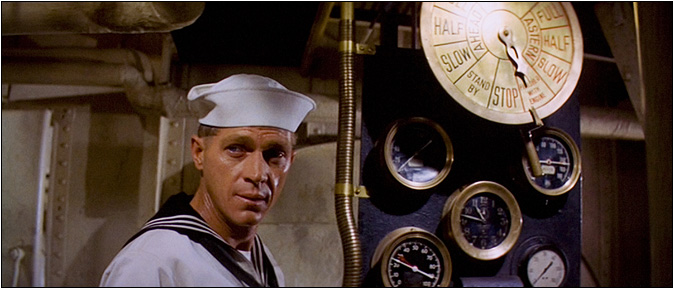
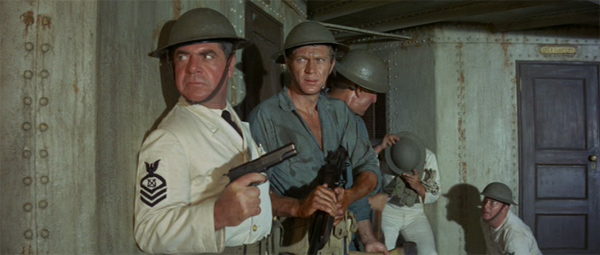
The movie, which was released in 1966, is one of my favorites and Steve McQueen is perfectly cast as Jake Holman.

Any excuse to insert a picture of Steve McQueen in the blog is a good one.

Any excuse to insert a picture of Steve McQueen in the blog is a good one.

The screenwriter did take many liberties with the story, however, which is a necessity I suppose with such a long, detailed book. In the book the sailors (the “sand pebbles”) are good guys deep down and not all are the low-lifes portrayed in the movie. The captain, also, is a good guy and not the duty-obsessed, blinders-wearing martinet portrayed in the film.

Perhaps it is better that Richard McKenna never saw it.

*P.S. No one says this in the book. Instead, Jake says, “Go to hell, you bastards!” The book is always better.

Now learn

by chuckofish

vincent-van-gogh-paintings-from-arles-221

“Now learn,” she commanded herself, “learn at last that anywhere you may expect grace.” And she was filled with happiness like a girl at this new proof that the traits she lived for were everywhere, that the world was ready.”

–Thornton Wilder, The Bridge of San Luis Rey

He said it

by chuckofish

“The multitude of books is a great evil. There is no measure or limit to this fever of writing; everyone must be an author; some out of vanity to acquire celebrity; others for the sake of lucre or gain.”

–Martin Luther, Table Talk (1569)

Sadly, four hundred and fifty years later, this is still the case. I can hardly bear to go into a big bookstore these days. It is too depressing to see the mess that is produced.

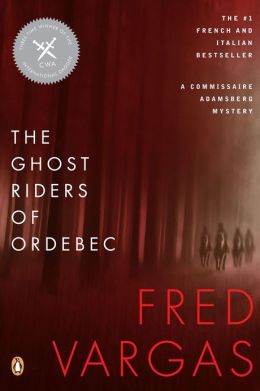
However, there are still some bright lights out there. I see that there is a new Fred Vargas mystery coming out in June.

ghostriders9780143123125_p0_v1_s260x420

I do love Commissaire Adamsberg, the chief of police in Paris’s seventh arrondissement!

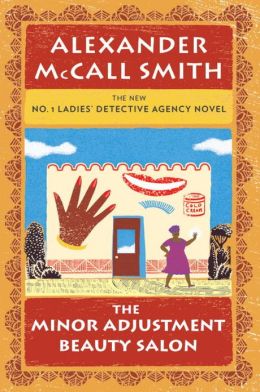
And there is a new Alexander McCall Smith #1 Ladies Detective Agency book coming out in November.

minor9780307378415_p0_v1_s260x420

I like the title of this new one!

Hilary Mantel is working feverishly to finish the third and final installment of her Thomas Cromwell trilogy–one fears before she is too ill to write. Ugh.

Anything else I can look forward to?

She dwelleth and abideth on the rock

by chuckofish

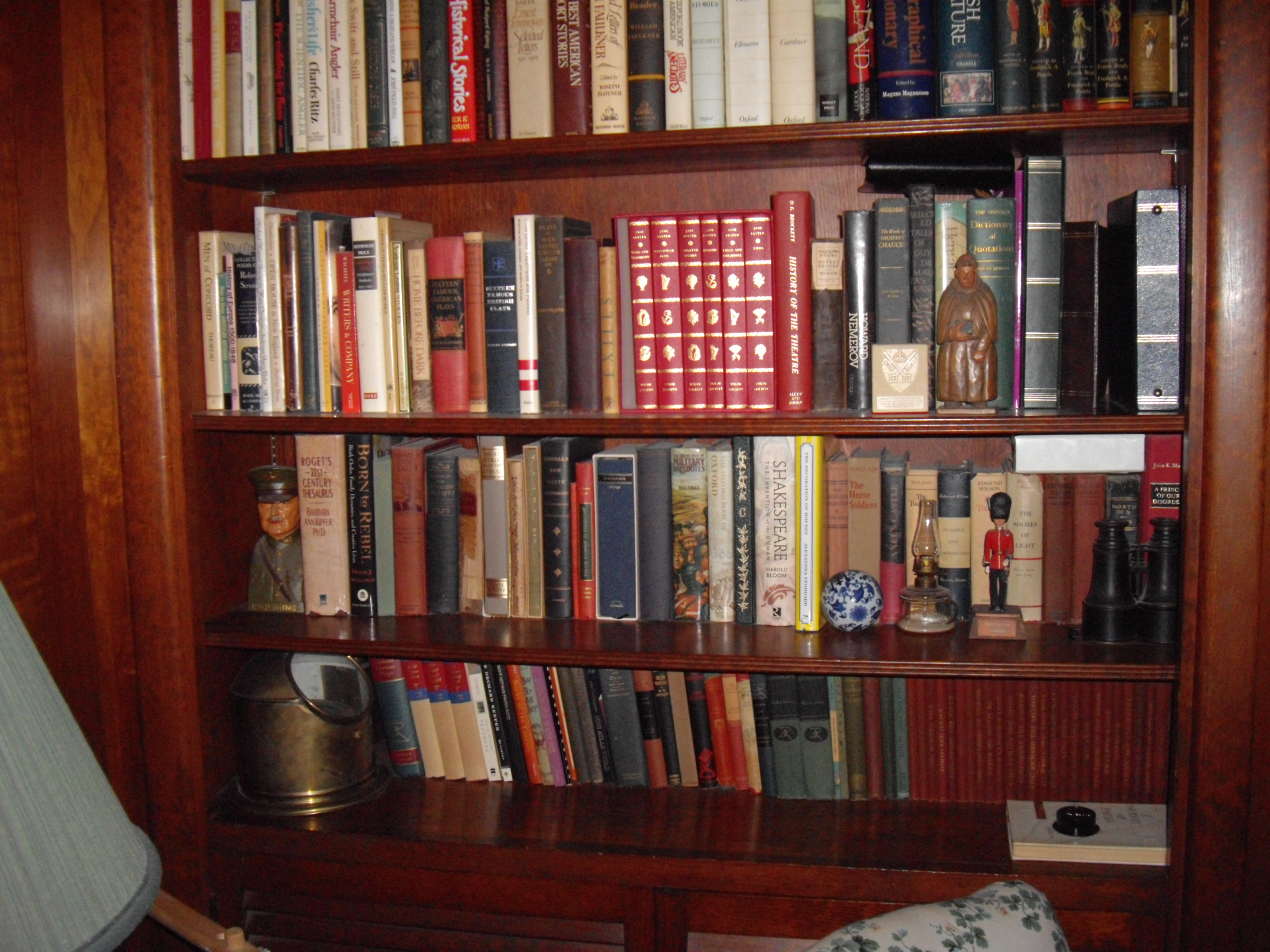
“Your house, being the place in which you read, can tell us the position books occupy in your life, if they are a defense you set up to keep the outside world at a distance, if they are a dream into which you sink as if into a drug, or bridges you cast toward the outside, toward the world that interests you so much that you want to multiply and extend its dimensions through books.”

― Italo Calvino, If on a Winter’s Night a Traveler

Or all of the above, right?

Furthermore, there are plenty of people who read, but do not have books in their home. Books, after all, gather dust and some people never read a book twice, so why would you want to own it? It is just entertainment. But for some of us, books are old friends whom we visit and re-visit.

books

The world can always be divided in two. You know, between people who collect and people who don’t. People who buy books and people who never buy books. People who buy a house and furnish it and never think of it again and those who are continually feathering their nests.

books2

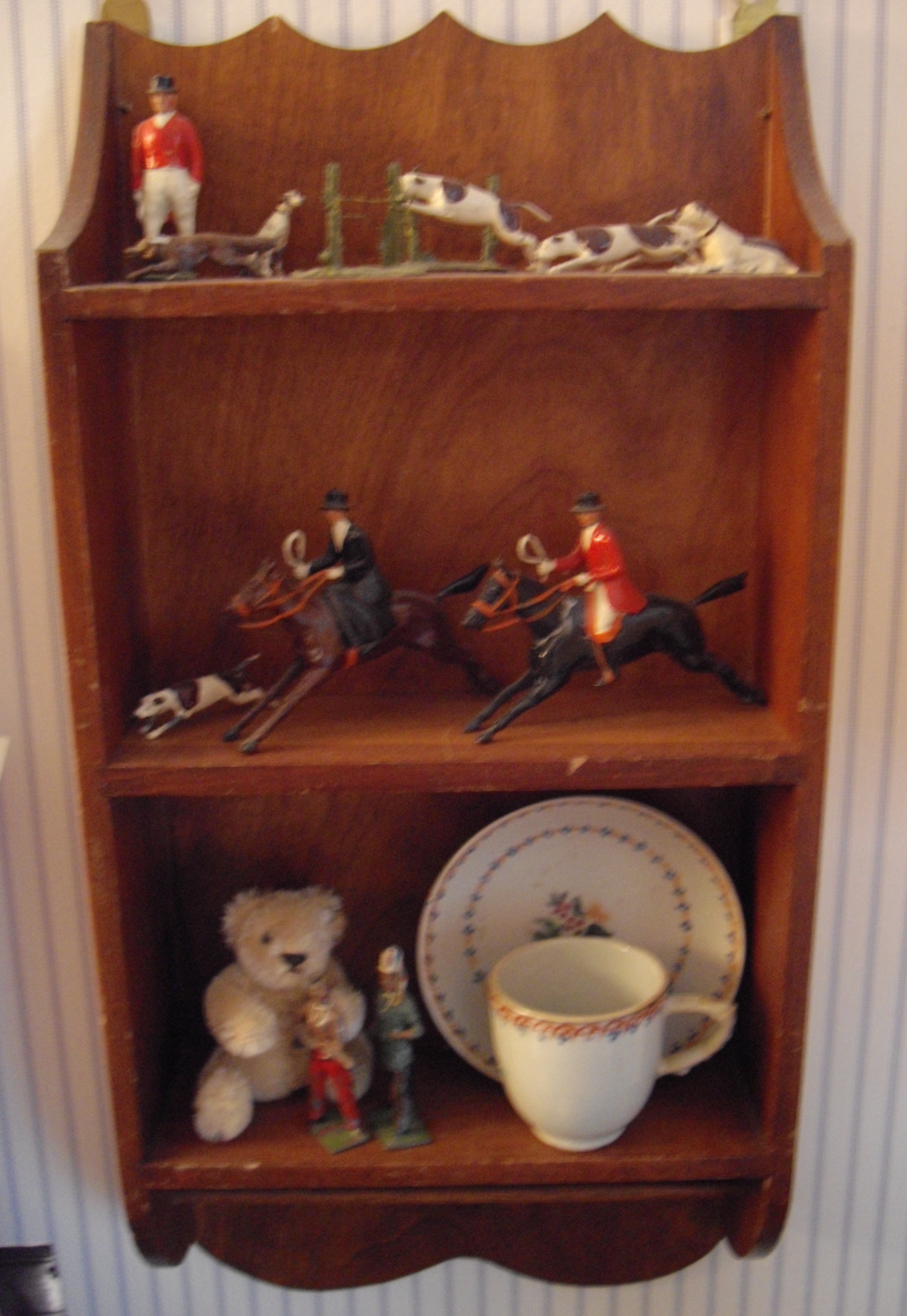
I spend a lot of time in my nest. Having my things around me (and my mother’s things and her mother’s things and so on) makes me happy. I appreciate them and enjoy them.

shelf3

This is not to say, I don’t believe whole-heartedly in “editing” and being organized. But I had a friend once who lived like she might have to move out of her house overnight and she wanted to be ready. That meant no extraneous possessions–like last month’s magazines. The minute her son outgrew something, she got rid of it. If he didn’t play with a toy for some designated time, out it went. (This begs another question–Are children allowed to have their own things and should their mother be getting rid of them?) I could not live that way, but to each his own. You do what you have to do.

It is never a good thing to get too attached to our things. They are, after all, just things–not people.

But I always told my children: in case of a fire, someone grab the sampler!

It went without saying that the priority was getting oneself out the door!

The key, of course, is enjoying what you have. Don’t you agree?

Hello, ship

by chuckofish

Okay, name that first line!

first lines

It is, of course, the great first line of The Sand Pebbles by Richard McKenna, published in 1962. I was reminded of this when I found the book at an estate sale on Saturday and bought it.

sandpebbles

I plan to read the book soon, but I had hoped to watch the movie. I thought we owned the DVD, but I was wrong. We only have the 2-video VHS set! The story of my life. So no Steve McQueen this weekend.

HF7Y3114_The_Sand_Pebbles_SD

This is a great movie, you will recall, and it was nominated for eight Academy Awards, including Best Picture and Best Actor. It won NONE. They were robbed! This was the year (1966) that A Man for All Seasons took home the big awards–you know, that movie about Thomas More. Bah. Give me Steve McQueen any day.

So anyway, I will have to Netflix the movie and watch it later. Meanwhile, despite this disappointment, I had a good weekend. I had lunch with the boy on Saturday after going to an estate sale together. I worked in the yard and started my DIY project in the bathroom. I went to Church!

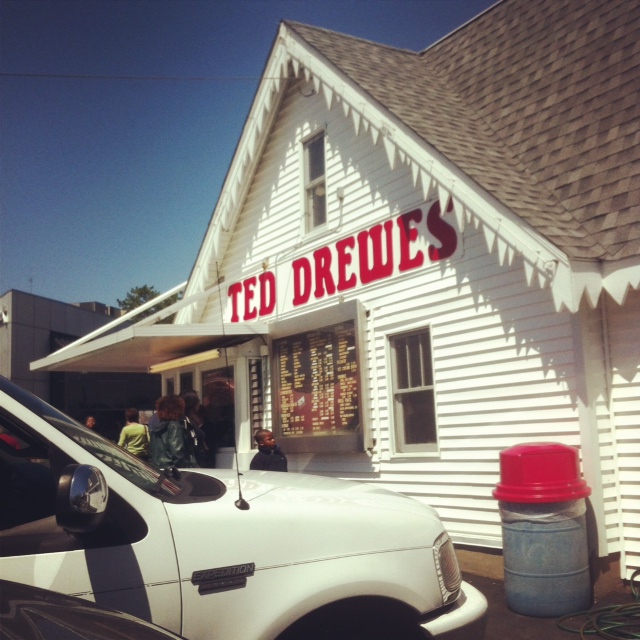
I celebrated daughter #2’s birthday with her father by making a trip down to:

ted drewes

A real treat.

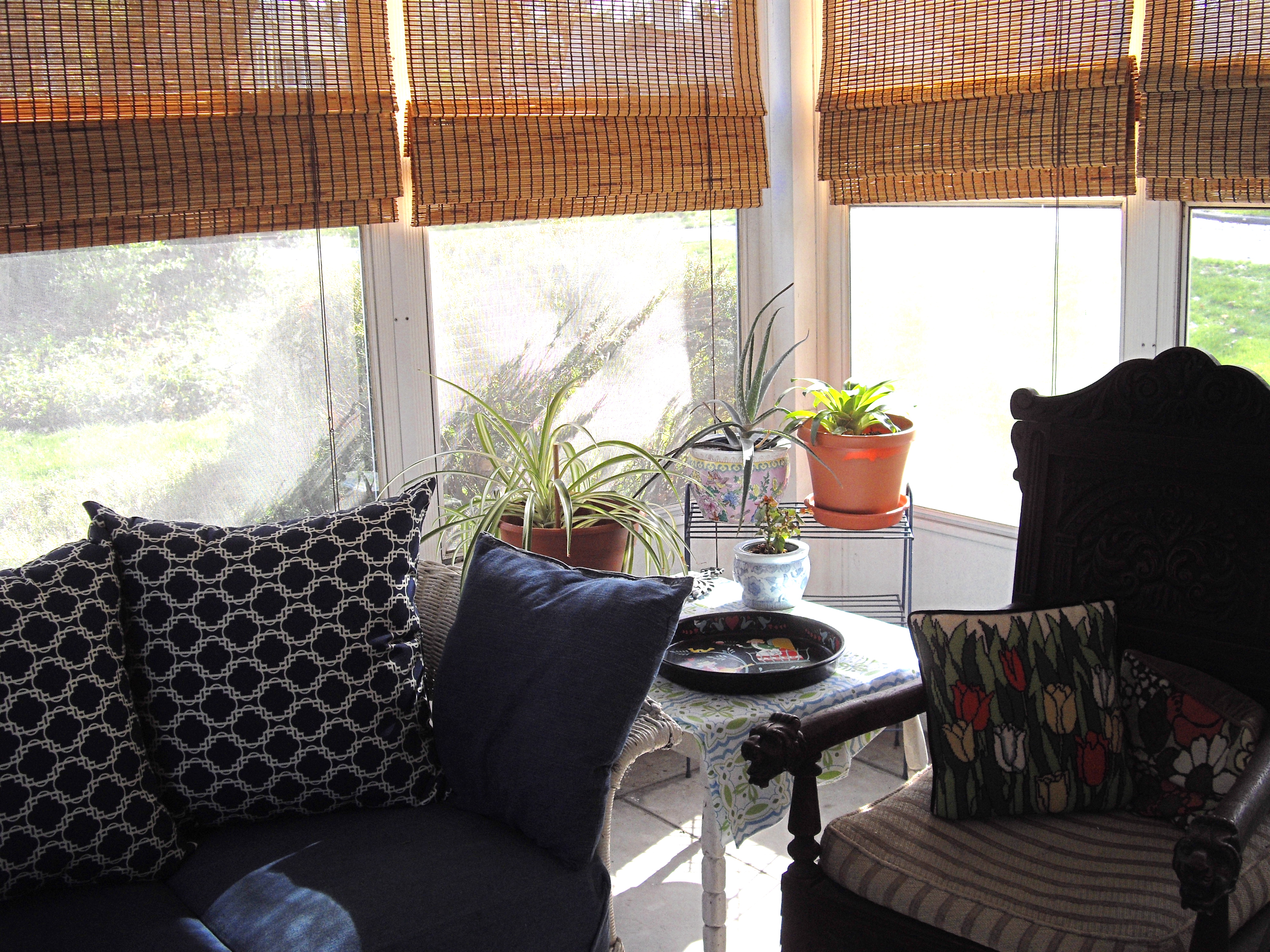
And the Florida room is officially open!

floridaroom

Have a great week! It is supposed to rain here all week, but that’s okay. You know what they say about April showers.

This and that

by chuckofish

How was your weekend? After an eventful and busy week at work, I was hoping for a quiet weekend, and due in large part to Mother Nature, I was successful.

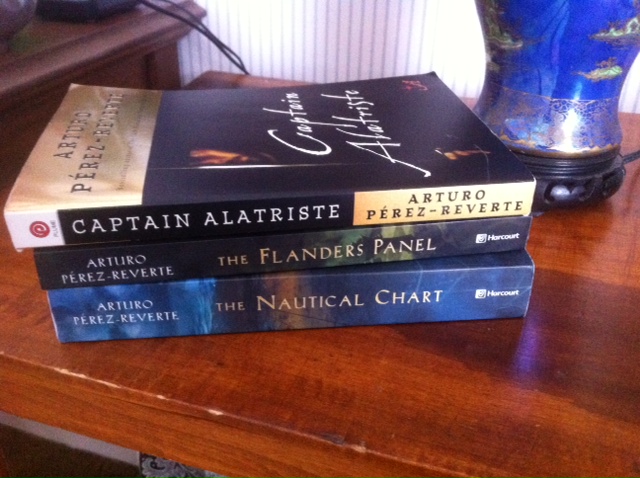
On Saturday I went to a couple of estate sales and was able to pick up a few things which I will give as presents to daughters # 1 and 2 this year. I picked up a few Captain Alatriste books for myself.

alatriste

After estate saling I got my hair cut and my hairdresser gave me spiritual advice about looking for another church after I confessed to her that I was unhappy with my church and, dare I say, my denomination. “Stay and pray,” she said, which I thought was very good advice and I will try to follow it.

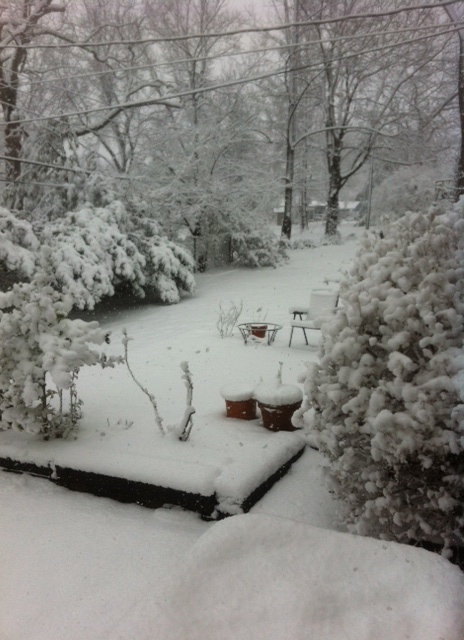
All week we were warned by our various flyover weather pundits about a snow storm that was bound to hit on Sunday.

snow

For once, they were spot on and I spent the day puttering around my house. As you know, there is nothing I like better. I also love to sit and watch it snow, so I did a lot of that.

book

I finished The Age of Doubt, a good mystery by Andrea Camilleri about my favorite Italian detective, Inspector Montalbano. I also received the April issue of Garden & Gun on Friday so I caught up on all things southern-hipster.

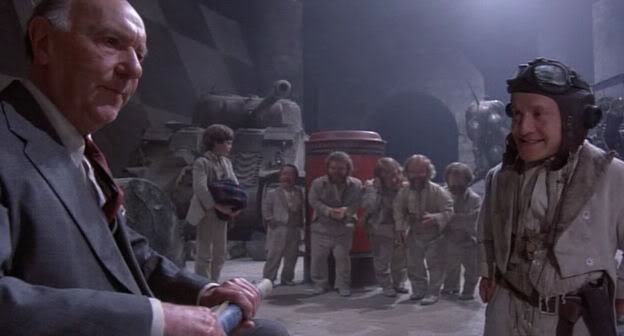
I also watched Time Bandits (1981), Terry Gilliam’s charming fantasy about a clever but “untidy” boy (Kevin) who joins a group of dwarves who have stolen a map from the Supreme Being. They jump from time period to time period looking for treasure to steal.

That's God on the left.

That’s God on the left.

This movie is a wonderful discourse about good and evil wherein we are reminded that “God does not care about technology” and that the existence of evil “has something to do with free will.” And Ralph Richardson in a three piece suit is and always shall be my perfect image of the Supreme Being.

...and more snow!

…and more snow!

We ended up with 12.4″–our biggest snow since the huge snow of 1982! No school today.

Happiness is…

by chuckofish

happiness is

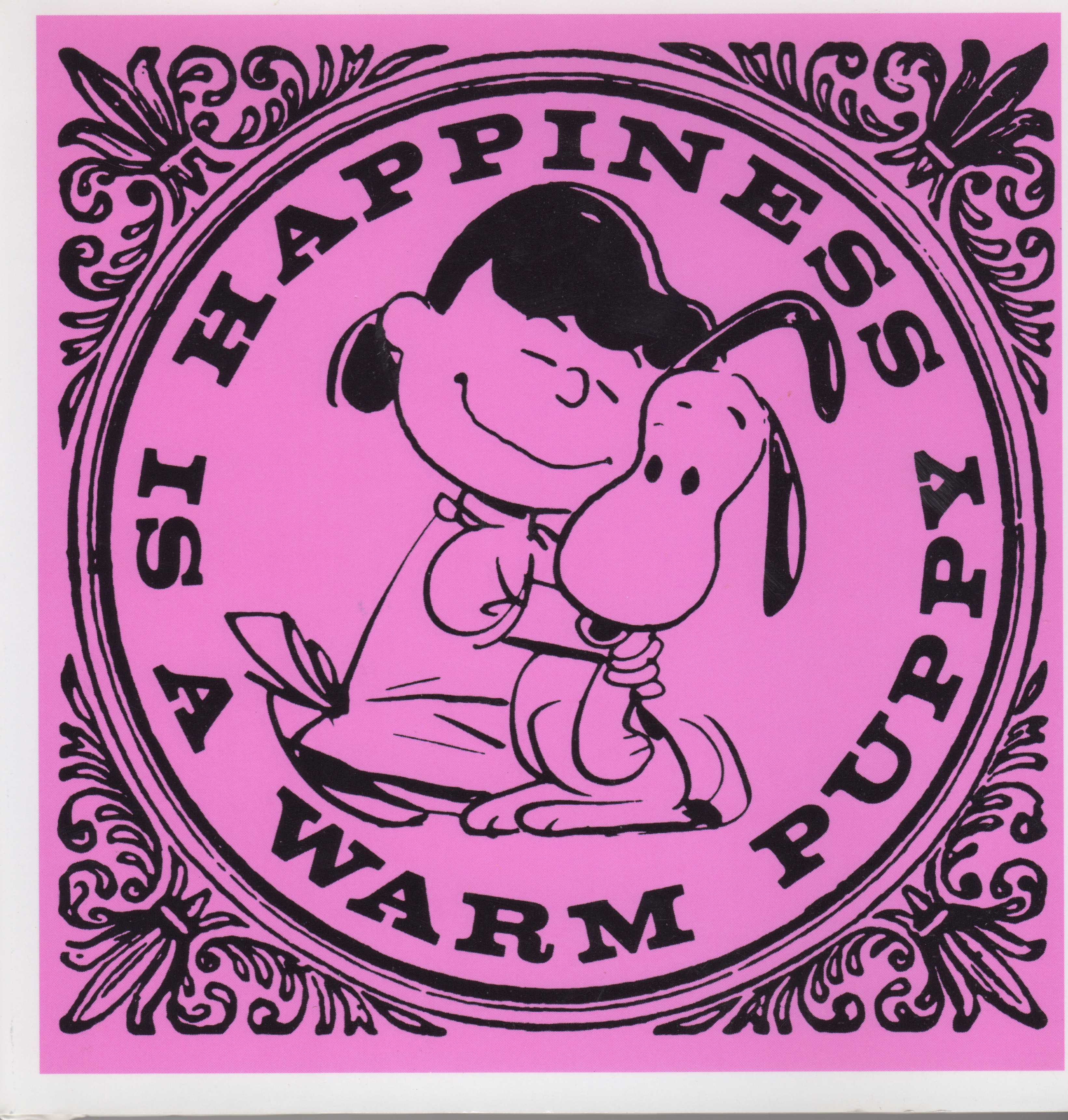
Remember this book from 1962? It reminds us that it’s the simple things that make us happy. Things like warm puppies and walking in the grass in your bare feet and knowing how to tie your own shoes and my favorite: “some black, orange, yellow, white and pink jelly beans, but no green ones.” (I am okay with the green ones.)

Charles M. Schulz certainly understood what makes a happy life. To this I would add a few things, such as a full tank of gas

gas

and a stack of new magazines in the mail.

mags

I had a happy weekend–did you?

I batted “0” at the only estate sale I went to on Saturday, but that’s okay. I had a text exchange with daughter #2 who was at an estate sale in Bethesda, Maryland, which warmed the cockles of my heart. (I taught her something!)

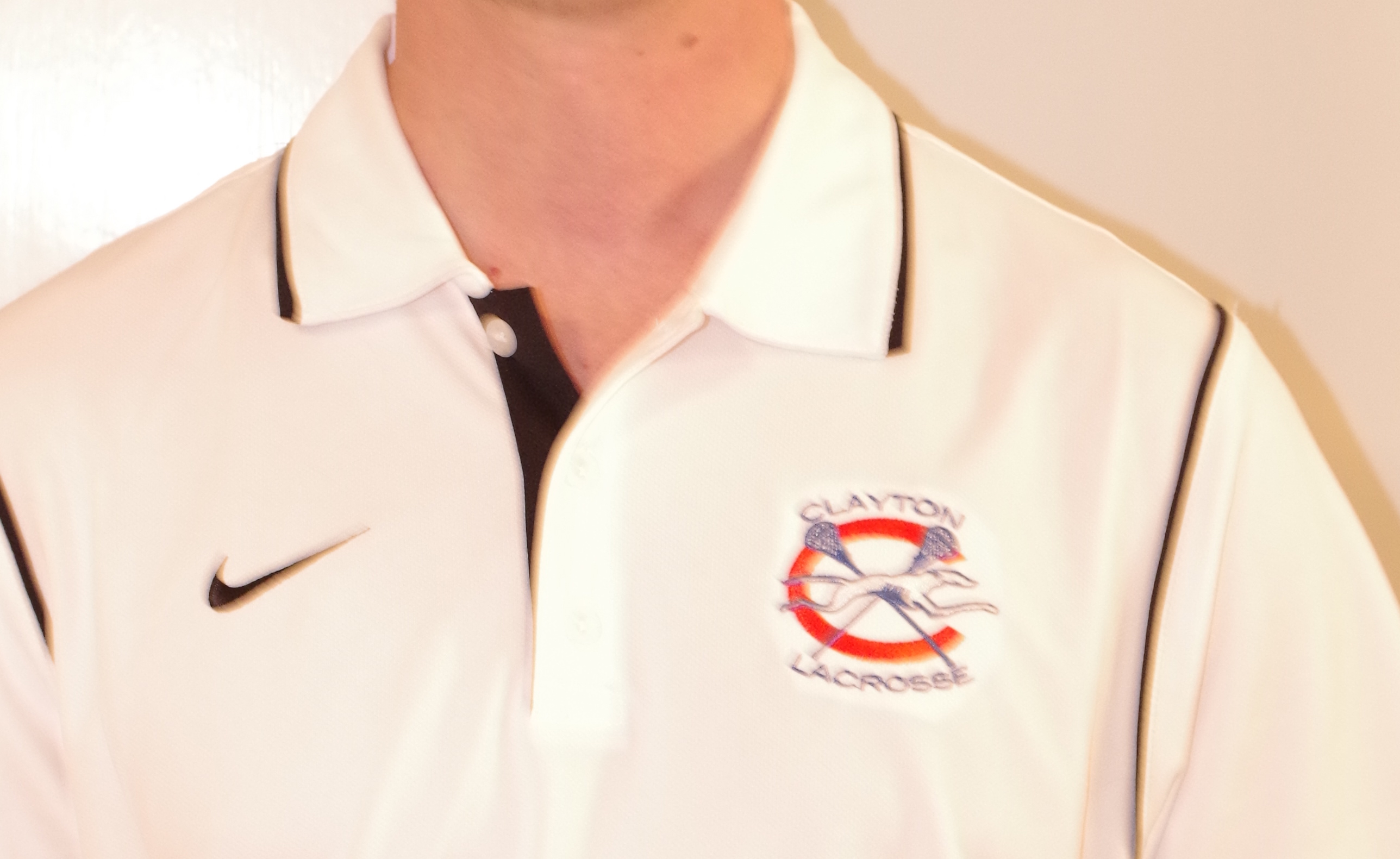
The boy came over to carry a chair upstairs for me. He was wearing one of his “coach” shirts.

laxshirt

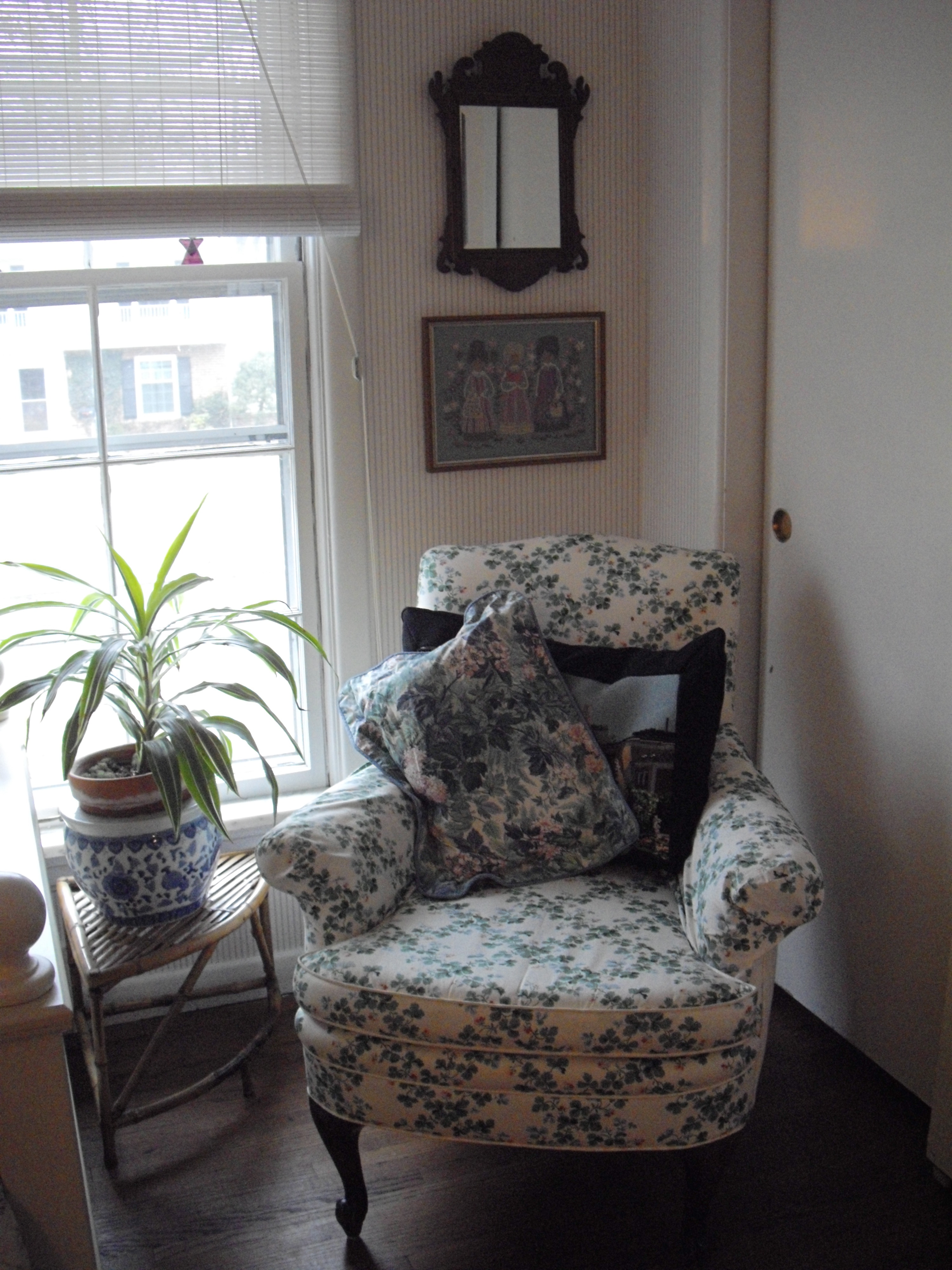
Now I can sit by this sunny window and read or work on my blog.

chair2

We went to lunch at Qdoba Mexican Grill. I had a naked burrito–yummo.

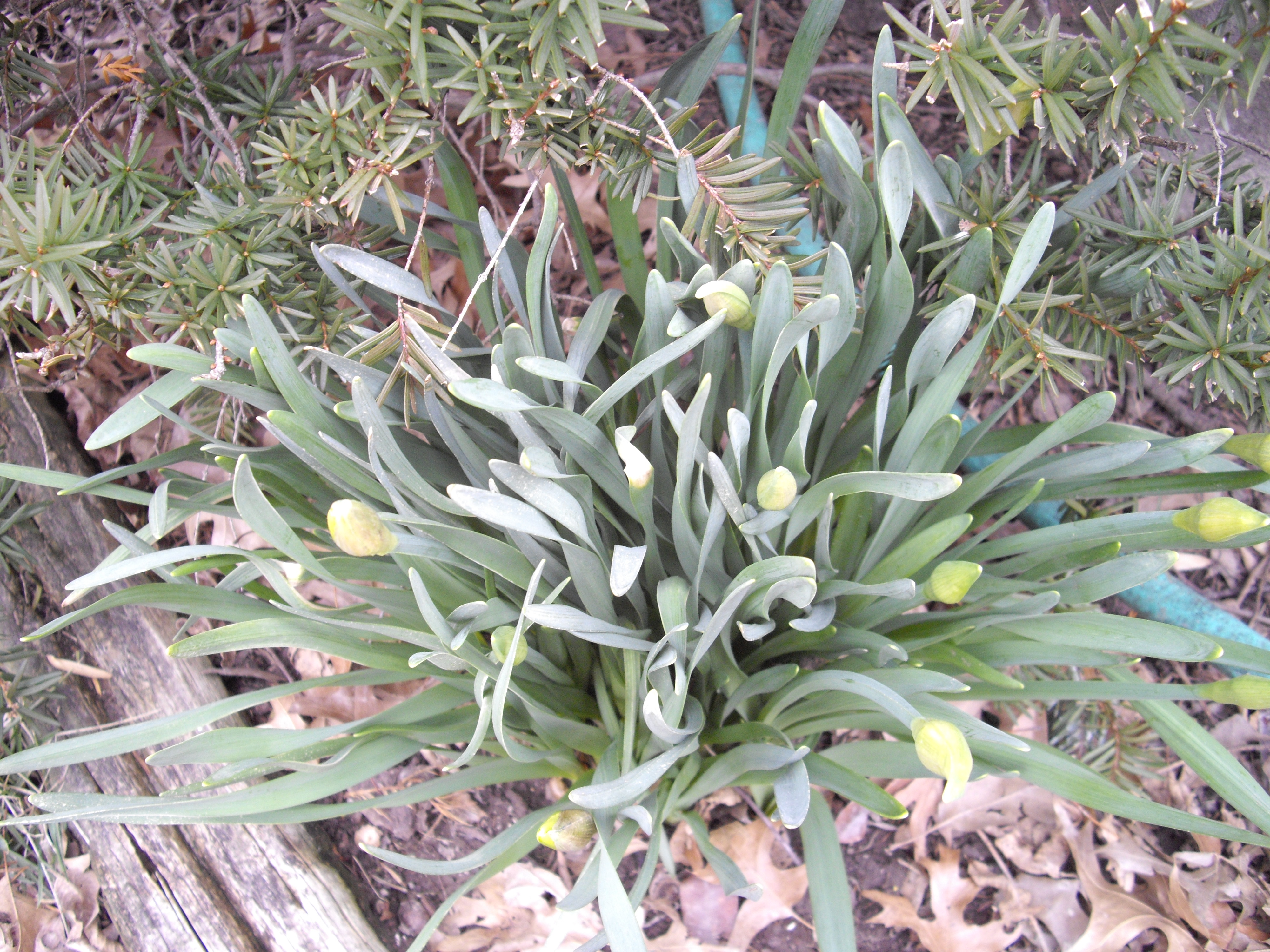
Although snow was in the forecast this weekend, there were plenty signs of spring in our yard.

daffo

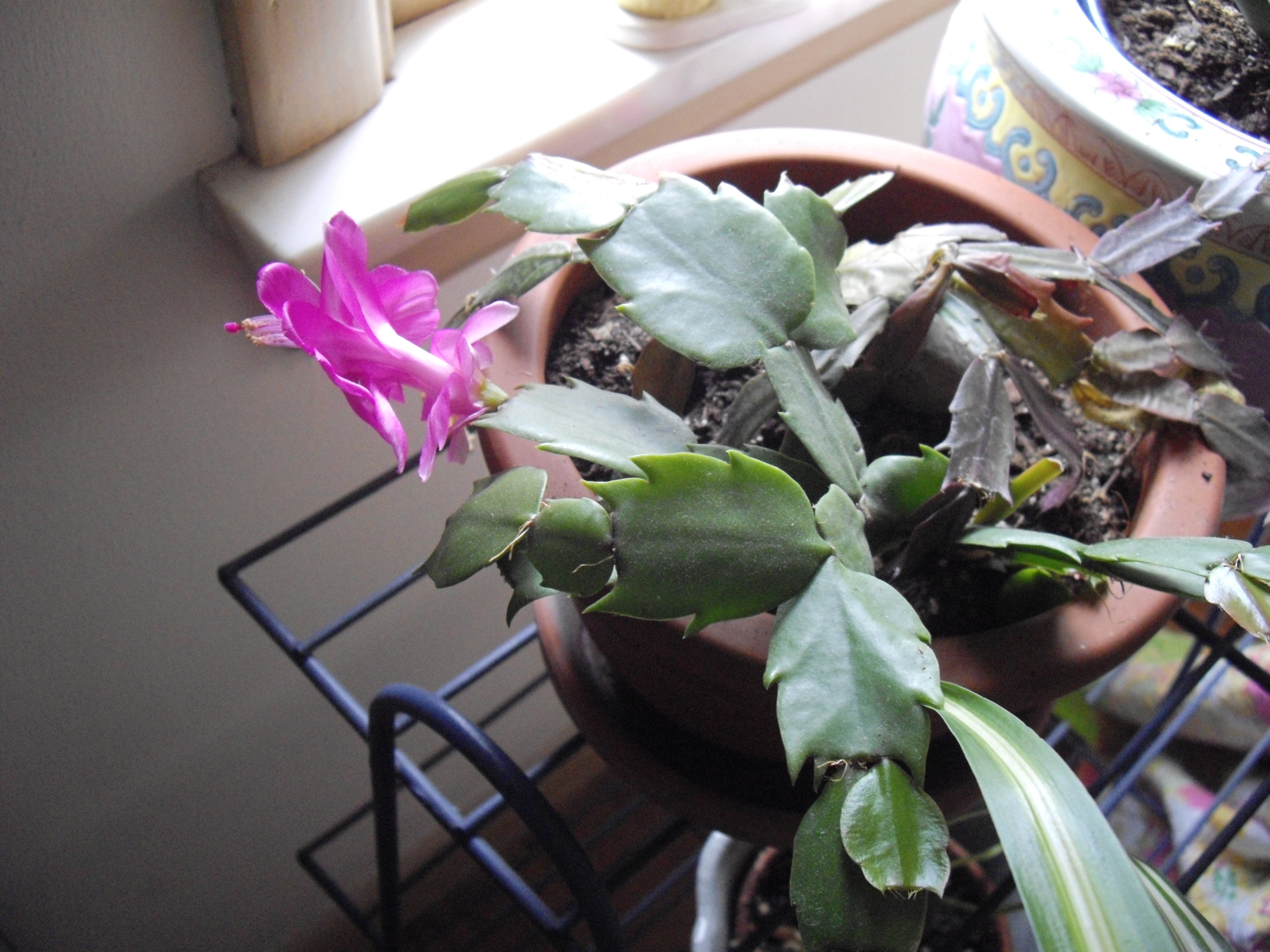
And the Christmas Cactus surprised me yet again!

xmas cac

I spent a good part of my weekend reading a book by Hilary Mantel published in 2000, Every Day is Mother’s Day. The book cover announces that it is “an accomplished novel of striking originality” and describes it as having certain elements of a “suspense thriller.” Really. Never in a million years would I confuse this book, although it is riveting, with a suspense thriller. Clearly prior to Wolf Hall no one knew what to make of Hilary Mantel. She defies pigeon-holing. She reminds me a lot of Shirley Jackson.

The characters in this book have no claim on happiness. One even admits: “Happiness seems a bit ambitious. I’m not sure I can see my way to that.”

England, we are reminded, is a depressing and dreadful place. One of the main characters describes his life thusly:

“I am a history teacher, a teacher of the benighted past to the benighted present, ill-recompensed for what I suffer and despairing of promotion. My feet are size eight and a half, and I belong to the generation of Angry Young Men, though I was never angry until it was too late, oh, very late, and even now I am only mildly irritated. I am not a vegetarian and contribute to no charities, on principle; I loathe beetroot, and the sexual revolution has passed me by. My taste in clothes is conservative but I get holes in my pockets and my small change falls through; I do not speak to my wife about this because she is an excellent mother and I am intimidated by her, also appalled by the paltry nature of this complaint or what might be construed by her as a complaint. The sort of writing I want to do is the sort that will force me to become a tax-exile.”

Terrible things happen. Funny things happen. As always I am in awe of Hilary and her amazing powers, but I really think I need to revisit the high, green hills of Mitford now, where the air is pure, the village is charming and the people are generally lovable.

Use it or lose it

by chuckofish

Today’s lesson is one I have learned over the years: stop saving things for later! Use them now. I learn this every weekend anew when I go to estate sales and there are linens galore that have been put away “for later” or for “company” and then never used.

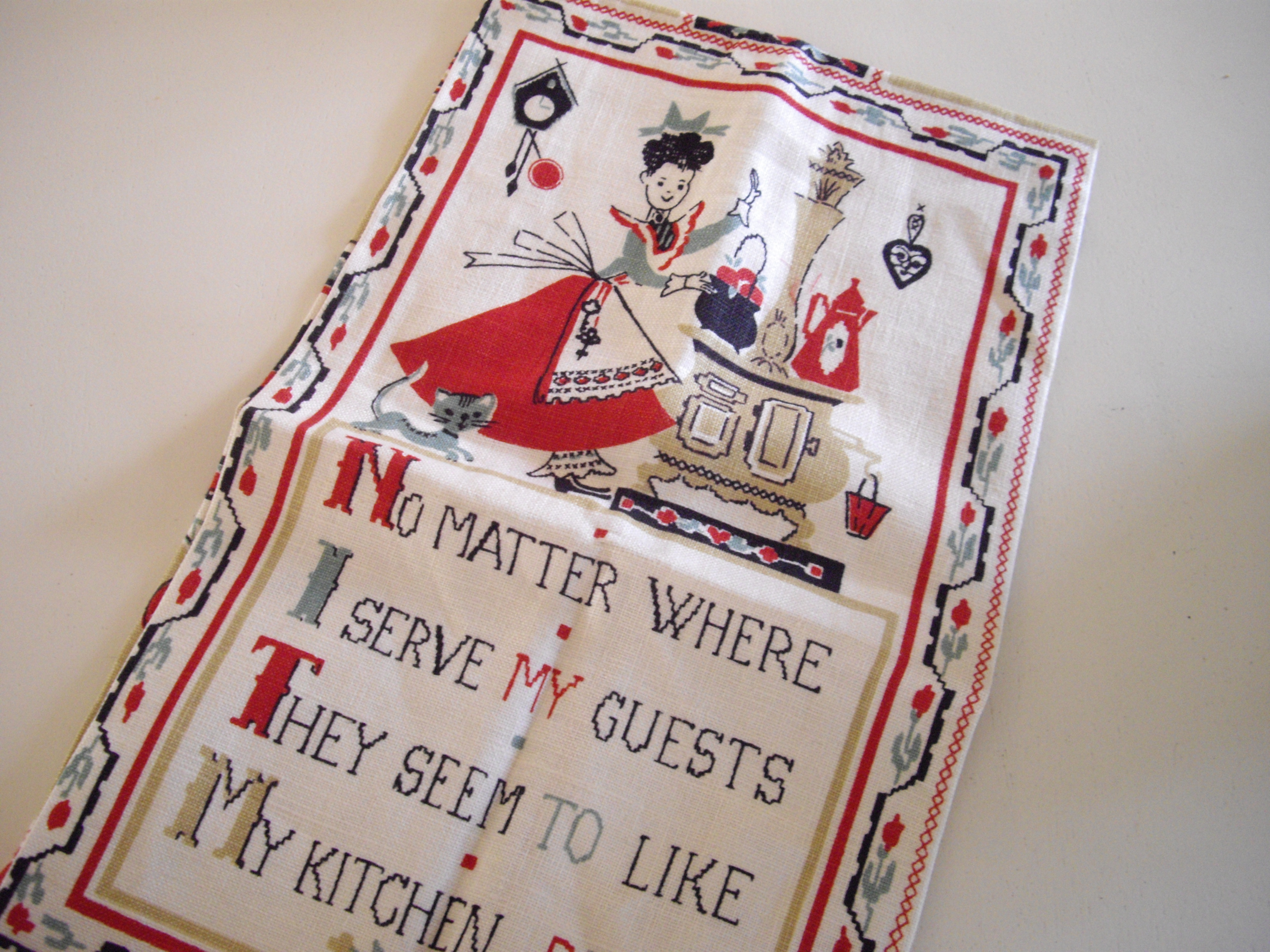
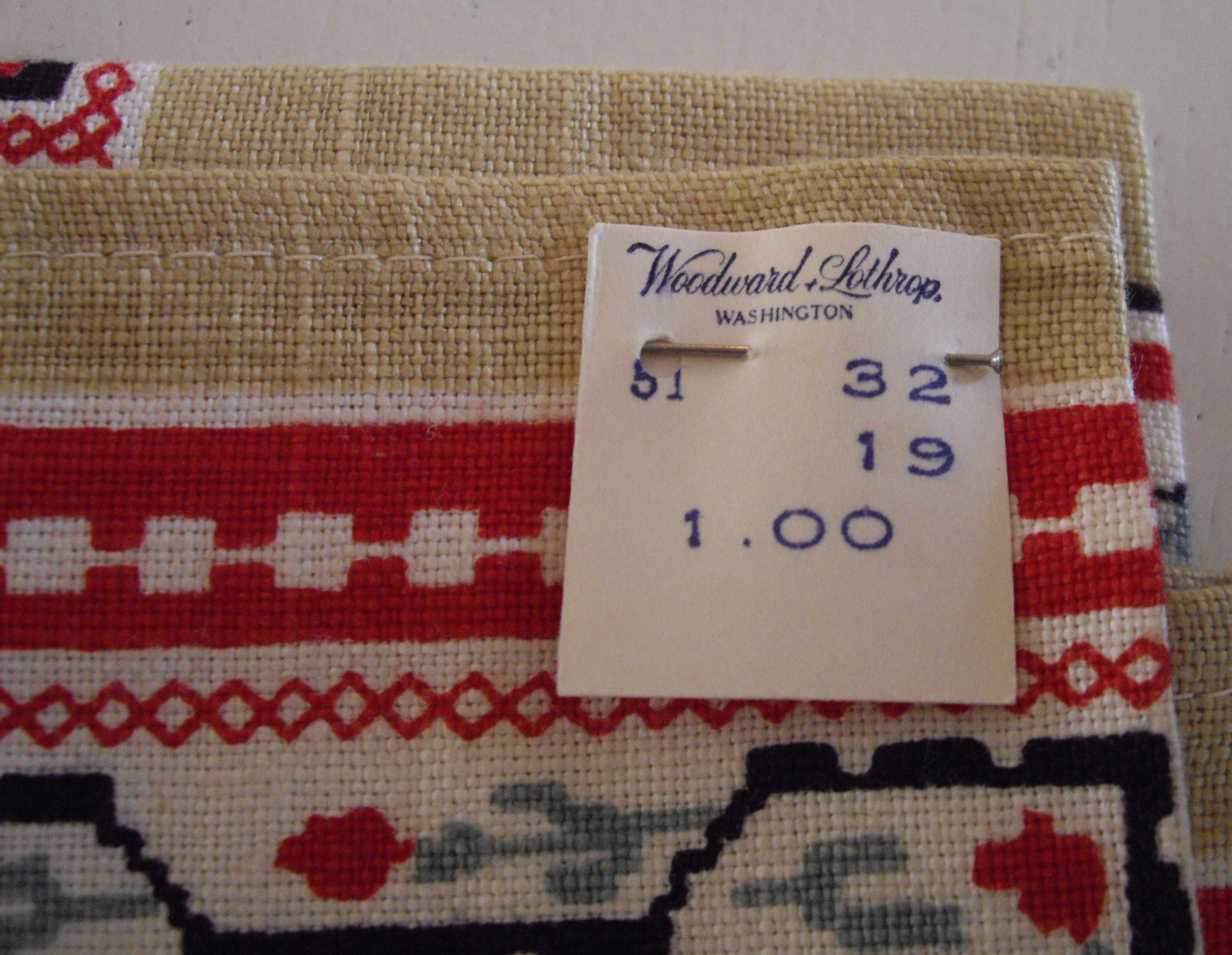
I was reminded of this again when I received a vintage linen kitchen towel in the mail that I had won on eBay. (Yes, I also collect these.)

towel1

It had clearly never been used. It even sported the original Woodward and Lothrop price tag pinned to it. How long has it been since they pinned on price tags? Or, for that matter, since anything cost a dollar? Or since Woodward and Lothrop closed its doors?

tag1

I say, use the good china! Light the candles! Bring out the cloth napkins! When my kids were growing up, we always did. It gives meals a certain gravitas and everyday elegance which is lacking in our do-it-fast, throw-away world. There is no denying that even McDonalds hamburgers taste better on Wedgwood.

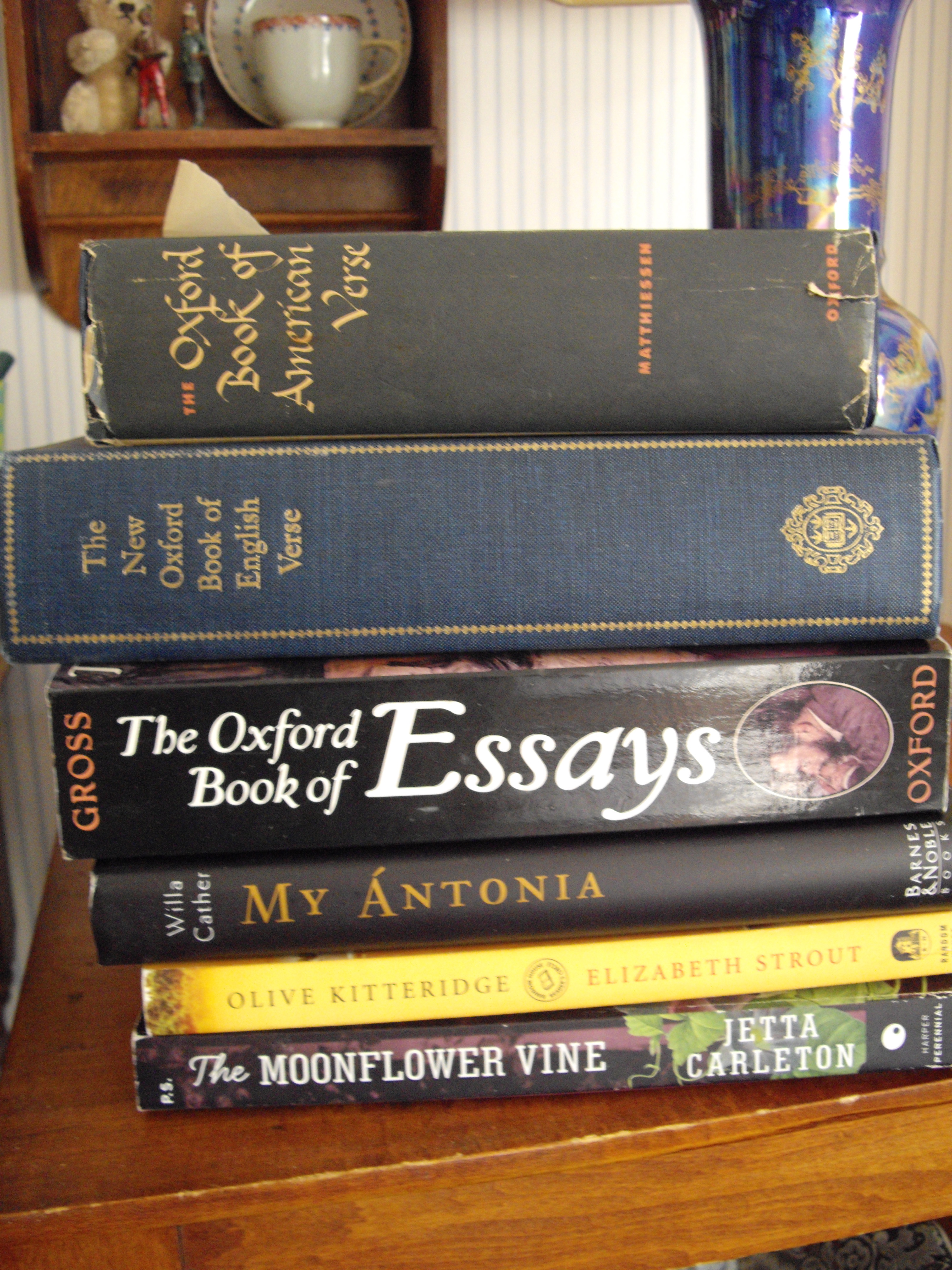
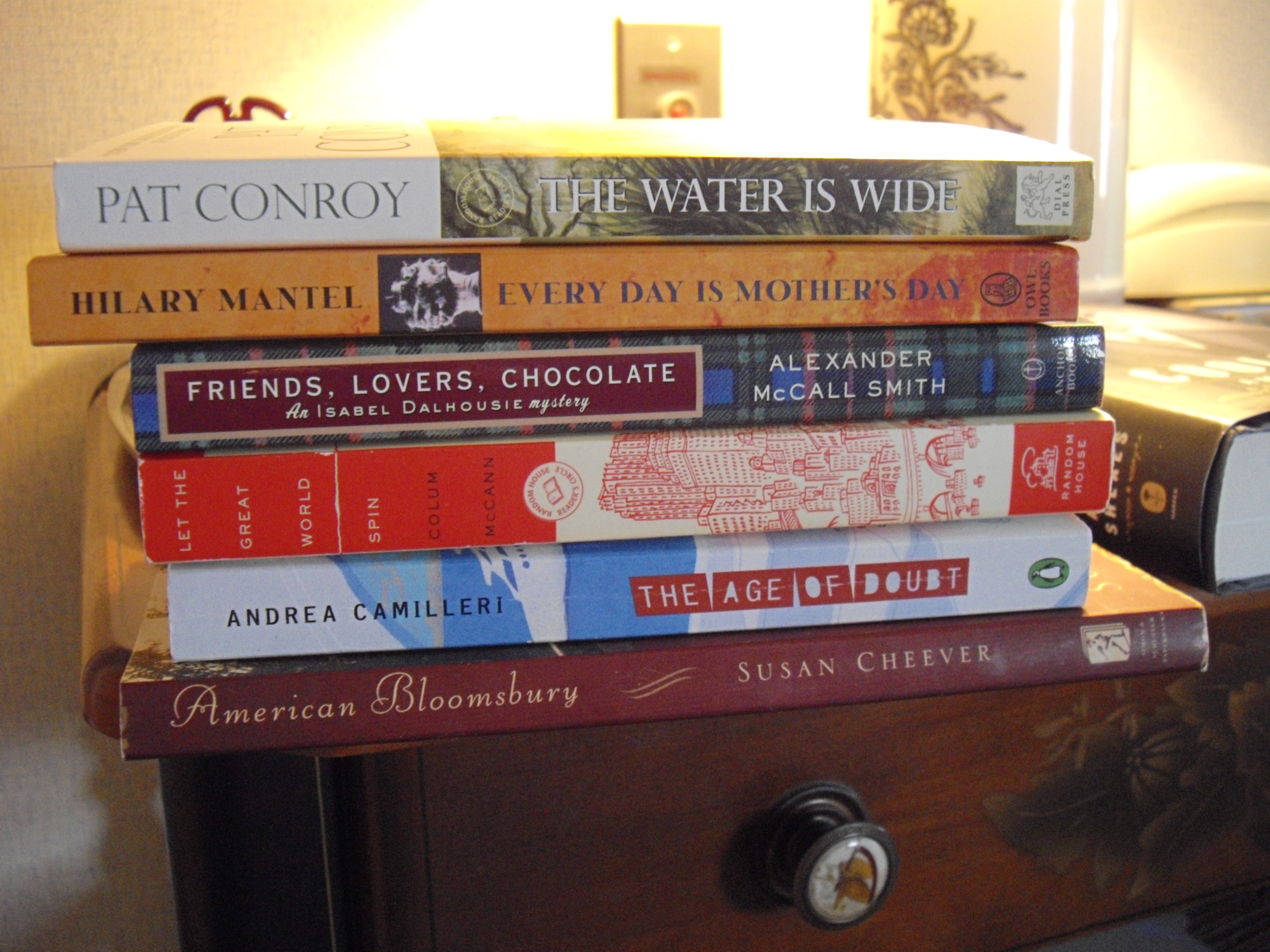
On another note, I went to the book fair at our local Unitarian Church this weekend. It is my experience that Unitarians and “ethical humanists” in general, have the best book sales, and once again I came away with two bulging bags of books. Some of them are duplicates and I will send them off to daughters #1 and #2.

book1

But quite a few I bought for myself. Ah, such a satisfying (and cheap) indulgence!

books2

It is, however, difficult to decide what to read after reading three novels by Willa Cather. I mean how do you follow that? I may have to resort to some mindless fun like this:

elmoreL

In other news, the boy, who is the head coach of the J.V. lacrosse team of one of our local public high schools–one known, let us say, more for its academic prowess than for its sports prowess–led his team to victory (in overtime) in their first game. (And the game was against a R.C. school, known conversely for being a sporting powerhouse.)

lax

Way to go, Hounds! (Greyhounds, that is, not Hounds of Hell–that would be the other team. But now I am mixing up my religious orders. Mea culpa.)

What did you do this weekend?

The good reader*

by chuckofish

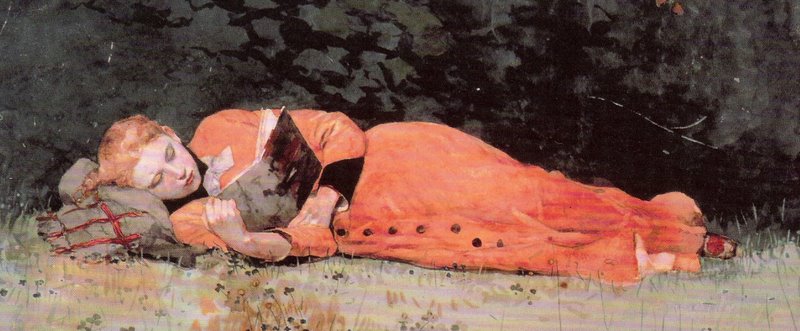
Winslow Homer, "Girl Reading"

Winslow Homer, “Girl Reading”

“The only advice … that one person can give another about reading is to take no advice, to follow your own instincts, to use your own reason, to come to your own conclusions. If this is agreed between us, then I feel at liberty to put forward a few ideas and suggestions because you will not allow them to fetter that independence which is the most important quality that a reader can possess. After all, what laws can be laid down about books? The battle of Waterloo was certainly fought on a certain day; but is Hamlet a better play that Lear? Nobody can say. Each must decide that question for himself. To admit authorities, however heavily furred and gowned, into our libraries and let them tell us how to read, what to read, what value to place upon what we read, is to destroy the spirit of freedom which is the breath of those sanctuaries. Everywhere else we may be bound by laws and conventions — there we have none.”

–Virginia Woolf, How Should One Read a Book? (1925)

*”Tis the good reader that makes the good book; in every book he finds passages which seem confidences or asides hidden from all else and unmistakenly meant for his ear; the profit of books is according to the sensibility of the reader; the profoundest thought or passion sleeps as in a mine, until it is discovered by an equal mind and heart.”
― Ralph Waldo Emerson