dual personalities

Tag: birthdays

“In my case, self-absorption is completely justified.”*

by chuckofish

Today is the birthday of the wonderful character actor Clifton Webb (November 19, 1889 – October 13, 1966). Born Webb Parmelee Hollenbeck (what a great name!) in Indianapolis, Indiana, he moved to New York City with his mother Maybelle when his parents divorced. By age 19 he was a professional ballroom dancer using the stage name Clifton Webb.

Between 1913 and 1947, Webb appeared in 23 Broadway shows, starting with major supporting roles and quickly progressing to leads. He introduced Irving Berlin’s “Easter Parade” and the Gershwin’s “I’ve Got a Crush on You” in Treasure Girl (1928). Most of Webb’s Broadway shows were musicals, but he also starred in Oscar Wilde’s The Importance of Being Earnest and in his longtime friend Noel Coward’s Blithe Spirit and Present Laughter.

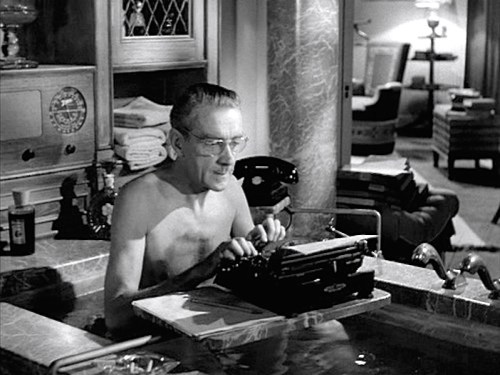
Movies followed and he made some great ones: Laura (1944), of course,

bathtub-typing

and The Razor’s Edge (1946)–he received a supporting actor Oscar nomination for both. But remember him in Sitting Pretty (1948) where he played Mr. Belvedere for the first time? This movie is hysterical.

017_sitting_pretty_dvd

And he received a leading actor Oscar nomination for it. (Laurence Olivier won that year for Hamlet–go figure.) He made three Mr. Belvedere movies and also Cheaper By the Dozen (1950)–another classic Webb role.

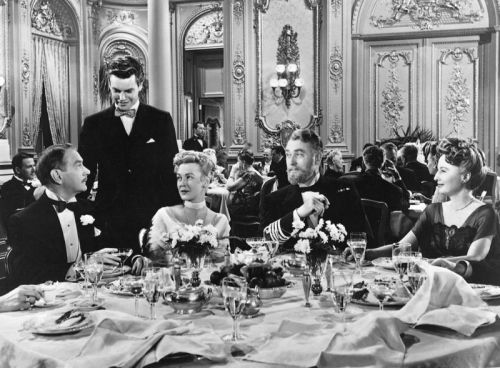
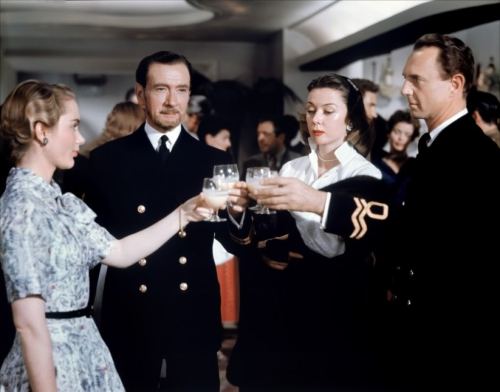
I also really like him as Barbara Stanwyck’s husband in the under-appreciated Titanic (1953)

1689721,kpNLHl8hwAsdhCAEetKf7gTwyrekETl9nwvUGYYmnugA4+dduLjXVruWRd7EkIuGViTMsXj+BpJkjE2irqViww==

and in the English war movie The Man Who Never Was (1956).

TheManWho1956

He was equally adept at comedy and drama–never over-doing either. You could probably argue that Clifton Webb always played Clifton Webb, but he was always wonderful, so who cares?

He lived with his mother until her death at age 91 in 1960, leading Noel Coward to remark, apropos Webb’s grieving, “It must be terrible to be orphaned at 71.”

A toast to Clifton Webb and, if you can find one of his movies, watch it!

*Waldo Lydecker (Clifton Webb) in Laura (1944)

Old man take a look at [your] life

by chuckofish

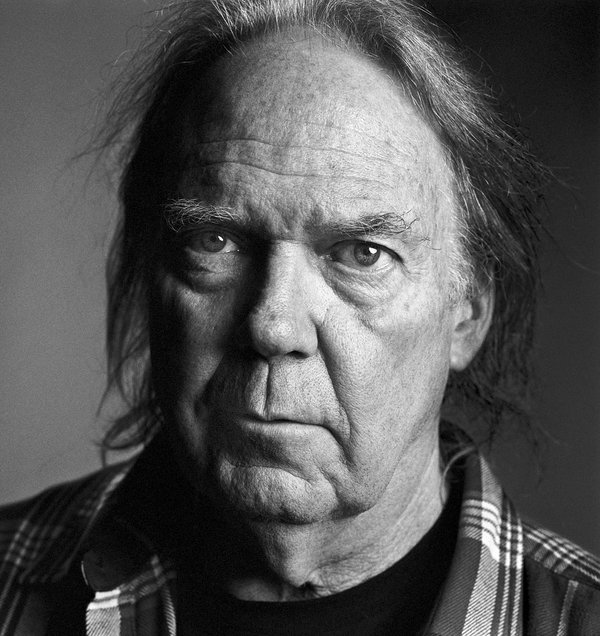
Okay, get this–today is Neil Young’s birthday

neil-young-ii

and he is seventy years old!

23young1-articleLarge

Well, the fact that he is old, makes me feel old. Zut alors, look at how the time goes past!*

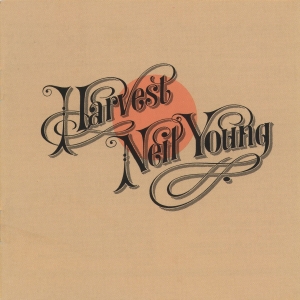
Harvest, you will recall, was the #1 best-selling album in the U.S. in 1972 when I was in the 10th grade. Even I owned it, which is saying something.

NeilYoungHarvestalbumcover

So cut me some slack.

Happy birthday, Neil. You’re kind of a tool and a preachy one at that, but I’ll toast you tonight anyway and your survival to the ripe old age of 70.

 *Clever inclusion of NY lyric

Friday movie picks

by chuckofish

Earlier in the week it was the birthday of character actor Martin Balsam (1919-1996) who, I was reminded, was in a lot of my favorite movies. For instance he was in Breakfast at Tiffany’s (1961)–
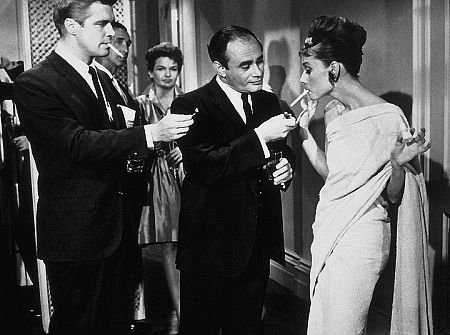
MV5BNjkwMzk0NTAzN15BMl5BanBnXkFtZTYwNTQwNTI2._V1_SX640_SY720_playing O.J. Berman, Holly’s agent. (“Hey, Fred-baby!”)

He was in A Thousand Clowns (1965)–
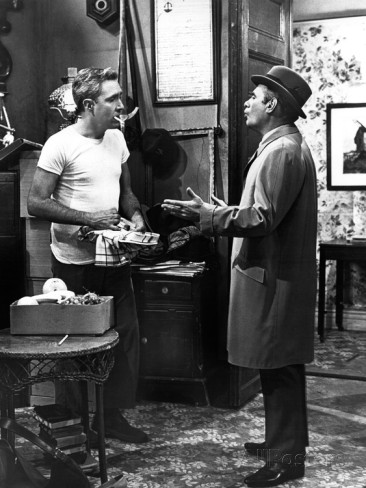
a-thousand-clowns-jason-robards-martin-balsam-1965

as Murray’s brother Arnold. (He won an Oscar for this one.)

He was in Hombre (1967)–
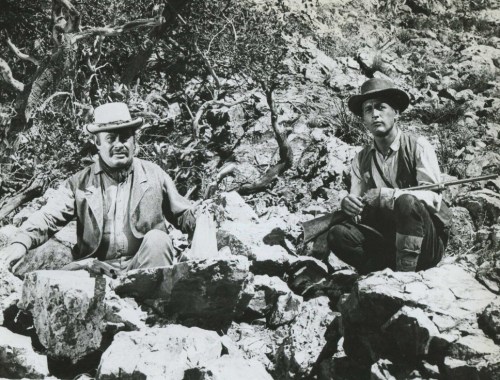
968full-martin-balsam

playing Paul Newman’s friend Henry Mendez.

Indeed, he was all over television and movies in the sixties and seventies and all the way to end of the millennium. As an ethnically-ambiguous Jew from the Bronx he could play everything from Mexican bandits to  Wasp admirals and he did, over and over. He was like Ward Bond in an earlier generation, always popping up in random movies. What  a career!

So I suggest you watch a movie with Martin Balsam in it. There are a lot of good ones from which to choose!

I will also note that I watched Melissa McCarthy’s Spy (2015) the other night.

spy-2015-movie

I am not a big fan of Ms. McCarthy–she is frequently over-the top in the vulgarity department–but I thought this movie was really funny. Besides McCarthy, the movie features Jude Law as a James Bond-type spy and Jason Statham in a parody of himself. Allison Janney is great as the Boss Lady who is a super bitch, but has been there and seen that and, in the end, understands.

The use of the f-bomb in this movie is a parody in itself. As Rose Byrne says, “What f**kery is this?”

When all is said and done, Paul Fieg (the writer) manages to make some good points about women who are ignored, stereotyped, laughed at, and generally under-appreciated because they are not traditionally beautiful, thin, assertive etc.

Anyway, I laughed non-stop to the point of embarrassment. My eyes were streaming with tears. The OM sat stone-faced throughout, of course, but he did stay for the whole movie, which is unheard of practically, and I think he smiled a few times.

So try it; you might like it.
“Color is vulgar, beauty is unimportant, and nature is trivial.”*

by chuckofish

Today  is the birthday of American photographer Walker Evans (1903-1975). Evans was born in St. Louis and attended Williams College for a year before dropping out and heading to Paris to be a writer.

He took up photography in 1928 after returning to the U.S. In the summer of 1936 he and writer James Agee were sent by Fortune magazine on assignment to Hale County, Alabama for a story the magazine subsequently opted not to run. (I wonder why?)

Walker Evans, [Floyd and Lucille Burroughs, Hale County Alabama], 1936. Gelatin silver print. Mandatory Credit: ©Walker Evans Archive, The Metropolitan Museum of Art /Published: The New York Times on the Web 07/18/99 Books PLEASE CONTACT Margaret M. Doyle, Senior Press Officer at The Metropolitan Museum of Art (212)-650-2128 FOR FUTURE REPRODUCTION USE.

walker-evans

hb_1995.266.2

In 1941 Evans’s photographs and Agee’s text detailing the duo’s stay with three white tenant families in southern Alabama during the Great Depression were published as the book Let Us Now Praise Famous Men. I remember reading this book in school–I can’t remember when, but it was quite a book.

Anyway, Walker Evans’ photographs surely prove the old adage: A picture is worth a thousand words.

WALKER EVANS 1

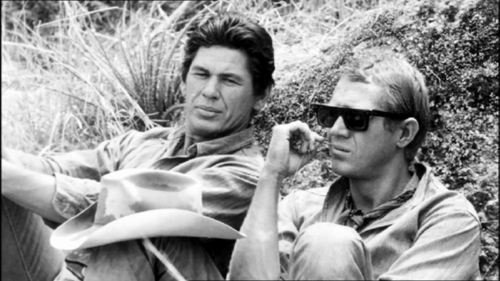
A toast to Walker Evans tonight! And another toast to another birthday boy, Charles Bronson (1921-2003)–actor and all-around cool dude.

tumblr_lm1r71Fo4U1qz5q5oo1_500

On the set of “The Magnificent Seven” with Steve McQueen, 1960

*Walker Evans…The boy said something very similar as a small child once. I asked him why he never used color in his very detailed pencil drawings. He replied, “Color is evil,” which stopped me in my tracks.

Friday movie pick: ”Call your baby, My wife’s having a husband”*

by chuckofish

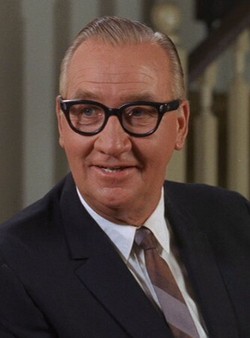
Today we say happy birthday to Edward Andrews, character actor extraordinaire and Episcopalian. He was born to be the senior warden** in some fancy church, don’t you think?

6718528_116604361829

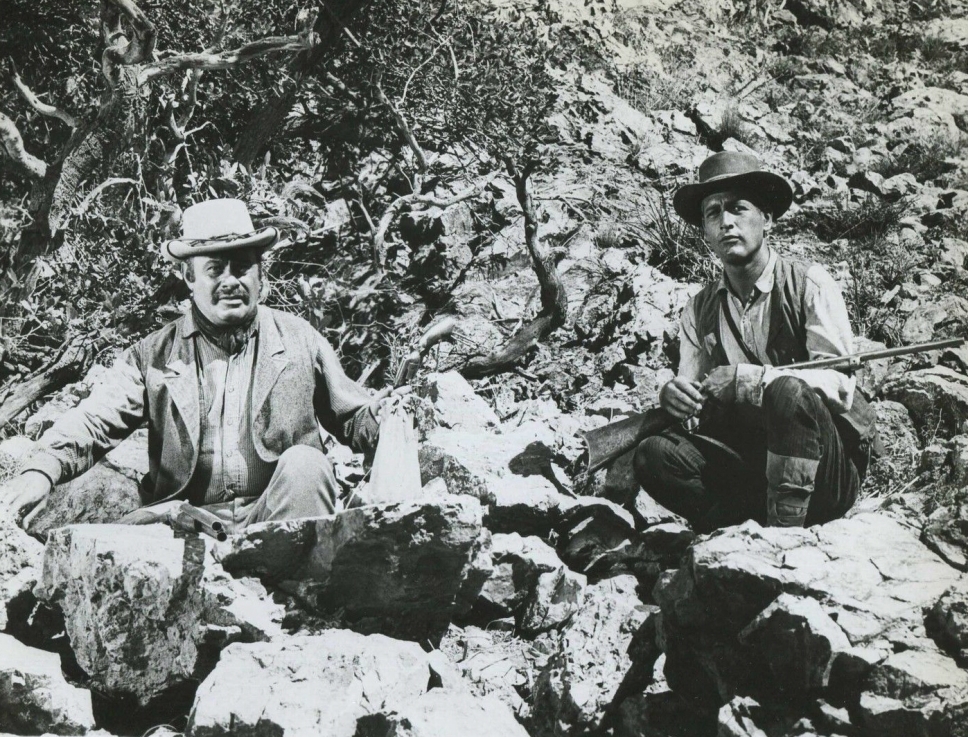
In actuality he was the son of an Episcopal minister, born in Georgia in 1914. He attended the University of Virginia, and at age 21, made his stage debut in 1935, progressing to Broadway the same year. His movie career didn’t take off until he was in his forties, but he was made for the movies. Of course you remember him.  He was perfect as both the harried executive and the slightly sleazy politician/military type. He frequently played The Mayor.

Last weekend I watched Send Me No Flowers (1964) in honor of Rock Hudson, and Andrews was hysterical as the doctor who puts up with Rock’s hypochondria.

He is also great in The Thrill of it All (1963) with Doris Day and James Garner, playing the flustered older father-to-be and advertising executive.

He was a staple on television from the 1950s until he his death in 1985. He was everywhere.

Anyway, one of Andrews’ movies might be just the ticket tonight as I know darn well it will be too stressful to watch the Cardinals take on the Cubs. Of course everyone in 49 states and Kansas City will be rooting for the Cubs against the Cards. That is always the way it is in the post-season. I hate it, but what can I do?

Pray  hard.

bravo__bravo__el_birdo.0

*Gardiner Fraleigh in The Thrill of It All

**The senior warden in an Episcopal Church works alongside the parish rector. Together they share with their congregation the mission and vision of the parish and manage its operations as well. They also identify and work with members of the congregation who show leadership qualities or abilities and model ways of incorporating the Gospel in their daily lives.

An’ The Raggedy Man, he knows most rhymes, An’ tells ’em, ef I be good, sometimes

by chuckofish

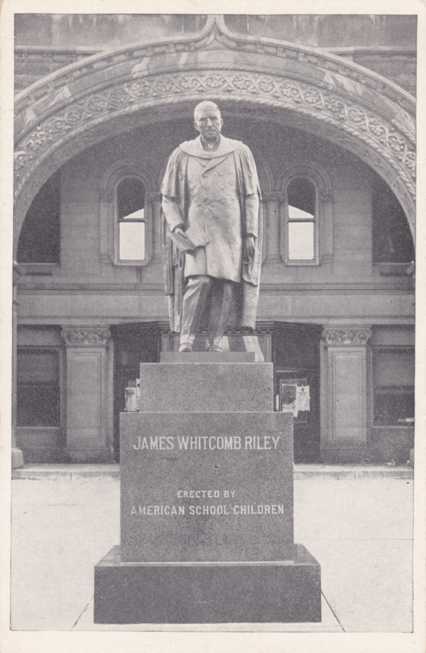
Today is the birthday of James Whitcomb Riley (October 7, 1849 – July 22, 1916) who was an American writer, poet, and best-selling author, frequently referred to as the “Hoosier Poet.”

Statue in Greenfield, Indiana

Statue in Greenfield, Indiana

I suppose no one reads his poems anymore. (Although–surprise!– his books are still in print.)

I remember my mother reading them aloud to us with great gusto. There was Little Orphant Annie

Little Orphant Annie’s come to our house to stay,
An’ wash the cups an’ saucers up, an’ brush the crumbs away,
An’ shoo the chickens off the porch, an’ dust the hearth, an’
sweep,
An’ make the fire, an’ bake the bread, an’ earn her board-
an-keep;
An’ all us other childern, when the supper-things is done,
We set around the kitchen fire an’ has the mostest fun,
A-listenin’ to the witch-tales ‘at Annie tells about,
An’ the Gobble-uns ‘at gits you
Ef you
Don’t
Watch
Out!

and The Raggedy Man

O The Raggedy Man! He works fer Pa;
An’ he’s the goodest man ever you saw!
He comes to our house every day,
An’ waters the horses, an’ feeds ’em hay…

Indeed, they were fun to read and fun to listen to. That is no doubt why Riley was among the most popular writers of the late nineteenth and early twentieth century.

So join me in a toast to the forgotten Hoosier poet, James Whitcomb Riley. (Perhaps with one of these.)

I leave you with this picture of another famous Hoosier reading some JWR poetry for fun and personal enrichment.

dean riley

Enjoy your Wednesday–and don’t let the Gobble-uns git you!

Like a flash of light*

by chuckofish

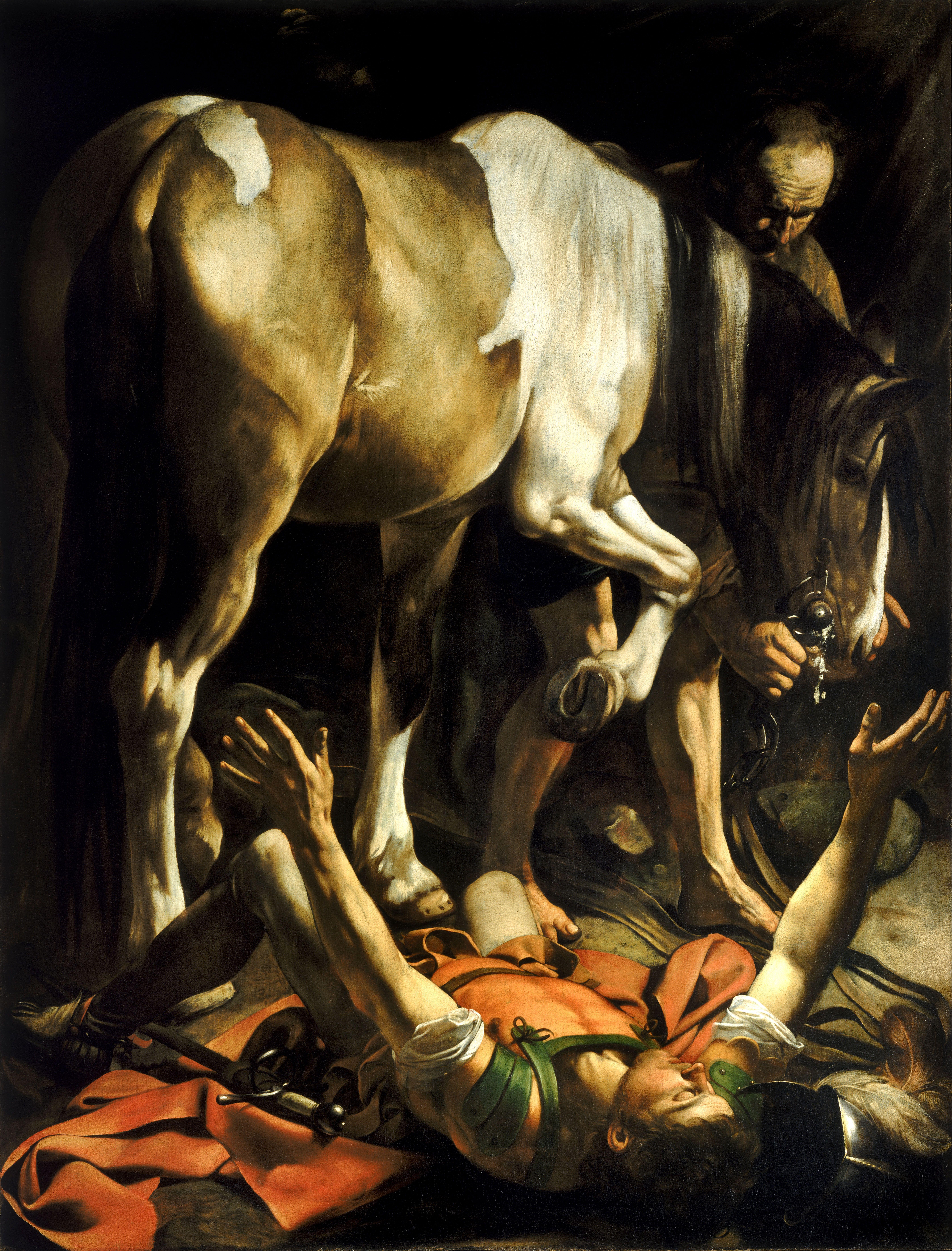
Conversion_on_the_Way_to_Damascus-Caravaggio_(c.1600-1)

“And he fell to the earth, and heard a voice saying unto him, Saul, Saul, why persecutest thou me?”

Today is the birthday of the Italian painter Caravaggio (1571–1610). I am not a big fan of his art, but I have always liked his painting of the conversion of Saint Paul. It is realistic and dramatic and the light–wow. Clearly something big is happening to Saul of Tarsus under the hooves of his horse.

Anyway, it gives us an opportunity to think about conversion today. Here is Frederick Buechner on the subject:

There are a number of conversions described in the New Testament. You think of Paul seeing the light on the road to Damascus (Acts 9:1-19), or the Ethiopian eunuch getting Philip to baptize him on the way from Jerusalem to Gaza (Acts 8:28-40). There is also the apostle Thomas saying, “My Lord and my God!” when he is finally convinced that Jesus is alive and whole again (John 20:26-29), not to mention the Roman centurion who witnessed the crucifixion saying, “Truly this man was the Son of God” (Luke 23:47). All these scenes took place suddenly, dramatically, when they were least expected. They all involved pretty much of an about-face, which is what the word conversion means. We can only imagine that they all were accompanied by a good deal of emotion.

But in this same general connection there are other scenes that we should also remember. There is the young man who, when Jesus told him he should give everything he had to the poor if he really wanted to be perfect as he said he did, walked sorrowfully away because he was a very rich man. There is Nicodemus, who was sufficiently impressed with Jesus to go talk to him under cover of darkness and later to help prepare his body for burial, but who never seems to have actually joined forces with him. There is King Agrippa, who, after hearing Paul’s impassioned defense of his faith, said, “Almost thou persuadest me to be a Christian” (Acts 26:28, KJV). There is even Pontius Pilate, who asked, “What is truth?” (John 18:38) under such circumstances as might lead you to suspect that just possibly, half without knowing it, he really hoped Jesus would be able to give him the answer, maybe even become for him the answer.

Like the conversions, there was a certain amount of drama about these other episodes too and perhaps even a certain amount of emotion, though for the most part unexpressed. But of course in the case of none of them was there any about-face. Presumably all these people kept on facing more or less the same way they had been right along. King Agrippa, for instance, kept on being King Agrippa just as he always had. And yet you can’t help wondering if somewhere inside himself, as somewhere also inside the rest of them, the “almost” continued to live on as at least a sidelong glance down a new road, the faintest itching of the feet for a new direction.

We don’t know much about what happened to any of them after their brief appearance in the pages of Scripture, let alone what happened inside them. We can only pray for them, not to mention also for ourselves, that in the absence of a sudden shattering event, there was a slow underground process that got them to the same place in the end.

–Frederick Buechner, Beyond Words

Discuss among yourselves.

*”Like a flash of light, I realized in what an abyss of errors, in what chaos I was.” (John Calvin)

Something Wonderful

by chuckofish

I am back from my jaunt to NYC and I am exhausted. I had a wonderful time with daughter #1, celebrating her birthday.

IMG_6019

But I need to go to work today, so if you don’t mind, you’ll have to wait until tomorrow to hear about it. Onward and upward.

Thy daily stage of duty run

by chuckofish

IMG_1350 (1)

I labored all weekend to get things ship-shape in my newly painted and papered master bedroom/bath and everything looks great.

IMG_1348 (1)

I am very pleased. Unfortunately my photography skills are lacking, so you’ll just have to take my word for it. My wallpapered accent wall is fabulous. Everything else is clean and bright and creamy white.

Our Labor Day bar-b-que went well, but I forgot to take pictures.

Well, three day weekends are the best, right?

Now I have a two-day work week and then I head up to NYC to celebrate daughter #1’s birthday. We are going to walk around Central Park, see The King and I at Lincoln Center, check out the John Singer Sargent exhibit at the Met, take the ferry to Governor’s Island and the Brooklyn Ferry to Brooklyn where we will check out the Plymouth Church, and go to Dear Irving for birthday drinks with D#1’s friends. She has the itinerary all worked out (with naps scheduled in) and places to eat and drink. I love when someone else figures everything out for me!

In the meantime let’s not to forget to raise a toast tonight to the great man Joshua Lawrence Chamberlain (September 8, 1828 – February 24, 1914) whose birthday is today.

Joshua_Chamberlain_-_Brady-Handy

And take a minute to listen this Steve Earle song about ol’ Col. Chamberlain and the 20th Maine.

https://www.youtube.com/watch?v=Z2qyqZvW_AY

Enjoy your Tuesday!

In the old days

by chuckofish

2.The Lookout Ð "All's Well" Winslow Homer (American, 1836Ð1910) 1896 Oil on canvas *Museum of Fine Arts, Boston. Warren CollectionÑWilliam Wilkins Warren Fund *Photograph © Museum of Fine Arts, Boston

“All’s Well”, Winslow Homer 1896

“It was a dog’s life,” said the poor old gentleman, quite reassured, “but it made men of those who followed it. I see a change for the worse even in our own town here; full of loafers now, small and poor as ’tis, who once would have followed the sea, every lazy soul of ’em. There is no occupation so fit for just that class o’ men who never get beyond the fo’cas’le. I view it, in addition, that a community narrows down and grows dreadful ignorant when it is shut up to its own affairs, and gets no knowledge of the outside world except from a cheap, unprincipled newspaper. In the old days, a good part o’ the best men here knew a hundred ports and something of the way folks lived in them. They saw the world for themselves, and like’s not their wives and children saw it with them. They may not have had the best of knowledge to carry with ’em sight-seein’, but they were some acquainted with foreign lands an’ their laws, an’ could see outside the battle for town clerk here in Dunnet; they got some sense o’ proportion. Yes, they lived more dignified, and their houses were better within an’ without. Shipping’s a terrible loss to this part o’ New England from a social point o’ view, ma’am.”

–Sarah Orne Jewett, The Country of the Pointed Firs

Today is the birthday of Sarah Orne Jewett (September 3, 1849 – June 24, 1909)–American novelist, short story writer and Episcopalian.

sarah-orne-jewett-at-her-desk1

The Sarah Orne Jewett House is a historic house museum at 5 Portland Street in South Berwick, Maine, which is just over the border from New Hampshire. Built in 1774,  it is an excellent example of late Georgian architecture.

Jewett House

I guess I’ll have to add it to my list of literary/historic places to visit. In the meantime, let’s toast old Sarah and maybe re-read The Country of the Pointed Firs, which I have somewhere. You can download it here.

While we’re toasting Sarah, we may want to raise a glass to Sally Benson (September 3, 1897 – July 19, 1972) whose birthday is also today. She was a screenwriter and prolific short story writer for The New Yorker back in its heyday. She is best known for her semi-autobiographical stories collected in Junior Miss and Meet Me in St. Louis. Yes, that “Meet Me in St. Louis.”

Meet_Me_In_St_Louis_Poster

Her other screen credits include Shadow of a Doubt (1943) for Alfred Hitchcock, Summer Magic (1963) for Walt Disney, Viva Las Vegas (1964) for Elvis, and The Singing Nun (1966)–quite a disparate group!  Her screenplay for Anna and the King of Siam (1946) was nominated for an Academy Award.

Here is a sketch of the St. Louis house in which Sally grew up:

Sketch-of-the-Real-5135-Kensington-Ave-house

This North St. Louis neighborhood “declined” and the house was torn down in 1994. Here’s a picture of the Hollywood version:

Meet-Me-in-St.-Louis-movie-house-side-view-summer-porch

(The pictures of the “Meet Me in St. Louis” houses were found here on a fun blog about houses.)

The Hollywood version was eventually torn down too when MGM sold off its lots in the 1970s.

C’est la vie. Plus ça change, plus c’est la même chose. (See above quote.)