Things of minor consequence
by chuckofish
This has turned into a busier week than usual. I am actually making to-do lists!
I am finishing up an article for the Kirkwood Historical Review about the renovation of Mudd’s Grove, the 165-year old home which the Historical Society bought in 1992 and made their headquarters. The house had been allowed to fall into wrack and ruin and was in really terrible shape when it was rescued.

It is sad when this happens and I am sympathetic to the poor soul who lived there and for years pretended to be “working” on the house. Ultimately it took hundreds of thousands of dollars and hundreds of volunteer hours to accomplish its renovation.
It is the showplace of our town now and a testament to what volunteers can do.

In my humble opinion, people would do well to give more money to historic preservation and less to already massively-endowed schools and universities that no longer teach much worth learning anyway. Maintaining historic homes and buildings is an ongoing endeavor–money is always needed–and the local, state and federal governments don’t do much to support this kind of thing.
Well, I’ll get off my soapbox.
Speaking of history, a lot of interesting things happened on April 10, among them: Archduke Maximilian of Hapsburg was proclaimed emperor of Mexico in 1864, Confederate General Robert E. Lee addressed his troops for the last time in 1865 following his surrender to General Grant the day before, the Titanic set sail in 1912, The Great Gatsby was published in 1925, and in 1939 the A.A. “Big Book” was published. In 1970 Paul McCartney announced he was leaving the Beatles.
We also remember Michael Curtiz, the great Hungarian director, who died on this day in 1962. He came to Hollywood in 1926, when he was 39 years old. He had already directed 64 films in Europe, and soon helped Warner Bros. become the fastest-growing movie studio. He directed 102 films during his Hollywood career, mostly at Warners, where he directed ten actors to Oscar nominations. He himself was nominated five times, and won twice, once for Best Short Subject for Sons of Liberty (1939) and once for Best Director for Casablanca (1942). The secret to his success was his amazing versatility–he could handle any film genre: melodrama, comedy, love story, western, film noir, musical, war story, or historical epic. He cared about the human-interest aspect of every story, stating that the “human and fundamental problems of real people” were the basis of all good drama.
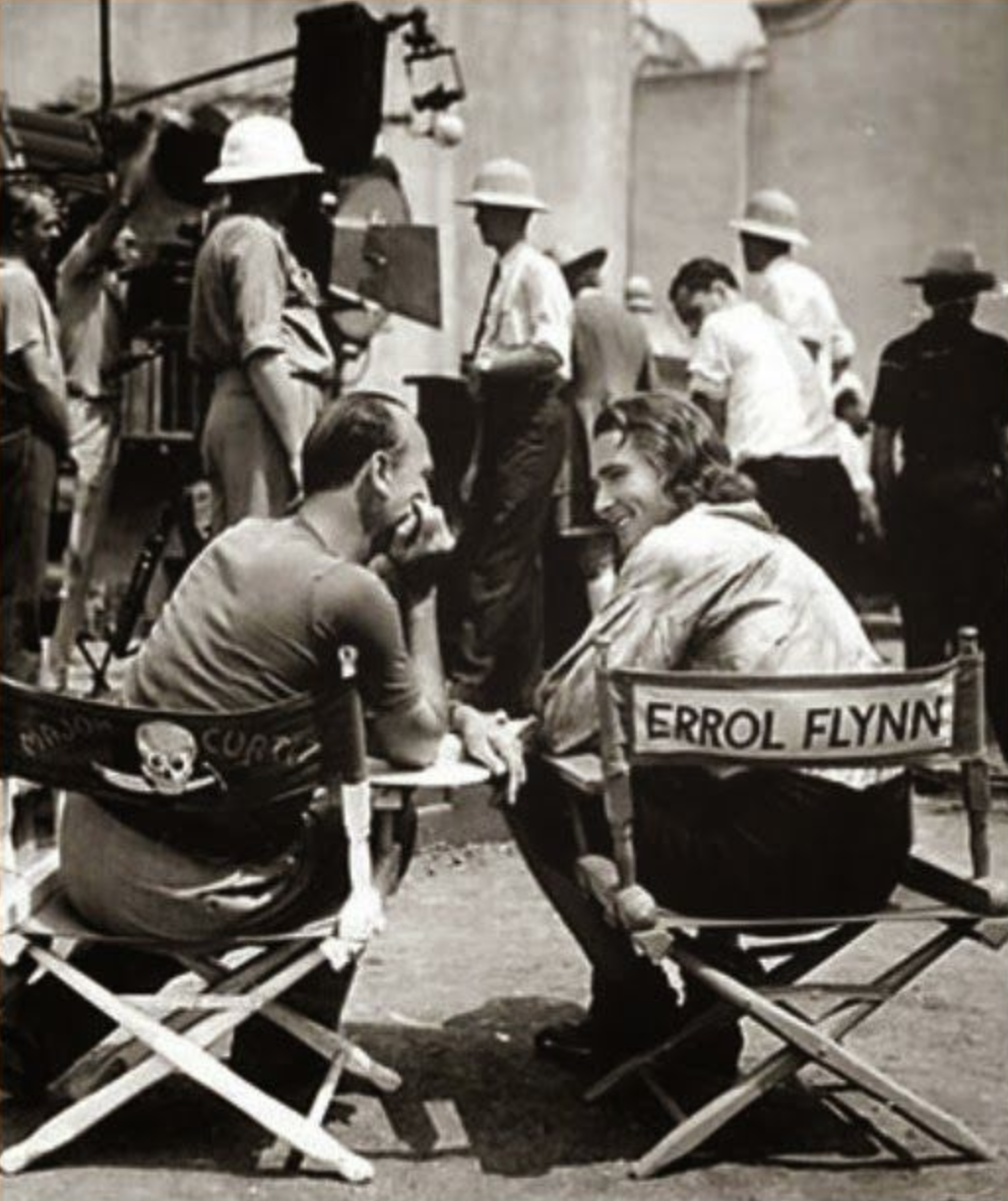
A look at the list of movies he directed shows his range and his amazing success. I’m thinking something with Errol Flynn might be in order tonight.
 dual personalities
Great stuff! I’d love to explore the historic homes and/or historical societies around here.
Mudd’s Grove is beautiful and you are right about supporting historical preservation!
Terrific–and full of interesting tidbits!
Maybe The Comancheros!
Yes! Curtiz’s final movie. JW helped direct it when MC was too sick to come to work.