But Nature cast me for the part she found me best fitted for, and I have had to play it and must play it till the curtain falls.*
by chuckofish
Back when I was in college I took one theater class, about which I remember nothing except that I wrote a research paper on Edwin Booth. I chose the topic because we had a playbill at home that one of my ancestors had saved from an 1873 performance of Julius Caesar starring Booth, and I wanted to find out more about him.
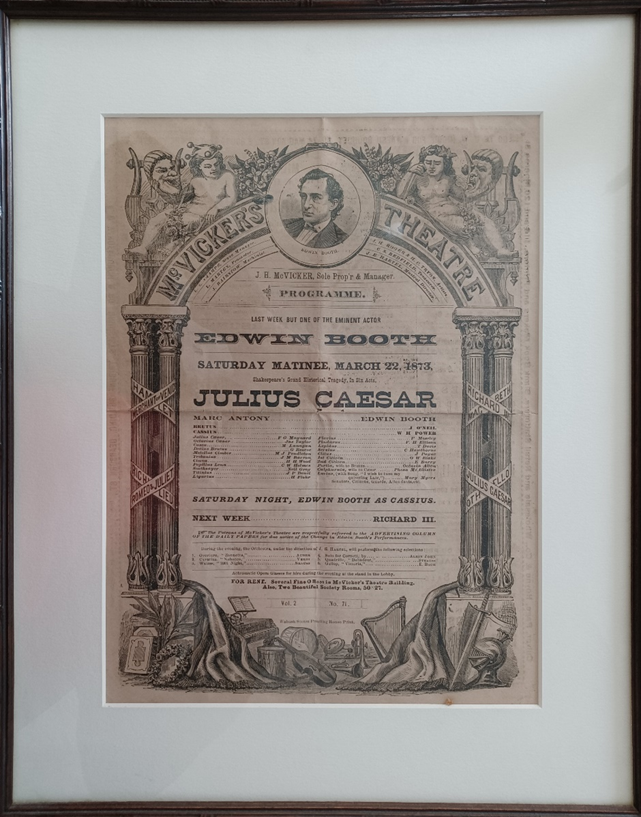
A few days ago, I came back to the topic and looked up the McVicker’s Theater, which I was surprised to discover was located in Chicago and not Boston as I had always assumed. Someone in the Carnahan family must have attended the play or perhaps one of the Rands kept the program as a souvenir after visiting from New Hampshire. The original theater was constructed in 1855 but burned down in the great Chicago fire of 1871, so our relatives (whoever they were) would have seen Julius Caesar in this new, luxurious building.
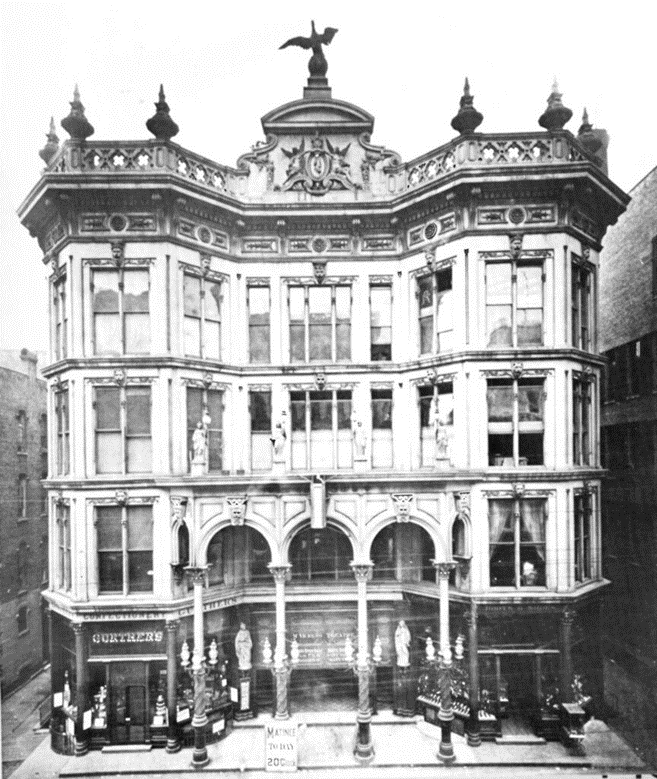
Over the years that followed, the theater burned down a second time and went through several remodelings until finally being demolished in 1985. Booth performed there off and on, from the start of his career until his retirement. In 1869, he took as his second wife Mary, the daughter of James McVickers, the theater’s eponymous owner.
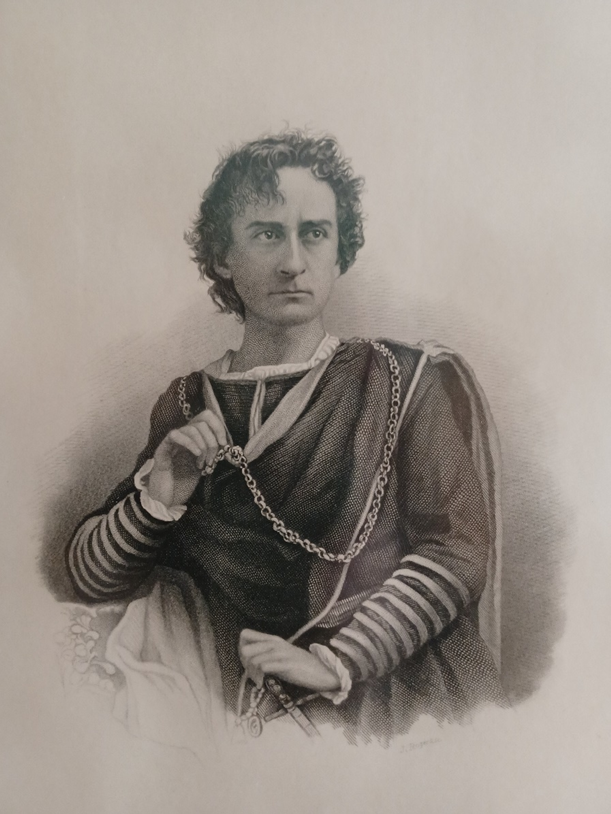
As an actor, Edwin Booth achieved renown, although now he is probably best known as the brother of John Wilkes Booth, Abraham Lincoln’s assassin. (I picked up this print of EB in St. Louis a few years ago.)
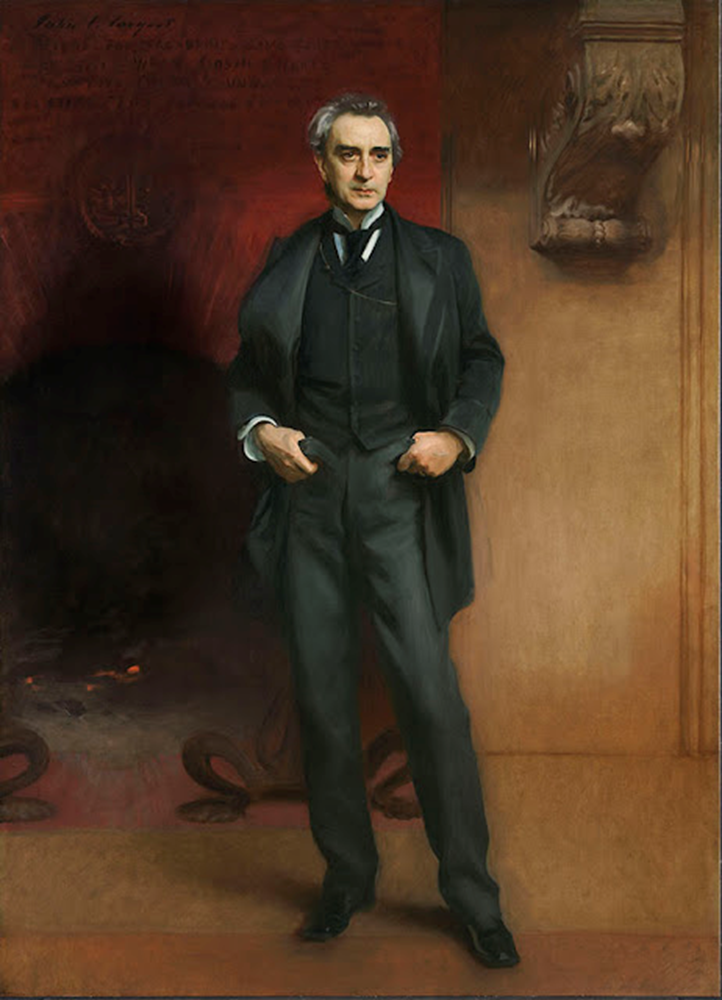
Edwin Booth’s personal life proved just as dramatic and full of tragedy as the parts he played. Being an actor, he abandoned himself to the real-life role of tragic hero quite naturally and perhaps unconsciously. He got drunk and ignored repeated calls to attend his (first) wife’s deathbed, a lapse that produced real anguish and lasting guilt. When his brother assassinated President Lincoln, Edwin left the stage until the need for funds and the urging of friends drove him back. His comeback as Hamlet became the stuff of legend, while the fact that he rescued Lincoln’s son from being run over by a train offered atonement for his brother’s horrific act. Yet he also received a fair number of death threats. In April 1879, someone even shot at him during a performance at McVicker’s Theater. Fortunately, no one was hurt. For Edwin Booth life imitated art. He played the tragic hero on and off stage. John Singer Sargent’s portrait, finished toward the end of the actor’s life, captures his subject’s careworn vitality perfectly.
As I looked around for information, I came across a 1955 movie called Prince of Players, in which Richard Burton plays Edwin Booth! Now there’s a thought. I haven’t found a way to watch the whole thing yet, but in case you’re curious here’s a longish scene. It appears that the screenwriter thought Edwin had father problems…
The world is a funny place and its history full of interesting people and events.
Enjoy your weekend!
*Edwin Booth quoted in Edwina Booth Grossman (1894). “Edwin Booth: Recollections by His Daughter, Edwina Booth Grossmann, and Letters to Her and to His Friends”, New York: Century Company.
 dual personalities
I have seen the life size portrait of EB at the Sargent show at the Met. Very cool! I’d like to see the movie again–it’s been years–but I remember liking it and thinking it was a perfect vehicle for Richard Burton who fought similar demons.
Yes, I was going to say that Edwin Booth always makes me think of that trip and seeing the show at the Met. xo
Really interesting stuff!
I liked the clip! Hopefully I’ll get to watch the whole thing someday
That story of Booth saving Robert Todd Lincoln’s life at the train station was always one of my favorite wild historical coincidences. Edwin is a fascinating figure. Interestingly, he claims he only voted once in his entire life–for Lincoln’s reelection. I guess he didn’t share his brother’s politics.