Don’t tell me the moon is shining; show me the glint of light on broken glass*
by chuckofish
One of the real joys of life is learning new things. This week I learned all about ancient glassmaking and was amazed to discover some of the wonderful objects that have survived. Glassmaking didn’t really take off until the 1st century BC when some smart bloke invented the art of glassblowing. Until then they made pretty, but rather clunky, glass bottles by working them around a clay/dung core and then scraping out the core afterward. Core-formed glasswork is believed to have developed in the Near East sometime around the 16th century BC. Here’s an example of core-formed glass from Syria.
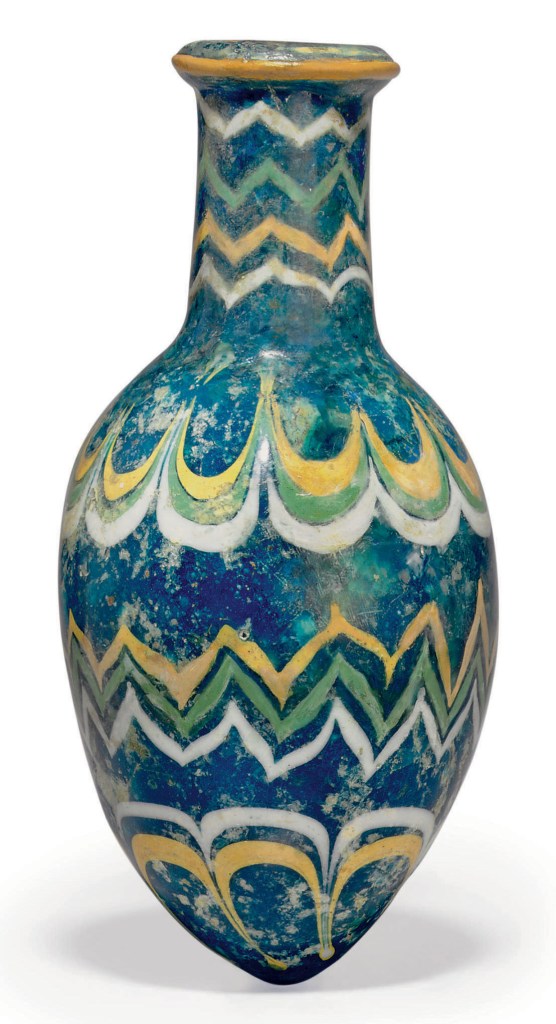
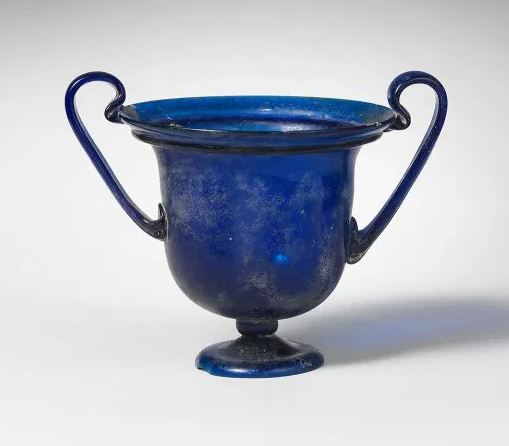
The design comes from adding spirals of colored glass and then raking them to create the pattern. It’s certainly pretty and represents a major technological advancement, but when compared to blown glass, well, it looks more like something you’d buy at a garage sale on the table marked “shabby chic”. Look at this 1st century BC Cantharus from the Metropolitan Museum of Art and you’ll see what I mean.
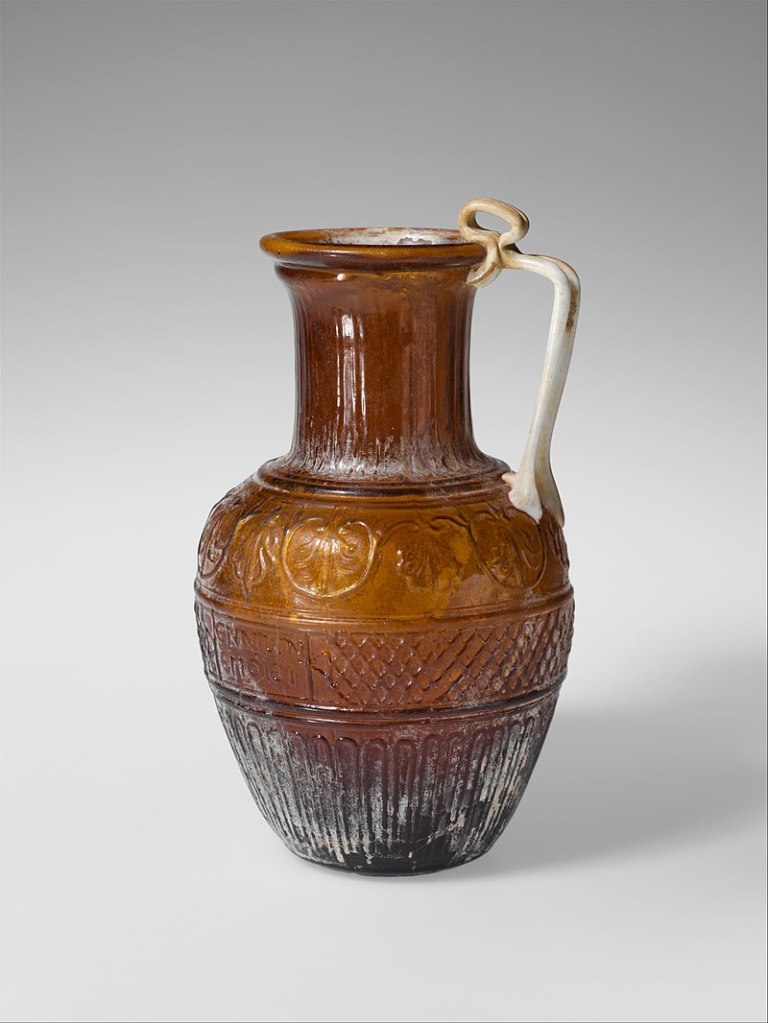
Sometimes glassmakers used molds to create beautiful designs. A Roman master named Ennion, working in the early first century AD, achieved the highest level of the art. Here’s an example of his work from the Corning Museum of Glass (which is now high on my bucket list of places to visit!).
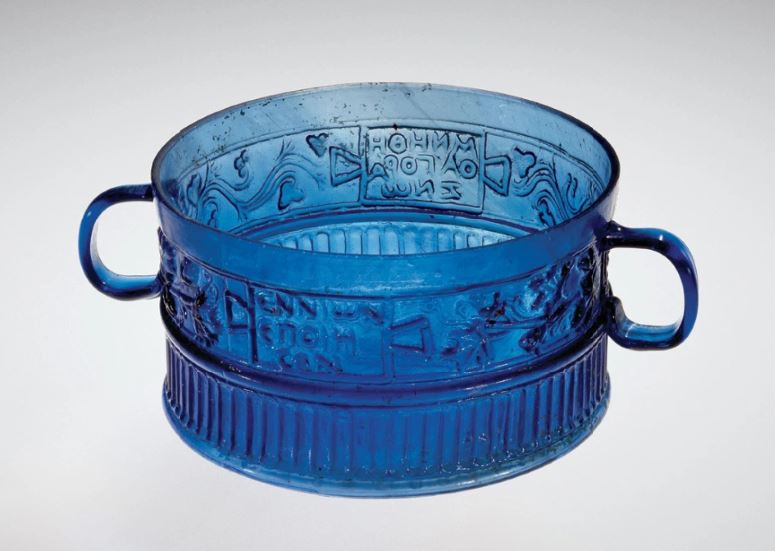
And here’s another of Ennion’s works from the Met just to prove that cobalt blue wasn’t the only color they used. It’s just my favorite.
By the late Roman Empire, in the 4th and 5th centuries AD glassmaking had reached its apogee; the cage-cup (diatretum) represents the extremes to which glassmakers would go for their art. Here’s a 4th century AD example from the Heritage museum Pljevja, Montenegro.
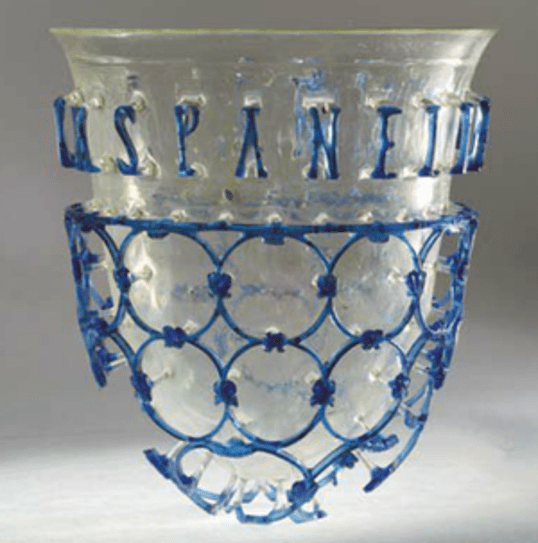
As I understand it, cage-cups were made by pouring two layers of (often) different colored glass together and then carving — yes, carving — the outer one into a delicate cage. One slip would ruin the whole thing. They often finished the cup off with a phrase carved along the top.
Of course, the marvel isn’t just that the ancients could make such gorgeous pieces but that so many survived largely intact. I wonder what, if any, of our belongings will still be around in two thousand years? Take a look around your abode and think about it. I know I will.
In the meantime, I hope you can enjoy a beautiful fall weekend!
*Anton Checkov
 dual personalities
Very interesting! Glass blowing is a fascinating art indeed. BTW, I always thought your title quote was Anton Checkov referring to writing technique.
Oops! You are correct! I’ll fix that…
Also, I have to say that I find it impossible to get wordpress to center my photos. Even when they look centered on the drafting page, they don’t turn out that way when I publish. It’s super frustrating!
Very interesting and beautiful pieces! I think the Corning museum of glass is about halfway between us – we should meet there some weekend in non-pandemic times!
I would love to do that!
Remember when we went to that glassblowing factory in Devon? I believe it’s the last one in England that still uses traditional techniques, if I’m remembering correctly. That was great!