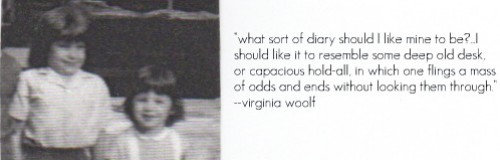
One day took two days and they got spent*
by chuckofish
I woke up this morning from a vivid dream in which I had composed a brilliantly insightful blog post. Unfortunately, waking drove my stellar plan away, and all I remember now is something vague about historical novels. On the upside, that experience got me thinking about how time eventually reduces our lives to a series of random snippets, like a dream that other people — not the dreamer — must somehow remember. Inevitably, those who study the past make a coherent story out of incomplete evidence. It’s important to remember that, try as we might to be objective and find “the truth,” those who tell the story, shape it.
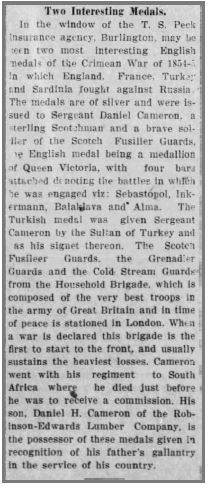
Consider our great grandfather, Daniel Cameron, about whom we know so little. Day in and day out, from 1857 to 1929, Daniel lived and worked; he traveled from London to South Africa, back to Scotland, and thence to Canada and the United States. He married and had four children. He worked for the same company from the moment he landed a job in Canada, until a month before his death in 1929. But what do we really know about him? Bits and pieces –some tantalizing (what happened to those medals?),
 some of them rather humorous,
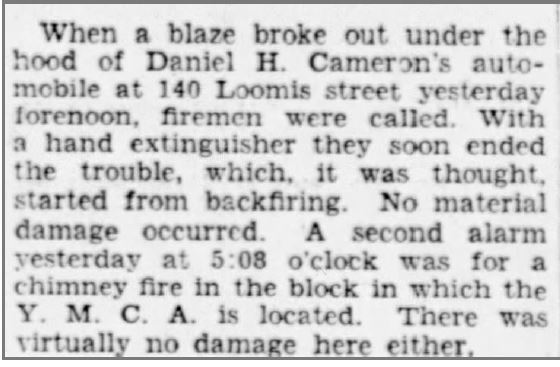 and some more mundane.
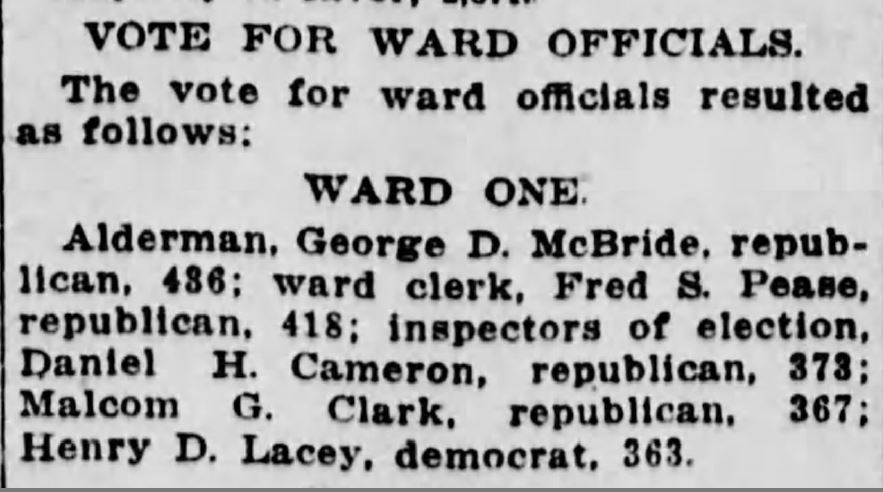
By the way, the medals article appeared in the Montpelier Morning Post of January, 1910, while the other two stories ran in the Burlington Free Press. The car-fire occurred in January, 1928 and the election in March, 1918. When Daniel died in May, 1929, his obituary appeared in the Burlington Free Press.
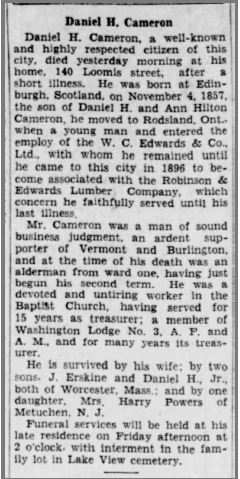
Alas, newspapers often contain errors: DHC was not born in Edinburgh, though he might have thought it was his birthplace, and he lived in Rockland (not Rodsland), Ontario. His father did die in South Africa, but the likelihood of his earning a commission in the regiment (he had transferred to the 10th Lincolnshire by that time ) is effectively nil. All this goes to show that it is vital to verify information!
Since I get to “frame the story”, I’d say that our great grandfather was a Christian gentleman, who managed to maintain his good character even in the darkest of times: in a Scottish orphanage; during WWI when his son served and his nephew was killed; when his daughter died soon after, and when he lost his job. He was a dependable, intelligent, honest, and honorable man, strict with his sons and a pushover with his daughters, and devoted to his wife — a man who would not have approved this public attention to his private life, but whose example we are in need of these days.
Meanwhile, in my small corner of the North Country, the ground is still frozen but the amaryllis is blooming!
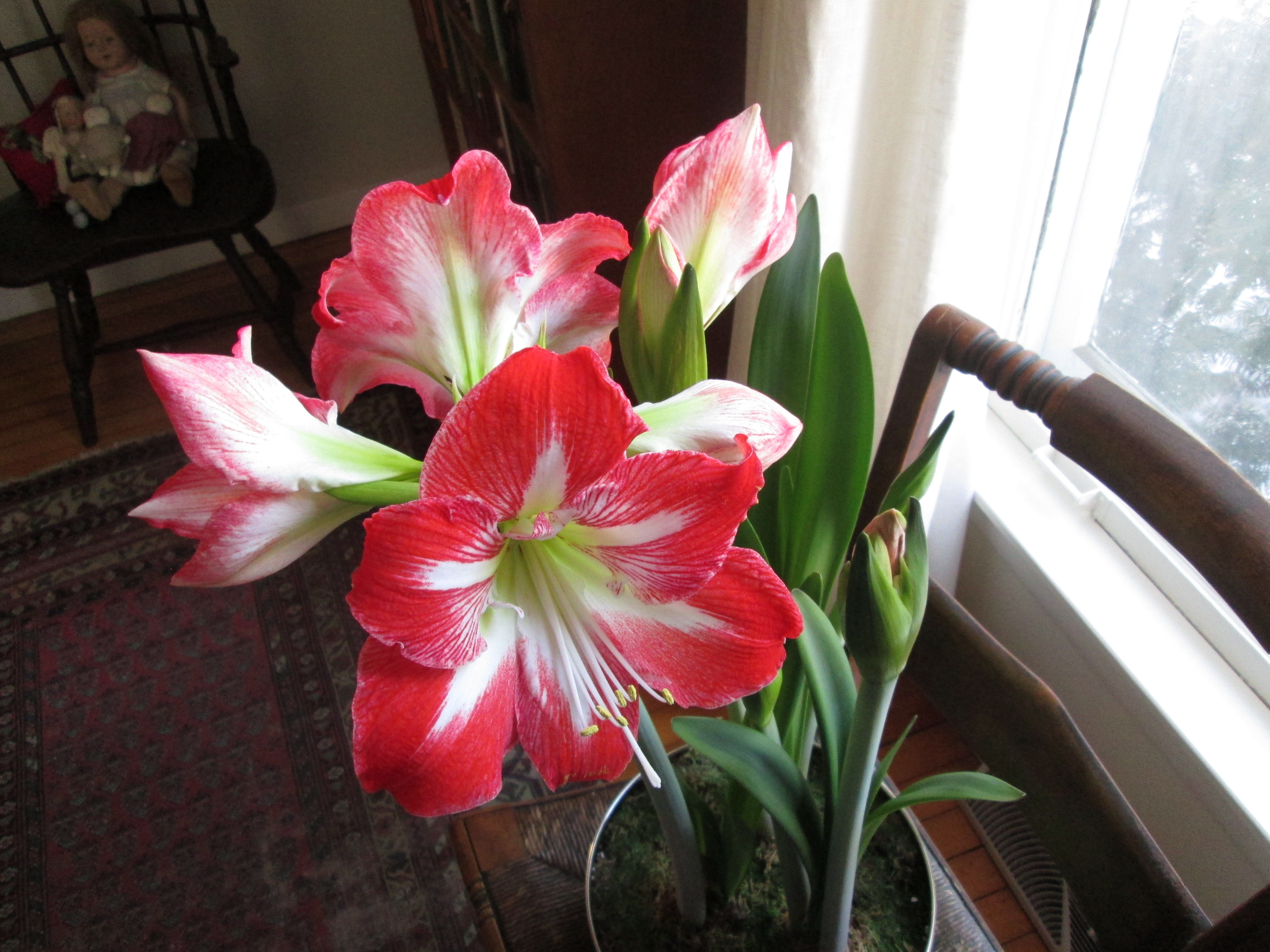
I can’t tell you what a morale boost beautiful flowers are, especially at this time of year, when the snow and ice still lie thick on the ground and the wind bites. Thank you CDC and JRP for such a lovely gift!
* The Tragically Hip, “A Beautiful Thing”
 dual personalities
A wonderful and thought-provoking post. Concerning the medals, I believe our father, who was a great collector of medals, tried to find them for years, writing letters hither and yon. Our mother said that Erskine had them, but when Susanne and George adopted a son and named him Bruce Cameron, he gave them to a museum. He had no son or grandsons to give them to, and he did not want an adopted grandson to get them. Shocking, I know, but clearly he felt strongly about it.
If only he had waited to see who else had children! Oh, well. It’s odd how pared down our lives get. Even before memory of us is left in someone else’s hands, we edit our own memories, reducing our lives to a convenient narrative. Kind of odd when you think about it.
Wow, I was blown away by this post, because I was just in Dolmabahce Palace today, and, while gazing at a painting of the Crimean War, I joked to my girlfriend, “you see, we helped you Turks out.” I then corrected myself saying that the Americans weren’t involved in the Crimean War. But this very evening your post reminded me that if you take the more literal meaning of “we” as “my family’s ancestors,” we did indeed help out the Turks, and received thanks from Abdulmecid, builder of the Dolmabahce Palace! The world is full of coincidence.
How cool that you can visit such places! If you can (and it’s still there), go to Scutari and see the hospital where Florence Nightingale tended the sick and wounded. The Crimean War was an incredible logistical debacle for the British. Interestingly, however, the Americans did send a team of observers there, including George B. McClellan. Small world, indeed…
Oh yes, I’ve seen that barracks many times, but I didn’t realize it was where Florence Nightingale worked. Unfortunately, it is still a military base so you are not allowed to visit.