Queen of the Desert?
by chuckofish
My beloved DP heads out to the Holy Land today, and while I understand that she is traveling with a church group and thus unlikely to do anything too wild, I can’t help thinking of her in terms of early English adventurers like Lady Hester Stanhope, Gertrude Bell and Freya Stark.
Born in 1776, Lady Hester was the daughter of an Earl and the niece of Prime Minister William Pitt (the younger), so she had the standing to flout convention. And she did. Bored by English society, she took herself off to the Mediterranean, found a lover, and started exploring. When women’s clothes became inconvenient, she simply started dressing as a man. The locals loved it.
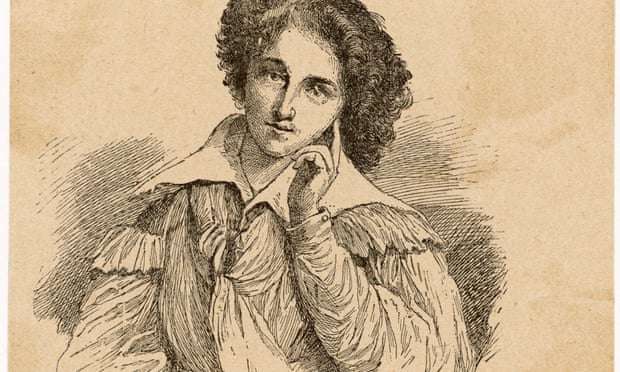
Reputedly one of the first westerners to undertake archaeological exploration, Lady Hester excavated at Ashkelon, an important biblical site on the coast of southern Israel. Apparently, she didn’t find the treasure she expected and smashed the one statue uncovered for fear that she be accused of stealing. So much for archaeology. Having become something of a legend, she spent the rest of her life living in the mountains of Lebanon, where she died a recluse in 1839. As I recall, she is the inspiration for the Mary Stewart classic, The Gabriel Hounds.
Much less eccentric than Stanhope, Gertrude Bell (1868-1926) was the daughter of a progressive industrialist, who served as Labor MP under Benjamin Disraeli. She was well educated, well informed, and highly intelligent. Although her career path was unconventional for a woman, Bell never courted scandal. Rather, her obvious competence and propriety won her the respect of her male contemporaries.
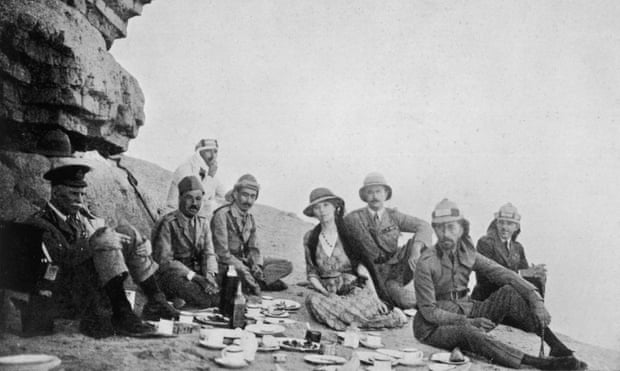
She hob-nobbled with kings and heads of state. Here she is picnicking with King Faisal, and here she is with T.E. Lawrence.
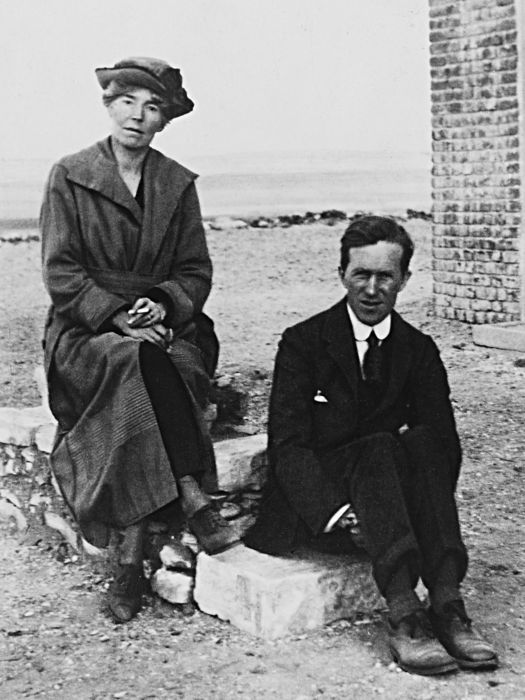
They had met before WWI, and shared interests in archaeology and near eastern politics. After the war, they were both involved in sorting out the boundaries of the Near East at the Paris peace talks, and both suffered deep disappointment as result. Bell died in Baghdad in 1926 as the result of an overdose of sleeping pills. Whether it was an accident or suicide is much debated. I’m inclined to believe that she died as she lived — according to her own wishes.
By contrast, Freya Stark lived to the ripe old age of 100 — which is pretty remarkable considering what she got up to during her life. Born in England in 1893, Stark’s near eastern travels began in 1927 when she arrived in Beirut. From there she moved east to Baghdad and then into the wilds of Iran, where she was the first western woman to visit the famed Valley of the Assassins.
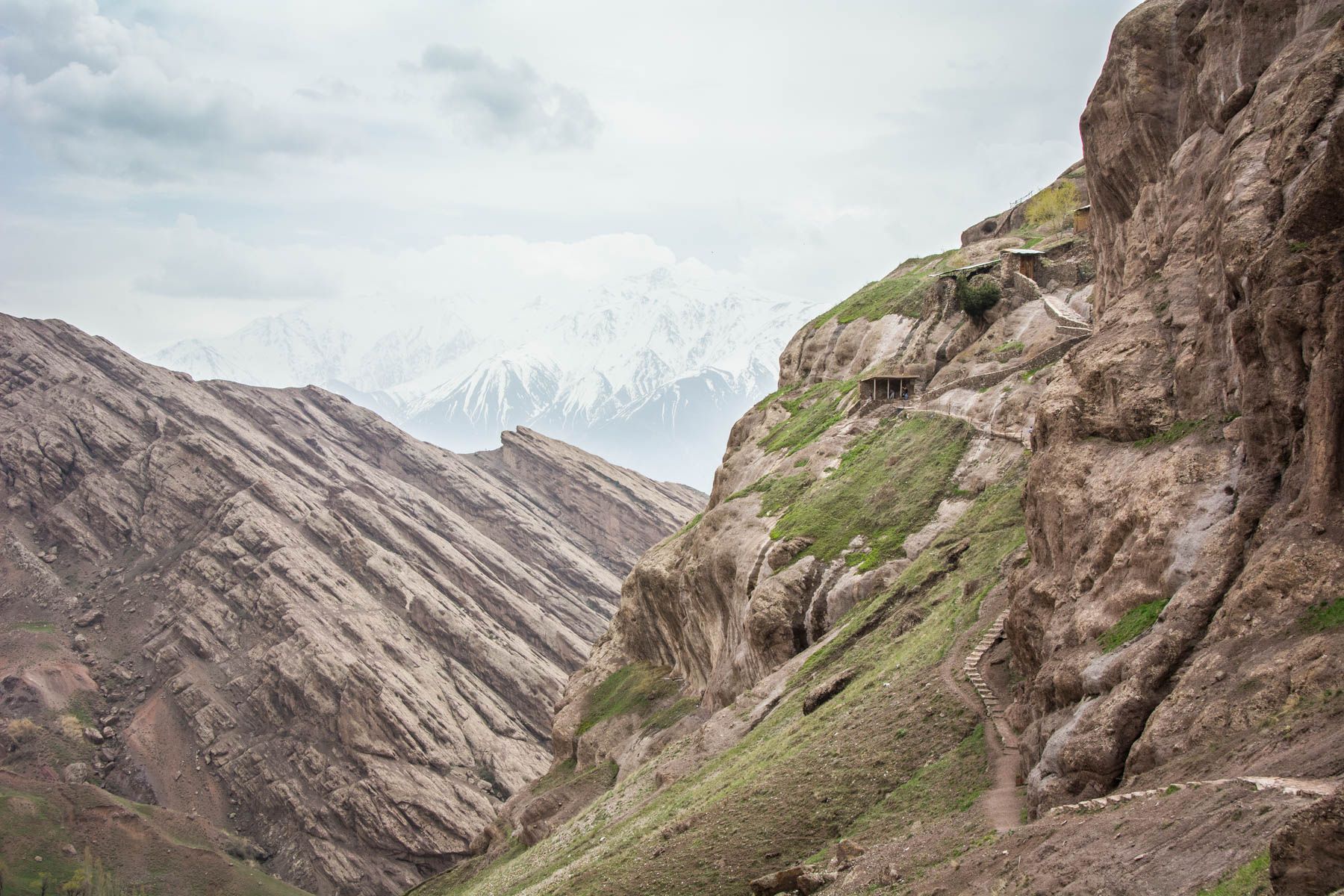
Rugged hiking for a lady in the 1920s
Stark wrote numerous books chronicling her adventures, the last of which involved a visit to Afghanistan in the 1970s! Now that’s what I call intrepid. Not only did she have a great name (sounds like the heroine in a Victorian novel), but she didn’t let anything hold her back. She lived as she pleased, even if it resulted in solitude.
Well, obviously I don’t expect my DP to rush headlong into the wilderness, but I do hope she learns a thing or two from the intrepid ladies mentioned here: (1) Write about your experiences. Inquiring minds want to know; (2) Fear nothing, prepare for everything, and (3) There’s no place like home! These women never found home, but yours is ready and waiting for your return. As Gertrude Bell once wrote,
All the earth is seamed with roads, and all the sea is furrowed with the tracks of ships, and over all the roads and all the waters a continuous stream of people passes up and down – traveling, as they say, for their pleasure. What is it, I wonder, that they go out to see?
*All photos recovered from Google Image.
 dual personalities
Speaking of Ashkelon, it is the home of the first domestic Israeli lacrosse club and has become the center of lacrosse development in the country.
Now that’s a fun fact to know and tell!
Great post, ma! These are some of the coolest ladies in history.
Fascinating post! Do you know a good book about these travelers of the Orient? I have a friend who would be very interested.
Lady Hester Stanhope’s memoirs are available online at https://archive.org/details/memoirsladyhest00unkngoog/page/n6, and some of Freya Stark’s books are still in print. There’s also a biography of her called A Passionate Nomad: The Life of Freya Stark. There’s a biography of Gertrude Bell called Queen of the Desert and GB’s letters are in print as well. There’s quite a lot out there.
Wow, great, thank you!
[…] Ostensibly a biopic of Gertrude Bell’s travels, encounters, and romantic liaisons in the Near East through World War I, Queen of the Desert felt more like a well-funded, beautifully shot Hallmark movie than a historical drama about a brilliant and intrepid intellectual. Nicole Kidman was woefully miscast as Bell, who by all accounts was rather sturdier than Kidman’s breathless performance suggests (btw, I’ve got nothing against Nicole Kidman, who is a fine actress. She can’t help being frail and lady-like). Robert Pattinson, another fine actor, looked the part of T.E. Lawrence, but could do nothing with the terrible script. As you can see from the photo, it’s a lush film full of lovely textiles, and it even attempts to recreate scenes from photographs and written sources (often to unintentionally humorous effect), but it does a terrible disservice to the people it depicts. It is never exciting, often inexplicable (why is she there? who are these people? why should we care?), and worst of all, the viewer gets no clear sense either of Gertrude Bell herself or the Near East. (If you’re curious, you can read my brief post about the real Gertrude Bell here). […]