If you really want to hear about it
by chuckofish
Well, I don’t know about you, but I just love Central Park. It really is the coolest. I mean we have a large, beautiful municipal park in my flyover town too, but it quite pales next to New York’s.
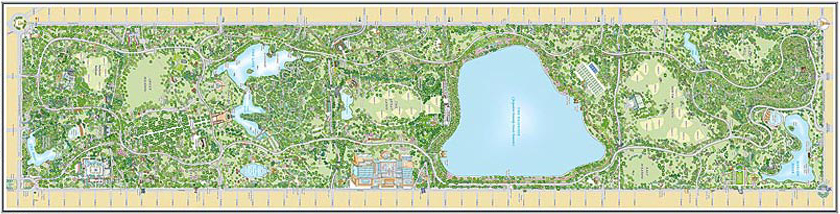
Someone had a brilliant idea back in the mid-1800s. Two men in particular, the poet and editor of the Evening Post, William Cullen Bryant, and the first American landscape architect, Andrew Jackson Downing, began to publicize the city’s need for a public park in 1844. All the big European cities had one, so why shouldn’t we? The state of New York appointed a Central Park Commission to oversee the development of the park, and in 1857 they held a landscape design contest.
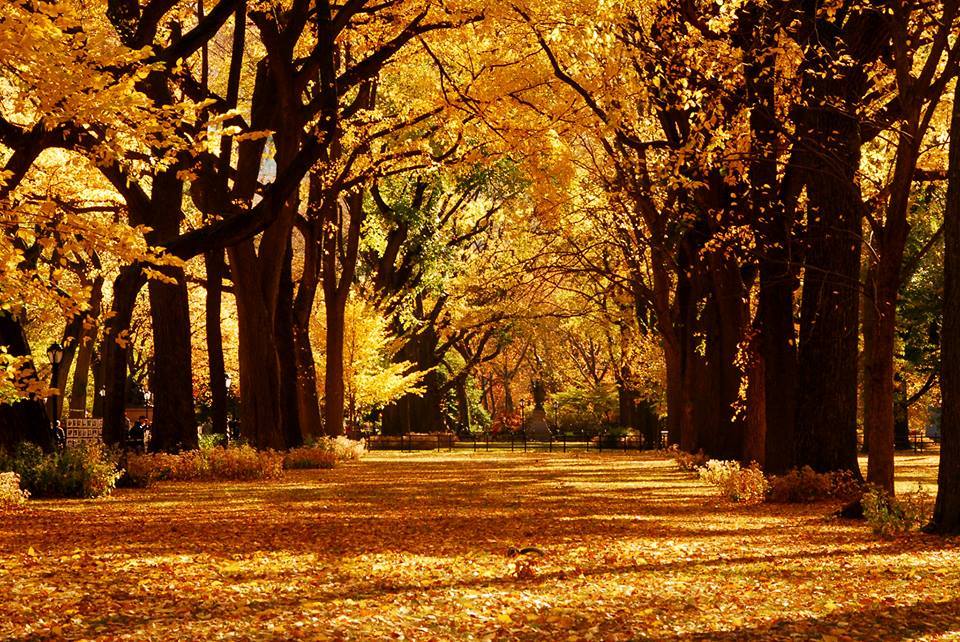
Photo of American Elm trees from the Central Park Website
In 1858 Frederick Law Olmsted and Calvert Vaux won the design competition with a plan they entitled the “Greensward Plan”. They really knocked themselves out. Construction began the same year, continued during the American Civil War, and was completed in 1873.
Central Park is the most visited urban park in the United States.
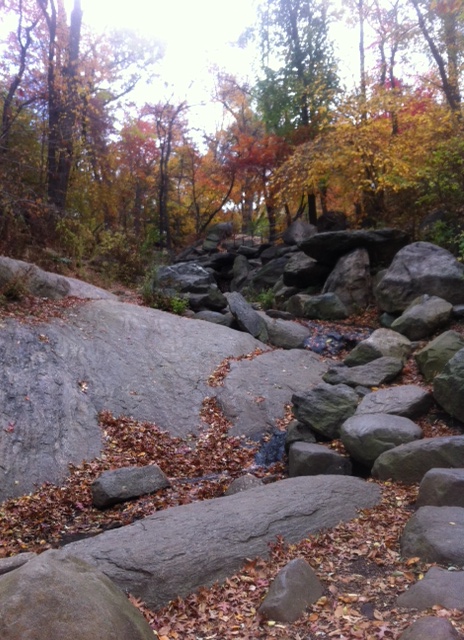
You’ll find babbling brooks in the middle of this great metropolis!
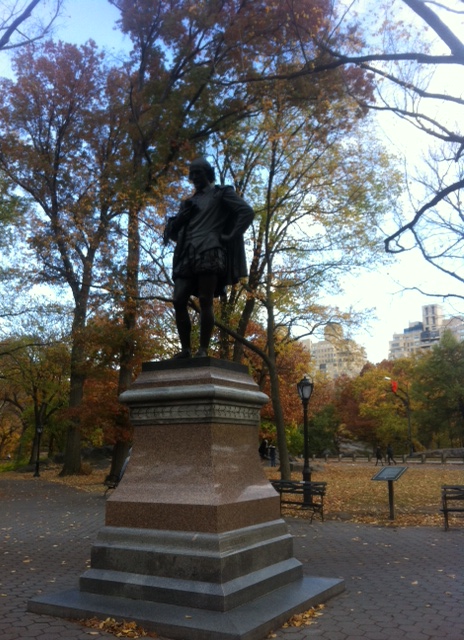
Shakespeare “in the park”
And there’s Shakespeare and Burns and Sir Walter Scott and many more statues to see. However, there is no sense of the space being cluttered with objects, which I like a lot. We walked all around the reservoir and down to the skating rink. We climbed to the top of Belvedere Castle, which was not as strenuous as the Walter Scott monument in Edinburgh but I did have a flash-back because the stairs are very similar!
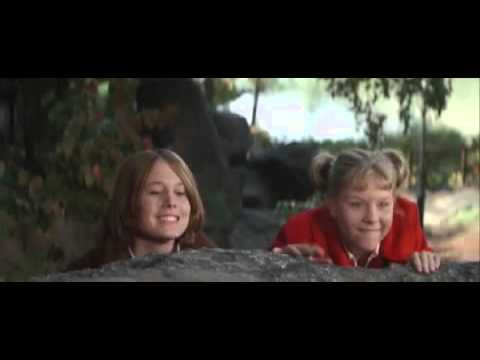
We saw many of the outcroppings of Manhattan schist which we have seen in our favorite movies.
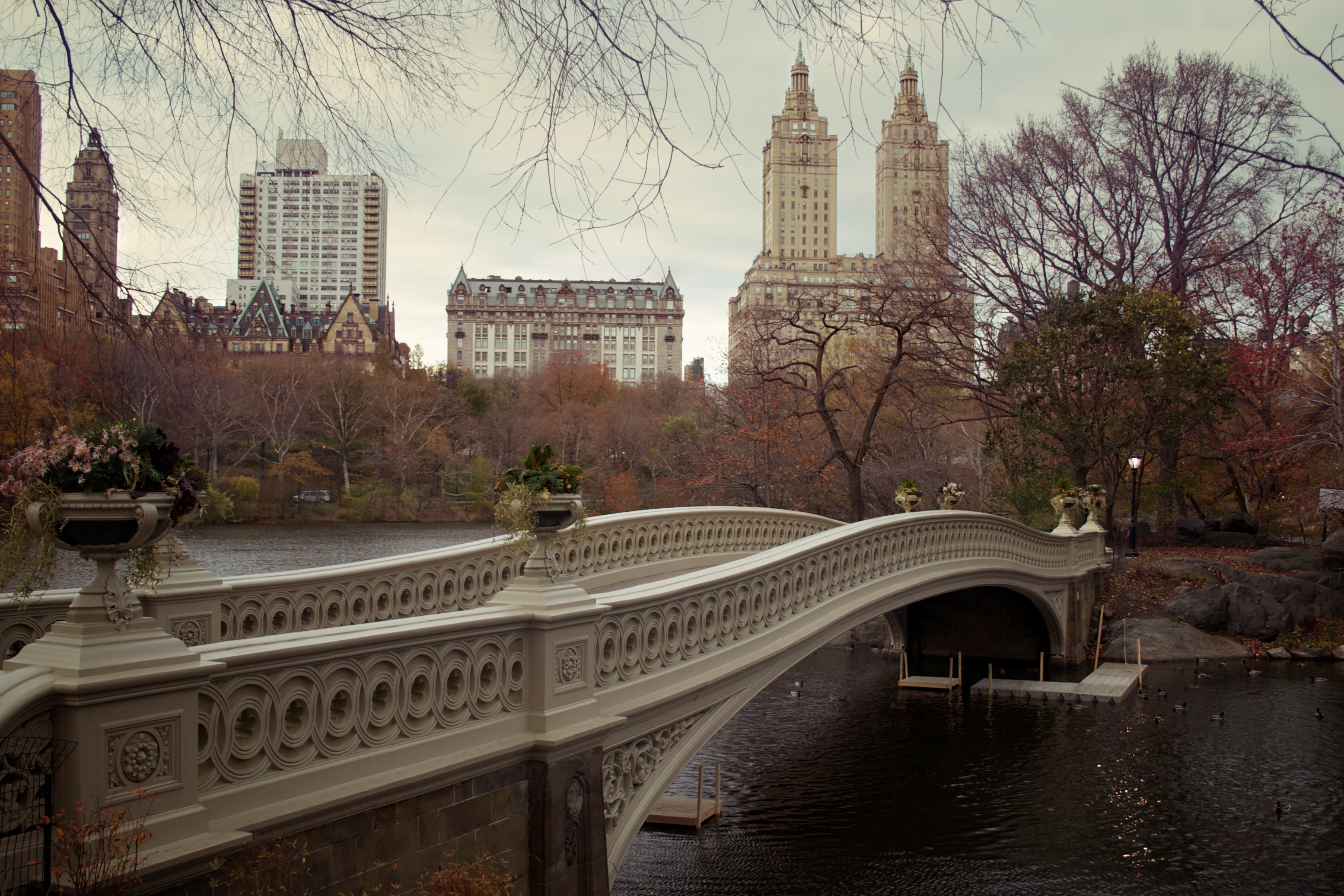
We walked over those famous bridges as well.
Across the street from the park and a block or so from daughter #1’s apartment is the wonderful American Museum of Natural History. I had not been there since 1978. Happily, not much has changed!
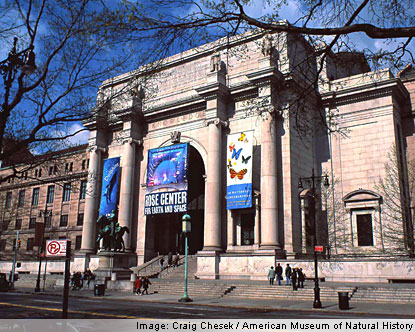
One of the largest and most celebrated museums in the world, the museum complex contains 27 interconnected buildings housing 45 permanent exhibition halls, in addition to a planetarium and a library. The museum collections contain over 32 billion specimens of plants, humans, animals, fossils, minerals, rocks, meteorites, and human cultural artifacts, of which only a small fraction can be displayed at any given time, and occupies 1,600,000 square feet. The Museum has a full-time scientific staff of 225, sponsors over 120 special field expeditions each year, and averages about five million visits annually.
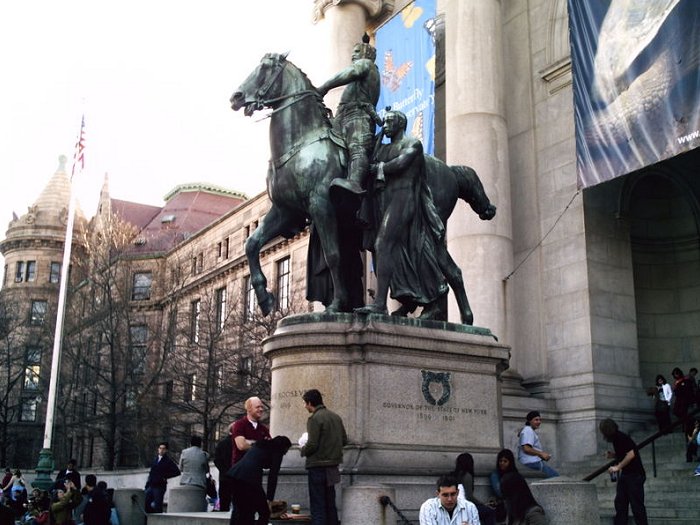
Theodore Roosevelt and Indian mate guard the front door.
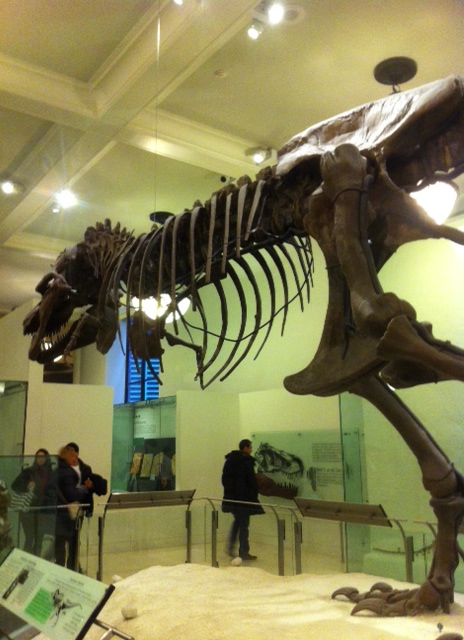
Last Friday we saw many stuffed mammals, the big blue whale, dinosaur skeletons and bones,
and the wonderful hall of Northwest Coast Indians, which is the oldest extant exhibit in the Museum. There were hundreds of children running around, but they did not bother me. They seemed to be enjoying themselves in this gloriously old-fashioned space–and why wouldn’t they?
Holden Caulfield, you’ll recall, was a big fan of this museum, so I thought about him when I was there.
The best thing, though, in that museum was that everything always stayed right where it was. Nobody’d move. You could go there a hundred thousand times, and that Eskimo would still be just finished catching those two fish, the birds would still be on their way south, the deers would still be drinking out of that water hole, with their pretty antlers and they’re pretty, skinny legs, and that squaw with the naked bosom would still be weaving that same blanket. Nobody’d be different. The only thing that would be different would be you. Not that you’d be so much older or anything. It wouldn’t be that, exactly. You’d just be different, that’s all. You’d have an overcoat this time. Or the kid that was your partner in line the last time had got scarlet fever and you’d have a new partner. Or you’d have a substitute taking the class, instead of Miss Aigletinger. Or you’d heard your mother and father having a terrific fight in the bathroom. Or you’d just passed by one of those puddles in the street with gasoline rainbows in them. I mean you’d be different in some way—I can’t explain what I mean. And even if I could, I’m not sure I’d feel like it.
― J.D. Salinger, The Catcher in the Rye
I love this particular paragraph and so I have always had a soft spot in my heart for this museum. I know exactly what Holden means, don’t you? Some things should just not change. They are great they way they are. And because we are always changing, we need those stable places in our lives.
It is 25-degrees here in my flyover town this morning. Hope you are keeping warm today!
 dual personalities
Great post, and I especially love the mention of the Manhattan Formation schist. In case you wanted a little more information, the schist was formed (by metamorphosing shales) about 450 million years ago, during the first phase of Appalachian mountain building. Pretty amazing stuff! The New York Geological Survey has good information:
http://www.nysm.nysed.gov/nysgs/experience/sites/nyc/index.html
Hope all is well!
I have always loved those “big rocks” in Central Park. Whenever we walk around we point and exclaim when we see another familiar outcropping. 🙂
P.S. Thanks for the interesting link to the N.Y. State Geological Survey–good stuff!
Oh man–I love that the Northwest Coastal Indians exhibit is the oldest. My new favorite!
I know, right?
Love the Holden Caulfield passage–one of my favorites, two. I wrote a paper about it once, I think. Sigh.
It is so great, I know. It is so J.D.
Old Fred Law Olmsted was a pretty impressive guy. It’s pretty amazing that Central Park hasn’t been turned in to a place “cluttered with objects” as you put it. Our Forest Park (and especially our Zoo) can’t say the same. I want to reread “The Catcher in the Rye” now. I love JD so much.
I love Forest Park. Is it really cluttered with objects now? How sad. I always wished that they would put water back in the lagoons. It’s a pretty cool place — or was anyway.
They did a lot of renovation on Forest Park a few years ago and it really looks nice. And, yes, there is water in the lagoons. The park is somewhat cluttered with cars parked all along the roads. But mostly it is the zoo that is so cluttered with objects and there is now very little open space in it.
Great Post!
Thank you!