dual personalities

Tag: writers

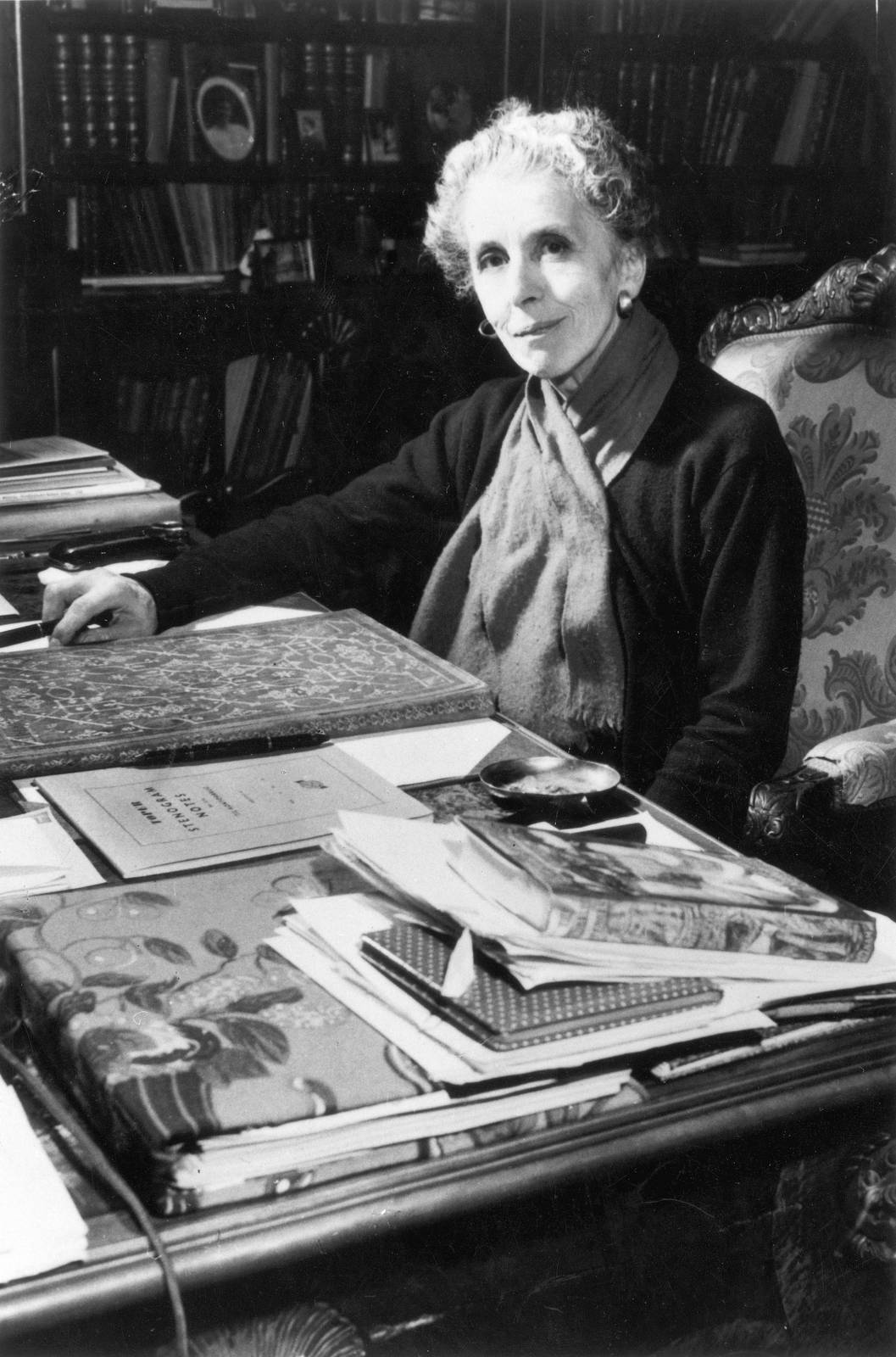
Happy birthday, Karen Blixen

by chuckofish

Karen Blixen (17 April 1885 – 7 September 1962), née Karen Christenze Dinesen, was a Danish author also known by her pen name Isak Dinesen.

Karen Blixen

Blixen is best known for Out of Africa, her account of living in Kenya, and one of her stories, Babette’s Feast, both of which have been adapted into highly-acclaimed, Academy Award-winning films. Prior to the release of the first film, she was noted for her Seven Gothic Tales, published in 1934. Unable to find an interested publisher in England or Denmark, she was first published by Random House in the United States.

“Man, my friends,is frail and foolish. We have all of us been told that grace is to be found in the universe. But in our human foolishness and short-sightedness we imagine divine grace to be finite. For this reason we tremble. We tremble before making our choice in life, and after having made it again tremble in fear of having chosen wrong. But the moment comes when our eyes are opened, and we see and realize that grace is infinite. Grace, my friends, demands nothing from us but that we shall await it with confidence and acknowledge it in gratitude. Grace, brothers, makes no conditions and singles out none of us in particular; grace takes us all to its bosom and proclaims general amnesty. See! that which we have chosen is given us, and that which we have refused is, also and at the same time, granted us. Ay, that which we have rejected is poured upon us abundantly. For mercy and truth have met together, and righteousness and bliss have kissed one another!”

— Isak Dinesen (Babette’s Feast)

A few years ago I read a lot of Isak Dinesen and she really is a great writer. Although Danish, she wrote in English–a fact that I find amazing. You can read more about her here. I highly recommend Judith Thurman’s 1983 biography of her, Isak Dinesen, as well.

This would also be an appropriate day to watch either of the above-mentioned movies. Alas, I think I only have the VHS version of Out of Africa! Oh well, maybe I will re-visit her Gothic Tales instead.

Blue, blue is the grass about the river

by chuckofish

11956419_4_x

Blue, blue is the grass about the river
And the willows have overfilled the close garden.
And within, the mistress, in the midmost of her youth.
White, white of face, hesitates, passing the door.
Slender, she puts forth a slender hand;

And she was a courtezan in the old days,
And she has married a sot,
Who now goes drunkenly out
And leaves her too much alone.

–Ezra Pound

The heart in thee

by chuckofish

ralph-waldo-emerson-448

“Ineffable is the union of man and God in every act of the soul. The simplest person who in his integrity worships God, becomes God; yet for ever and ever the influx of this better and universal self is new and unsearchable. It inspires awe and astonishment. How dear, how soothing to man, arises the idea of God, peopling the lonely place, effacing the scars of our mistakes and disappointments! When we have broken our god of tradition and ceased from our god of rhetoric, then may God fire the heart with his presence. It is the doubling of the heart itself, nay, the infinite enlargement of the heart with a power of growth to a new infinity on every side. It inspires in man an infallible trust. He has not the conviction, but the sight, that the best is the true, and may in that thought easily dismiss all particular uncertainties and fears, and adjourn to the sure revelation of time the solution of his private riddles. He is sure that his welfare is dear to the heart of being. In the presence of law to his mind he is overflowed with a reliance so universal that it sweeps away all cherished hopes and the most stable projects of mortal condition in its flood. He believes that he cannot escape from his good. The things that are really for thee gravitate to thee. You are running to seek your friend. Let your feet run, but your mind need not. If you do not find him, will you not acquiesce that it is best you should not find him? for there is a power, which, as it is in you, is in him also, and could therefore very well bring you together, if it were for the best. You are preparing with eagerness to go and render a service to which your talent and your taste invite you, the love of men and the hope of fame. Has it not occurred to you that you have no right to go, unless you are equally willing to be prevented from going? O, believe, as thou livest, that every sound that is spoken over the round world, which thou oughtest to hear, will vibrate on thine ear! Every proverb, every book, every byword that belongs to thee for aid or comfort, shall surely come home through open or winding passages. Every friend whom not thy fantastic will but the great and tender heart in thee craveth, shall lock thee in his embrace. And this because the heart in thee is the heart of all; not a valve, not a wall, not an intersection is there anywhere in nature, but one blood rolls uninterruptedly an endless circulation through all men, as the water of the globe is all one sea, and, truly seen, its tide is one.”

–Ralph Waldo Emerson, “The Over-Soul”

This is a long quote, but I hope you read the whole thing and did not skim. Dear daughter #2 shared this quote with me yesterday with the suggestion that “it’s nice to fall back on the Transcendentalist ideas if the institution of the church is failing you.” I guess my recent posts had her a little worried. But fear not, my relationship with the Episcopal Church, though a love/hate one, is a long-term one. From time to time I threaten to leave, but I probably won’t. I just continue to lower my expectations!

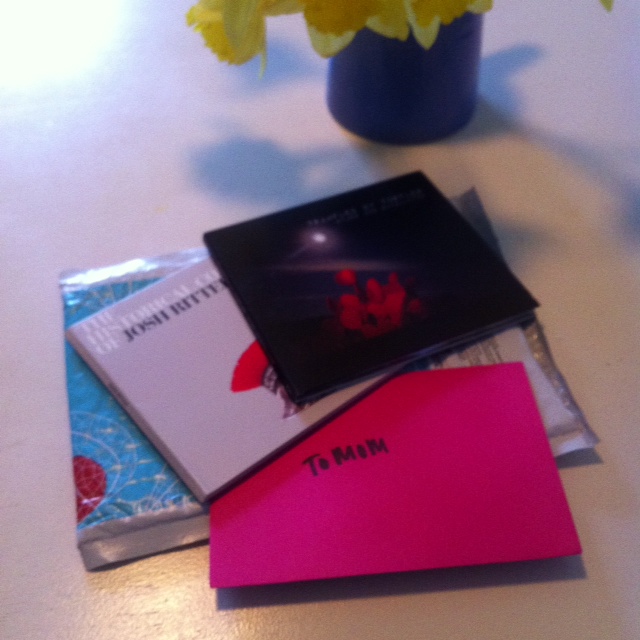
Thanks also to daughter #2 for sending her old mama some new music!

CDs

Josh Ritter and Trampled by Turtles! Great choices for me, especially the TBT–nothing gets me going in the morning like 21st century bluegrass! Here is my favorite song, titled appropriately “Walt Whitman”:

This song gets my Barbara Stanwyck alter ego all charged up and ready to go. Sometimes I think my driving may suffer, but so far so good.

Happy Easter and have a great weekend!

At least we amuse ourselves

by chuckofish

thoreau-head2

Feb. 3, 1859 “The writer must to some extent inspire himself. Most of his sentences may at first lie dead in his essay, but when all are arranged, some life and color will be reflected on them from the mature and successful lines; they will appear to pulsate with fresh life, and he will be enabled to eke out their slumbering sense, and make them worthy of the neighborhood.”

Feb. 20, 1859 “How much the writer lives and endures in coming before the public so often! A few years or books are with him equal to a long life of experience, suffering, etc. It is well if he does not become hardened. He learns how to bear contempt and to despise himself. He makes, as it were, post-mortem examination of himself before he is dead. Such is art.”

–H.D. Thoreau, A Writer’s Journal

I wonder what old Thoreau would have thought of blogging? I think it would have suited him, don’t you? A laptop in a little cabin in the woods.

Happiness is…

by chuckofish

happiness is

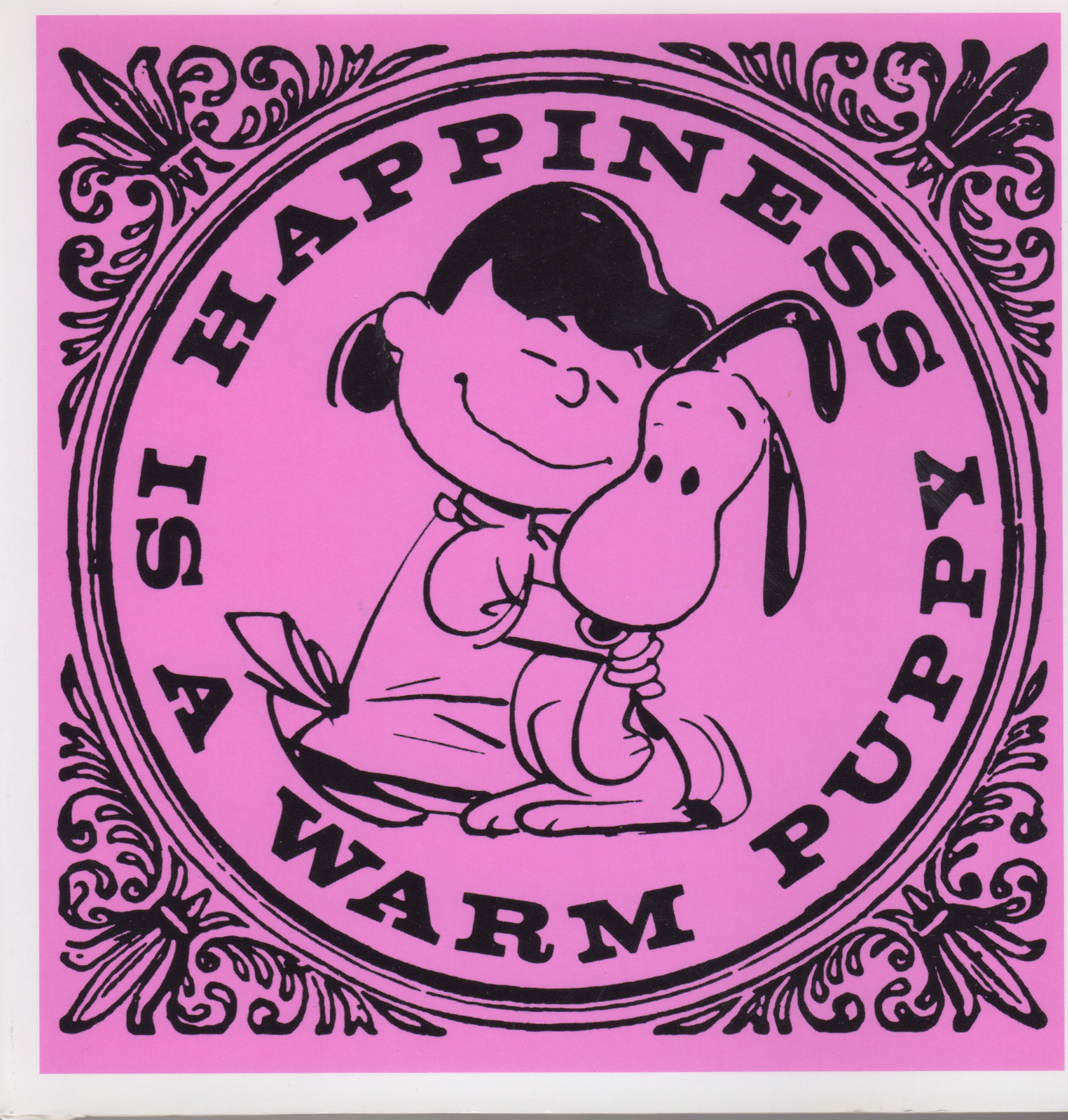
Remember this book from 1962? It reminds us that it’s the simple things that make us happy. Things like warm puppies and walking in the grass in your bare feet and knowing how to tie your own shoes and my favorite: “some black, orange, yellow, white and pink jelly beans, but no green ones.” (I am okay with the green ones.)

Charles M. Schulz certainly understood what makes a happy life. To this I would add a few things, such as a full tank of gas

gas

and a stack of new magazines in the mail.

mags

I had a happy weekend–did you?

I batted “0” at the only estate sale I went to on Saturday, but that’s okay. I had a text exchange with daughter #2 who was at an estate sale in Bethesda, Maryland, which warmed the cockles of my heart. (I taught her something!)

The boy came over to carry a chair upstairs for me. He was wearing one of his “coach” shirts.

laxshirt

Now I can sit by this sunny window and read or work on my blog.

chair2

We went to lunch at Qdoba Mexican Grill. I had a naked burrito–yummo.

Although snow was in the forecast this weekend, there were plenty signs of spring in our yard.

daffo

And the Christmas Cactus surprised me yet again!

xmas cac

I spent a good part of my weekend reading a book by Hilary Mantel published in 2000, Every Day is Mother’s Day. The book cover announces that it is “an accomplished novel of striking originality” and describes it as having certain elements of a “suspense thriller.” Really. Never in a million years would I confuse this book, although it is riveting, with a suspense thriller. Clearly prior to Wolf Hall no one knew what to make of Hilary Mantel. She defies pigeon-holing. She reminds me a lot of Shirley Jackson.

The characters in this book have no claim on happiness. One even admits: “Happiness seems a bit ambitious. I’m not sure I can see my way to that.”

England, we are reminded, is a depressing and dreadful place. One of the main characters describes his life thusly:

“I am a history teacher, a teacher of the benighted past to the benighted present, ill-recompensed for what I suffer and despairing of promotion. My feet are size eight and a half, and I belong to the generation of Angry Young Men, though I was never angry until it was too late, oh, very late, and even now I am only mildly irritated. I am not a vegetarian and contribute to no charities, on principle; I loathe beetroot, and the sexual revolution has passed me by. My taste in clothes is conservative but I get holes in my pockets and my small change falls through; I do not speak to my wife about this because she is an excellent mother and I am intimidated by her, also appalled by the paltry nature of this complaint or what might be construed by her as a complaint. The sort of writing I want to do is the sort that will force me to become a tax-exile.”

Terrible things happen. Funny things happen. As always I am in awe of Hilary and her amazing powers, but I really think I need to revisit the high, green hills of Mitford now, where the air is pure, the village is charming and the people are generally lovable.

Tout va bien

by chuckofish

IMGP0433

“Maybe it’s all utterly meaningless. Maybe it’s all unutterably meaningful. If you want to know which, pay attention to what it means to be truly human in a world that half the time we’re in love with and half the time scares the hell out of us. Any fiction that helps us pay attention to that is religious fiction. The unexpected sound of your name on somebody’s lips. The good dream. The strange coincidence. The moment that brings tears to your eyes. The person who brings life to your life. Even the smallest events hold the greatest clues.”
–Frederick Buechner

Thought for the day

by chuckofish

“Ancient religion and modern science agree: we are here to give praise. Or, to slightly tip the expression, to pay attention. Without us, the physicists who have espoused the anthropic principle tell us, the universe would be unwitnessed, and in a real sense not there at all. It exists, incredibly, for us. This formulation (knowing what we know of the universe’s ghastly extent) is more incredible, to our sense of things, than the Old Testament hypothesis of a God willing to suffer, coddle, instruct, and even (in the Book of Job) to debate with men, in order to realize the meager benefit of worship, of praise for His Creation. What we beyond doubt do have is our instinctive intellectual curiosity about the universe from the quasars down to the quarks, our wonder at existence itself, and an occasional surge of sheer blind gratitude for being here.”

Updike_2

–John Updike

Seek him who made the Pleiades and Orion, and turns deep darkness into the morning, and darkens the day into night; who calls for the waters of the sea and pours them out upon the surface of the earth: The Lord is his name. Amos 5:8

A spirit of power and of love and of self-control

by chuckofish

“The earth was warm under me, and warm as I crumbled it through my fingers…I kept as still as I could. Nothing happened. I did not expect anything to happen. I was something that lay under the sun and felt it, like the pumpkins, and I did not want to be anything more. I was entirely happy. Perhaps we feel like that when we die and become a part of something entire, whether it is sun and air, or goodness and knowledge. At any rate, that is happiness; to be dissolved into something complete and great. When it comes to one, it comes as naturally as sleep.”

For weeks now I have been meaning to write something about Willa Cather, but I have been so busy that I have not been able to think about it. I have read The Song of the Lark and My Antonia in quick succession, followed by O Pioneers! They are all three deep goldmines of insight and wonderful writing. I (literally) wept the tears a writer sheds when she reads something better than she can ever write.

Portrait of Willa Cather by Edward Steichen

Portrait of Willa Cather by Edward Steichen

She was born Wilella Sibert Cather in 1873 in the Back Creek Valley near Winchester, Virginia. Her father was Charles Fectigue Cather, whose family had lived on land in the valley for six generations. Her mother was Mary Virginia Boak, a former school teacher. The Cathers moved to Nebraska in 1883, joining Charles’ parents, when Willa was nine years old. Her father tried his hand at farming for eighteen months; then he moved the family into the town of Red Cloud, where he opened a real estate and insurance business, and the children attended school for the first time. Clearly Cather’s time in this frontier state was a deeply formative experience for her.

For now I will just give you a few quotes to give you some idea of the power of her writing and of her strong feelings about things. Reading three books in a row, I have a pretty good idea what was important to her: art, home, the land, childhood, hard work, authenticity. She repeats themes, and characters have similarities that indicate clearly where old Willa was coming from. I have to say, I am with her all the way.

As she says of one character: “Everything she said seemed to come right out of her heart.”

Here she writes about the young main character in The Song of the Lark:

“The clamor about her drowned out the voice within herself. In the end of the wing, separated from the other upstairs sleeping rooms by a long, cold, unfinished lumber room, her mind worked better. She thought things out more clearly. Pleasant plans and ideas occurred to her which had never come before. She had certain thoughts which were like companions, ideas which were like older and wiser friends. She left them there in the morning, when she finished dressing in the cold, and at night, when she came up with her lantern and shut the door after a busy day, she found them awaiting her.”

Many years later, the girl, now a famous opera singer, tries to explain her art in a long, brilliant section. Here’s just a snippet:

“They saved me: the old things, things like the Kohlers’ garden. They were in everything I do…the light, the color, the feeling. Most of all the feeling. It comes in when I’m working on a part, like the smell of a garden coming in at the window. I try all the new things, and then go back to the old. Perhaps my feelings were stronger then. A child’s attitude toward everything is an artist’s attitude. I am more or less of an artist now, but then I was nothing else…”

Here in My Antonia the narrator describes houses in the town:

“They were flimsy shelters, most of them poorly built of light wood, with spindle porch-posts horribly mutilated by the turning-lathe. Yet for all their frailness, how much jealousy and envy and unhappiness some of them managed to contain! The life that went on in them seemed to me made up of evasions and negations; shifts to save cooking, to save washing and cleaning, devices to propitiate the tongue of gossip.”

And here in O Pioneers! a person expresses something important to a friend:

“It’s by understanding me, and the boys, and mother, that you’ve helped me. I expect that is the only way a person ever really can help another. I think you are about the only one that ever helped me.”

Have I convinced you yet? Go now and order this book!

nationalgeographic.com
nationalgeographic.com

Hot dog, I feel lucky today

by chuckofish

Mary Chapin Carpenter (born February 21, 1958), an American folk and country music singer, songwriter and musician, turns 55 today.

mcc1

Born in Princeton, NJ, she went to Princeton Day School and The Taft School and Brown, so she grew up in a world similar to the one I did, but she also has that bad-ass cowgirl alter ego with which I readily identify. Who else could have written:

Dwight Yoakam’s in the corner, trying to catch my eye
Lyle Lovett’s right beside me with his hand upon my thigh.

And her monogram is the same as my mother’s.

Anyway, I have been a fan of hers for many years. One of my favorite Mary Chapin Carpenter memories is of the time I (once again) was having a Girl Scout earning-a-patch event at our house. The plan was for Daughter #1 and her small troop to learn to line dance. Not that I was an expert. Uh huh. Priceless.

We moved the dining room table against the wall so we could practice in a large space, which coincidentally had one wall that was a giant mirror, sort of like in a dance studio. The girls lined up and we played “Shut Up and Kiss Me” over and over and (yes) over again, carefully counting one, two, three, four before trying again. And remember, this was in the days of cassette tapes! So there was a lot of rewinding involved. Good lord, how I wish I had a videotape of this coolness.

Here she is singing this great song. In the original, Leroy Parnell was in her band, but oh well.

So happy birthday, Mary Chapin Carpenter! Salut!

This is great

by chuckofish

Have you ever run across this in your internet browsing? Well, a big hat tip to the New York Times for this wonderful tour of New York City: Walking in Holden’s Footsteps, which is from Peter G. Beidler’s book, “A Reader’s Companion to J.D. Salinger’s The Catcher in the Rye” (Coffeetown Press, 2008).

I have no doubt that it is a sure sign of my unwavering immaturity, but The Catcher in the Rye never dims in my estimation. Nor does my devout love for old J.D.

jdsaljpg

The next time I am in NYC I want to walk the “41 gorgeous blocks” from Ernie’s to the Edmont Hotel. Maybe I’ll pay the big bucks and go inside the Museum of Natural History. Now that daughter #1 lives there, I am relaxed as hell about going there. Well, the Upper West Side anyway. I’m crazy. I swear to God I am.