dual personalities

Tag: writers

“My soul has grown deep like the rivers”*

by chuckofish

St. Louis in 1846

St. Louis in 1846

“The face of the water, in time, became a wonderful book–a book that was a dead language to the uneducated passenger, but which told its mind to me without reserve, delivering its most cherished secrets as clearly as if it uttered them with a voice. And it was not a book to be read once and thrown aside, for it had a new story to tell every day.”

– Mark Twain, Life on the Mississippi

I have lived in the city on the River nearly my whole life and I always know where I am in relation to the river. I always know or feel where it is–running north and south and I am “situated” that way. I cannot imagine not living by a river or some body of water. I wonder if other people feel this way?

*Langston Hughes


“In Naomi’s Eyes we were about as Jewish as Episcopalians.”*

by chuckofish

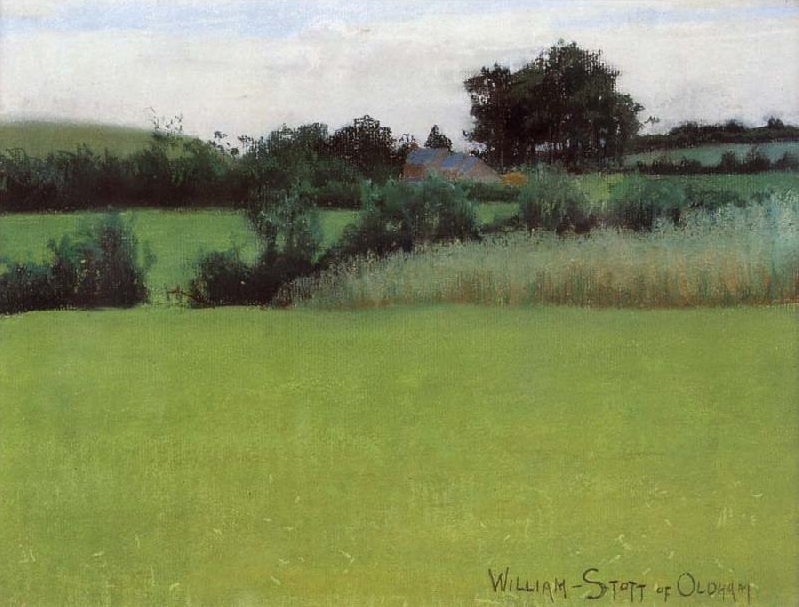
"Barrow Farm" by William Stott of Oldham (1857--1900)

“Barrow Farm” by William Stott of Oldham (1857–1900)

“The crickets felt it was their duty to warn everybody that summertime cannot last for ever. Even on the most beautiful days in the whole year – the days when summer is changing into autumn – the crickets spread the rumour of sadness and change.”

–E.B. White, Charlotte’s Web

As I have mentioned before, summer in our flyover state is hot and muggy and generally pretty terrible. But this summer has been just lovely and I am loathe to see it end. Sigh.

End it shall…but not yet.

This weekend, which followed a long, stressful, sad week, I decided to throw in the towel and leave the rest of my bathroom to the professional who is coming to paint this week. If there’s one thing I know, it’s my limits. I cleaned up the mess I made.

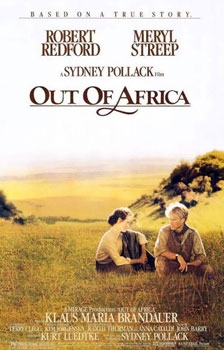
I watched Out of Africa (1985) which is a pretty wonderful movie and one of the few which deserved its Best Picture Oscar.
Out_of_africa_poster

I hadn’t seen it for many years and I think it has certainly held up. Although some may think it over-rated and slow, I think its pace is perfect. It has a smart script and it is beautifully directed and the cinematography is sublime. Good grief, Meryl Streep is perfect. It is very romantic. And who doesn’t love Isak Dinesen? Granted there are no car chases or explosions, but there is a great sequence in a bi-plane.

I re-read The Wonder Spot by Melissa Bank, which is the follow-up to her best-selling The Girl’s Guide to Hunting and Fishing. Bank’s writing, you recall, was one of the first to be labeled “Chick Lit”–so unfortunate. When the Girl’s Guide was published to such acclaim in 1999, I spurned it because it sounded stupid and it was so popular–it couldn’t be good, right?  Then ten years later when I was having a very bad week, I saw it at a rummage sale and thought, “What the heck? I’ll give it a whirl.” (This was one of those shoulder taps from my guardian angel that I have learned to listen to.) When I started reading it, I couldn’t put it down. It was so good–genuinely funny without being vulgar, heart-felt and remarkably kind.

The Wonder Spot was not the giant best-seller of its predecessor, but I like it, and I enjoyed re-reading it. I laughed out loud on numerous occasions. It is both funny and sad–a combination of which I approve.

IMGP1070

“The women are young, young, young, liquidy and sweet-looking; they are batter, and I am the sponge cake they don’t know they’ll become. I stand here, a lone loaf, stuck to the pan. ” (“The Wonder Spot”)

Have a good week!

* “2oth Century Typing”, Melissa Bank
 

The right instructions

by chuckofish

Farmer with a Pitchfork by Winslow Homer

Farmer with a Pitchfork by Winslow Homer


“You mustn’t wish for another life. You mustn’t want to be somebody else. What you must do is this:
‘Rejoice evermore.
Pray without ceasing.
In everything give thanks.’
I am not all the way capable of so much, but those are the right instructions.”

–Wendell Berry, Hannah Coulter

Happy Birthday, Wendell Berry  (born August 5, 1934)–American novelist, poet, environmental activist, and farmer!


“To amuse oneself in order that one may exert oneself…seems right; for amusement is a sort of relaxation, and we need relaxation because we cannot work continuously.” *

by chuckofish

Winslow Homer's "The Nooning"

Winslow Homer’s “The Nooning”

It is August. The year is more than half over!  The goals I have set for my summer are looming.

All that said, I still try to take each day as it comes and enjoy the moment. I suggest you do the same.

Here are a few things to think about this weekend:

“Part of the inner world of everyone is this sense of emptiness, unease, incompleteness, and I believe that this in itself is a word from God, that this is the sound that God’s voice makes in a world that has explained him away. In such a world, I suspect that maybe God speaks to us most clearly through his silence, his absence, so that we know him best through our missing him.”

(Frederick Buechner, Secrets in the Dark: A Life in Sermons)

“If there is anywhere on earth a lover of God who is always kept safe, I know nothing of it, for it was not shown to me. But this was shown: that in falling and rising again we are always kept in that same precious love.”

(Julian of Norwich)

“I have found that I even have to pray for the willingness to give up the stuff I hate most about myself. I have to ask for help, and sometimes beg. That’s the human condition. I just love my own guck so much. Help. Then I try to be a good person, a better person than I was yesterday, or an hour ago. In general, the Ten Command­ments are not a bad place to start, nor is the Golden Rule. We try not to lie so much or kill anyone that day. We do the footwork, which comes down mostly to paying attention and try­ing not to be such a jerk. We try not to feel and act so entitled. We let others go first.

How can something so simple be so pro­found, letting others go first, in traffic or in line at Starbucks, and even if no one cares or notices? Because for the most part, people won’t care—they’re late, they haven’t heard back from their new boyfriend, or they’re fixated on the stock market. And they won’t notice that you let them go ahead of you.

They take it as their due.

But you’ll know. And it can change your whole day, which could be a way to change your whole life. There really is only today, al­though luckily that is also the eternal now. And maybe one person in the car in the lane next to you or in line at the bank or at your kid’s baseball game will notice your casual generos­ity and will be touched, lifted, encouraged—in other words, slightly changed for the better— and later will let someone else go first. And this will be quantum.”

(Anne Lamott, Help, Thanks, Wow)

Clay Boone: I think we’ll go to St. Louis.

Cat: St. Louis?

Clay Boone: Yeah, St. Louis! City on the Missouri, railhead of the Santa Fe, jump off for the Oregon Trail – producers of beef, beer, shoes and, ah, good times.

(Cat Ballou, 1965)

Cat_Ballou_Poster

Cat Ballou will be shown on TCM tonight as part of their all-Jane Fonda-all day program. I remember going to see it at the movies back in 1965 and I thought it was pretty great. Of course, I was nine. It is not a great movie, but I am kind of in the mood for such silliness. Lee Marvin, of course, won an Oscar for his portrayal of Kid Shelleen/Tim Strawn.  I’m sure Richard Burton, Laurence Olivier, Rod Steiger, and Oskar Werner–who were also nominated that year–weren’t laughing. If you look at the nominees/winners, you’ll see it was a really weak year.

Anyway, it’s been a busy week and I am ready for my weekend! Have a good one.

*Aristotle


I look down deep and do believe

by chuckofish

Moby Dick by Rockwell Kent

Moby Dick by Rockwell Kent

(Ahab) “Oh, grassy glades! oh, ever vernal endless landscapes in the soul; in ye,–though long parched by the dead drought of the earthly life,–in ye, men yet may roll, like young horses in new morning clover; and for some few fleeting moments, feel the cool dew of life immortal in them. Would to God these blessed calms would last. But the mingled, mingling threads of life are woven by warp and woff; calms crossed by storms, a storm for every calm. There is no stead unretracing progress in this life; we do not advance through fixed graduations, and at the last one pause:–through infancy’s unconscious spell, boyhood’s thoughtless faith, adolescence’s doubt (the common doom), then skepticism, then disbelief, resting at last in manhood’s pondering repose of If. But once gone through, we trace the round again; and are infants, boys, and men, and Ifs eternally. Where lies the final harbor, whence we unmoor no more? In what rapt ether sails the world, of which the weariest will never weary? Where is the foundling’s father hidden? Our souls are like those orphans whose unwedded mothers die in bearing them: the secret of our paternity lies in their grave, and we must there to learn it.”

And the same day, too, gazing far down from his boat’s side into that same golden sea. Starbuck lowly murmured:–“Loveliness unfathomable, as ever lover saw in his young bride’s eye!–Tell me not of thy teeth-tiered sharks, and thy kidnapping cannibal ways. Let faith oust fact; let fancy oust memory; I look deep down and do believe.”

Tomorrow is Herman Melville’s birthday, so take a break today and read some Moby-Dick!


“Take yourself by the scruff of the neck and shake off your incarnate laziness.”

by chuckofish

Today is the birthday of Oswald Chambers (24 July 1874 – 15 November 1917), an early 20th century Scottish Baptist and Holiness Movement teacher and evangelist.

oswald-pic

You can read about him here. He is most famous today as the author of My Utmost for His Highest (1924), a daily devotional composed of 365 selections of Chamber’s talks, each of about 500 words. The work has never been out of print and has been translated into 39 languages. The book was published after Oswald’s death in 1917, his wife Gertrude Hobbs compiling the passages from her shorthand notes.

I have had my own copy of this wonderful book for many years. It is dog-eared and much highlighted. If you do not have a copy, I recommend you get one.

“The teaching of the Sermon on the Mount is not–Do your duty, but–Do what is not your duty. It is not your duty to go the second mile, to turn the other cheek, but Jesus says if we are His disciples we shall always do these things. There will be no spirit of–“Oh, well, I cannot do any more, I have been so misrepresented and misunderstood”. . . Never look for right in the other man, but never cease to be right yourself. We are always looking for justice; the teaching of the Sermon on the Mount is–Never look for justice, but never cease to live it.”

There is a good reason that this book has never been out of print! There is also a daily online devotional.

“Get into the habit of saying, ‘Speak, Lord,’ and life will become a romance.”

Bonus tidbit: Since we celebrated the 45th anniversary of the Apollo 11 Moon Landing in 1969 earlier this week, I thought I would share this story with you. Do you know that Buzz Aldrin, an elder in his Presbyterian Church in Texas, brought communion on the space flight and  celebrated it with Neil Armstrong on the moon? He did. Here is the full text of the original article — written by Buzz Aldrin — published inGuideposts magazine in October of 1970.

So I unstowed the elements in their flight packets.  I put them and the scripture reading on the little table in front of the abort guidance system computer.

Then I called back to Houston.

“Houston, this is Eagle.  This is the LM Pilot speaking.  I would like to request a few moments of silence.  I would like to invite each person listening in, wherever and whomever he may be, to contemplate for a moment the events of the past few hours and to invite each person listening to give thanks in his own individual way.”

Amazing. Read the whole thing.

What are you reading?

by chuckofish

girl-reading-758651

Once again I found myself casting about for something to read over the weekend. I picked Susan Cheever’s memoir of her father John Cheever (May 27, 1912 – June 18, 1982) from the bookshelf.  I received it as a Christmas present in 1984.

IMGP1065So I have been reading Home Before Dark again and enjoying it very much. Old John Cheever, the “influential twentieth century fiction writer affectionately known as ‘the Chekhov of the suburbs,'” is such a familiar type of dude to me–the waspy, literate Yankee gentleman who is also a terrible alcoholic.

JohnCheever

I mean look at him in his shetland sweater. He was even a practicing Episcopalian who said grace before every meal! So familiar. Like my own pater, he made to age 70, but just barely.

It’s true that this “brilliant chronicler of American suburbia” led a tortured double life filled with sexual guilt, self-loathing and immense quantities of booze. Unfortunately his bad behavior went way beyond drinking too much. But I really think Susan Cheever could have stopped after writing her first memoir. Did she need to write another? Cheever’s son Ben has edited a collection of his letters. And they sold his journals in an auction. He has been turned inside out. Does anyone deserve this?

Anyway, I bought a used copy of The Stories of John Cheever and I will re-acquaint myself with his writing, which is what we should remember old Cheever for, right? I will resist reading Blake Baily’s 700-page Cheever: A Life which chronicles every sordid detail and secret of his life. Enough already.

An aged man is but a paltry thing, a tattered coat upon a stick, unless he sees the bright plumage of the bird called courage–Cardinalis virginius, in this case–and oh how his heart leapt.

–John Cheever, Oh What a Paradise it Seems

Some Thoreau on Tuesday

by chuckofish

thoreau-head2

Saw Perez Blood in his frock,–a stuttering, sure, unpretending man, who does not speak without thinking, does not guess. When I reflected how different he was from his neighbors, Conant, Mason, Hodgman, I saw that it was not so much outwardly, but that I saw an inner form. We do, indeed, see through and through each other, through the veil of the body, and see the real form and character in spite of the garment. Any coarseness or tenderness is seen and felt under whatever garb. How nakedly men appear to us! for the spiritual assists the natural eye.

–Journal, 1851

“Gentleman, this is America!”*

by chuckofish

Last Saturday (June 28) was the birthday of Emerson Hough (1857–1923), the author of some 34 books and countless magazine articles and a distant cousin of my great-grandmother. You can read all about him here.

Emerson_Hough

Emerson was also descended from the original Hough who emigrated from Chester, England in 1683 to Pennsylvania, but his ancestors subsequently moved from Pennsylvania to Loudoun County, Virginia.

Family legend has it that Hough’s most famous novel, The Covered Wagon, was based on my great-great grandmother’s journal.

coveredwagon

If there is any truth to this story, boy, wouldn’t I love to get my hands on that journal! One of these days I’ll have to venture up to the University of Iowa (Hough’s alma mater) to check out his archive. (There are also letters in the collections at Iowa State and the University of Virginia.)

Besides writing fiction, Hough was also a journalist and conservationist. He once explored Yellowstone on skis and his reports were largely responsible for an act of Congress protecting the buffalo in the park.

One of the highlights of his writing career came when Theodore Roosevelt wrote him a fan letter, praising Story of the Cowboy (1897):

I don’t know when I have read a book that I like more than your “Story of the Cowboy.” I have always been hoping against hope that such a book would be written, but I had about given it up, and there was scant time remaining in which anyone could write it. At last, thank Heaven, it has been done! Not only is it to my mind a most fascinating book, but I think it is as valuable a bit of genuine contemporary history as I have yet examined.

Hough died in Evanston, Illinois, on April 30, 1923, a week after seeing the Chicago premiere of the silent movie The Covered Wagon, which was a huge hit. It ran fifty-nine weeks at the Criterion Theater in New York City, eclipsing the record of The Birth of a Nation. He is buried in Galesburg, Illinois.

findagrave.com

findagrave.com

Anyway, I plan to toast old Emerson Hough tonight. And while I’m at it, I’ll toast Teddy Roosevelt and his Rough Riders who stormed San Juan Hill on this day in 1898.

1263px-RoughRiders

How about you?

*First line of The Mississippi Bubble by Emerson Hough

Despite all our outfield saves*

by chuckofish

She was quiet and she stared at the sky. There were many ways of pursuing happiness and perhaps half of them were stupid. Most of the time you were a fool and the rest of it in pain.

–H.E. Bates, A Month at the Lake

Sometimes I feel this way. We all do, right? Sometimes I drive around on Saturday mornings going from estate sale to estate sale, feeling really stupid. And sometimes I think how much fun I would be having if my mother was there to ride around with me. She would have loved it. The driving around. The estate sale-ing. The being with me.

grad78

Sigh. My mother died 26 years ago today. I think about how much fun we’ve missed these last 26 years. She never even saw most of her grandchildren.

C’est la vie. We take the bitter with the sweet. We do our best. We are grateful for what we have. And had.

* “Honey, It’s Alright” by Gregory Alan Isakov