dual personalities

Tag: World War II

“O hear us when we cry to thee For those in peril on the sea”*

by chuckofish

Today is the annual “Four Chaplains Day,” established by an act of Congress in 1988. It is also observed as a feast day on the liturgical calendar of the Episcopal Church.
four-chaplains

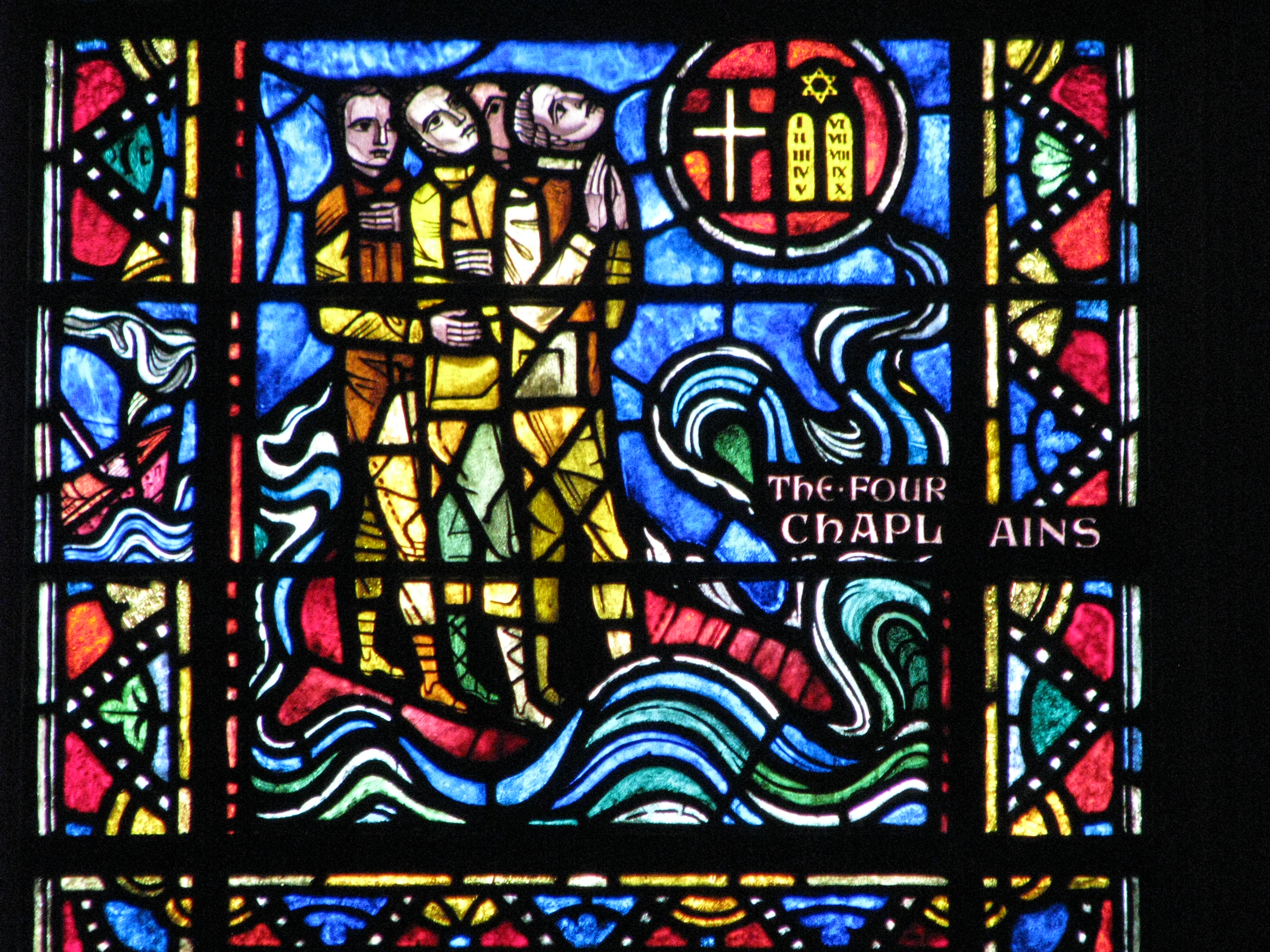
Four Chaplains Panel–Sacrifice for Freedom Window, Washington National Cathedral

Who, pray tell, were the The Four Chaplains you ask?  Sometimes referred to as the “Immortal Chaplains” or the “Dorchester Chaplains,” they were four U.S. army chaplains during WWII who gave their lives to save other civilian and military personnel as the troop ship USAT Dorchester sank on February 3, 1943, having been torpedoed by a German U-boat. They helped other soldiers board lifeboats and gave up their own life jackets when the supply ran out. The chaplains joined arms, said prayers and sang hymns as they went down with the ship.

four chaplains 2

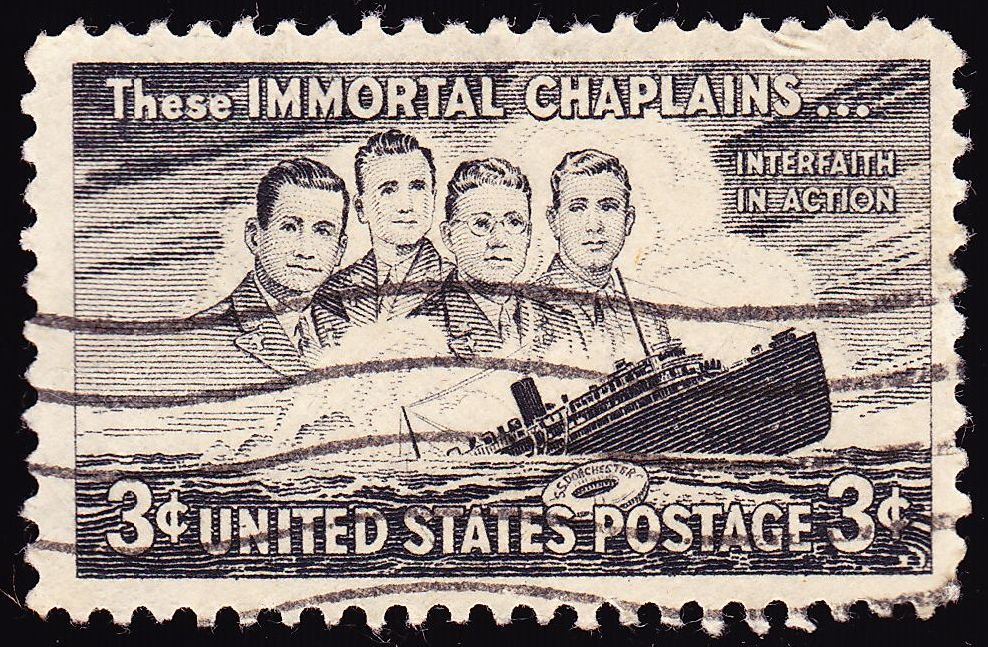
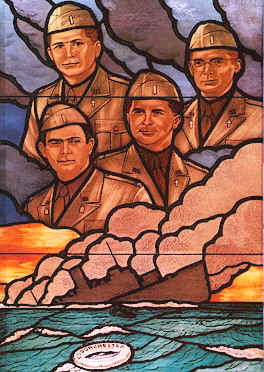
The Four were Lt. George Fox, a Methodist minister; Lt. Alexander Goode, a Jewish rabbi; Lt. John Washington, a Roman Catholic priest; and Lt. Clark Poling, a Dutch Reformed minister. Although their backgrounds, personalities and faiths were different,  it should be noted that Goode, Poling and Washington had all served as leaders in the Boy Scouts of America.
Immortal_Chaplains-3c

They died for God and Country and we salute them. You can read more about them here.
Four_Chaplains_glass1

Holy God, who didst inspire the Dorchester chaplains to be models of steadfast sacrificial love in a tragic and terrifying time: Help us to follow their example, that their courageous ministry may inspire chaplains and all who serve, to recognize thy presence in the midst of peril; through Jesus Christ our Savior, who livest and reignest with thee and the Holy Spirit, one God, for ever and ever. Amen.

*William Whiting
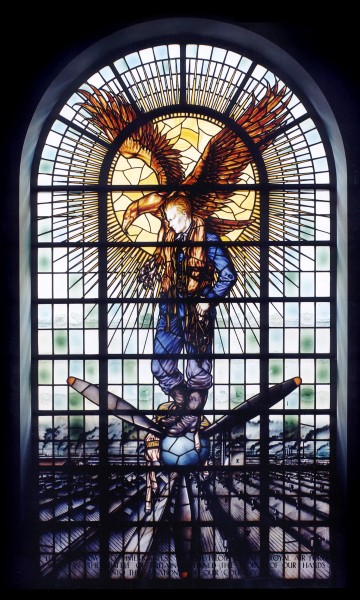
 

“Though many brave unwritten tales were simply told in vapour trails”*

by chuckofish

Let’s take a moment to remember that the Battle of Britain began on July 10, 1940 as Nazi forces attacked shipping convoys in the English Channel. It was the first major assault by the Luftwaffe. Although heavily outnumbered, the British fighter pilots put up a fierce fight and succeeded in driving off the attackers.

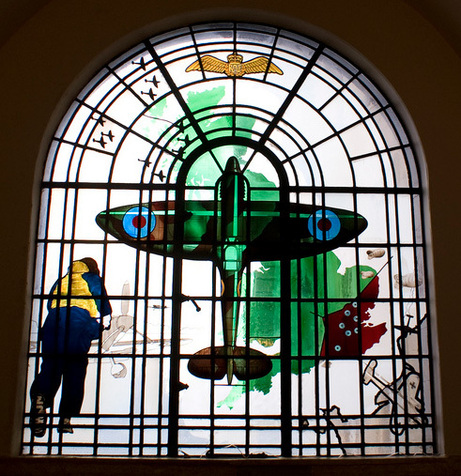
The Battle of Britain Memorial Window for Rolls-Royce, dedicated in 1947 in the Lady Chapel in Westminster Abbey

The Battle of Britain Memorial Window for Rolls-Royce, dedicated in 1947 in the Lady Chapel in Westminster Abbey

“Spitfire” window was created to honour all members of RAF Fighter Command. It’s located at the former RAF Bentley Priory, headquarters of Fighter Command during the Second World War

“Spitfire” window created to honor all members of RAF Fighter Command. It’s located at the former RAF Bentley Priory, headquarters of Fighter Command during the Second World War.

Battle of Britain Memorial in Kent, England

Battle of Britain Memorial in Kent, England

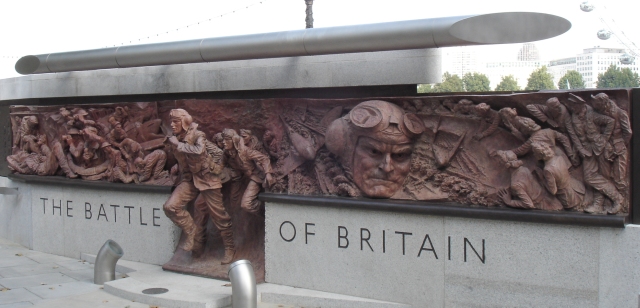
A section of the Battle of Britain Monument in London, England

A section of the Battle of Britain Monument in London, England

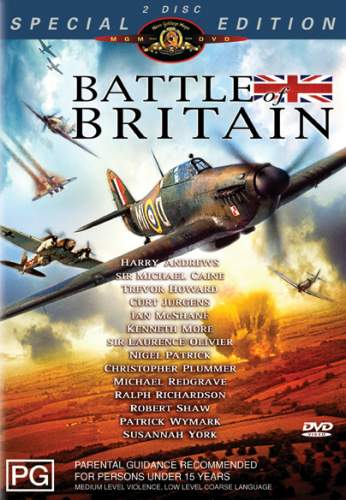
I might have to dust off my copy of The Battle of Britain (1969), an “historical reenactment of the air war in the early days of World War Two for control of the skies over Britain as the new Luftwaffe and the Royal Air Force determine whether or not an invasion can take place.”

10448

Directed by Guy Hamilton, there is a lot of aerial action by Spitfires and it boasts a who’s who of British actors, including Michael Caine, Trevor Howard, Ian McShane, Laurence Olivier, Michael Redgrave, Kenneth More, Ralph Richardson, and on and on.

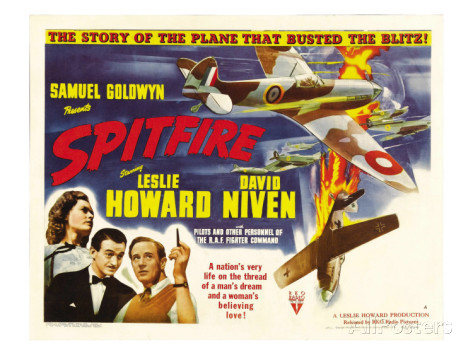
If I had not just recently seen Spitfire–The First of Few (1942) starring Leslie Howard and David Niven, I would certainly watch it.

spitfire-rosamund-john-david-niven-leslie-howard-1942

Leslie Howard is great as aircraft designer R.J. Mitchell and, as usual, he is doing his best to support the war effort in the best way he can.

It goes without saying that I will toast those few brave flyers who fought so valiantly to save so many. Will you join me?

* Lines from “Our Wall” by Flight Lieutenant William Walker, 616 Squadron, inscribed on a plaque next to the memorial wall in Kent.