dual personalities

Tag: William Faulkner

“He wasn’t shot with no fawty-one Colt.”*

by chuckofish

How was your weekend? Hope you managed to keep cool. We had more storms and this time the electricity at our house went out for an hour and a half! I was just packing a bag to go to daughter #1’s house, when it came back on. Such drama–these days we are lost without our precious electricity.

Poor daughter #2 and famille had their air conditioning go out on Saturday and had to wait all day to get it fixed. I am sympathetic, but back in my day, we didn’t have central air conditioning at all and we had to wait all summer for relief. We are very spoiled now, that’s for sure. We would go to the movies to sit for a few hours in the AC. Grocery shopping was also a diversion!

Anyway, c’est la vie. Saturday morning I went to a flower arranging workshop at church led by the floral director at Schnucks Markets. I learned a lot!
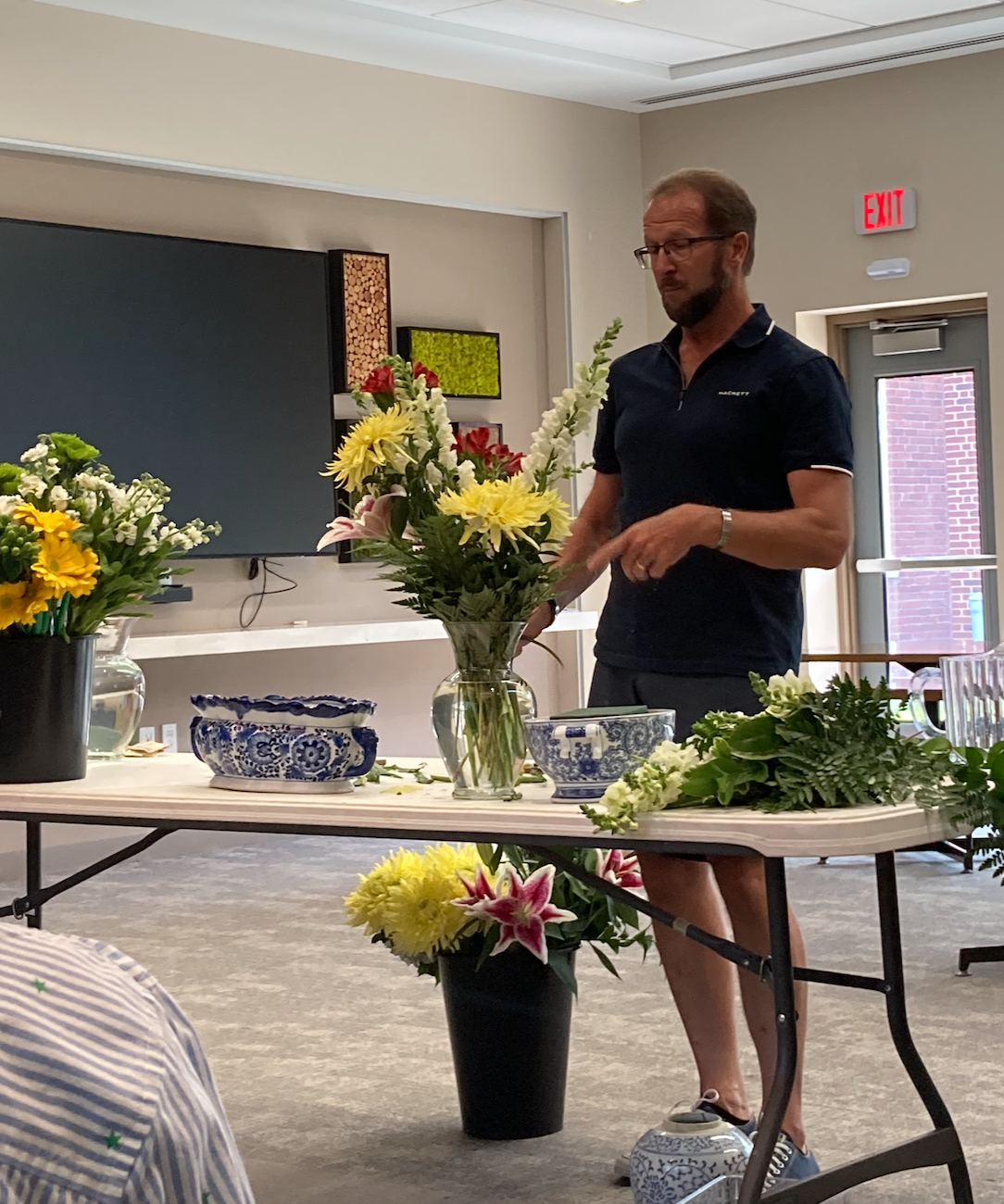
I like the fact that the flowers at our church are always done by volunteers. There is no “the flowers are given (i.e. paid for) to the glory of God and in thanksgiving for/in memory of by so-and-so” announcement in the bulletin. It is just an anonymous gift. But we in the flower guild do our best (for the glory of God) and every week the arrangements are very different.

After church on Sunday there was a reception for a lady who is retiring after working there for 24 years–one of those unsung women who make everything run smoothly in the office and, if they are lucky, are appreciated for being “hard-working” and “organized”. Lois was also lauded for her sincere faith. Well, “Whatever you do, work heartily, as for the Lord and not for men” (Colossians 3:23).

I watched a really good movie–Intruder in the Dust (1949) based on William Faulkner’s novel, which is basically a mystery story set in the deep South. It is the story of Lucas Beauchamp, an independent, land-owning black man, who is unjustly accused of the murder of a white man, Vinson Gowrie. Through the help of two teenage boys, the town lawyer and an elderly white lady, who figure out who the real murderer is, he is able to prove his innocence.
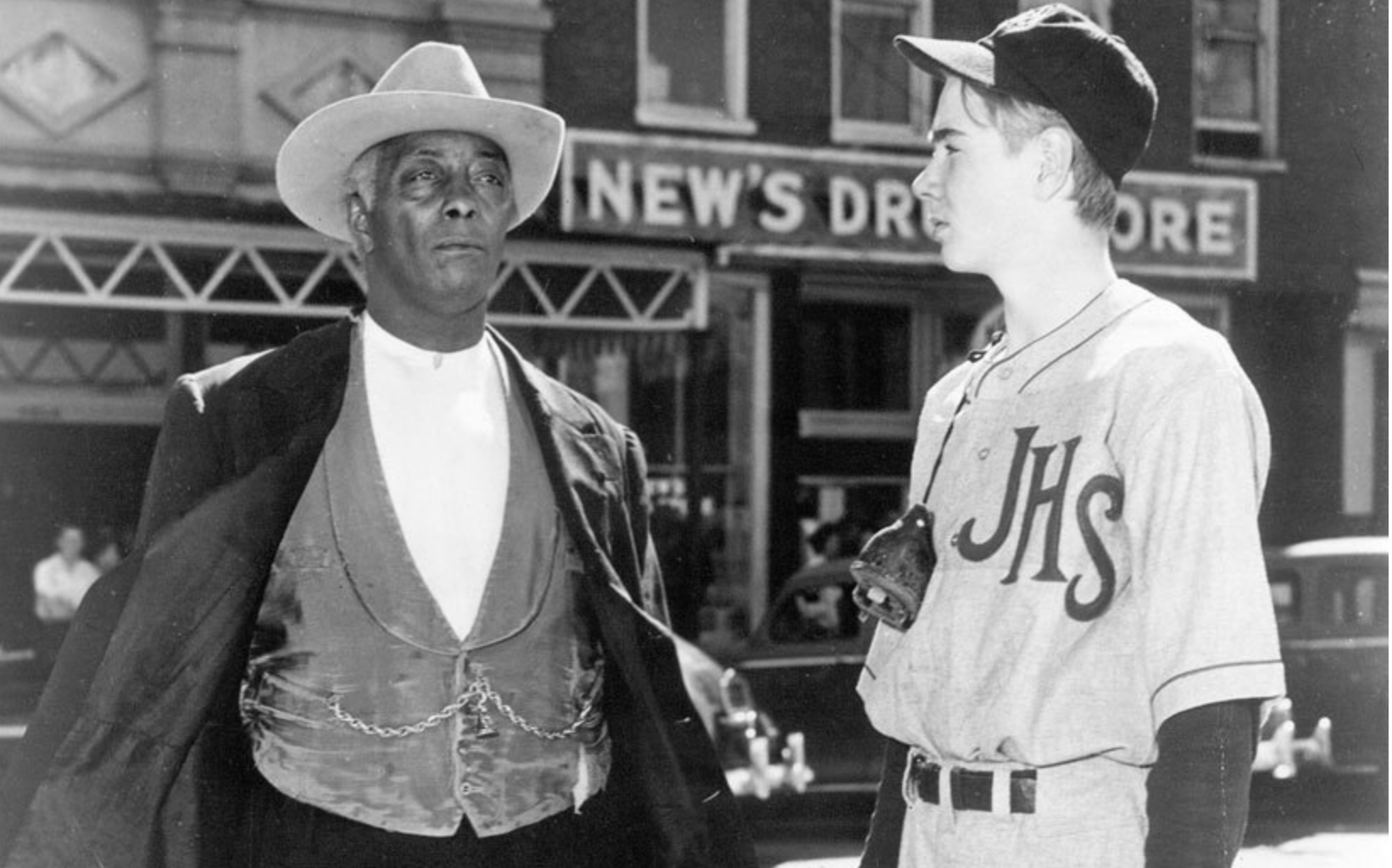
I had not seen this movie in many years. It held up. Shot entirely on location in Oxford, Mississippi, it has an air of authenticity that the backlot never would have achieved. The actors are all solid. The screenplay by Ben Maddow sticks to Faulkner’s book. The Director Clarence Brown, who grew up in Knoxville, Tennessee and apparently knew something about the South, was not even nominated for an Oscar for this movie, but he won the British Academy Film Award for it. (Brown holds the record for the most Academy Award for direction nominations–6–without a win.)

Not surprisingly, the film failed at the box office, not even earning back its negative costs according to studio records. There is, after all, no romance in this movie; there are no pretty girls. There is no real action to speak of–only the threat of action (a lynching). There are tense moments, to be sure, for our heroes as they ride around at night and dig up a dead body and, when they get the sheriff on board with their plan, dig the body up again. But American audiences were not interested.

It is said, however, that William Faulkner himself was pleased with the film and Ralph Ellison wrote that of the whole cycle of race-based movies released in 1949, Intruder in the Dust was “the only film that could be shown in Harlem without arousing unintended laughter, for it is the only one of the four in which Negroes can make complete identification with their screen image.”

Check it out. It’s worth a viewing. Then read the book!

“Some things you must always be unable to bear. Some things you must never stop refusing to bear. Injustice and outrage and dishonor and shame. No matter how young you are or how old you have got. Not for kudos and not for cash: your picture in the paper nor money in the bank either. Just refuse to bear them.”

*William Faulkner, Intruder in the Dust

Begin at the beginning

by chuckofish

In his “10 tips to writing”, Elmore Leonard advised, “Avoid prologues. They can be annoying, especially a prologue following an introduction that comes after a foreword.” Inasmuch as he was advising against pretentious self-indulgence, I agree. But there is an argument to be made in favor of ancillary material. If you explore a book before starting to read, you can find all sorts of wonderful gifts: an introduction; foreword; prologue; epilogue; afterward; appendices; maps and illustrations; lists of dramatis personae, and indices. They may not all be necessary, but they can be helpful, edifying, or just plain funny.

Take, for example, this ‘letter’ at the beginning of John Buchan’s The Three Hostages (1924):

To a young gentleman of Eton College:

Honoured Sir,

On your last birthday a well-meaning godfather presented you with a volume of mine, since you had been heard on occasion to express approval of my works. The book dealt with a somewhat arid branch of historical research, and it did not please you. You wrote to me, I remember, complaining that I had “let you down,” and summoning me, as I valued your respect, to “pull myself together.” In particular you demanded to hear more of the doings of Richard Hannay, a gentleman for whom you professed a liking.  I too have a liking for Sir Richard, and when I met him the other day (he is now a country neighbour) I observed that his left hand had been considerably mauled, an injury which I knew had not been due to the War. He was so good as to tell me the tale of an unpleasant business in which he had recently been engaged, and to give me permission to re-tell it for your benefit. Sir Richard took a modest pride in the affair, because from first to last it had been a pure contest of wits, without recourse to those more obvious methods of strife with which he is familiar. So I herewith present it to you, in the hope that in the eyes of you and your friends it may atone for certain other writings of mine which which you have been afflicted by those in authority.

The Three Hostages is a wonderful addition to the Richard Hannay series, and if you are in the mood for intrigue, little violence, and upstanding heroes behaving bravely, I highly recommend it. Be warned, however, that Buchan’s attitude toward race belongs firmly in his era. Modern sensibilities may be affronted on occasion. He was a firm believer in British imperialism and exceptionalism.

Just after reading Buchan, I cam across this gem that I’ve excerpted (with edits) from the introduction of William Faulkner’s Sanctuary (1932). In the author’s own words,

This book was written three years ago. To me it is a cheap idea, because it was deliberately conceived to make money. I had been writing books for about five years, which got published and not bought. But that was all right. I was young then and hard-bellied. I had never lived among nor known people who wrote novels and stories and I suppose I did not know that people got money for them. I was not very much annoyed when publishers refused the mss. now and then. Because I was hard-gutted then. I could do a lot of things that could earn what little money I needed, thanks to my father’s unfailing kindness which supplied me with bread at need despite the outrage to his principles at having been of a bum progenitive.

Then I began to get a little soft. I could still paint houses and do carpenter work, but I got soft. I began to think about making money by writing. I began to be concerned when magazine editors turned down short stories, concerned enough to tell them that they would buy these stories later anyway, and hence why not now. Meanwhile, with one novel completed and consistently refused for two years, I had just written my guts into The Sound and the Fury though I was not aware until the book was published that I had done so, because I had not done it for pleasure. I believed then that I would never be published again. I had stopped thinking of myself in publishing terms.

[After a while]…I began to think of myself again as a printed object. I began to think of books in terms of possible money. I decided I might just as well make some of it myself. I took a little time out, and speculated what a person in Mississippi would believe to be current trends, chose what I thought was the right answer and invented the most horrific tale I could imagine and wrote it [Sanctuary] in about three weeks…[My publisher] wrote immediately, “Good God, I can’t publish this. We’d both be in jail.” So I told [myself], “You’re damned. You’ll have to work now and then for the rest of your life.” That was in the summer of 1929. I got a job in the power plant, on the night shift, from 6 P.M. to 6 A.M., as a coal passer, I shoveled coal from the bunker into a wheel-barrow and wheeled it in and dumped it where the fireman could put it into the boiler…

I think I had forgotten about Sanctuary, just as you might forget about anything made for an immediate purpose, which did not come off… I rewrote the book…and I hope you will buy it and tell your friends and I hope they will buy it too.

You should look it up and read the whole intro. It’s really something. But much as I like Faulkner, this book is so dismally depressing that I could not read more than a third of it. It’s the story of dreadful people doing dreadful things and a decent man who, try as he might, can’t do anything about it. IMHO the best thing about the book is the introduction.

This all goes to show how important it is for readers to start at the actual beginning of a book — not with the first pages of the central text — and to explore all its nooks and crannies thoroughly. You never know what wonders you will discover.

Just so I can post one picture, I leave you with this weekend’s movie recommendation: 12 Strong. It has a great cast, including handsome Chris Hemsworth, a fine script, and wonderful scenery.

It is very well directed and surprisingly restrained in terms of violence (there’s plenty, but without the usual gouts of blood) or over-the-top machismo. Really, it’s about thoughtful, brave men doing brave things under difficult circumstances. They have a job to do and they do it — no complaints and no internal conflict. That is not to say that they enjoy killing; they just learn to live with it. Even their wives accept the situation stoically. The film has something to say beyond “war is bad.” Go see it.

Have a great weekend!!

Now hold your head up, Mason

by chuckofish

I am a New Englander by birthright and a Midwesterner by acclimation. My ancestors were all Yankee-bred.

Chamberlins from Vermont, Sargents and Putnams from Massachusetts, Rands from New Hampshire, Wheelers from Connecticut, Tukeys from Maine. The Houghs and Carnahans from Pennsylvania are the farthest south we go.

We boast no southerners in this family, but nevertheless, I feel drawn to the South. Some of its culture repels me: the pseudo aristocracy-Gone-With-the-Wind delusions, their misguided Robert E. Lee-sense of honor, slavery. But like I said, there is much to recommend it as well.

For one thing, there is the grand literary tradition exemplified by Faulkner, Welty, Capote, Harper Lee, Reynolds Price et al. They do not romantisize, even here:

It’s all now you see. Yesterday won’t be over until tomorrow and tomorrow began ten thousand years ago. For every Southern boy fourteen years old, not once but whenever he wants it, there is the instant when it’s still not yet two o’clock on that July afternoon in 1863, the brigades are in position behind the rail fence, the guns are laid and ready in the woods and the furled flags are already loosened to break out and Pickett himself with his long oiled ringlets and his hat in one hand probably and his sword in the other looking up the hill waiting for Longstreet to give the word and it’s all in the balance, it hasn’t happened yet, it hasn’t even begun yet, it not only hasn’t begun yet but there is still time for it not to begin against that position and those circumstances which made more men than Garnett and Kemper and Armistead and Wilcox look grave yet it’s going to begin, we all know that, we have come too far with too much at stake and that moment doesn’t need even a fourteen-year-old boy to think This time. Maybe this time with all this much to lose than all this much to gain: Pennsylvania, Maryland, the world, the golden dome of Washington itself to crown with desperate and unbelievable victory the desperate gamble, the cast made two years ago; or to anyone who ever sailed a skiff under a quilt sail, the moment in 1492 when somebody thought This is it: the absolute edge of no return, to turn back now and make home or sail irrevocably on and either find land or plunge over the world’s roaring rim.

Intruder in the Dust (1948)

And, of course, there is the gospel-enriched music: from Hank Williams to Dolly Parton and Lyle Lovett—almost all of my favorites and some of my soul mates.

Yes, I love the American South. I even subscribe to Garden & Gun magazine, which purports to reflect “the Soul of the South.” Well, I will say they have interesting articles about the likes of Padgett Powell and Wendell Berry and Olivia Manning.

And I dream of a Tennessee Mountain Home, don’t you?

Here is Dolly singing about her Tennessee Mountain Home. (Listening to this song on an old compilation CD of “Mom’s Favorites” made by daughter #1 back in the day prompted this post.)

Have I mentioned that I really want a Magnolia (Magnolia grandiflora) tree?