dual personalities

Tag: Willa Cather

Mid-week musings

by chuckofish

Today we toast the American writer Stephen Crane, who died on this day in 1900 at the age of 28. He wrote poetry and short stories and the famous war novel The Red Badge of Courage.

A river, amber-tinted in the shadow of its banks, purled at the army’s feet; and at night, when the stream had become of a sorrowful blackness, one could see across it the red, eyelike gleam of hostile camp-fires set in the low brows of distant hills.

John Huston made a movie adaption of the novel in 1951 starring Audie Murphy. Although I know a man who just thinks it is the best movie ever, I find that hard to believe, given the star and the director, but I should see it before I judge. I should also read the book again, which I may have read in high school, but I do not remember it clearly. The Civil War scene in How the West Was Won (1962) where George Peppard drinks from the bloody river with the confederate deserter is derivative I’m sure. Anyway, I’ll add that to my list.
Willa Cather wrote this lovely piece –When I Knew Stephen Crane–and sums him up brilliantly. She was a college girl when she was acquainted with him briefly in Lincoln, Nebraska and he opened up to her on a memorable evening.

Men will sometimes reveal themselves to children, or to people whom they think never to see again, more completely than they ever do to their confreres. From the wise we hold back alike our folly and our wisdom, and for the recipients of our deeper confidences we seldom select our equals. The soul has no message for the friends with whom we dine every week. It is silenced by custom and convention, and we play only in the shallows. It selects its listeners willfully, and seemingly delights to waste its best upon the chance wayfarer who meets us in the highway at a fated hour. There are moments too, when the tides run high or very low, when self-revelation is necessary to every man, if it be only to his valet or his gardener. At such a moment, I was with Mr. Crane.

I will also note that Stagecoach (1939) is on TCM tonight. It is always a good time to watch this movie, which is one of the best 96 minutes ever put on film. Stagecoach was nominated for an Academy Award as Best Picture; Thomas Mitchell received an Academy Award for his supporting role as “Doc Boone,” and Richard Hageman, Franke Harling, John Leipold and Leo Shuken received an Academy Award for their score. Stagecoach also made the National Board of Review’s ten best list, and John Ford was honored as best director of 1939 by the New York Film Critics. It catapulted the western genre into the A-film realm. (And, of course, the stunts are out of this world.)

Here’s Viggo Mortensen’s take on Stagecoach:

So read an old book, watch an old movie (again) and praise God from whom all blessings flow!

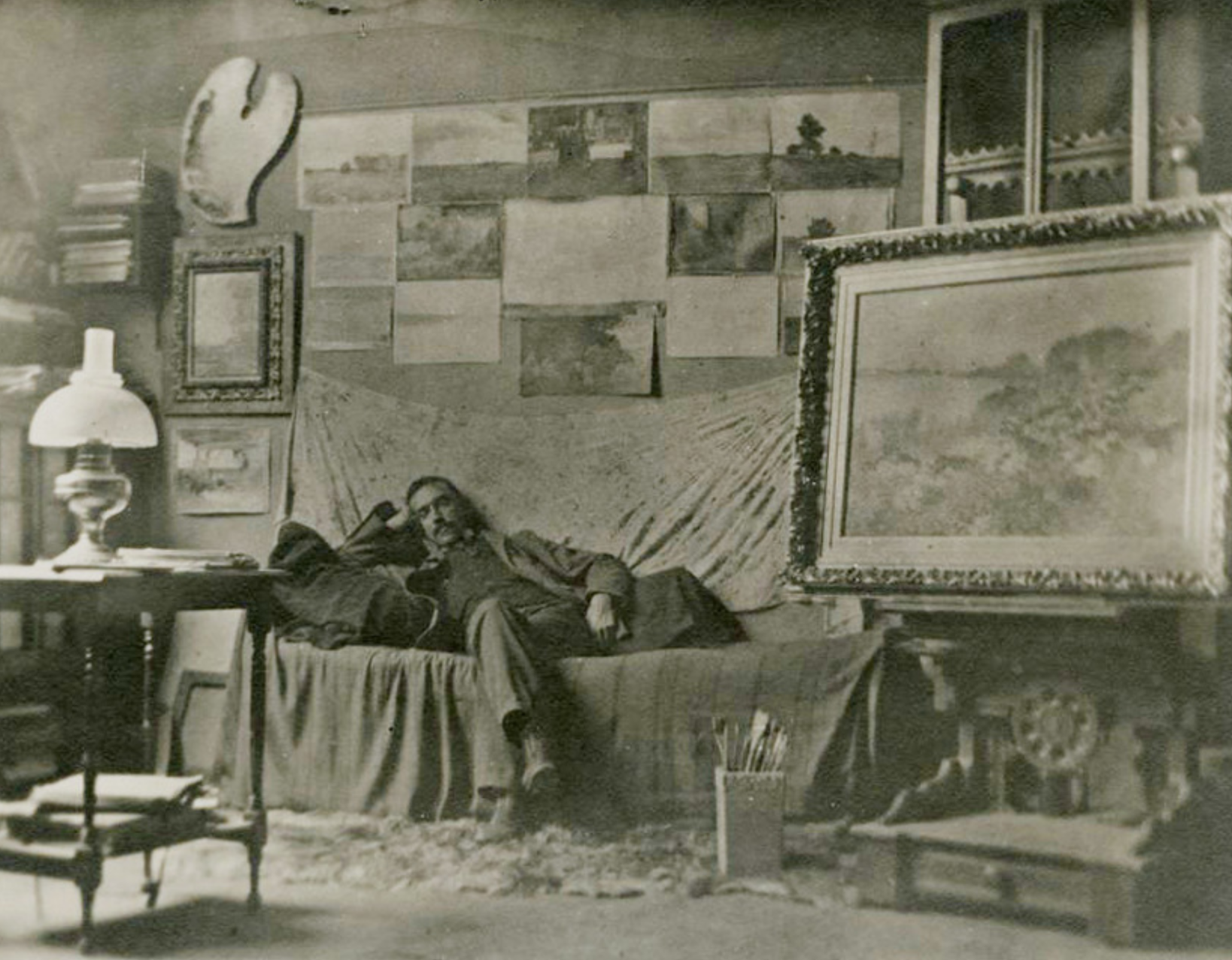
(The photo is Stephen Crane in Corwin Knapp Linson’s studio on West 22nd Street, Manhattan, c. 1894, when Crane was writing The Red Badge of Courage.)(Syracuse University Libraries via Roger Williams University)
“Hold the selfies, put the Gram away/ Get your family, y’all hold hands and pray”*

by chuckofish


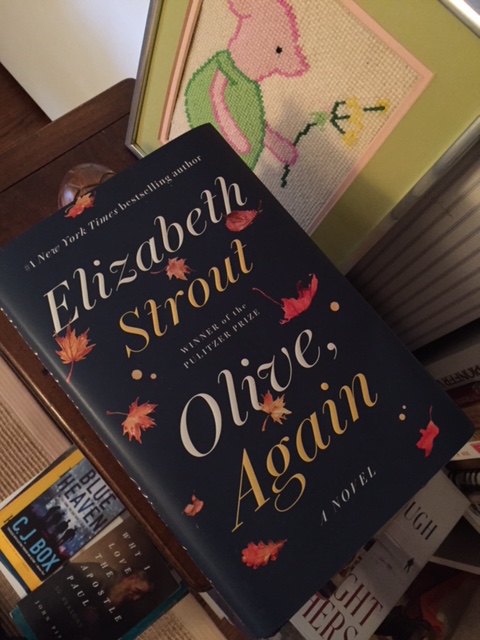
IMG_4072.JPGOn Friday I received my copy of Olive, Again by Elizabeth Strout in the mail. It was a quick read and I finished it in a day. It was a big disappointment. All of the reviews I have read have been raves, so I am in a distinct minority it seems.


Olive, Again is a sequel to Strout’s Olive Kitteridge, which I loved. I have liked most of her books and almost all of them are tied up in this one. Indeed, in a series of linked short stories, we find out what happens to all those Maine characters who have populated her books. What we find out, basically, is that they are all frightened and lonely people with no spiritual life. It is a bleak world where nothing has much meaning. At the end of the book, Olive writes (spoiler alert!), “I do not have a clue who I have been. Truthfully, I do not understand a thing.”

I could go on, but it is just kind of depressing, so why bother.

Anyway, despite reading this disappointing book, daughter # 1 and I got quite a lot done this weekend, tidying up the house for daughter #2’s visit this coming weekend. I even persuaded the OM to hang up a pair of new drapes in my office. I got them on Etsy.com and I think they look great.

IMG_4071.JPG

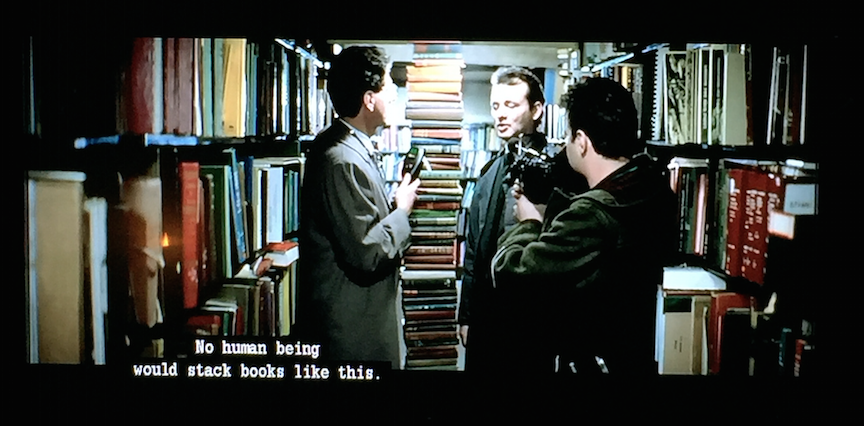
We also watched Ghostbusters (1984) which I thought held up very well and is kind of a classic at this point.

Screen Shot 2019-10-28 at 11.52.53 AM.png

The scene at the beginning in the New York Public Library…

Screen Shot 2019-10-28 at 3.10.30 PM.png

reminded us of Lottie…LOL!

Screen Shot 2019-10-28 at 3.19.25 PM.png

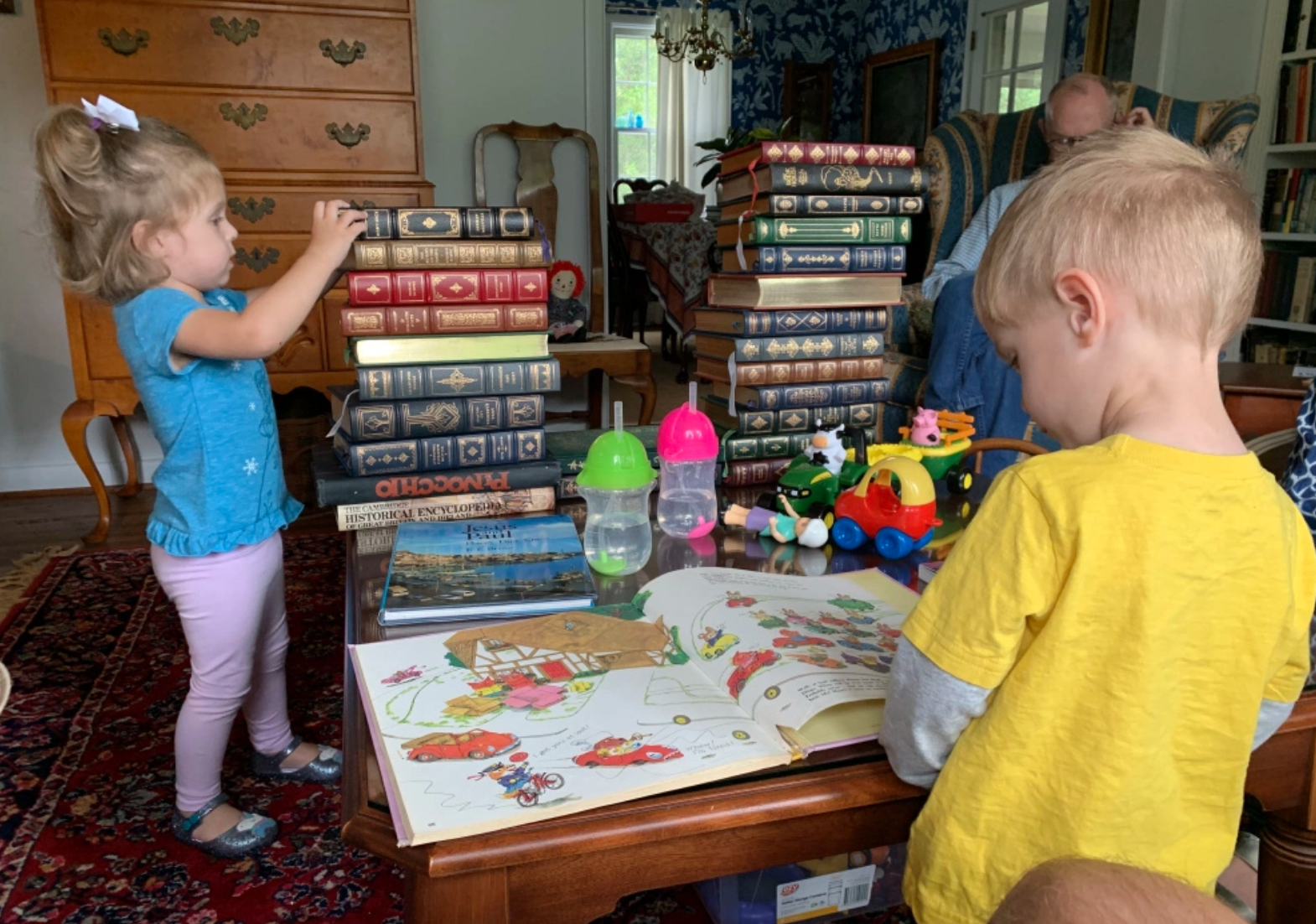
“No human being would stack books like this.”

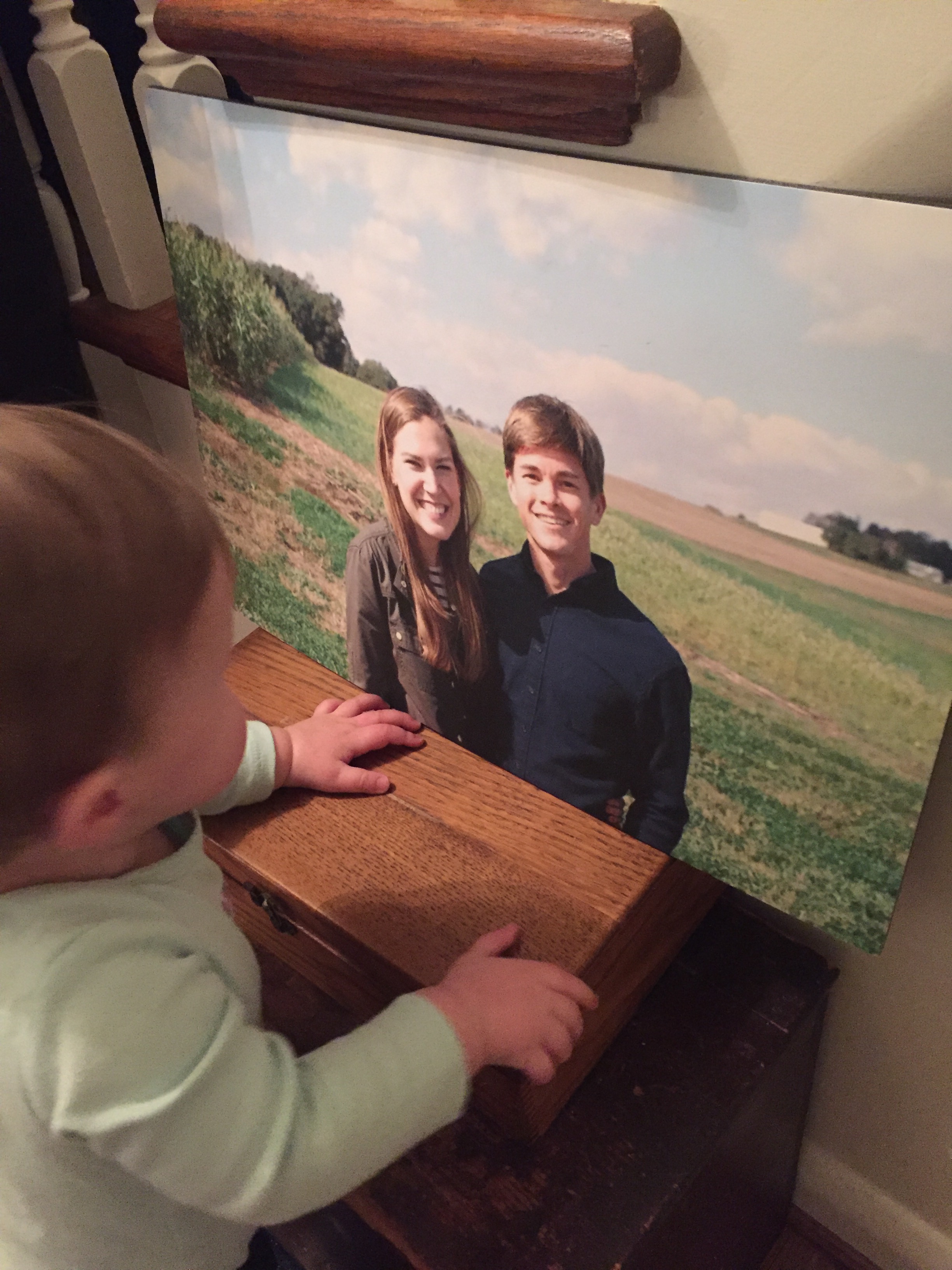
Meanwhile, the boy had a fine time at the wedding in Rye, New York.

Unknown.jpeg

There he is to the right of the bride

And now he is home again, home again, jiggety jig.

And now I am back to wondering what to read. Have a good week!

“I don’t myself think much of science as a phase of human development. It has given us a lot of ingenious toys; they take our attention away from the real problems, of course, and since the problems are insoluble, I suppose we ought to be grateful for distraction. But the fact is, the human mind, the individual mind, has always been made more interesting by dwelling on the old riddles, even if it makes nothing of them. Science hasn’t given us any new amazements, except of the superficial kind we get from witnessing dexterity and sleight-of-hand. It hasn’t given us any richer pleasures, as the Renaissance did, nor any new sins-not one! Indeed, it takes our old ones away. It’s the laboratory, not the Lamb of God, that taketh away the sins of the world. You’ll agree there is not much thrill about a physiological sin. We were better off when even the prosaic matter of taking nourishment could have the magnificence of a sin. I don’t think you help people by making their conduct of no importance-you impoverish them. As long as every man and woman who crowded into the cathedrals on Easter Sunday was a principal in a gorgeous drama with God, glittering angels on one side and the shadows of evil coming and going on the other, life was a rich thing. The king and the beggar had the same chance at miracles and great temptations and revelations. And that’s what makes men happy, believing in the mystery and importance of their own little individual lives. It makes us happy to surround our creature needs and bodily instincts with as much pomp and circumstance as possible. Art and religion (they are the same thing, in the end, of course) have given man the only happiness he has ever had.”
― Willa Cather, The Professor’s House 

*Kanye West, “Closed on Sunday”

This little light of mine

by chuckofish

Screen Shot 2019-04-17 at 9.03.18 AM.pngI am a morning person. I get up early and I exercise (while listening to R.C. Sproul or the like) and then I have coffee and watch the news for half an hour. Then I perform my morning ablutions and get ready for work. Sometimes I vacuum. By the time I get to work I have been up for two and a half hours!
Screen Shot 2019-04-17 at 1.11.07 PM.png

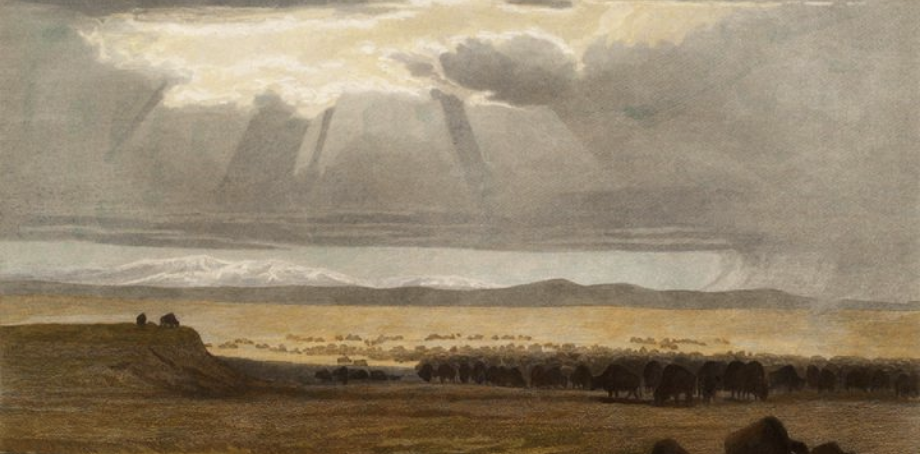
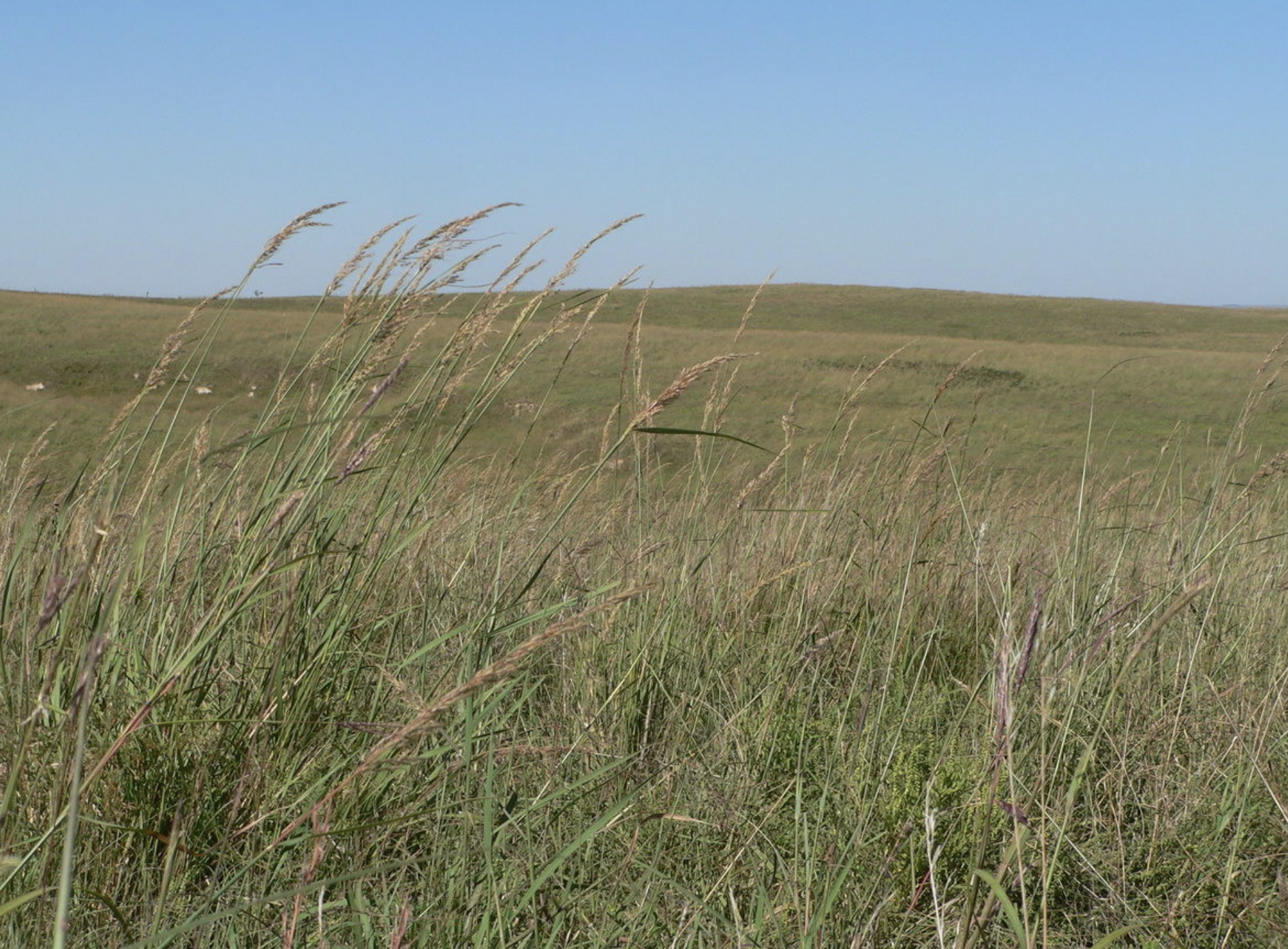
“Carl sat musing until the sun leaped above the prairie, and in the grass about him all the small creatures of day began to tune their tiny instruments. Birds and insects without number began to chirp, to twitter, to snap and whistle, to make all manner of fresh shrill noises. The pasture was flooded with light; every clump of ironweed and snow-on-the-mountain threw a long shadow, and the golden light seemed to be rippling through the curly grass like the tide racing in.”
― Willa Cather, O Pioneers! 

Screen Shot 2019-04-17 at 1.46.17 PM.png

I see a lot of sunrises out my kitchen window. Highly recommended.

The painting is by William Holbrook Beard, On the Prairie, 1860, The Museum of Nebraska Art; the photo is the Willa Cather Memorial Prairie.

Back to the salt mine musings

by chuckofish

IMG_2356 2.JPG

There was a lot of coming and going during this long weekend, and sometimes this old lady could barely keep track of who was here and who wasn’t.

C’est la vie and I am not complaining. I am rejoicing.

It even snowed a little, just a dusting, but enough so we could see red fox tracks zipping through our yard.

03e3fdf15fb34435c0dc98f0d4bef3d0.jpg

Life is full of wonder.

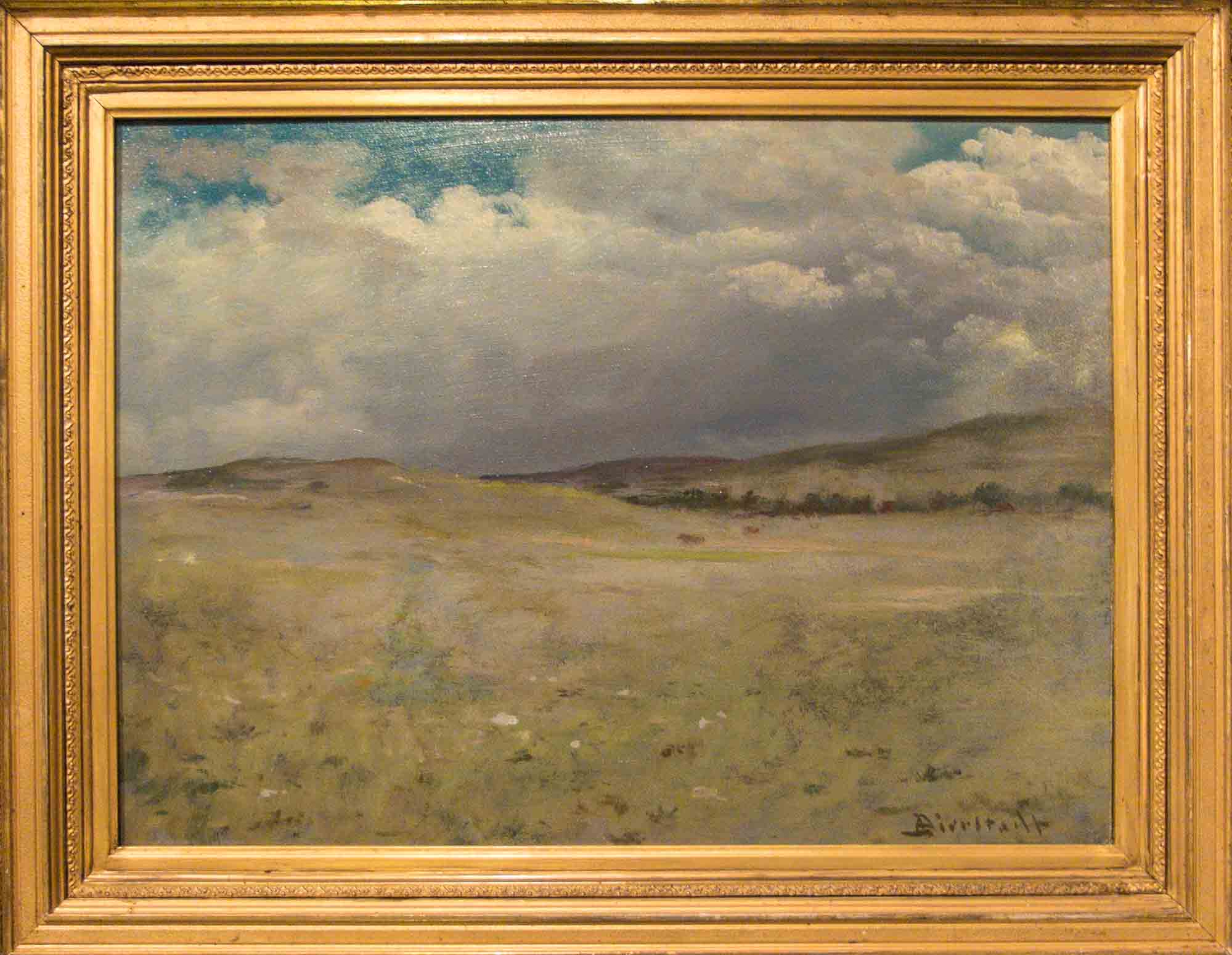
Although it was only four o’clock, the winter day was fading. The road led southwest, toward the streak of pale, watery light that glimmered in the leaden sky. The light fell upon the two sad young faces that were turned mutely toward it: upon the eyes of the girl, who seemed to be looking with such anguished perplexity into the future; upon the somber eyes of the boy, who seemed already to be looking into the past. The little town behind them had vanished as if it had never been, had fallen behind the swell of the prairie, and the stern frozen country received them into its bosom. The homesteads were few and far apart; here and there a windmill gaunt against the sky, a sod house crouching in a hollow. But the great fact was the land itself, which seemed to overwhelm the little beginnings of human society that struggled in its somber wastes.

–Willa Cather, O Pioneers!

Albert-Bierstadt-Clouds-Coming-Over-the-Plains-MONA-Kearney-1.jpg

“Clouds Coming Over the Plains” by Albert Bierstadt

“Fill your paper with the breathings of your heart.”*

by chuckofish

file16013.png

“Alexandra drew her shawl closer about her and stood leaning against the frame of the mill, looking at the stars which glittered so keenly through the frosty autumn air. She always loved to watch them, to think of their vastness and distance, and of their ordered march. It fortified her to reflect upon the great operations of nature, and when she thought of the law that lay behind them, she felt a sense of personal security. That night she had a new consciousness of the country, felt almost a new relation to it. Even her talk with the boys had not taken away the feeling that had overwhelmed her when she drove back to the Divide that afternoon. She had never known before how much the country meant to her. The chirping of the insects down in the long grass had been like the sweetest music. She had felt as if her heart were hiding down there, somewhere, with the quail and the plover and all the little wild things that crooned or buzzed in the sun. Under the long shaggy ridges, she felt the future stirring.”

–Willa Cather, O Pioneers!

Today we toast Willa Cather (1873-1947), whom we love, on her birthday.

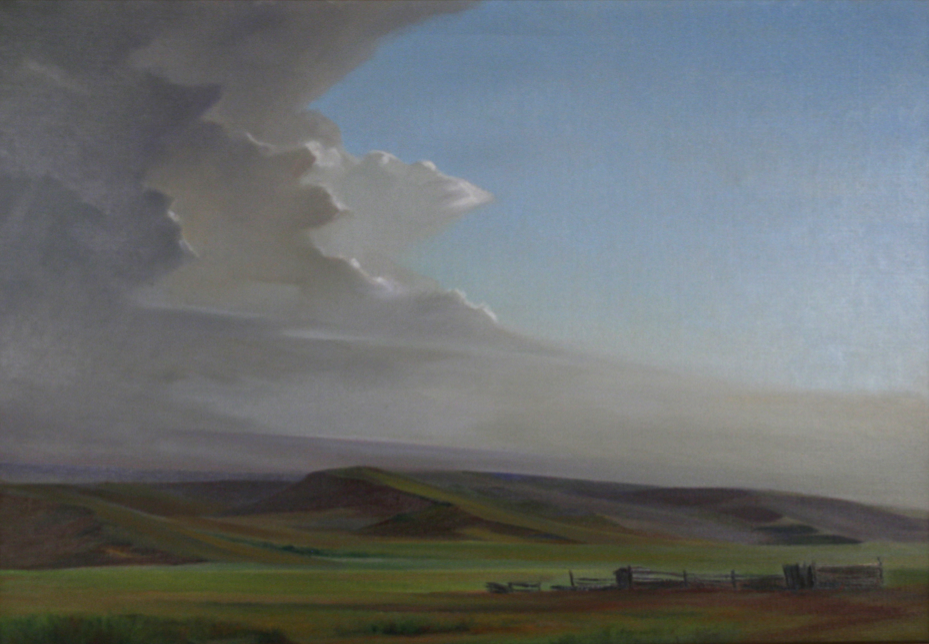
The painting is “High Plains — Range Land,” an oil on linen painting by Raymond J. Eastwood.

*William Wordsworth

“You come with me, we hunt buffalo, get drunk together! Hallelujah! Hallelujah!”*

by chuckofish

This November, we celebrate Native American Heritage Month, a time to honor the history, culture, and traditions of Native Americans past and present.

On September 28, 1915, President Calvin Coolidge issued a proclamation that resulted in the first Native American heritage celebration in the United States; he declared the second Saturday of each May as American Indian Day. In 1990, President George H. W. Bush approved a joint resolution designating November as National American Indian Heritage Month.

We will try to be more respectful in our celebrations this month than might be suggested from our entertaining, but culturally appropriative, singing of “Ugga Wugga Wigwam” to the wee babes the other night.

Perhaps we will watch the final season of Longmire, which premiers next Friday.

But I doubt it. Since reading all the books last summer, I am loathe to watch the show, because in my opinion, the video version and its ridiculous story lines do not compare positively to the books. I mean, there is no torture of people (Indian or white) in the books (see trailer)! There is no evil Indian bad guy in the books! And I’m sorry, Walt is a lot smarter in the books! Furthermore, Walt has a good relationship with the Cheyenne in the books, not the relationship fraught with drama portrayed on the tv series. All the racial unrest on the show is inserted to heighten the drama and that drives me crazy. Ugh.

We’ll have to think of something to do to celebrate Native American Heritage Month, such as visit one of the various American Indian sites throughout our state. There are several–for instance, I did not know there is a restored and authentically finished 1790-1815 French and Indian trading post and village, at Fort Charrette Village and Museum, 10 minutes east of Washington, Missouri. The fort includes five log houses, one of which is believed to be the oldest log house west of the Mississippi River. All are furnished with 1700s American antiques. There is even a winery nearby!

In the meantime, here is something beautiful and perceptive from Willa Cather:

“It was the Indian manner to vanish into the landscape, not to stand out against it. The Hopi villages that were set upon rock mesas were made to look like the rock on which they sat, were imperceptible at a distance. …

In the working of silver or drilling of turquoise the Indians had exhaustless patience; upon their blankets and belts and ceremonial robes they lavished their skill and pains. But their conception of decoration did not extend to the landscape. They seemed to have none of the European’s desire to “master” nature, to arrange and re-create. They spent their ingenuity in the other direction; in accommodating themselves to the scene in which they found themselves. This was not so much from indolence, the Bishop thought, as from an inherited caution and respect. It was as if the great country were asleep, and they wished to carry on their lives without awakening it; or as if the spirits of earth and air and water were things not to antagonize and arouse. When they hunted, it was with the same discretion; an Indian hunt was never a slaughter. They ravaged neither the rivers nor the forest, and if they irrigated, they took as little water as would serve their needs. The land and all that it bore they treated with consideration; not attempting to improve it, they never desecrated it.”

Death Comes for the Archbishop

Screen Shot 2017-11-08 at 11.31.28 AM.png

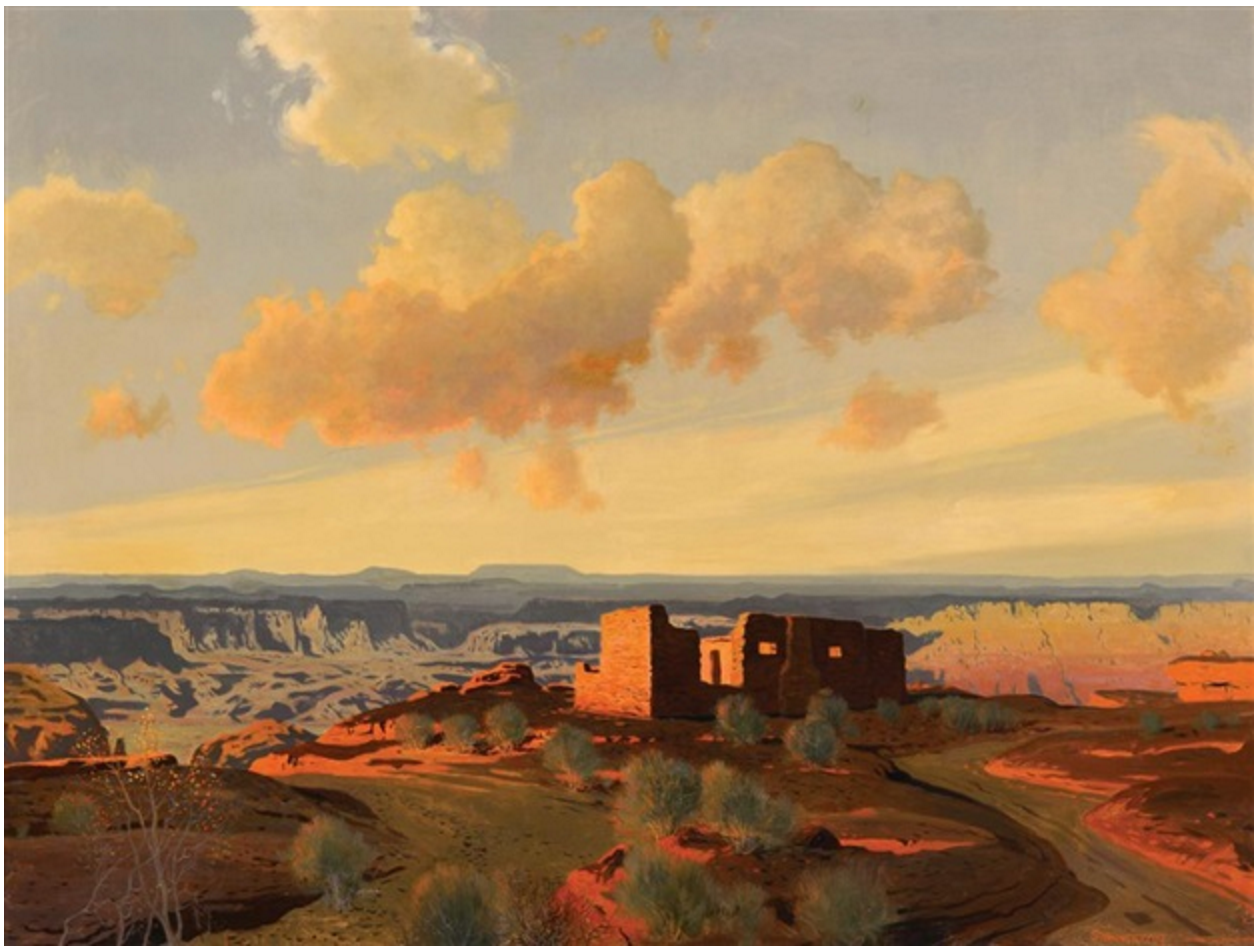
Ruins of Hopi Trading Post by James Swinnerton (1875–1974)

43e5bf44ad0298f0d8a498ee3f3c7b64.jpg

Thomas Moran (1837–1926)

06a1c5a60553a822961b4d062c1a12e8--southwest-art-landscape-paintings.jpg

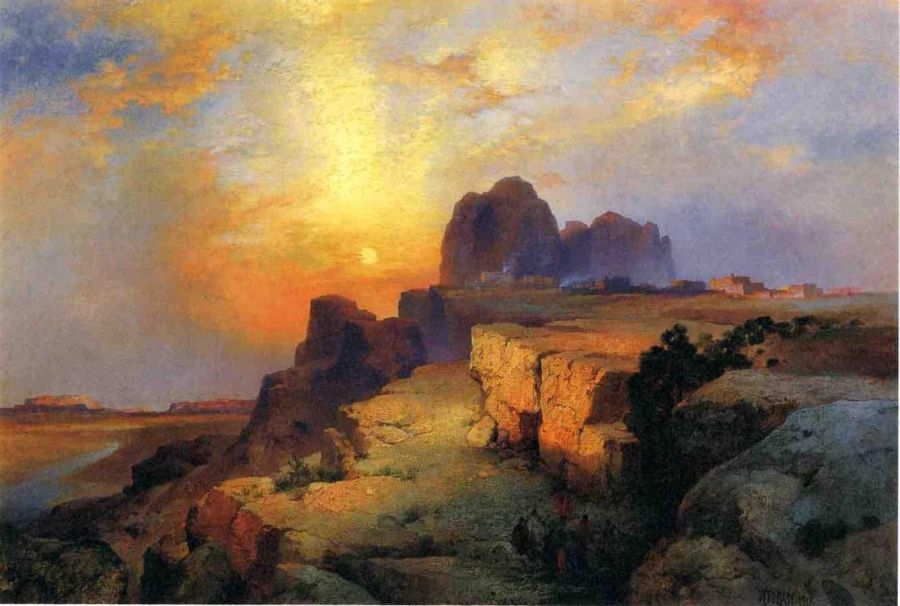
Thomas Moran (American, 1837 – 1926) -“Hopi Museum, Arizona”, 1916

*Pony That Walks in She Wore a Yellow Ribbon (1949)

Dissolved into something complete and great

by chuckofish

I have gushed previously about Willa Cather on this blog here. I am about to do so again.

cAther

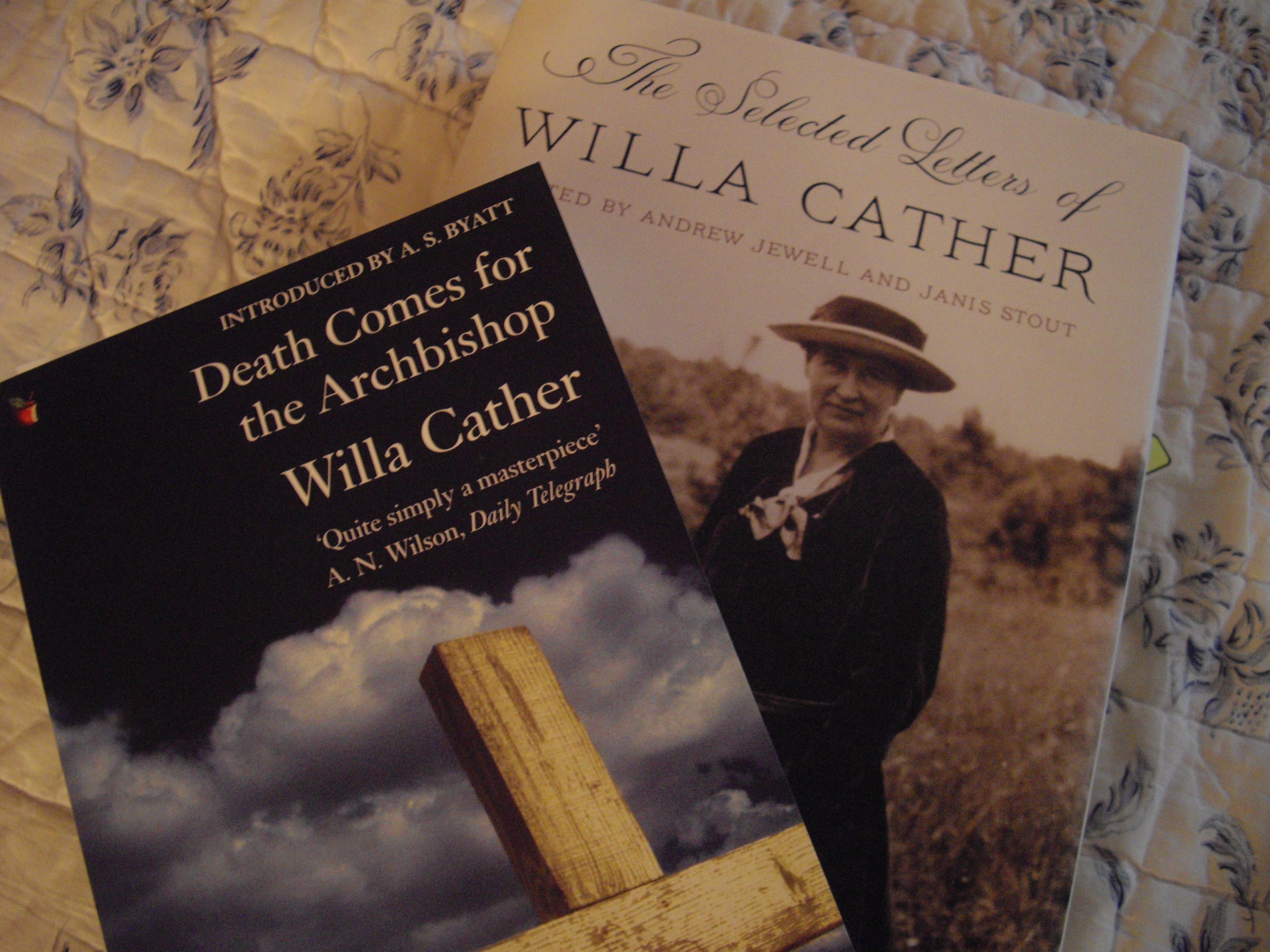
My dual personality gave me the newly published Selected Letters of Willa Cather for my birthday last month. Cather had left adamant instructions to her executors that her private correspondence not be published or quoted. “The editors of the new collection, Andrew Jewell and Janis Stout, acknowledge in the introduction that this publication flies in the face of Cather’s instructions, as set forth by a will that partially expired in 2011. Still, they believe that publication of her letters will prove invaluable for her legacy, arguing that ‘these lively, illuminating letters will do nothing to damage her reputation.'” (Melville House)

Oh well, I have been enthusiastically reading them. (Personally I think she was very depressed at the end of her life, and that is why she put those particular orders into effect.) I already knew from her fiction, that she was wonderfully talented and deep, but from her letters we get a real sense of Willa as a person. We see what gets her excited and the things that annoy her. We see her feelings hurt by mean-spirited reviewers and her confidence boosted by the encouraging words of worthy people.

“Weeks ago I got such a heart-warming letter from a former president of the Missouri Pacific, Edwin Winter, who as a young man helped to carry the U.P. across Nebraska, and who built the bridge over Dale Creek canyon–the first bridge, which was of timber! He asked if he could come to see me, and on Friday he came. Such a man! all that one’s proudest of in one’s country. He picked the book [My Antonia] up in his club and sat right down and wrote me the most beautiful of letters. I would rather have the admiration of one man like that than sell a thousand books…”

–from a letter to her brother Roscoe Cather, 1919

She loved her family and friends. She never married, and despite what some people who look at everything through the “queer lens” imagine, I think she would have liked to. But she was a passionate artist first and foremost. Had she married and had children, we might not have the wonderful books which are her legacy.

I also read Death Comes for the Archbishop, which she considered to be her best work. It is awesome. It tells the story of two well-meaning and devout French priests who encounter an entrenched Spanish-Mexican clergy whom they are sent to supplant after the United States acquired New Mexico in the Mexican-American War. She is very respectful of the Catholic Church (more so probably than a Catholic would be), and I am happy to say, she is a big fan of our old family friend Kit Carson, who plays a minor role in the novel.

“This Missourian, whose eye was so quick to read a landscape or a human face, could not read a printed page. He could at that time barely write his own name. Yet one felt in him a quick and discriminating intelligence. That he was illiterate was an accident; he had got ahead of books, gone where the printing-press could not follow him. Out of the hardships of his boyhood–from fourteen to twenty picking up a bare living as cook or mule-driver for wagon trains, often in the service of brutal and desperate characters–he had preserved a clean sense of honour and a compassionate heart.”

Through the 1910s and 1920s, Cather was firmly established as a major American writer, receiving the Pulitzer Prize in  1922 for her novel One of Ours. By the 1930s, however, critics began to dismiss her as a “romantic, nostalgic writer who could not cope with the present.” Critics such as Granville Hicks accused Cather of failing to confront “contemporary life as it is.” The same thing happened to Thornton Wilder, you may recall,  and many other writers who are still read today (whereas Granville Hicks is long forgotten). It is good to see Willa Cather appreciated again. I agree with Wallace Stevens who wrote toward the end of her life: “We have nothing better than she is. She takes so much pains to conceal her sophistication that it is easy to miss her quality.” I am so grateful to have finally discovered her!

On a personal note, I was interested to read that one of her favorite nieces graduated from Smith College. I was gratified to learn that the college bestowed an honorary degree on Willa, the year her niece graduated.

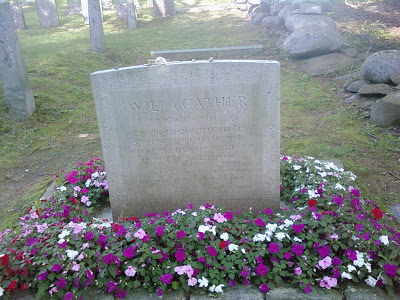
Someday I would like to visit her grave in Jaffrey, New Hampshire.

willacathergrave

WILLA CATHER
December 7, 1873-April 24, 1947
THE TRUTH AND CHARITY OF HER GREAT
SPIRIT WILL LIVE ON IN THE WORK
WHICH IS HER ENDURING GIFT TO HER
COUNTRY AND ALL ITS PEOPLE.
“…that is happiness; to be dissolved
into something complete and great.”
From My Antonia

A spirit of power and of love and of self-control

by chuckofish

“The earth was warm under me, and warm as I crumbled it through my fingers…I kept as still as I could. Nothing happened. I did not expect anything to happen. I was something that lay under the sun and felt it, like the pumpkins, and I did not want to be anything more. I was entirely happy. Perhaps we feel like that when we die and become a part of something entire, whether it is sun and air, or goodness and knowledge. At any rate, that is happiness; to be dissolved into something complete and great. When it comes to one, it comes as naturally as sleep.”

For weeks now I have been meaning to write something about Willa Cather, but I have been so busy that I have not been able to think about it. I have read The Song of the Lark and My Antonia in quick succession, followed by O Pioneers! They are all three deep goldmines of insight and wonderful writing. I (literally) wept the tears a writer sheds when she reads something better than she can ever write.

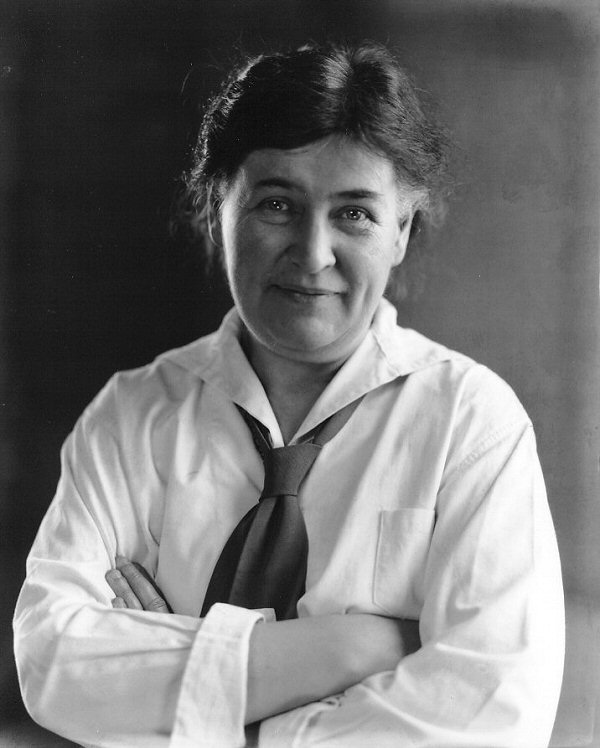
Portrait of Willa Cather by Edward Steichen

Portrait of Willa Cather by Edward Steichen

She was born Wilella Sibert Cather in 1873 in the Back Creek Valley near Winchester, Virginia. Her father was Charles Fectigue Cather, whose family had lived on land in the valley for six generations. Her mother was Mary Virginia Boak, a former school teacher. The Cathers moved to Nebraska in 1883, joining Charles’ parents, when Willa was nine years old. Her father tried his hand at farming for eighteen months; then he moved the family into the town of Red Cloud, where he opened a real estate and insurance business, and the children attended school for the first time. Clearly Cather’s time in this frontier state was a deeply formative experience for her.

For now I will just give you a few quotes to give you some idea of the power of her writing and of her strong feelings about things. Reading three books in a row, I have a pretty good idea what was important to her: art, home, the land, childhood, hard work, authenticity. She repeats themes, and characters have similarities that indicate clearly where old Willa was coming from. I have to say, I am with her all the way.

As she says of one character: “Everything she said seemed to come right out of her heart.”

Here she writes about the young main character in The Song of the Lark:

“The clamor about her drowned out the voice within herself. In the end of the wing, separated from the other upstairs sleeping rooms by a long, cold, unfinished lumber room, her mind worked better. She thought things out more clearly. Pleasant plans and ideas occurred to her which had never come before. She had certain thoughts which were like companions, ideas which were like older and wiser friends. She left them there in the morning, when she finished dressing in the cold, and at night, when she came up with her lantern and shut the door after a busy day, she found them awaiting her.”

Many years later, the girl, now a famous opera singer, tries to explain her art in a long, brilliant section. Here’s just a snippet:

“They saved me: the old things, things like the Kohlers’ garden. They were in everything I do…the light, the color, the feeling. Most of all the feeling. It comes in when I’m working on a part, like the smell of a garden coming in at the window. I try all the new things, and then go back to the old. Perhaps my feelings were stronger then. A child’s attitude toward everything is an artist’s attitude. I am more or less of an artist now, but then I was nothing else…”

Here in My Antonia the narrator describes houses in the town:

“They were flimsy shelters, most of them poorly built of light wood, with spindle porch-posts horribly mutilated by the turning-lathe. Yet for all their frailness, how much jealousy and envy and unhappiness some of them managed to contain! The life that went on in them seemed to me made up of evasions and negations; shifts to save cooking, to save washing and cleaning, devices to propitiate the tongue of gossip.”

And here in O Pioneers! a person expresses something important to a friend:

“It’s by understanding me, and the boys, and mother, that you’ve helped me. I expect that is the only way a person ever really can help another. I think you are about the only one that ever helped me.”

Have I convinced you yet? Go now and order this book!

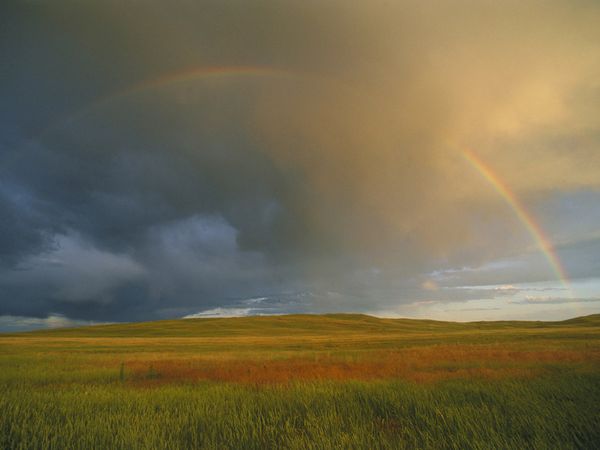
nationalgeographic.com

nationalgeographic.com

Music from the New World

by chuckofish

I am reading The Song of the Lark by Willa Cather. It is very good. Here is a quote about going to see a concert in Chicago, which reminded me of my dual personality and how, when she was a very small child–3 or 4–she got a record of the “New World Symphony” for Christmas.

sarah

She loved it and insisted on listening to it over and over. She would walk around the house singing Dum dum dum dum de dum, dum dum dum dum duuuuuum.

She had been to so few concerts that the great house, the crowd of people, and the lights, all had a stimulating effect…During the first number Thea was so much interested in the orchestra itself, in the men, the instruments, the volume of sound, that she paid little attention to what they were playing. Her excitement impaired her power of listening. She kept saying to herself, “Now I must stop this foolishness and listen; I may never hear this again”; but her mind was like a glass that is hard to focus. She was not ready to listen until the second number, Dvorak’s Symphony in E minor, called on the programme, “From the New World.” The first theme had scarcely been given out when her mind became clear; instant composure fell upon her, and with it came the power of concentration. This was music she could understand, music from the New World indeed! Strange how, as the first movement went on, it brought back to her that high tableland above Laramie; the grass-grown wagon trails the far-away peaks of the snowy range, the wind and the eagles, that old man and the first telegraph message.

When the first movement ended, Thea’s hands and feet were cold as ice. She was too much excited to know anything except that she wanted something desperately, and when the English horns gave out the theme of the Largo, she knew that what she wanted was exactly that. Here were the sand hills, the grasshoppers and locusts, all the things that wakened and chirped in the early morning; the reaching and reaching of high plains, the immeasurable yearning of all flat lands. There was home in it, too; first memories, first mornings long ago; the amazement of a new soul in a new world; a soul new and yet old, that had dreamed something despairing, something glorious, in the dark before it was born; a soul obsessed by what it did not know, under the cloud of a past it could not recall.

Makes me want to listen to the “New World” symphony, how about you? Well, here you go!