We tend to think that if Jesus Christ compels us to do something and we are obedient to Him, He will lead us to great success. We should never have the thought that our dreams of success are God’s purpose for us. In fact, His purpose may be exactly the opposite. We have the idea that God is leading us toward a particular end or a desired goal, but He is not. The question of whether or not we arrive at a particular goal is of little importance, and reaching it becomes merely an episode along the way. What we see as only the process of reaching a particular end, God sees as the goal itself.
What is my vision of God’s purpose for me? Whatever it may be, His purpose is for me to depend on Him and on His power now. If I can stay calm, faithful, and unconfused while in the middle of the turmoil of life, the goal of the purpose of God is being accomplished in me. God is not working toward a particular finish–His purpose is the process itself.
–Oswald Chambers, My Utmost for His Highest
*The above illustration is from GodBricks, “Blogging at the intersection between LEGO and religion”.
It was quite a weekend. I took part in more socializing than in the first 5 months of the year combined.
A very dear friend and her husband were visiting from Virginia and we had dinner with them at a friend’s house with other members of our high school class–a mini reunion of sorts. There were tornado sirens and we turned on the TV during dinner to make sure we weren’t in the path of disaster. Luckily the tornadic activity passed by us to the north, but you can never be too sure. Unbenownst to us, there was a lot of local damage and power outages galore.
Oh my goodness.
On Saturday we went to my old man’s 40th high school reunion which was held at his bff’s house up on a bluff above the Mississippi River.
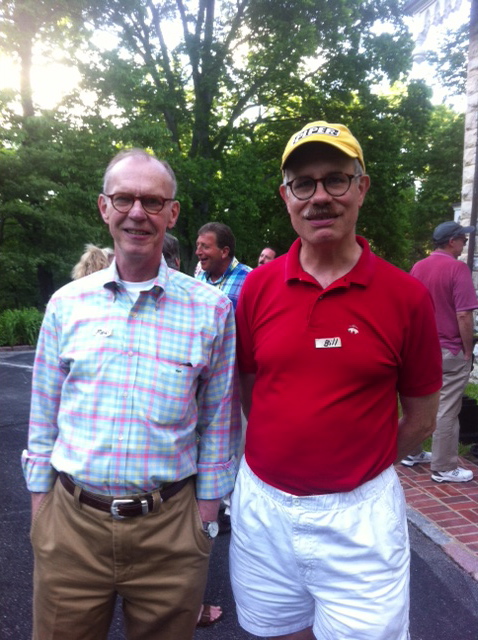
BFFs
Such a view!
There was a pig roast (sorry, no pictures) and lots of nostalgic ’70s music. Hello, Neil Young.
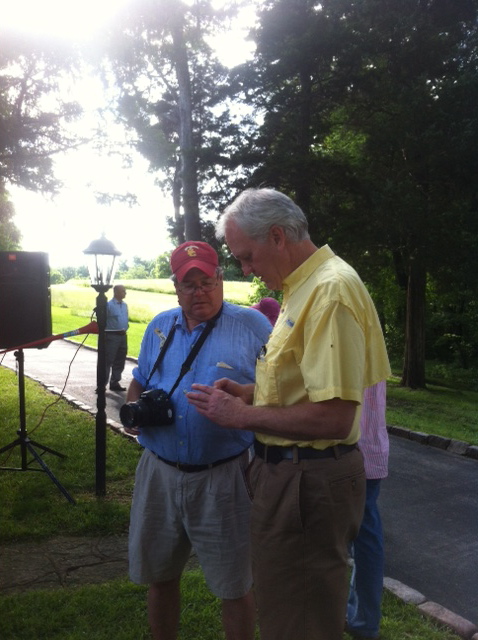
Martin and Cap check out those newfangled phone devices.
The boys shot off a cannon and there were fireworks.
On Sunday I went to church because I was reading the second lesson. It was one of those “as we have said before, so now I repeat…” exhortations that ol’ St. Paul is known for. Great stuff. My favorite to read. While we were passing the peace, the first lector said, “Good job,” to me. “As usual. We had the A-team today.” I chuckled, but I was pleased. I’ve never been on the A-team before. Boo yah.
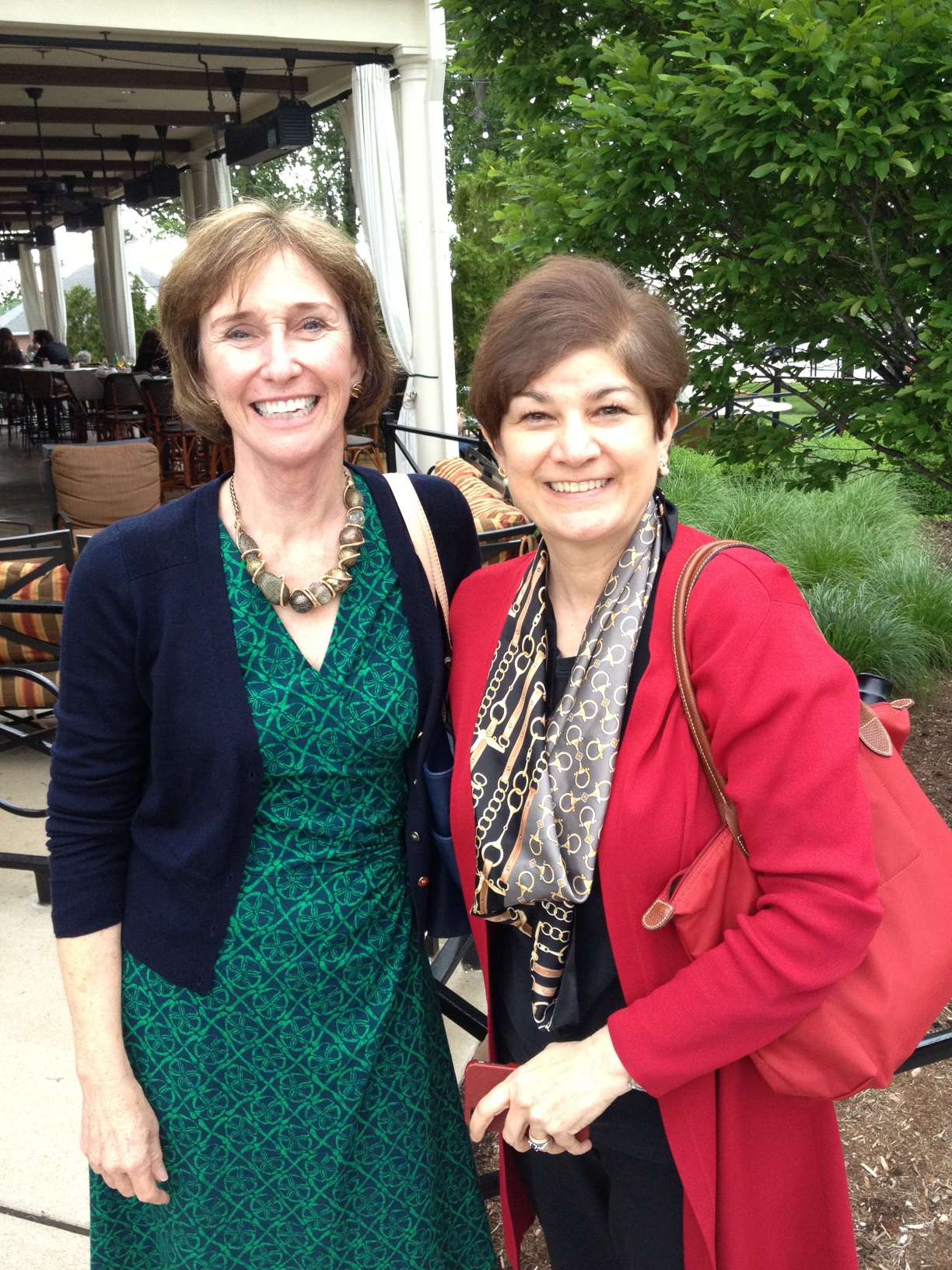
I had brunch with my BFFs from Virginia and then went home to work in the yard a little before it rained. A lovely end to an exhausting but wonderful weekend.
#Oldfriends
Oh, this old world
Keeps spinning round
It’s a wonder tall trees
Ain’t layin’ down
There comes a time.
May 6 (Monday) was the 149th anniversary of Henry David Thoreau’s death of consumption in 1862 at age 44. I’m sorry I missed it, but these things happen.
When his aunt Louisa asked him in his last weeks if he had made his peace with God, Thoreau responded: “I did not know we had ever quarreled.” His last words were “Now comes good sailing”, followed by two lone words, “moose” and “Indian”.
Bronson Alcott planned the service. The Boston Transcript reported:
Selections from the Bible were read by the minister. A brief ode, written for the purpose by William Ellery Channing, was plaintively sung. Mr. Emerson read an address of considerable length, marked by all his felicity of conception and diction — an exquisite appreciation of the salient and subtle traits of his friend’s genius — a high strain of sanitive thoughts, full of beauty and cheerfulness, chastened by the gentle sorrow of the hour. Referring to the Alpine flower adelweiss, or noble purity, which the young Switzers sometimes lose their lives in plucking from perilous heights, Mr. Emerson said, “Could we pierce to where he is we would see him wearing profuse chaplets of it; for it belongs to him. Where there is knowledge, where there is virtue, where there is beauty, where there is progress, there is now his home.” Mr. Alcott read some very appropriate passages from the writings of the deceased, and the service closed with a prayer by the Rev. Mr. Reynolds. A long procession was then formed to follow the body to the grave. The hands of friends reverently lowered it into the bosom of the earth, on the pleasant hillside of his native village, whose prospects will long wait to unfurl themselves to another observer so competent to discriminate their features, and so attuned to their moods.
Can you imagine such a funeral? It must have been something.
Originally buried in the Dunbar family plot, Thoreau and members of his immediate family were eventually moved to Sleepy Hollow Cemetery in Concord, Massachusetts.
Have no mean hours, but be grateful for every hour, and accept what it brings. The reality will make any sincere record respectable. No day will have been wholly misspent, if one sincere, thoughtful page has been written. Let the daily tide leave some deposit on these pages, as it leaves sand and shells on the shore. So much increase of terra firma. this may be a calendar of the ebbs and flows of the soul; and on these sheets as a beach, the waves may cast up pearls and seaweed.
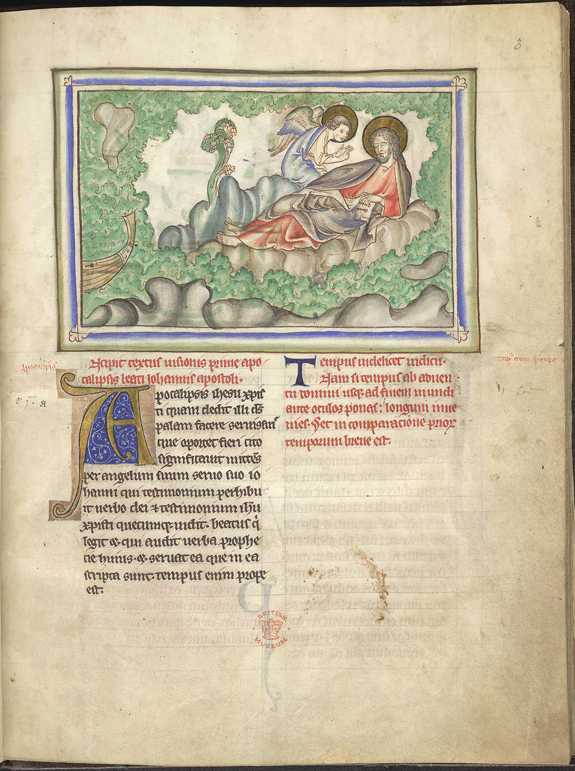
I read the second lesson in church on Sunday. It was a great passage from the Book of Revelation, the one that starts out “I saw no temple in the city, for the temple is the Lord God Almighty…”
Here is paradise! The hymns reflected this nicely. We sang #620, “Jerusalem, My Happy Home” and #621, “Lights’ Abode, Celestial Salem”.
The sermon, no surprise, did not address the holy city, but was about “Friends”. The preacher vaguely connected this to the Gospel, but it was a stretch.
I can’t help wondering if some ministers do not want to talk about resurrection and heaven, because they do not really believe in it. It certainly makes them very uncomfortable. Partly I think this is because they enjoy their life here and now too much. They certainly don’t buy into the idea put forth so well in hymn #621:
Now with gladness, now with courage,
bear the burden on thee laid,
that hereafter these thy labors
may with endless gifts be paid,
and in everlasting glory
thou with brightness be arrayed.
But what did old Thomas á Kempis know? Or for that matter, the Victorian (J. M. Neale) who translated it?
Well, who am I to say? It just got me thinking, you know? And Lord knows I have to think about something during those long sermons about #friendship.
I had a bad day on Friday and it carried into my weekend. I’m afraid I am not spiritually advanced enough to power through those bad days. I disappoint myself, but it’s the truth.
It takes some work you know. I won’t go into all the details, but I finally had a breakthrough when I watched Awakenings (1990) on Saturday night.
No, that is not my brother in the car with Robert De Niro! That’s Robin Williams.
Leonard Lowe, De Niro’s character, who has been “awakened” from a 30-year catatonic state, tells us:
Read the newspaper. What does it say? All bad. It’s all bad. People have forgotten what life is all about. They’ve forgotten what it is to be alive. They need to be reminded. They need to be reminded of what they have and what they can lose. What I feel is the joy of life, the gift of life, the freedom of life, the wonderment of life!
It is important to be reminded of this frequently. I highly recommend this wonderful movie, although be prepared to cry off-and-on for two hours. This also is a good thing (see here.)
I went to church on Sunday and was under-whelmed by the service and the sermon, but was gladdened by the display of new spring growth evident in the church grounds.
There was plenty of spring bounty at the grocery store as well.
Back in my yard, there is plenty of work to be done already.
But I’m feeling better already. Aren’t you?
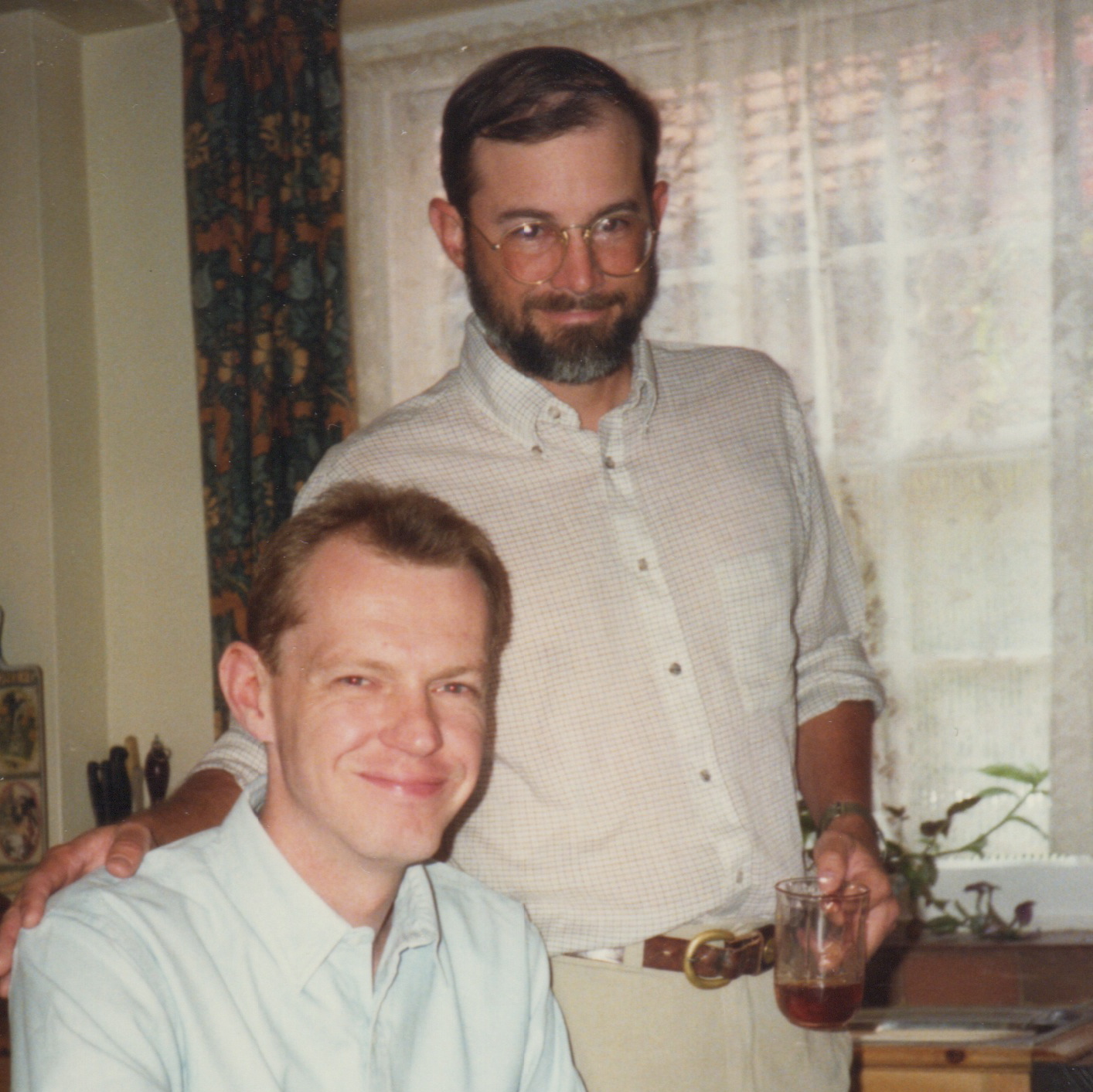
And for you doubters out there who don’t believe that Robin Williams is my brother’s doppelganger…here’s proof!
Here he is (on the right obviously) in 1989 with his bro-in-law.
Born a few weeks apart in 1951, the only way to tell them apart is that Robin is a LOT more hairy.
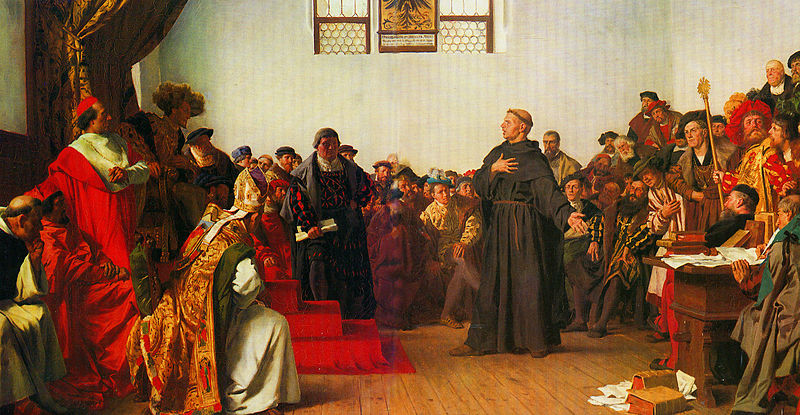
As the trial of Martin Luther began its second day during the assembly of the Diet of Worms in 1521, he refused to recant his teachings despite the threat of excommunication. On April 18 he stood alone against the mighty Catholic Church and prayed one of the all-time great prayers:
Almighty and eternal God, what a strange cause this is! How it loosens people’s tongues! How small and insignificant is their trust in you! How weak and tender is the flesh, and how powerful and busy is the devil, with the help of his apostles and the worldly wise!! How quickly the world withdraws help, does an about-face, pursues the easy way, and speeds on the broad road to hell where the godless belong. It sees only the brilliant and powerful, great, mighty, and respected! If I should turn my eyes to it, I would be done for.
Oh God, Oh God, Oh my God, stand by me against all the wisdom and reason of the world. Do it. You alone must do it. It is not really my concern, it is yours. Alone I have nothing to do with these great lords of the world. I want good and quiet days, undisturbed. But it is your cause: it is righteous and eternal. Stand by me. Oh true and eternal God, I do not rely on human counsel, for it would be in vain. All that is carnal and tastes carnal fails.
O God, O God, do you not hear me, my God? Are you dead? No, you cannot die; you are only hiding. Have you called me to this place? I ask you so that I am sure. God, grant it! Never in my life had I thought to oppose such great rulers and never had I set out to do it.
O God, stand by me in the name of your dear Son Jesus Christ who shall be my Protector and Defender, even my mighty Fortress, through the power and help of your Holy Spirit.
Lord, where are you? Come, come, I am ready like a patient lamb to lay down my life for this cause. It is your cause and it is righteous. I will not separate myself from you forever. Be it resolved in your name that the world cannot force me to act against my conscience, even if I had still more devils, and if my body which is first of all your creation should have to perish. So your Word and Spirit come to my rescue even if only for the body. And my soul is yours. It belongs to you, and it remains with you forever. Amen. So help me. Amen.
Priceless. How then shall we pray? The direct approach, as always, is best. So help me. Amen.
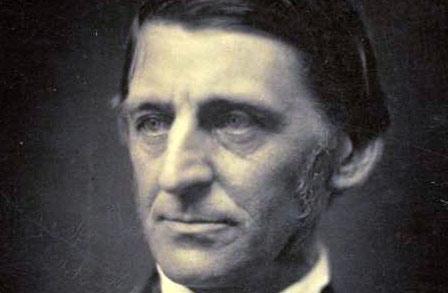
“Ineffable is the union of man and God in every act of the soul. The simplest person who in his integrity worships God, becomes God; yet for ever and ever the influx of this better and universal self is new and unsearchable. It inspires awe and astonishment. How dear, how soothing to man, arises the idea of God, peopling the lonely place, effacing the scars of our mistakes and disappointments! When we have broken our god of tradition and ceased from our god of rhetoric, then may God fire the heart with his presence. It is the doubling of the heart itself, nay, the infinite enlargement of the heart with a power of growth to a new infinity on every side. It inspires in man an infallible trust. He has not the conviction, but the sight, that the best is the true, and may in that thought easily dismiss all particular uncertainties and fears, and adjourn to the sure revelation of time the solution of his private riddles. He is sure that his welfare is dear to the heart of being. In the presence of law to his mind he is overflowed with a reliance so universal that it sweeps away all cherished hopes and the most stable projects of mortal condition in its flood. He believes that he cannot escape from his good. The things that are really for thee gravitate to thee. You are running to seek your friend. Let your feet run, but your mind need not. If you do not find him, will you not acquiesce that it is best you should not find him? for there is a power, which, as it is in you, is in him also, and could therefore very well bring you together, if it were for the best. You are preparing with eagerness to go and render a service to which your talent and your taste invite you, the love of men and the hope of fame. Has it not occurred to you that you have no right to go, unless you are equally willing to be prevented from going? O, believe, as thou livest, that every sound that is spoken over the round world, which thou oughtest to hear, will vibrate on thine ear! Every proverb, every book, every byword that belongs to thee for aid or comfort, shall surely come home through open or winding passages. Every friend whom not thy fantastic will but the great and tender heart in thee craveth, shall lock thee in his embrace. And this because the heart in thee is the heart of all; not a valve, not a wall, not an intersection is there anywhere in nature, but one blood rolls uninterruptedly an endless circulation through all men, as the water of the globe is all one sea, and, truly seen, its tide is one.”
–Ralph Waldo Emerson, “The Over-Soul”
This is a long quote, but I hope you read the whole thing and did not skim. Dear daughter #2 shared this quote with me yesterday with the suggestion that “it’s nice to fall back on the Transcendentalist ideas if the institution of the church is failing you.” I guess my recent posts had her a little worried. But fear not, my relationship with the Episcopal Church, though a love/hate one, is a long-term one. From time to time I threaten to leave, but I probably won’t. I just continue to lower my expectations!
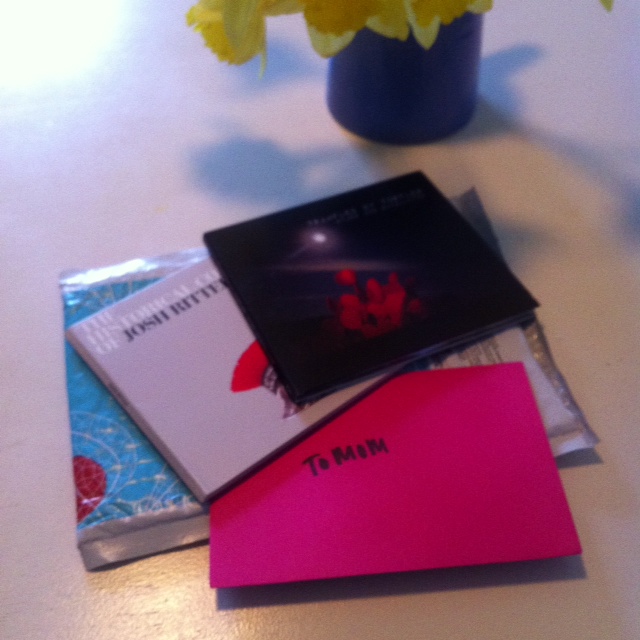
Thanks also to daughter #2 for sending her old mama some new music!
Josh Ritter and Trampled by Turtles! Great choices for me, especially the TBT–nothing gets me going in the morning like 21st century bluegrass! Here is my favorite song, titled appropriately “Walt Whitman”:
This song gets my Barbara Stanwyck alter ego all charged up and ready to go. Sometimes I think my driving may suffer, but so far so good.
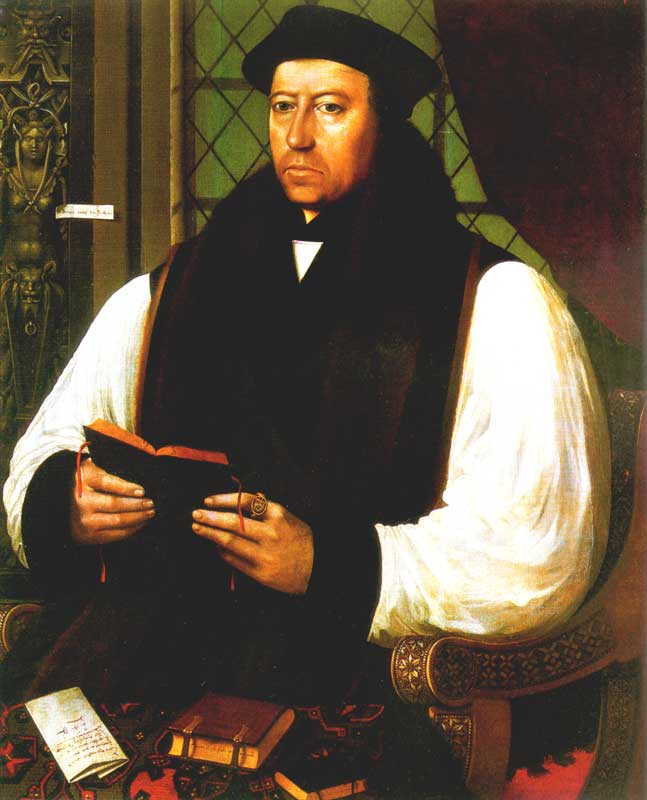
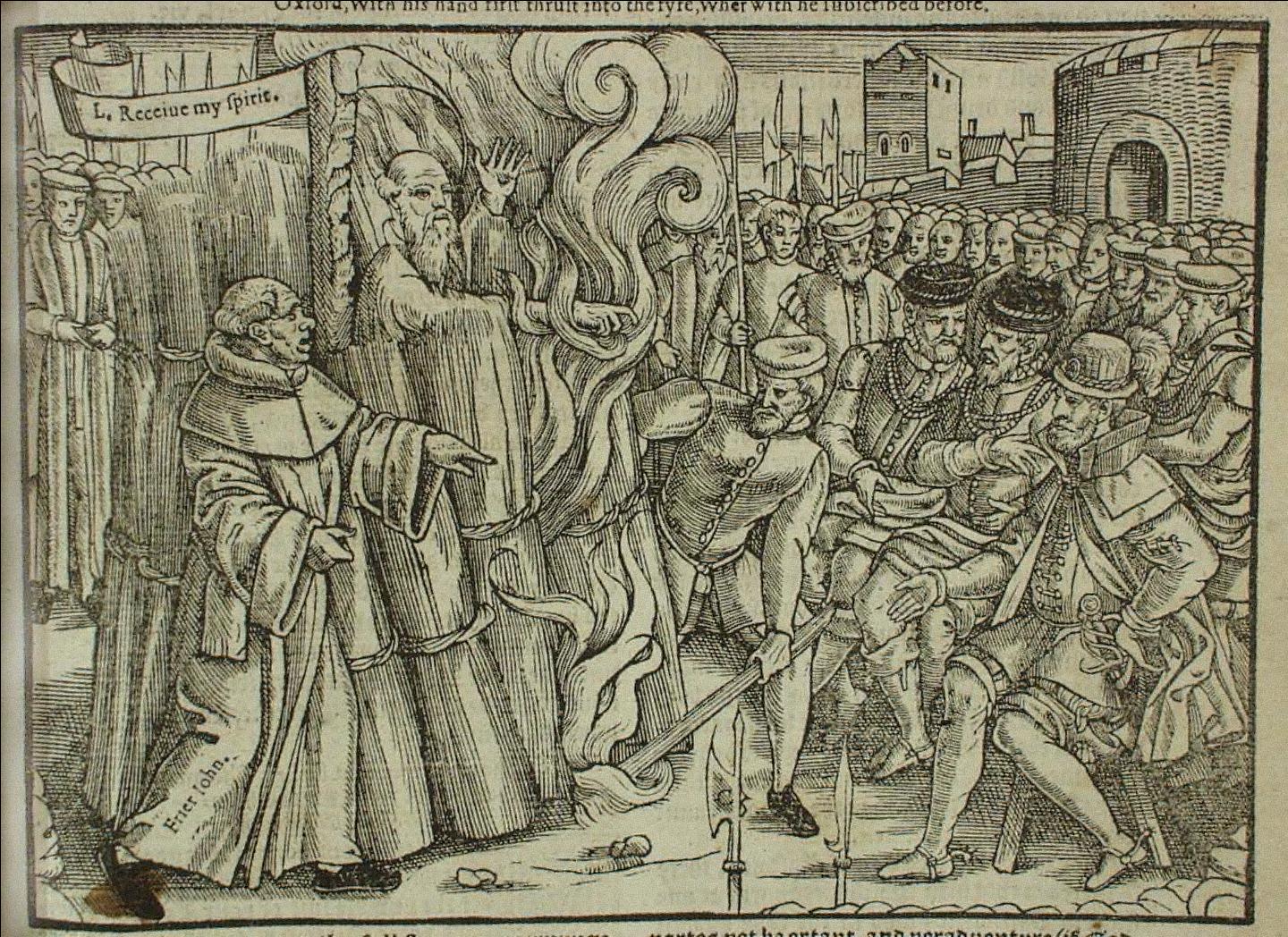
On this day in 1556 Thomas Cranmer, Archbishop of Canterbury, was burned at the stake at Oxford. At the very end, he repudiated his final letter of submission, and announced that he died a Protestant. He said, “I have sinned, in that I signed with my hand what I did not believe with my heart. When the flames are lit, this hand shall be the first to burn.” And when the fire was lit around his feet, he leaned forward and held his right hand in the fire until it was charred to a stump. Aside from this, he did not speak or move, except that once he raised his left hand to wipe the sweat from his forehead. Cranmer is commemorated in the Anglican Communion as a Reformation Martyr on 21 March.
Merciful God, through the work of Thomas Cranmer you renewed the worship of your Church by restoring the language of the people, and through his death you revealed your power in human weakness: Grant that by your grace we may always worship you in spirit and in truth; through Jesus Christ, our only Mediator and Advocate, who lives and reigns with you and the Holy Spirit, one God, for ever and ever. Amen.
“Cranmer said to him, when they were talking late one night, St. Augustine says we need not ask where our home is, because in the end we all come home to God.”
–Hilary Mantel, Wolf Hall
“Maybe it’s all utterly meaningless. Maybe it’s all unutterably meaningful. If you want to know which, pay attention to what it means to be truly human in a world that half the time we’re in love with and half the time scares the hell out of us. Any fiction that helps us pay attention to that is religious fiction. The unexpected sound of your name on somebody’s lips. The good dream. The strange coincidence. The moment that brings tears to your eyes. The person who brings life to your life. Even the smallest events hold the greatest clues.”
–Frederick Buechner









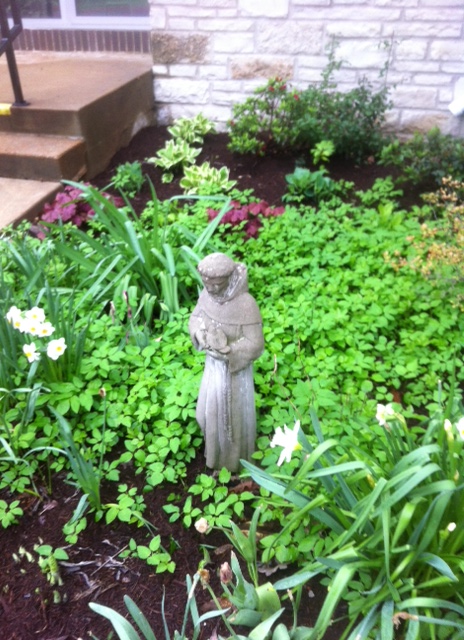
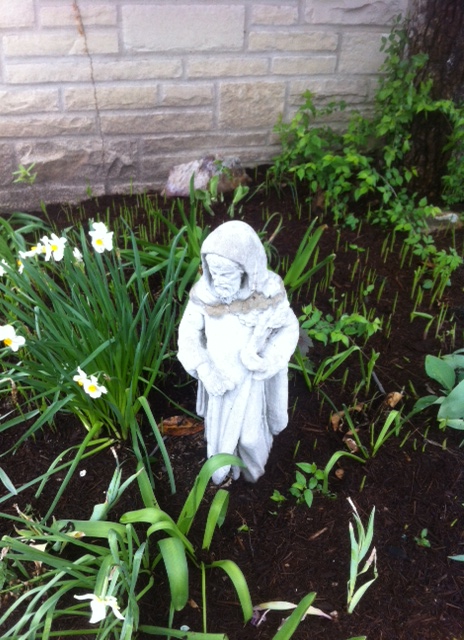





 dual personalities