dual personalities

Tag: Scotland

Gin a body meet a body/Comin thro’ the rye

by chuckofish

It is cold and dreary and occasionally spitting here in flyover country, but what ho, the end of January is in sight. I caught up with my bible reading, on which I had fallen behind over the weekend, and am pursuing other indoor activities.

I will note that today is the birthday of Robert Burns (1759-96), and although we won’t be dining on a traditional Burns’ Supper (haggis, tatties and turnips), we will certainly lift a glass in his honor and maybe watch one of our favorite Scottish movies.

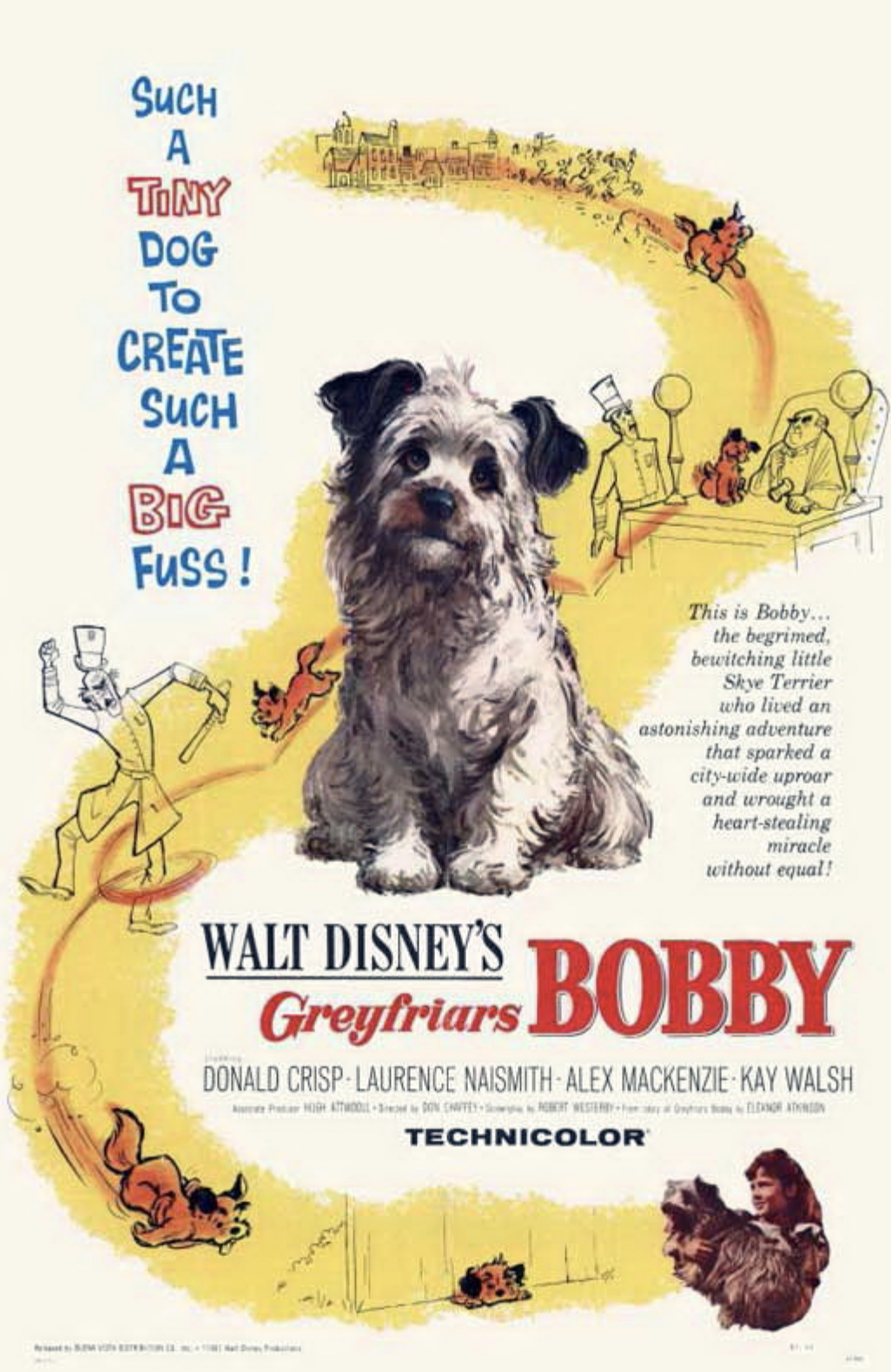
Do I hear Greyfriars Bobby (1961) calling me?

Coincidentally, I’ve also started re-reading the Lymond Chronicles, which are, of course, novels about Scottish history.

And here’s a prayer by John Knox, founder of the Presbyterian Church in Scotland:

The great bishop of our souls, Jesus our Lord,
so strengthen and assist your troubled hearts
with the mighty comfort of our Holy Spirit,
that neither earthly tyrants,
nor worldly torments,
may have power to drive you
from the hope and expectation of that kingdom,
which for the elect was prepared from the beginning,
by our heavenly Father,
to whom be all praise and honor,
now and ever.

–John Knox (1505-1572)

And now, back to my dusting…

I love the thistle ’tis an ill used flower

by chuckofish

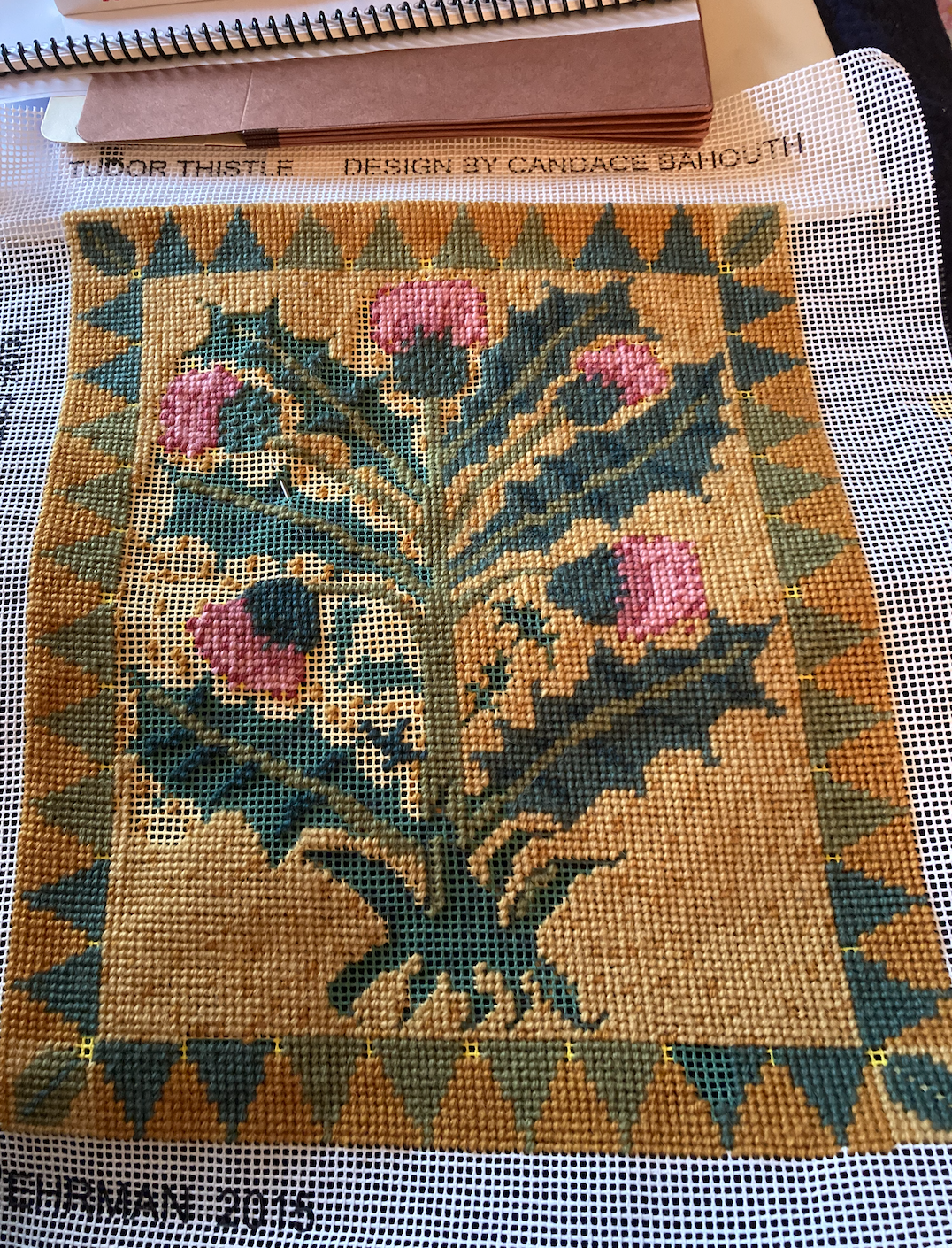
Well, one thing I have tried to be mindful of is doing a little needlepoint every day. I have two large projects going and I am making progress. My Tudor Thistle is really coming along! It gives me at least the illusion of accomplishment.

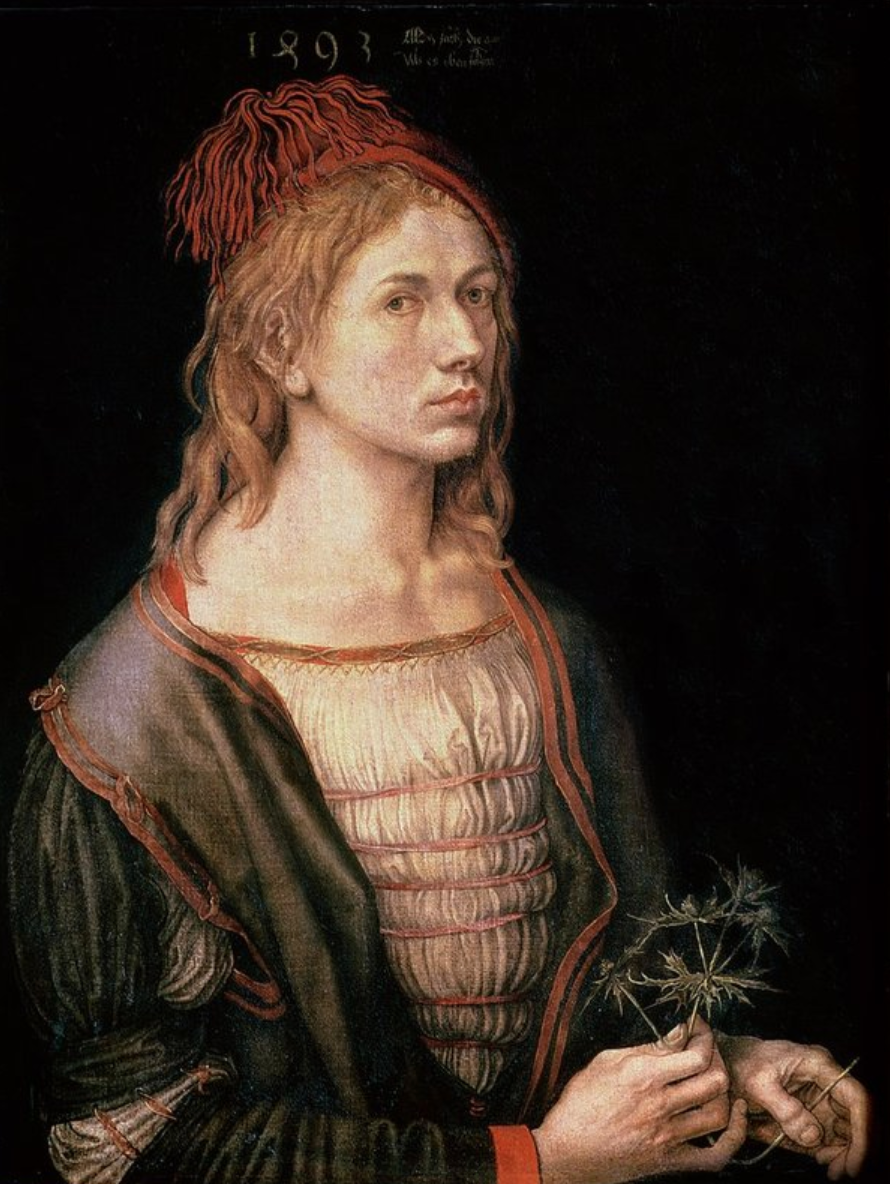
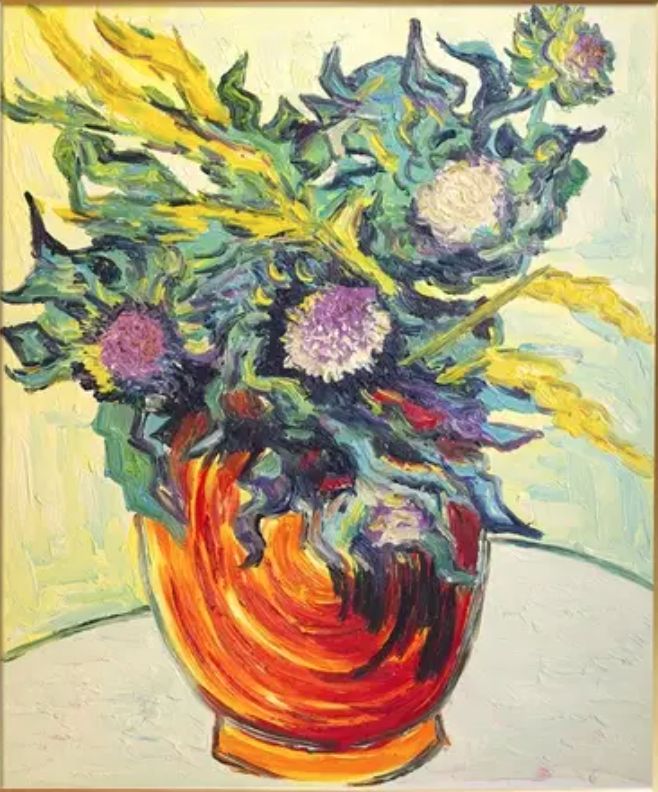
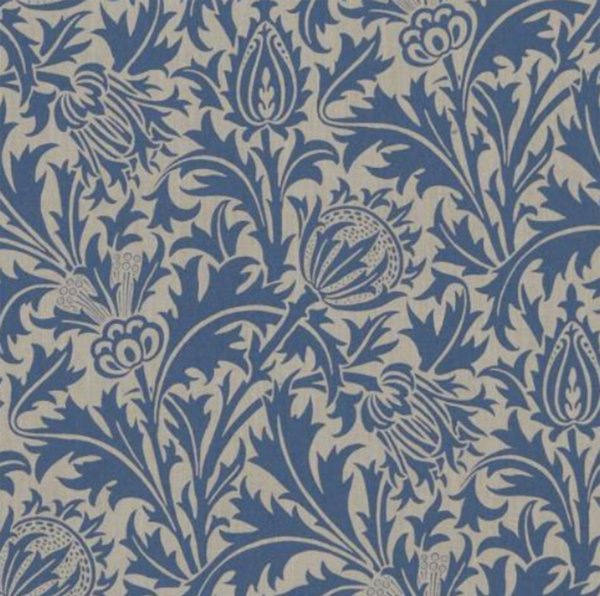
I have always been fond of the lowly thistle. It is, after all, the floral emblem of Scotland. The thistle turns up in art from time to time…

Albrecht Durer, self-portrait, 1493
Van Gogh, Still Life with Thistles, 1890
Art Nouveau thistle tile, 1905
William Morris & Co., wallpaper

And here’s a poem: “The Thistle” by John Clare (1793-1864)…

I love the thistle with its ruddy flowers
It cheers me on the waste in lonely hours
It cheers me in lone sunshine out of doors
When seeking solitude on rushy moores
It cheers me resting on the way-side stones
Where tears of morning glitter on the thorns
I love the thistle ’tis an ill used flower
And bees are singing round for many an hour.

I love the thistle and its prickles too
Cobwebs are round it with a veil of dew
I love the thistle where it bravely stands
For rights of Liberty in many lands
Simply defying every rogueish eye
With ” wha dare meddle wi me” that passes bye
My right is simple, blooming ‘mong the flowers
That God’s hand scatters on this land of ours.

So I love the thistles spread round Scottish bowers
Better than any other of the wildling flowers
I love the warrior thistle where it stands
Though often wounded in the legs and hands
On Bannockburn its bloom undaunted stood
Dy’d deeper in the streams of human blood.

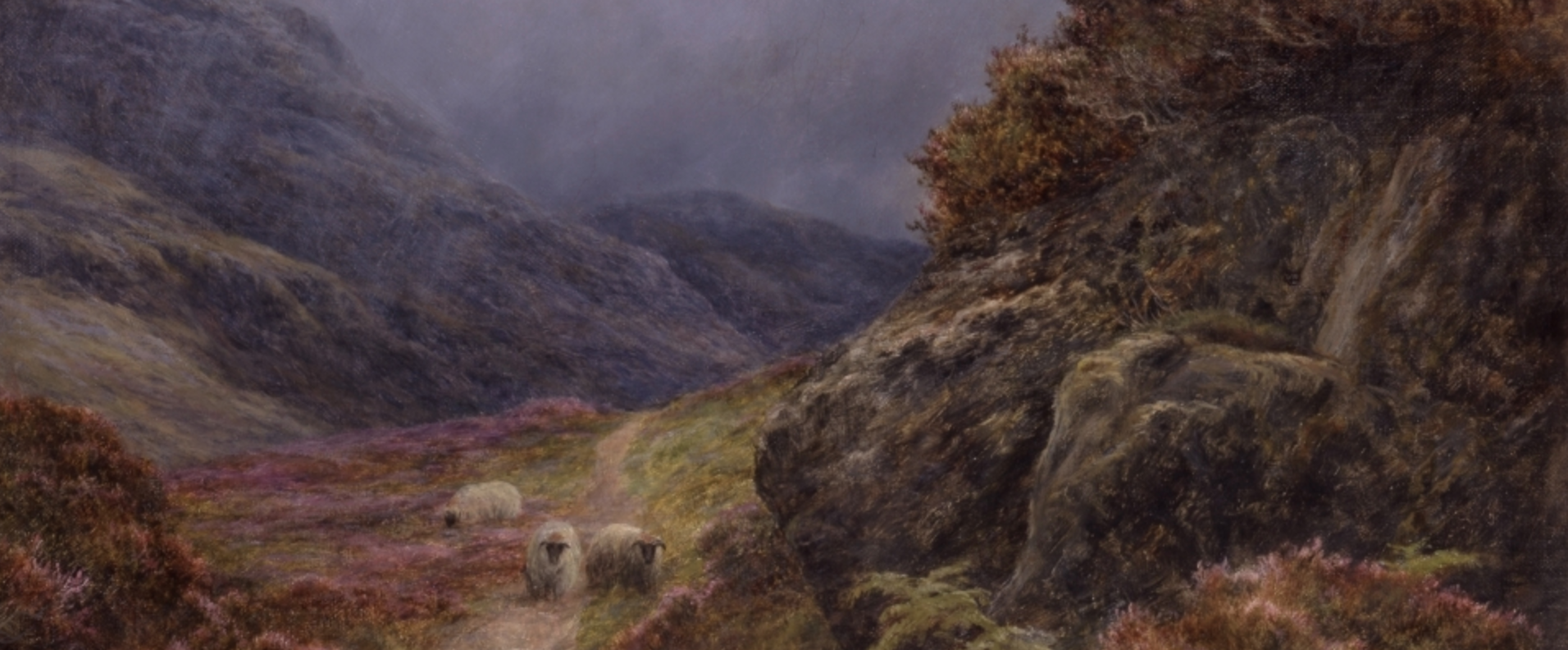
James Faed, Jr. (Scottish, 1857-1920), Scottish Landscape (detail)

Scots Wha Hae

by chuckofish

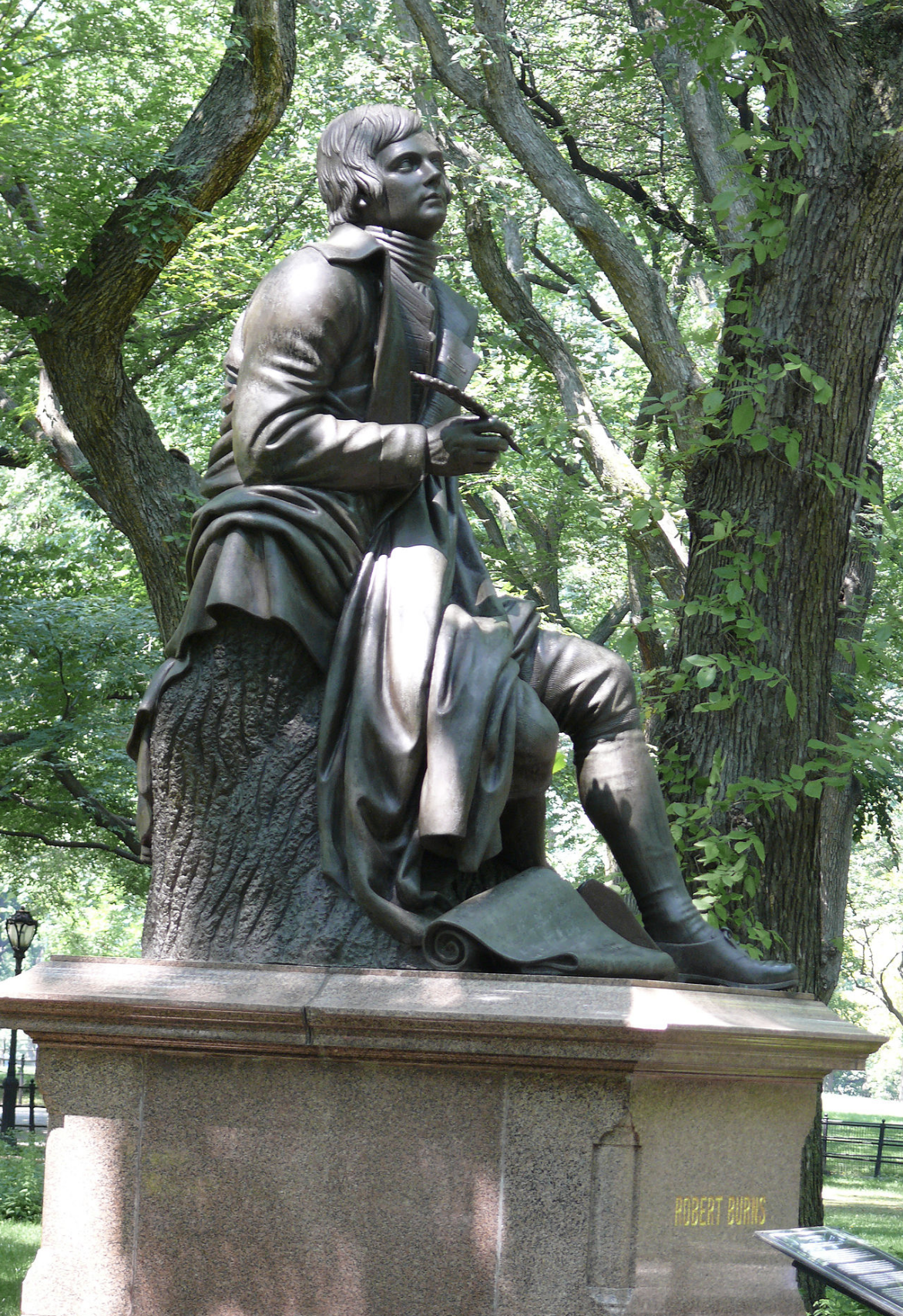
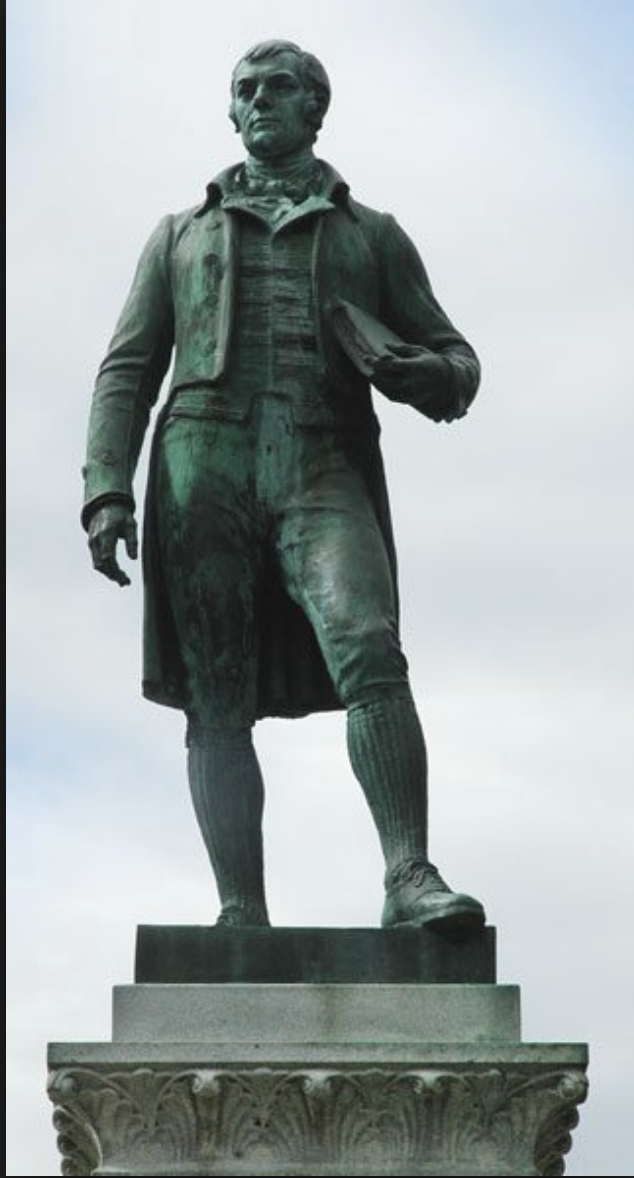
Today is the birthday of Robert Burns (January 25, 1759–July 21, 1796)–beloved Scottish poet and lyricist. There are memorials to Burns all over the world: Scotland, England, Canada, Australia, New Zealand, America…

…from Central Park…

Screen Shot 2019-01-24 at 1.02.59 PM.png

…to Cheyenne, Wyoming…

Screen Shot 2019-01-24 at 1.13.33 PM.png

…and even on the campus of my own flyover university where he was a favorite poet of many of the university trustees circa 1928. Artist Robert Aitken (1878–1949) completed the eight foot high bronze, which was ‘erected under the auspices of the Burns Club of St. Louis by admirers of Robert Burns and his genius’.

Screen Shot 2019-01-24 at 1.09.59 PM.png

Speaking of which, in 2004 the Robert Burns World Federation had 400 clubs affiliated to it and these reflected a membership of approximately 60,000. Burns Clubs exist throughout the world “to encourage and cherish the memory of Robert Burns, to foster a love of his writings and generally to encourage an interest in the Scots Language and Literature.” (Wikipedia)

Well, even Bob Dylan has named Burns as his greatest inspiration. And I did not know that Michael Jackson’s good friend, David Gest, theorized that “the King of Pop’s influential Thriller video was inspired by Burns’ poem Tam O’ Shanter, which tells the story of a drunk who passes a graveyard and witnesses witches, zombies and demons dancing to the tunes of the devil on bagpipes.”

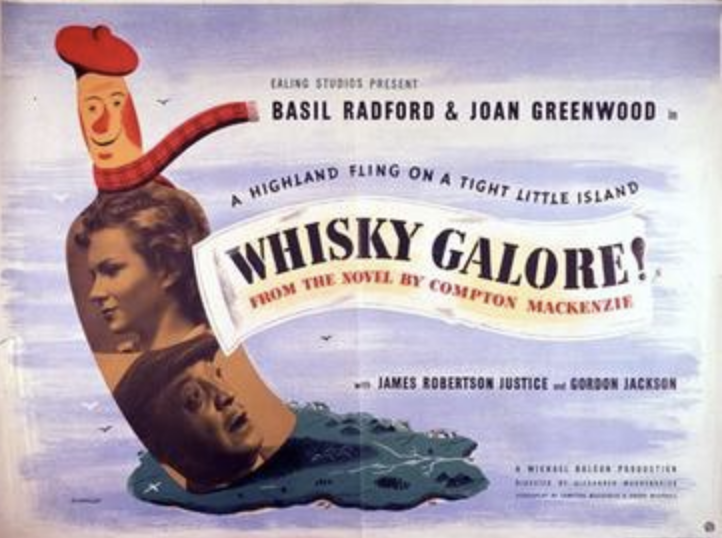
So tonight we’ll toast the great Scot, maybe even with a dram of Scotch. Of course, we’ll have to watch something appropriate…

Screen Shot 2019-01-24 at 1.26.07 PM.png

Whisky Galore! (1949)

Screen Shot 2019-01-24 at 1.27.34 PM.png

Greyfriars Bobby (1961)

Screen Shot 2019-01-24 at 1.28.36 PM.png

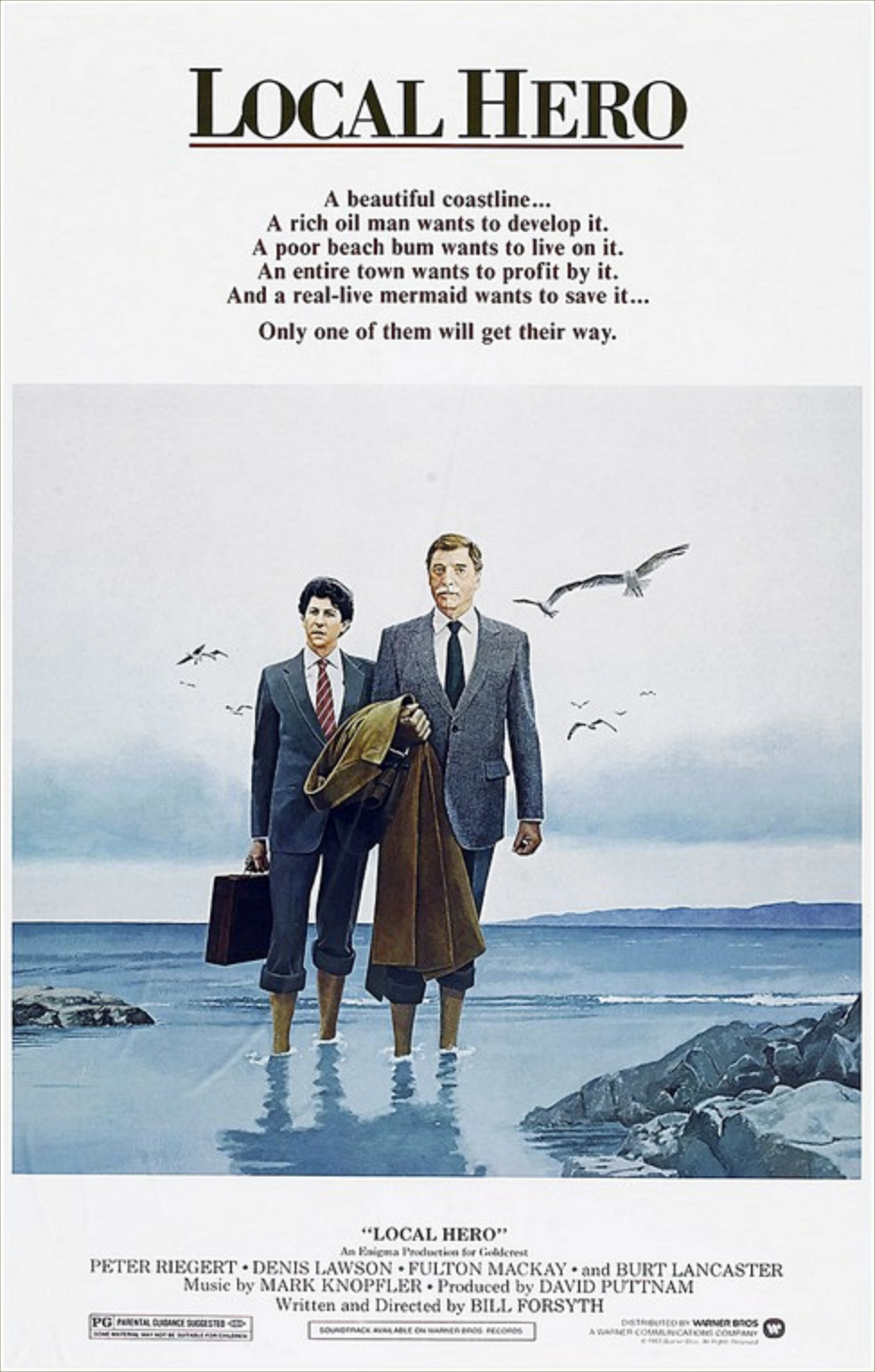
Local Hero (1983)

Screen Shot 2019-01-24 at 1.29.33 PM.png

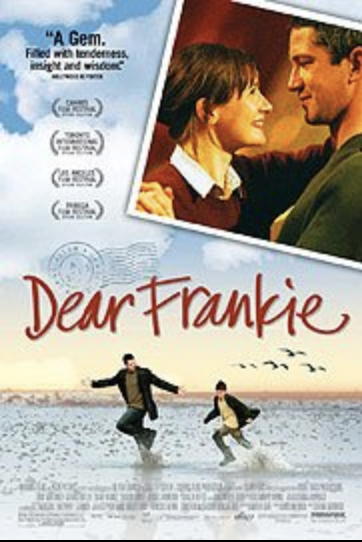
Dear Frankie (2004)

Screen Shot 2019-01-24 at 1.37.59 PM.png

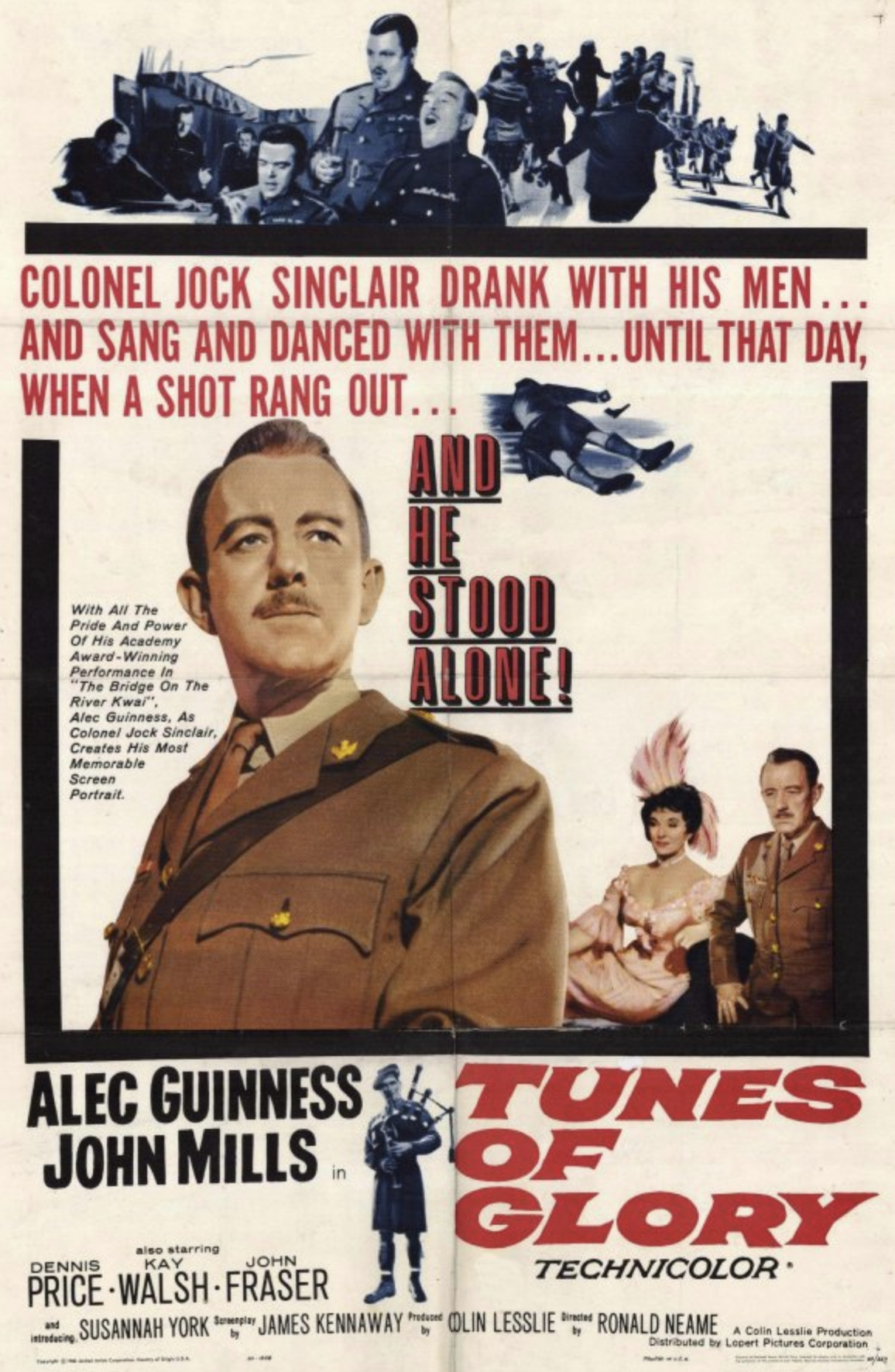
Tunes of Glory (1960)

Screen Shot 2019-01-24 at 1.40.18 PM.png

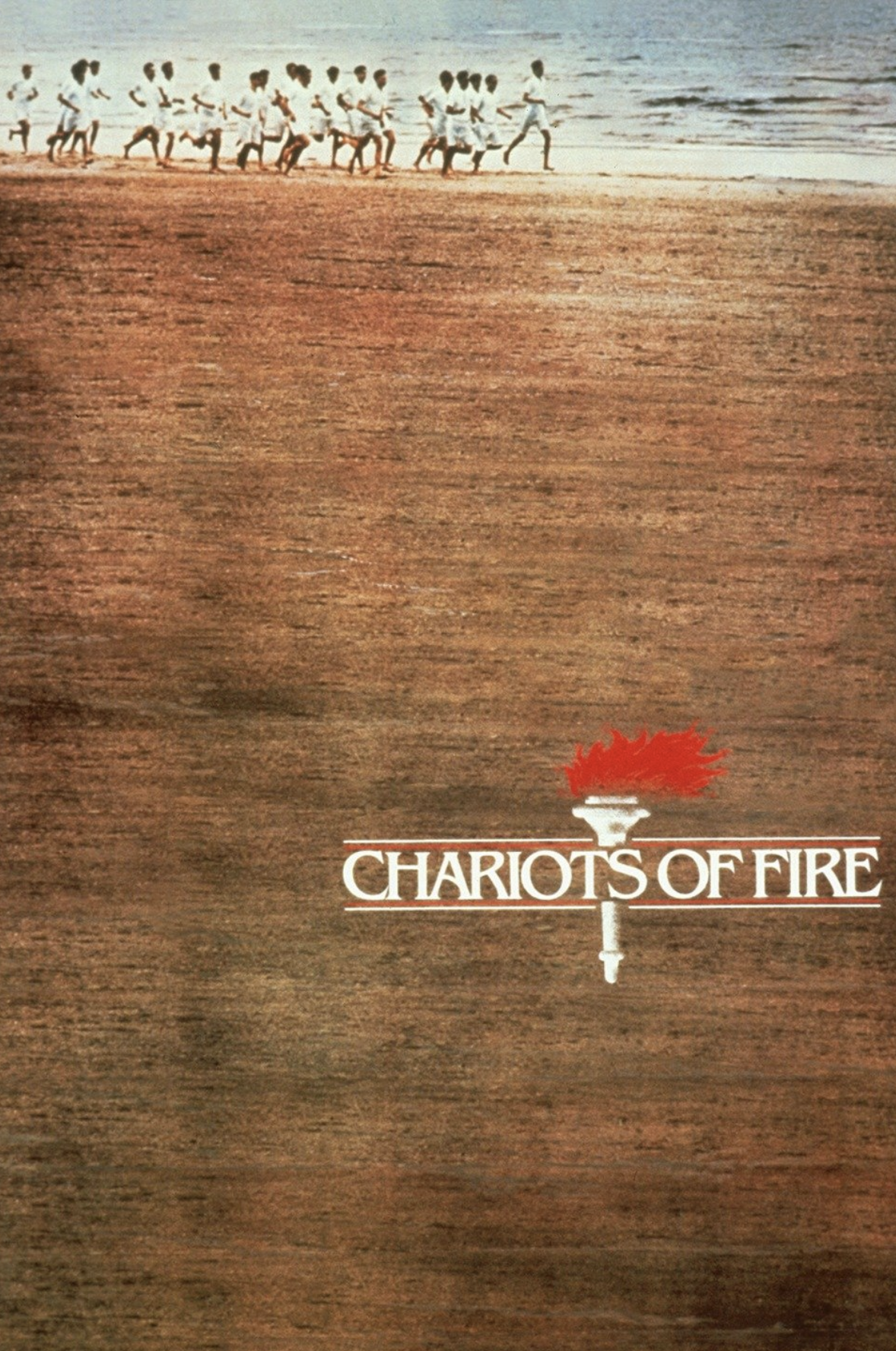
Chariots of Fire (1981)

Screen Shot 2019-01-24 at 1.41.49 PM.png

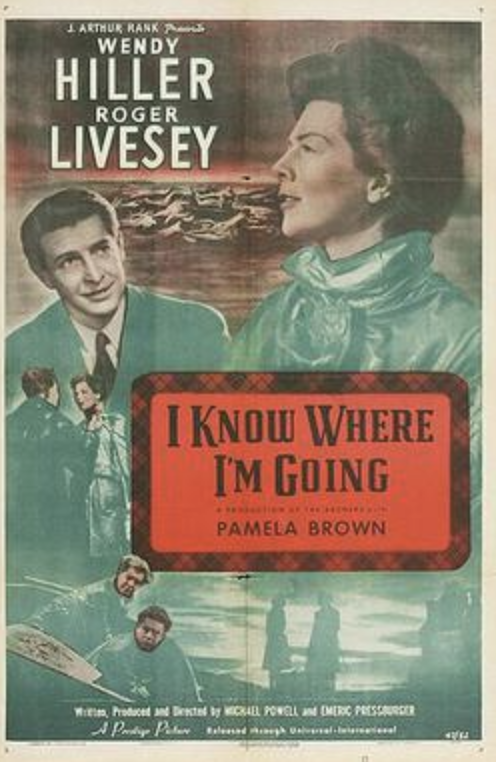
I Know Where I’m Going (1945)

These are all great movies! And there are many more besides…This could be a weekend endeavor!

From Scenes like these, old SCOTIA’S grandeur springs,

That makes her lov’d at home, rever’d abroad:

Princes and lords are but the breath of kings,

‘An honest man’s the noble work of GOD.’

Have a great weekend!

“Puir—Bobby! Gang—awa’—hame—laddie.”

by chuckofish

Last weekend I watched the old Disney movie Greyfriars Bobby (1961).

Screen Shot 2018-06-12 at 9.57.59 AM.png

I had not seen it in years and years and I was quite struck by what a really terrific movie it is. It packs quite a punch. Filmed in Scotland, it really tugged at my genetic heartstrings.
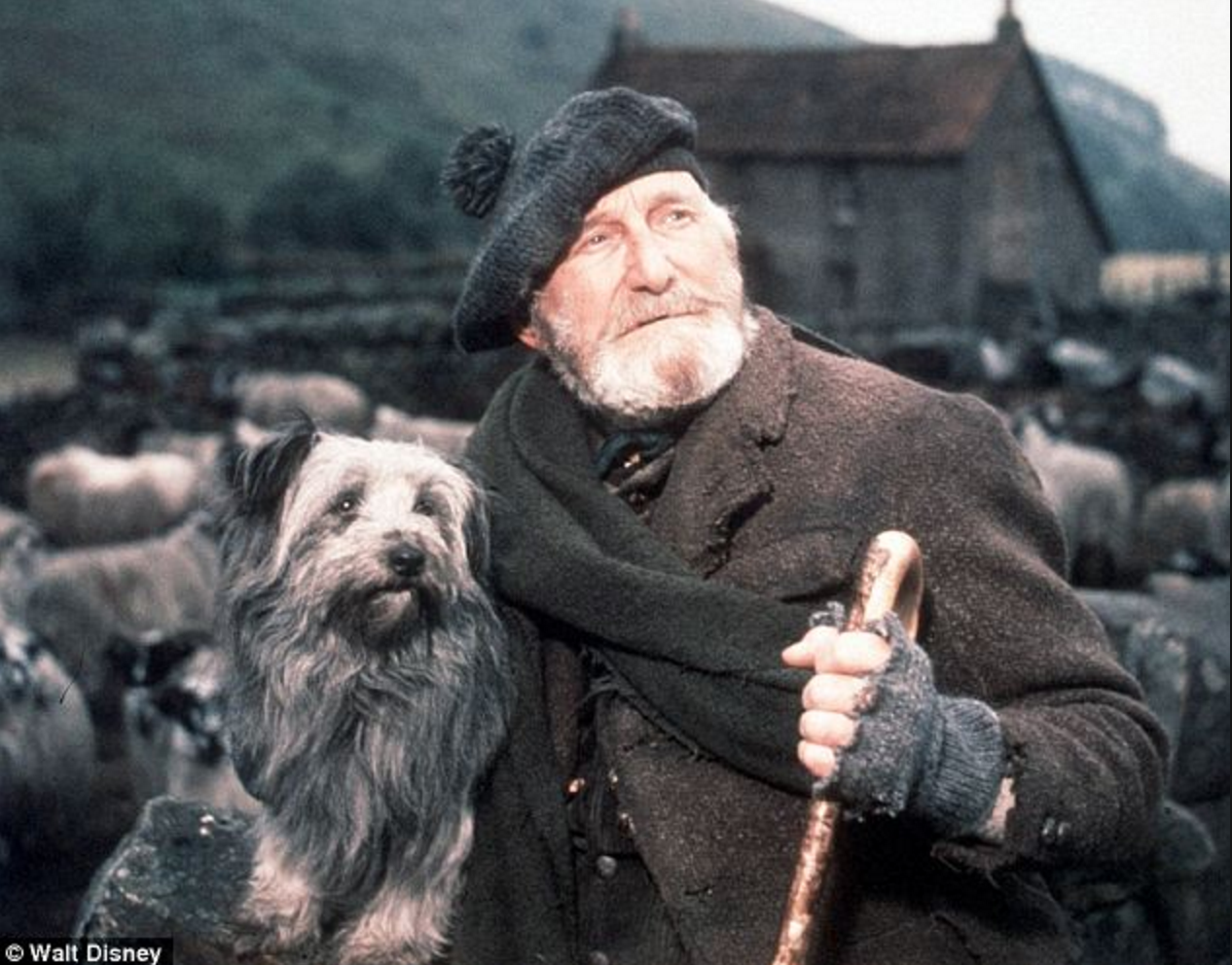
Screen Shot 2018-06-12 at 9.58.28 AM.png

The actor who played “Auld Jock” reminded me a lot of Robin Williams, who was, after all, of Scottish derivation.

You remember the story: A wee Skye Terrier named Bobby is the pet of a Scottish farmer and his wife, but the dog loves an old shepherd hired on the farm called Auld Jock. When money grows scarce on the farm, Auld Jock is let go. He travels to Edinburgh, and Bobby follows him. Auld Jock dies in poverty in an inn and is buried in Greyfriar’s kirkyard. Bobby returns to Auld Jock’s grave every night to sleep. Two men (played by Laurence Naismith and Donald Crisp) vie for his affection, as do the street urchins of the town, but he will belong to no one but Auld Jock. In the meantime, no one has purchased a license for Bobby, and without a license and someone to take responsibility for Bobby, he may be destroyed. Bobby’s fate rests with the Lord Provost of Edinburgh. In a moving act of charity, the children of Edinburgh contribute their pennies for Bobby’s license. Bobby is declared a Freeman of the City and adopted by the populace of Edinburgh.

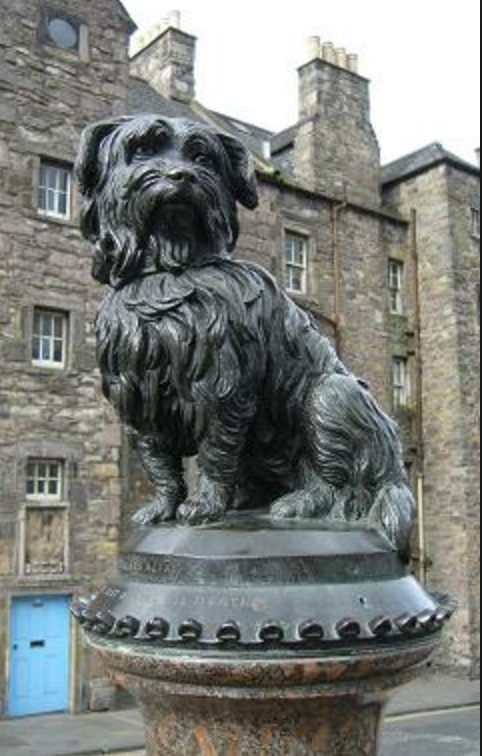
This is a true story and there is a statue commemorating the loyalty of the wee dog in Edinburgh. I have seen it.
Screen Shot 2018-06-12 at 10.00.12 AM.png

Anyway, after viewing the movie (and weeping throughout) I thought I would like to read the book on which the Disney version is based. I found my grandfather Cameron’s copy, which he had received as a gift in 1912.
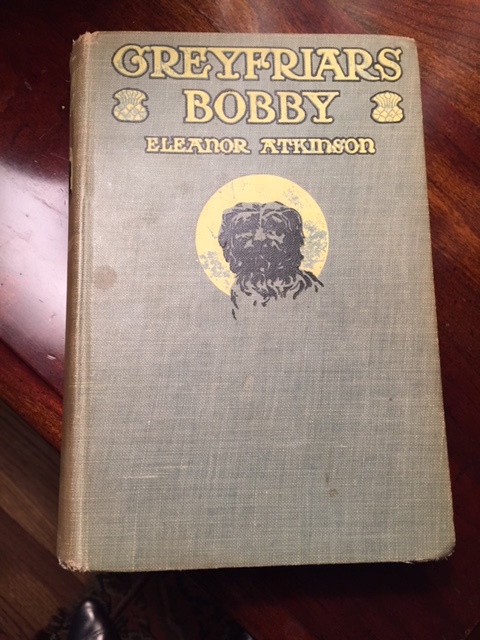
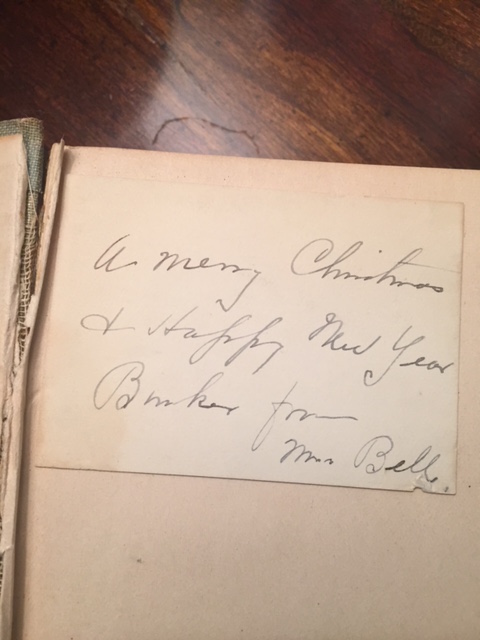
IMG_3261.jpegIMG_3262.jpeg

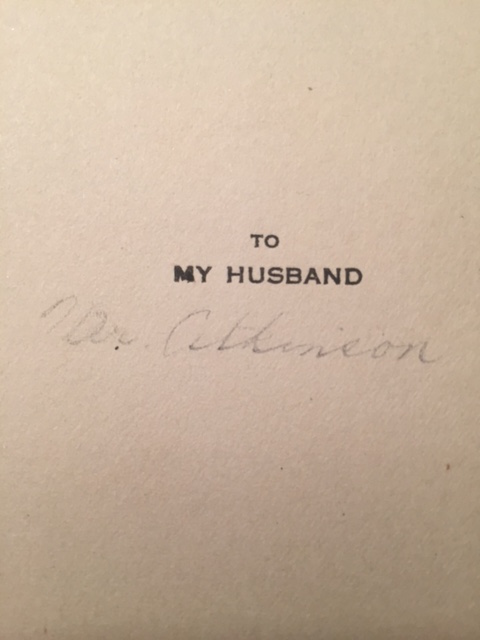
Bunker had written his name underneath and on the dedication page he had added his own notation:
IMG_3264.jpeg

(I can’t tell you how much I love that.)

I read the book and enjoyed it. The Disney screenplay follows it very closely–a good call on their part. Interestingly, Eleanor Atkinson was from Indiana and had never been to Scotland! She must have known some natives, because the dialect is excellent. The book is still in print (a Puffin Classic).

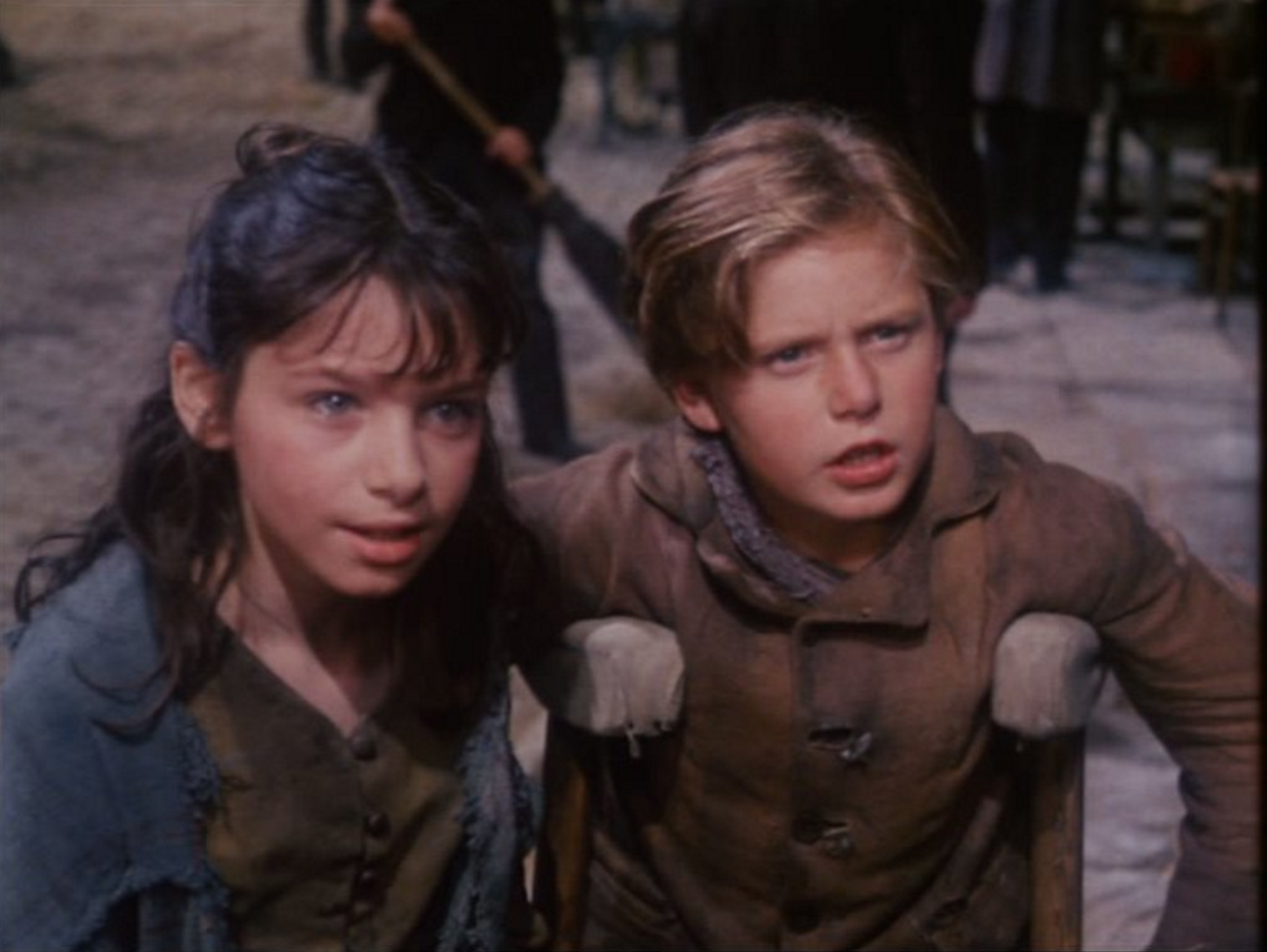
So I heartily recommend you watch this vintage Disney movie! And here is a fun fact to know and tell. I was struck by how excellent the children in this movie are. Some you may remember from other old Disney movies, but one girl stood out to me.
Screen Shot 2018-06-12 at 9.59.18 AM.png

I looked on IMDB.com to see who played Ailie. It was Joan Juliet Buck, which sounded very familiar. Indeed, she grew up to be the editor of Paris Vogue (1994-2001). Greyfriars Bobby is the only movie she made as a child actress.

The world is more than we know.

“The Lord is my Shepherd; I shall not want.”

So far it was plain and comforting. “He maketh me to lie down in green pastures. He leadeth me beside the still waters.”

Nae, the pastures were brown, or purple and yellow with heather and gorse. Rocks cropped out everywhere, and the peaty tarps were mostly bleak and frozen. The broad Firth was ever ebbing and flowing with the restless sea, and the burns bickering down the glens. The minister of the little hill kirk had said once that in England the pastures were green and the lakes still and bright; but that was a fey, foreign country to which Auld Jock had no desire to go. He wondered, wistfully, if he would feel at home in God’s heaven, and if there would be room in that lush silence for a noisy little dog, as there was on the rough Pentland braes.

–From Greyfriars Bobby by Eleanor Atkinson

Have a good Wednesday!


Scots Wha Hae*

by chuckofish

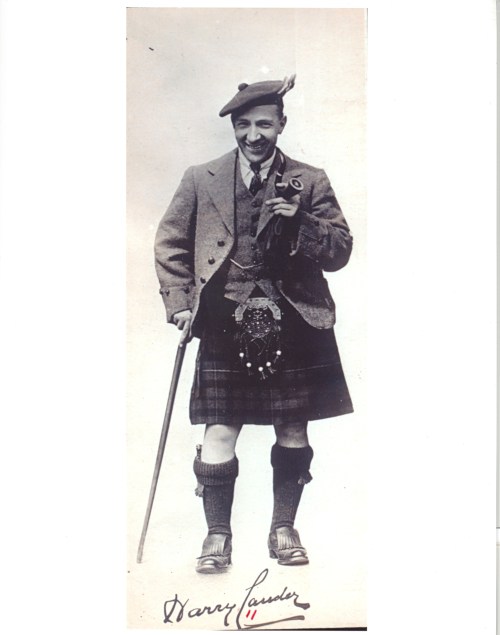
Today is the birthday of Harry Lauder (August 4, 1870 – February 26, 1950)–famous Scottish music hall performer.

lauder0001

Lauder was, at one time, the highest-paid performer in the world, making the equivalent of £12,700 a night plus expenses. During the First World War Lauder promoted recruitment into the services and starred in many concerts for troops at home and on the western front. His entertainment activities were made ever the more poignant by the death in action of his only son at the end of 1916.

Our pater was a big fan of Harry Lauder and I recall him listening attentively to his scratchy 78 records, losing himself in a sentimental and, no doubt, alcohol-inspired fog. Frequently we would run from the room.

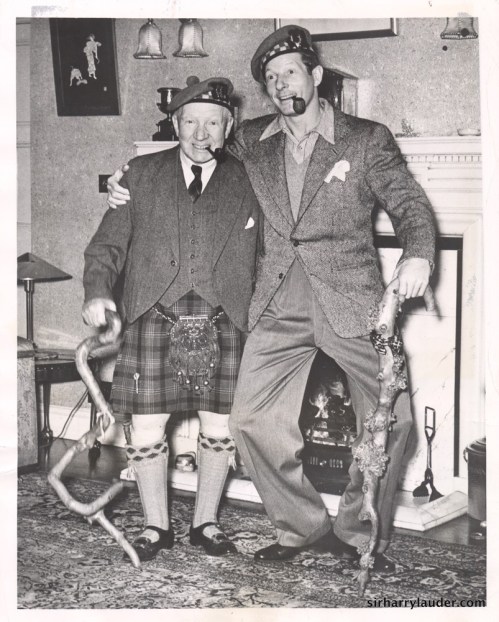
Anyway, here is Harry with Danny Kaye!

sir-harry--danny-kaye-at_med

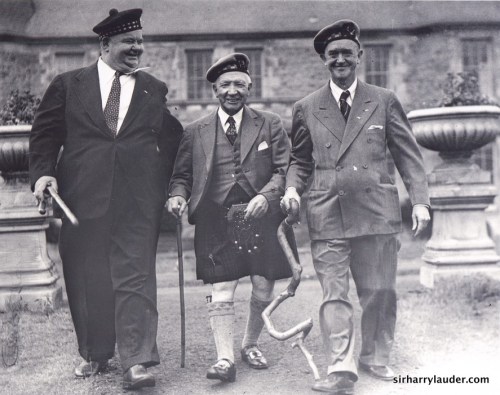
And here he is with Stan Laurel and Oliver Hardy.

sir-harry-with-laurel-and_med

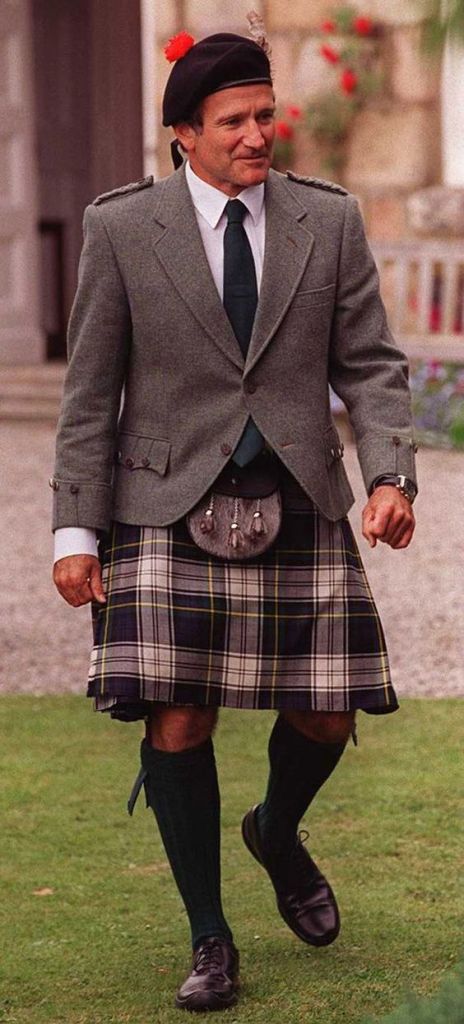
And here’s Robin Williams dressed like the good Scotsman he was. (He bears a certain resemblance to Sir Harry, don’t you think?)

robin

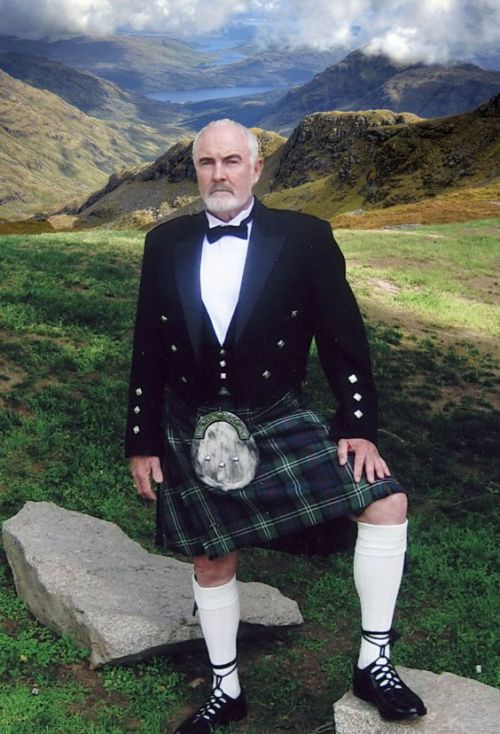
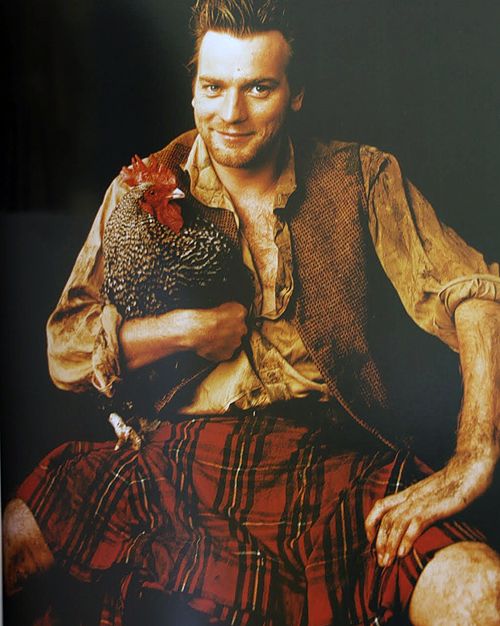
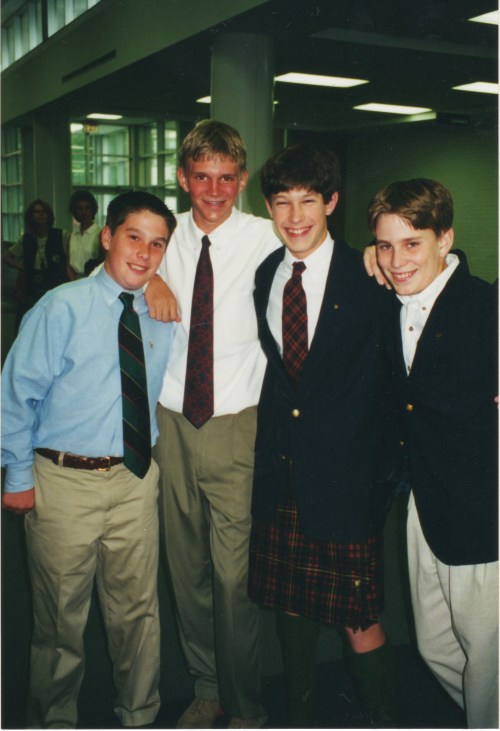
Since we’re on a roll, here are some other great Scots in suitable attire.

fe140c9a36bcf3bfcc4837c8aa002a3b

2b3b3257b8c6cfd82807163db3c5ef16

kilt-3

wrc-kilt

Cheers to Sean Connery, Ewan McGregor, Gerard Butler, and the boy (in a kilt at his 8th grade graduation)! and to…

Roamin’ in the gloamin’ on the bonnie banks o’ Clyde.

Roamin’ in the gloamin’ wae my lassie by my side.

When the sun has gone to rest, That’s the time we love the best.

O, it’s lovely roamin’ in the gloamin!

*The title of a poem by Robert Burns

Rest and be thankful

by chuckofish

restand be thankful

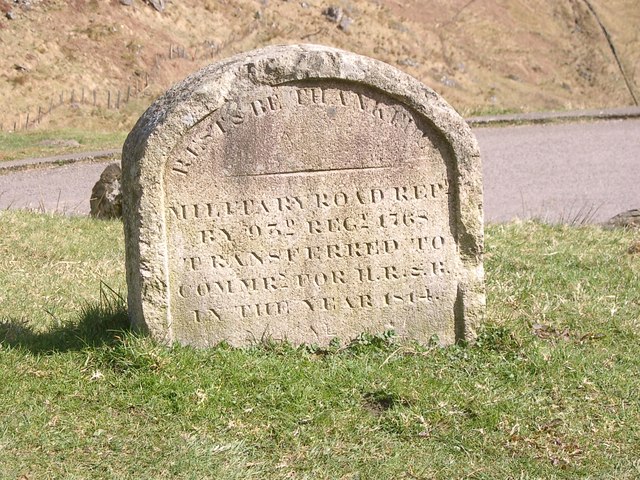
XIII. “REST AND BE THANKFUL!”
AT THE HEAD OF GLENCROE

Doubling and doubling with laborious walk,
Who, that has gained at length the wished-for Height,
This brief this simple wayside Call can slight,
And rests not thankful? Whether cheered by talk
With some loved friend, or by the unseen hawk
Whistling to clouds and sky-born streams that shine,
At the sun’s outbreak, as with light divine,
Ere they descend to nourish root and stalk
Of valley flowers. Nor, while the limbs repose,
Will we forget that, as the fowl can keep
Absolute stillness, poised aloft in air,
And fishes front, unmoved, the torrent’s sweep,–
So may the Soul, through powers that Faith bestows,
Win rest, and ease, and peace, with bliss that Angels share.

–Composed by William Wordsworth during a tour in Scotland and on the English border in the autumn of 1831

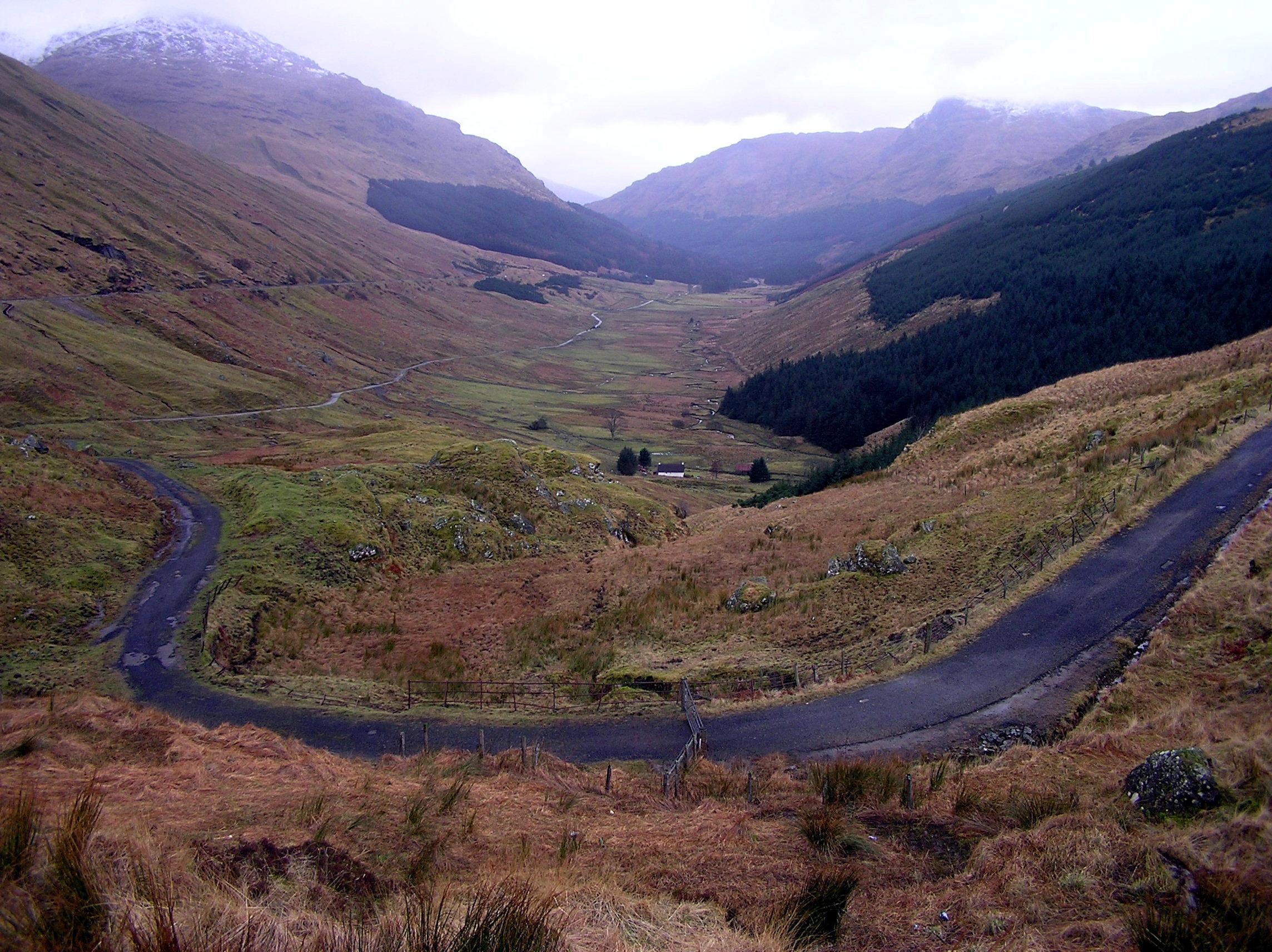
“Rest and be thankful” are the words inscribed on a stone near the junction of the A83 and the B828, placed there by soldiers who built the original military road in 1753, now referred to as the Drovers’ road. The original stone fell into ruin and was replaced by a commemorative stone at the same site.

OLYMPUS DIGITAL CAMERA

The section is so named as the climb out of Glen Croe is so long and steep at the end that it was traditional for travellers to rest at the top, and be thankful for having reached the highest point. The current road no longer keeps to the floor of Glen Croe but steadily climbs across the southern slopes of The Cobbler, on the north side of the Glen, to the highest point of the pass. The westward descent to Loch Fyne is through Glen Kinglas, and from here the A815, the main road to Dunoon and the Cowal peninsula, branches off to the south.*

I have not been to this particular corner of Scotland, but I wish I had! Wow. And isn’t it great that they erected a stone inviting people to “rest and be thankful”?

Anyway, I thought this fit in nicely with my effort to be thankful this month–don’t you agree?

*Information and photos via Wikipedia

The lowly thistle

by chuckofish

Someone brought this vase of thistles to work the other day. He picked them on the side of the highway! Aren’t they awesome?

Often considered a weed around here, the thistle has been, of course, the national emblem of Scotland since the reign of Alexander III (1249–1286). According to legend, an invading Norse army was attempting to sneak up at night upon a Scottish army’s encampment. During this operation one barefoot Norseman had the misfortune to step upon a thistle, causing him to cry out in pain, thus alerting the Scots to the presence of the Norse invaders.

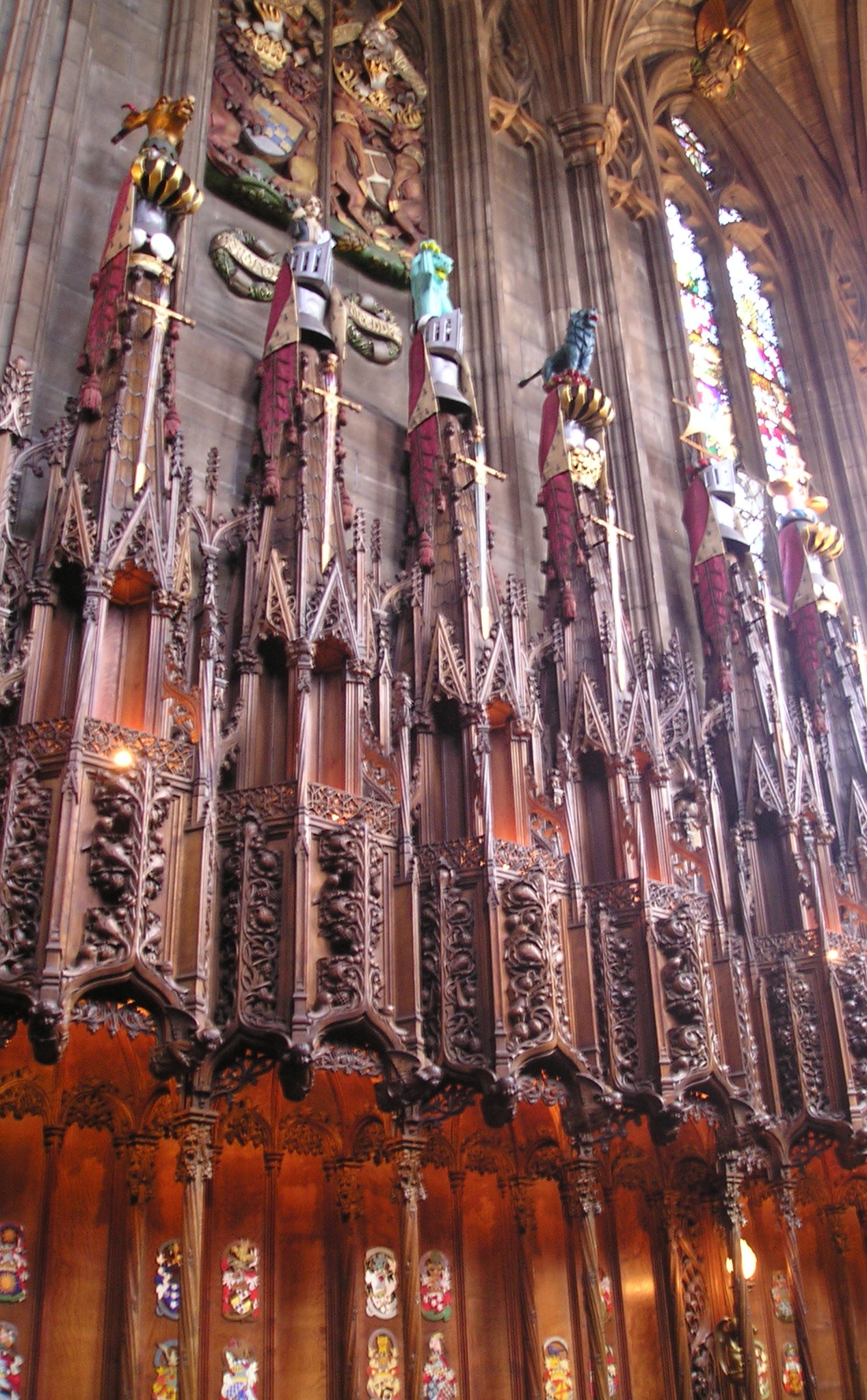
It is the symbol of the Order of the Thistle, a high chivalric order of Scotland

Crests of the Knights of the Thistle in their chapel in St. Giles Cathedral (or the High Kirk) in Edinburgh

According to Wikipedia the thistle is found as well in many Scottish symbols and as the name of several Scottish football clubs. The thistle, crowned with the Scottish crown, is the symbol of seven of the eight Scottish Police Forces (the exception being the Northern Constabulary). The thistle is also the emblem of Encyclopædia Britannica, which originated in Edinburgh, Scotland. Carnegie Mellon University features the thistle in its crest in honor of the Scottish heritage of its founder, Andrew Carnegie.

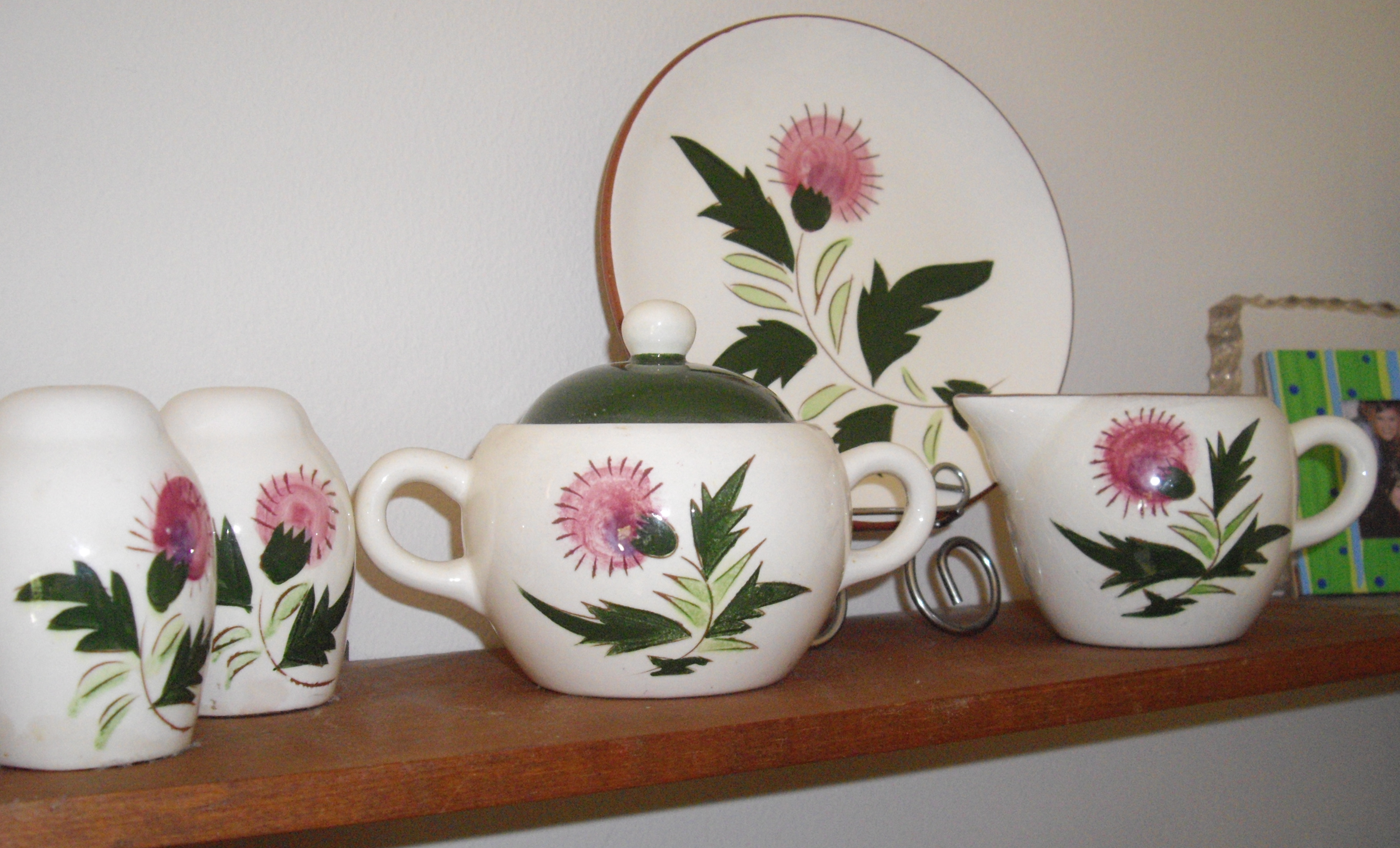
I started collecting Govancroft “Made in Scotland” pottery for daughter #2 (because Cameron is her middle name) when she was little. I love the funky, stylized and somewhat garish purple and green thistles.

I also have given her some Stangl china in the “Thistle” pattern–very mid-century modern.

Neither, I’m afraid, really grabbed her, but I like them anyway. And, I for one, love the lowly thistle–prickly though they be! Like some people I guess.