dual personalities

Tag: reading

“Grace is the celebration of life, relentlessly hounding all the non-celebrants in the world”*

by chuckofish

This morning I am going to the airport to pick up daughter #2, DN and Katiebelle! They will be here for the weekend and will attend our 200th Birthday of Missouri Statehood party on Saturday. Also on Saturday is my DP’s second son’s re-scheduled wedding. How did this scheduling snafu happen you ask? Long story…but c’est la vie! This weekend is party central for both DPs.

This was an interesting article about raising children by Episcopalian Sam Bush. “God does not aim to quell our anxiety by offering us helpful tips or boosting our self-esteem.” Yes, but I do get tired of articles that go on about how hard everything is, including child-rearing. Everything is an excuse for anxiety. Of course, raising children is hard, especially in this iPhone-addicted age. But your children do not ultimately belong to you; they belong to God. Turn your worry and your cares over to Him. A lot of our modern problems are due to our trying to go it alone, with only “science” to help. Good luck with that. Be sure to watch the Parks and Recreation video–priceless Ron Swanson (who I have no doubt is a Calvinist.)

And I found this article to be quite compelling.

Happy birthday to Wendell Berry, who turns 87 today. It is also the birthday of Guy de Maupassant, the master of the short story. He wrote his own epitaph:  “I have coveted everything and taken pleasure in nothing,” which should be a warning to us all. A toast to them both!

“Grace is the celebration of life, relentlessly hounding all the non-celebrants in the world. It is a floating, cosmic bash shouting its way through the streets of the universe, flinging the sweetness of its cassations to every window, pounding at every door in a hilarity beyond all liking and happening, until the prodigals come out at last and dance, and the elder brothers finally take their fingers out of their ears.”

Robert Farrar Capon, “Between Noon and Three”

“I keep an inventory of wonders”*

by chuckofish

We think a lot about the passing of time and this was a shocker:

Yes, the album was released on May 26, 1967–54 years ago. And WWI was only 50 years before that. Western culture had changed a lot in those 50 years, but think about how much it’s changed in the past 54 years.

As usual, I am trying to escape our crumbling culture by reading something uplifting. Currently I am re-reading Hannah Coulter by Wendell Berry. This novel has much to say about the passage of time and people living in community.

As I have told it over, the past visible again in the present, the dead living still in their absence, this dream of time seems to come to rest in eternity. My mind, I think, has started to become, it is close to being, the room of love where the absent are present, the dead are alive, time is eternal, and all the creatures prosperous. The room of love is the love that holds us all, and it is not ours. It goes back before we were born. It goes all the way back. It is Heaven’s. Or it is Heaven, and we are in it only by willingness. By whose love, Andy Catlett, do we love this world and ourselves and one another? Do you think we invented it ourselves? I ask with confidence, for I know you know we didn’t.

Frederick Buechner calls it “the Room called Remember.”

The past and the future. Memory and expectation. Remember and hope. Remember and wait. Wait for him whose face we all of us know because somewhere in the past we have faintly seen it, whose life we all of us thirst for because somewhere in the past we have seen it lived, have maybe even had moments of living it ourselves. Remember him who himself remembers us as he promised to remember the thief who died beside him. To have faith is to remember and wait, and to wait in hope is to have what we hope for already begin to come true in us through our hoping. Praise him.

Anyway, I highly recommend both Wendell Berry and Frederick Buechner.

And, of course, there’s always Jorge Luis Borges…

In the golden afternoon, or in
a serenity the gold of afternoon
might symbolize,
a man arranges books
on waiting shelves
and feels the parchment, the leather, the cloth,
and the pleasure bestowed
by looking forward to a habit
and establishing an order.
Here Stevenson and Andrew Lang, the other Scot,
will magically resume
their slow discussion
which seas and death cut short,
and surely Reyes will not be displeased
by the closeness of Virgil.
(In a modest, silent way,
by ranging books on shelves
we ply the critic’s art.)
The man is blind, and knows
he won’t be able to decode
the handsome volumes he is handling,
and that they will never help him write
the book that will justify his life in others’ eyes;
but in the afternoon that might be gold
he smiles at his curious fate
and feels that peculiar happiness
which comes from loved old things.

June, 1968

*Wendell Berry, Sabbaths 2016

Look homeward, angel

by chuckofish

Today is the birthday of American author Stanley Elkin, who taught at my flyover university for many years. He also lived two houses down from us growing up. I babysat for his children Bernie and Molly from time to time when I was in high school. His wife Joan was nice. I remember they had the cover of every book he wrote blown up to poster size and framed, which I thought was a little over the top, but to each his own.

Here’s a little film about Stanley which shows our street (I think) at about 1:01.

And here he is sitting in front of his house (photo by Esquire).

He rode a motorcycle until he was diagnosed with MS, and then he slowed down quite a bit.

Anyway, the English Department at WashU must have been quite the place back then–what with Stanley and William Gass and Howard Nemerov. The Gasses lived in our neighborhood too and Nemerov famously walked down our street on his way to work. But some of my friends didn’t like driving to my neighborhood–too sketchy.

Different perspectives.

“Some days are diamonds/ Some days are rocks”*

by chuckofish

Mood

Hope you are having a diamond of a day, able to enjoy the weather and read a little poetry.

The Real Prayers are not the Words, but the Attention that Comes First

The little hawk leaned sideways and, tilted, rode
the wind. Its eye at this distance looked like green
glass; its feet were the color of butter. Speed, obviously,
was joy. But then, so was the sudden, slow circle
it carved into the slightly silvery air, and the squaring
of its shoulders, and the pulling into itself the long,
sharp-edged wings, and the fall into the grass where it
tussled a moment, like a bundle of brown leaves, and
then, again, lifted itself into the air, that butter-color
clenched in order to hold a small, still body, and it flew
off as my mind sang out oh all that loose, blue rink
of sky, where does it go to, and why?        

–Mary Oliver

Today is the birthday of writer Eudora Welty (1909–2001) whom I have admired for many years. It is always a good day to take down one of her books from a shelf and open and read.

“The events in our lives happen in a sequence in time, but in their significance to ourselves they find their own order, a timetable not necessarily – perhaps not possibly – chronological. The time as we know it subjectively is often the chronology that stories and novels follow: it is the continuous thread of revelation.”

Eudora Welty, One Writer’s Beginnings

I will also note that tomorrow is daughter #2’s birthday.

We will celebrate her birthday in 10 days when she and baby Katie visit for a long weekend. Of course, we can’t wait to hold that baby, but I can’t wait to hold my baby…

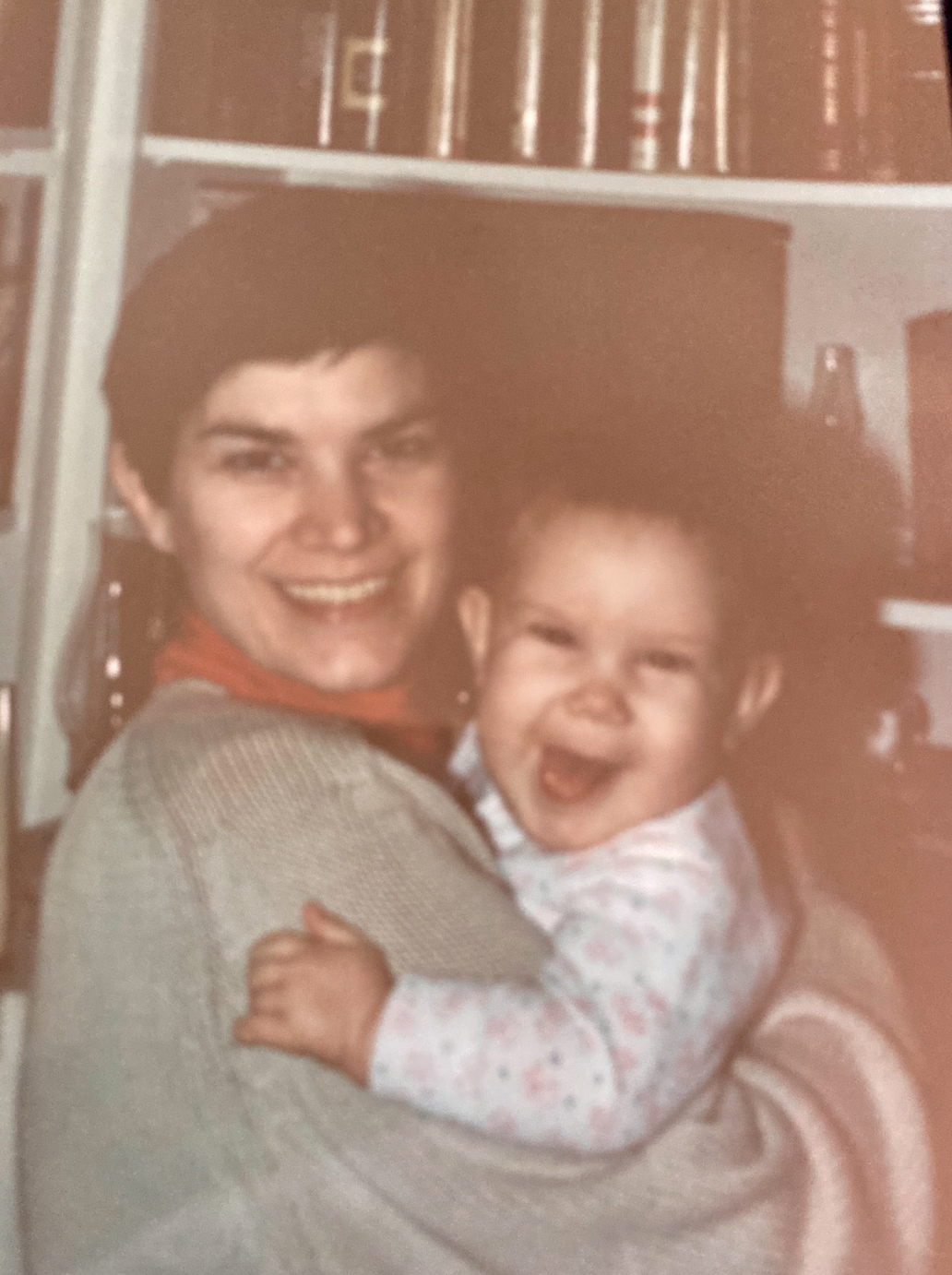
…who was a precious bundle of joy not so long ago and is now a beautiful and talented young woman.

Sunrise, sunset. Time is the continuous thread of revelation.

The watercolor is by Louis Michel Eilshemius, painted between 1888 and 1910. (Detroit Institute of Arts)

*Tom Petty, Walls

“Must be getting early, clocks are running late”*

by chuckofish

Daylight Savings time starts on Sunday. The days will start to be longer and that’s okay with me.

I finished reading The Eighth Day by Thornton Wilder last week and I really enjoyed it. It’s been a long time since I’ve read any fiction of substance where interesting characters express interesting thoughts.

“I have long noticed that people who talk to those closest to them only about what they eat, what they wear, the money they make, the trip they will or will not take next week—such people are of two sorts. They either have no inner life, or their inner life is painful to them, is beset with regret or fear.”

I started to re-read The Bridge of San Luis Rey and I’m also reading a biography of R.C. Sproul.

This article about The Pilgrim’s Progress was interesting. I remember it was a favorite of the boy when he was a child. I think it is true that while “the Christian allegory is inescapable and unmissable for adults, for younger readers Bunyan’s book can read like an exciting fantastical adventure featuring more than its fair share of peril, drama, and creative invention.”

“When Theodore Roosevelt died, the Secretary of his class at Harvard, in sending classmates a notice of his passing, added this quotation from ‘Pilgrim’s Progress’: ‘My sword I give to him that shall succeed me in my pilgrimage, and my courage and skill to him that can get it. My marks and scars I carry with me, to be a witness for me that I have fought His battles who now will be my rewarder.'” (FDR)

It may be time to re-read this classic as well.

I didn’t watch any movies on my lenten list this week, but I will this weekend. I did watch Go For Broke! (1951), which I had never seen. It is the real-life story of the 442nd, which was composed of Americans born of Japanese parents, many of whom were in internment camps back in the U.S. Fighting in the European theater during WWII, this unit became the most heavily decorated unit for its size and length of service in the history of the U.S. Army, as well as one of the units with the highest casualty rates.

It starred Van Johnson who was nearly a foot taller than most of his co-stars, which seemed kind of racist, but was probably just illustrative of the truth. It wasn’t the best war movie ever, but I enjoyed it and I learned something. The screenplay by Robert Pirosh was nominated for an Academy Award in 1951. Back then they knew how to make different characters knowable and distinctive in a very short time and this film was very effective in doing that.

In other news, yesterday afternoon I finally got my PowerPort removed and that is a great relief. It’ll leave a scar, but Yay.

It has been raining and it is supposed to rain off and on all weekend. We will endeavor to have a good weekend anyway!

*Grateful Dead, Touch of Grey

A barrel full of bears

by chuckofish

Tomorrow is the birthday of Ogden Nash (August 19, 1902 – May 19, 1971), an American poet known for his light verse. This poem, which I haven’t thought about for years and years, was a great favorite of mine as a child. Remember “The Tale of Custard the Dragon”?

  • Belinda lived in a little white house,
    With a little black kitten and a little gray mouse,
    And a little yellow dog and a little red wagon,
    And a realio, trulio, little pet dragon.
  • Now the name of the little black kitten was Ink,
    And the little gray mouse, she called him Blink,
    And the little yellow dog was sharp as Mustard,
    But the dragon was a coward, and she called him Custard.
  • Belinda was as brave as a barrel full of bears,
    And Ink and Blink chased lions down the stairs,
    Mustard was as brave as a tiger in a rage,
    But Custard cried for a nice safe cage.

You can read the whole poem here.

Our copy was in “The Golden Treasury of Poetry” illustrated by Joan Walsh Anglund.

I wonder if people still read Nash’s poems to their children as our parents did. Studies show, of course, that reading to one’s children is one of the most effective ways to build the “language” neural connections in their growing brains as well as a strong base for cognitive development. Indeed, babies who are read to have their “receptive” vocabularies (number of words they understand) increased 40 per cent, while those not read to increase by only 16 per cent. (Studies show!)

Well, a toast to old Ogden Nash and a realio, trulio, little pet dragon.

While on the subject of reading, John Piper gives 10 reasons for reading the Bible every day. “Ye shall know the truth, and the truth shall make you free.” (John 8:32)

(Painting by Mary Cassatt: “Mrs Cassatt Reading to her Grandchildren” -1888)

“Sweet July, warm July!”*

by chuckofish

I have been reading a little bit of this, a little bit of that…

The Walter Mirisch book is fascinating if you are at all interested in movies. Written by an extremely successful film producer (several Academy Awards for Best Picture), one learns how someone who can make brilliant decisions can also make dumbfoundingly bad ones and never understand why. The David McCullough book contains “portraits in history” ranging from Louis Agassiz to Frederick Remington to Miriam Rothschild. As I have said before, McCullough understands context better than almost anyone writing today. He does not judge his subjects, but he likes them (you can tell).

Did I mention that we watched The Brothers Karamazov (1958) Sunday night? I’m not sure I had ever really watched the whole movie. Of course, it is not the masterpiece that the book is–it is just the plot with some character development that we see. The spiritual aspects are mostly left out, although (spoiler alert!) Richard Basehart as Ivan does admit that there is a God at the conclusion of the story.

Nevertheless, it is very good. Yul Brynner is excellent and so handsome–really at the top of his game–his performance shows a lot of depth. Also, William Shatner is very good as the youngest, most spiritual brother. (And he is also very handsome.) There are also some casting mistakes (why did Albert Salmi have a career?), but on the whole, I was impressed by this adaption by Richard Brooks–well done.

[Also I will note that there is a line in the movie said by Grushenka–“All the truth adds up to one big lie.”–which is also a line in a Bob Dylan song. Of course, Bob.]

I am having some follow-up surgery this Thursday, but my DP, along with daughters #1 and 2, will pick up the slack, and I’ll be back soon.

“Be not forgetful of prayer. Every time you pray, if your prayer is sincere, there will be new feeling and new meaning in it, which will give you fresh courage, and you will understand that prayer is an education.”

–Fyodor Dostoevsky, The Brothers Karamazov

*George Meredith, “July”

What are you reading?

by chuckofish

Screen Shot 2019-02-25 at 1.33.54 PM.png

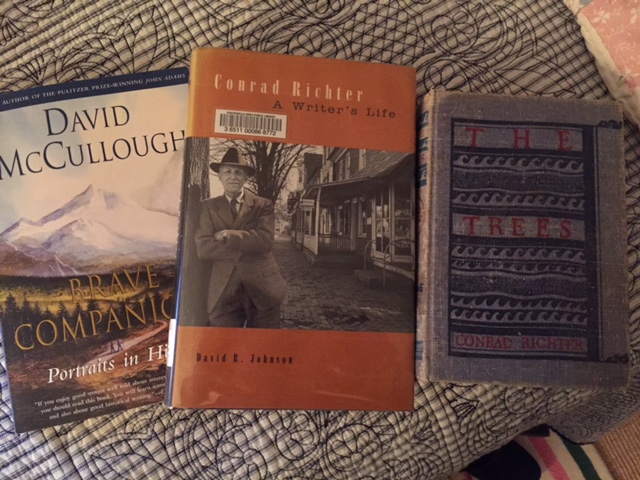
I finished re-reading The Trees by Conrad Richter over the weekend.  It is such a great book. So underrated.  He reminds me of Willa Cather, who also worked hard at her craft, getting it right. Richter also put so much into his books, so much research, and they are spare and perfect–no extraneous showing off.

RichterFullSizeRender.jpg

“There is great tenderness in his stories,” wrote David McCullough about Richter, “Much that is raw and earthy, much that is funny, and not a little cold-blooded violence. The land is never merely the setting; it is elemental to the story, vast and full of power and mystery. His characters do not merely move across the landscape; it is part of them and they are part of it…In the trilogy [The Trees, The Fields, The Town] it is the ancient trees, ‘a race of giants,’ that shut out the light.”

There they stood [Sayward Luckett reflects] with their feet deep in the guts of the earth and their heads in the sky, never even looking at you or letting on you were there. This was their country. Here they had lived and died since back in heathen times. Even the Lord, it seemed, couldn’t do much with them. For every one He blew down, a hundred tried to grow up in its place.

“The underlying values expressed in the trilogy,” McCullough continues, “in all the novels, are the old-fashioned primary values–courage, respect for one’s fellow man, self-reliance, courtesy, devotion to the truth, a loathing of hypocrisy, the power in simple goodness. He called them “the old verities” and he was sure they were vanishing from  American life. He had no patience with such expressions as “the Puritan ethic.” He thought most of those who used that expression never bothered to understand what the Puritans were all about.”

So, if you are looking for something to read, try Conrad Richter! I am going on with the trilogy.

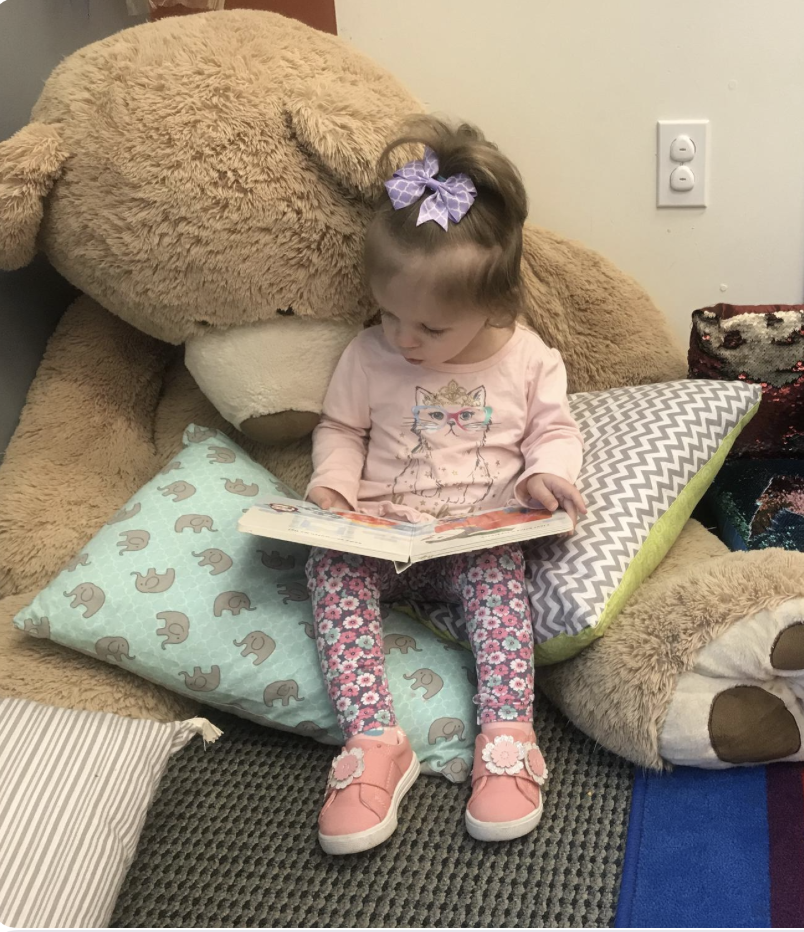
On another note, I must say, there is nothing more gratifying than seeing the wee babes “reading” books.

Screen Shot 2019-02-25 at 10.34.00 AM.pngScreen Shot 2019-02-25 at 5.39.04 PM.png

“You can be too rich and too thin, but you can never be too well read or too curious about the world.”
― Tim Gunn, Gunn’s Golden Rules: Life’s Little Lessons for Making It Work 

“And the moral of the story is?”

by chuckofish

“What is it with you white people and morals? Maybe it’s just a story about what happened.” He paused for a moment. “If an Indian points at a tree, you white people are always thinking, What does that mean? What does the tree stand for? What’s the lesson in this for me? Maybe it’s just a tree.” (Virgil White Buffalo in Hell Is Empty)

While waiting for cabs and resting between long walks and Big Events last weekend, I sought solace in the company of Walt Longmire in the Wyoming mountains.  Hell Is Empty is amazingly apropos reading for wiling away hours in LaGuardia Airport! (“Hell is empty and all the devils are here.”–Shakespeare, The Tempest)

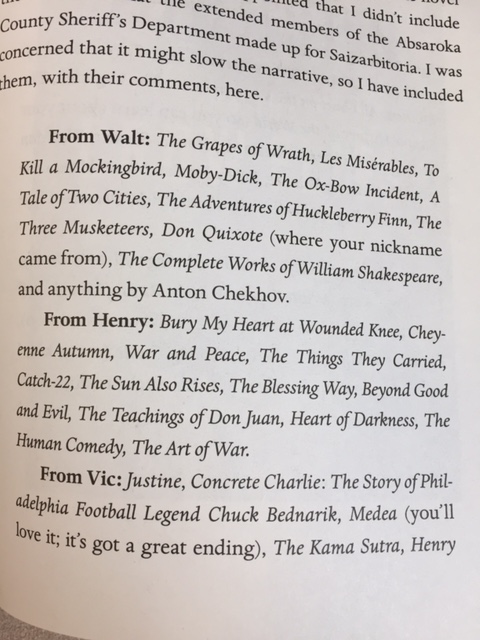
Anyway, at the beginning of this novel we are told that one of Walt’s deputies, regretting a stint in higher education devoted almost exclusively to criminal justice, is attempting to fill in some of the literary gaps. Walt and his deputies, plus the dispatcher and the lady who runs the diner have all made book lists for him. Dante’s Inferno plays a big part in the rest of the story.

Craig Johnson, understanding that his readers would want to know, thoughtfully includes the different lists in an appendix to the novel.

Unknown-1.jpeg

Of course, Ruby, the dispatcher and my soul sister, includes The Holy Bible (NT), The Pilgrim’s Progress, Inferno, Paradise Lost, My Antonia, The Scarlett Letter, Walden, Poems of Emily Dickinson, My Friend Flicka, and Our Town.

How great is that? I guess I’ll have to read My Friend Flicka!

I love lists.

My list would include: The Holy Bible (NT), The Book of Common Prayer, Moby-Dick, The Catcher in the Rye, O Pioneers!, The Big Sky, The Waters of Kronos, The Big Sleep, Gilead, Lonesome Dove…

I’m sure I’m forgetting something important that I really love. You know how that goes.

Here’s Frederick Buechner on a similar theme:

THE WRITERS WHO get my personal award are the ones who show exceptional promise of looking at their lives in this world as candidly and searchingly and feelingly as they know how and then of telling the rest of us what they have found there most worth finding. We need the eyes of writers like that to see through. We need the blood of writers like that in our veins.

J.D. Salinger’s The Catcher in the Rye was one of the first books I read that did it to me, that started me on the long and God knows far from finished journey on the way to becoming a human being—started making that happen. What I chiefly learned from it was that even the slobs and phonies and morons that Holden Caulfield runs into on his travels are, like Seymour Glass’s Fat Lady, “Christ Himself, buddy,” as Zooey explains it to his sister Franny in the book that bears her name Even the worst among us are precious. Even the most precious among us bear crosses. That was a word that went straight into my bloodstream and has been there ever since. Along similar lines I think also of Robertson Davies’ Deptford trilogy, Ford Madox Ford’s The Good Soldier, Rose Macaulay’s The Towers of Trebizond, George Garrett’s Death of the Fox, some of the early novels of John Updike like The Poorhouse Fair and The Centaur, John Irving’s A Prayer for Owen Meany. I think of stories like Flannery O’Connor’s “The Artificial Nigger” and Raymond Carver’s “Feathers” and works of non-fiction, to use that odd term (like calling poetry non-prose) such as Annie Dillard’s Holy the Firm and Geoffrey Wolff’s The Duke of Deception and Robert Capon’s The Supper of the Lamb or plays like Death of a Salesman or Our Town.

What 10 books would you put on your list of must-reads? Think about it.

But excuse me, I have to get back to Absaroka County…

04c3b6f656d895842ccde47daf712055.jpg

What are you reading?

by chuckofish

d9a63a66d4adeff712b814f74b8e3c8c.jpg

Someone at work has been cleaning out his bookshelves recently and I have been the recipient of several good mystery novels. First I read an Easy Rawlins mystery by Walter Moseley which was well written and held my interest.

9780671884291-us-300.jpg

Then I started the first Longmire mystery with low expectations and was rewarded with a real prize.

the-cold-dish-cover.jpg

I am enjoying this book so much! It is well-written and character-driven and the characters are all fascinating individuals. It is slightly humorous, and by that I mean, it does not take itself too seriously, as I think the television version tends to. Plus, bonus: Walt is a lawman with a literary bent. He is always making literary references, but not in a pretentious, stuffy way. Rather, he is always kind of kidding when he does so.

“I took a sip of my coffee, sat the folder on the counter, and began reading the newspaper. “In the cold, gray dawn of September the twenty-eighth . . .” Dickens. “. . . The slippery bank where the life of Cody Pritchard came to an ignominious end . . .” Faulkner. “Questioning society with the simple query, why?” Steinbeck. “Dead.” Hemingway.”

“You know, Balzac once described bureaucracy as a giant mechanism operated by pygmies.”

“What’d your buddy Balzac have to say about inadmissible evidence?”

“Not a lot. I think he considered the subject beneath him.”

“I wandered past Vic’s office and looked in at the explosion of legal pads. The display was daunting, and I would be cursed at if I messed up any of what I’m sure was a carefully detailed arrangement. We were little but we were mighty. I thought of Don Quixote, being far too powerful to war with mere mortals and pleading for giants.”

That is just how his mind works.

I am happy to note that as of May 2017, Craig Johnson has written 12 novels, 2 novellas and a collection of short stories featuring Sheriff Walt Longmire of Absaroka County, Wyoming.

Craig_Johnson_in_Toulouse_in_2011_022-edit.jpg

My kind of guy.

One of these days I am going to quit my job and move to Wyoming and get a job as the admin to an overworked sheriff. You think I’m kidding?

(The painting at the top is by Mary Cassatt.)