dual personalities

Tag: reading

“Pick me out a winner, Bobby”*

by chuckofish

Yesterday Robert Redford died in his sleep at his home in Sundance, Utah at the age of 89. He was never a particular favorite of mine, but it is always sad to see a Hollywood icon from the olden days die. He was undeniably handsome, but he had a cold, cynical look in his eye that made him less attractive to me than, say, Paul Newman. But I really liked him in The Sting (1973) and The Natural (1984)–two of my favorite movies.

Maybe I’ll watch The Natural. Sigh.

It’s been a sad week.

This is a good one about reading as the best way to rebel in a world that can glance at everything and gaze at nothing. “In our world today, many voices seek our attention. Influencers everywhere hawk their wares. How tragic if we develop the capacity to attune to everything but the Word of the Lord. The most radical, countercultural practice we can cultivate today is an intensity in reading and listening to the Scriptures.”

So watch an old movie, read an old book, read the Bible!

103 How sweet are thy words unto my taste! yea, sweeter than honey to my mouth!

104 Through thy precepts I get understanding: therefore I hate every false way.

105 Thy word is a lamp unto my feet, and a light unto my path.

(Psalm 119:103-105)

*Roy Hobbs in The Natural

What are you re-reading?

by chuckofish

You know I am a great believer in re-reading books (and re-watching movies) and so is the writer of this article. “Love is the starting place of repeated rereading. And because of that beginning, the gifts of reading are amplified within its practice. Let me make a case to you: rereading is a rich, moral craft that forms us as people.”

And what do you know, science proves it! It says so here.

I definitely think this is true! I have my go-to bonafide stress-reducer movies that I like to watch when I need a lift. Don’t you? It might be time to watch Hatari (1962).

Speaking of John Wayne, this is super cool! “Many Americans of Generation X and older will recall the red, white, and blue American Freedom Train that was a centerpiece of America’s glorious Bicentennial celebration. But few know that the Freedom Train, pulled by a steam locomotive and filled with American historical artifacts, was the brainchild of none other than John Wayne.” Let’s bring back John Wayne’s rolling tribute to America’s finest.

And a bear was spotted playing in a Connecticut back yard…watch the video–priceless!

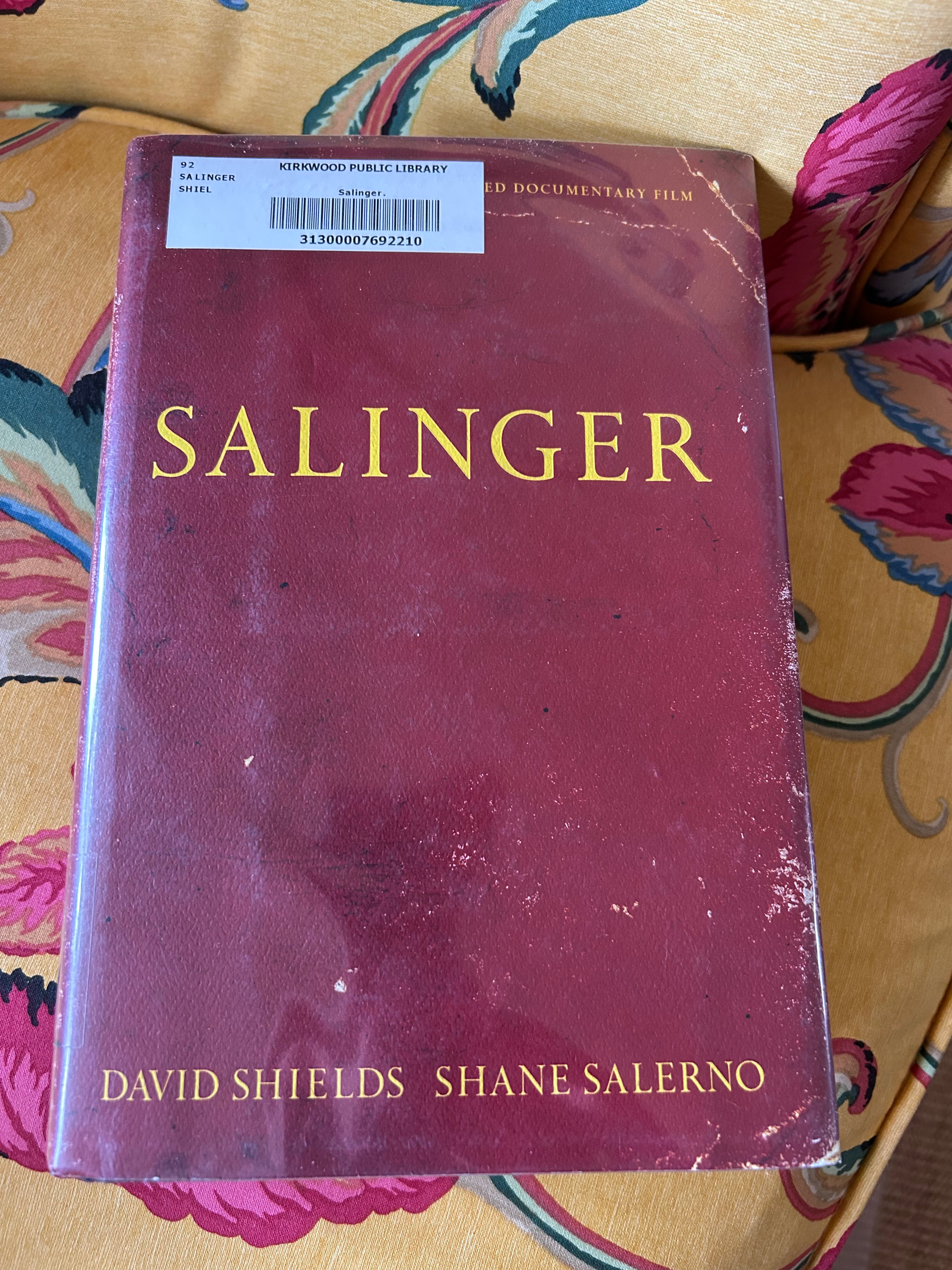
What are you reading?

by chuckofish

I am reading Matthew again in my daily Bible reading. I have just read through the beatitudes and the similitudes and a lot of talk about the law. Following after that, chapter six is all about how to do things right and not like the hypocrites and reminders that “your Father who sees in secret will reward you.” Humility is the watchword of the day. We can never read about that too much, can we?

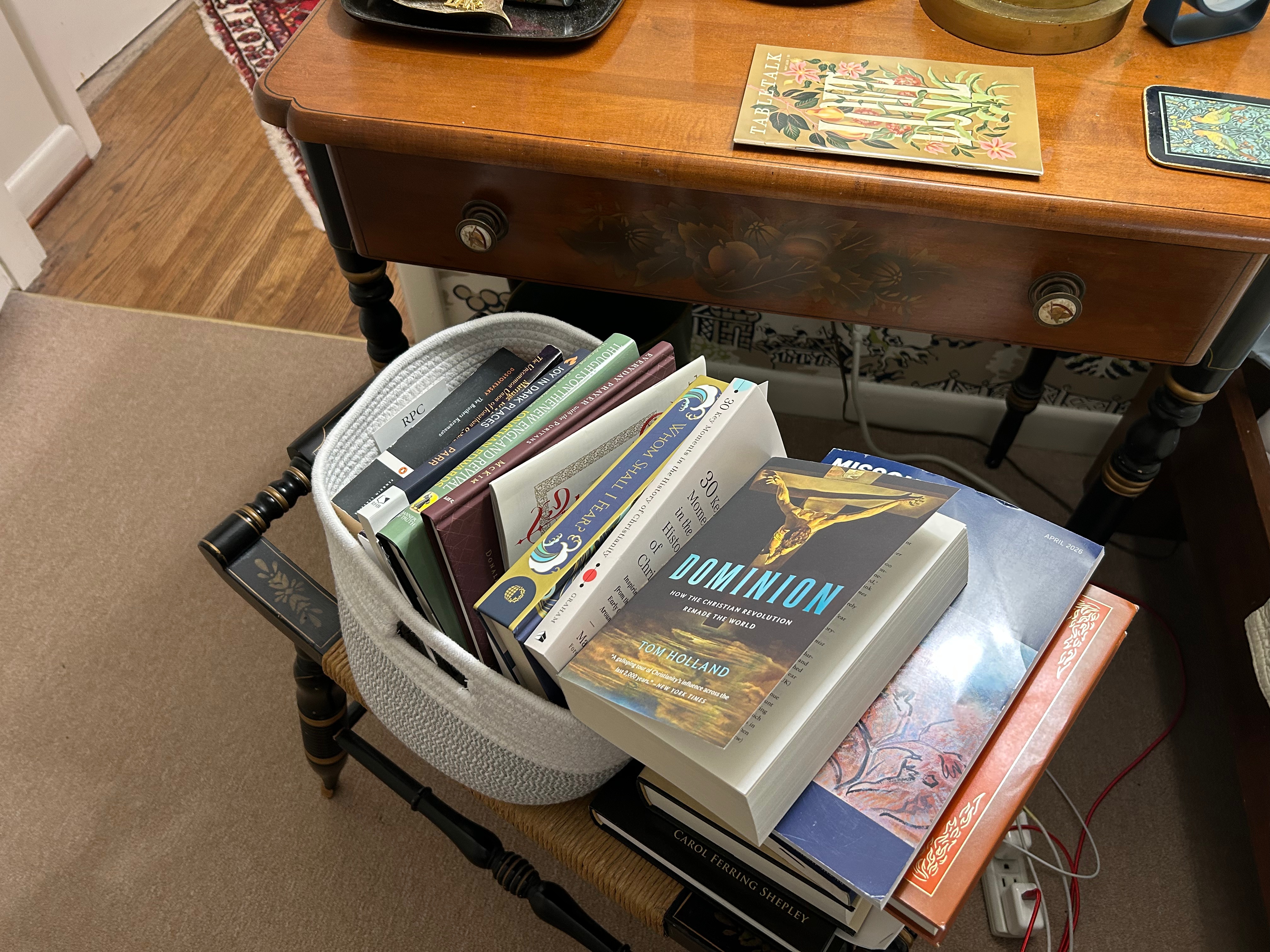
I am also reading several other books…

…and I actually finished one: The Pale Horse written by Agatha Christie and published in 1961. I have never been much of a Christie fan, but I ran across a mention of this book and I thought, I’ll give it a whirl.

The plot involves a dying woman, Mrs Davis, who gives her last confession to Father Gorman, a Roman Catholic priest, but along with her confession she gives him a list of names and a terrible secret. Before he can take action, however, he is struck dead in the fog. As the police begin to investigate, the main character begins to piece together evidence which points to a dark, occult group. I was pleasantly surprised by the book–it is well written, moves right along and is peopled with likable characters who are well developed and realistic. I enjoyed it so perhaps I will attempt to read another Christie mystery.

I am also reading Tim Keller on the Christian Life by Matt Smethurst for my Community Group. We are going through it chapter by chapter, starting tomorrow. You may recall that Tim Keller has been very influential to me on my spiritual walk. I credit him, along with R.C. Sproul and John Piper, with explaining the gospel to me, with showing me that the Bible is the foundation of the Christian life and with urging me to find a new church.

Boy, am I grateful for his guidance.

Today we also remember Henry Mancini who was born on this day in 1924. Let’s all have a cocktail and toast him tonight.

What are you reading?

by chuckofish

Daughter #2 is back today! I am happy to report that my daily reading habits have persisted, and while there are always misses among the hits, I have several good things to share.

Quick notes: I failed to finish Charlotte Brontë’s Villette (1853) — there is a reason Jane Eyre (1847) is the better known work — but while I trudged through the first half, I also read and thoroughly enjoyed two Fred Vargas mysteries. My mother had mailed them to me, which I appreciated, since I do not think my local prairie library carries French mysteries in translation. My mother has blogged about Vargas many times, but I’ll link to this post, which — bonus — mostly discusses her reading of The House of the Seven Gables (1851), a novel I love dearly and re-read at the beginning of the year.

My local prairie library does carry two shelves of “General Fiction,” which feature a funny mix of contemporary “chick lit” and classic canonical works. Something compelled me to grab John Steinbeck’s The Grapes of Wrath (1939), and I found it surprisingly easy to read. It is one of those epic long novels that, because the chapters are so short, allows you to leisurely chug along with great and frequent reward. Steinbeck alternates between naturalist descriptions of the American landscape, mini treatises on the American economy, and what I found to be the gripping plot of the Joad family’s Dust Bowl journey from Oklahoma to California. I was very happy to read in context the passage quoted in one of my favorite blog posts.

When Katie assembled this Duplo truck with trailer and a multitude of passengers, I couldn’t help but think, “It’s giving me Joad family jalopy vibes.”

Finally, I recently finished Muriel Barbery’s The Elegance of the Hedgehog (2006). The novel’s dual protagonists are wise in different ways: Paloma beyond her 12 years, and Renée beyond her station (which she believes precludes the intellectual life she keeps a secret). When a Japanese man moves into the apartment building where they both live, the three forge an unlikely friendship. Interestingly, Kakura Ozu is able to intuit the rich inner lives of Paloma and Renée, and draws them out of their shells despite the social structures in which they find themselves stuck. While it was all a little far-fetched, I did appreciate the idea that we can recognize a kindred intellectual spirit when we encounter it, even briefly.

My favorite section of the novel, “On Grammar,” centered on the trio’s shared appreciation of language and disdain for those who misuse it. When Renée and Ozu meet, they both flinch when another — supposedly refined — tenant makes a glaring grammatical error. Their friendship is forged in this moment. And at one point, Paloma snaps when her literature teacher makes an asinine comment about grammar. Later, Paloma reflects in her journal,

“Personally, I think that grammar is a way to attain beauty. When you speak, or read, or write, you can tell if you’ve said or read or written a fine sentence. You can recognize a well-turned phrase or an elegant style. But when you are applying the rules of grammar skillfully, you ascend to another level of the beauty of language. When you use grammar you peel back the layers, to see how it is all put together, see it quite naked, in a way. And that’s where it becomes wonderful, because you say to yourself, ‘Look how well-made this is, how well-constructed it is! How solid and ingenious, rich and subtle!’ I get completely carried away just knowing there are words of all different natures, and that you have to know them in order to be able to infer their potential usage and compatibility. I find there is nothing more beautiful, for example, than the very basic components of language, nouns and verbs. When you’ve grasped this, you’ve grasped the core of any statement. It’s magnificent, don’t you think? Nouns, verbs…

“Perhaps, to gain access to all the beauty of the language that grammar unveils, you have to place yourself in a special state of awareness. I have the impression that I do that anyway without any special effort. I think that it was at the age of two, when I first heard grown-ups speak, that I understood once and for all how language is made. Grammar lessons have always seemed to me a sort of synthesis after the fact and, perhaps, a source of supplemental details concerning terminology.”

Paloma is a little overdone as a precocious tween, but I can’t help but relate to much of this. It’s very obvious to me that toddlers intuit grammar from the language around them, and yes, as their mother, I believe that Ida and Katie have an “elegant style” of speech. Ida once looked at the rainy back deck and said, “I wish we could go outside today.” (For reference, at her age, “go outside” would be typical.) Solid and ingenious, rich and subtle indeed!

Up next, I am testing my endurance with Wolf Hall. So far, so good!

You have been God’s grace to me

by chuckofish

Monday I successfully dropped off Mr. Smith at Silver Maple kennel after an early morning belly-scratch session. He never looked back, so happy was he to be there. He definitely is a ‘no regrets’ kind of dog. I’m sure there is a lesson there for all of us.

The weather has been lovely–blue skies and temperatures in the 60s–I even went to the park and walked around the pond. Hard to believe it was so cold and snowy last week!

I talked to my sister who is a grandmother as of last Friday. Congratulations to all! The baby boy weighed over 10 pounds!

The boy brought the bud over yesterday afternoon while Lottie went to dance class. The bud wanted to do some driveway sittin’ (the first of the year!) and I can’t say no to him. He broke up some ice on the driveway and made friends with the cat next door (named Messi after his hero) and patted a dog walking by. There were a lot of people, in fact, passing by and cars with whom he raced (a Honda! a Fiat! an Audi!)–good grief. He wiped out racing a UPS truck and we went inside to get a bandaid and watched some Wild Kratts until his dad returned. All in a boy’s day…

Daughter #1 returns today from work adventures in Indiana and I am looking forward to a glass of wine and hearing about her exploits.

I talked to daughter #2 and she told me she had just read Home by Marilyn Robinson, which was quite a delight after all the bad contemporary “literature” she has read recently. This warmed my heart. She had many good insights with which I concurred. I started re-reading Gilead after our conversation. Wonderful.

“I’m writing this in part to tell you that if you ever wonder what you’ve done in your life, and everyone does wonder sooner or later, you have been God’s grace to me, a miracle, something more than a miracle. You may not remember me very well at all, and it may seem to you to be no great thing to have been the good child of an old man in a shabby little town you will no doubt leave behind. If only I had the words to tell you.”

So praise God from whom all blessings flow, pet a nice dog, watch a boy play in the yard, read an old book, reach out to the ones you love. They are God’s grace to you.

A scrolling world

by chuckofish

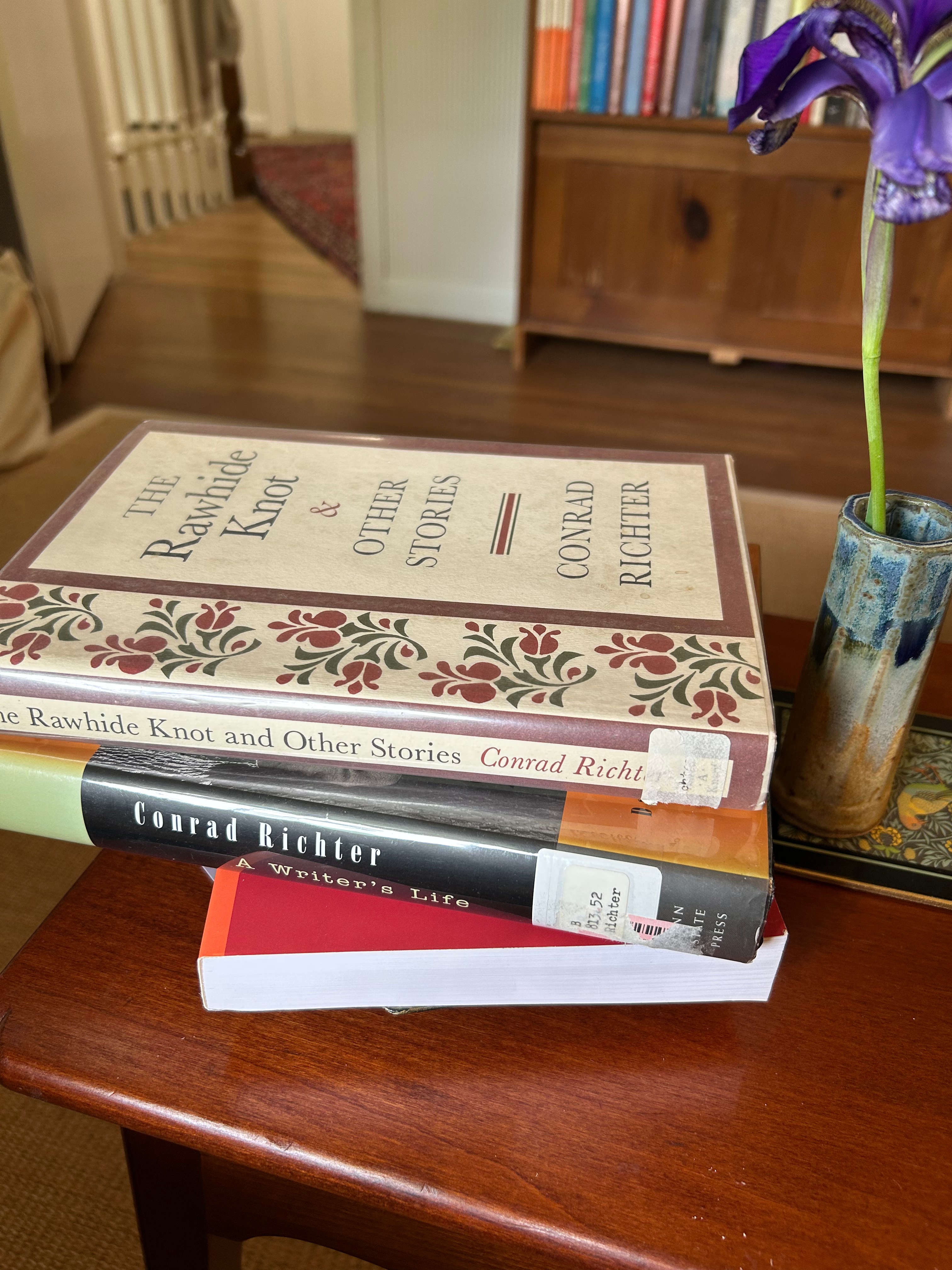
You may have noticed that I have been trying to read real books lately. I was shocked to realize that, indeed, I read very few entire books in 2024. Part of that is because most contemporary fiction is not worth the effort, and part of it is because I cannot read at bedtime because I fall asleep.

Well, I have given myself permission to read during the day–a silly thing, but it is something I struggle with. I am retired, I tell myself. I can do what I want. I do not have to be particularly “productive”.

But some of it, I must admit, is because I have a hard time focusing on reading. Obviously, this is not just my problem. This about reading in a scrolling world is pertinent to what a lot of us are feeling. Brain rot is real.

Well, I did read through the Bible for the third year in a row, so I can pat myself on the back for that. Right now, in my 5x5x5 NT reading plan, I am in the book of Acts, and Stephen–whose “face is like the face of an angel”–is about to be martyred. Sela.

The Grammy Awards are as out of touch as anything else these days, but the Americana genre keeps producing some interesting artists, including this year’s big winner, Sierra Ferrell…

So take heart, put your phone away, read a book!

“Why, what’s the matter,
That you have such a February face,
So full of frost, of storm and cloudiness?”

–William Shakespeare, Much Ado About Nothing

“The eyes of the Lord range throughout the earth”*

by chuckofish

I am proud to say I finished reading Drums Along the Mohawk–all 654 pages! It was well-worth the effort. Really a wonderful book. The author, Walter D. Edmonds, writes in his Author’s Note:

To those who may feel that here is a great to-do about a bygone life, I have one last word to say. It does not seem to me a bygone life at all. The parallel is too close to our own [1936]. Those people of the valley were confronted by a reckless Congress and ebullient finance, with their inevitable repercussions of poverty and practical starvation. The steps followed with automatic regularity. The applications for relief, the failure of relief, and then the final realization that a man must stand up to live…They suffered the paralysis of abject dependence on a central government totally unfitted to comprehend a local problem. And finally, though they had lost two-thirds of their fighting strength, these people took hold of their courage and struck out for themselves. Outnumbered by trained troops, well equipped, these farmers won the final battle of the long war, preserved their homes, and laid the foundations of a great and strong community.

Woohoo, yes, they did.

I was also reminded of how truly hard it was to be a woman on the frontier–something today’s bloggers/influencers, who find it “hard” to have babies and bring up children today, might find mind-boggling. Just to give birth to a baby in 1779 and then watch it starve or freeze to death or be tomahawked and scalped is beyond their comprehension. It’s kind of beyond mine, and, yes, yes, parents do have plenty of modern problems today–iphones and activist teachers etc. etc.–I know, but at least I have the grace to be thankful for my OB-GYN, and safe, warm house, and well-stocked grocery stores. Ye gods, women, get some perspective!

Anyway, we should all take a moment every once in awhile to remember our ancestors who stepped up and made many sacrifices so that we can enjoy our freedom. And stop whining. Please.

Today is the birthday of one of my favorite ancestors, John Wesley Prowers, who was a pioneer on another frontier. I think of his mother, my great-great-great grandmother, who gave birth to him in 1838 in Westport, MO, a frontier outpost on the Missouri River where just a handful of white people lived at the time. She gave birth to my great-great grandmother the following year. Then her husband died. She did have family nearby and the settlement was growing, but wow.

Anyway, it is my practice to watch a good cowboy movie to celebrate JWP’s birthday–usually the great Red River (1947). But I think I might dip again into Lonesome Dove (1989) this year. JWP, you will recall, was a friend and business partner of Charles Goodnight, upon whom the character Captain Call (Tommy Lee Jones) is based. 

Here’s to the sunny slopes of long ago.

And this is really, really good. “To the rest of the country—the rest of the world–we don’t matter, here in the Middle of Nowhere. And that’s fine, for the most part. Most of us are happy to let the noise and craziness of the world pass us by. But that doesn’t mean that we are unseen by God. That we are unnoticed by Heaven.”

Have a good day! Read an old book. Watch an old movie. Praise God from whom all blessings flow.

*II Chronicles 16:9

In which I do not recommend several novels

by chuckofish

Every few years, I (daughter #2) decide to read a number of acclaimed and/or recommended contemporary novels in quick succession. This is usually a bad decision, but for some reason I feel a need to know the current state of fiction. Long story short: disappointing. And yet, long story long, I have a lot to say!!

I will write here about various themes and takeaways so that you might choose to avoid the work of reading these (award-winning!!!) tomes. Several of them were, like my previous reading material, 400+ pages long! I plan to end on a positive, note, though, because I successfully landed on a wonderful palate cleanser and treat. A quick rundown:

Donna Tartt, The Goldfinch (2013)
Kevin Wilson, Nothing to See Here (2019)
Elizabeth Strout, Tell Me Everything (2024)
Claire Lombardo, Same As It Ever Was (2024)
Anthony Doerr, Cloud Cuckoo Land (2021)
Daniel Mason, North Woods (2023)
Amor Towles, Table for Two (2024)
Amor Towles, Rules of Civility (2011) (re-read)

To start with the negative, Same As It Ever Was joins seemingly so many contemporary novels in representing the hardships of the modern mother. This novel truly repeated, over and over again, that the young mother was “having a hard time,” even though she boasts various privileges that make life (and certainly parenting) easier. (I put “having a hard time” in quotation marks because I literally mean that sentence was repeated ad nauseam.) Though I found the particulars of this character’s “hardships” grating, it was actually the hand-wringing tone of it all that was so frustrating. It reminded me of Elizabeth Strout’s first “pandemic novel” (Oh William!) in which Lucy Barton actually wrings her hands nonstop. (In Tell Me Everything, it is somehow still pandemic-esque in Maine, and Lucy hasn’t really calmed down.) Both Lucy and the protagonist of Lombardo’s novel are constantly wondering if their children like them, while unapologetically behaving in ways that don’t exactly merit being liked (by their inexplicably-devoted husbands, friends, or children).

Kevin Wilson’s novel is not really worth mentioning — it bordered on a “beach read.” That said, this odd novel about the nanny of children who spontaneously combust is the only contemporary work I read last year in which someone has the experience of loving children unconditionally, 24 hours a day, even when it is hard to care for them. How lovely that it isn’t their mother (deceased, of course) or stepmother, but a nanny!

I did enjoy Cloud Cuckoo Land, in spite of its slow start and the challenge of learning three+ different timelines and narratives. I gave it credit for its relentless love of libraries, language, and literature, and its optimism about people and the world broadly (even with a climate activist/terrorist plotline!). Of course, these were the qualities that were semi-derided by a New Yorker review, which, more interestingly, linked Doerr and Donna Tartt: both authors won both the Pulitzer Prize for Fiction and the Carnegie Medal for Excellence in Fiction in 2015 and 2014, respectively. My critique of Doerr’s novel was that it was almost absurdly clever, and as it careened toward its conclusion, I knew it was going to wrap up into a neatly-tied bow. This guy really tried hard with the novel, and it showed. But whereas Doerr seemed invested in justice (poetic and otherwise) as well as redemption, Tartt concludes that good and bad actions are basically all relative, and that individuals should simply do what makes them happy. We can explain away all our sins. I hate to admit it, but I was legitimately shocked. I did not love the main character enough to feel happy about how The Goldfinch ended.

I knew that Daniel Mason’s North Woods, which is apparently based on Nathaniel Hawthorne’s notebooks and is based in western Massachusetts, would drive me nuts. And it did. While the novel, which spans several centuries, was well-researched in ecology and nature (tree spores! fungi! beetles!), its treatment of people was a little too cute. Spinster sisters, prison pen pals, true crime reporters. Sure. But you know I felt a line was crossed when the author spent a section on fictionalized versions of Herman Melville and Nathaniel Hawthorne. I could tell you exactly which notebook entries of Hawthorne’s were referenced, which short story of Melville’s was ripped off — and I didn’t appreciate it. If I want to enjoy literary (and even scientific!) scenes of bucolic Massachusetts forests, I can (and will!) return to Henry David Thoreau.

Doerr, Tartt, and Mason clearly did their research for their novels, and it showed. It was all a little too effortful. By contrast, Amor Towles is capable of writing a smart character who is well-read and quick-witted, without showing off how well-read and quick-witted he is. Accordingly, both Table for Two and Rules of Civility were such a pleasure to read. And you know what’s funny? Walden is a bit of a plot point in one of the novel’s central relationships: she says it’s her desert island book; he reads it with pencil in hand; he leaves it behind at the relationship’s conclusion. Throughout all this, it comes naturally that the narrator shares how Thoreau’s writing applies to the scene at hand:

There is an oft-quoted passage in Walden, in which Thoreau exhorts us to find our pole star and to follow it unwaveringly as would a sailor or a fugitive slave. It’s a thrilling sentiment–one so obviously worthy of our aspirations. But even if you had the discipline to maintain the true course, the real problem, it has always seemed to me, is how to know in which part of the heavens your star resides.

But there is another passage in Walden that has stayed with me as well. In it, Thoreau says that men mistakenly think of truth as being remote–behind the farthest star, before Adam and after the reckoning. When in fact, all these times and places and occasions are now and here. In a way, this celebration of the now and here seems to contradict the exhortation to follow one’s star. But it is equally persuasive. And oh so much more attainable.

I don’t regret reading a number of misses — it just reminds me who I am. I read these novels and I think, these must be for people who are deeply confused. Life is hard, and they don’t know why. They are happy to hear that other people think life is hard. They have neither a pole star, nor a sense of the now and here. And I like to think: I have both.

What are you reading?

by chuckofish

It has been such a cold week! Thankfully the sun has been out much of the time and I have been able to needlepoint by my window. I also sent the Review off to the printer. I do love crossing items off my to-do list, don’t you?

I am also making headway reading Drums Along the Mohawk–the 600+-page tome given to me for Christmas. I am more than a third of the way in and I must say, it is wonderful. Published in 1936, it is well-written, exciting, and populated with realistic characters. It is very scary in parts and well it should be. It was a scary time to be on the New York frontier.

“For the first time they began to realize that there was no protection for them except in themselves. An unpredictable force had been born in the Mohawk Valley…”

The book is peopled with historical persons such as General Nicholas Herkimer and Adam Helmer, and other descendants of the German immigrants who were the majority residents in the central Mohawk Valley at the time. It also features such historical events as the Battle of Oriskany.

(Side note: When I was writing the Review article about RADM Courtney Shands, I learned that he was the commander of the aircraft carrier USS Oriskany during the Korean Conflict. The USS Oriskany was named after the famous and bloody engagement during the Saratoga Campaign. Synchronicity!)

Anyway, I am learning a lot and enjoying the book. Of course, young people today never read books like this and it is a shame. They might actually learn something about our country and the pioneers who built it. It was not easy, not easy at all.

Here’s another bit of trivia. Henry Fonda, the star of the film Drums Along the Mohawk (1939), was a descendent of Douw Fonda, (1700–1780) a prominent settler and trader in the Mohawk Valley. During the fighting with Loyalists, he was captured by a Mohawk, tomahawked and scalped. Two of Douw Fonda’s sons, John and Adam, were taken prisoner in the raid and taken to Canada.

Our ancestors were a hardy lot. They had to be.

So stay warm, read some (good) historical fiction, watch an old movie. Be thankful for and remember those who came before you.

The tapestries of afterthought*

by chuckofish

As Barnabas Piper says, “There is nothing magical or super spiritual about reading the Bible in a year. But there is something super wise and spiritual about prioritizing the reading of the Bible. And every Christian should read the entire Bible.”

Here is a list of some different Bible Reading plans for 2025.

Yesterday I caught up with my Bible reading plan (the Chronological Bible Reading Plan) and finished Revelation. Tomorrow I start a new plan–the 5x5x5 Bible Reading Plan–which I have done before and liked. Having a plan and following through with it has been an anchor in my spiritual life now for three years. I highly recommend it.

Try it or don’t–it’s up to you–but you might like it!

“A thorough knowledge of the Bible is worth more than a college education.”

–Theodore Roosevelt

*From “Year’s End” by Richard Wilbur; read the whole poem here.