dual personalities

Tag: reading

A scrolling world

by chuckofish

You may have noticed that I have been trying to read real books lately. I was shocked to realize that, indeed, I read very few entire books in 2024. Part of that is because most contemporary fiction is not worth the effort, and part of it is because I cannot read at bedtime because I fall asleep.

Well, I have given myself permission to read during the day–a silly thing, but it is something I struggle with. I am retired, I tell myself. I can do what I want. I do not have to be particularly “productive”.

But some of it, I must admit, is because I have a hard time focusing on reading. Obviously, this is not just my problem. This about reading in a scrolling world is pertinent to what a lot of us are feeling. Brain rot is real.

Well, I did read through the Bible for the third year in a row, so I can pat myself on the back for that. Right now, in my 5x5x5 NT reading plan, I am in the book of Acts, and Stephen–whose “face is like the face of an angel”–is about to be martyred. Sela.

The Grammy Awards are as out of touch as anything else these days, but the Americana genre keeps producing some interesting artists, including this year’s big winner, Sierra Ferrell…

So take heart, put your phone away, read a book!

“Why, what’s the matter,
That you have such a February face,
So full of frost, of storm and cloudiness?”

–William Shakespeare, Much Ado About Nothing

“The eyes of the Lord range throughout the earth”*

by chuckofish

I am proud to say I finished reading Drums Along the Mohawk–all 654 pages! It was well-worth the effort. Really a wonderful book. The author, Walter D. Edmonds, writes in his Author’s Note:

To those who may feel that here is a great to-do about a bygone life, I have one last word to say. It does not seem to me a bygone life at all. The parallel is too close to our own [1936]. Those people of the valley were confronted by a reckless Congress and ebullient finance, with their inevitable repercussions of poverty and practical starvation. The steps followed with automatic regularity. The applications for relief, the failure of relief, and then the final realization that a man must stand up to live…They suffered the paralysis of abject dependence on a central government totally unfitted to comprehend a local problem. And finally, though they had lost two-thirds of their fighting strength, these people took hold of their courage and struck out for themselves. Outnumbered by trained troops, well equipped, these farmers won the final battle of the long war, preserved their homes, and laid the foundations of a great and strong community.

Woohoo, yes, they did.

I was also reminded of how truly hard it was to be a woman on the frontier–something today’s bloggers/influencers, who find it “hard” to have babies and bring up children today, might find mind-boggling. Just to give birth to a baby in 1779 and then watch it starve or freeze to death or be tomahawked and scalped is beyond their comprehension. It’s kind of beyond mine, and, yes, yes, parents do have plenty of modern problems today–iphones and activist teachers etc. etc.–I know, but at least I have the grace to be thankful for my OB-GYN, and safe, warm house, and well-stocked grocery stores. Ye gods, women, get some perspective!

Anyway, we should all take a moment every once in awhile to remember our ancestors who stepped up and made many sacrifices so that we can enjoy our freedom. And stop whining. Please.

Today is the birthday of one of my favorite ancestors, John Wesley Prowers, who was a pioneer on another frontier. I think of his mother, my great-great-great grandmother, who gave birth to him in 1838 in Westport, MO, a frontier outpost on the Missouri River where just a handful of white people lived at the time. She gave birth to my great-great grandmother the following year. Then her husband died. She did have family nearby and the settlement was growing, but wow.

Anyway, it is my practice to watch a good cowboy movie to celebrate JWP’s birthday–usually the great Red River (1947). But I think I might dip again into Lonesome Dove (1989) this year. JWP, you will recall, was a friend and business partner of Charles Goodnight, upon whom the character Captain Call (Tommy Lee Jones) is based. 

Here’s to the sunny slopes of long ago.

And this is really, really good. “To the rest of the country—the rest of the world–we don’t matter, here in the Middle of Nowhere. And that’s fine, for the most part. Most of us are happy to let the noise and craziness of the world pass us by. But that doesn’t mean that we are unseen by God. That we are unnoticed by Heaven.”

Have a good day! Read an old book. Watch an old movie. Praise God from whom all blessings flow.

*II Chronicles 16:9

In which I do not recommend several novels

by chuckofish

Every few years, I (daughter #2) decide to read a number of acclaimed and/or recommended contemporary novels in quick succession. This is usually a bad decision, but for some reason I feel a need to know the current state of fiction. Long story short: disappointing. And yet, long story long, I have a lot to say!!

I will write here about various themes and takeaways so that you might choose to avoid the work of reading these (award-winning!!!) tomes. Several of them were, like my previous reading material, 400+ pages long! I plan to end on a positive, note, though, because I successfully landed on a wonderful palate cleanser and treat. A quick rundown:

Donna Tartt, The Goldfinch (2013)
Kevin Wilson, Nothing to See Here (2019)
Elizabeth Strout, Tell Me Everything (2024)
Claire Lombardo, Same As It Ever Was (2024)
Anthony Doerr, Cloud Cuckoo Land (2021)
Daniel Mason, North Woods (2023)
Amor Towles, Table for Two (2024)
Amor Towles, Rules of Civility (2011) (re-read)

To start with the negative, Same As It Ever Was joins seemingly so many contemporary novels in representing the hardships of the modern mother. This novel truly repeated, over and over again, that the young mother was “having a hard time,” even though she boasts various privileges that make life (and certainly parenting) easier. (I put “having a hard time” in quotation marks because I literally mean that sentence was repeated ad nauseam.) Though I found the particulars of this character’s “hardships” grating, it was actually the hand-wringing tone of it all that was so frustrating. It reminded me of Elizabeth Strout’s first “pandemic novel” (Oh William!) in which Lucy Barton actually wrings her hands nonstop. (In Tell Me Everything, it is somehow still pandemic-esque in Maine, and Lucy hasn’t really calmed down.) Both Lucy and the protagonist of Lombardo’s novel are constantly wondering if their children like them, while unapologetically behaving in ways that don’t exactly merit being liked (by their inexplicably-devoted husbands, friends, or children).

Kevin Wilson’s novel is not really worth mentioning — it bordered on a “beach read.” That said, this odd novel about the nanny of children who spontaneously combust is the only contemporary work I read last year in which someone has the experience of loving children unconditionally, 24 hours a day, even when it is hard to care for them. How lovely that it isn’t their mother (deceased, of course) or stepmother, but a nanny!

I did enjoy Cloud Cuckoo Land, in spite of its slow start and the challenge of learning three+ different timelines and narratives. I gave it credit for its relentless love of libraries, language, and literature, and its optimism about people and the world broadly (even with a climate activist/terrorist plotline!). Of course, these were the qualities that were semi-derided by a New Yorker review, which, more interestingly, linked Doerr and Donna Tartt: both authors won both the Pulitzer Prize for Fiction and the Carnegie Medal for Excellence in Fiction in 2015 and 2014, respectively. My critique of Doerr’s novel was that it was almost absurdly clever, and as it careened toward its conclusion, I knew it was going to wrap up into a neatly-tied bow. This guy really tried hard with the novel, and it showed. But whereas Doerr seemed invested in justice (poetic and otherwise) as well as redemption, Tartt concludes that good and bad actions are basically all relative, and that individuals should simply do what makes them happy. We can explain away all our sins. I hate to admit it, but I was legitimately shocked. I did not love the main character enough to feel happy about how The Goldfinch ended.

I knew that Daniel Mason’s North Woods, which is apparently based on Nathaniel Hawthorne’s notebooks and is based in western Massachusetts, would drive me nuts. And it did. While the novel, which spans several centuries, was well-researched in ecology and nature (tree spores! fungi! beetles!), its treatment of people was a little too cute. Spinster sisters, prison pen pals, true crime reporters. Sure. But you know I felt a line was crossed when the author spent a section on fictionalized versions of Herman Melville and Nathaniel Hawthorne. I could tell you exactly which notebook entries of Hawthorne’s were referenced, which short story of Melville’s was ripped off — and I didn’t appreciate it. If I want to enjoy literary (and even scientific!) scenes of bucolic Massachusetts forests, I can (and will!) return to Henry David Thoreau.

Doerr, Tartt, and Mason clearly did their research for their novels, and it showed. It was all a little too effortful. By contrast, Amor Towles is capable of writing a smart character who is well-read and quick-witted, without showing off how well-read and quick-witted he is. Accordingly, both Table for Two and Rules of Civility were such a pleasure to read. And you know what’s funny? Walden is a bit of a plot point in one of the novel’s central relationships: she says it’s her desert island book; he reads it with pencil in hand; he leaves it behind at the relationship’s conclusion. Throughout all this, it comes naturally that the narrator shares how Thoreau’s writing applies to the scene at hand:

There is an oft-quoted passage in Walden, in which Thoreau exhorts us to find our pole star and to follow it unwaveringly as would a sailor or a fugitive slave. It’s a thrilling sentiment–one so obviously worthy of our aspirations. But even if you had the discipline to maintain the true course, the real problem, it has always seemed to me, is how to know in which part of the heavens your star resides.

But there is another passage in Walden that has stayed with me as well. In it, Thoreau says that men mistakenly think of truth as being remote–behind the farthest star, before Adam and after the reckoning. When in fact, all these times and places and occasions are now and here. In a way, this celebration of the now and here seems to contradict the exhortation to follow one’s star. But it is equally persuasive. And oh so much more attainable.

I don’t regret reading a number of misses — it just reminds me who I am. I read these novels and I think, these must be for people who are deeply confused. Life is hard, and they don’t know why. They are happy to hear that other people think life is hard. They have neither a pole star, nor a sense of the now and here. And I like to think: I have both.
What are you reading?

by chuckofish

It has been such a cold week! Thankfully the sun has been out much of the time and I have been able to needlepoint by my window. I also sent the Review off to the printer. I do love crossing items off my to-do list, don’t you?

I am also making headway reading Drums Along the Mohawk–the 600+-page tome given to me for Christmas. I am more than a third of the way in and I must say, it is wonderful. Published in 1936, it is well-written, exciting, and populated with realistic characters. It is very scary in parts and well it should be. It was a scary time to be on the New York frontier.

“For the first time they began to realize that there was no protection for them except in themselves. An unpredictable force had been born in the Mohawk Valley…”

The book is peopled with historical persons such as General Nicholas Herkimer and Adam Helmer, and other descendants of the German immigrants who were the majority residents in the central Mohawk Valley at the time. It also features such historical events as the Battle of Oriskany.

(Side note: When I was writing the Review article about RADM Courtney Shands, I learned that he was the commander of the aircraft carrier USS Oriskany during the Korean Conflict. The USS Oriskany was named after the famous and bloody engagement during the Saratoga Campaign. Synchronicity!)

Anyway, I am learning a lot and enjoying the book. Of course, young people today never read books like this and it is a shame. They might actually learn something about our country and the pioneers who built it. It was not easy, not easy at all.

Here’s another bit of trivia. Henry Fonda, the star of the film Drums Along the Mohawk (1939), was a descendent of Douw Fonda, (1700–1780) a prominent settler and trader in the Mohawk Valley. During the fighting with Loyalists, he was captured by a Mohawk, tomahawked and scalped. Two of Douw Fonda’s sons, John and Adam, were taken prisoner in the raid and taken to Canada.

Our ancestors were a hardy lot. They had to be.

So stay warm, read some (good) historical fiction, watch an old movie. Be thankful for and remember those who came before you.

The tapestries of afterthought*

by chuckofish

As Barnabas Piper says, “There is nothing magical or super spiritual about reading the Bible in a year. But there is something super wise and spiritual about prioritizing the reading of the Bible. And every Christian should read the entire Bible.”

Here is a list of some different Bible Reading plans for 2025.

Yesterday I caught up with my Bible reading plan (the Chronological Bible Reading Plan) and finished Revelation. Tomorrow I start a new plan–the 5x5x5 Bible Reading Plan–which I have done before and liked. Having a plan and following through with it has been an anchor in my spiritual life now for three years. I highly recommend it.

Try it or don’t–it’s up to you–but you might like it!

“A thorough knowledge of the Bible is worth more than a college education.”

–Theodore Roosevelt

*From “Year’s End” by Richard Wilbur; read the whole poem here.

Christmas goals

by chuckofish

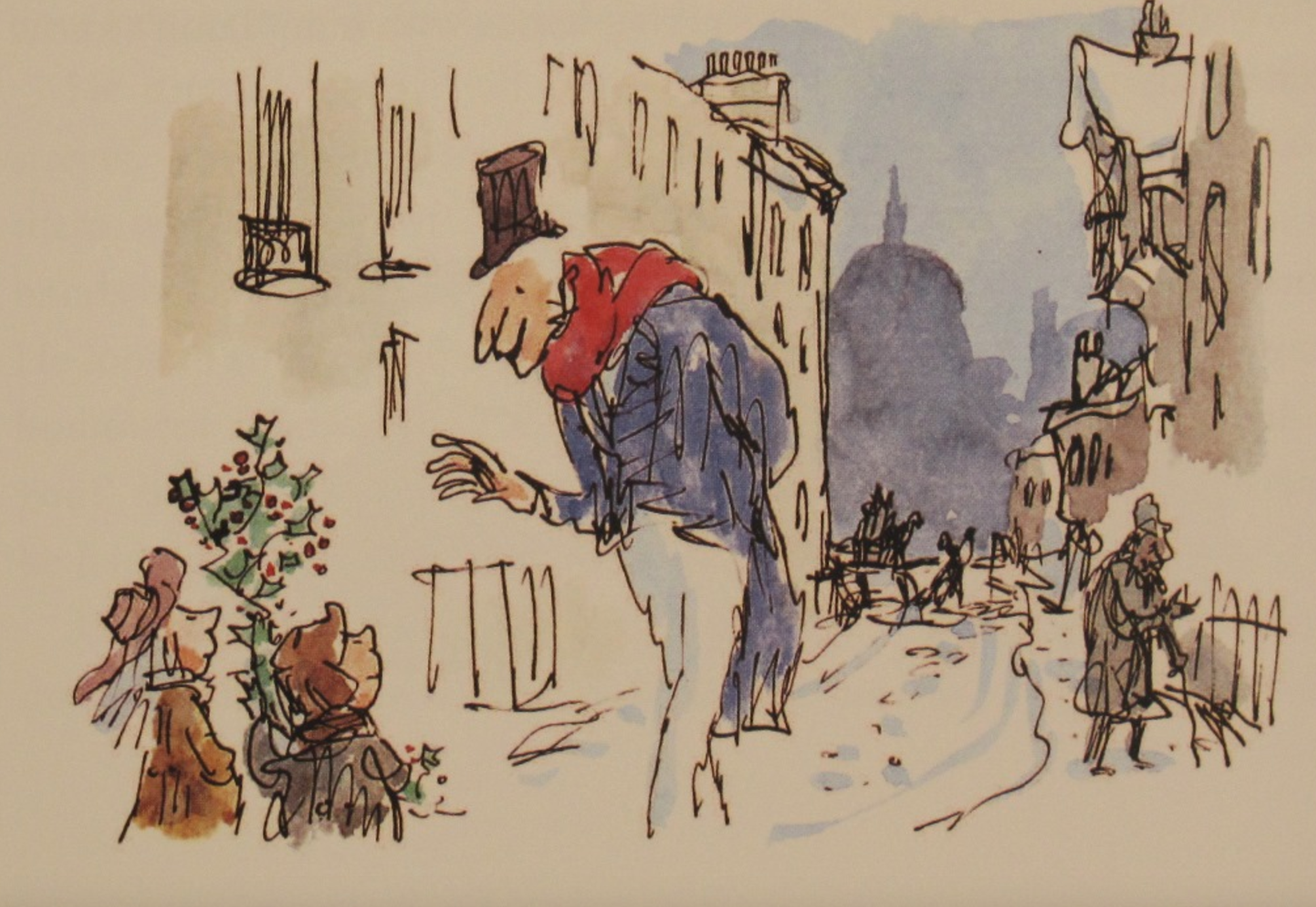
“He went to the church, and walked about the streets, and watched the people hurrying to and for, and patted the children on the head, and questioned beggars, and looked down into the kitchens of homes, and up to the windows, and found that everything could yield him pleasure. He had never dreamed of any walk, that anything, could give him so much happiness.”

–Charles Dickens, A Christmas Carol, 1843

So much happiness!

The drawing is by Quentin Blake (b. 1932), illustrator, Quentin Blake’s A Christmas Carol, 1995

“The wind rises… We must try to live!”*

by chuckofish

Today we toast the great, but under-appreciated, writer Conrad Richter, who died on this day in 1968. Isaac Bashevis Singer wrote, “There are in the literature of the world few works of historical fiction that make the reader feel that the writer must have been a witness to what he describes; he was actually there and came back – a transmigrated soul – to tell a story. The Awakening Land is such a work… it would be a great novel in any literature.”

I would heartily concur. Richter wrote short stories and 15 novels. His novel The Town, the last story of his trilogy The Awakening Land about the Ohio frontier, won the 1951 Pulitzer Prize for Fiction. His novel The Waters of Kronos won the 1961 National Book Award for Fiction.

A strange, uneasy feeling ran over him. If he had been wrong about his mother in this, might he by any chance have been wrong in other things about her also? Could it be even faintly possible that the children of pioneers like himself, born under more benign conditions than their parents, hated them because they themselves were weaker, resented it when their parents expected them to be strong, and so invented all kinds of intricate reasoning to prove that their parents were tyrannical and cruel, their beliefs false and obsolete, and their accomplishments trifling? Never had his mother said that. But once long ago he had heard her mention, not in as many words, that the people were too weak to follow God today, that in the Bible God made strong demands on them for perfection, so the younger generation watered God down, made Him impotent and got up all kinds of reasons why they didn’t have to follow Him but could go along their own way.” (The Town)

Like all great fiction, his words still speak to us, even seventy-five years after being published.

Well, as you know, I am a great re-reader, so I will reward myself with some Conrad Richter today.

Yesterday the boy came over and fixed our shutters which have been buffeted around by the wind all year and thus we were beginning to look like that house in the neighborhood that looks like it is decorated for Halloween all year. He also took apart the crib which was taking up a lot of room in our spare bedroom and moved it to the garage. I am so grateful to have adult children who are still speaking to me. This is a blessing not everyone can claim.

So re-read an old book, count your blessings and remember:

The steadfast love of the Lord never ceases;
    his mercies never come to an end;
they are new every morning;
    great is your faithfulness.

(Lamentations 3:22)

*Today is the poet Paul Valéry’s birthday (1871-1945)–“Le vent se lève… il faut tenter de vivre !” Read the whole poem here.

Your word is a lamp unto my feet

by chuckofish

I’m back in the Psalms in my daily Bible reading. Psalm 119 is the longest Psalm and also the longest chapter in the Bible with 176 verses.

Your testimonies are wonderful;
    therefore my soul keeps them.
130 The unfolding of your words gives light;
    it imparts understanding to the simple.
131 I open my mouth and pant,
    because I long for your commandments.
132 Turn to me and be gracious to me,
    as is your way with those who love your name.
133 Keep steady my steps according to your promise,
    and let no iniquity get dominion over me.
134 Redeem me from man’s oppression,
    that I may keep your precepts.
135 Make your face shine upon your servant,
    and teach me your statutes.

(Psalm 119: 129-135)

David Powlison observed that “Psalm 119 is actually not about the topic of getting Scripture into your life. Instead, it is the honest words that erupt when what God says gets into you. It’s not an exhortation to Bible study; it’s an outcry of faith…Psalm 119 is the thoughtful outcry that rises when real life meets real God.

Charles Spurgeon liked this “priceless Psalm” so much that he suggested “we might do well to commit it to memory.” I wish I could, but 176 verses is a lot!

This sacred ode is a little Bible, the Scriptures condensed, a mass of Bibline, Holy Writ rewritten in holy emotions and actions. Blessed are they who can read and understand these saintly aphorisms; they shall find golden apples in this true Hesperides, and come to reckon that this Psalm, like the whole Scripture which it praises, is a pearl island, or, better still, a garden of sweet flowers.

And here’s a sobering thought from Sinclair Ferguson:

An air of invincible energy and cheerfulness

by chuckofish

One more week of August! Signs of fall are everywhere!

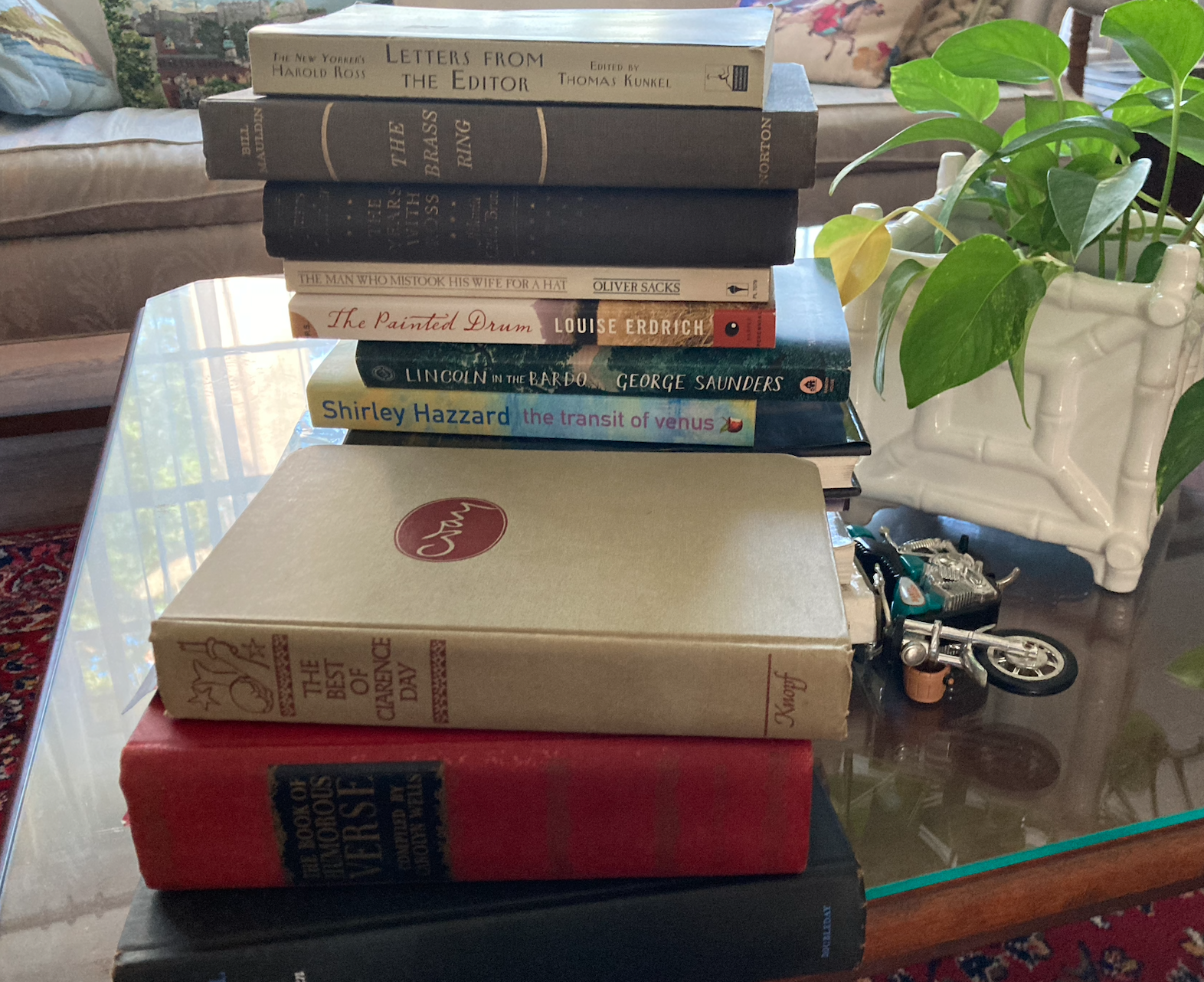
I continue to unbox the books I hurriedly boxed up last Friday…

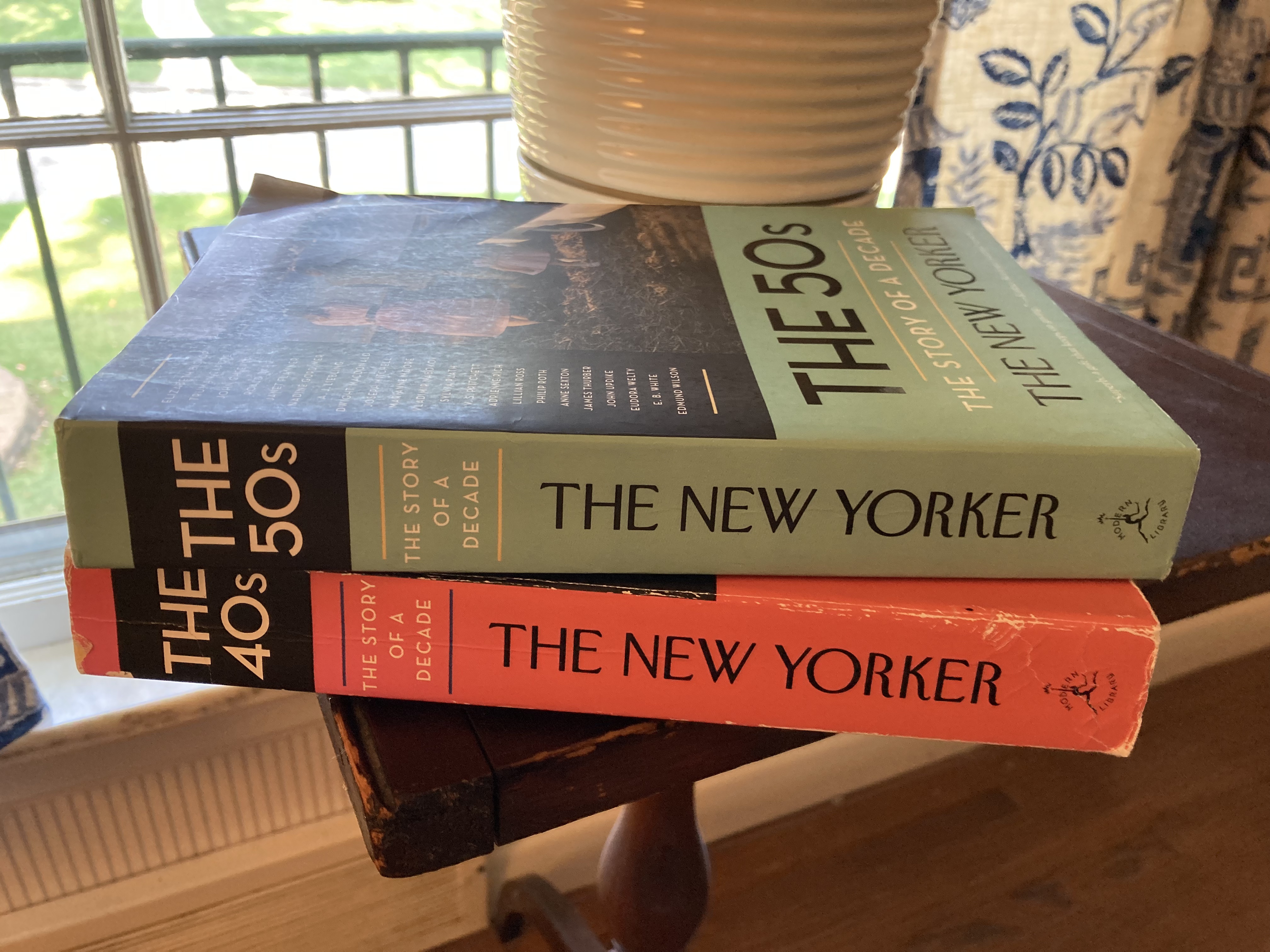
I am especially enjoying these books which include articles and reviews from The New Yorker, back when it was a magazine worth reading…

Take for instance Wolcott Gibbs’ review of Guys and Dolls when it opened in 1950. He starts off with this:

I don’t think I ever had more fun at a musical comedy than I had the other night, when an association of strangely gifted men put on a Broadway epic known as Guys and Dolls. There have been loftier moral and aesthetic experiences, like Show Boat and South Pacific; there have been more enduring musical accomplishments, like Porgy and Bess; there have been occasions when the humor was clearly on a more ambitious level, like Of Thee I Sing; there have been sensational individual performances, like practically anything involving Miss Ethel Merman. There has, however, been nothing I can remember that sustained a higher level of sheer entertainment than the operation at the Forty-sixth Street Theatre.

Well.

There are book reviews, television and movie reviews, poetry, fiction, and longer pieces on “the American Scene”, “Artists and Entertainers”, current events, “Characters”, “Curious Developments”, and a lot more. Certainly enough to keep me busy for some time.

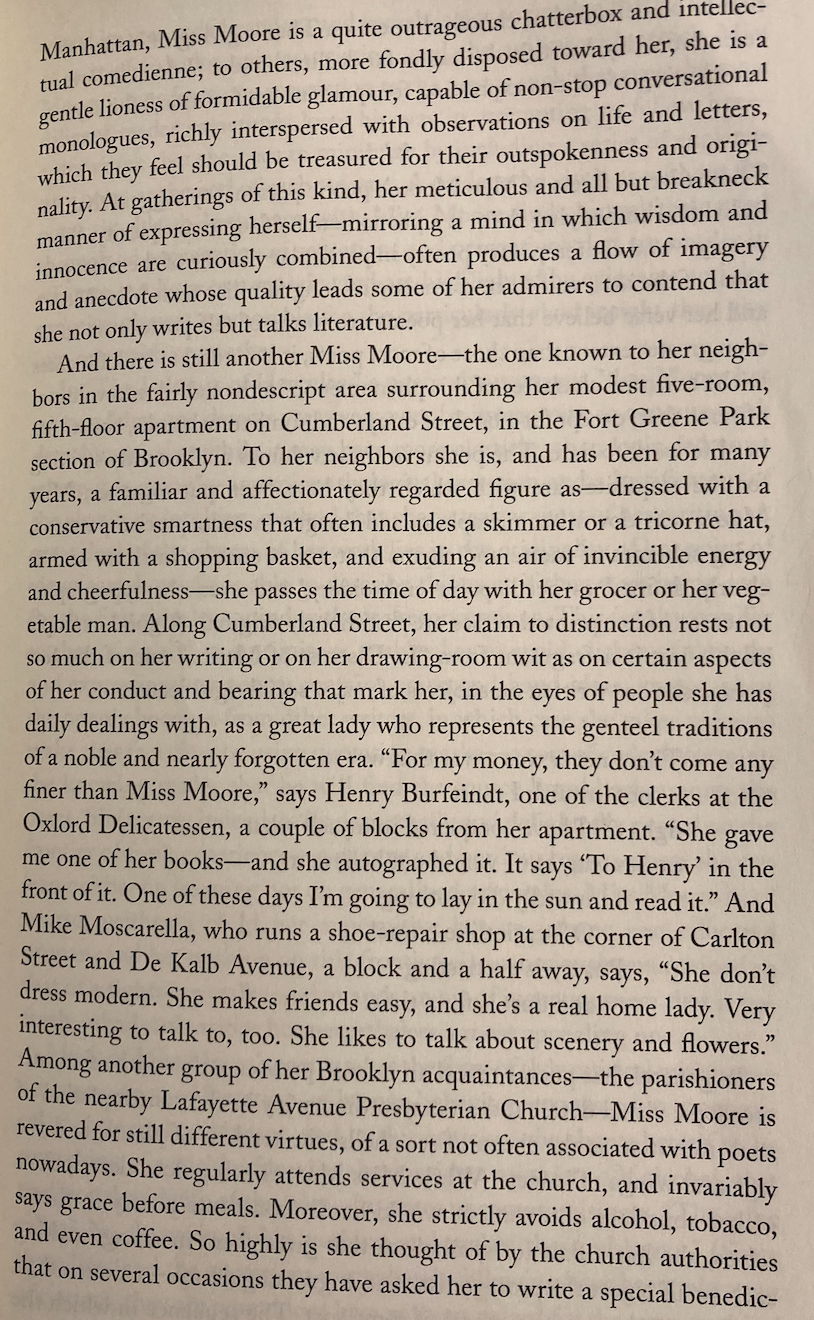
I especially enjoyed a long article by Winthrop Sargeant on the poet Marianne Moore, “Humility, Concentration and Gusto”, in the 2/16/1957 issue. I wrote an article about Moore for the Kirkwood Historical Review last year, but I was unaware of this piece in The New Yorker. It is a wonderful in-depth portrait and it reinforces my impression of her. “To some of the more complicated types who frequent literary teas and cocktail parties in…

…well, you understand. I’m afraid they don’t make ’em like Marianne Moore anymore. More’s the pity. Anyway, I am going to aim at exuding an air of invincible energy and cheerfulness. It won’t be easy.

Enjoy your Tuesday!

What are you reading?

by chuckofish

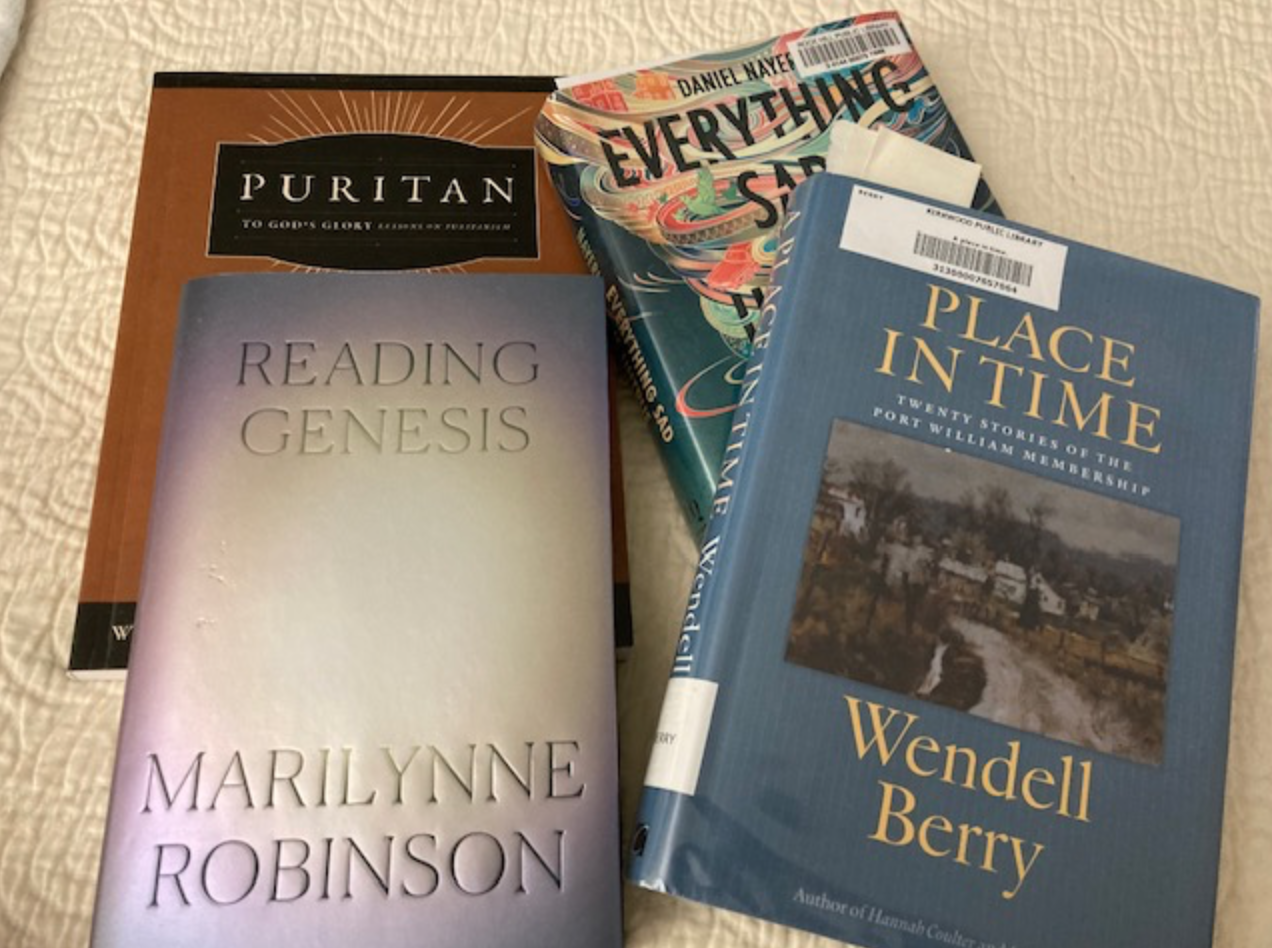
August is trudging along and I am trying to read some real books. I started Everything Sad Is Untrue: (A True Story) by Daniel Nayeri, but it has not grabbed me. I’ll keep going, but I promise nothing. Place In Time by Wendell Berry is really good. I love Wendell Berry. The Marilynne Robinson is also very good and I am reminded that it was my small group reading Genesis thirty-odd years ago that got me started on Bible reading–real Bible reading where you read the whole book, chapter by chapter and verse by verse. Genesis is indeed a great, great book–however you slice it.

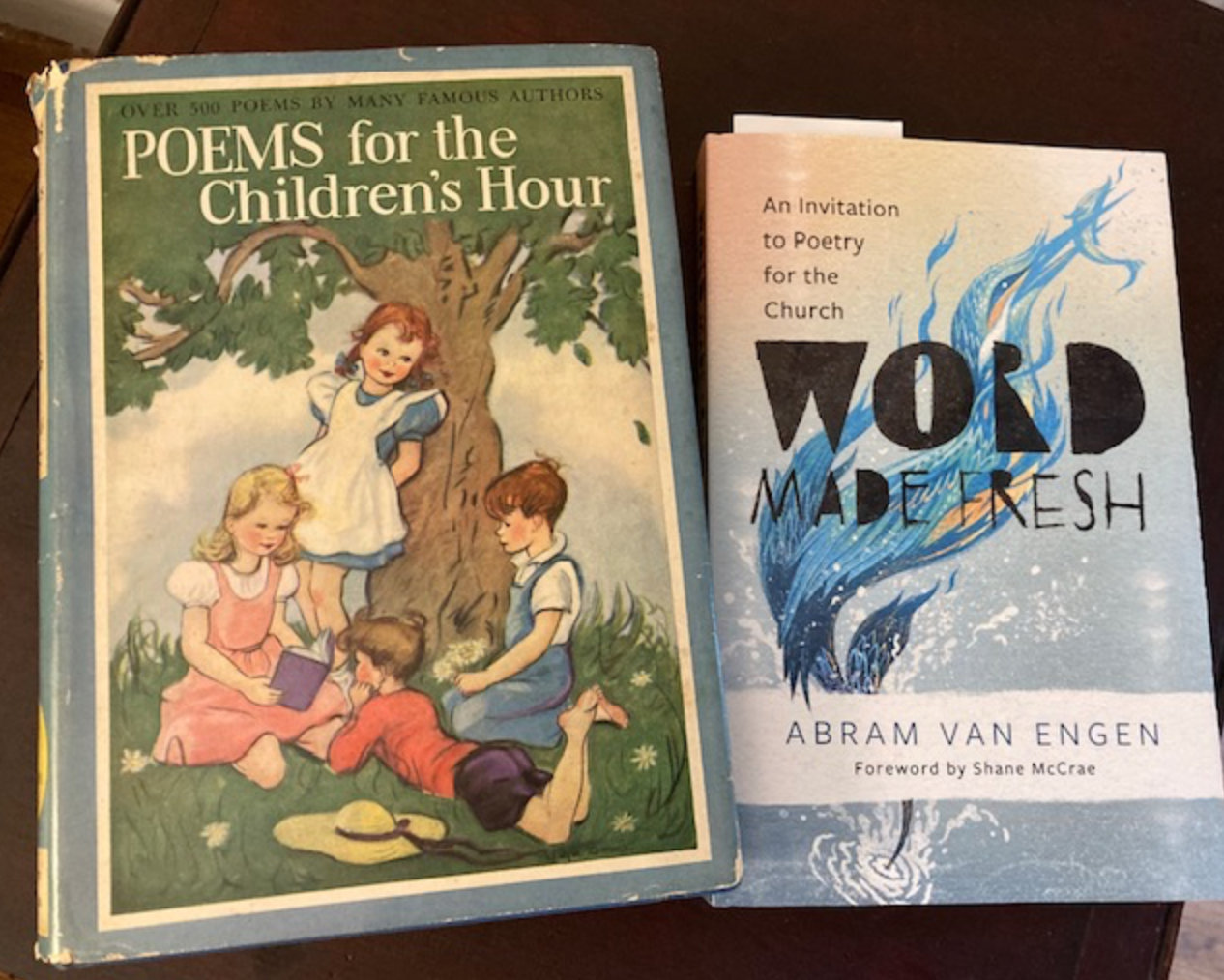
I have also been reading the new Van Engen book where he attempts to “show readers how poetry is for everyone–and how it can reinvigorate our Christian faith.” Poetry is for everyone. I am looking forward to hearing him talk on Friday night at church.

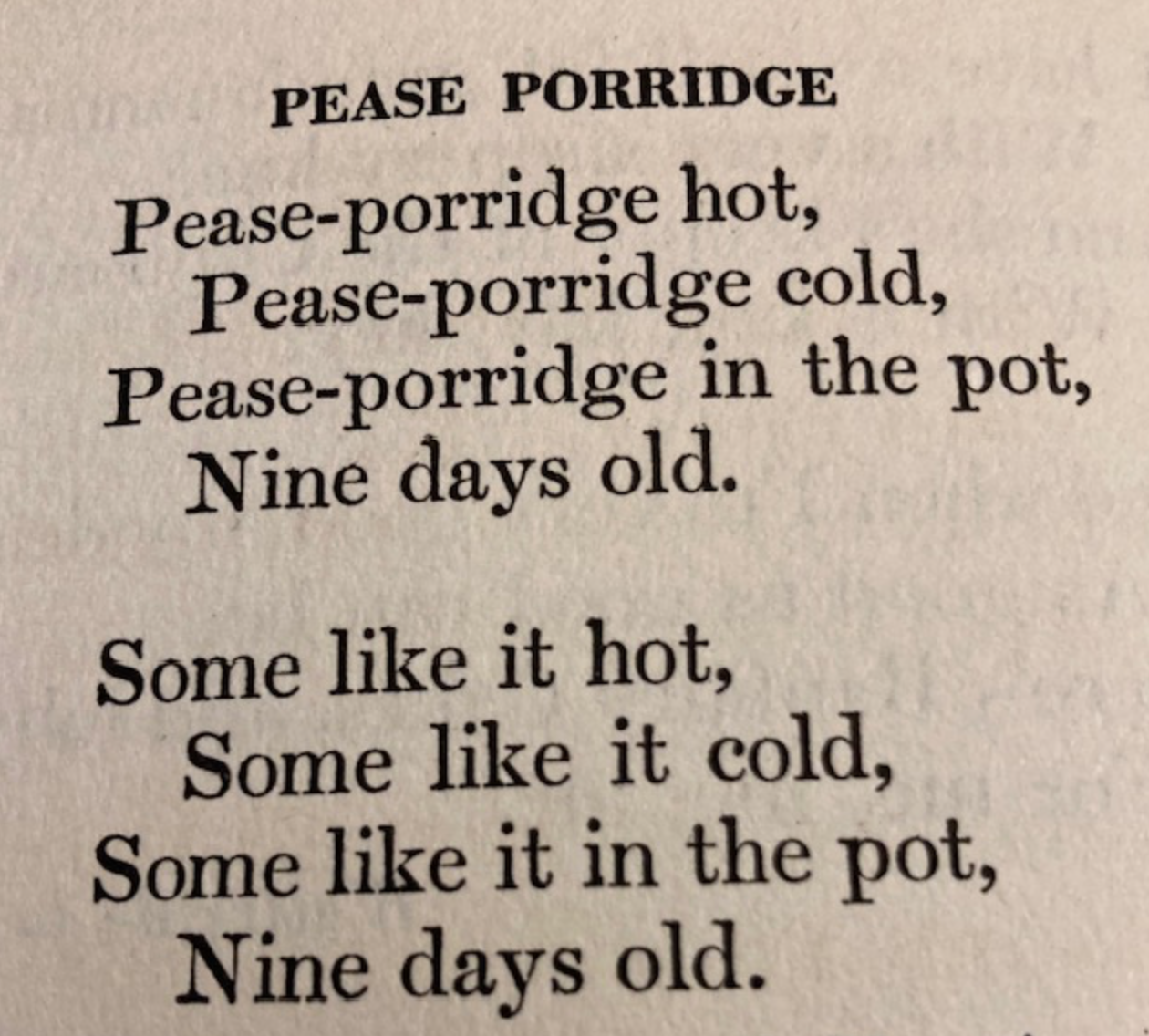
I bought Poems for the Children’s Hour at an estate sale a few weeks ago and am enjoying paging through it. Printed in 1927, it is compiled with an eye for “every child’s experiences in family, nature, play, community, patriotic, and spiritual relationships” throughout the year. Do children still know the old clapping game…

If not, they should. I will pass it along to daughter #2 in the hopes that some day her children will get the reference in that old Billy Wilder film with Jack Lemmon and Marilyn Monroe…

I was reminded on Sunday that my women’s Bible Study starts up again in a few weeks and I will be back to the Gospel of Matthew and Thursday mornings with the ladies and serious prayer time. This will be a good thing and I am looking forward to it.

If you have been asking yourself, ‘What’s wrong with the world?’, leave it to Alistair Begg to answer well.

And BYU runner Kenneth Rooks winning silver in the 3000m steeplechase was one of the most thrilling races ever. Rooks was the only American to make the men’s steeplechase final. He started the race in the middle of the pack of 16 runners but faded as far back as last place before coming on strong in the final two laps. By the time the bell was ringing to signify the start of the final lap, Rooks had surged into the lead. Ultimately, Soufiane El Bakkali, who won the gold at the Tokyo Olympics, was able to catch and pass him to claim the gold medal, but oh my goodness, Rooks was awesome. This is what the Olympics is all about.

Well, keep reading! Keep doing what you’re doing and keep the faith.