dual personalities

Tag: reading

Note to self

by chuckofish

I was casting about recently, as I am wont to do, trying to find something to read. I have plenty of books at home and usually can come up with something rather easily. And I did.

I started re-reading Civil to Strangers by Barbara Pym, which I had read back in the 1980s when I went through a Pym period. She had recently been re-discovered by the English-speaking world after the biographer David Cecil and the poet Philip Larkin both nominated her as the most underrated writer of the century.

Anyway, I thoroughly enjoyed my re-introduction to Pym.
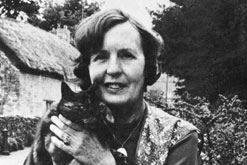
Her books are very English, full of very English characters.

‘I suppose every author gets stuck occasionally,’ said Mrs. Gower.

‘The inspiration flows less easily,’ interposed Mrs. Wilmot, thinking that it was a more suitable phrase.

Cassandra smiled at both of them. ‘That’s just it,’ she said, making each woman feel that she had said exactly the right thing. ‘It’s so nice of you to ask after Adam’s book,’ she said, turning to Janie. ‘People are so kind,’ she added vaguely, almost as if her husband were an invalid who needed sympathetic enquiries.

I’m sure you know what I mean. Alexander McCall Smith even likens her to Jane Austen: “Like Jane Austen, Pym painted her pictures on a small square of ivory, and covered much the same territory as did her better-known predecessor: the details of smallish lives led to places that could only be in England. Neither used a megaphone; neither said much about the great issues of their time.”

So I have ordered Excellent Women, her most well-known novel, from Amazon and am eagerly awaiting its arrival.

‘I wonder, when you are working here, have you ever given a thought to all those who have died in Bodley’s Library, or as a result of working there?’

Adam was forced to admit that he had not.

‘You should, you know, it is quite an education.’

‘It would surely do one more good to concentrate on one’s work,’ said Adam austerely.

‘That is my work,’ said the clergyman simply. ’I am writing a thesis on that subject for the degree of Bachelor of Letters.’

Adam said nothing, but looked at him in some surprise.

‘Since my wife died,’ said the clergyman, ‘I have thought much of death. And your wife?’ He looked suddenly at Adam. ’You have a wife?’

‘She is not with me here,’ said Adam, hypnotised by the old man.

‘No, she is not with you here. But,’ his voice rose, ‘you must believe that you will meet again, that she will be waiting for you, in that other life, perhaps?’

‘She is in Budapest,’ said Adam shortly.

‘Oh, well, that’s another pair of shoes, isn’t it?’ said the clergyman surprisingly.

— Civil to Strangers

So if you are casting about for something to read, and the thought of the London Olympics ending makes you sad, I suggest you try Barbara Pym. You’ll be glad you did.

Why I love Raymond Chandler

by chuckofish

“So you got yourself in another jam.”

“Oh, you heard about it.”

“Brother I sit here all day on my fanny and I don’t look as if I had a brain in my head. But you’d be surprised what I hear…”

(The Big Sleep)

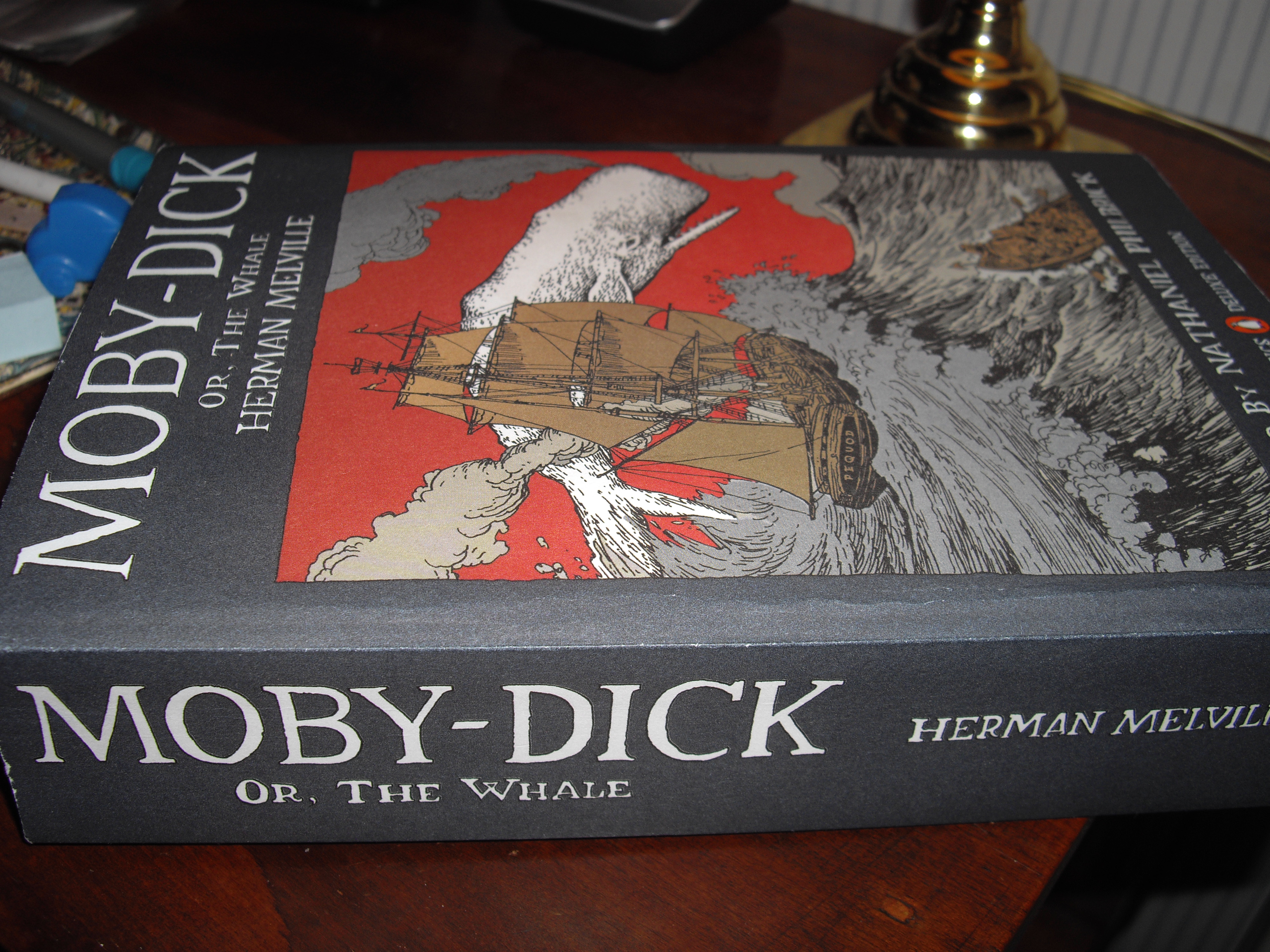
BTW, I heard from a couple of people at the wedding festivities that they were reading Moby Dick after reading our blog. Also someone told me she had gone out and bought Matterhorn and read it after reading about it on the blog. This warms my heart. Keep up the good work, readers! And let us know what you are reading.

Odds and ends and St. Elmo’s Fire

by chuckofish

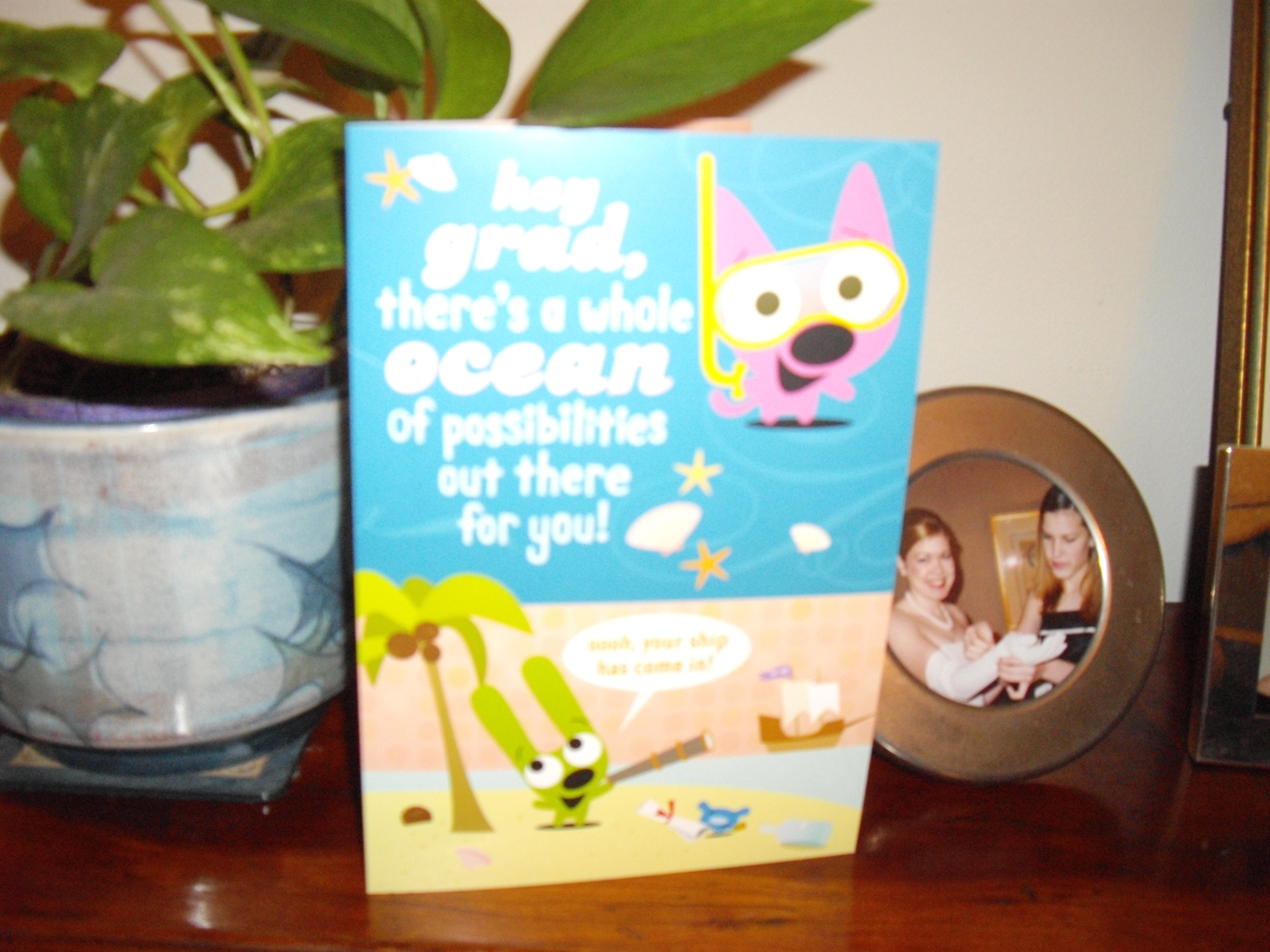
It was a big weekend. Daughter #2, as you know, graduated.

Hoops and YoYo talking card

I bought this vintage 1970s needlepoint pillow at an estate sale.

And I finished Moby-Dick.

“One often hears of writers that rise and swell with their subject, though it may seem but an ordinary one. How, then, with me, writing of this Leviathan? Unconsciously my chirography expands into placard capitals. Give me a condor’s quill! Give me Vesuvius’ crater for an inkstand! Friends, hold my arms! For in the mere act of penning my thoughts of this Leviathan, they weary me, and make me faint with their outreaching comprehensiveness of sweep, as if to include the whole circle of the sciences, and all the generations of whales, and men, and mastodons, past, present, and to come, with all the revolving panoramas of empire on earth, and throughout the whole universe, not excluding its suburbs. Such, and so magnifying, is the virtue of a large and liberal theme! We expand to its bulk. To produce a mighty book, you must choose a mighty theme. No great and enduring volume can ever be written on the flea, though many there be who have tried it.” (The Fossil Whale, chapter 104)

A mighty book indeed! You’ll hear more about this book in the days to come. If you are looking for something to read, I can make no stronger a recommendation–read this book!

The art of (not) mincing words

by chuckofish

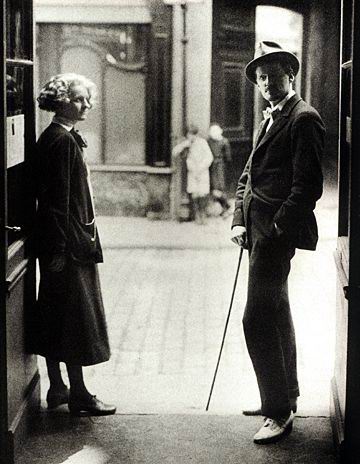
Sylvia Beach, American ex-patriot, minister’s daughter and owner of “Shakespeare and Company”, a bookstore in Paris, decided to rescue Ulysses which had been banned in English-speaking countries, by publishing it herself in France. A prospectus was printed announcing that Ulysses by James Joyce would be published “complete as written” by Shakespeare and Company Paris, in the autumn of 1921. The edition was to be limited to 1000 copies. On the back of the prospectus was a blank form to be filled with the subscriber’s name and his choice of the kind of copy he wanted (there were 3 choices).

Sylvia sent a prospectus to George Bernard Shaw, even though Joyce said he would never subscribe. They made a bet. She received the following reply:

Dear Madam,

I have read fragments of Ulysses in the serial form. It is a revolting record of a disgusting phase of civilization, but it is a truthful one; and I should like to put a cordon around Dublin, round up every male person in it between the ages of 15 and 30; force them to read all the foul mouthed, foul minded derision and obscenity. To you possibly it may appeal as art; you are probably (you see I don’t know you) a young barbarian beglamoured by the excitements and enthusiasms that art stirs up in passionate material; but to me it is all hideously real: I have walked those streets and know those shops and have heard and taken part in those conversations. I escaped from them to England at the age of twenty; and forty years later have learnt from the books of Mr. Joyce that Dublin is still what it was, and young men are still drivelling in slack-jawed blackguardism just as they were in 1870. It is, however, some consolation to find that at last somebody has felt deeply enough about it to face the horror of writing it all down and using his literary genius to force people to face it. In Ireland they try to make a cat cleanly by rubbing its face in its own filth. Mr. Joyce has tried the same treatment on the human subject. I hope it may prove successful.

…I must add, as the prospectus implies an invitation to purchase, that I am an elderly Irish gentleman, and if you imagine that any Irishman, much less an elderly one, would pay 150 francs for such a book, you know little of my countryman.

Faithfully,

G. Bernard Shaw

Sylvia was amused by being called “A young barbarian beglamoured”, but she lost the bet all right.

Happy 401st birthday

by chuckofish

…to the King James Version of the Bible. Time flies, doesn’t it? In 1611 the King James Bible was published for the first time in London, England, by printer Robert Barker. It molded the English language, “buttressed by ‘the powers that be’–one of its famous phrases–and yet enshrined a gospel of individual freedom. No other book has given more to the English-speaking world.”

Phrases that originated in the KJV:

From time to time
The root of the matter
As a lamb to the slaughter
Stand in awe
Turned the world upside down
To every thing there is a season
Unto the pure all things are pure
A thorn in the flesh
A still small voice
Suffer the little children
Pour out your heart
No small stir
Know for a certainty
The skin of my teeth
Fell flat on his face
Set thine house in order

(Thank you to the National Geographic, December 2011, for this information)

Let’s all take a break today and read a chapter from the KJV. Here’s one to start with (I Corinthians 13):

1Though I speak with the tongues of men and of angels, and have not charity, I am become as sounding brass, or a tinkling cymbal.

2And though I have the gift of prophecy, and understand all mysteries, and all knowledge; and though I have all faith, so that I could remove mountains, and have not charity, I am nothing.

3And though I bestow all my goods to feed the poor, and though I give my body to be burned, and have not charity, it profiteth me nothing.

4Charity suffereth long, and is kind; charity envieth not; charity vaunteth not itself, is not puffed up,

5Doth not behave itself unseemly, seeketh not her own, is not easily provoked, thinketh no evil;

6Rejoiceth not in iniquity, but rejoiceth in the truth;

7Beareth all things, believeth all things, hopeth all things, endureth all things.

8Charity never faileth: but whether there be prophecies, they shall fail; whether there be tongues, they shall cease; whether there be knowledge, it shall vanish away.

9For we know in part, and we prophesy in part.

10But when that which is perfect is come, then that which is in part shall be done away.

11When I was a child, I spake as a child, I understood as a child, I thought as a child: but when I became a man, I put away childish things.

12For now we see through a glass, darkly; but then face to face: now I know in part; but then shall I know even as also I am known.

13And now abideth faith, hope, charity, these three; but the greatest of these is charity.

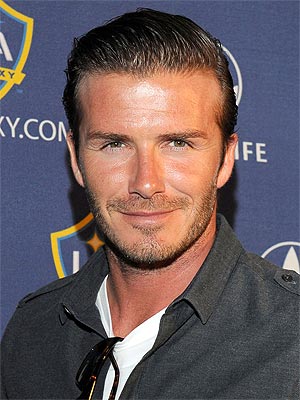
And while we’re at it, Happy birthday, David Beckham!

David Robert Joseph Beckham, OBE (born 2 May 1975) is an English association footballer who plays for the Los Angeles Galaxy. He has played for Manchester United, Preston North End, Real Madrid, Milan, and the England national team for which he holds the appearance record for an outfield player. And, for the record, he is perfect.

What are you reading?

by chuckofish

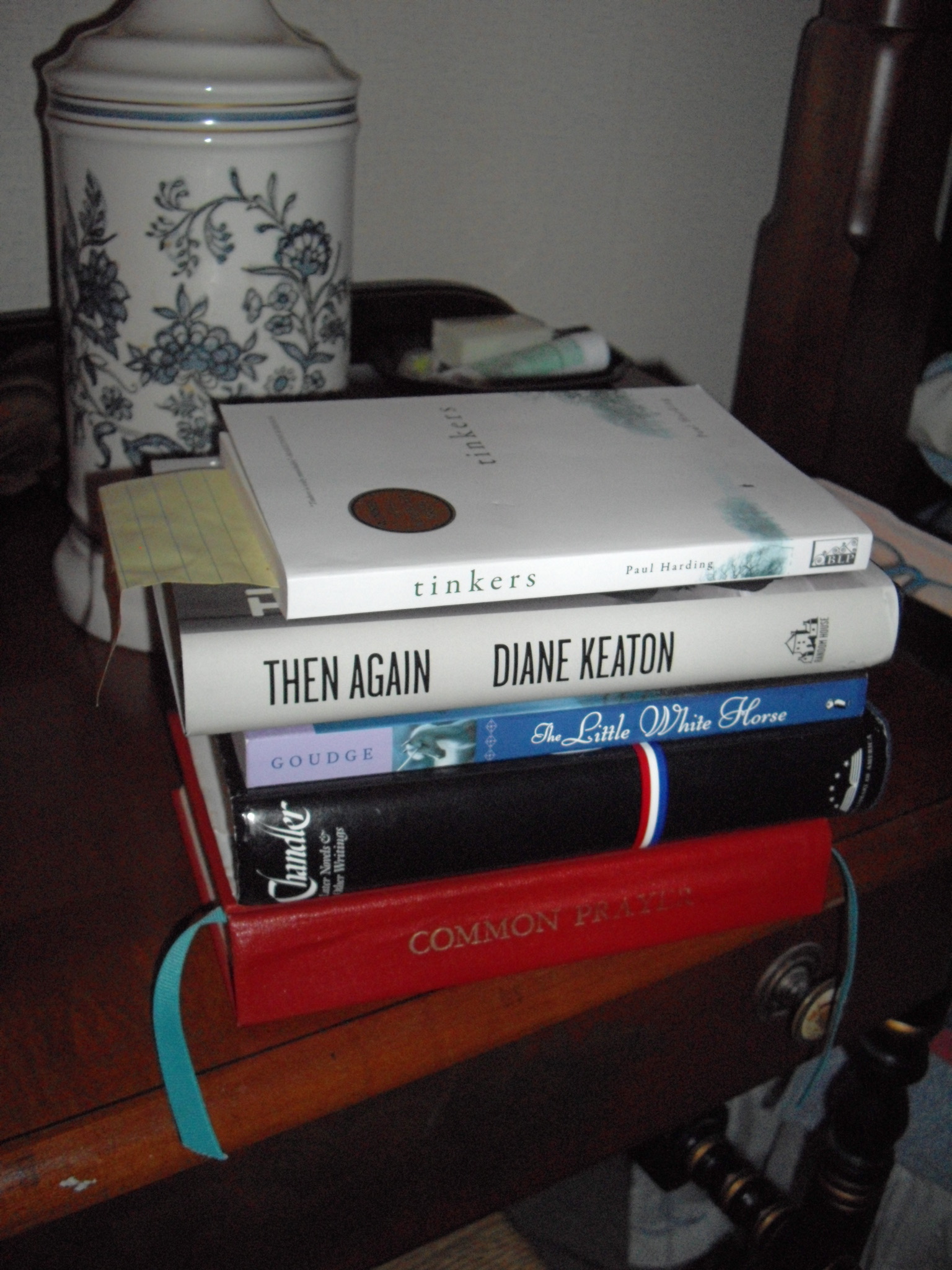
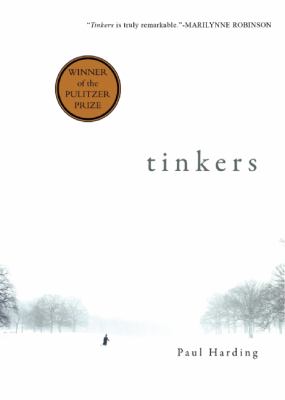
1. I just finished Tinkers by Paul Harding, winner of the Pulitzer Prize, a short, beautiful first novel.

So few books like this are ever written, much less published. It is about an old man on his death-bed remembering his father, who in turn remembers his. A keeper!

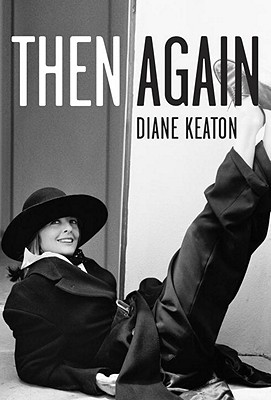
2. Then Again by Diane Keaton–I am currently reading this memoir by actress Diane Keaton.

It is more about her relationship with her mother than a celebrity tell-all, and that is what attracted me to it. She is an unpretentious and intelligent person who was very close to her mother and wrote the book after her death to try to understand her better. “Comparing two women with big dreams who shared many of the same conflicts and also happened to be mother and daughter is partially a story of what’s lost in success contrasted with what’s gained in accepting an ordinary life.” Like me in my youth, Diane has frequently been classified as a “flakey chick”, but still waters run deep as they say.

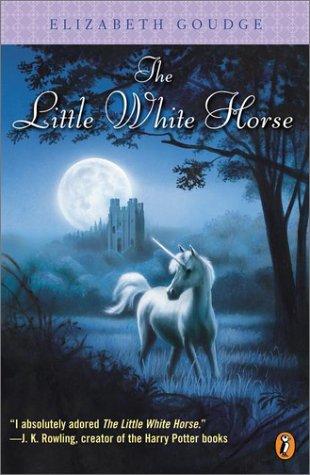
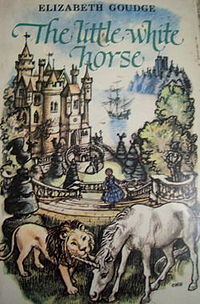
3. The Little White Horse by Elizabeth Goudge–a juvenile novel I had heretofore missed. The cover of the newest edition is terrible, isn’t it?

An older one is much more appealing:

It is purportedly one of J.K. Rowling’s favorites and it is very popular in England. It was even made into a movie starring Ioan Gruffudd, but they changed a lot (playing up some vague romance angles) and angered the book’s fans. It was good and well written and I finished it, but it won’t be added to my shelf of classics.

4. Volume II of the Library of America collected writings of Raymond Chandler.

I periodically re-read his novels, which never disappoint. One can read these books every year, because the plot is forgotten as soon as the book is closed. It is old Philip Marlowe that lingers.

And the prayer book, so the Psalms are always at hand!

What are you reading?

Read anything good lately?

by chuckofish

“I’ve been reading the old books, books that I’ve read before. The first time you read a book, you don’t read it at all carefully; you just read it for the story. You have to keep rereading. Every year or so I read Shakespeare straight through. But then I go to the latest by Agatha Christie or Rex Stout. I read every book of theirs. I do like a book with an elaborate plot. But I haven’t any definite plan of reading. I read almost everything, and I like anything that’s good.”
–P.D. Wodehouse

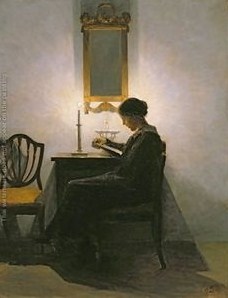
Peter Vilhelm Ilsted, Woman Reading by Candlelight, 1908

I’m with P.D. I’ve never understood people who don’t re-read books. I do it all the time. I like to read Raymond Chandler on a semi-regular basis, and since he only wrote a few books, one must re-read. I also think of books by Jan Karon and Alexander McCall Smith as a sort of comfort food. Nothing calms the soul like a visit to Mitford or Botswana. This past summer I re-read a lot of Eudora Welty. And, of course, there’s J.D. Salinger. His oeuvre is small, but every once in awhile a new gem is unearthed. I found a short story of his in a copy of The Best Short Stories of the Saturday Evening Post–wow! And sometimes when we re-read a book that we read many years ago at a spectacularly younger age, we discover a whole new book. This was the case when I recently read Ivanhoe by Sir Walter Scott. What a great book! (Sometimes, it must be noted, the opposite is true–when a much-loved book doesn’t quite measure up on the second go-round.)

The best re-reading is scripture. Over and over until it enters this dullard’s brain and lives there. Like Sky Masterson says: “Don’t tangle with me on the Good Book. I must’ve read it through at least a dozen times.”

Saturday hero

by chuckofish

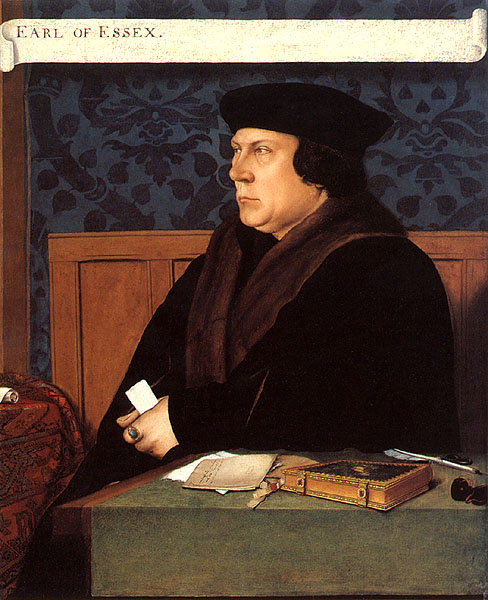
Thomas Cromwell by Hans Holbein

My newest hero is Thomas Cromwell, thanks to Hilary Mantel’s wonderful book, Wolf Hall. Here’s one of my favorite quotes from it:

“It’s easy to employ some child who will total the columns and push them under your nose, get them initialed and then lock them in a chest. But what’s the point of that? The page of an accounts book is there for your use, like a love poem. It’s not there for you to nod and then dismiss it; it’s there to open your heart to possibility. It’s like the scriptures: it’s there for you to think about, and initiate action. Love your neighbor. Study the market. Increase the spread of benevolence. Bring in better figures next year.”

Really, that’s the main thing, isn’t it? Engage your brain and try to improve things for all in your care.