dual personalities

Tag: quotes

Where are you, my little object of art?

by chuckofish

“She’s beautiful,’ he murmured.
‘She’s a metre across the hips, easily,’ said Julia.
‘That is her style of beauty,’ said Winston.”

― George Orwell, 1984

fatlady

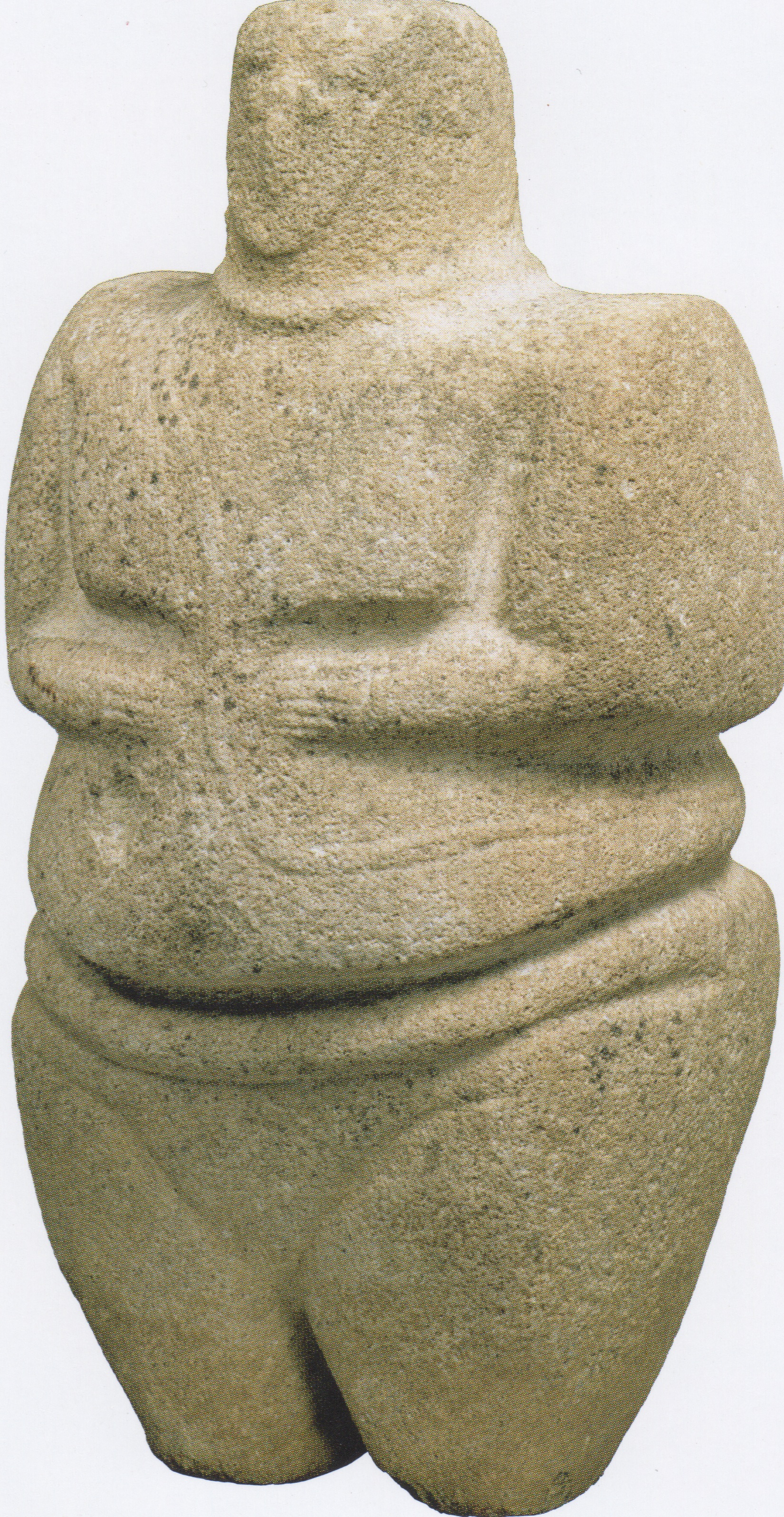
I have a Metropolitan Museum of Art day-by-day calendar in my bathroom. Every day there is a new art work to view. This piece of ancient Arabian sculpture appeared the other day and I couldn’t help thinking that she looks familiar. Oh, yes, I see her in the mirror every day!

Well, all I have to say is that I totally agree with George Eliot: “It’s an uncommonly dangerous thing to be left without any padding against the shafts of disease.” (Middlemarch: A Study of Provincial Life)

I learn something new every day

by chuckofish

“Never grow a wishbone, Daughter, where your backbone ought to be.”

–Clementine Paddleford

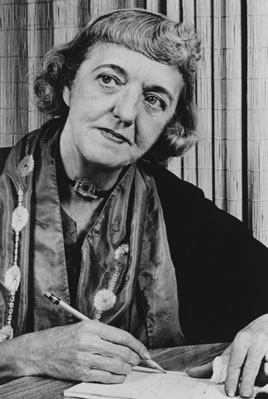
I read this quote on a blog (of course) and then looked up Clementine Paddleford on Wikipedia to see if she was a real person. Well, yes, she was a real person.

food-editor

Clementine Paddleford (September 27, 1898 – November 13, 1967) was an American food writer active from the 1920s through the 1960s, writing for several publications, including the New York Herald Tribune, the New York Sun, The New York Telegram, Farm and Fireside, and This Week magazine. She was born in Stockdale, Riley County, Kansas and graduated from Kansas State University in 1921 with a degree in journalism. She then studied at New York University’s school of journalism and lived most of her life in New York City, where she introduced her readers to the global range of food to be found in that city. She was also a pilot, and flew a Piper Cub around the country to report on America’s many regional cuisines.

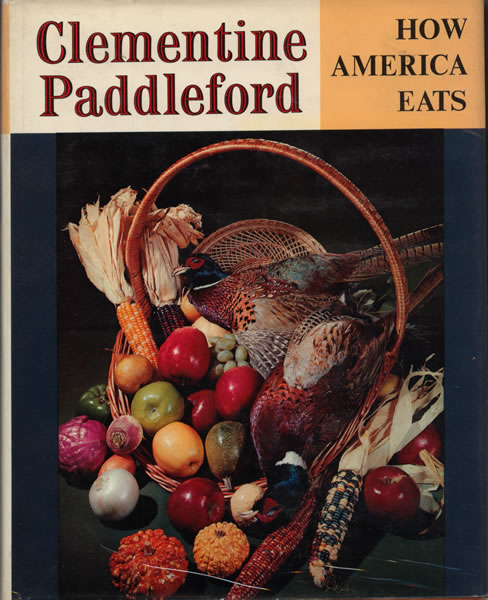
Paddleford’s book How America Eats, published in 1960, was the culmination of her career.

how-america-eats

It was eclipsed, however by The New York Times Cookbook by Craig Claiborne, published in 1961, and Mastering the Art of French Cooking by Mesdames Beck, Bertholle and Julia Child the same year.

The afore-quoted admonition, although attributed to Clementine Paddleford, actually was something her mother used to say to her (according to her memoir called “A Flower for My Mother.”) I’m sure they both were fascinating women.

You can read all about Clementine here in The New York Times. I must say I was glad to discover her.

The world is more than we know.

Speaking of teacups

by chuckofish

cups

“Your great-great-great-great-grandmother had these cups, when she was married,” said Hepzibah to Phoebe. “She was a Davenport, of a good family. They were almost the first teacups ever seen in the colony; and if one of them were to be broken, my heart would break with it. But it is nonsense to speak so about a brittle teacup, when I remember what my heart has gone through without breaking.”

I had no plans for the 4th of July, so I finished reading The House of Seven Gables by Nathaniel Hawthorne, which I had started (prompted by daughter #2) while on my vacation in Florida. What a great way to spend a good chunk of a day off! It is, indeed, a luxury to be able to read, uninterrupted, for any length of time during the daytime hours when one is a working person who normally crawls into bed exhausted quite early.

I must say, I agree with daughter #2 that old Nathaniel Hawthorne is wonderful and should not be relegated to the reading lists of bored high schoolers.

Published in 1851, the same year as Moby-Dick, The House of Seven Gables explores themes of guilt, retribution, and atonement in a New England family and includes supernatural aspects and witchcraft.

dean-and-sam

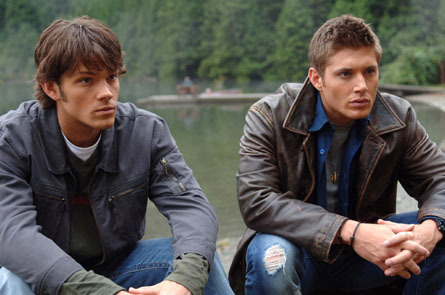
I wonder what Dean and Sam would think of it?

But I digress…The story was inspired by a gabled house in Salem belonging to Hawthorne’s cousin Susanna Ingersoll and by those of Hawthorne’s ancestors who played a part in the Salem Witch Trials of 1692. Since we are descendants of one of the teenage girls who was a chief accuser in those same trials (Ann Putnam), I can relate.

It is extremely readable and modern in its approach and organization. I was impressed and will read more Hawthorne! How did I miss him in all my years of reading?

books2

Now I am going to read Fred Vargas’ newest Commissaire Adamsberg mystery The Ghost Riders of Ordebec. If you are not acquainted with Fred Vargas, you should be. I am not a big fan of mysteries, but I like her very much.

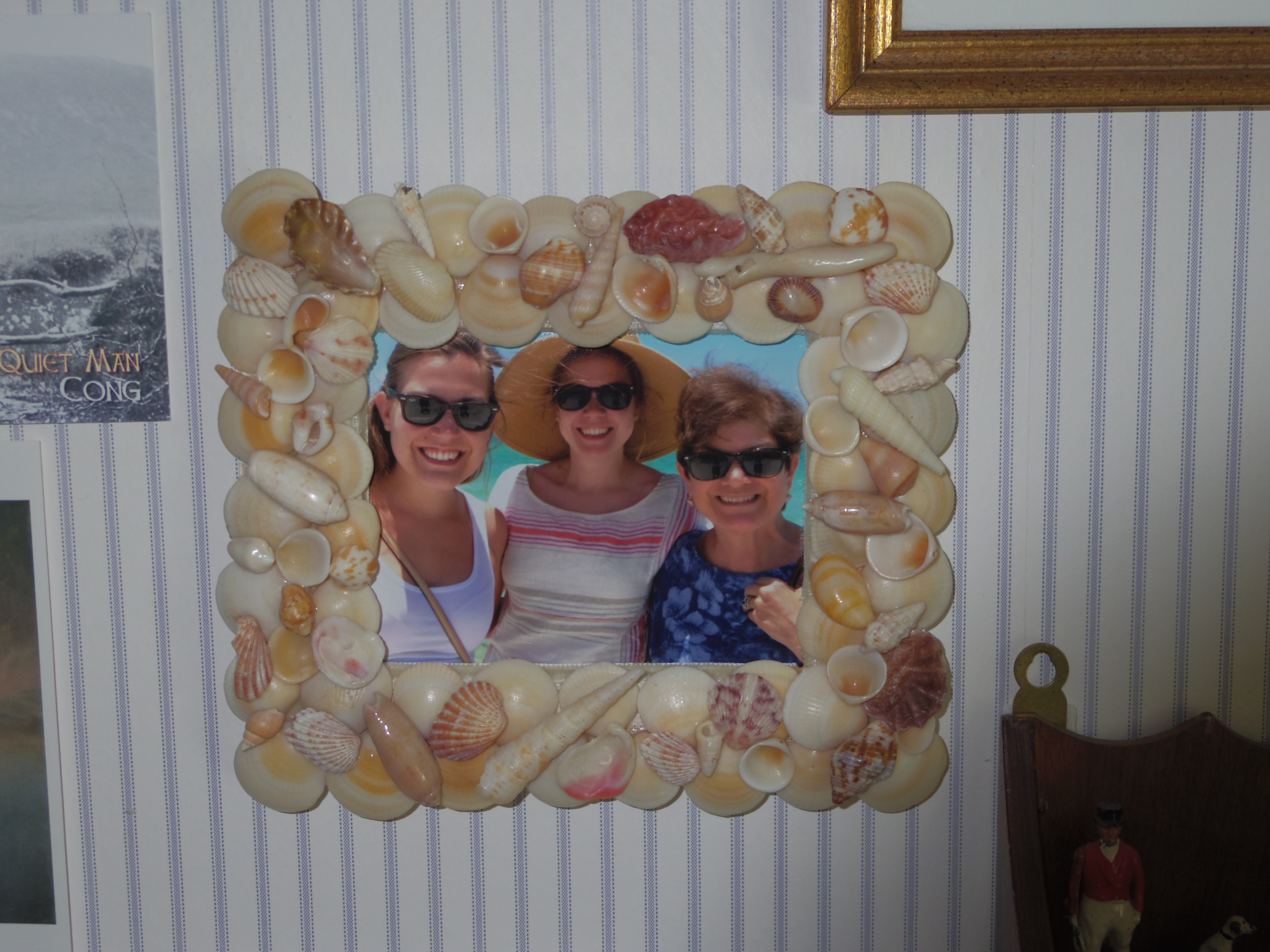
I also framed a Florida memory in an estate sale frame

IMGPfloridapic0081

and hung it on my office wall.

wallpics2

Well, it’s the little things in life that make us the most happy, right? That and fireworks on the levee!

Randys-Fireworks

I am an American

by chuckofish

American-revolution

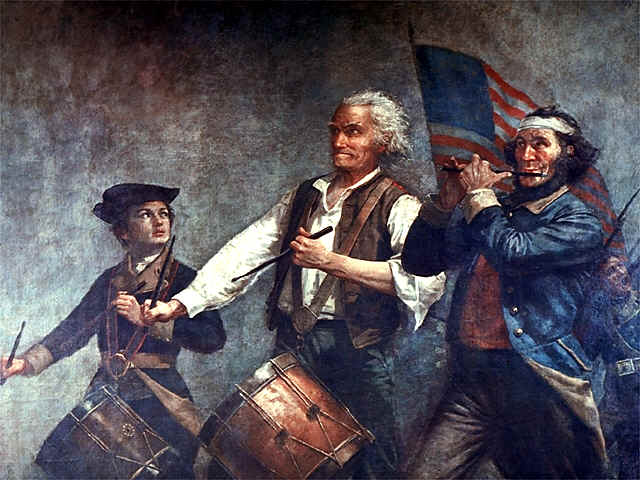
“I am an American; free born and free bred, where I acknowledge no man as my superior, except for his own worth, or as my inferior, except for his own demerit.”

― Theodore Roosevelt

Have a great 4th of July–celebrate responsibly! Read some Emerson!

Concord Hymn

By the rude bridge that arched the flood,
Their flag to April’s breeze unfurled,
Here once the embattled farmers stood,
And fired the shot heard round the world.

The foe long since in silence slept;
Alike the conqueror silent sleeps;
And Time the ruined bridge has swept
Down the dark stream which seaward creeps.

On this green bank, by this soft stream,
We set to-day a votive stone;
That memory may their deed redeem,
When, like our sires, our sons are gone.

Spirit, that made those heroes dare,
To die, and leave their children free,
Bid Time and Nature gently spare
The shaft we raise to them and thee.

–Ralph Waldo Emerson

lexington-91

And last but not least…Happy Birthday to our dear brother!

sibs1967

Long remember

by chuckofish

This week marks the 150th anniversary (July 1–3, 1863) of the battle of Gettysburg in Pennsylvania. The battle involved the largest number of casualties of the entire war (Antietam had the most in a single day) and is often described as the war’s turning point.

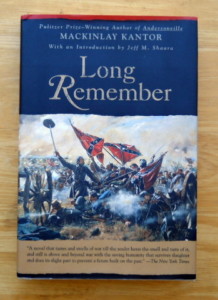
Last year I read Long Remember written in 1934 by Mackinlay Kantor.
long remember

It is considered the first “realistic” novel about the Civil War. I guess that means it does not glorify it or romanticize it in any way. It deals with the residents of the town of Gettysburg and how the battle affected them.

“She had never thought that war could be like this, with such a desperate casualness about it. War was fought in fields: there was the field of Shiloh, the field of Antietam, the field of Fredericksburg. She knew; she had read the papers. The papers mentioned nothing of people running across back yards and knocking down the clothes-props as they went.”

I liked it very much and highly recommend it.

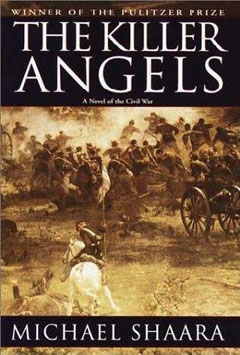
I have also read The Killer Angels by Michael Shaara, the Pulitzer Prize-winning novel of 1975.
Killer Angels

This novel introduces you to all the main players on both sides in the battle of Gettysburg. My favorite, of course, is Joshua Lawrence Chamberlain, who, though we share a surname, I cannot claim as a relative.

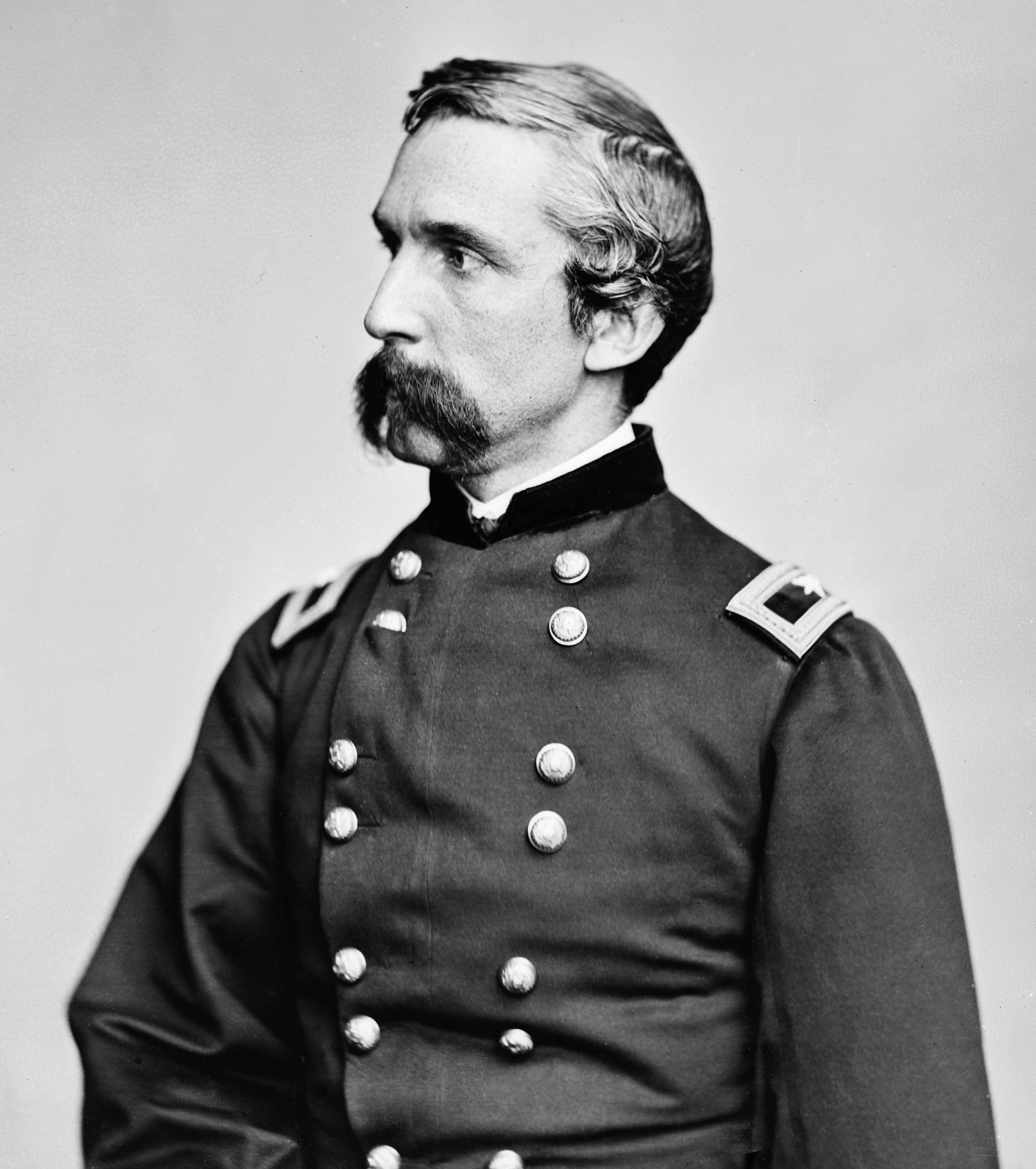
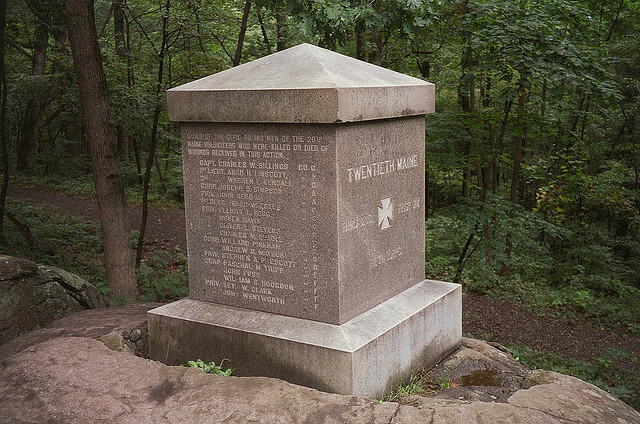
Col. Joshua Chamberlain of the 20th Maine Infantry, awarded the Medal of Honor, Governor of Maine and President of Bowdoin College

Col. Joshua Chamberlain of the 20th Maine Infantry, awarded the Medal of Honor, Governor of Maine and President of Bowdoin College

Col. Chamberlain was, of course, a Chamberlain from Maine, while our Chamberlins (sans “a”) hailed from Vermont. You will recall that my dual personality blogged about our other non-relative at Gettysburg, Waldo Farrar here.

They broke the mold when they made old Joshua Chamberlin. A devout Congregationalist and choir member, he was a college professor when the Civil War began. Chamberlain believed the Union needed to be supported by “all those willing” against the Confederacy. Of his desire to serve in the War he wrote to Maine’s Governor Israel Washburn, Jr., “I fear, this war, so costly of blood and treasure, will not cease until men of the North are willing to leave good positions, and sacrifice the dearest personal interests, to rescue our country from desolation, and defend the national existence against treachery.” Chamberlain put his money where his mouth was and joined up.

For his “daring heroism and great tenacity in holding his position on the Little Round Top against repeated assaults, and carrying the advance position on the Great Round Top”, Chamberlain was awarded the Medal of Honor.

In early 1865, Chamberlain was given command of the 1st Brigade of the 1st Division of V Corps, and he continued to act with courage and resolve. On March 29, 1865, his brigade participated in a major skirmish on the Quaker Road during Grant’s final advance that would finish the war. Despite losses, another wound (in the left arm and chest that almost caused amputation), and nearly being captured, Chamberlain was successful and brevetted to the rank of major general by President Abraham Lincoln. Chamberlain gained the name “Bloody Chamberlain” at Quaker Road. Chamberlain kept a bible and framed picture of his wife in his left front “chest” pocket. A confederate shot at Chamberlain. The bullet went through his horse’s neck, hit the picture frame, entered under Chamberlain’s skin in the front of his chest, traveled around his body under the skin along the rib, and exited his back. To all observers Union and Confederate, it appeared that he was shot through his chest. He continued to encourage his men to attack. All sides cheered his valiant courage, and the union assault was successful.

In all, Chamberlain served in 20 battles and numerous skirmishes, was cited for bravery four times, had six horses shot from under him, and was wounded six times.

Chamberlain left the army soon after the war ended, going back to his home state of Maine. Due to his immense popularity he served as Governor of Maine for four one-year terms after he won election as a Republican. His victory in 1866 set the record for the most votes and the highest percentage for any Maine governor by that time. He would break his own record in 1868.

After leaving political office, he returned to Bowdoin College. In 1871, he was appointed president of Bowdoin and remained in that position until 1883, when he was forced to resign due to ill health from his war wounds.

Chamberlain died of his lingering wartime wounds in 1914 at Portland, Maine, age 85, and is buried in Pine Grove Cemetery in Brunswick, Maine. He was the last Civil War veteran to die as a result of wounds from the war.

Well, I seem to have gotten off the subject of Gettysburg here, but Col. Chamberlain has that effect on me. We should all toast Col. Chamberlain tonight and all those brave souls who fought during those bloody July days in Gettysburg. Going to the Gettysburg National Military Park is on my bucket list. One of these days.

20thmaine9402_47bb034d2f_z

“The faith itself was simple; he believed in the dignity of man. His ancestors were Huguenots, refugees of a chained and bloody Europe. He had learned their stories in the cradle. He had grown up believing in America and the individual and it was a stronger faith than his faith in God. This was the land where no man had to bow. In this place at last a man could stand up free of the past, free of tradition and blood ties and the curse of royalty and become what he wished to become. This was the first place on earth where the man mattered more than the state. True freedom had begun here and it would spread eventually over all the earth. But it had begun HERE. The fact of slavery upon this incredibly beautiful new clean earth was appalling, but more even than that was the horror of old Europe, the curse of nobility, which the South was transplanting to new soil. They were forming a new aristocracy, a new breed of glittering men, and Chamberlain had come to crush it. But he was fighting for the dignity of man and in that way he was fighting for himself. If men were equal in America, all the former Poles and English and Czechs and blacks, then they were equal everywhere, and there was really no such thing as foreigner; there were only free men and slaves. And so it was not even patriotism but a new faith. The Frenchman may fight for France, but the American fights for mankind, for freedom; for the people, not the land.”

― Michael Shaara, The Killer Angels
“I shall wear white flannel trousers, and walk upon the beach.” *

by chuckofish

On Saturday I’m flying to Florida to meet up with “my girls” for a week on the beach.

On Tuesday my dual personality will leave for her biennual journey to England to visit her in-laws.

Posting will most probably be intermittent, but don’t worry, we’ll be checking in from time to time. My husband will be loaded down with all manner of laptop, iPad, iPhone, etc. so I will not be cut off from the world. God forbid.

Five years ago in Sanibel

In Sanibel: Team Skinnypants

While we are gone, the boy and his bride will move into their new (old) house. That worked out nicely, right?

*T.S. Eliot, “The Love Song of J. Alfred Prufrock”

You remember…

Shall I part my hair behind? Do I dare to eat a peach?
I shall wear white flannel trousers, and walk upon the beach.
I have heard the mermaids singing, each to each.

I do not think that they will sing to me.

I have seen them riding seaward on the waves
Combing the white hair of the waves blown back
When the wind blows the water white and black.

We have lingered in the chambers of the sea
By sea-girls wreathed with seaweed red and brown
Till human voices wake us, and we drown.

Where are you now?

by chuckofish

Facebook, as you know, is a veritable font of new-agey platitudes and politically-correct advice. Once in a rare while, however, I find something that a friend has posted that makes me sit up and pay attention.

laotzu

Lao Tzu, or Laozi, is traditionally regarded as the author of the Tao Te Ching and as the founder of Taoism. I readily admit I know next to nothing about eastern religions. (If you are interested, you can read about it here.)

Whatever. I just think these particular words are eminently true. It is SO important to live in the day.

Here is what Frederick Buechner says about it:

“Much as we wish, not one of us can bring back yesterday or shape tomorrow. Only today is ours, and it will not be ours for long, and once it is gone it will never in all time be ours again. Thou only knowest what it holds in store for us, yet even we know something of what it will hold. The chance to speak the truth, to show mercy, to ease another’s burden. The chance to resist evil, to remember all the good times and good people of our past, to be brave, to be strong, to be glad.”

― Frederick Buechner, The Hungering Dark

So BE in the present. Or at least try hard. Look around you. Pay attention. Listen. Be brave, be strong, be glad.

Praise the Lord.

Happy Father’s Day

by chuckofish

ward cleaver

“Then came the reflection, how little at any time could a father do for the wellbeing of his children! The fact of their being children implied their need of an all-powerful father: must there not then be such a father? Therewith the truth dawned upon him, that first of truths, which all his church-going and Bible-reading had hitherto failed to disclose, that, for life to be a good thing and worth living, a man must be the child of a perfect father, and know him. In his terrible perturbation about his children, he lifted up his heart—not to the Governor of the world; not to the God of Abraham or Moses; not in the least to the God of the Kirk; least of all to the God of the Shorter Catechism; but to the faithful creator and Father of David Barclay. The aching soul which none but a perfect father could have created capable of deploring its own fatherly imperfection, cried out to the father of fathers on behalf of his children, and as he cried, a peace came stealing over him such as he had never before felt.”

― George MacDonald, Heather and Snow

Happy Fathers Day to all you good fathers out there and grace to you, and peace, from God our Father.

The old rag and bone shop

by chuckofish

Photo of WBY by Lady Ottoline Morrell

Photo of WBY by Lady Ottoline Morrell

In honor of William Butler Yeats’ birthday, here’s a poem for June 13.

“The Circus Animals’ Desertion” (1939)

I
I sought a theme and sought for it in vain,
I sought it daily for six weeks or so.
Maybe at last, being but a broken man,
I must be satisfied with my heart, although
Winter and summer till old age began
My circus animals were all on show,
Those stilted boys, that burnished chariot,
Lion and woman and the Lord knows what.

II
What can I do but enumerate old themes?
First that sea-rider Oisin led by the nose
Through three enchanted islands, allegorical dreams,
Vain gaiety, vain battle, vain repose,
Themes of the embittered heart, or so it seems,
That might adorn old songs or courtly shows;
But what cared I that set him on to ride,
I, starved for the bosom of his faery bride?

And then a counter truth filled out its play,
The Countess Cathleen was the name I gave it:
She, pity-crazed, had given her soul away,
But masterful Heaven had intervened to save it.
I thought my dear must her own soul destroy,
So did fanaticism and hate enslave it,
And this brought forth a dream and soon enough
This dream itself had all my thought and love.

And when the Fool and Blind Man stole the bread
Cuchulain fought the ungovernable sea;
Heart-mysteries there, and yet when all is said
It was the dream itself enchanted me:
Character isolated by a deed
To engross the present and dominate memory.
Players and painted stage took all my love
And not those things that they were emblems of.

III
Those masterful images, because complete
Grew in pure mind, but out of what began?
A mound of refuse, of the sweepings of a street,
Old kettles, old bottles, and a broken can,
Old iron, old bones, old rags, that raving slut
Who keeps the till. Now that my ladder’s gone
I must lie down where all ladders start
In the foul rag-and-bone shop of the heart.

Walter_de_la_Mare,_Bertha_Georgie_Yeats_(née_Hyde-Lees),_William_Butler_Yeats,_unknown_woman_by_Lady_Ottoline_Morrell

Enjoy the day! Clearly WBY knew how to party down.

Mid-week readjustment

by chuckofish

 “Take courage! It is I. Don’t be afraid.”

“Take courage! It is I. Don’t be afraid.”

We tend to think that if Jesus Christ compels us to do something and we are obedient to Him, He will lead us to great success. We should never have the thought that our dreams of success are God’s purpose for us. In fact, His purpose may be exactly the opposite. We have the idea that God is leading us toward a particular end or a desired goal, but He is not. The question of whether or not we arrive at a particular goal is of little importance, and reaching it becomes merely an episode along the way. What we see as only the process of reaching a particular end, God sees as the goal itself.

What is my vision of God’s purpose for me? Whatever it may be, His purpose is for me to depend on Him and on His power now. If I can stay calm, faithful, and unconfused while in the middle of the turmoil of life, the goal of the purpose of God is being accomplished in me. God is not working toward a particular finish–His purpose is the process itself.

–Oswald Chambers, My Utmost for His Highest

*The above illustration is from GodBricks, “Blogging at the intersection between LEGO and religion”.