dual personalities

Tag: quotes

To go with the drift of things

by chuckofish

I had a rather sad weekend, spending a good deal of it thinking about what I had been doing the weekend before when daughter #1 was visiting. I try not to do this, but it is hard.

I watched a depressing movie about Sylvia Plath (played by Gwyneth Paltrow).

And I read some sad poems.

Out through the fields and the woods
And over the walls I have wended;
I have climbed the hills of view
And looked at the world, and descended;
I have come by the highway home,
And lo, it is ended.

The leaves are all dead on the ground,
Save those that the oak is keeping
To ravel them one by one
And let them go scraping and creeping
Out over the crusted snow,
When others are sleeping.

And the dead leaves lie huddled and still,
No longer blown hither and thither;
The last lone aster is gone;
The flowers of the witch hazel wither;
The heart is still aching to seek,
But the feet question ‘Whither?’

Ah, when to the heart of man
Was it ever less than a treason
To go with the drift of things,
To yield with a grace to reason,
And bow and accept the end
Of a love or a season?

― Robert Frost, Reluctance

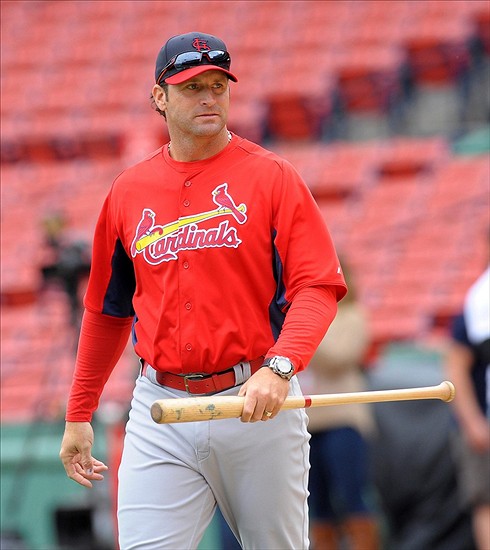
I watched some stressful World Series games. But this guy always cheers me up.

matheny3

I will miss our skipper in the off-season. See, there I go again! Well, onward and upward this week and go Cards!

Friday movie pick: He which hath no stomach to this fight, Let him depart

by chuckofish

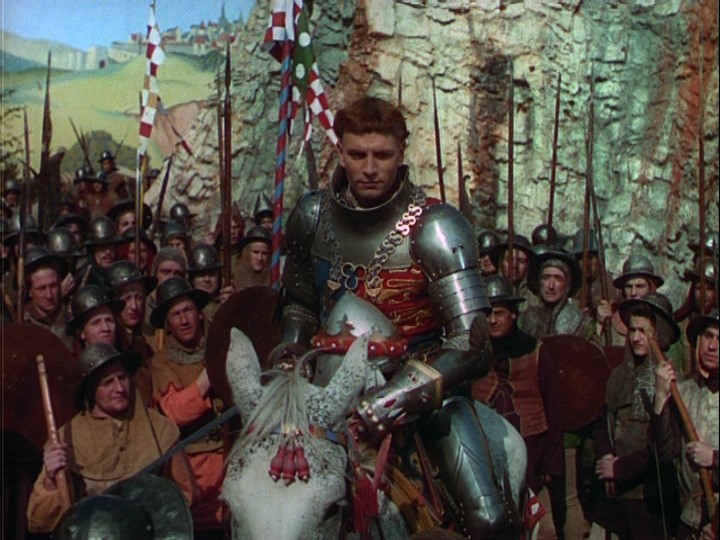
The battle of Agincourt took place on Friday, October 25, 1415 (Saint Crispin’s Day) in northern France. You can read all about it here. And here’s the rousing speech by (Shakespeare’s) Henry V. (Every day is a good day to read this out loud; you will feel smarter having done so.)
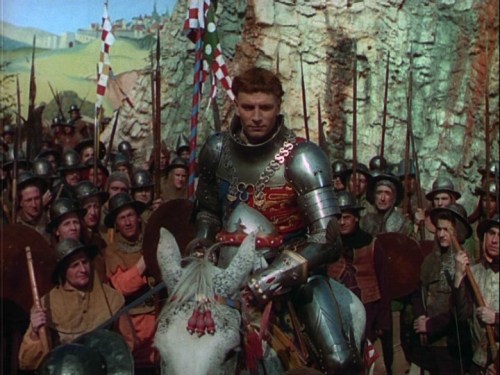
Laurence Olivier--the best Henry V

Laurence Olivier–the best Henry V

What’s he that wishes so?
My cousin Westmoreland? No, my fair cousin:
If we are mark’d to die, we are enow
To do our country loss; and if to live,
The fewer men, the greater share of honour.
God’s will! I pray thee, wish not one man more.
By Jove, I am not covetous for gold,
Nor care I who doth feed upon my cost;
It yearns me not if men my garments wear;
Such outward things dwell not in my desires:
But if it be a sin to covet honour,
I am the most offending soul alive.
No, faith, my coz, wish not a man from England:
God’s peace! I would not lose so great an honour
As one man more, methinks, would share from me
For the best hope I have. O, do not wish one more!
Rather proclaim it, Westmoreland, through my host,
That he which hath no stomach to this fight,
Let him depart; his passport shall be made
And crowns for convoy put into his purse:
We would not die in that man’s company
That fears his fellowship to die with us.
This day is called the feast of Crispian:
He that outlives this day, and comes safe home,
Will stand a tip-toe when the day is named,
And rouse him at the name of Crispian.
He that shall live this day, and see old age,
Will yearly on the vigil feast his neighbours,
And say ‘To-morrow is Saint Crispian:’
Then will he strip his sleeve and show his scars.
And say ‘These wounds I had on Crispin’s day.’
Old men forget: yet all shall be forgot,
But he’ll remember with advantages
What feats he did that day: then shall our names.
Familiar in his mouth as household words
Harry the king, Bedford and Exeter,
Warwick and Talbot, Salisbury and Gloucester,
Be in their flowing cups freshly remember’d.
This story shall the good man teach his son;
And Crispin Crispian shall ne’er go by,
From this day to the ending of the world,
But we in it shall be remember’d;
We few, we happy few, we band of brothers;
For he to-day that sheds his blood with me
Shall be my brother; be he ne’er so vile,
This day shall gentle his condition:
And gentlemen in England now a-bed
Shall think themselves accursed they were not here,
And hold their manhoods cheap whiles any speaks
That fought with us upon Saint Crispin’s day.

Today is also the anniversary of the Charge of the Light Brigade, a charge of British light cavalry led by Lord Cardigan against Russian forces during the Battle of Balaclava in the Crimean War in 1854.

Here is the famous poem written by Alfred, Lord Tennyson to commemorate the event. I think my older brother had to memorize this poem in fifth grade and that was my first introduction to it. My kindergarten self thought it was pretty dramatic.

The Charge of the Light Brigade

Half a league, half a league,
  Half a league onward,
All in the valley of Death,
  Rode the six hundred.
‘Forward, the Light Brigade!
Charge for the guns’ he said:
Into the valley of Death
  Rode the six hundred.

‘Forward, the Light Brigade!’
Was there a man dismay’d?
Not tho’ the soldiers knew
  Some one had blunder’d:
Theirs not to make reply,
Theirs not to reason why,
Theirs but to do and die:
Into the valley of Death
  Rode the six hundred.

Cannon to right of them,
Cannon to left of them,
Cannon in front of them
  Volley’d and thunder’d;
Storm’d at with shot and shell,
Boldly they rode and well,
Into the jaws of Death,
Into the mouth of Hell
  Rode the six hundred.

Flash’d all their sabres bare,
Flash’d as they turned in air
Sabring the gunners there,
Charging an army while
  All the world wonder’d:
Plunged in the battery-smoke
Right thro’ the line they broke;
Cossack and Russian
Reel’d from the sabre-stroke
Shatter’d and sunder’d.
Then they rode back, but not
Not the six hundred.

Cannon to right of them,
Cannon to left of them,
Cannon behind them
  Volley’d and thunder’d;
Storm’d at with shot and shell,
While horse and hero fell,
They that had fought so well
Came thro’ the jaws of Death,
Back from the mouth of Hell,
All that was left of them,
  Left of six hundred.

When can their glory fade?
O the wild charge they made!
  All the world wonder’d.
Honour the charge they made!
Honour the Light Brigade,
  Noble six hundred!

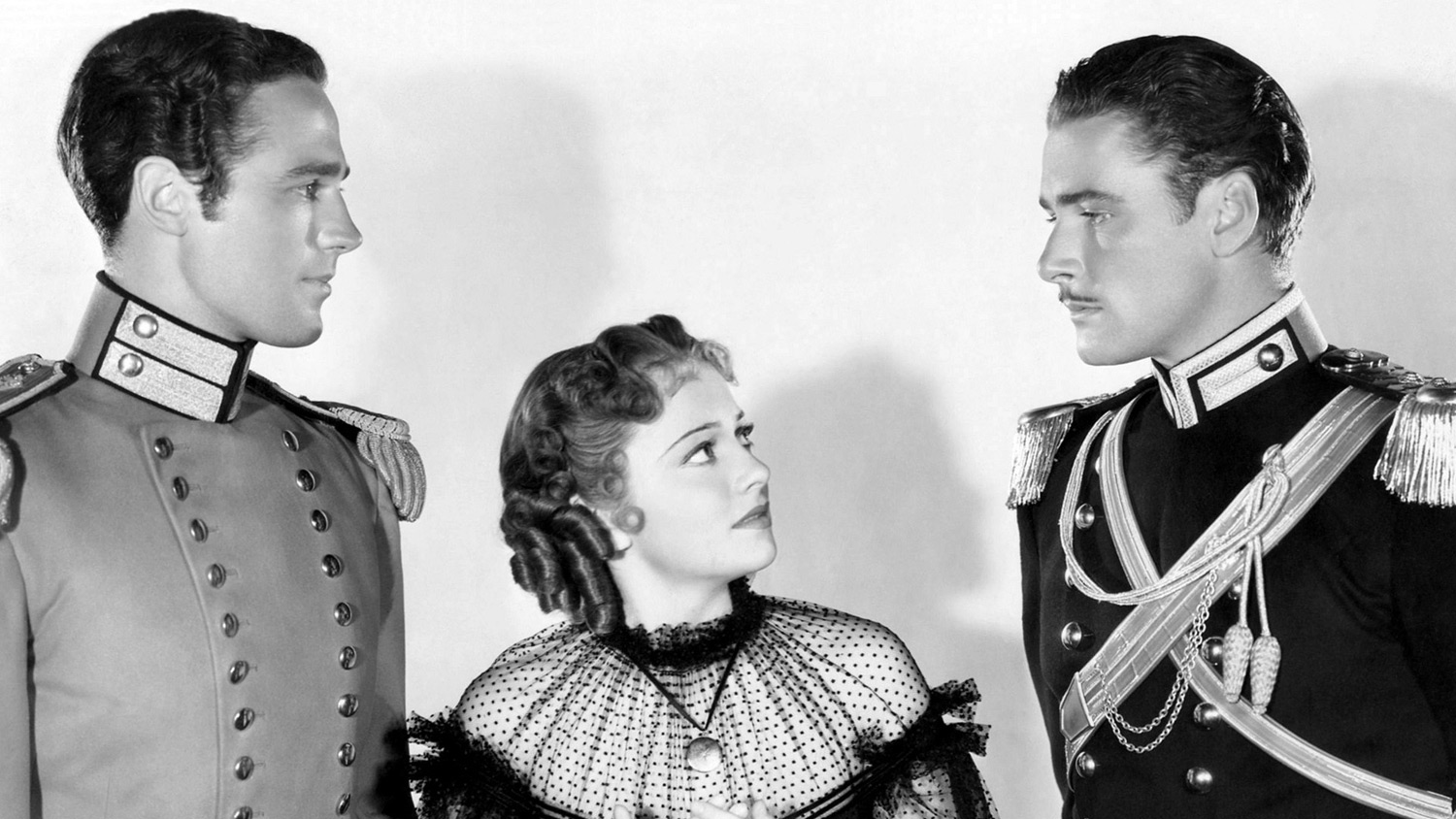
Where is this post going? you ask. Well now, I don’t know about you, but all this patriotic English hoo-haw puts me in the mood for some Errol Flynn! However, the film version of The Charge of the Light Brigade (1936) is notable mostly for the fact that Errol Flynn does not “get the girl” (Olivia de Haviland).
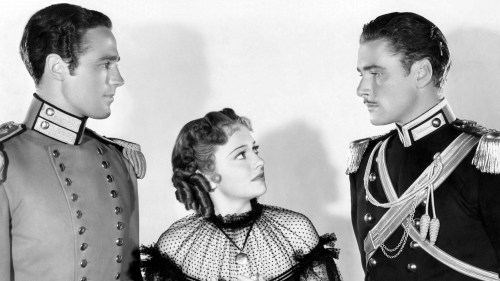
photo-La-Charge-de-la-brigade-legere-The-Charge-of-the-Light-Brigade-1936-5

No, his brother, played by the handsome Patric Knowles, does. This is hardly satisfactory.

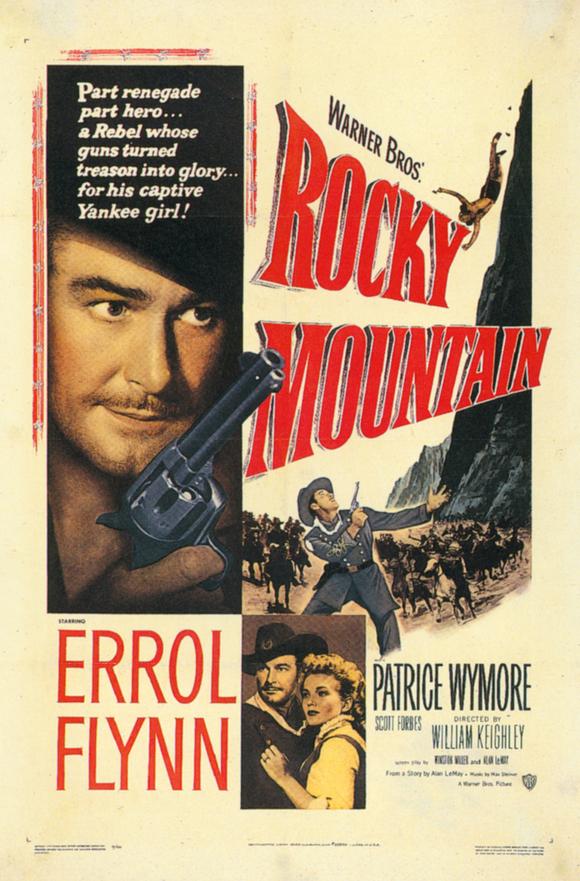
I am more in the mood for something like Rocky Mountain (1950), which dishes up some large helpings of Confederate hoo-haw.
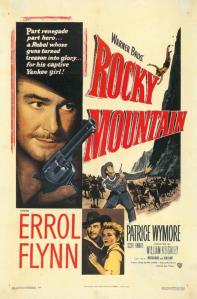
rocky-mountain-movie-poster-1950-1020308754

My movie pick for this week tells the story of a Confederate troop, led by Captain Lafe Barstow (Flynn), prowling the far ranges of California and Nevada in “a last desperate attempt” to build up an army in the West for the faltering Confederacy. The troop fails in its mission but the honor of the Old South is upheld as they too make a charge into “the valley of Death”. Although it features an aging Errol Flynn, it is not as bad as it sounds, due mostly to a pretty good screenplay by Alan Le May who wrote The Unforgiven and The Searchers. Also, Flynn does not phone in his performance as usual during this phase of his career, probably because he was trying to impress his co-star, the 24-year old Patrice Wymore, whom he married when filming ended.
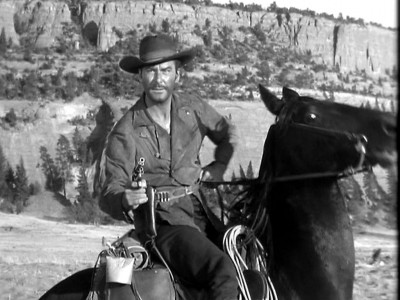
Flynn was always impressive on horseback.

Flynn was always impressive on horseback.

Anyway, I like this movie and its old-fashioned gallantry. There is even an obsessively loyal dog. And the tune “Dixie” is prominently featured in the tear-inducing score. I am hoping that it will be a good respite from baseball stress. Our Cardinals who have…fought so well…we hope will come…

…thro’ the jaws of Death,
Back from the mouth of Hell…

Well, you get the idea. In other news: Eminem’s daughter Hailee was named homecoming queen at her high school. I don’t know about you, but this makes me very happy.
Happy Trails

by chuckofish

Good-by is a prayer, a ringing cry. ‘You must not go – I cannot bear to have you go! But you shall not go alone, unwatched. God will be with you. God’s hand will cover you’ and even – underneath, hidden, but it is there, incorrigible – ‘I will be with you; I will watch you – always.’ It is a mother’s good-by.

–Anne Morrow Lindbergh, North to the Orient

Well, I got up at 4:30 this morning, after a fitful night’s sleep, to drive daughter #1 to the airport. I have a long day ahead of me at the salt mine, but c’est la vie, n’est-ce pas?

We managed to fit in every favorite hometown thing she wanted to do. Yes, we went to the zoo.

zoo

We went to Grant’s Farm,

elephant

clydesdale

the Missouri Botanical Garden,

mobot

and squeezed in some estate-saling and outlet mall shopping.

We also ate out four times. We even went to church!

And the Cardinals won the National League pennant for the 19th time.

The Missouri Botanical Garden displays its Cardinal pride.

The Missouri Botanical Garden displays its Cardinal pride.

I am not too sad that daughter #1 has jetted back to her glamorous life in NYC, because I am going to visit her there in a few weeks for a quick weekend. Then daughter #2 will be home for Thanksgiving. In between my life will settle back into its old routine.

Thank goodness! I couldn’t keep up this pace for too much longer!

katieandmary

Play the man

by chuckofish

Yesterday was the day we Episcopalians remember Hugh Latimer and Nicholas Ridley who were burned at the stake by Queen “Bloody” Mary in England in 1555. (Archbishop Thomas Cranmer is also remembered on October 16, but he was actually executed later.)

memlatimer

When Catholic Mary became Queen of England one of her first acts was to arrest Bishop Ridley, Bishop Latimer, and Archbishop Thomas Cranmer. She insisted that the best way to deal with heresy was to burn as many heretics as possible. In the course of a five-year reign, she lost all the English holdings on the continent of Europe, she lost the affection of her people, and she lost any chance of a peaceful religious settlement in England. Of the nearly three hundred persons burned by her orders, the most famous are the Oxford Martyrs, commemorated yesterday.

The scholar Nicholas Ridley had been a chaplain to King Henry VIII and was Bishop of London under his son Edward. He was a preacher beloved of his congregation. Hugh Latimer also became an influential preacher during King Edward’s reign. He was an earnest student of the Bible, and as Bishop of Worcester he encouraged the Scriptures be known in English by the people. His sermons emphasized that men should serve the Lord with a true heart and inward affection, not just with outward show.

When Ridley was asked if he believed the pope was heir to the authority of Peter as the foundation of the Church, he replied that the church was not built on any man but on the truth Peter confessed — that Christ was the Son of God. Ridley said he could not honor the pope in Rome since the papacy was seeking its own glory, not the glory of God. Neither Ridley nor Latimer could accept the Roman Catholic mass as a sacrifice of Christ. Latimer told the commissioners, “Christ made one oblation and sacrifice for the sins of the whole world, and that a perfect sacrifice; neither needeth there to be, nor can there be, any other propitiatory sacrifice.”

For their heresy they were burned at the stake on October 16, 1555. As the flames rose around them, Latimer encouraged Ridley, “Be of good comfort, Mr. Ridley, and play the man! We shall this day light such a candle by God’s grace, in England, as I trust never shall be put out.”

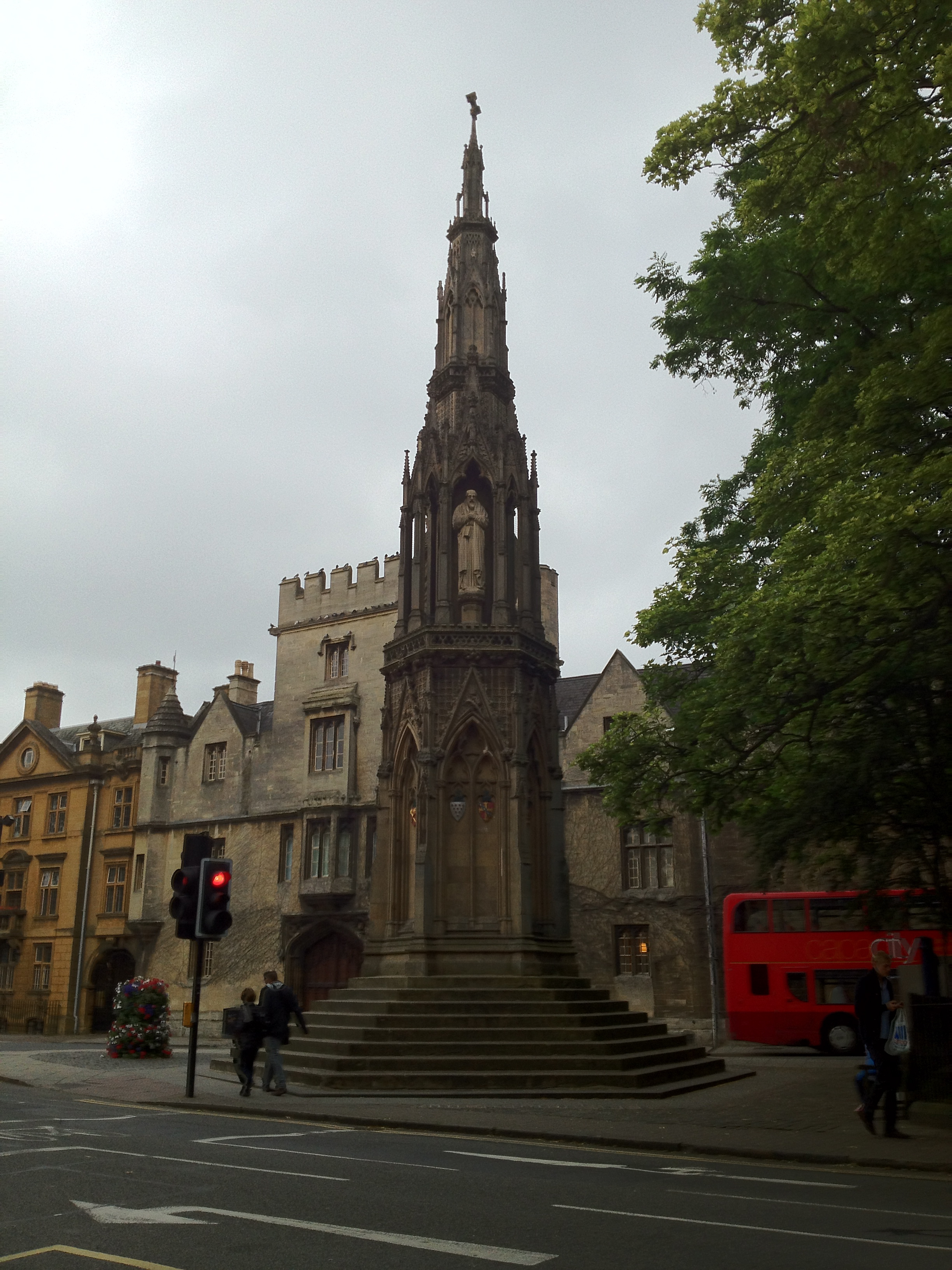
Martyrs' monument in Oxford.

Martyrs’ monument in Oxford.

Keep us, O Lord, constant in faith and zealous in witness, that, like thy servants Hugh Latimer and Nicholas Ridley, we may live in thy fear, die in thy favor, and rest in thy peace; for the sake of Jesus Christ thy Son our Lord, who liveth and reigneth with thee and the Holy Spirit, one God, now and for ever. Amen.

I’m sorry I did not remember the Oxford Martyrs yesterday. Today is a good day to do so as well. Lest we forget.

“They may torture my body, break my bones, even kill me. But then they will have my dead body, but not my obedience.”

― Mahatma Gandhi

(Historical info from Christianity.com)

Gathering leaves

by chuckofish

leavevs2

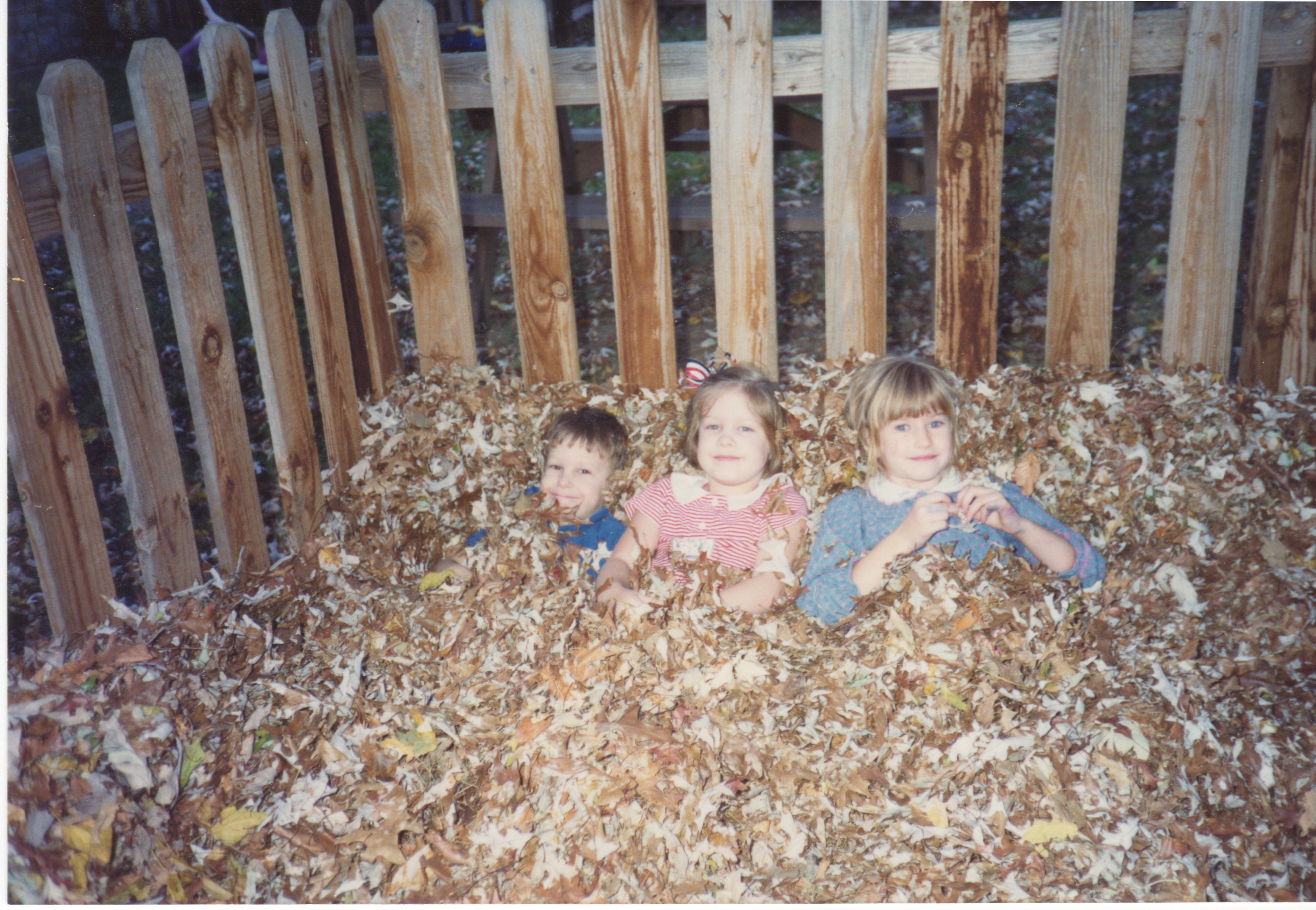
It is that time of year when the leaves begin to fall and we begin to think about cleaning them up.

Gone are the days when we had lots of free help.

leaves

Sigh.

The boy did come over on Sunday and he helped me achieve an ant apocalypse by destroying a giant ant hill that had been built over the course of some years in a low wall surrounding a tree in the front yard. He came over for brunch, but somehow he always ends up doing some much-needed man-work around the house/yard, for which I am most appreciative.

Here’s a poem to start off the week. Have a good one!

Spades take up leaves
No better than spoons,
And bags full of leaves
Are light as balloons.
I make a great noise
Of rustling all day
Like rabbit and deer
Running away.
But the mountains I raise
Elude my embrace,
Flowing over my arms
And into my face.
I may load and unload
Again and again
Till I fill the whole shed,
And what have I then?
Next to nothing for weight,
And since they grew duller
From contact with earth,
Next to nothing for color.
Next to nothing for use.
But a crop is a crop,
And who’s to say where
The harvest shall stop?”

― Robert Frost

Waste not

by chuckofish

“…I cannot endure to waste anything so precious as autumnal sunshine by staying in the house. So I have spent almost all the daylight hours in the open air.”

~Nathaniel Hawthorne, 10th October 1842

The view from my back door in the morning

The view from my backdoor yesterday morning

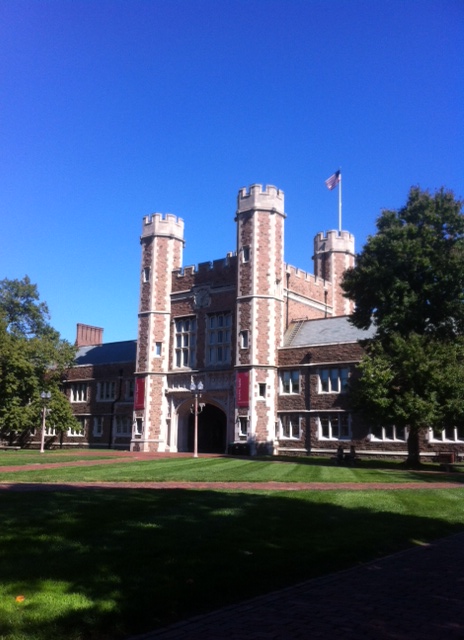
I am with Hawthorne all the way. Unfortunately I do not have the option of staying outside all day. I will, however, take a walk around the block if work allows. Yesterday I had a meeting on my flyover campus and so I got to walk around. It was nice. I mean look at that sky!

wustl

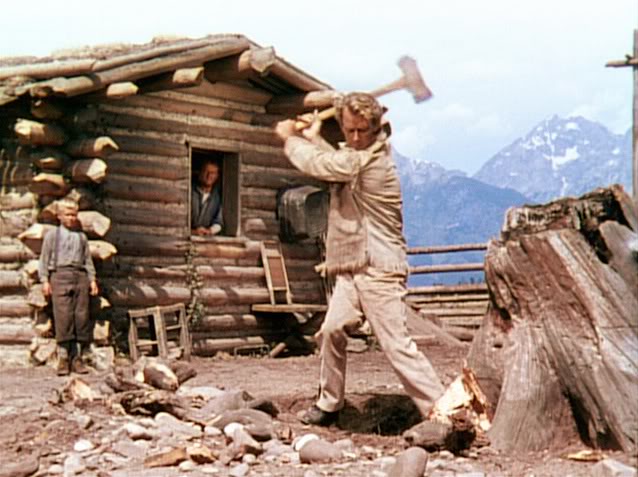
And when I get home today I will attack some more vines–strenuous yard work which bears visible results is good for the soul, right? But sometimes I feel like Shane and that stump.

ShaneStump

And, yes…

adam-wainwright-smi2

We won the NLDS! Just look at the wing span on old Adam Wainwright! Onward and upward, Cardinals! Bring on the Dodgers!

You are here

by chuckofish

whitman-main

Oh me! Oh life! of the questions of these recurring,
Of the endless trains of the faithless, of cities fill’d with the foolish,
Of myself forever reproaching myself, (for who more foolish than I, and who more faithless?)
Of eyes that vainly crave the light, of the objects mean, of the struggle ever renew’d,
Of the poor results of all, of the plodding and sordid crowds I see around me,
Of the empty and useless years of the rest, with the rest me intertwined,
The question, O me! so sad, recurring—What good amid these, O me, O life?

Answer.
That you are here—that life exists and identity,
That the powerful play goes on, and you may contribute a verse.

O Me! O Life! by Walt Whitman
Leaves of Grass (1892)

This is a moment

by chuckofish

thomas wolfe

“A destiny that leads the English to the Dutch is strange enough; but one that leads from Epsom into Pennsylvania, and thence into the hills that shut in Altamont over the proud coral cry of the cock, and the soft stone smile of an angel, is touched by that dark miracle of chance which makes new magic in a dusty world.

Each of us is all the sums he has not counted: subtract us into nakedness and night again, and you shall see begin in Crete four thousand years ago the love that ended yesterday in Texas.

The seed of our destruction will blossom in the desert, the alexin of our cure grows by a mountain rock, and our lives are haunted by a Georgia slattern, because a London cutpurse went unhung. Each moment is the fruit of forty thousand years. The minute-winning days, like flies, buzz home to death, and every moment is a window on all time.

This is a moment.”

–Thomas Wolfe (October 3, 1900 – September 15, 1938)
Look Homeward, Angel (1929)

I read this book a long, long time ago and this quote was in one of my earliest quote books. It reminds me a lot of William Faulkner and also Thornton Wilder. Both would have agreed with him.

What are you reading?

by chuckofish

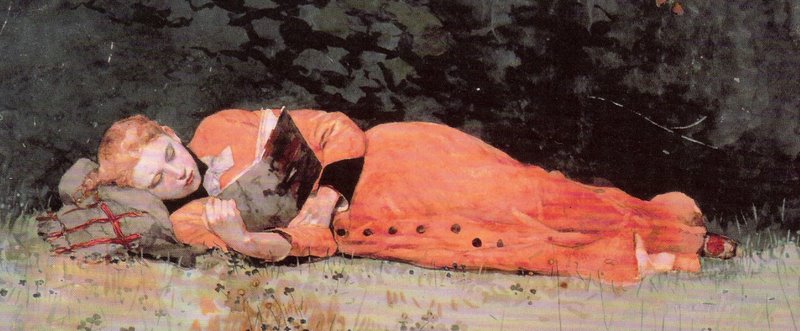
Girl-reading-758651

Lately I have had a hard time finding something good to read. I have started several novels, but never gotten too far with any of them.

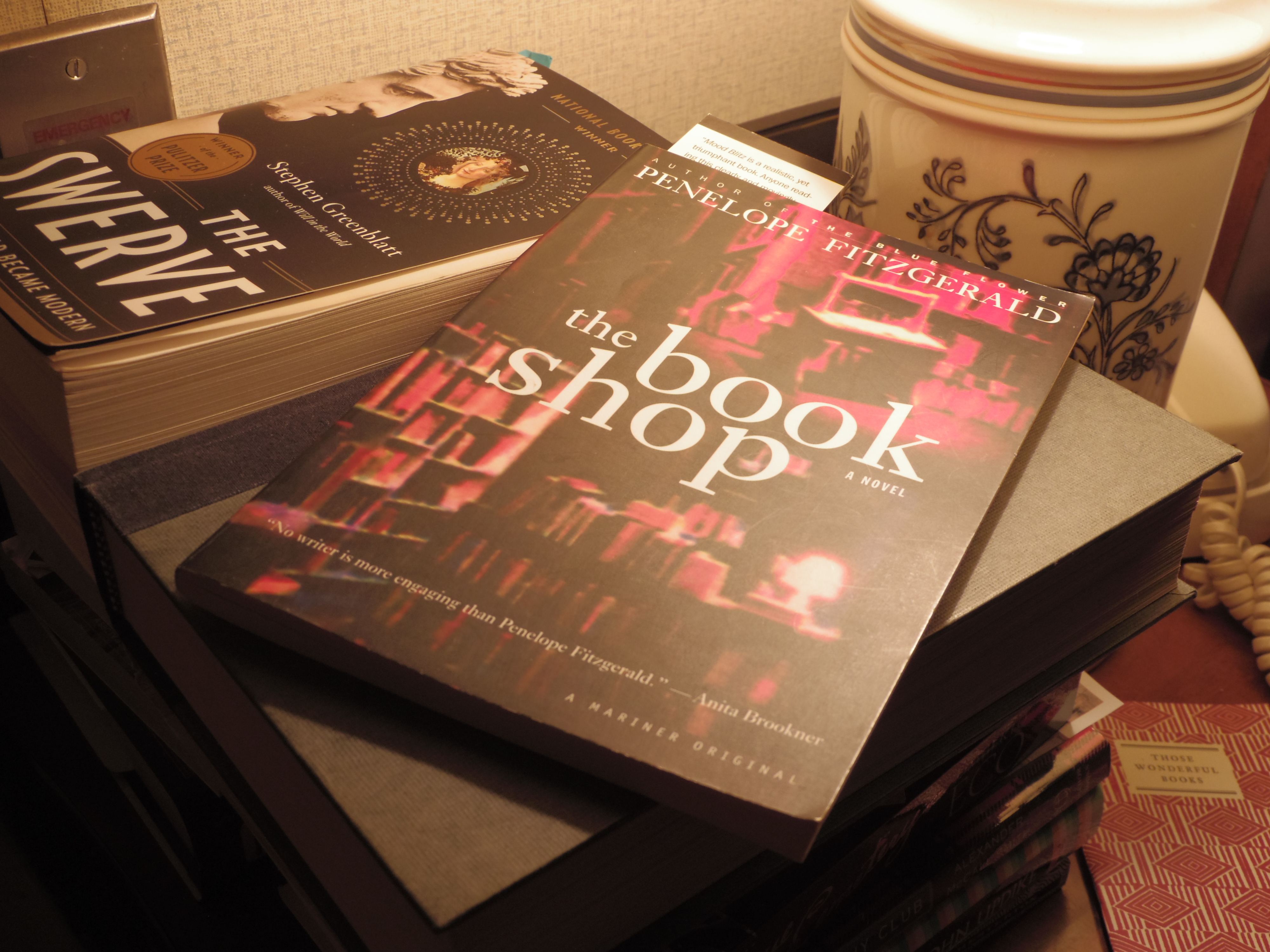
Then someone at work handed me a copy of The Bookshop by Penelope Fitzgerald. It is really good!

books

The novel, set mainly in 1959, centers around Florence Green, a middle-aged widow, who decides to open a bookshop in the small fictional town of Hardborough, Suffolk. The characters are expertly wrought with few wasted words.

“What seemed delicacy in him was usually a way of avoiding trouble; what seemed like sympathy was the instinct to prevent trouble before it started. It was hard to see what growing older would mean to such a person. His emotions, from lack of exercise, had disappeared almost altogether. Adaptability and curiosity, he had found, did just as well.”

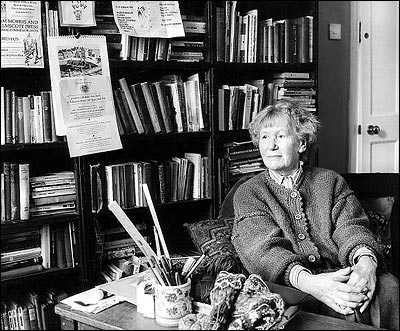
Penelope Fitzgerald (17 December 1916 – 28 April 2000) was a Booker Prize-winning English novelist, poet, essayist and biographer. I had read Fitzgerald’s highly-touted final novel, The Blue Flower, published in 1995, which centers on the 18th century German poet and philosopher Novalis. I liked it, but I didn’t go on a Penelope Fitzgerald binge like I sometimes do with a newly discovered author.

I can relate.

I can relate.

She launched her literary career in 1975, at the age of 58, when she published a biography of Pre-Raphaelite artist Edward Burne-Jones (1833–1898). This was followed two years later by The Knox Brothers, a biography of her well-known father and uncles. Later, in 1977, she published her first novel, The Golden Child, a comic murder mystery with a museum setting inspired by the Tutankhamun mania earlier in the decade. Clearly a girl after my own heart.

I love a late-bloomer, don’t you? It gives one hope.

What are you reading?

Happy birthday, F. Scott Fitzerald

by chuckofish

(September 24, 1896 – December 21, 1940)

(September 24, 1896 – December 21, 1940)

I always felt kind of sorry for Fitzgerald. He had talent, but he also had a serious drinking problem and he married the wrong woman. That can be a deadly combination.

According to Wikipedia, Fitzgerald died at age 44 and was originally buried in Rockville Union Cemetery, an Anglican cemetery and the oldest burying ground in Rockville, Maryland. His daughter Scottie Smith worked to overturn the Archdiocese of Baltimore’s ruling that Fitzgerald had died a non-practicing Catholic, so that he could be buried at the Roman Catholic Saint Mary’s Cemetery where his father’s family was interred; this involved “re-Catholicizing” Fitzgerald after his death. His remains (and those of his Episcopalian wife Zelda) were moved to the family plot in Saint Mary’s Cemetery in Rockville, Maryland, in 1975.

Seriously?

“Oh, the poor son-of-a-bitch.”*

But I got a little side-tracked there. Here’s a quote:

“He did not understand all he had heard, but from his clandestine glimpse into the privacy of these two, with all the world that his short experience could conceive of at their feet, he had gathered that life for everybody was a struggle, sometimes magnificent from a distance, but always difficult and surprisingly simple and a little sad.”

― F. Scott Fitzgerald, Babylon Revisited and Other Stories

*The Great Gatsby