dual personalities

Tag: quotes

Grace to you and peace

by chuckofish

murray

“Humility is perfect quietness of heart. It is to expect nothing, to wonder at nothing that is done to me, to feel nothing done against me. It is to be at rest when nobody praises me, and when I am blamed or despised. It is to have a blessed home in the Lord, where I can go in and shut the door, and kneel to my Father in secret, and am at peace as in a deep sea of calmness, when all around and above is trouble.”

― Andrew Murray
(1828 – 1917) Murray was a South African writer, teacher, and Dutch Reformed minister.

Are you thinking about giving up something for Lent? Or taking something on? Are you eating pancakes tonight?

“All great and precious things are lonely.”*

by chuckofish

East of Sweden … John Steinbeck's Of Mice and Men faced isolated calls for censorship in Turkey.

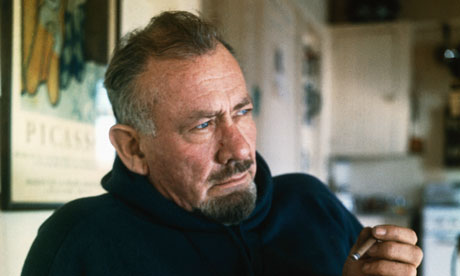
John Steinbeck, author, Nobel Prize winner and Episcopalian, was born on this day in 1902 in Salinas, California.

  A writer out of loneliness is trying to communicate like a distant star sending signals. He isn’t telling or teaching or ordering. Rather he seeks to establish a relationship of meaning, of feeling, of observing. We are lonesome animals. We spend all life trying to be less lonesome. One of our ancient methods is to tell a story begging the listener to say—and to feel—

“Yes, that’s the way it is, or at least that’s the way I feel it. You’re not as alone as you thought.”

So tonight I will lift my glass of wine in a toast to the memory of the great Steinbeck! Why don’t you join me?

*East of Eden

We could open up this suitcase full of sparks

by chuckofish

abe-simpson-wallpapers-9-1-s-307x512

I used to be “with it”. But  they changed what “it” was.  Now what I’m with isn’t “it” and what’s “it” seems weird and scary to me.”

–Grampa Simpson, From “Homerpalooza” (Season 7, Episode 24)

Sadly, I can relate to Grampa Simpson. Can you? I guess this is an inevitable part of aging. Not that I was ever too “with it” to begin with…but a lot of modern pop culture seems “weird and scary” to me. Hello, Kim Kardashian. And The Batchelor. I don’t get that either.

However, as readers of this blog know, I have a soft spot in my heart for Eminem. I try to keep an open mind. Occasionally I even go to a concert.

Such was the case last Sunday night when I ventured downtown to the Sheldon Concert Hall to see Josh Ritter.

sheldon

Mostly I bought the tickets to see his opening act Gregory Alan Isakov. My Old Man bailed on me at the last minute (he had a headache) and so the boy stepped up and went with me. He was a good concert date.

It was a sold out concert. Unfortunately, a lot of the audience arrived during Gregory Alan Isakov’s performance which was annoying. And rude. And the poor guy’s band was not with him. They had to leave in Chicago, he explained, and so he was on his own for the rest of the tour. It had been “super fun and scary” since then.

I kind of love him for saying “super fun”.

GAI

Gregory  epitomizes the introverted artist who must perform. And to stand up there without his band–zut alors! But I thought he was wonderful, performing his set of seven songs from numerous albums with humor and spirit.

Before his last song, he said, “I’ll leave you with a sad one, because that’s how I roll.”

Is he my kind of guy or what!

On the flip side was Josh Ritter who bounded onto the stage full of self-confidence and raring to go.

ritter

He put on quite a show, which I enjoyed very much. His fans, who filled the theater, were enthusiastic. Two middle-aged women to our left were down-right embarrassing–swaying and giggling like teenagers. (They also made several trips to the bar, which probably explains a lot of their behavior.) Please shoot me if I ever behave like this.

We opted to leave before the encores in order to avoid the parking lot mayhem and because it was a school night after all. But I was glad I had nudged myself out of my routine.

(My thanks to the boy who took these photos on his iPhone.)

“You can praise God by peeling a spud if you peel it to perfection.”*

by chuckofish

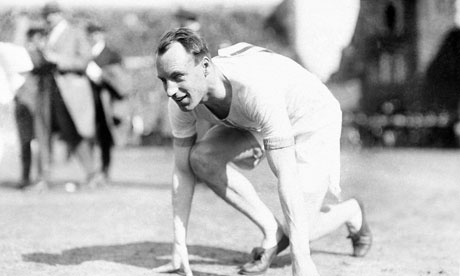
The liturgical calendar of the Episcopal Church (USA) remembers Eric Liddell with a feast day on February 22. Isn’t that nice?

liddell-chariots-daughter

You remember Eric Liddell. He was the Scottish athlete and devout Christian, who refused to run in a heat held on Sunday at the 1924 Olympics in Paris and was forced to withdraw from the 100-metres race, his best event. However, he won the 400 metres. They made a movie about him and Harold Abrahams called Chariots of Fire in 1981. Remarkably it won the Best Picture Oscar. (I blogged about it here.) It is one of my favorite movies.

Anyway, I was unaware that we Episcopalians recognize this worthy missionary on our calendar. I can’t say I approve of all the “saints” so celebrated, but I approve of him.

God whose strength bears us up as on mighty wings: We rejoice in remembering your athlete and missionary, Eric Liddell, to whom you gave courage and resolution in contest and in captivity; and we pray that we also may run with endurance the race set before us and persevere in patient witness, until we wear that crown of victory won for us by Jesus our Savior; who with you and the Holy Spirit lives and reigns, one God, for ever and ever. Amen.

–Collect for the day

* Chariots of Fire (1981); screenplay by Colin Welland

Food for thought: fear not

by chuckofish

St. George window in the Princeton United Methodist Church by Tiffany Studio of New York City

St. George window in the Princeton United Methodist Church by Tiffany Studio of New York City

“How should we be able to forget those ancient myths that are at the beginning of all peoples, the myths about dragons that at the last moment turn into princesses; perhaps all the dragons of our lives are princesses who are only waiting to see us once beautiful and brave. Perhaps everything terrible is in its deepest being something helpless that wants help from us.

So you must not be frightened if a sadness rises up before you larger than any you have ever seen; if a restiveness, like light and cloud shadows, passes over your hands and over all you do. You must think that something is happening with you, that life has not forgotten you, that it holds you in its hand; it will not let you fall. Why do you want to shut out of your life any uneasiness, any miseries, or any depressions? For after all, you do not know what work these conditions are doing inside you.”

― Rainer Maria Rilke, Letters to a Young Poet

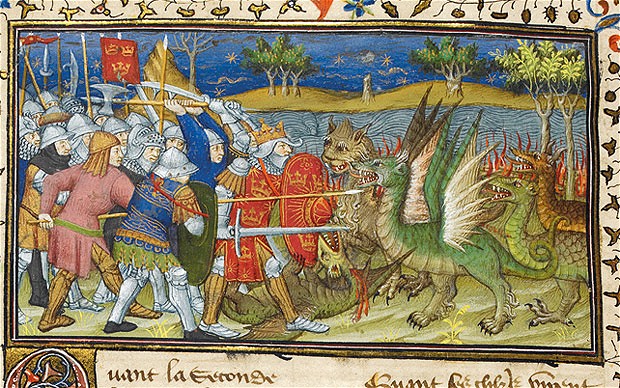
Alexander fighting dragons, Le livre et la vraye hystoire du bon roy Alixandre, Paris, c. 1420–25

Alexander fighting dragons, Le livre et la vraye hystoire du bon roy Alixandre, Paris, c. 1420–25

Kunisada dragon

Kunisada dragon

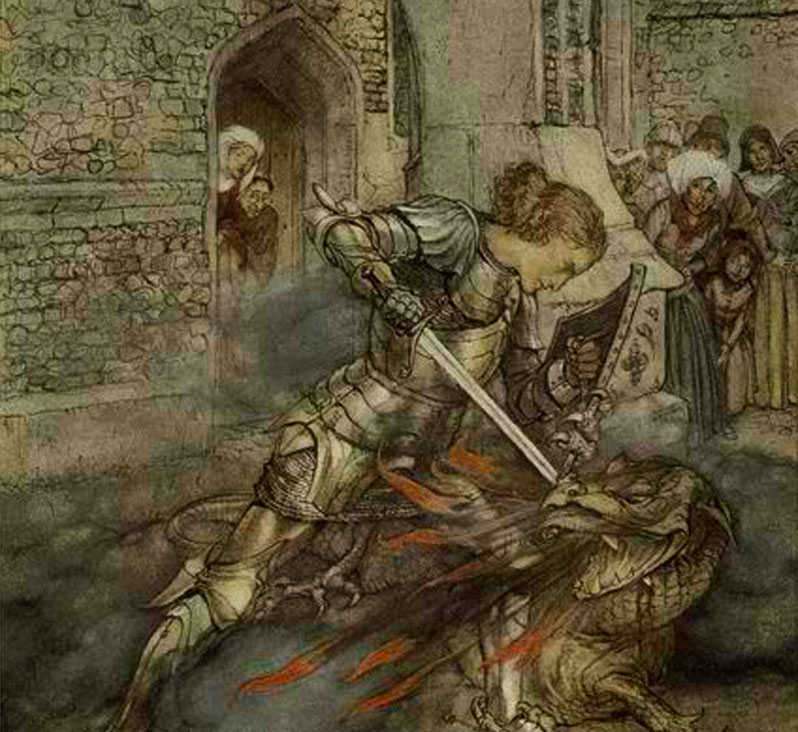
Arthur Rackham

Arthur Rackham

'St. George and the Dragon', by Wassily Kandinsky, 1911

‘St. George and the Dragon’, by Wassily Kandinsky, 1911

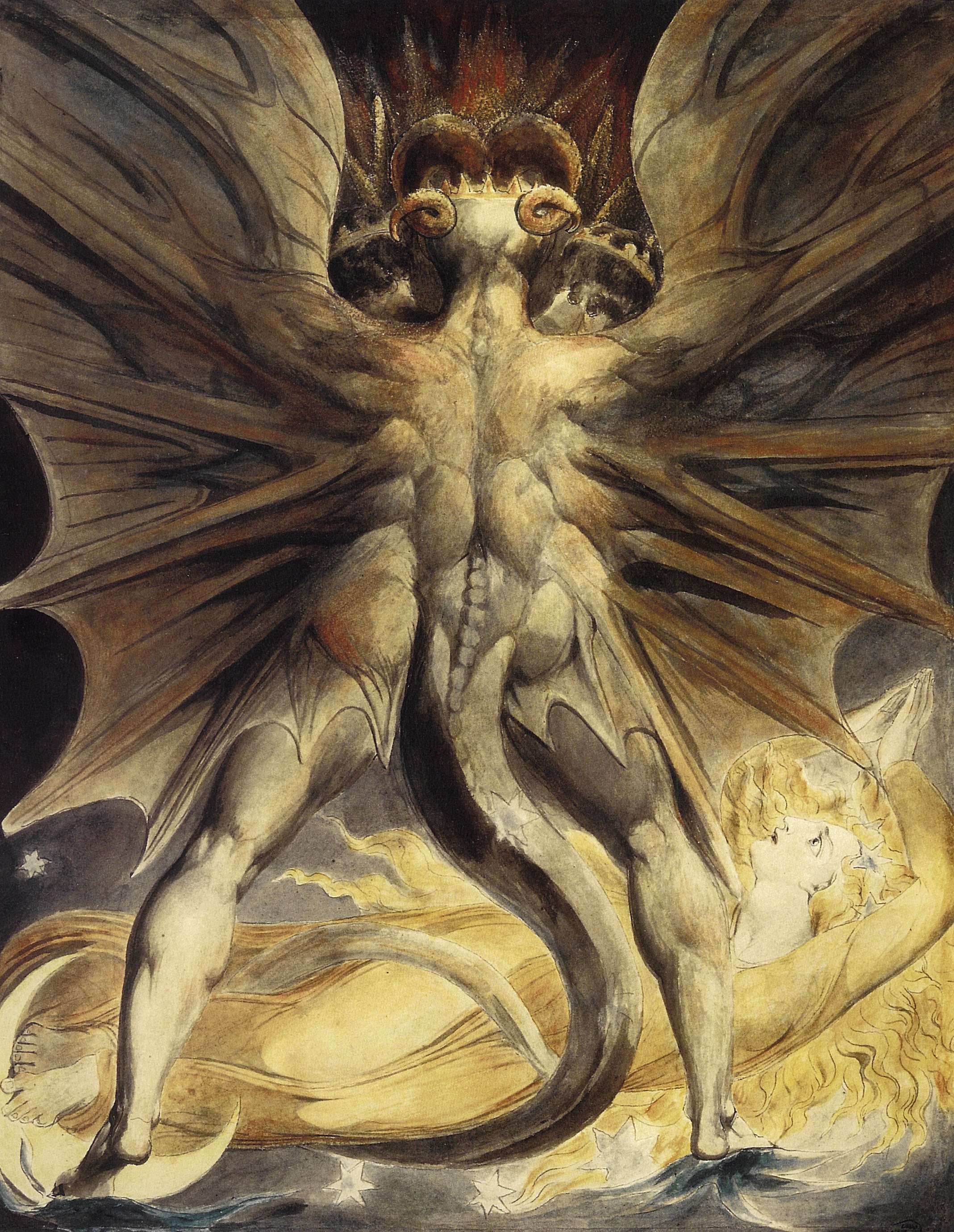
 'The Great Red Dragon and the Woman Clothed in Sun', by William Blake


‘The Great Red Dragon and the Woman Clothed in Sun’, by William Blake

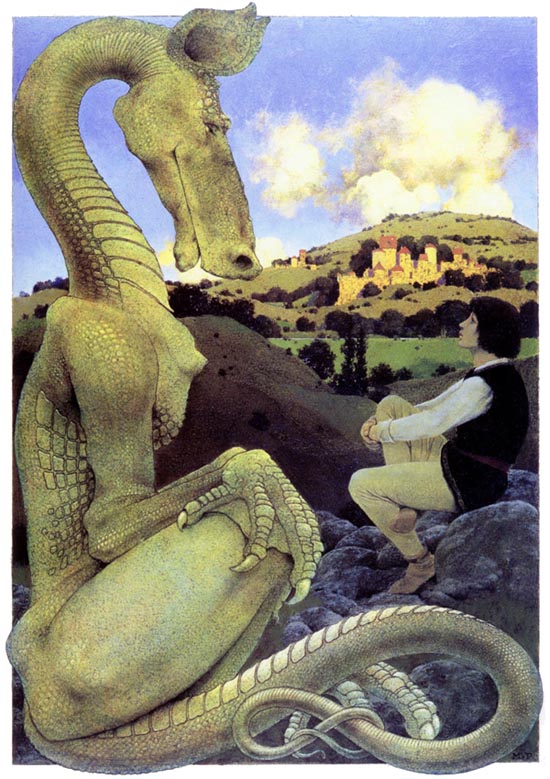
The Reluctant Dragon by Maxfield Parrish

The Reluctant Dragon by Maxfield Parrish

“To be, or not to be; that is the bare bodkin”

by chuckofish

On this day in 1885 The Adventures of Huckleberry Finn was first published in the United States. What a book! It is still controversial, lo, these many years later.

An illustration by Thomas Hart Benton

An illustration by Thomas Hart Benton

We will not go into all that today. I will let ol’ Huck speak for himself in this, one of the greatest scenes in literature:

“It made me shiver. And I about made up my mind to pray, and see if I couldn’t try to quit being the kind of a boy I was and be better. So I kneeled down. But the words wouldn’t come. Why wouldn’t they? It warn’t no use to try and hide it from Him. Nor from ME, neither. I knowed very well why they wouldn’t come. It was because my heart warn’t right; it was because I warn’t square; it was because I was playing double. I was letting ON to give up sin, but away inside of me I was holding on to the biggest one of all. I was trying to make my mouth SAY I would do the right thing and the clean thing, and go and write to that nigger’s owner and tell where he was; but deep down in me I knowed it was a lie, and He knowed it. You can’t pray a lie–I found that out.

So I was full of trouble, full as I could be; and didn’t know what to do. At last I had an idea; and I says, I’ll go and write the letter–and then see if I can pray. Why, it was astonishing, the way I felt as light as a feather right straight off, and my troubles all gone. So I got a piece of paper and a pencil, all glad and excited, and set down and wrote:

Miss Watson, your runaway nigger Jim is down here two mile below Pikesville, and Mr. Phelps has got him and he will give him up for the reward if you send.

HUCK FINN.

I felt good and all washed clean of sin for the first time I had ever felt so in my life, and I knowed I could pray now. But I didn’t do it straight off, but laid the paper down and set there thinking–thinking how good it was all this happened so, and how near I come to being lost and going to hell. And went on thinking. And got to thinking over our trip down the river; and I see Jim before me all the time: in the day and in the night-time, sometimes moonlight, sometimes storms, and we a-floating along, talking and singing and laughing. But somehow I couldn’t seem to strike no places to harden me against him, but only the other kind. I’d see him standing my watch on top of his’n, ‘stead of calling me, so I could go on sleeping; and see him how glad he was when I come back out of the fog; and when I come to him again in the swamp, up there where the feud was; and such-like times; and would always call me honey, and pet me and do everything he could think of for me, and how good he always was; and at last I struck the time I saved him by telling the men we had small-pox aboard, and he was so grateful, and said I was the best friend old Jim ever had in the world, and the ONLY one he’s got now; and then I happened to look around and see that paper.

It was a close place. I took it up, and held it in my hand. I was a-trembling, because I’d got to decide, forever, betwixt two things, and I knowed it. I studied a minute, sort of holding my breath, and then says to myself:

“All right, then, I’ll GO to hell”–and tore it up.”

–Mark Twain, The Adventures of Huckleberry Finn 

There we two, content, happy in being together, speaking little, perhaps not a word*

by chuckofish

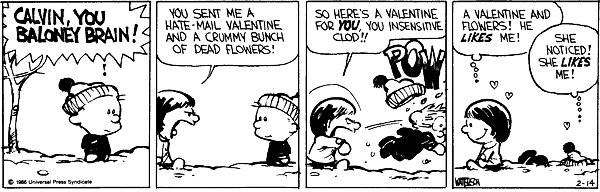
valentines-day-calvin-hobbes-style-31400-1265919147-13

How was your weekend? Did you have a nice Valentine’s Day?

I asked my valentine for a new shower head and my husband went out and bought one for me. I was pleased. He had to buy a special wrench as well (par for the course) but he installed it with a minimum of cursing.

Later in the weekend I found a box with old cards in it. Some were Valentines. This one from the Green Tiger Press

valentinecard

was sent to my one-year-old daughter #1 by her aunt, my dual personality, who was a first year doctoral student living in a dorm at Yale at the time.  She wrote a long note inside. Here is a wee bit of that note:

Well, sweetie-poops, I have to make this short because I need to mail it and then take a nap. My neighbors kept me awake last night with their talking and I had to get up really early to do my Hittite and Akkadian, so I am tired. Otherwise, I’m doing okay and working hard and eating right and learning French and thinking about you all the time!

Isn’t that a riot? It was fun to go through all the cards and read what my friends wrote back in the day when our children were tiny and we were young and lighthearted.

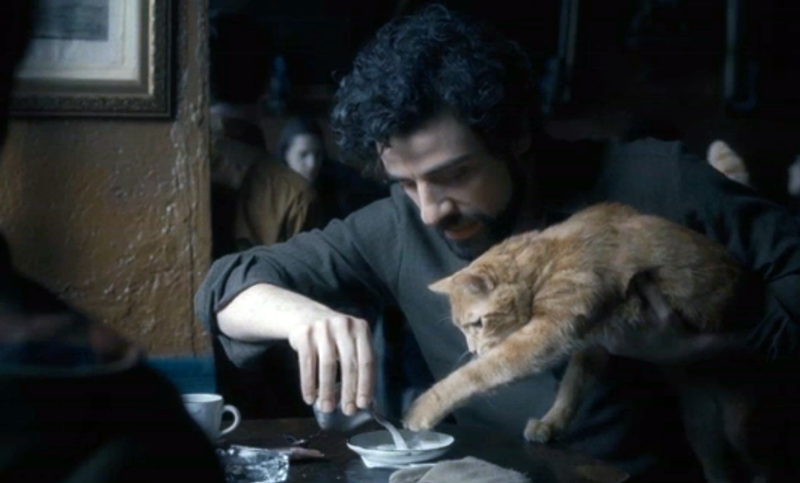
I saw Inside Llewyn Davis. I really liked it. I thought Oscar Isaac was excellent. I had been listening to the soundtrack all week and so I was well prepared for the music to be great. But the film is more than just the music. And I liked the marmalade cat a lot. It made me want another Cat. But I am allergic, so that won’t happen. Sigh. Of course, the movie wasn’t nominated for Best Picture and Oscar got no Oscar nod. Typical.

coencat

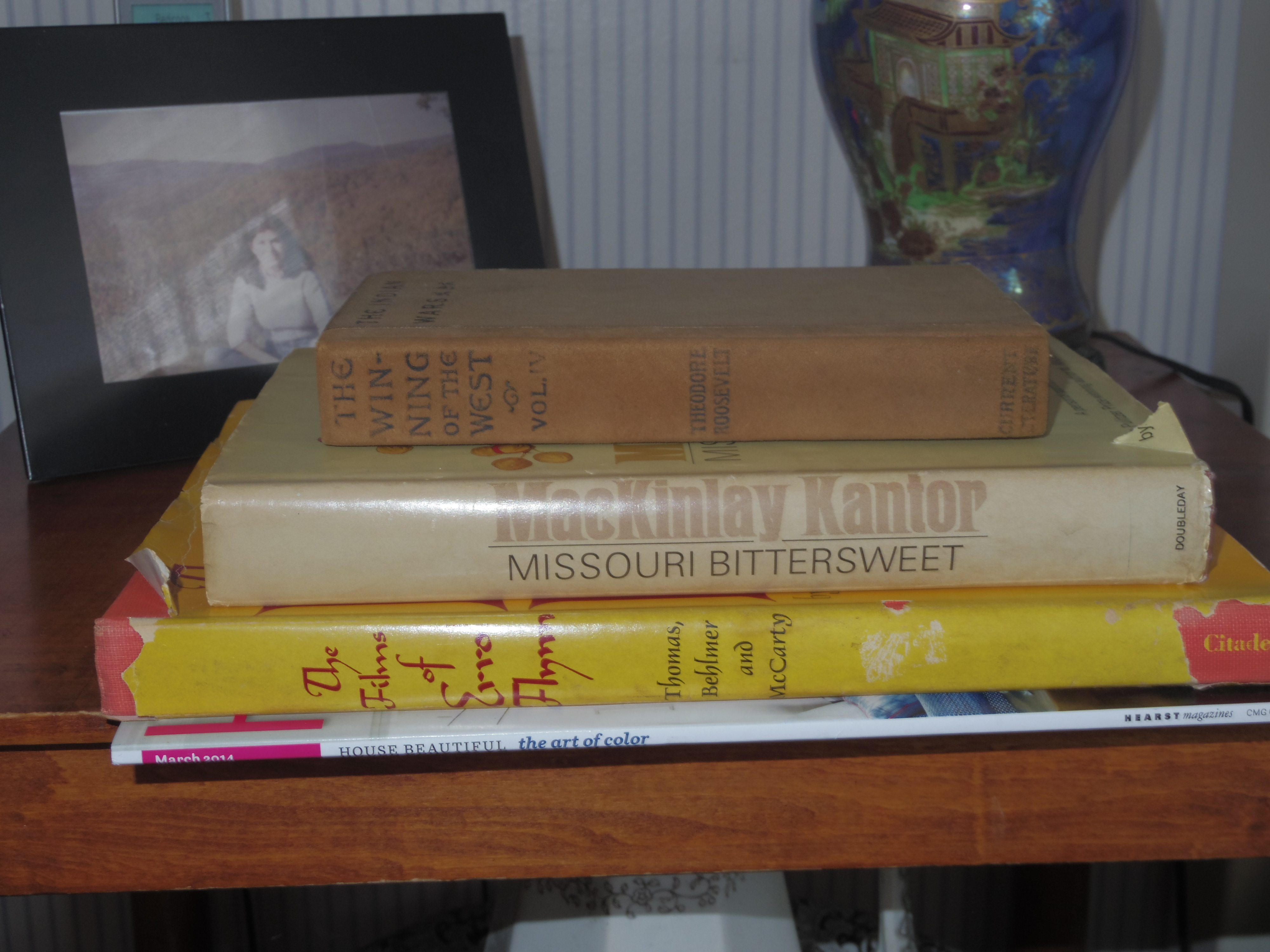
I went to a couple of estate sales, but didn’t get anything except a few odd books.

books

I have been reading Missouri Bittersweet by MacKinlay Kantor and it is wonderful. I had no idea Kantor, whom I have always admired as a novelist, was such a fan of my flyover state. He and his wife revisited many small towns and counties in order to write this book and there is a lot of interesting stuff about the fascinating people who have lived in this state, such as Jesse James, Mark Twain and Daniel Boone, and also the regular people who still do.  It was published in 1969.

I was the Intercessor at church Sunday morning. In the Prayers of the People we always pray for the diocese of Lui in the Sudan and some of those African names can be a challenging mouthful, but I managed to stumble over “Albert”. Sometimes my brain just freezes. But afterwards the associate rector complimented me on my reading of the names on the prayer request list. I gather I kept the pace up nicely. Well, compliments are always appreciated.

And the amaryllis finally bloomed!

amaryllis

Amaryllis1_SP90

It seemed like it took forever and they still haven’t quite burst forth completely.  Our patience has been tested! They are indeed a welcome sight in the midst of our arctic winter–as are all our green friends which I move around the house to sunny spots.

A sunny window at home

A sunny window at home

Have a good week!

* from “A Glimpse” by Walt Whitman (1819 – 1892)

And life barrels on like a runaway train*

by chuckofish

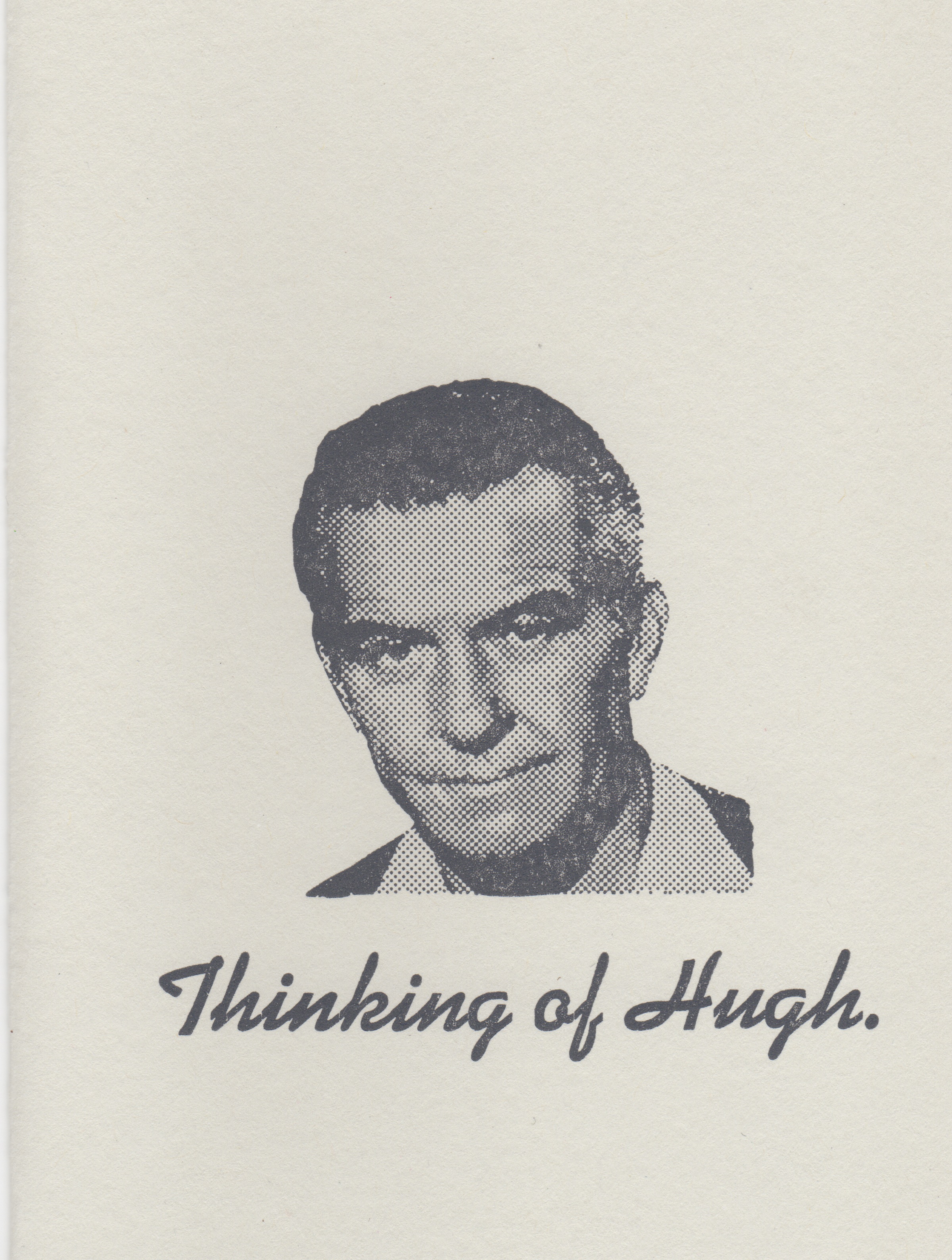
HughB

Sunday is the birthday of Eugene Hugh Beaumont (February 16, 1909 – May 14, 1982) who you will recall was an American actor and television director. He was also an ordained Methodist minister. Hugh Beaumont is best known for his portrayal of Ward Cleaver on one of my favorite TV series, Leave It to Beaver (1957–1963) which I watched for years after school when it was in syndication.

Ward was not perfect. He made mistakes and he tried too hard sometimes and he lost his patience with his sons when they didn’t act as he thought they should. But he loved them and he could laugh at himself. Ward was a role model, and I have to say, it was very comforting to watch that syndicated show after school every day.

It has been suggested that Hugh Beaumont felt that he had been type-cast as Ward Cleaver and that his career suffered. Maybe it did. But I hope he knew that besides entertaining generations of people, he probably touched a lot of kids out there whose parents were not perfect and whose family was not as “functional” as the Cleavers. He touched me. I still cannot watch the above clip without getting a little misty-eyed.

Rest in peace, Hugh.

And here’s hoping you all have a nice Valentine’s Day and that someone gives you a nice card like the one above.

image002

P.S. FYI One of the writers for the show was Joss Whedon’s grandfather. This does not surprise me in the least.

*Ben Folds

What are you reading?

by chuckofish

Girl-reading-758651

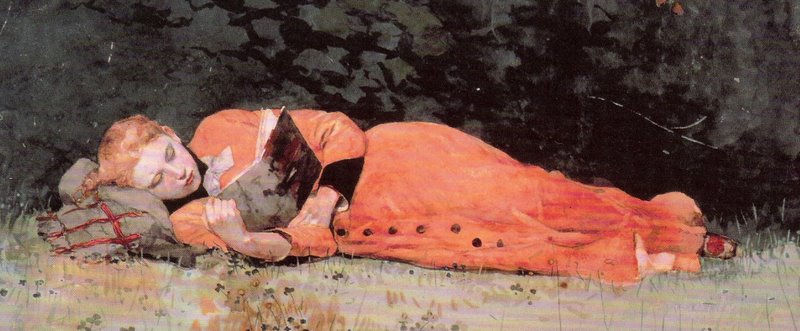
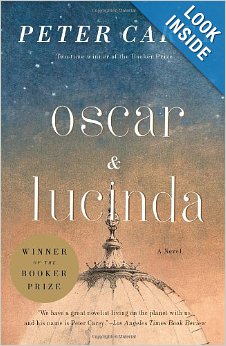
I have been reading Oscar and Lucinda by the Australian Peter Carey, winner of the Booker Prize in 1988. It tells the story of Oscar Hopkins, an Anglican priest, and Lucinda Leplastrier, a young Australian heiress who buys a glass factory. They meet on a ship going to Australia and discover that they are both gamblers, one obsessive the other compulsive. Lucinda bets Oscar that he cannot transport a glass church from Sydney to a remote settlement.
oscar and L

I have been reading it slowly, appreciatively, with care. Because it is SO good.

The writing is excellent. The characters are wonderful. Oh my. All of the characters, even the most minor, are drawn with fine, detailed strokes. I care so much for the two main characters, Oscar and Lucinda.

“Our whole faith is a wager, Miss Leplastrier. We bet–it is all in Pascal and very wise it is too…we bet that there is a God. We bet our life on it. We calculate the odds, the return, that we shall sit with the saints in paradise. Our anxiety about our bet will wake us before dawn in a cold sweat. We are out of bed and on our knees, even in the midst of winter. And God sees us, and sees us suffer. And how can this God, a God who sees us at prayer beside our bed…I cannot see,” he said, “that such a God, whose fundamental requirement of us is that we gamble our mortal souls, every second of our temporal existence…It is true! We must gamble every instant of our allotted span. We must stake everything on the unprovable fact of His existence.”

…”That such a God,” said Oscar, “knowing the anguish and the trembling hope with which we wager…That such a God can look unkindly on a chap wagering a few quid on the likelihood of a dumb animal crossing the line first, unless…unless–and no one has ever suggested such a thing to me–it might be considered blasphemy to apply to common pleasure that which is by its very nature divine.”

Religion in the novel is not absurd. There is a pattern in everything.

The book is composed of 111 short, titled chapters (like in Moby-Dick), each a self-contained episode, each one a testimony to luck.

I find myself constantly scribbling in the margins–I read with a pencil at hand–and underlining passages. I have not been so excited since I discovered Willa Cather last year!

She had judged him too hastily. This was a bad habit. It had caused her trouble before. She had compared him to Dennis Hasset and had pursed her lips when he picked up his tea-cup a certain way, or placed the pot back on the table a little too heavily. She had felt slighted when he had scurried back into his room and shut the door on her. And yet–how quickly it happened–she had come to be proud of the propriety with which they now shared a house, the sense of measured discipline (a virtue she much admired) that they brought to their conduct so that there was great closeness, the closeness of intimates, but also a considerable distance, the distance not of strangers, but of neighbors. They occupied a position well above the Philistines who snubbed and slighted them. God, who saw all things, would not find their conduct unbecoming.

My oldest friend, who has similar taste in literature, has suggested I read The Siege of Krishnapur by J.G. Farrell, which won the Booker Prize in 1973.
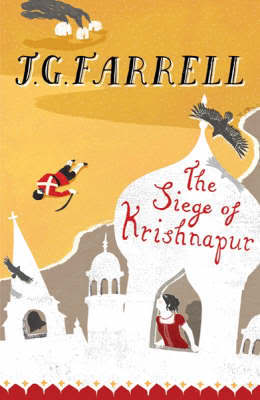
seige

She is trying to read Booker prize-winners she has missed over the years, which is a great idea, and one I may embrace.

Another friend handed me a copy of Barbara Kingsolver’s new book Flight Behavior.
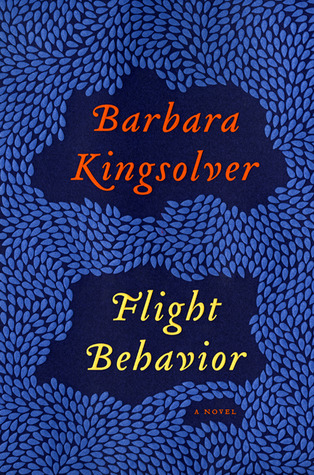
flight

Since I have it in my hot little hand, it will probably be next on my list, although BK tends to be too political for me. I’ll give it a try.

What are you reading?
February Days

by chuckofish

photo from Pinterest

photo from Pinterest

Who could tire of the long shadows,
The long shadows of the trees on snow?
Sometimes I stand at the kitchen window
For a timeless time in a long daze
Before these reflected perpendiculars,
Noting how the light has changed,
How tender it is now in February
When the shadows are blue not black.
The crimson cyclamen has opened wide,
A bower of petals drunk on the light,
And in the snow-bright ordered house
I am drowsy as a turtle in winter,
Living on light and shadow
And their changes.

–May Sarton (1912–1995)

I blogged about old May Sarton here. She’s real good, n’est-ce pas?