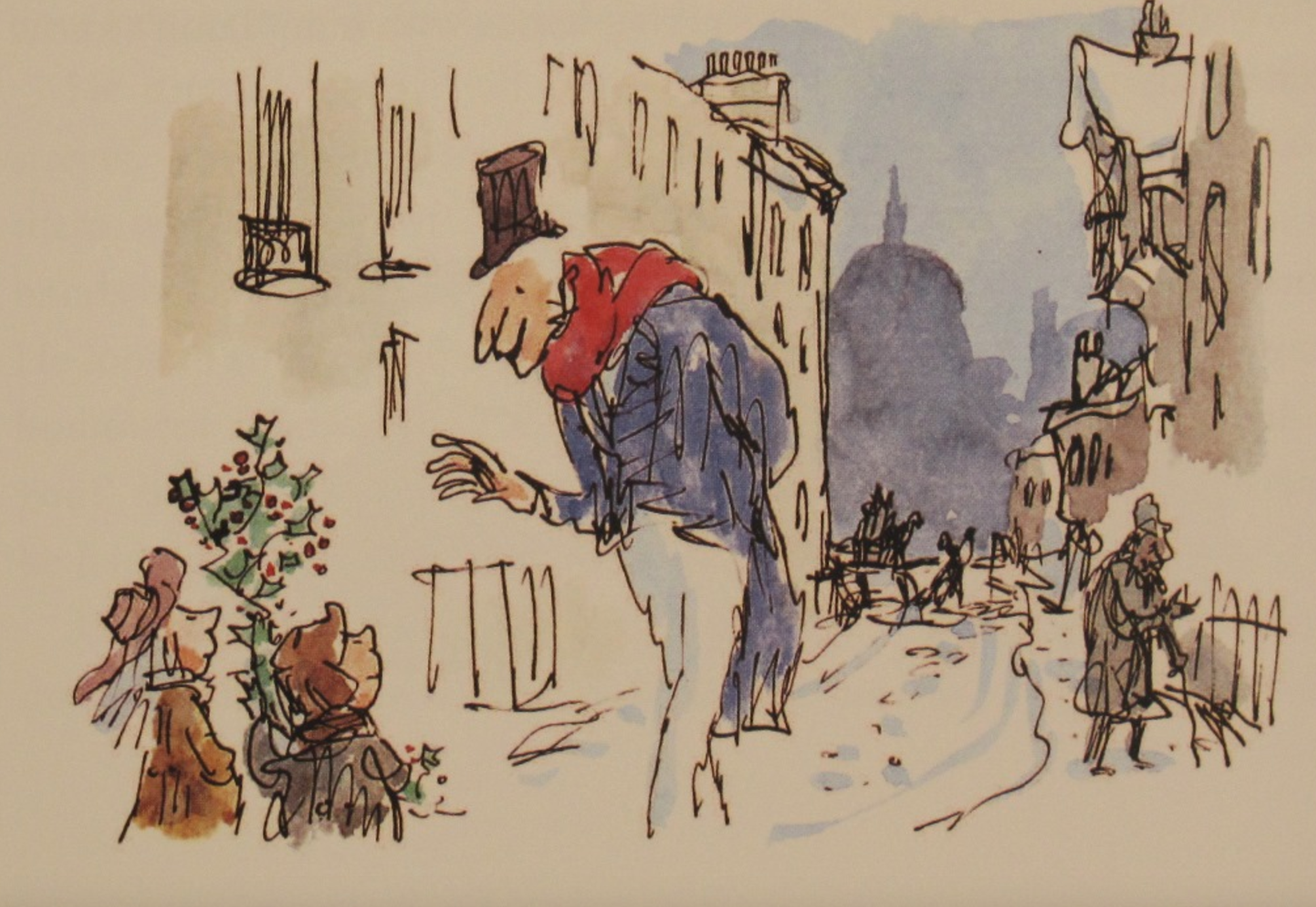
“He went to the church, and walked about the streets, and watched the people hurrying to and for, and patted the children on the head, and questioned beggars, and looked down into the kitchens of homes, and up to the windows, and found that everything could yield him pleasure. He had never dreamed of any walk, that anything, could give him so much happiness.”
–Charles Dickens, A Christmas Carol, 1843
So much happiness!
The drawing is by Quentin Blake (b. 1932), illustrator, Quentin Blake’s A Christmas Carol, 1995
Well, I got my new license plates at the DMV yesterday. Bingpot! It wasn’t a terrible experience. Somehow I feel that everyone is feeling lighter and less burdened by care these days. Waiting/standing in a long line is not the end of the world.
In my morning Bible reading I am in 2 Corinthians and I was struck by this:
For our boast is this, the testimony of our conscience, that we behaved in the world with simplicity and godly sincerity, not by earthly wisdom but by the grace of God, and supremely so toward you. (2 Cor. 1:12)
What a gem! Make that my epitaph, please. I’m afraid I have a long way to go, however, in becoming more serious, less frivolous. My fellow church members are a very serious tribe. They do not joke around. I am learning.
I know what I have to do–in the words of Charles Spurgeon: “We must conquer—some of us especially—our tendency to levity. A great distinction exists between holy cheerfulness, which is a virtue, and that general levity, which is a vice. There is a levity which has not enough heart to laugh, but trifles with everything; it is flippant, hollow, unreal. A hearty laugh is no more levity than a hearty cry.”
So let us try to be more cheerful and less relentlessly superficial (as John Piper would say). One day at a time.
Today we celebrate the birth of Charles Monroe “Sparky” Schulz (1922-2000), cartoonist and creator of Peanuts. He is widely regarded as one of the most influential cartoonists in history, and cited by many cartoonists as a major influence. I, of course, have been a fan since the mid-1960s.
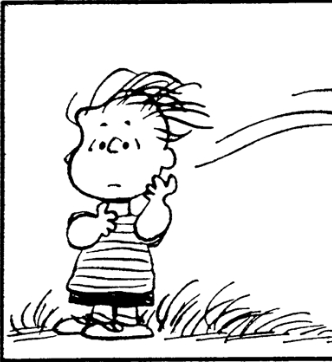
Funnily enough, as I get older, I look more and more like Linus…
Linus has always been the character I relate to most (not Lucy as my siblings would argue). There is certainly someone for everyone to relate to in this great classic comic strip. To whom do you relate most?
We also remember that in 1789 George Washington recommended that November 26 be “devoted by the People of these States to the service of that great and glorious Being, who is the beneficent Author of all the good that was, that is, or that will be. That we may then all unite in rendering unto him our sincere and humble thanks, for his kind care and protection of the People of this Country previous to their becoming a Nation, for the signal and manifold mercies, and the favorable interpositions of his providence, which we experienced in the course and conclusion of the late war, for the great degree of tranquility, union, and plenty, which we have since enjoyed, for the peaceable and rational manner, in which we have been enabled to establish constitutions of government for our safety and happiness, and particularly the national One now lately instituted, for the civil and religious liberty with which we are blessed; and the means we have of acquiring and diffusing useful knowledge; and in general for all the great and various favors which he hath been pleased to confer upon us.”
Well said, President Washington!
In 1863 President Abraham Lincoln proclaimed November 26 as a national Thanksgiving Day, to be celebrated annually on the final Thursday of November. It has been observed on the fourth Thursday in November since 1942.
Meanwhile I am busy readying my house for precious visitors arriving tomorrow. Thankful for good times ahead and praying for travel mercies tomorrow!
Peace I leave with you; my peace I give to you. Not as the world gives do I give to you. Let not your hearts be troubled, neither let them be afraid. John 14:27
Do you need to preach truth to yourself today? This post addresses this: “I don’t know about you, but despite my best efforts not to get mired down in the election bruhaha, a sense of dread has seeped into my psyche as the day draws near. From political texts blowing up my phone to interminable campaign commercials zipping by as I fast-forward past them and even comic strips, I can’t escape the ever-present signs that the event is barreling down on us.”
“Even if I knew that tomorrow the world would go to pieces, I would still plant my apple tree.”
Yesterday Ron, my co-editor of the Kirkwood Historical Review, came over to discuss the issue I am currently getting ready to send to the printer and he grumbled about how nippy it was outside. Indeed, the frost will be on the pumpkin very soon! And about time, really. I am ready for nippy.
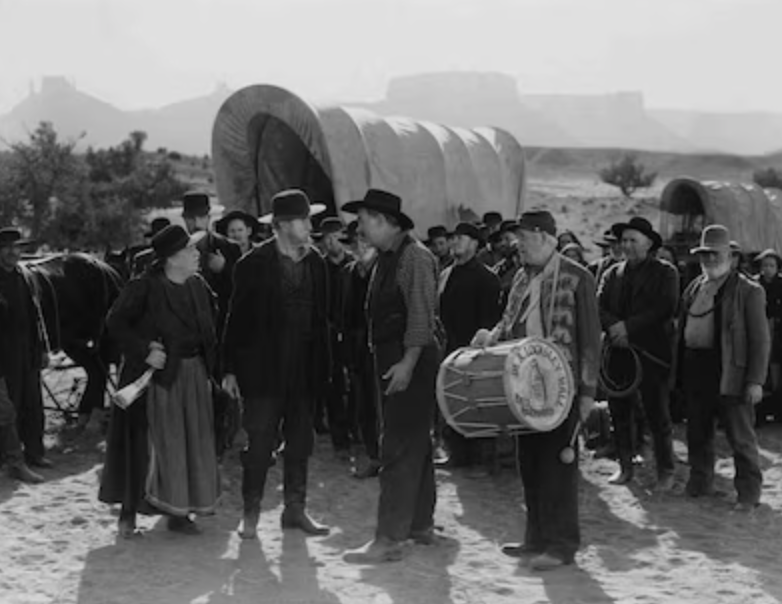
Today we toast Jane Darwell, the wonderful character actress of 170+ films, who was born on this day in 1879.
I was surprised to learn that she was born in Palmyra, Missouri, the daughter of the president of the Louisville Southern Railroad. You can actually visit her birthplace, which is on the National Register of Historic places. I just saw her in My Darling Clementine (1946) and she was wonderful as always. Other favorites include: Bright Eyes (1934) plus four other Shirley Temple movies, 3Godfathers (1948), Wagon Master (1950), and her final film, Mary Poppins (1964) as the old Bird Woman. She won the Oscar for Best Supporting Actress for The Grapes of Wrath (1940).
In October desiringGod is on a 31-day journey with Heroes of the Reformation. Every day they highlight a different hero, such as Thomas Cranmer. Not surprisingly, I am enjoying it a lot.
This is a very hopeful article about preaching the gospel in the wasteland of New England.
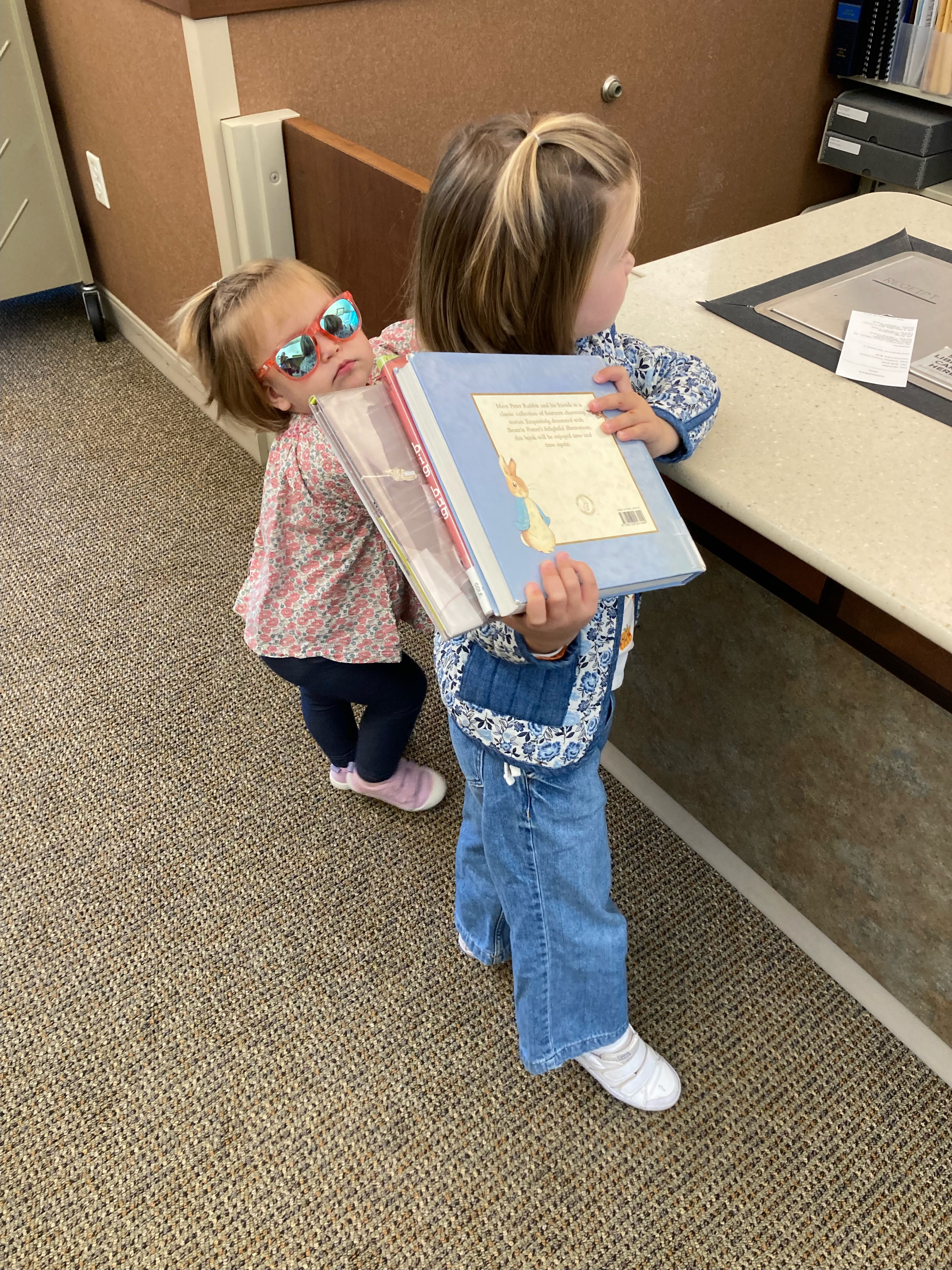
Meanwhile, the prairie girls went to the library and Ida was, as usual, too cool for school.
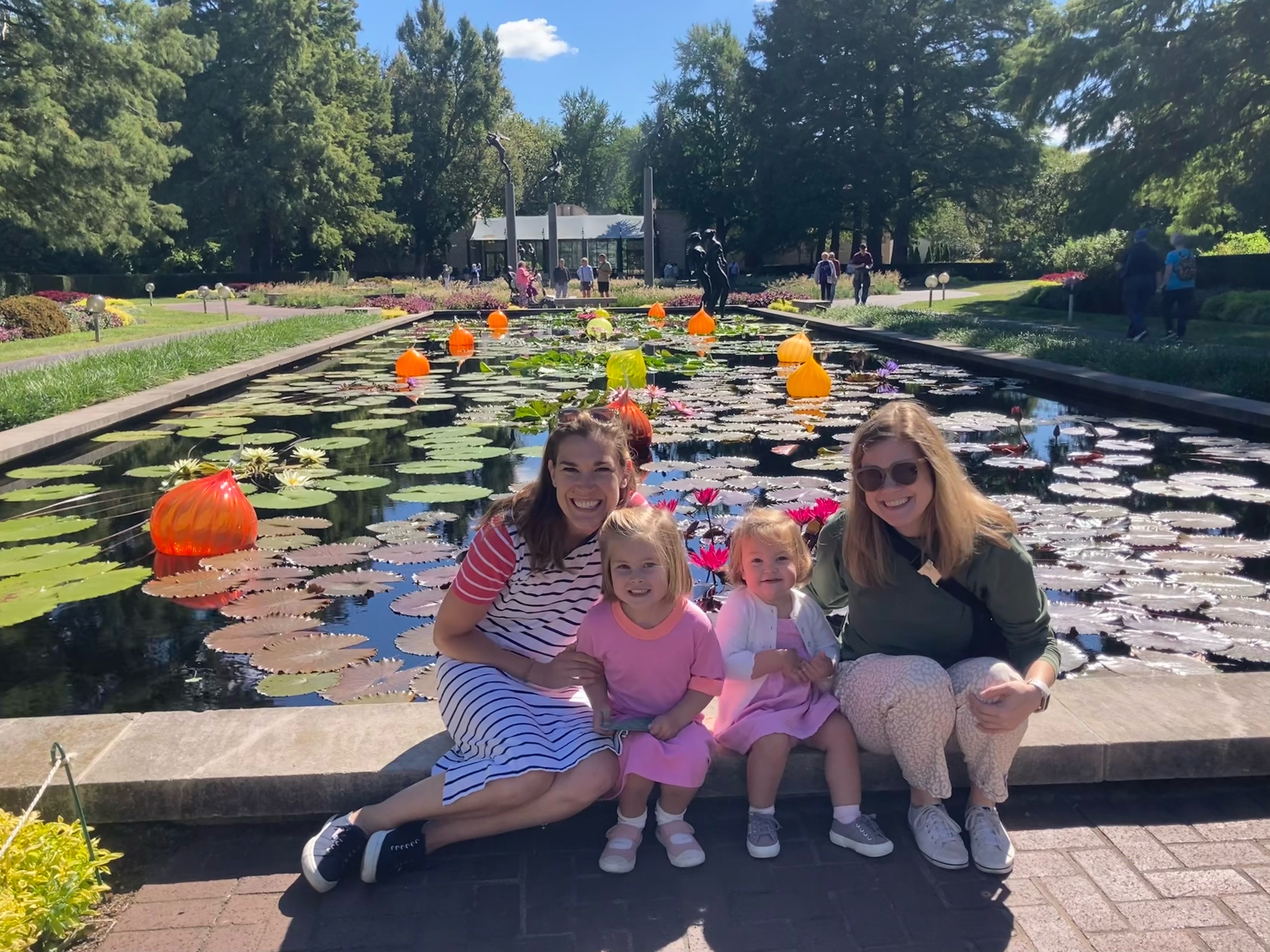
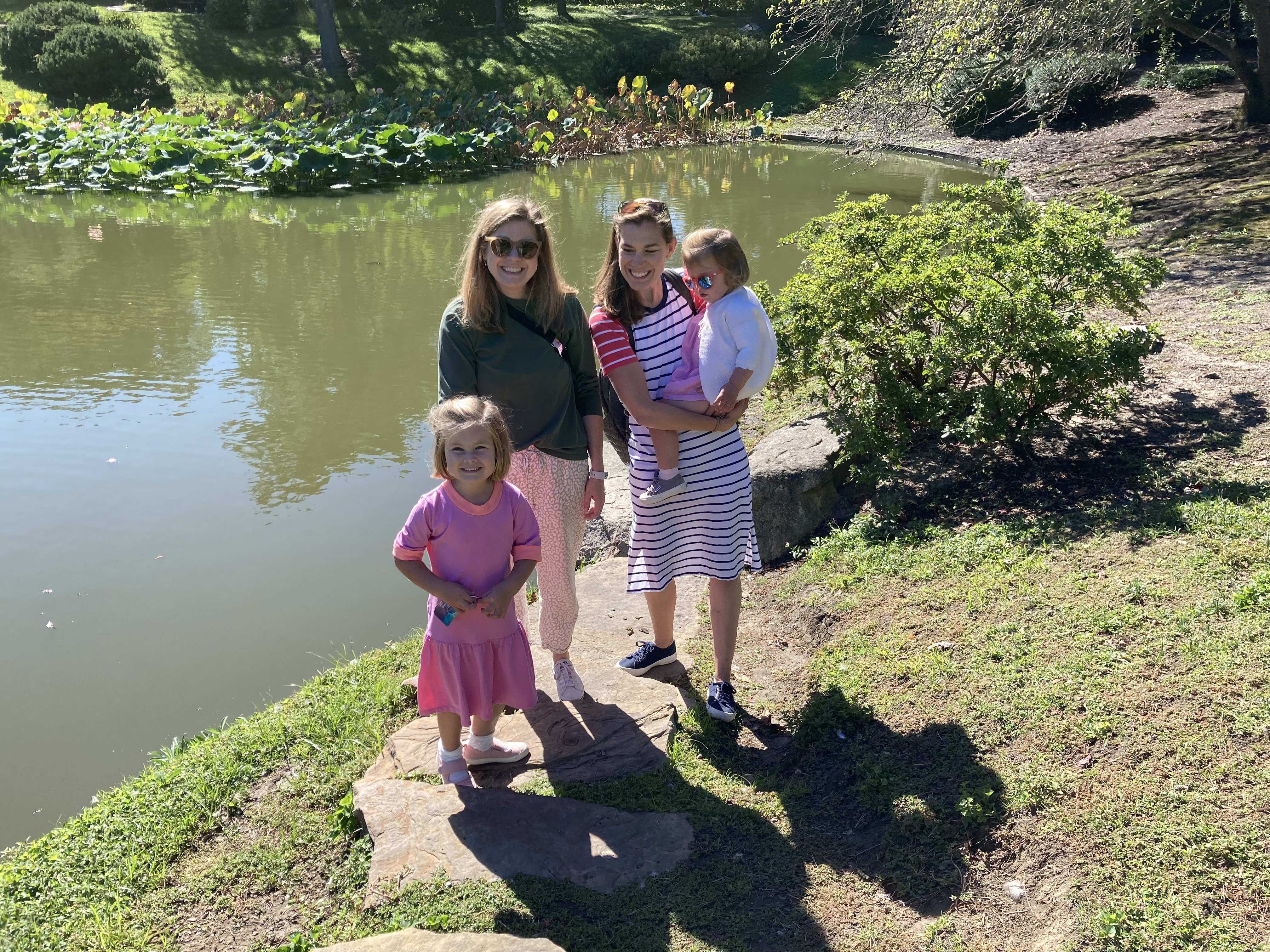
We had absolutely perfect weather this weekend–cool, sunny, breezy, no humidity. We did all the things. DN went to his wedding and we had serious Compton Lady time…
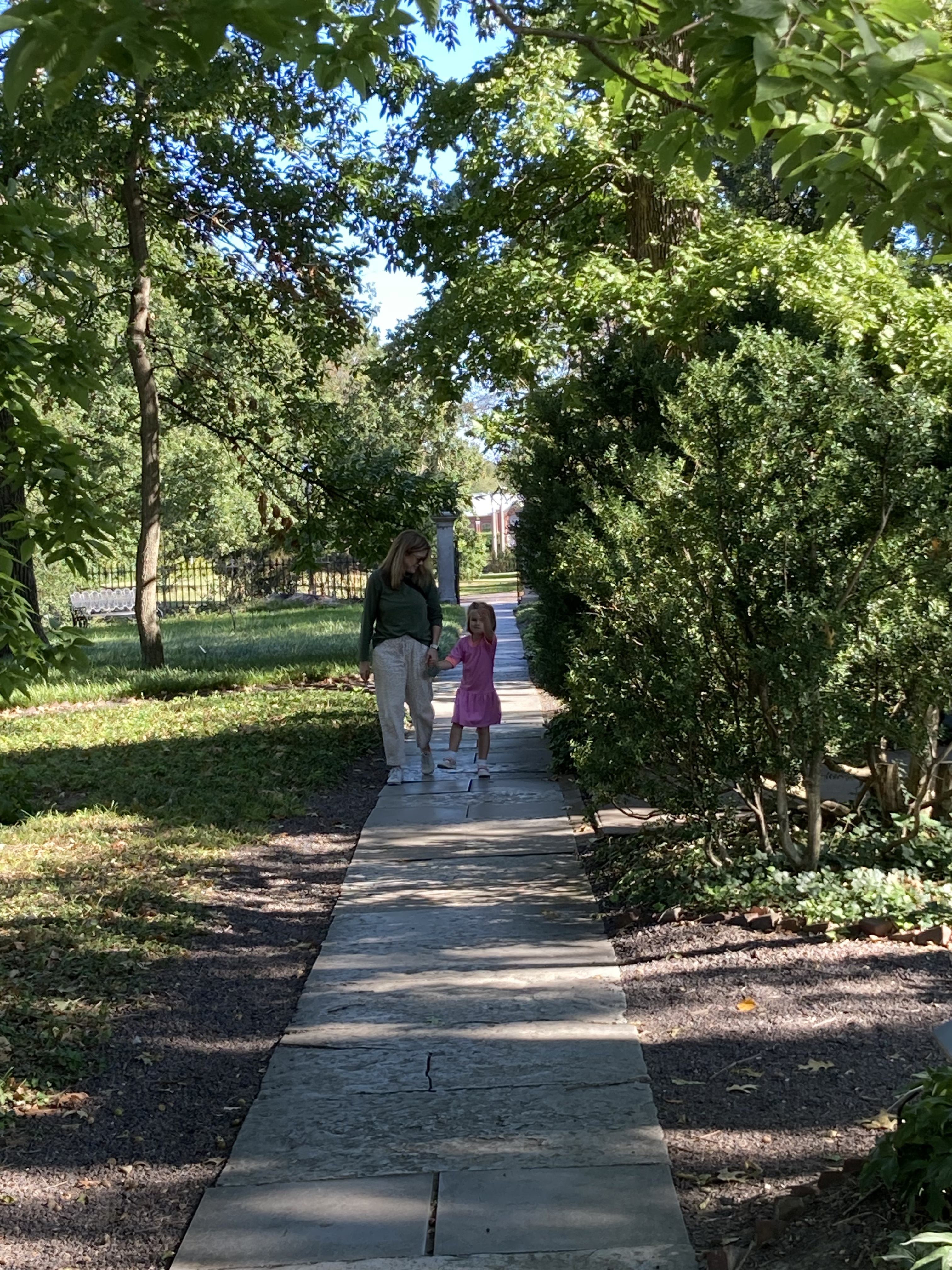
We went to the Missouri Botanical Garden where I had not been for literally years. The Koi are almost gone! The geese have taken over! Otherwise, it looked great.
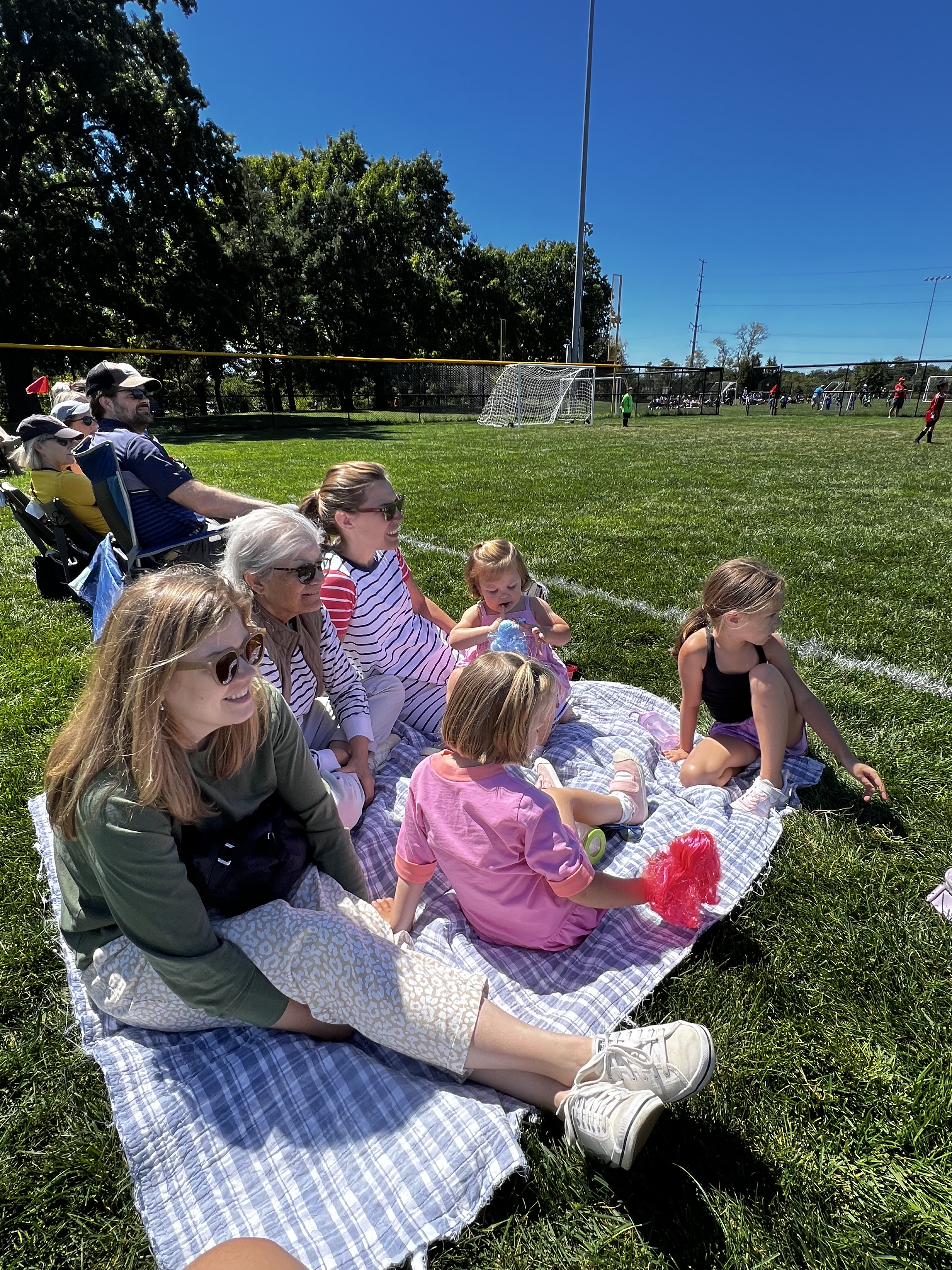
We watched the bud play soccer…
I made it to church and to a great Sunday School class on Being Presbyterian.
Doubtless, were we to regard things as they appear, the kingdom of Christ would seem often to be on the verge of ruin. But the promise, that Christ shall never be thrust from his seat, takes away from us every fear.
Thus says the Lord, your Redeemer, who formed you from the womb: “I am the Lord, who made all things, who alone stretched out the heavens, who spread out the earth by myself, 25 who frustrates the signs of liars and makes fools of diviners, who turns wise men back and makes their knowledge foolish, 26 who confirms the word of his servant and fulfills the counsel of his messengers, who says of Jerusalem, ‘She shall be inhabited,’ and of the cities of Judah, ‘They shall be built, and I will raise up their ruins’…
(Isaiah 44:24-26)
Here’s more Isaiah to propel us into the weekend. I daresay we can all use it.
We are heading to Jefferson City today and the boy and his family are heading out to the beach on Sunday so traveling mercies to all who are on the road. We also wish the boy and daughter #3 a happy 12th anniversary on Sunday! Mazel tov!
I think I mentioned that I fell behind in my daily Bible reading over the past two weeks, but I am catching up. Yesterday I was rewarded with Isaiah 40-43, which covers a lot of familiar territory.
Have you not known? Have you not heard? The Lord is the everlasting God, the Creator of the ends of the earth. He does not faint or grow weary; his understanding is unsearchable. 29 He gives power to the faint, and to him who has no might he increases strength. 30 Even youths shall faint and be weary, and young men shall fall exhausted; 31 but they who wait for the Lord shall renew their strength; they shall mount up with wings like eagles; they shall run and not be weary; they shall walk and not faint.
(Isaiah 40:28-31)
I was also reminded of last year’s VBS where the kids memorized the following:
Fear not, for I am with you; be not dismayed, for I am your God; I will strengthen you, I will help you, I will uphold you with my righteous right hand.
(Isaiah 41:10)
And these verses were important in Pilgrim’s Progress:
“Fear not, for I have redeemed you; I have called you by name, you are mine. 2 When you pass through the waters, I will be with you; and through the rivers, they shall not overwhelm you; when you walk through fire you shall not be burned, and the flame shall not consume you. 3 For I am the Lord your God, the Holy One of Israel, your Savior.
(Isaiah 43:1-3)
These are all great verses, especially when we are in need of hope and comfort.
This article gives solid advice for when your mind gets stuck in unproductive places.
And I really liked this one about prayer postures in the Bible. I need all the help I can get in increasing my prayer time. I tend to “remember [God] upon my bed, and meditate on you in the watches of the night.” (Psalm 63:6) My wandering mind betrays me during the day when I try to focus. I can do better.
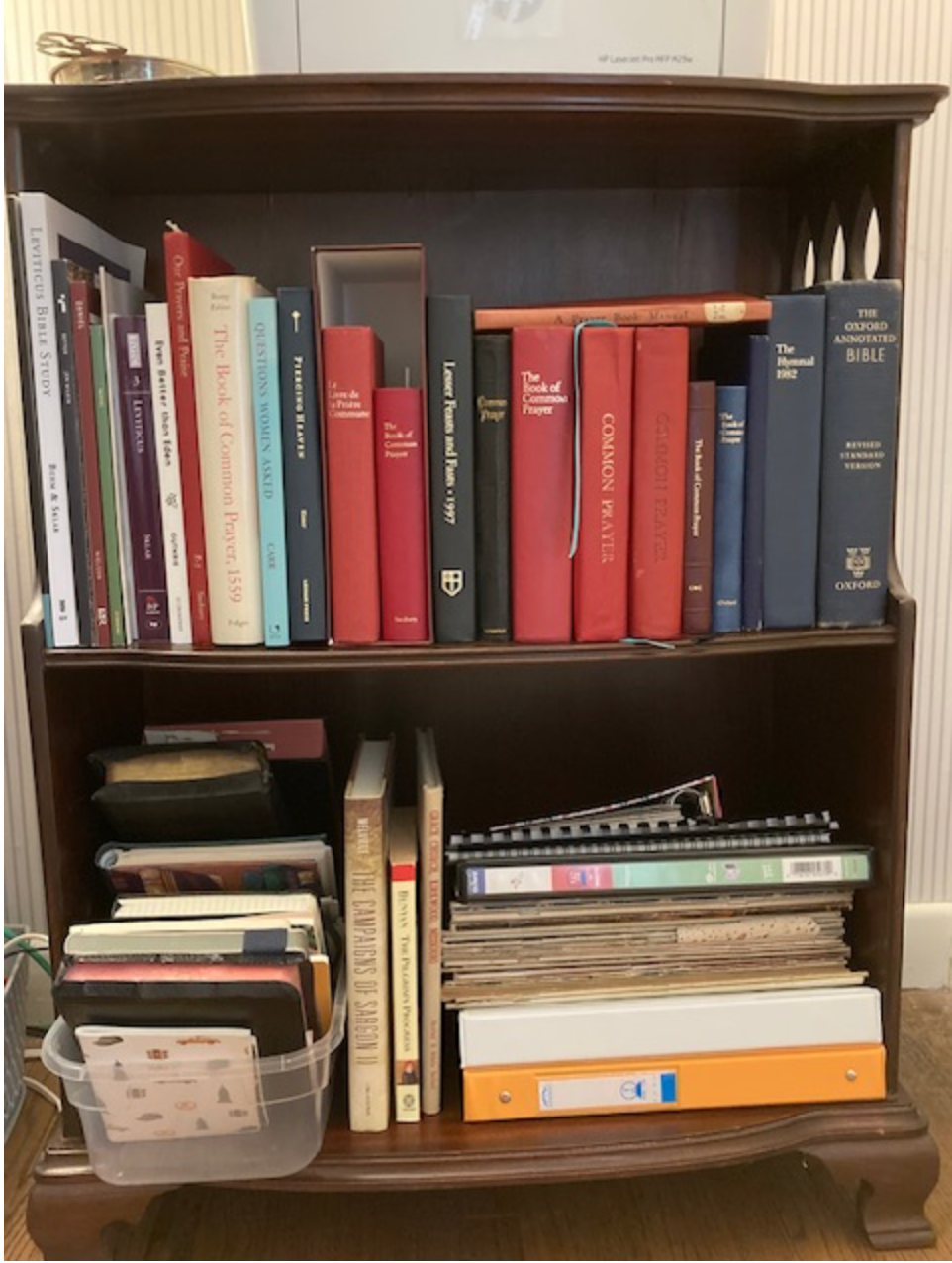
Meanwhile I am rearranging my office and I moved a small bookcase. The question arises: how many copies of the BCP do I really need?
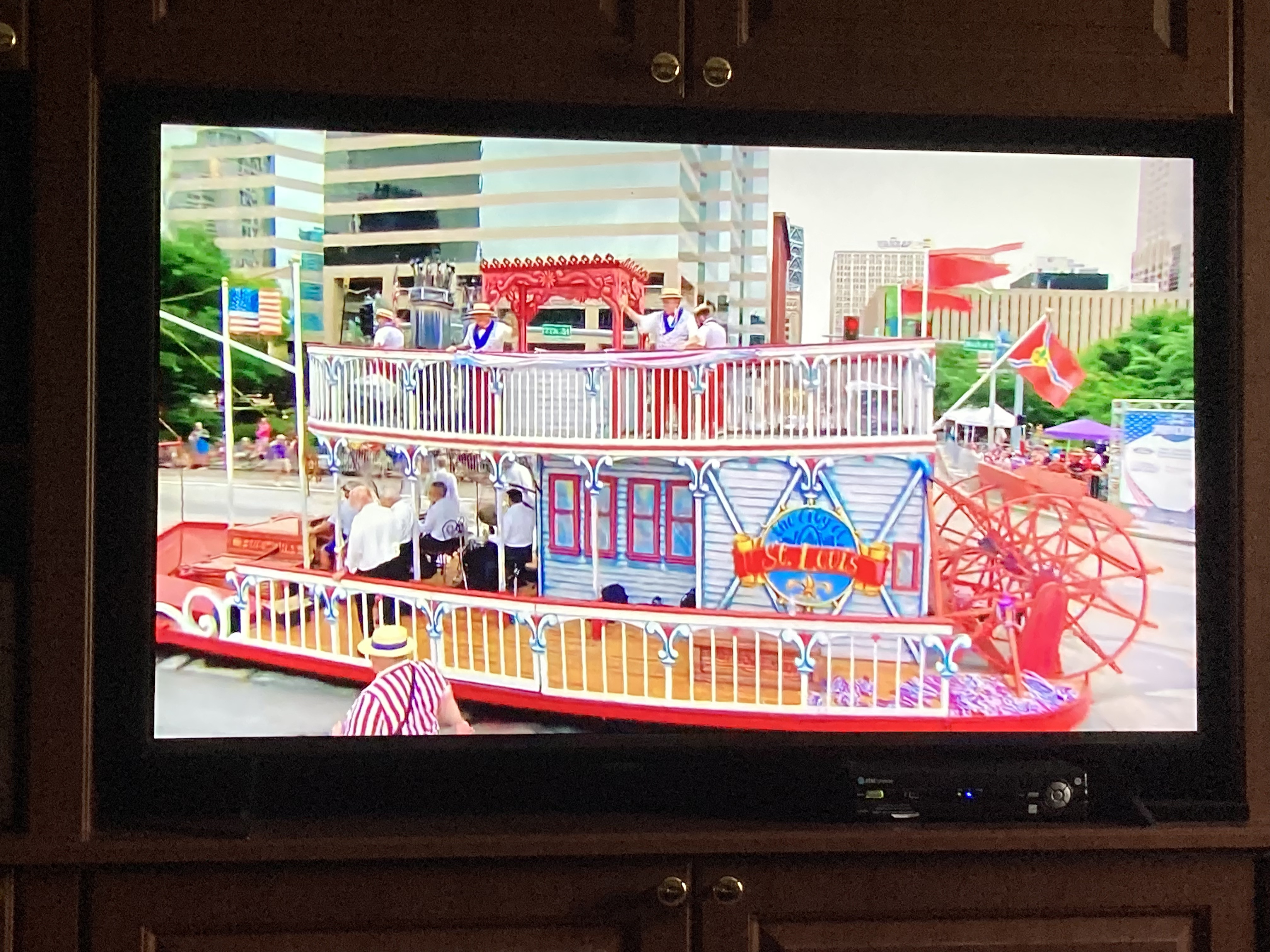
We had a lot of rain early on July 4th, but the sun came out and “America’s Birthday Parade” went forward although there were not a whole lot of people in downtown St. Louis. I watched from home.
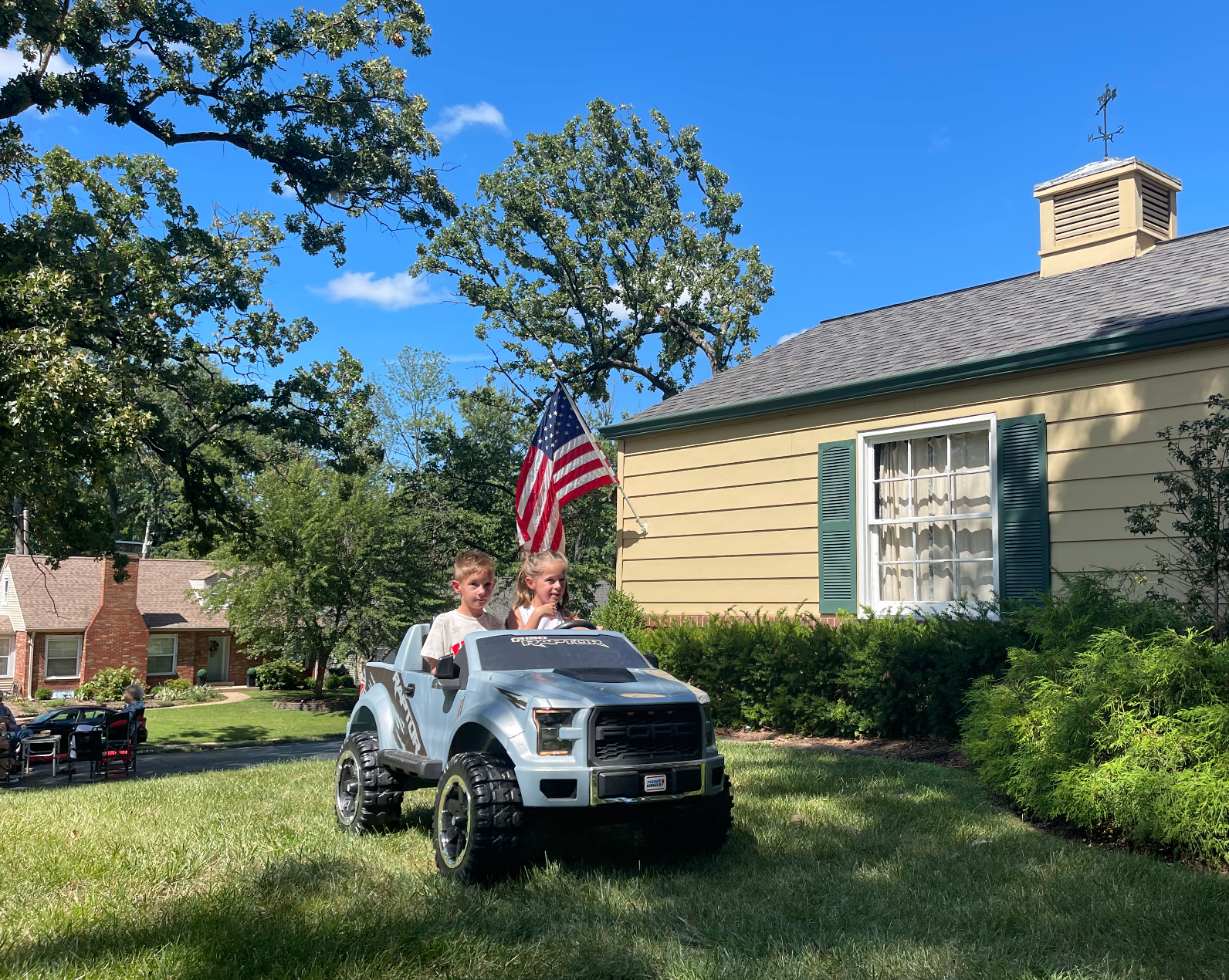
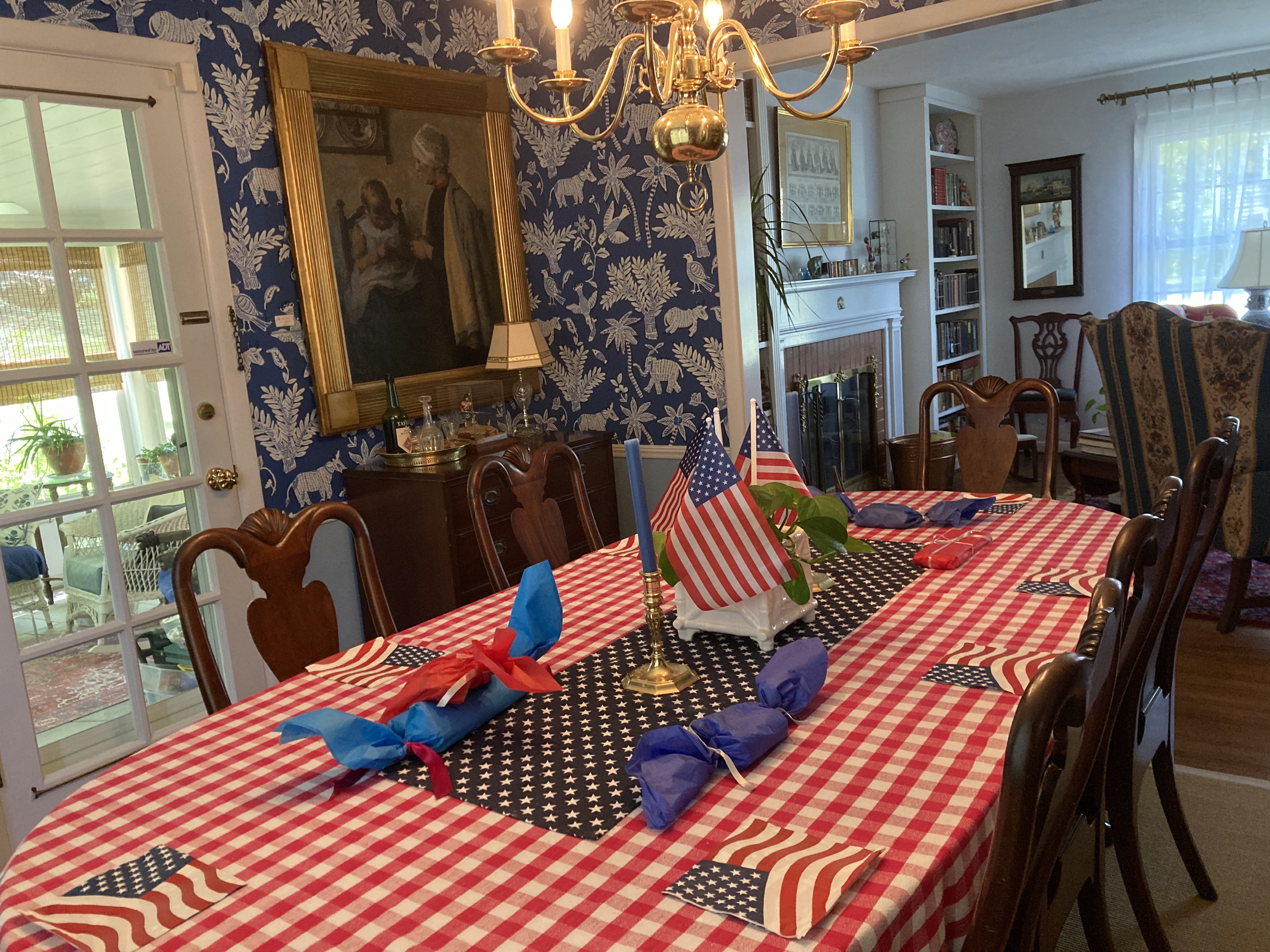
Daughter #1 and Mr. Smith and the boy and his family came over in the afternoon and we celebrated in our traditional way.
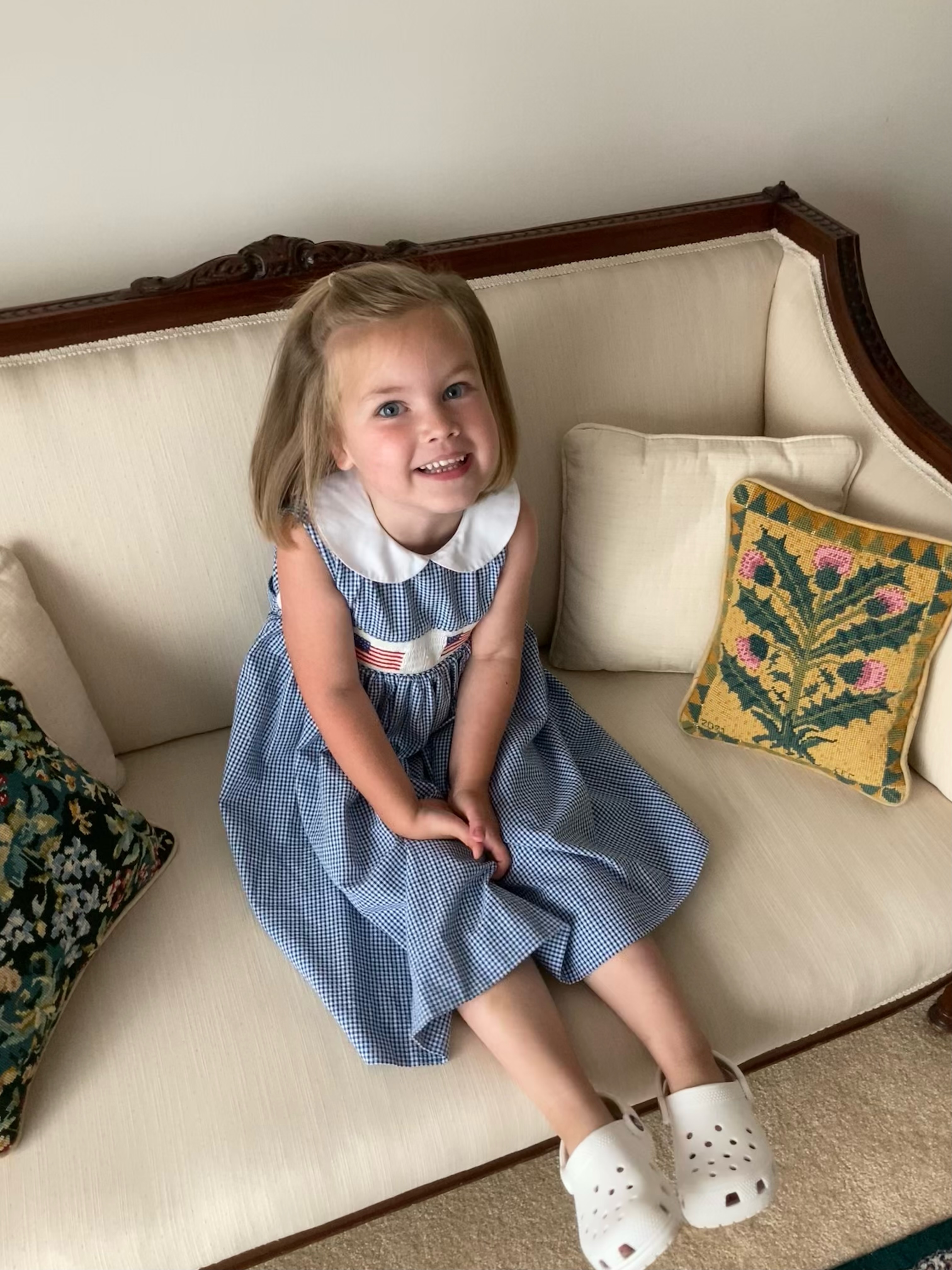
Why mess with a good thing? Daughter #2 and her family celebrated with their own backyard BBQ along with some new friends. The prairie girls were dressed appropriately!
The local town fireworks display was postponed until tonight because of dire weather predictions (note the blue, nearly cloudless sky in above photos), so we’ll probably go over to our usual spot in the high school parking lot to watch. But I have to say there were a lot of local, unofficial firework displays in our own neighborhood last night. More than I remember in previous years.
Well, I’ll wrap up with some wise words from Calvin Coolidge:
About the Declaration [of Independence] there is a finality that is exceedingly restful. It is often asserted that the world has made a great deal of progress since 1776, that we have had new thoughts and new experiences which have given us a great advance over the people of that day, and that we may therefore very well discard their conclusions for something more modern. But that reasoning can not be applied to this great charter. If all men are created equal, that is final. If they are endowed with inalienable rights, that is final. If governments derive their just powers from the consent of the governed, that is final. No advance, no progress can be made beyond these propositions. If anyone wishes to deny their truth or their soundness, the only direction in which he can proceed historically is not forward, but backward toward the time when there was no equality, no rights of the individual, no rule of the people. Those who wish to proceed in that direction can not lay claim to progress. They are reactionary. Their ideas are not more modern, but more ancient, than those of the Revolutionary fathers.
–President Calvin Coolidge, from a speech given on the 150th anniversary of the Declaration of Independence on July 4, 1926
We grant no dukedoms to the few, We hold like rights and shall;- Equal on Sunday in the pew, On Monday in the mall. For what avail the plough or sail, Or land or life, if freedom fail?
The noble craftsmen we promote, Disown the knave and fool; Each honest man shall have his vote, Each child shall have his school. A union then of honest men, Or union nevermore again.
Today in St. Louis we are also celebrating the 150th anniversary of the opening of Eads Bridge, a true architectural marvel. It was the first bridge in St. Louis, the first in the world to use steel and the first in the U.S. to use caissons for its piers.
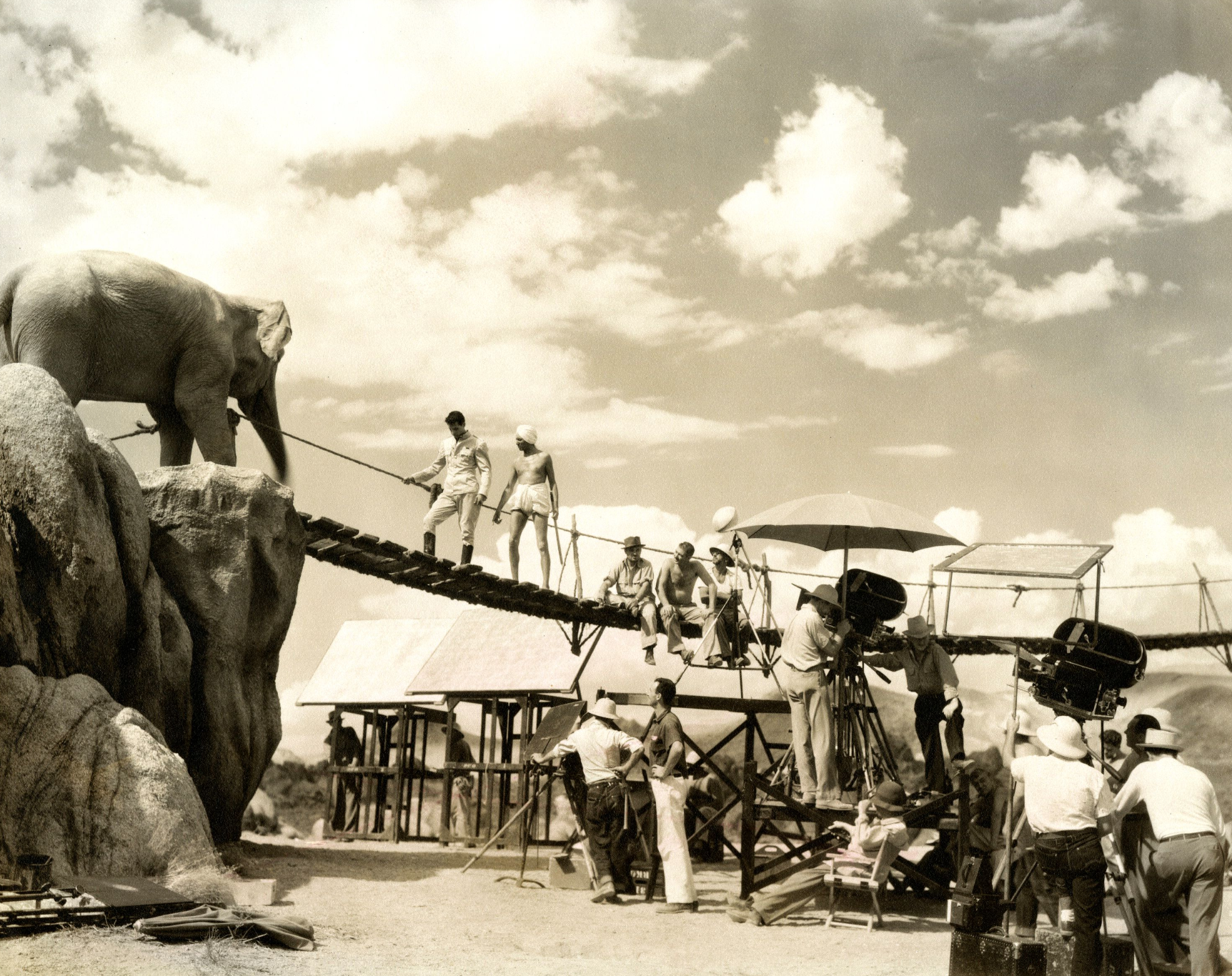
At the time there were many doubters who were concerned about the safety of the structure, but people were reassured two weeks before the grand opening by the sight of an elephant lumbering across the wagon deck. It was an unscientific test, but in the 19th century many people believed elephants knew instinctively not to set foot on unsound structures. (This made me think of that famous scene in Gunga Din (1939) when the elephant is willing to step onto the rickety bridge to follow Cary Grant…)
Needless to say, Eads bridge was sound…
Well then, exactly at daybreak on July 4, 1874 on a clear and sunny day, a thirteen-gun salute was fired to honor the original colonies of the United States. At 9 a.m. 100 guns were fired, fifty on each side of the the Mississippi River, to signal the beginning of a huge parade.
“A link of steel unites the East and West” was painted on one side of the bridge’s main arch. On the other side, decorated with evergreens, appeared a fifty-foot-high portrait of the man of the hour, James B. Eads. A display of fireworks completed the evening festivities.
I hope you all have fun plans to celebrate Independence Day with friends and family. If not, read some Emerson or Whitman, watch an old movie like Yankee Doodle Dandy (1942) or Alleghany Uprising (1939)…
What is the meaning of this intrusion?
…Read Esther Forbes’ fine book Paul Revere and the World He Lived In or Eric Metaxas’ If You Can Keep It: the Forgotten Promise of American Liberty or David McCullough’s 1776.
“The year 1776, celebrated as the birth year of the nation and for the signing of the Declaration of Independence, was for those who carried the fight for independence forward a year of all-too-few victories, of sustained suffering, disease, hunger, desertion, cowardice, disillusionment, defeat, terrible discouragement, and fear, as they would never forget, but also of phenomenal courage and bedrock devotion to country, and that, too they would never forget.”
Be proud. Be loud. Open the windows and blast your neighbors! That’s what we did when I was growing up. We had this LP and this was one of my favorite pieces:
















 dual personalities