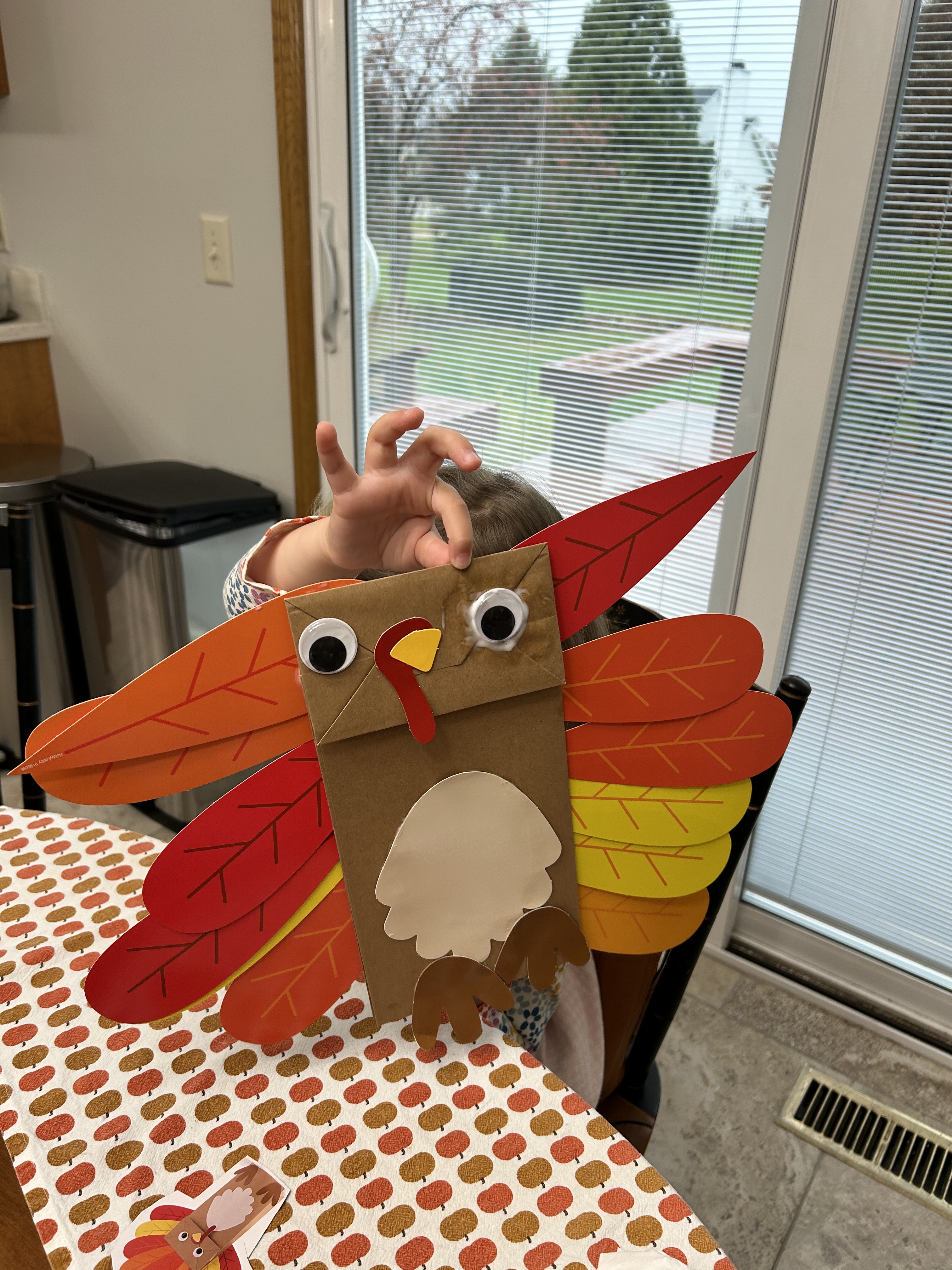
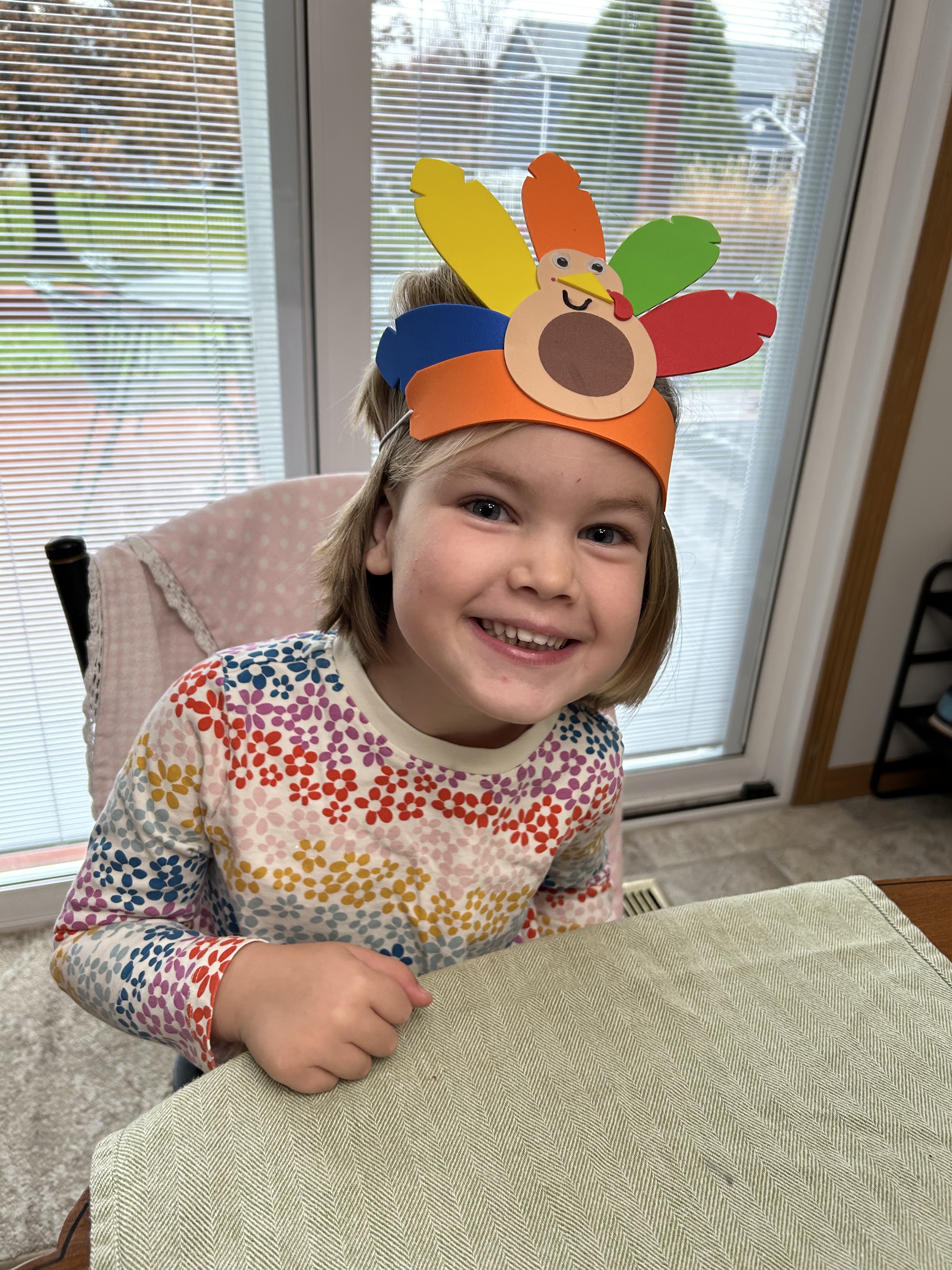
Yesterday was such a dark, gloomy, rainy November day! Lots of leaves came down. Being Monday, I had a lot to do. C’est la vie. I was happy to see that the Prairie Girls were using their time to good advantage.
Oh Mylanta, cuteness overload.
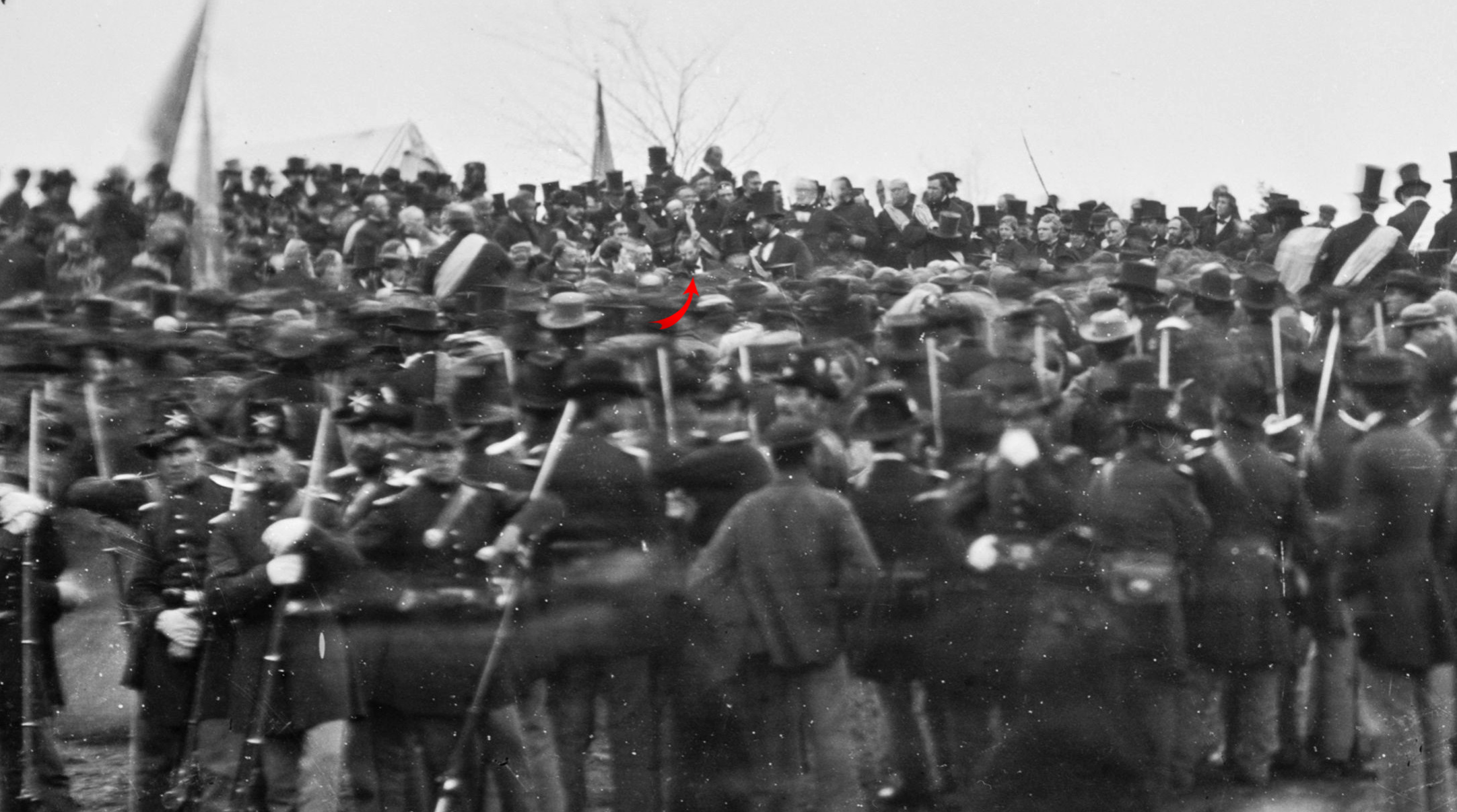
Today we remember President Abraham Lincoln, who gave the Gettysburg Address at the dedication ceremony for the military cemetery at Gettysburg, PA on this day in 1863. Let’s just take a few minutes and read it:
Four score and seven years ago our fathers brought forth on this continent, a new nation, conceived in Liberty, and dedicated to the proposition that all men are created equal.
Now we are engaged in a great civil war, testing whether that nation, or any nation so conceived and so dedicated, can long endure. We are met on a great battle-field of that war. We have come to dedicate a portion of that field, as a final resting place for those who here gave their lives that that nation might live. It is altogether fitting and proper that we should do this.
But, in a larger sense, we can not dedicate—we can not consecrate—we can not hallow—this ground. The brave men, living and dead, who struggled here, have consecrated it, far above our poor power to add or detract. The world will little note, nor long remember what we say here, but it can never forget what they did here. It is for us the living, rather, to be dedicated here to the unfinished work which they who fought here have thus far so nobly advanced. It is rather for us to be here dedicated to the great task remaining before us—that from these honored dead we take increased devotion to that cause for which they gave the last full measure of devotion—that we here highly resolve that these dead shall not have died in vain—that this nation, under God, shall have a new birth of freedom—and that government of the people, by the people, for the people, shall not perish from the earth.
Of course, not everyone at the time thought that it was a great speech. The Democrat-leaning Chicago Times observed, “The cheek of every American must tingle with shame as he reads the silly, flat and dishwatery utterances of the man who has to be pointed out to intelligent foreigners as the President of the United States.” Yes, times have not changed. Especially within the ranks of our so-called intellectual elites.
Today we toast the great, but under-appreciated, writer Conrad Richter, who died on this day in 1968. Isaac Bashevis Singer wrote, “There are in the literature of the world few works of historical fiction that make the reader feel that the writer must have been a witness to what he describes; he was actually there and came back – a transmigrated soul – to tell a story. The Awakening Land is such a work… it would be a great novel in any literature.”
I would heartily concur. Richter wrote short stories and 15 novels. His novel The Town, the last story of his trilogy The Awakening Land about the Ohio frontier, won the 1951 Pulitzer Prize for Fiction. His novel The Waters of Kronos won the 1961 National Book Award for Fiction.
A strange, uneasy feeling ran over him. If he had been wrong about his mother in this, might he by any chance have been wrong in other things about her also? Could it be even faintly possible that the children of pioneers like himself, born under more benign conditions than their parents, hated them because they themselves were weaker, resented it when their parents expected them to be strong, and so invented all kinds of intricate reasoning to prove that their parents were tyrannical and cruel, their beliefs false and obsolete, and their accomplishments trifling? Never had his mother said that. But once long ago he had heard her mention, not in as many words, that the people were too weak to follow God today, that in the Bible God made strong demands on them for perfection, so the younger generation watered God down, made Him impotent and got up all kinds of reasons why they didn’t have to follow Him but could go along their own way.” (The Town)
Like all great fiction, his words still speak to us, even seventy-five years after being published.
Well, as you know, I am a great re-reader, so I will reward myself with some Conrad Richter today.
Yesterday the boy came over and fixed our shutters which have been buffeted around by the wind all year and thus we were beginning to look like that house in the neighborhood that looks like it is decorated for Halloween all year. He also took apart the crib which was taking up a lot of room in our spare bedroom and moved it to the garage. I am so grateful to have adult children who are still speaking to me. This is a blessing not everyone can claim.
So re-read an old book, count your blessings and remember:
The steadfast love of the Lord never ceases; his mercies never come to an end; they are new every morning; great is your faithfulness.
(Lamentations 3:22)
*Today is the poet Paul Valéry’s birthday (1871-1945)–“Le vent se lève… il faut tenter de vivre !” Read the whole poem here.
Yesterday Ron, my co-editor of the Kirkwood Historical Review, came over to discuss the issue I am currently getting ready to send to the printer and he grumbled about how nippy it was outside. Indeed, the frost will be on the pumpkin very soon! And about time, really. I am ready for nippy.
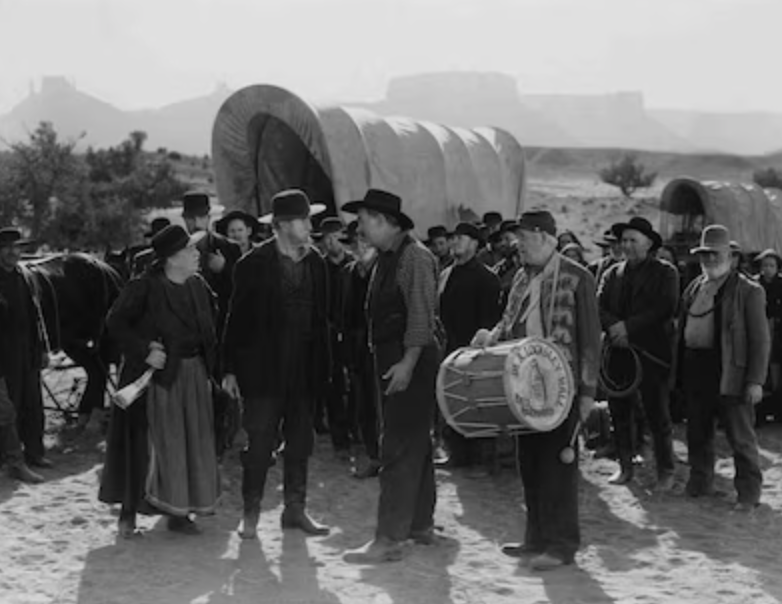
Today we toast Jane Darwell, the wonderful character actress of 170+ films, who was born on this day in 1879.
I was surprised to learn that she was born in Palmyra, Missouri, the daughter of the president of the Louisville Southern Railroad. You can actually visit her birthplace, which is on the National Register of Historic places. I just saw her in My Darling Clementine (1946) and she was wonderful as always. Other favorites include: Bright Eyes (1934) plus four other Shirley Temple movies, 3Godfathers (1948), Wagon Master (1950), and her final film, Mary Poppins (1964) as the old Bird Woman. She won the Oscar for Best Supporting Actress for The Grapes of Wrath (1940).
In October desiringGod is on a 31-day journey with Heroes of the Reformation. Every day they highlight a different hero, such as Thomas Cranmer. Not surprisingly, I am enjoying it a lot.
This is a very hopeful article about preaching the gospel in the wasteland of New England.
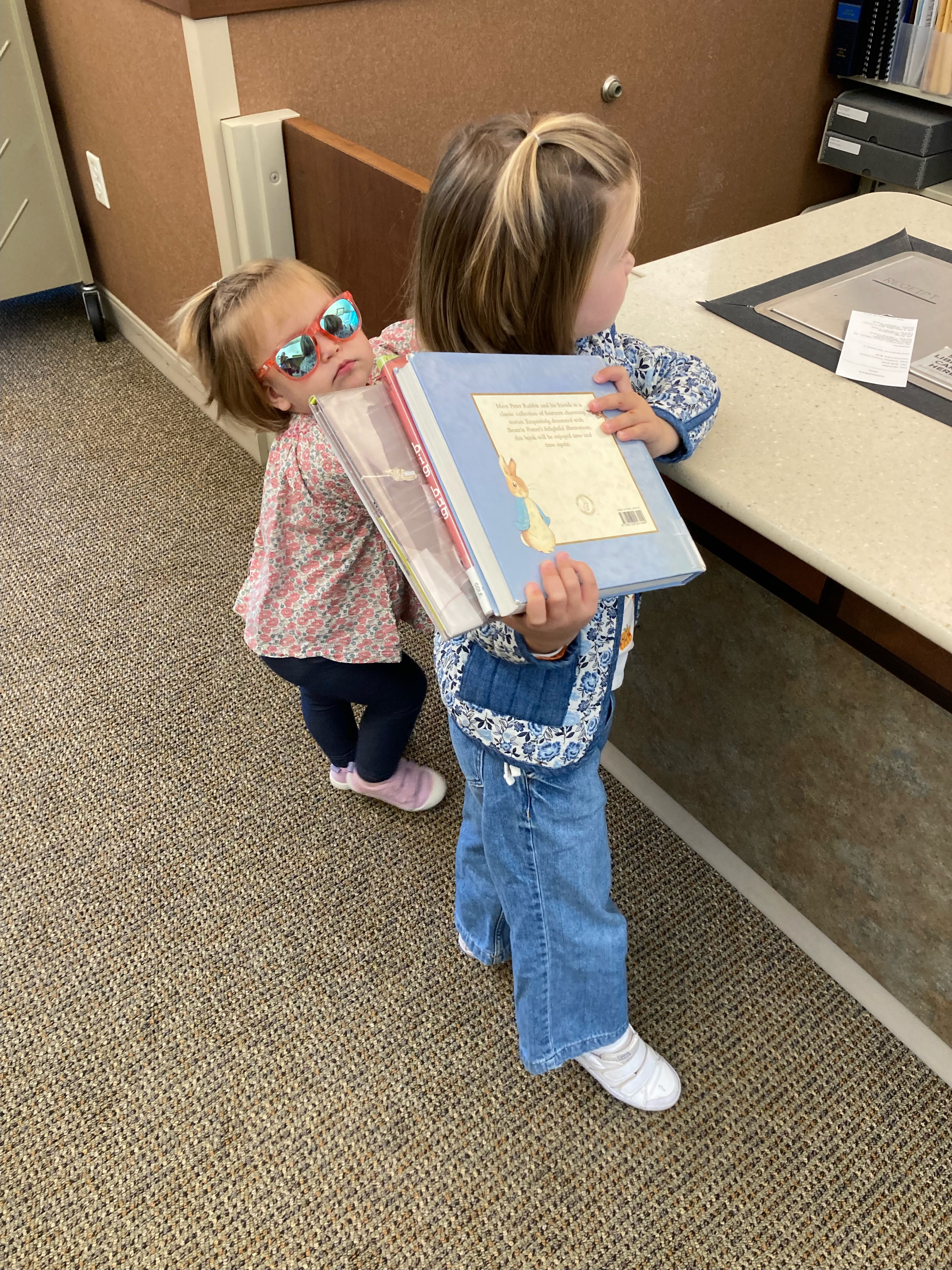
Meanwhile, the prairie girls went to the library and Ida was, as usual, too cool for school.
Mondays are for laundry, putting away toys and puzzles and games, vacuuming up crumbs, and generally getting situated for the week ahead. I also had to catch up with my Bible reading, which I had failed to do over the weekend. Now hear the word of the Lord:
And you shall know that I am the Lord, when I open your graves, and raise you from your graves, O my people. 14 And I will put my Spirit within you, and you shall live, and I will place you in your own land. Then you shall know that I am the Lord; I have spoken, and I will do it, declares the Lord.” (Ezekiel 37:13-14)
Now it is Tuesday. Time for a new ‘to do’ list!
And here’s a poem by Mary Oliver (1935-2019)–today is her birthday: “Invitation”
Oh do you have time to linger for just a little while out of your busy
and very important day for the goldfinches that have gathered in a field of thistles
for a musical battle, to see who can sing the highest note, or the lowest,
or the most expressive of mirth, or the most tender? Their strong, blunt beaks drink the air
as they strive melodiously not for your sake and not for mine
and not for the sake of winning but for sheer delight and gratitude— believe us, they say, it is a serious thing
just to be alive on this fresh morning in the broken world. I beg of you,
do not walk by without pausing to attend to this rather ridiculous performance.
It could mean something. It could mean everything. It could be what Rilke meant, when he wrote: You must change your life.
This week was a scorcher, but par for the flyover course. The forecast for the long weekend is optimistic so we’ll see.
Daughter #2 and her family escaped to Michigan, but they encountered a huge storm halfway through their vacay which knocked out the electricity to 400,000 people and their running water!
C’est la vie. Before the weather catastrophe, my brother and sister-in-law drove over for a short visit…
…and caught up with the comings and goings of Pete the Cat et al.
Yes, the month is winding down. I will toast Jorge Luis Borges again and suggest you read this short story about a man whose father tells him he had “Lunch with Borges” once. It reminded me of my father telling me he sat on Gertrude Stein’s lap as an infant. We know our parents so little really.
As in dreams behind high doors there is nothing, not even emptiness. As in dreams behind the face that looks at us there is no one. Obverse without a reverse, one-sided coin, the side of things. That pittance is the boon tossed to us by hastening time. We are our memory, we are that chimerical museum of shifting shapes, that pile of broken mirrors.
This is an interesting reflection on Peer Gynt, showing how a troll becomes a troll. “In 2024, we live in a world of trolls. What is the name for cowardly people who leave hateful comments on the internet? Trolls. Our family’s word for road-ragers? Road trolls. Peer Gynt is a story for today.”
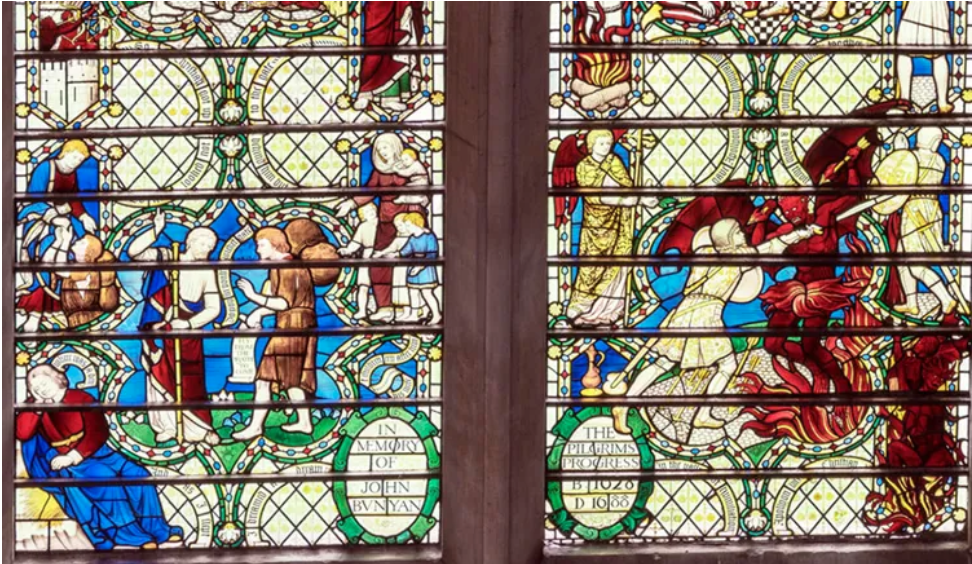
And here’s a heads up that the Church of England remembers John Bunyan with a Lesser Festival on 30 August. I was glad to see that a memorial window to Bunyan was unveiled in the west aisle of the north transept of Westminster Abbey in January 1912. It was erected by public subscription and designed by J. Ninian Comper and shows eight main scenes from the first part of Bunyan’s most famous work The Pilgrim’s Progress. The inscription reads: In memory of John Bunyan. The Pilgrim’s Progress. B.1628. D.1688.
“You are not yet out of reach of the gunshot of the Devil. You have not yet resisted unto death in your striving against sin. Let the Kingdom be always before you, and believe with certainty and consistency the things that are yet unseen. Let nothing that is on this side of eternal life get inside you. Above all, take care of your own hearts, and resist the lusts that tempt you, for your hearts `are deceitful above all things, and desperately wicked.’ Set your faces like a flint; you have all the power of Heaven and earth on your side.”
One more week of August! Signs of fall are everywhere!
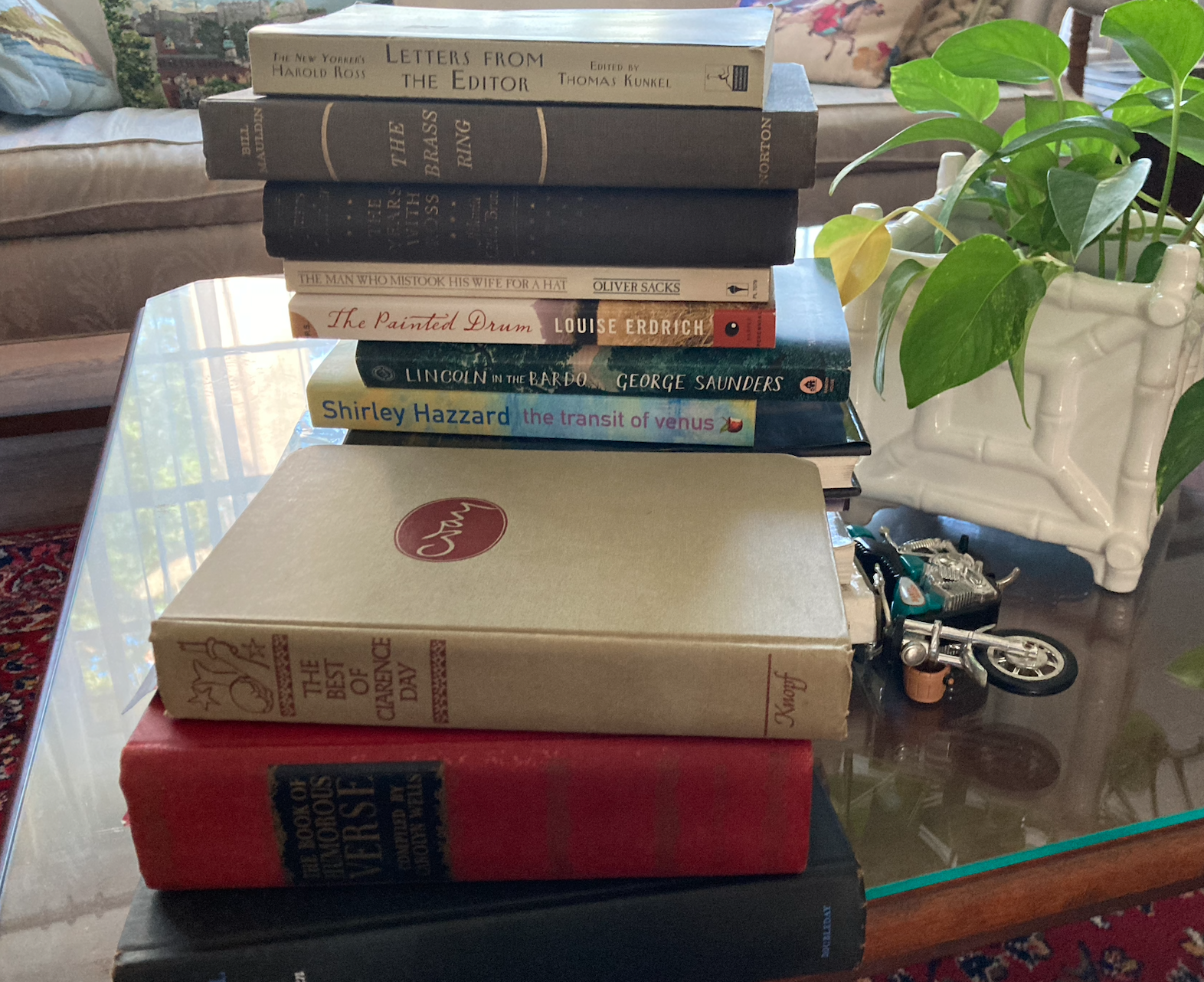
I continue to unbox the books I hurriedly boxed up last Friday…
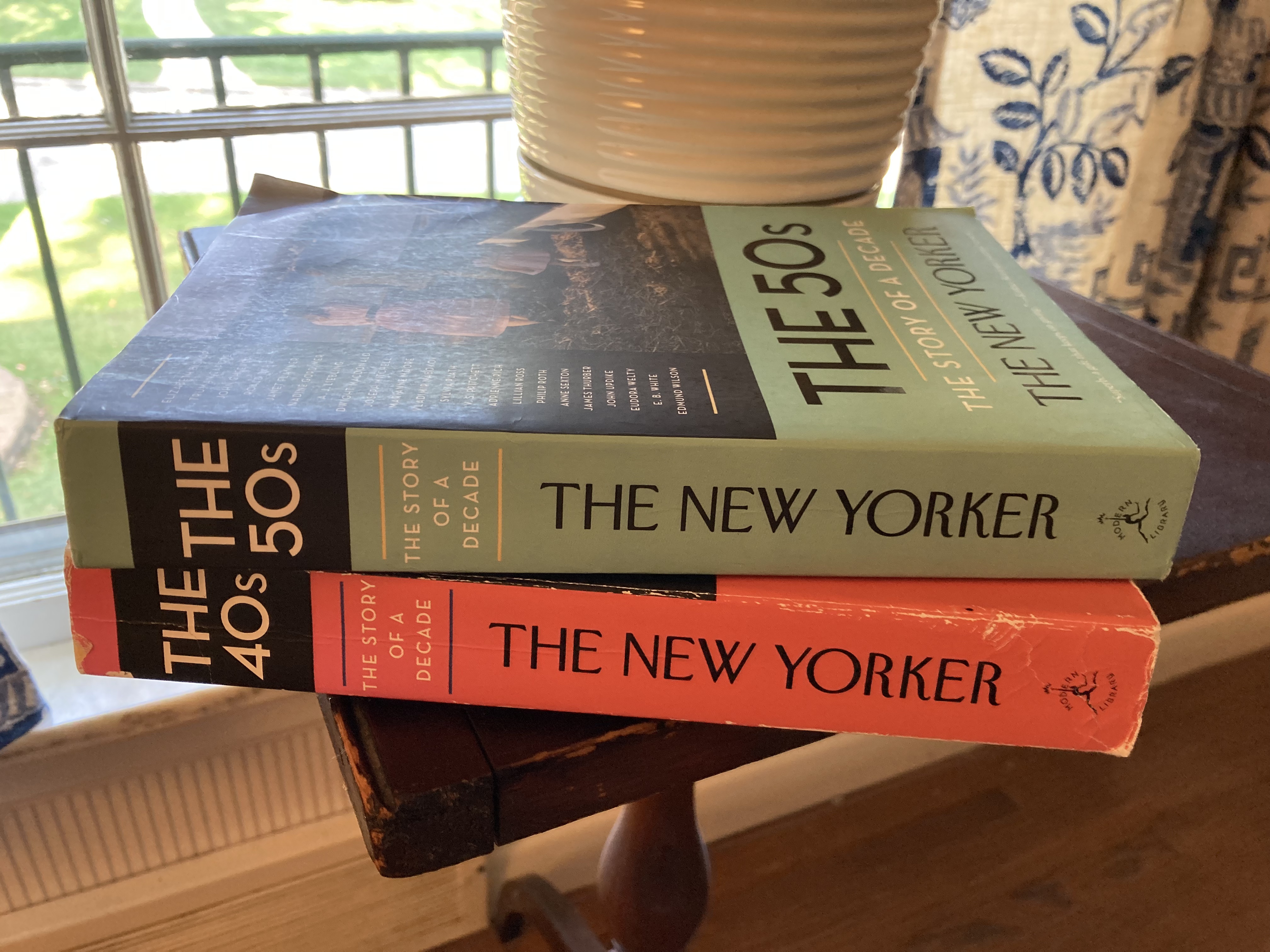
I am especially enjoying these books which include articles and reviews from The New Yorker, back when it was a magazine worth reading…
Take for instance Wolcott Gibbs’ review of Guys and Dolls when it opened in 1950. He starts off with this:
I don’t think I ever had more fun at a musical comedy than I had the other night, when an association of strangely gifted men put on a Broadway epic known as Guys and Dolls. There have been loftier moral and aesthetic experiences, like Show Boat and South Pacific; there have been more enduring musical accomplishments, like Porgy and Bess; there have been occasions when the humor was clearly on a more ambitious level, like Of Thee I Sing; there have been sensational individual performances, like practically anything involving Miss Ethel Merman. There has, however, been nothing I can remember that sustained a higher level of sheer entertainment than the operation at the Forty-sixth Street Theatre.
Well.
There are book reviews, television and movie reviews, poetry, fiction, and longer pieces on “the American Scene”, “Artists and Entertainers”, current events, “Characters”, “Curious Developments”, and a lot more. Certainly enough to keep me busy for some time.
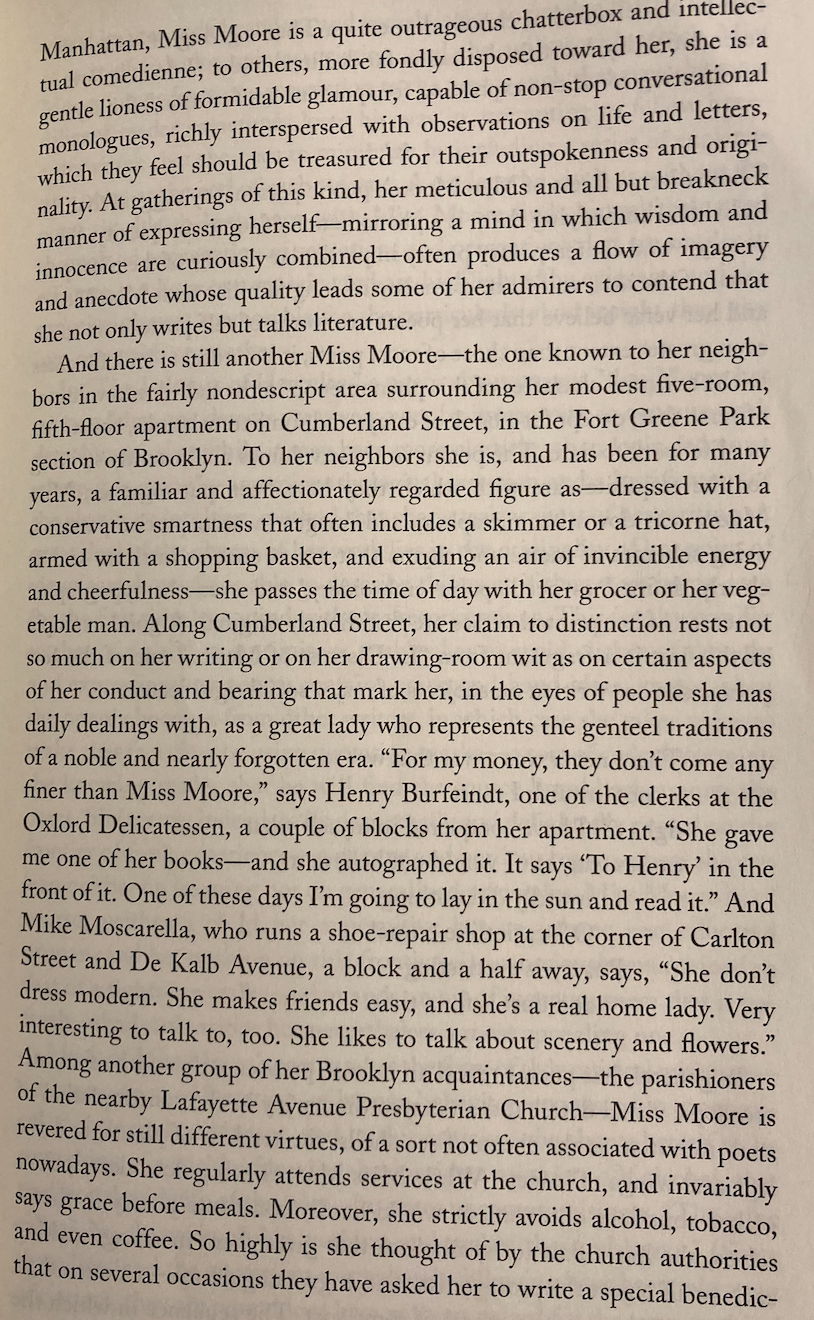
I especially enjoyed a long article by Winthrop Sargeant on the poet Marianne Moore, “Humility, Concentration and Gusto”, in the 2/16/1957 issue. I wrote an article about Moore for the Kirkwood Historical Review last year, but I was unaware of this piece in The New Yorker. It is a wonderful in-depth portrait and it reinforces my impression of her. “To some of the more complicated types who frequent literary teas and cocktail parties in…
…well, you understand. I’m afraid they don’t make ’em like Marianne Moore anymore. More’s the pity. Anyway, I am going to aim at exuding an air of invincible energy and cheerfulness. It won’t be easy.
My week is off to a quiet start and that is okay with me. I don’t have much going on besides having to do my homework for my Bible Study which starts anew on Thursday.
This week I will also be reading works by Jorge Luis Borges, the Argentine writer, poet and philosopher, whose birthday we celebrate on August 24. Here is a snippet from an interview with William F. Buckley where he speaks about the English language…
I could listen to him talk for hours.
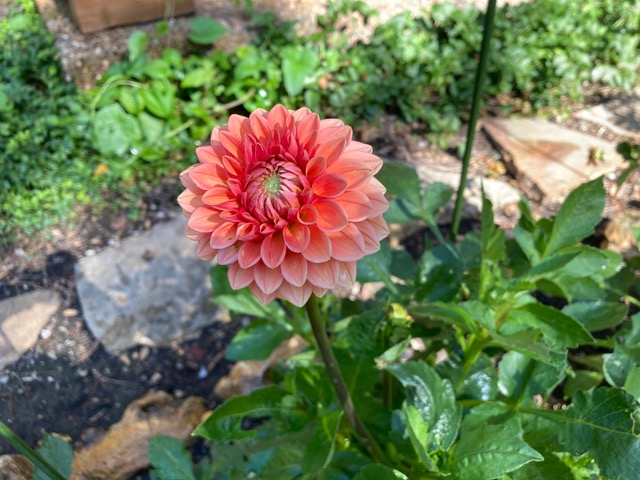
Meanwhile Don’s dahlias are beautiful…
As a member of the Asteraceae family, the dahlia has a flower head that is actually a composite with both central disc florets and surrounding ray florets. Each floret is a flower in its own right, according to Don, but is often incorrectly described as a petal. God’s amazing creation!
I guess things went well on the first day of school…
And here’s a fun fact to know and share: In 1954, Charles Schulz introduced Charlotte Braun to the Charlie Brown cast as a loud-mouthed female character (a role Lucy would later inherit). Readers disliked Charlotte, and she disappeared a few months later after only about 10 times in the strip.
I have a feeling Charlotte may have hit too close to home for some people (loud-mouthed females). But she’d fit right in now…
How was your weekend? We had beautiful weather–temps in the 70s and 80s–unheard of for August! We tried to optimize time spent outside by going to the winery and also enjoying the first driveway sittin’ in a long time.
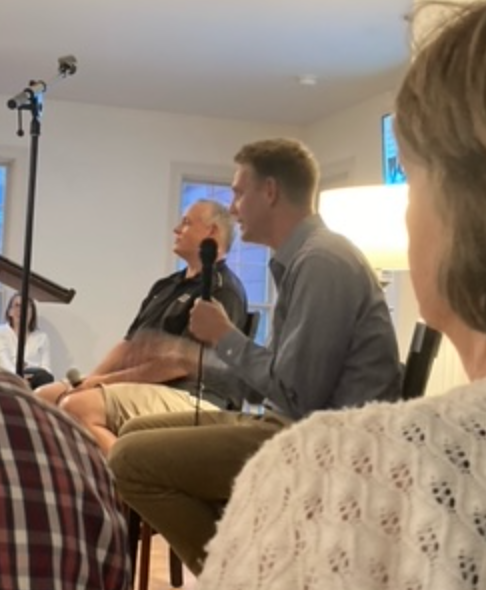
Friday evening daughter #1 and I went to church to hear Abram Van Engen talk about his new book on reading poetry.
I enjoyed it very much and am also enjoying reading his book. But then, I enjoy reading poetry. Van Engen contends that poets do what God instructed Adam to do–name creation (Genesis 2:19-20). And when you think about it, that is what poets do–they point things out, they draw our attention to things. I think of Billy Collins’ poem “Litany”:
You are the bread and the knife, the crystal goblet and the wine. You are the dew on the morning grass and the burning wheel of the sun. You are the white apron of the baker, and the marsh birds suddenly in flight.
However, you are not the wind in the orchard, the plums on the counter, or the house of cards. And you are certainly not the pine-scented air. There is just no way that you are the pine-scented air.
It is possible that you are the fish under the bridge, maybe even the pigeon on the general’s head, but you are not even close to being the field of cornflowers at dusk.
And a quick look in the mirror will show that you are neither the boots in the corner nor the boat asleep in its boathouse.
It might interest you to know, speaking of the plentiful imagery of the world, that I am the sound of rain on the roof.
I also happen to be the shooting star, the evening paper blowing down an alley and the basket of chestnuts on the kitchen table.
I am also the moon in the trees and the blind woman’s tea cup. But don’t worry, I’m not the bread and the knife. You are still the bread and the knife. You will always be the bread and the knife, not to mention the crystal goblet and—somehow—the wine.
and anything, of course, by Walt Whitman…
After working in the basement for awhile on Saturday morning, we went to our favorite winery in Hillsboro and sat and listened to music and people-watched and drank wine in the sunshine. That is the best way to spend a Saturday afternoon.
On Sunday we went to church. Unbeknowst to us (and everyone else) the man teaching our Sunday School class was sick and so they moved the Children’s Sunday School teacher training into our room, so we ended up attending the training class! It was interesting, but I do not plan to volunteer for that particular ministry.
After church I had lunch with my two best friends and later the boy and his family came over for some Sunday driveway sittin’. No one took any pictures except this one of Lottie with Mr. Smith.
We barbecued hotdogs and ate chips ‘n dip and watermelon, which everyone enjoyed. My philosophy is keep it simple.
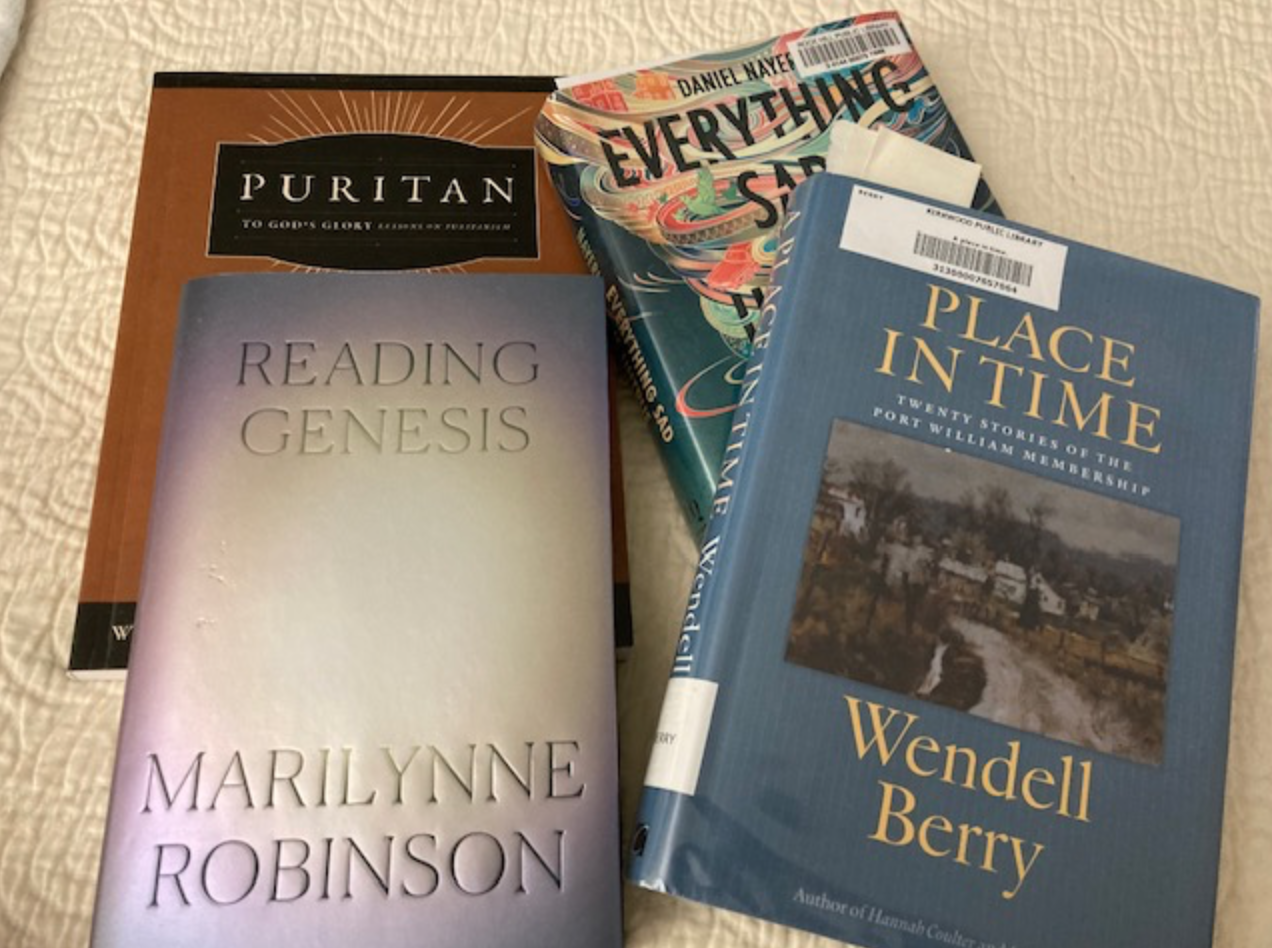
August is trudging along and I am trying to read some real books. I started Everything Sad Is Untrue: (A True Story) by Daniel Nayeri, but it has not grabbed me. I’ll keep going, but I promise nothing. Place In Time by Wendell Berry is really good. I love Wendell Berry. The Marilynne Robinson is also very good and I am reminded that it was my small group reading Genesis thirty-odd years ago that got me started on Bible reading–real Bible reading where you read the whole book, chapter by chapter and verse by verse. Genesis is indeed a great, great book–however you slice it.
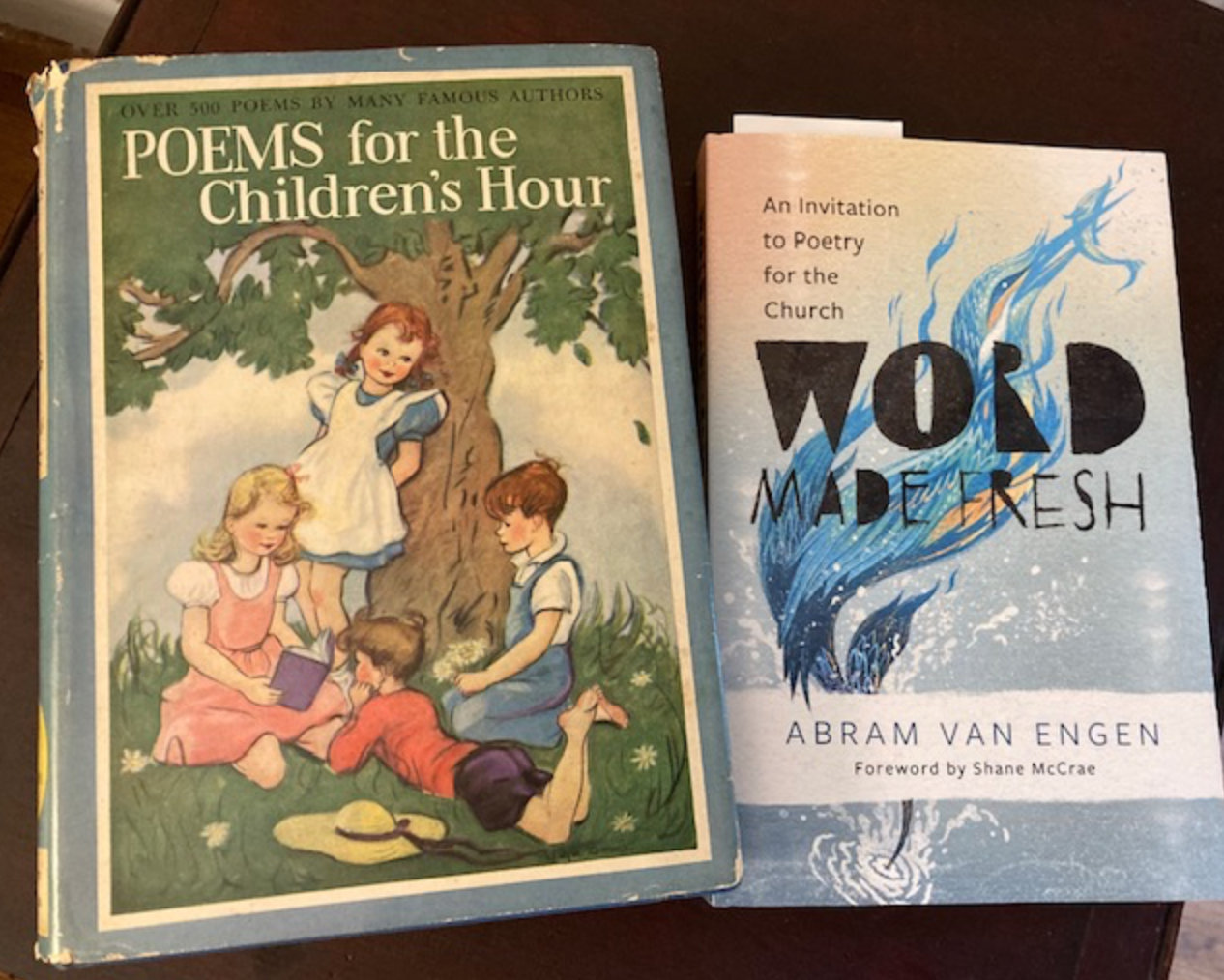
I have also been reading the new Van Engen book where he attempts to “show readers how poetry is for everyone–and how it can reinvigorate our Christian faith.” Poetry is for everyone. I am looking forward to hearing him talk on Friday night at church.
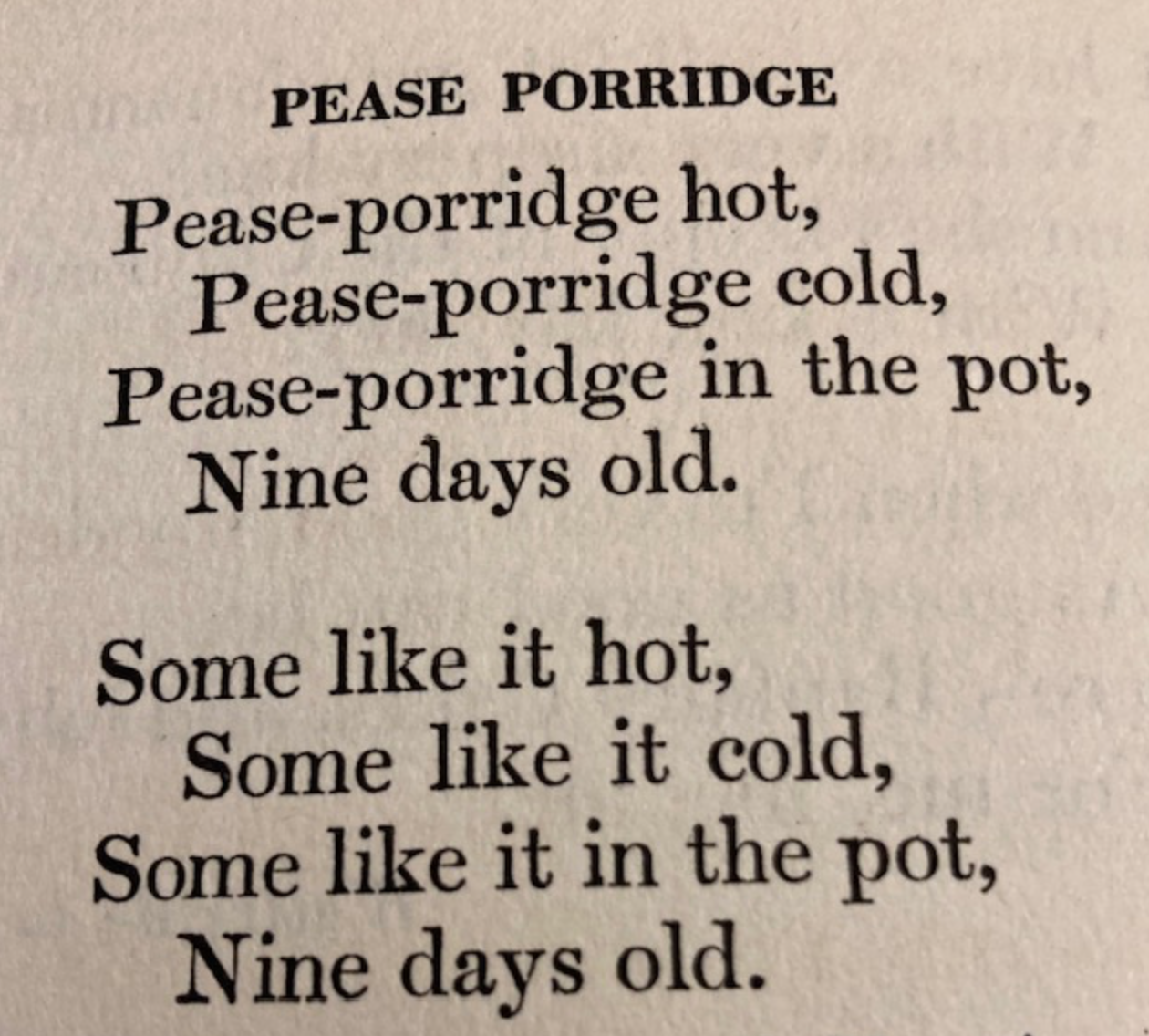
I bought Poems for the Children’s Hour at an estate sale a few weeks ago and am enjoying paging through it. Printed in 1927, it is compiled with an eye for “every child’s experiences in family, nature, play, community, patriotic, and spiritual relationships” throughout the year. Do children still know the old clapping game…
If not, they should. I will pass it along to daughter #2 in the hopes that some day her children will get the reference in that old Billy Wilder film with Jack Lemmon and Marilyn Monroe…
I was reminded on Sunday that my women’s Bible Study starts up again in a few weeks and I will be back to the Gospel of Matthew and Thursday mornings with the ladies and serious prayer time. This will be a good thing and I am looking forward to it.
If you have been asking yourself, ‘What’s wrong with the world?’, leave it to Alistair Begg to answer well.
And BYU runner Kenneth Rooks winning silver in the 3000m steeplechase was one of the most thrilling races ever. Rooks was the only American to make the men’s steeplechase final. He started the race in the middle of the pack of 16 runners but faded as far back as last place before coming on strong in the final two laps. By the time the bell was ringing to signify the start of the final lap, Rooks had surged into the lead. Ultimately, Soufiane El Bakkali, who won the gold at the Tokyo Olympics, was able to catch and pass him to claim the gold medal, but oh my goodness, Rooks was awesome. This is what the Olympics is all about.
Well, keep reading! Keep doing what you’re doing and keep the faith.
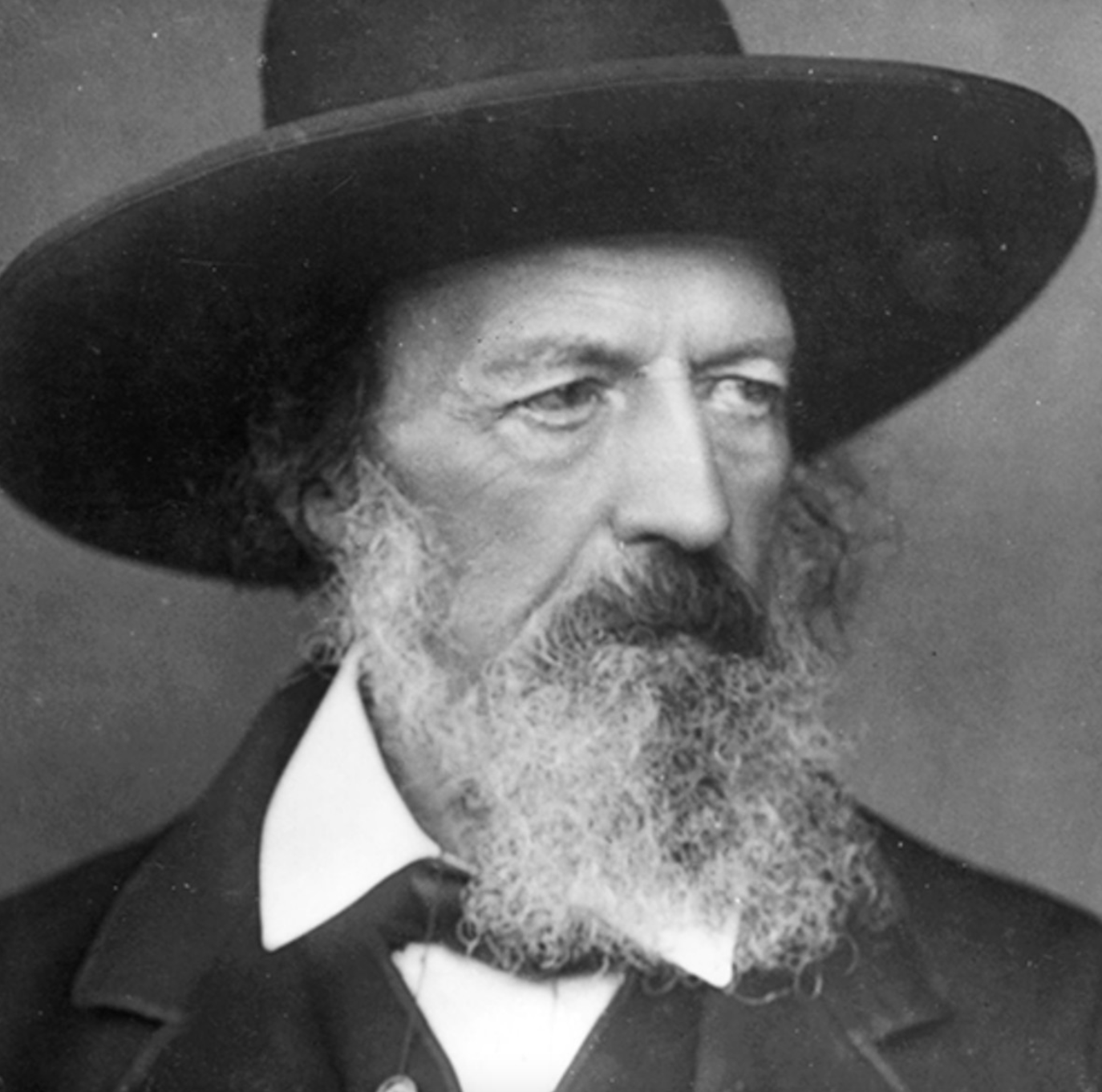
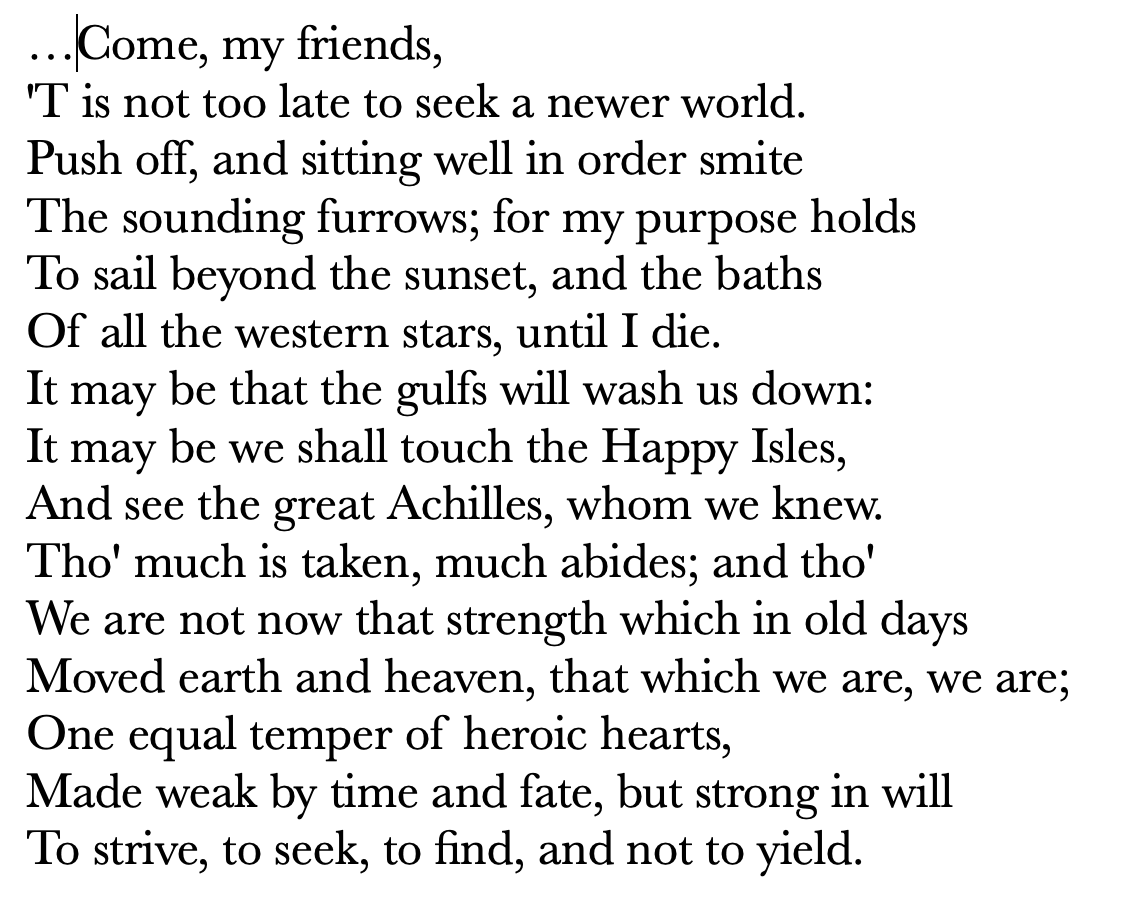
Today we toast the great English poet Alfred, Lord Tennyson, born on this day in 1809. He was the Poet Laureate during much of Queen Victoria’s reign. A number of phrases from Tennyson’s work have become commonplace in the English language, including “Nature, red in tooth and claw” (which I use all the time), “‘Tis better to have loved and lost / Than never to have loved at all”, “Theirs not to reason why, / Theirs but to do and die”, “My strength is as the strength of ten, / Because my heart is pure”, “To strive, to seek, to find, and not to yield”, “Knowledge comes, but Wisdom lingers”, and “The old order changeth, yielding place to new”. He is the ninth most frequently quoted writer in the Oxford Dictionary of Quotations.
Speaking of heroic hearts, aIthough I am not watching the Olympics and he is a professional, I was happy to hear that Scottie Scheffler won the Gold for men’s golf, coming from behind in a record-tying final round. He cried during the playing of our National Anthem.
“I would say first and foremost I’m proud of the country I’m from. I’m proud to be American. I got emotional the other night watching the gold medal ceremony for the women’s gymnastics. I take tremendous pride in coming over here and representing my country,” he said after his round.
Thank you, Scottie.
FYI it is also the birthday of Lucille Ball, Robert Mitchum, Ella Raines, and M. Night Shyamalan. So watch an old movie! And, as always, look out for bears!















 dual personalities