dual personalities

Tag: poetry

Imperatives

by chuckofish

Imperatives, Part 2 of Mysteries of the Incarnation

by Kathleen Norris

Look at the birds 1

Consider the lilies 2

Drink ye all of it 3

Ask 4

Seek

Knock

Enter by the narrow gate 5

Do not be anxious 6

Judge not; 7 do not give dogs what is holy 8

Go: be it done for you 9

Do not be afraid 10

Maiden, arise 11

Young man, I say, arise 12

Stretch out your hand 13

Stand up, 14 be still 15

Rise, let us be going …14

Love 15

Forgive 16

Remember me

1 Matthew 6:26. See also Luke 12:24, “Consider the ravens.” 2 Matthew 6:28; Luke 12:27. 3 “Drink from it, all of you” (Matthew 26:27). Norris uses the King James translation here. 4 This stanza is a series of Jesus’s commands from the Sermon on the Mount: “Ask, and it shall be given you; seek, and ye shall find; knock, and it shall be opened unto you” (Matthew 7:7, King James; also Luke 11:9). 5 Matthew 7:13-14; also Luke 13:23-24. 6 Matthew 6:25, 31; Luke 12:22, 29. 7 Matthew 7:1; Mark 4:24; Luke 6:37-38. 8 Matthew 7:6. 9 Matthew 8:13. 10 “Do not be afraid” – a frequent command by Jesus; for example, Matthew 10:31; 14:27; 17:7; 28:10. 11 The healing of Jairus’s daughter: “Little girl, get up!” (Mark 5:41; also Luke 8:54). 12 The healing the widow’s only son; Luke 7:14. 13 The healing of the man with the withered hand: Matthew 12:13; Mark 3:1-6; Luke 6:6-11. 14 Jesus’s healing the paralyzed man: Matthew 9:2-8; Mark 2:1-12; Luke 5:17-26. 15 Jesus’s command to the ocean: Mark 5:39; also Matthew 8:26; Luke 8:24. 14 Jesus to his disciples in Gethsemane: “Rise, let us be going: behold, he is at hand that doth betray me” (Matthew 26:46; Mark 14:42). 15 Jesus’s two great commandments: “You shall love the Lord your God with all your heart, and with all your soul, and with all your mind. … You shall love your neighbor as yourself” (Matthew 22:37-39; also Mark 12:28-31; Luke 10:25-28). 16 Matthew 18:21-22; Luke 17:4.

Praise for the morning

by chuckofish

“Morning Has Broken” is a popular Christian hymn first published in 1931. It was not written by Cat Stevens, although it is frequently attributed to him.  He should be given credit for introducing it to a wider audience.  However, English author Eleanor Farjeon wrote the words and it is set to a traditional Scottish tune known as “Bunessan”. According to Wikipedia, the hymn originally appeared in the second edition of “Songs of Praise” (published in 1931). In Songs of Praise Discussed, the editor, Percy Dearmer, explains that as there was need for a hymn to give thanks for each day, English poet and children’s author Eleanor Farjeon had been “asked to make a poem to fit the lovely Scottish tune”. A slight variation on the original hymn, also written by Eleanor Farjeon, can be found in the form of a poem contributed to the anthology Children’s Bells, under Farjeon’s new title, “A Morning Song (For the First Day of Spring)”, published by Oxford University Press in 1957.

Eleanor Farjeon (13 February 1881 – 5 June 1965) was an author of children’s stories and plays, poetry, biography, history and satire. She was the granddaughter of the American actor Joseph Jefferson and counted among her friends D. H. Lawrence, Walter de la Mare and Robert Frost. We thank her for writing this wonderful reminder to appreciate the small things (which are really the big things) in our lives and to thank our creator. After all, “this is the day the Lord has made; let us be glad and rejoice in it.” (Psalm 118:24)

Morning Has Broken
lyrics by Eleanor Farjeon

Morning has broken,
like the first morning
Blackbird has spoken,
like the first bird
Praise for the singing,
praise for the morning
Praise for the springing
fresh from the word

Sweet the rain’s new fall,
sunlit from heaven
Like the first dewfall,
on the first grass
Praise for the sweetness
of the wet garden
Sprung in completeness
where his feet pass

Mine is the sunlight,
mine is the morning
Born of the one light,
Eden saw play
Praise with elation,
praise every morning
God’s recreation of the new day

God was man in Palestine

by chuckofish

Christmas
by John Betjeman

The bells of waiting Advent ring,
The Tortoise stove is lit again
And lamp-oil light across the night
Has caught the streaks of winter rain
In many a stained-glass window sheen
From Crimson Lake to Hookers Green.

The holly in the windy hedge
And round the Manor House the yew
Will soon be stripped to deck the ledge,
The altar, font and arch and pew,
So that the villagers can say
‘The church looks nice’ on Christmas Day.

Provincial Public Houses blaze,
Corporation tramcars clang,
On lighted tenements I gaze,
Where paper decorations hang,
And bunting in the red Town Hall
Says ‘Merry Christmas to you all’.

And London shops on Christmas Eve
Are strung with silver bells and flowers
As hurrying clerks the City leave
To pigeon-haunted classic towers,
And marbled clouds go scudding by
The many-steepled London sky.

And girls in slacks remember Dad,
And oafish louts remember Mum,
And sleepless children’s hearts are glad.
And Christmas-morning bells say ‘Come!’
Even to shining ones who dwell
Safe in the Dorchester Hotel.

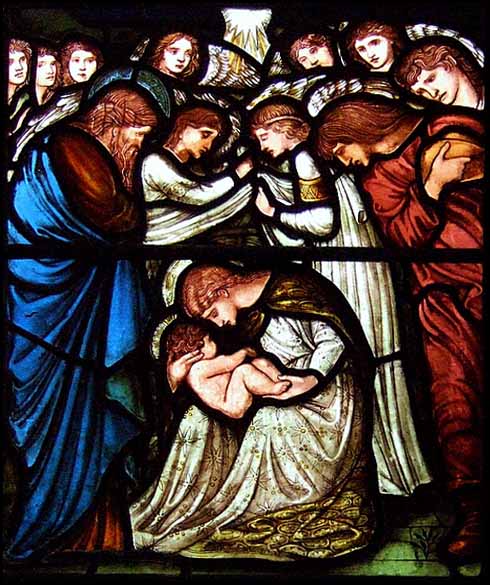
And is it true? And is it true,
This most tremendous tale of all,
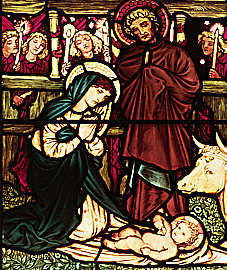
Seen in a stained-glass window’s hue,
A Baby in an ox’s stall ?
The Maker of the stars and sea
Become a Child on earth for me ?

And is it true ? For if it is,
No loving fingers tying strings
Around those tissued fripperies,
The sweet and silly Christmas things,
Bath salts and inexpensive scent
And hideous tie so kindly meant,

No love that in a family dwells,
No carolling in frosty air,
Nor all the steeple-shaking bells
Can with this single Truth compare –
That God was man in Palestine
And lives today in Bread and Wine.

A gentle reminder

by chuckofish

The True Christmas

So stick up ivy and the bays,
And then restore the heathen ways.
Green will remind you of the spring,
Though this great day denies the thing.
And mortifies the earth and all
But your wild revels, and loose hall.
Could you wear flowers, and roses strow
Blushing upon your breasts’ warm snow,
That very dress your lightness will
Rebuke, and wither at the ill.
The brightness of this day we owe
Not unto music, masque, nor show:
Nor gallant furniture, nor plate;
But to the manger’s mean estate.
His life while here, as well as birth,
Was but a check to pomp and mirth;
And all man’s greatness you may see
Condemned by His humility.
Then leave your open house and noise,
To welcome Him with holy joys,
And the poor shepherd’s watchfulness:
Whom light and hymns from heaven did bless.
What you abound with, cast abroad
To those that want, and ease your load.
Who empties thus, will bring more in;
But riot is both loss and sin.
Dress finely what comes not in sight,
And then you keep your Christmas right.

–Henry Vaughan

Henry Vaughan (1621 − April 23, 1695) was a Welsh physician and metaphysical poet. For more information look here.

‘Tis the last rose of summer

by chuckofish

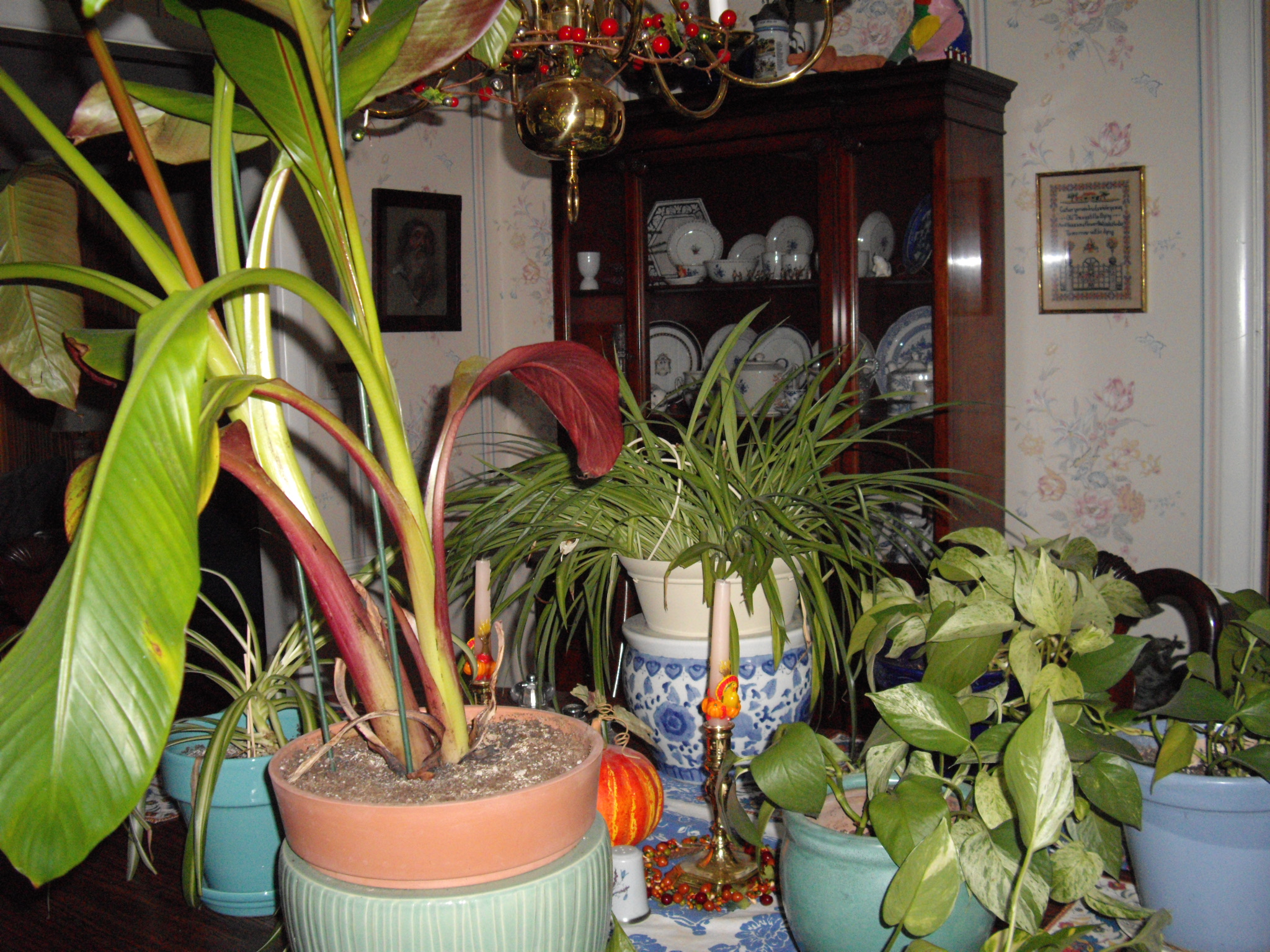
Behold the last rose of summer. (There are actually two others close by.) It got quite cold last week. Brave roses! I had to bring all my plants in from the “Florida Room” (see below). They are piled in and on and around the dining room. The rubber plant has grown a LOT and will need to be re-potted. Yikes.

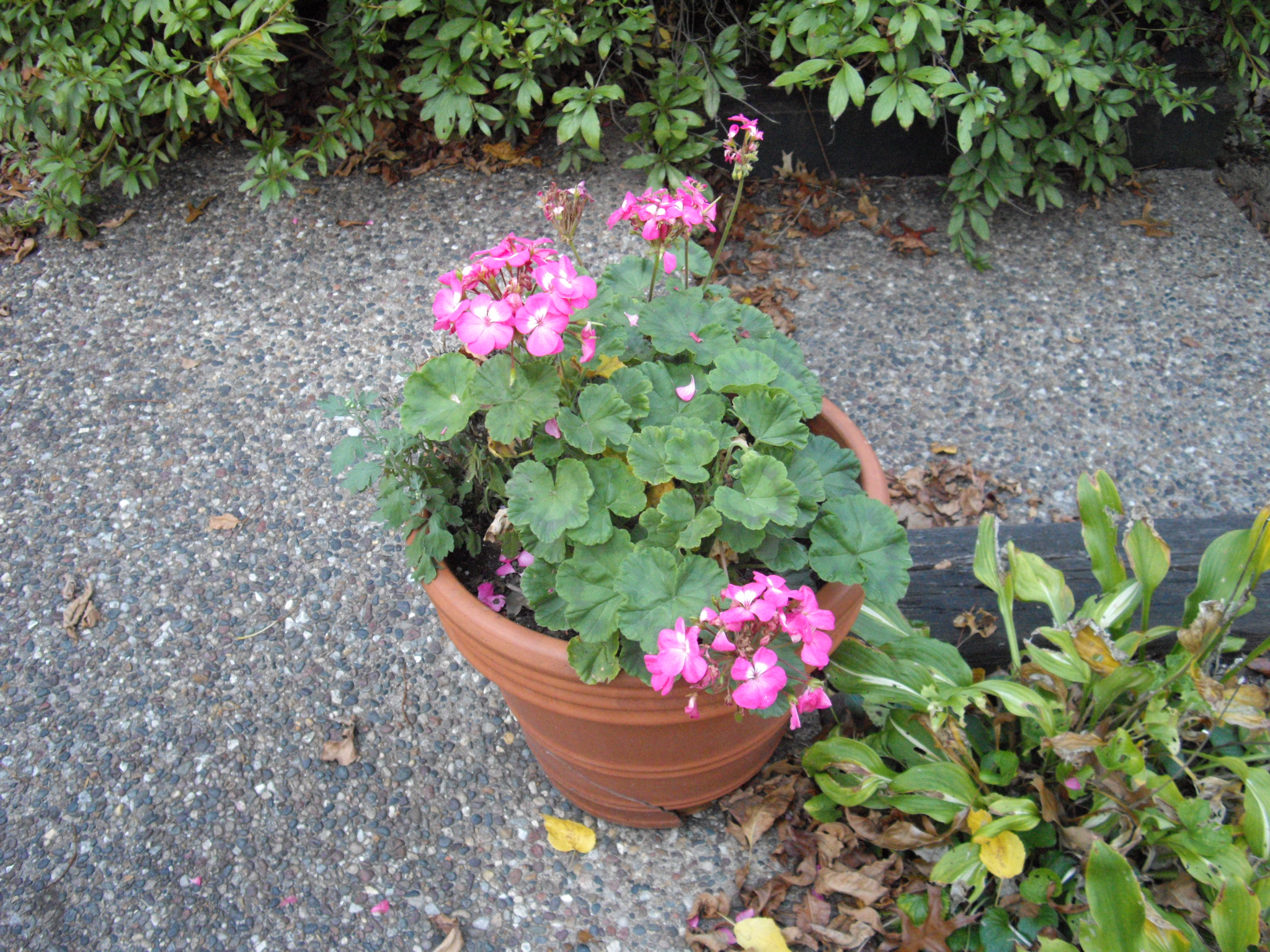
And the geraniums soldier on bravely.

‘Tis the last rose of summer
Left blooming alone;
All her lovely companions
Are faded and gone…

Day in Autumn

by chuckofish

By Rainer Maria Rilke
(Translated By Mary Kinzie)

After the summer’s yield, Lord, it is time
to let your shadow lengthen on the sundials
and in the pastures let the rough winds fly.

As for the final fruits, coax them to roundness.
Direct on them two days of warmer light
to hale them golden toward their term, and harry
the last few drops of sweetness through the wine.

Whoever’s homeless now, will build no shelter;
who lives alone will live indefinitely so,
waking up to read a little, draft long letters,
and, along the city’s avenues,
fitfully wander, when the wild leaves loosen.

from: http://www.poetryfoundation.org/