dual personalities

Tag: poetry

An Updike poem for thursday

by chuckofish

This poem is titled “January”, but it describes December just as well I think.

The days are short,
The sun a spark
Hung thin between the dark and dark.

Fat snowy footsteps track the floor.
Milk bottles burst outside the door.
The river is a frozen place
Held still beneath the trees of lace.
The sky is low, the wind is gray.
The radiator purrs all day.

-John Updike-

I grew up with radiators in an old house. They purred, but they were also known to bink and bonk and rattle, weren’t they? In my first house as a married person, we had radiators and I remember worrying that their audible antics might wake up a sleeping baby!

The boy and daughter #1 playing in front of a big ol' radiator.

The boy and daughter #1 playing in front of a big ol’ radiator.

Our house now has forced air heat. It turns on and off and blows quietly. I guess this is progress.

[We are expecting snow this afternoon, so, as usual, the local TV weather people are all in a tizzy. Daughter #1 is flying in from NYC, so let’s pray that she doesn’t get sidelined in Wichita (or anywhere else)!]

This is how my mind works

by chuckofish

I was reading daughter #2’s blog yesterday and her latest Emerson quote and I began thinking about one of my favorite mid-19th-century American poets, William Cullen Bryant, who, by the way, went to Williams College. I lived in the dorm next to Bryant House, named after the prominent alum, when I was an exchange student.

Anyway, I looked Bryant up on Wikipedia and found out (among other things) that Bryant Park in midtown Manhattan is named after him! Who knew?
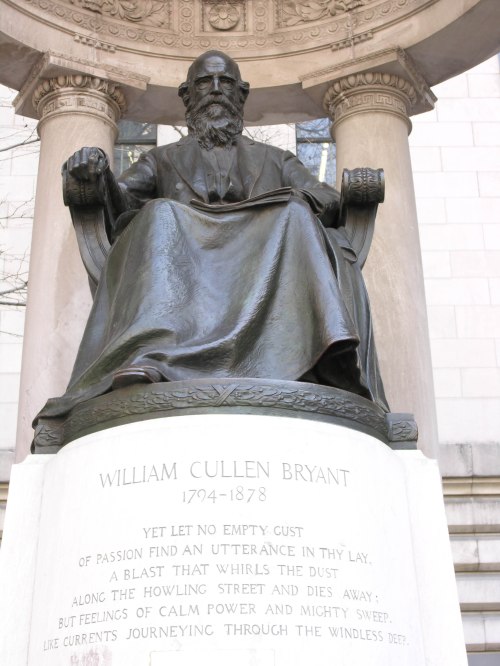
Bryantstatue

Bryant Park is located between 5th and 6th Avenues and between 40th and 42nd Streets. Formerly known as Reservoir Square, it was renamed Bryant Park to honor the New York Evening Post editor and abolitionist in 1884.

Although he is usually thought of as a New Englander, Bryant was, for most of his lifetime, a New Yorker—and a very dedicated one at that. He was a major force behind the idea that became Central Park, as well as a leading proponent of creating the Metropolitan Museum of Art. He was one of a group of founders of New York Medical College. He had close affinities with the Hudson River School of art and was an good friend of Thomas Cole.

Here he is portrayed in Asher Durand’s famous painting:

Asher Durand's 'Kindred Spirits' depicts William Cullen Bryant with Thomas Cole, in this quintessentially Hudson River School work.

Asher Durand’s Kindred Spirits depicts William Cullen Bryant with Thomas Cole, in this quintessentially Hudson River School work.

As a writer, Bryant was an early advocate of American literary nationalism, and his own poetry focusing on nature as a metaphor for truth established a central pattern in the American literary tradition. I think daughter #2 definitely needs to add William Cullen Bryant to her list of must-reads for Christmas break.

I seem to remember that he was very nice looking, but I couldn’t find a picture of him when he was young. This gives you some idea:
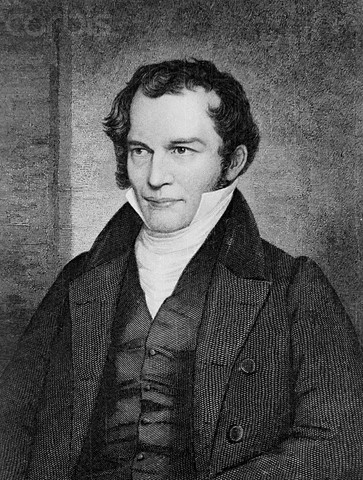
Portrait of William Cullen Bryant

Anyway, here is Thanatopsis, which he wrote when he was a mere 19 or 20-years old. Makes you want to shoot yourself.

To him who in the love of nature holds
Communion with her visible forms, she speaks
A various language; for his gayer hours
She has a voice of gladness, and a smile
And eloquence of beauty; and she glides
Into his darker musings, with a mild
And healing sympathy that steals away
Their sharpness ere he is aware. When thoughts
Of the last bitter hour come like a blight
Over thy spirit, and sad images
Of the stern agony, and shroud, and pall,
And breathless darkness, and the narrow house,
Make thee to shudder, and grow sick at heart;–
Go forth, under the open sky, and list
To Nature’s teachings, while from all around–
Earth and her waters, and the depths of air–
Comes a still voice. Yet a few days, and thee
The all-beholding sun shall see no more
In all his course; nor yet in the cold ground,
Where thy pale form was laid, with many tears,
Nor in the embrace of ocean, shall exist
Thy image. Earth, that nourished thee, shall claim
Thy growth, to be resolved to earth again,
And, lost each human trace, surrendering up
Thine individual being, shalt thou go
To mix forever with the elements,
To be a brother to the insensible rock
And to the sluggish clod, which the rude swain
Turns with his share, and treads upon. The oak
Shall send his roots abroad, and pierce thy mold.

Yet not to thine eternal resting-place
Shalt thou retire alone, nor couldst thou wish
Couch more magnificent. Thou shalt lie down
With patriarchs of the infant world — with kings,
The powerful of the earth — the wise, the good,
Fair forms, and hoary seers of ages past,
All in one mighty sepulchre. The hills
Rock-ribbed and ancient as the sun, — the vales
Stretching in pensive quietness between;
The venerable woods — rivers that move
In majesty, and the complaining brooks
That make the meadows green; and, poured round all,
Old Ocean’s gray and melancholy waste,–
Are but the solemn decorations all
Of the great tomb of man. The golden sun,
The planets, all the infinite host of heaven,
Are shining on the sad abodes of death
Through the still lapse of ages. All that tread
The globe are but a handful to the tribes
That slumber in its bosom. — Take the wings
Of morning, pierce the Barcan wilderness,
Or lose thyself in the continuous woods
Where rolls the Oregon, and hears no sound,
Save his own dashings — yet the dead are there:
And millions in those solitudes, since first
The flight of years began, have laid them down
In their last sleep — the dead reign there alone.

So shalt thou rest — and what if thou withdraw
In silence from the living, and no friend
Take note of thy departure? All that breathe
Will share thy destiny. The gay will laugh
When thou art gone, the solemn brood of care
Plod on, and each one as before will chase
His favorite phantom; yet all these shall leave
Their mirth and their employments, and shall come
And make their bed with thee. As the long train
Of ages glides away, the sons of men–
The youth in life’s fresh spring, and he who goes
In the full strength of years, matron and maid,
The speechless babe, and the gray-headed man–
Shall one by one be gathered to thy side,
By those, who in their turn, shall follow them.

So live, that when thy summons comes to join
The innumerable caravan, which moves
To that mysterious realm, where each shall take
His chamber in the silent halls of death,
Thou go not, like the quarry-slave at night,
Scourged to his dungeon, but, sustained and soothed
By an unfaltering trust, approach thy grave
Like one who wraps the drapery of his couch
About him, and lies down to pleasant dreams.

William Cullen Bryant. Also makes you want to Go forth, under the open sky…
A sonnet for Monday

by chuckofish

In my flyover institute of learning we sometimes offer a course on reading sonnets facilitated by a gentleman who really loves sonnets. I have never been a big fan of sonnets myself, in large part because when we studied them in the 6th grade, we had to write one. Good grief! What 12-year old is capable of writing a sonnet I ask you? John Keats maybe. Certainly not I. It prejudiced me against the form. Anyway, I was glancing through the syllabus the other day and came across this one.

The Cross of Snow
By Henry Wadsworth Longfellow

In the long, sleepless watches of the night,
A gentle face — the face of one long dead —
Looks at me from the wall, where round its head
The night-lamp casts a halo of pale light.
Here in this room she died; and soul more white
Never through martyrdom of fire was led
To its repose; nor can in books be read
The legend of a life more benedight.
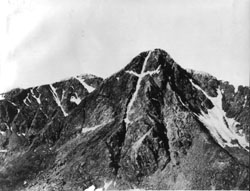
There is a mountain in the distant West
That, sun-defying, in its deep ravines
Displays a cross of snow upon its side.
Such is the cross I wear upon my breast
These eighteen years, through all the changing scenes
And seasons, changeless since the day she died.

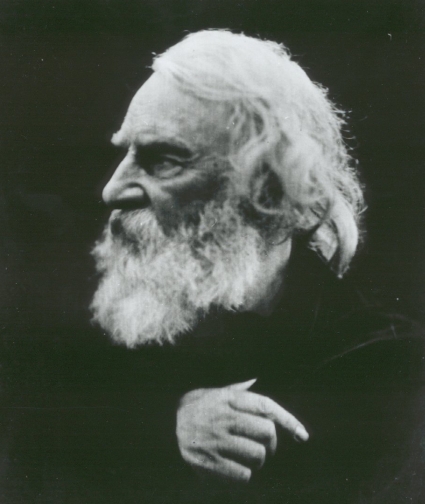
Longfellow wrote this sonnet about his second wife, Frances Appleton Longfellow, who died after her dress caught on fire and she was severely burned. Longfellow himself was burned when he attempted to put out the flames with a rug and his own body. His face was burned and that is why, from then on, he always wore a beard.

Longfellow photographed by Julia Cameron

Longfellow’s great fame faded after his death and he is mostly known today for having written The Midnight Ride of Paul Revere. However, I doubt that school children are made to memorize portions of it now or learn about meter by reciting This is the forest primeval…from Evangeline.

More’s the pity. I like this sonnet about his wife. Could I be wrong about sonnets? Look for more sonnets in this blog as we widen our appreciation together!

You can say that again

by chuckofish

“In the mail a letter from a twelve-year-old child, enclosing poems, her mother having asked her to ask my opinion. This child does really look at things, and I can write something helpful, I think. But it is troubling how many people expect applause, recognition, when they have not even begun to learn a craft. Instant success is the order of the day; “I want it now!” I wonder whether this is not our corruption by machines. Machines do things quickly and outside the natural rhythm of life, and we are indignant if a car doesn’t start at the first try. So the few things that we still do, such as cooking (though there are TV dinners!), knitting, gardening, anything at all that cannot be hurried, have a very particular value.”

—May Sarton, Journal Of A Solitude
(found here)

After I read this on the W.W. Norton blog, I went back to my May Sarton books which I have collected over the years. Some belonged to my mother who liked Sarton a lot and felt a certain bond with this lonely writer.

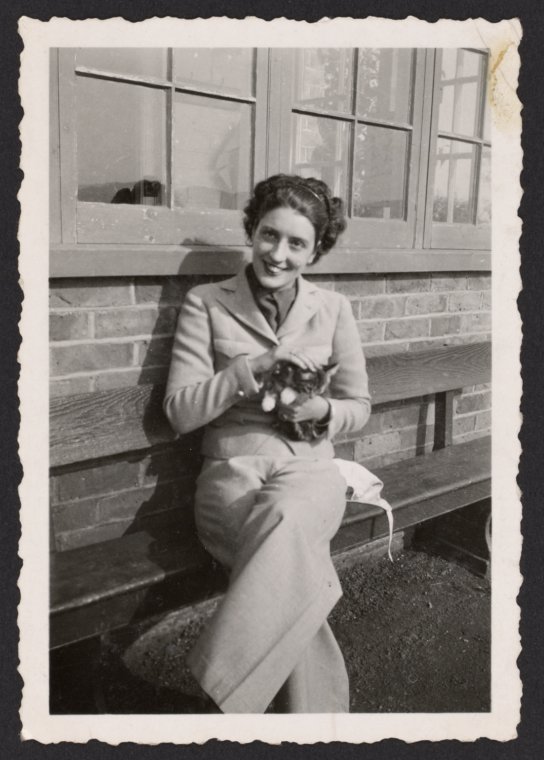
Image from the New York Public Library

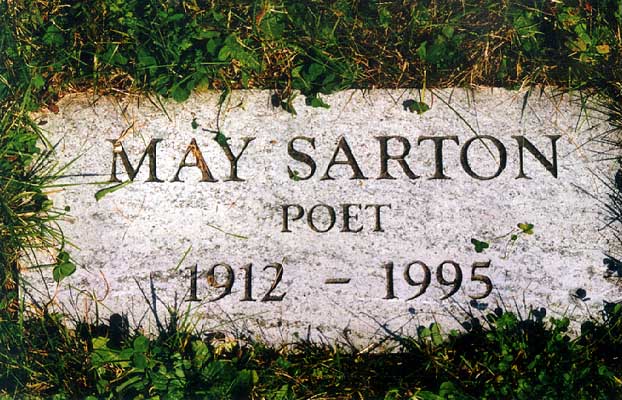
Born in Belgium, May Sarton (May 3, 1912 – July 16, 1995) was an American poet, novelist and writer of memoirs. Although she is frequently pigeon-holed as a lesbian writer, she has a lot to say to everyone. Here’s a poem to think about today:

Now I Become Myself

Now I become myself. It’s taken
Time, many years and places;
I have been dissolved and shaken,
Worn other people’s faces,
Run madly, as if Time were there,
Terribly old, crying a warning,
“Hurry, you will be dead before– ”
(What? Before you reach the morning?
Or the end of the poem is clear?
Or love safe in the walled city?)
Now to stand still, to be here,
Feel my own weight and density!

May Sarton, Collected Poems, 1930-1973

In case you haven’t noticed

by chuckofish

It’s September!

The summer, of course, is not officially over, and, yes, it was 93-degrees yesterday and they’re saying it’ll be 96-degrees today. But it is September.

Oh boy. Ol’ John Updike covers a lot about September in this poem:

“The breezes taste
Of apple peel.
The air is full
Of smells to feel-
Ripe fruit, old footballs,
Burning brush,
New books, erasers,
Chalk, and such.
The bee, his hive,
Well-honeyed hum,
And Mother cuts
Chrysanthemums.
Like plates washed clean
With suds, the days
Are polished with
A morning haze.”

Yes indeed. Soon it will be time to get out the sweaters and the black tights. Maybe someday soon we will be able to open a window at home and in the car! I shouldn’t get carried away, but October is just around the corner.

What are you looking forward to?

Though he with giants fight

by chuckofish

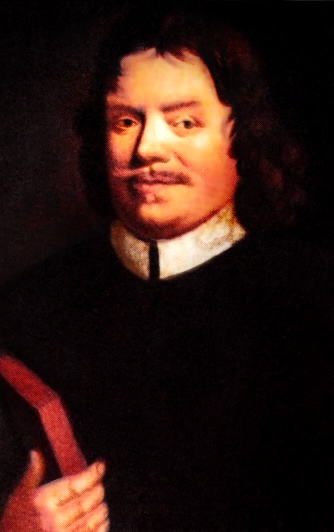
John Bunyan (28 November 1628 – 31 August 1688) was, of course, an English Christian writer and preacher, who is well known for his wonderful book The Pilgrim’s Progress. Though he was a Reformed Baptist, he is remembered in the Church of England with a Lesser Festival on August 30, and on the liturgical calendar of the Episcopal Church (US) on August 29.

I have mentioned before that we had a daily chapel service at the private school I attended. I remember our English headmaster telling us that the hymn “He Who Would Valiant Be” was a favorite (if not the favorite) hymn of Winston Churchill. That struck me as significant and I paid close attention to the words.

He Who Would Valiant Be Hymn

He who would valiant be ’gainst all disaster,
Let him in constancy follow the Master.
There’s no discouragement shall make him once relent
His first avowed intent to be a pilgrim.

Who so beset him round with dismal stories
Do but themselves confound – his strength the more is.
No foes shall stay his might; though he with giants fight,
He will make good his right to be a pilgrim.

Since, Lord, Thou dost defend us with Thy Spirit,
We know we at the end, shall life inherit.
Then fancies flee away! I’ll fear not what men say,
I’ll labor night and day to be a pilgrim.

I tried to find a Youtube video of the hymn, but they all featured the wrong tune (Monk’s Gate). Here is one that at least plays the St. Dunstan’s tune, so you can sing along!

A good thought for Monday

by chuckofish

The Peace of Wild Things
By Wendell Berry

When despair for the world grows in me
and I wake in the night at the least sound
in fear of what my life and my children’s lives may be,
I go and lie down where the wood drake
rests in his beauty on the water, and the great heron feeds.
I come into the peace of wild things
who do not tax their lives with forethought
of grief. I come into the presence of still water.
And I feel above me the day-blind stars
waiting with their light. For a time
I rest in the grace of the world, and am free.

I especially like the line about taxing our lives with “forethought of grief.” Why do we do that? Lord, help me to rest in the grace of the world!

When all the sky is clear and blue

by chuckofish

“In winter I get up at night
And dress by yellow candle-light.
In summer quite the other way,
I have to go to bed by day.
I have to go to bed and see
The birds still hopping on the tree,
Or hear the grown-up people’s feet
Still going past me in the street.
And does it not seem hard to you,
When all the sky is clear and blue,
And I should like so much to play,
To have to go to bed by day?”

– Robert Louis Stevenson, Bed in Summer

I remember this so well–going to bed when it was still light outside! The days are long in June in this flyover state!

Absent-Minded Professor

by chuckofish

This lonely figure of not much fun
Strayed out of folklore fifteen years ago
Forever. Now on an autumn afternoon,
While the leaves drift past the office window,
His bright replacement, present-minded, stays
At the desk correcting papers, nor ever grieves
For the silly scholar of the bad old days,
Who’d burn the papers and correct the leaves.

–Howard Nemerov

Howard Nemerov (29 February 1920 – 5 July 1991) was an American poet who was twice Poet Laureate Consultant in Poetry to the Library of Congress, from 1963 to 1964 and again from 1988 to 1990. He was for many years a professor at our flyover university and as such used to walk to work past our parent’s house. He wrote a poem called “Walking Down Westgate in the Fall.” It ends with the lines: “Hearing the acorns bang on the roofs of cars/ And bounce and roll along the rainy street.”

I remember that. (The sound of acorns banging on cars.)

Be that as it may

by chuckofish

Today we take note of the birthday of our pater familias, who would be 90 today.

Wind on the Hill
by A.A. Milne

No one can tell me,
Nobody knows,
Where the wind comes from,
Where the wind goes.

It’s flying from somewhere
As fast as it can,
I couldn’t keep up with it,
Not if I ran.

But if I stopped holding
The string of my kite,
It would blow with the wind
For a day and a night.

And then when I found it,
Wherever it blew,
I should know that the wind
Had been going there too.

So then I could tell them
Where the wind goes…
But where the wind comes from
Nobody knows.