dual personalities

Tag: poetry

Tonight I long for rest

by chuckofish

Arthur_Hacker-Fire_Fancies__1865

Here’s a great poem, “The Day is Done,” from the forgotten Henry Wadsworth Longfellow. Read the whole thing.

The day is done, and the darkness
Falls from the wings of Night,
As a feather is wafted downward
From an eagle in his flight.

I see the lights of the village
Gleam through the rain and the mist,
And a feeling of sadness comes o’er me
That my soul cannot resist:

A feeling of sadness and longing,
That is not akin to pain,
And resembles sorrow only
As the mist resembles the rain.

Come, read to me some poem,
Some simple and heartfelt lay,
That shall soothe this restless feeling,
And banish the thoughts of day.

Not from the grand old masters,
Not from the bards sublime,
Whose distant footsteps echo
Through the corridors of Time,

For, like strains of martial music,
Their mighty thoughts suggest
Life’s endless toil and endeavor;
And tonight I long for rest.

Read from some humbler poet,
Whose songs gushed from his heart,
As showers from the clouds of summer,
Or tears from the eyelids start;

Who, through long days of labor,
And nights devoid of ease,
Still heard in his soul the music
Of wonderful melodies.

Such songs have a power to quiet
The restless pulse of care,
And comes like the benediction
That follows after prayer.

Then read from the treasured volume
The poem of thy choice,
And lend to the rhyme of the poet
The beauty of thy voice.

And the night shall be filled with music,
And the cares, that infest the day,
Shall fold their tents, like the Arabs,
And as silently steal away.

–Henry Wadsworth Longfellow (1807-1882

The painting is “Fire Fancies” by Arthur Hacker, 1865

He bids me sing

by chuckofish

I had a scratchy throat and was fighting a cold all last weekend, so flying on Sunday kind of did my ears in and I am feeling not-so-good now…So this is all I’ve got.

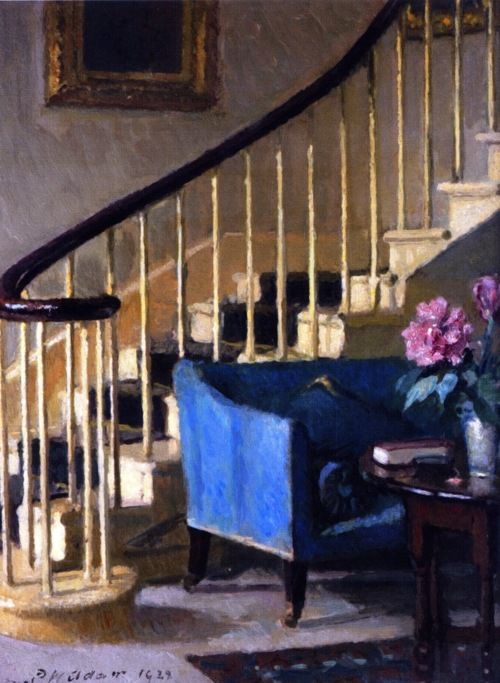
‘Winter Sunshine’ (1930s or 1940s) by English artist Frederick William Elwell (1870-1958).

‘Winter Sunshine’ (1930s or 1940s) by English artist Frederick William Elwell (1870-1958)

I

The irresponsive silence of the land,

The irresponsive sounding of the sea,

Speak both one message of one sense to me:–

Aloof, aloof, we stand aloof, so stand

Thou too aloof bound with the flawless band

Of inner solitude; we bind not thee;

But who from thy self-chain shall set thee free?

What heart shall touch thy heart? what hand thy hand?–

And I am sometimes proud and sometimes meek,

And sometimes I remember days of old

When fellowship seemed not so far to seek

And all the world and I seemed much less cold,

And at the rainbow’s foot lay surely gold,

And hope felt strong and life itself not weak.


II

Thus am I mine own prison.

Everything

Around me free and sunny and at ease:

Or if in shadow, in a shade of trees

Which the sun kisses, where the gay birds sing

And where all winds make various murmuring;

Where bees are found, with honey for the bees;

Where sounds are music, and where silences

Are music of an unlike fashioning.

Then gaze I at the merrymaking crew,

And smile a moment and a moment sigh

Thinking: Why can I not rejoice with you?

But soon I put the foolish fancy by:

I am not what I have nor what I do;

But what I was I am, I am even I.


III

Therefore myself is that one only thing

I hold to use or waste, to keep or give;

My sole possession every day I live,

And still mine own despite Time’s winnowing.

Ever mine own, while moons and seasons bring

From crudeness ripeness mellow and sanitive;

Ever mine own, till Death shall ply his sieve;

And still mine own, when saints break grave and sing.

And this myself as king unto my King

I give, to Him Who gave Himself for me;

Who gives Himself to me, and bids me sing

A sweet new song of His redeemed set free;

he bids me sing: O death, where is thy sting?

And sing: O grave, where is thy victory?


–Christina Rosetti, “The Thread of Life”

“Let us cross over the river, and rest under the shade of the trees.”*

by chuckofish

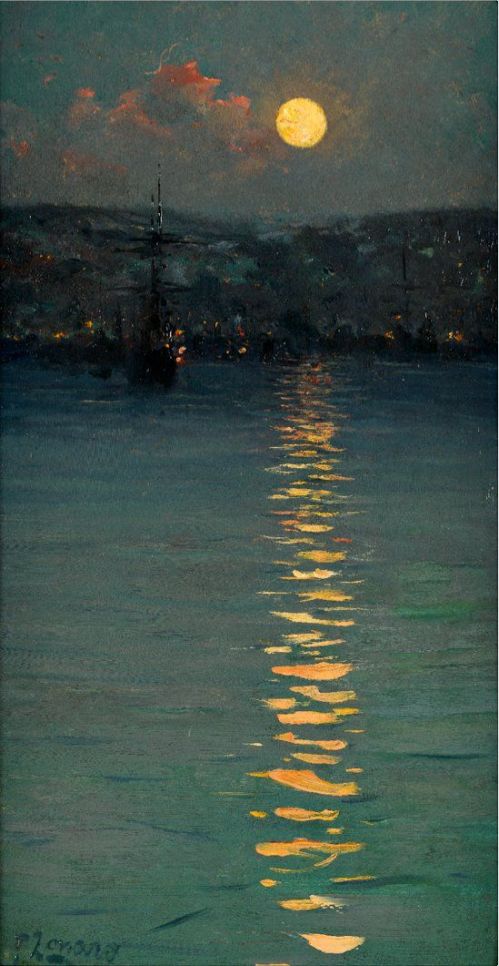
Today is the 153rd anniversary of the death of General Thomas “Stonewall” Jackson (age 39) following the Battle of Chancellorsville, when he was shot by friendly fire on the moonlit night of May 2, 1863.

"Chancellorsville" portrait, taken at a Spotsylvania County farm on April 26, 1863, seven days before he was wounded.

“Chancellorsville” portrait, taken at a Spotsylvania County farm on April 26, 1863, seven days before he was wounded. What a face!

Here he is younger and beardless. Pretty dreamy.

stonewall-young

I have always admired Stonewall Jackson as an exemplar of the Scotch-Irish Protestants who came to this country in the eighteenth century, many of them as indentured servants, and worked and fought hard to make a home here. In fact his paternal great-grandparents (John Jackson and Elizabeth Cummins) met on the prison ship from London and fell in love. They married six years later when they gained their freedom.

The family migrated west across the Blue Ridge Mountains to settle near Moorefield, Virginia in 1758. In 1770, they moved farther west to the Tygart Valley. They began to acquire large parcels of virgin farming land near the present-day town of Buckhannon, including 3,000 acres in Elizabeth’s name. John and his two teenage sons fought in the Revolutionary War; John finished the war as a captain. While the men were in the army, Elizabeth converted their home to a haven for refugees from Indian attacks known as “Jackson’s Fort.”

Yes, the Jacksons were awesome.

Furthermore, Stonewall was a profoundly religious man and a deacon in the Presbyterian Church. One of his many nicknames was “Old Blue Lights,” a term applied to a military man whose evangelical zeal burned with the intensity of the blue light used for night-time display. He disliked fighting on Sunday, although that did not stop him from doing so after much personal debate.

Here is a poem by Herman Melville that pretty well sums up my feelings about the great Stonewall:

Mortally Wounded at Chancellorsville

The Man who fiercest charged in fight,
Whose sword and prayer were long –
Stonewall!
Even him who stoutly stood for Wrong,
How can we praise? Yet coming days
Shall not forget him with this song.

Dead is the Man whose Cause is dead,
Vainly he died and set his seal –
Stonewall!
Earnest in error, as we feel;
True to the thing he deemed was due,
True as John Brown or steel.

Relentlessly he routed us;
But we relent, for he is low –
Stonewall!
Justly his fame we outlaw; so
We drop a tear on the bold Virginian’s bier,
Because no wreath we owe.

Monument Avenue in Richmond, VA

Monument Avenue in Richmond, VA

*Stonewall Jackson’s dying words–beautiful!

November rain

by chuckofish

Screen shot 2015-11-17 at 11.17.45 AM

The day is cold, and dark, and dreary;
It rains, and the wind is never weary;
The vine still clings to the mouldering wall,
But at every gust the dead leaves fall,
And the day is dark and dreary.

My life is cold, and dark, and dreary;
It rains, and the wind is never weary;
My thoughts still cling to the mouldering past,
But the hopes of youth fall thick in the blast,
And the days are dark and dreary.

Be still, sad heart, and cease repining;
Behind the clouds is the sun still shining;
Thy fate is the common fate of all,
Into each life some rain must fall,
Some days must be dark and dreary.

–Henry Wadsworth Longfellow

November rain, when it goes on for days, cannot help but bring a person’s spirits down. But I like old Longfellow’s thinking on this subject. When did we stop reading him? He’s kind of great.

Henry_Wadsworth_Longfellow_by_Southworth_&_Hawes_c1850_restored

Henry was one of those handsome mid-century American writers we are so fond of. Read more about this poet here.

Anyway, please note that there is a slight chance of snow on Saturday! It won’t be long until the weather media is whipping us up into a stock-up-on-bread-and-milk frenzy.

An’ The Raggedy Man, he knows most rhymes, An’ tells ’em, ef I be good, sometimes

by chuckofish

Today is the birthday of James Whitcomb Riley (October 7, 1849 – July 22, 1916) who was an American writer, poet, and best-selling author, frequently referred to as the “Hoosier Poet.”

Statue in Greenfield, Indiana

Statue in Greenfield, Indiana

I suppose no one reads his poems anymore. (Although–surprise!– his books are still in print.)

I remember my mother reading them aloud to us with great gusto. There was Little Orphant Annie

Little Orphant Annie’s come to our house to stay,
An’ wash the cups an’ saucers up, an’ brush the crumbs away,
An’ shoo the chickens off the porch, an’ dust the hearth, an’
sweep,
An’ make the fire, an’ bake the bread, an’ earn her board-
an-keep;
An’ all us other childern, when the supper-things is done,
We set around the kitchen fire an’ has the mostest fun,
A-listenin’ to the witch-tales ‘at Annie tells about,
An’ the Gobble-uns ‘at gits you
Ef you
Don’t
Watch
Out!

and The Raggedy Man

O The Raggedy Man! He works fer Pa;
An’ he’s the goodest man ever you saw!
He comes to our house every day,
An’ waters the horses, an’ feeds ’em hay…

Indeed, they were fun to read and fun to listen to. That is no doubt why Riley was among the most popular writers of the late nineteenth and early twentieth century.

So join me in a toast to the forgotten Hoosier poet, James Whitcomb Riley. (Perhaps with one of these.)

I leave you with this picture of another famous Hoosier reading some JWR poetry for fun and personal enrichment.

dean riley

Enjoy your Wednesday–and don’t let the Gobble-uns git you!

A floating sense of doom

by chuckofish

107-Christ the Comforter

“God knows we have our own demons to be cast out, our own uncleanness to be cleansed. Neurotic anxiety happens to be my own particular demon, a floating sense of doom that has ruined many of what could have been, should have been, the happiest days of my life, and more than a few times in my life I have been raised from such ruins, which is another way of saying that more than a few times in my life I have been raised from death – death of the spirit anyway, death of the heart – by the healing power that Jesus calls us both to heal with and to be healed by.”

― Frederick Buechner, Secrets in the Dark: A Life in Sermons

I can surely relate to what Frederick Buechner is saying here, although I wouldn’t classify it as neurotic anxiety exactly. I just have always had a morbid imagination, always thinking about what might happen, especially concerning loved ones.

At the evensong service on Sunday the choir sang an anthem based on a poem by Robert Herrick (1591–1674):

In the hour of my distress,

When temptations me oppress,

And when I my sins confess,

Sweet Spirit, comfort me!


When I lie within my bed,

Sick in heart and sick in head,

And with doubts discomforted,

Sweet Spirit, comfort me!


When the house doth sigh and weep,

And the world is drown’d in sleep,

Yet mine eyes the watch do keep,

Sweet Spirit, comfort me!

I was reminded that people back in the seventeenth century lay in bed at night and obsessed over problems too. I must say that I do find comfort in that.

And as I always say to the boy after one of our overwrought discussions of current events, God is in control. It is good to remember that.

The evensong service ends with the wonderful prayer for mission:

Keep watch, dear Lord, with those who work, or watch, or weep this night, and give thine angels charge over those who sleep. Tend the sick, Lord Christ; give rest to the weary, bless the dying, soothe the suffering, pity the afflicted, shield the joyous; and all for thy love’s sake. Amen.

You can’t go wrong with this prayer at bedtime. Keep it on your bedside table. Envision those angels watching over you and your loved ones. It helps to dissipate that floating sense of doom.

Mid-week meditation

by chuckofish

StoneWall

September’s Baccalaureate
A combination is
Of Crickets—Crows—and Retrospects
And a dissembling Breeze

That hints without assuming—
An Innuendo sear
That makes the Heart put up its Fun
And turn Philosopher.

–Emily Dickinson

Yes, September is here.

DSCN1507And I have a very cute calendar page for this month, don’t I?

How rewarding to know Mr. Smith

by chuckofish

Well, here’s something interesting. William Jay Smith, the author of more than fifty books of poetry, translation, children’s books, and literary criticism, has died. He was 97 and had had a distinguished career spanning fifty-two years.

smith_wj

He served in the US Naval Reserves during World War II, and afterward met and married the poet Barbara Howes and completed graduate study at Columbia University, at Oxford University as a Rhodes Scholar, and at University of Florence. He taught and lectured at many colleges and universities, including Williams and Hollins. He served as Consultant in Poetry to the Library of Congress (the position now called Poet Laureate) from 1968 to 1970, and he had been a member of the Academy of Arts and Letters since 1975.

Furthermore, he grew up outside St. Louis and graduated from Washington University! I am ashamed to say I had never heard of him until I got the email about a distinguished alum dying.

So here in his honor is a poem he wrote about “Mr. Smith”

How rewarding to know Mr. Smith,
Whose writings at random appear!
Some think him a joy to be with
While others do not, it is clear.

His eyes are somewhat Oriental,
His fingers are notably long;
His disposition is gentle,
He will jump at the sound of a gong.

His chin is quite smooth and uncleft,
His face is clean-shaven and bright,
His right arm looks much like his left,
His left leg it goes with his right.

He has friends in the arts and the sciences;
He knows only one talent scout;
He can cope with most kitchen appliances,
But in general prefers dining out.

When young he collected matchboxes,
He now collects notebooks and hats;
He has eaten roussettes (flying foxes),
Which are really the next thing to bats!

He has never set foot on Majorca,
He has been to Tahiti twice,
But will seldom, no veteran walker,
Take two steps when one will suffice.

He abhors motorbikes and boiled cabbage;
Zippers he just tolerates;
He is wholly indifferent to cribbage,
And cuts a poor figure on skates.

He weeps by the side of the ocean,
And goes back the way that he came;
He calls out his name with emotion–
It returns to him always the same.

It returns on the wind and he hears it
While the waves make a rustle around;
The dark settles down, and he fears it,
He fears its thin, crickety sound.

He thinks more and more as time passes,
Rarely opens a volume on myth.
Until mourned by the tall prairie grasses,
How rewarding to know Mr. Smith!

Happy Thursday, y’all!

“Whereon it is enough for me, Not to be doing, but to be!”*

by chuckofish

beachview

What heed I of the dusty land
And noisy town?
I see the mighty deep expand
From its white line of glimmering sand
To where the blue of heaven on bluer waves shuts down!

In listless quietude of mind,
I yield to all
The change of cloud and wave and wind
And passive on the flood reclined,
I wander with the waves, and with them rise and fall.

–from “Hampton Beach” by John Greenleaf Whittier

Tomorrow I am off to Florida to meet up with daughters #1 and #2 for a week on the beach. The OM has flaked on us due to work commitments, so we will eat and drink what we please and binge watch “Freaks and Geeks” if we so desire.

Although daughter #2 will have her laptop, I will not be online. So I’ll see you in a week or so. Keep us travelers in your prayers.

beach2

*From “A Day of Sunshine” by Henry Wadsworth Longfellow

“A good man, full of the Holy Spirit and faith.” *

by chuckofish

paul-barnabas

Today the Episcopal Church observes the feast day of St. Barnabas, the early Christian fondly nicknamed Son of Encouragement (Acts 4:37). He befriended Saul of Tarsus after his conversion and introduced him to the skeptical leaders back in Jerusalem: “But Barnabas took him, brought him to the apostles, and described for them how on the road he had seen the Lord, who had spoken to him, and how in Damascus he had spoken boldly in the name of Jesus.” (Acts 9:27)

After that he and Paul (formerly Saul) undertook several missionary journeys together.

Willem de Poorter's "St. Paul and Barnabas in Lystra"

Willem de Poorter’s “St. Paul and Barnabas in Lystra”

Eventually the two disagreed about whether to take Barnabas’ cousin/nephew John Mark, whom Paul thought was a quitter, on another trip. The dispute ended with Paul taking Silas as his companion and journeying through Syria and Cilicia, while Barnabas took John Mark to visit Cyprus.

You see, even back then, church people were arguing and separating and going off in a huff. Why should we be surprised when this happens today?

Acts 15:38

Acts 15:38

I always liked old Barnabas. I’m sure he had to put up with a lot from Paul, who wasn’t always the easiest person/apostle to get along with. I always thought it was sad that their friendship ended the way it did. I’m sure we can all take a lesson from it.

St. Barnabas, with John his sister’s son,
Set sail for Cyprus; leaving in their wake
That chosen Vessel, who for Jesus’ sake
Proclaimed the Gentiles and the Jews at one.
Divided while united, each must run
His mighty course not hell should overtake;
And pressing toward the mark must own the ache
Of love, and sigh for heaven not yet begun.
For saints in life-long exile yearn to touch
Warm human hands, and commune face to face;
But these we know not ever met again:
Yet once St. Paul at distance overmuch
Just sighted Cyprus; and once more in vain
Neared it and passed;–not there his landing-place.

–Christina Rossetti

*Acts 11:24